How to Weatherproof Your Plastic Shed

Plastic sheds are a popular choice for many garden owners. They are known for their durability and simple upkeep. However, these structures are not immune to the effects of the weather. Even the best-made unit requires care to stand the test of time.
Water is a persistent problem. It can seep in through the roof, walls, or floor. No shed is guaranteed to be completely waterproof without proper measures. This protection is vital for preserving your belongings.
When water gets inside, it causes damage. The contents of the shed can be ruined. More seriously, the structure itself begins to deteriorate. This leads to issues like mould and decay, shortening its lifespan.
This guide provides clear steps to shield your storage space from the elements. It offers a systematic approach to safeguarding your garden investment. With the right knowledge, this task is straightforward and highly effective.
Inhaltsverzeichnis
Key Takeaways
- Plastic sheds require proactive measures to withstand harsh weather conditions.
- Water ingress is a primary threat that can damage both the shed’s contents and its structure.
- No shed is inherently completely waterproof without additional intervention.
- Proper weatherproofing significantly extends the functional life of a plastic shed.
- Following a structured guide makes the weatherproofing process manageable for any garden owner.
Assessing Your Plastic Shed’s Condition
A thorough check-up is the first step in any maintenance routine. It provides a clear picture of the structure’s current state. This assessment helps identify which areas need immediate attention.
Begin by looking for visible signs of damage. Small cracks or holes might seem minor. Over time, they can expand, letting in moisture and leading to significant issues.
Discolouration from sun exposure is another concern. It can weaken the material, making it more prone to warping. A careful inspection now prevents bigger problems later.
Inspecting for Cracks, Fading and Damage
Pay close attention to the walls and doors. These are common spots for stress points to appear. Even a tiny gap can compromise the entire unit.
Look for fading, which indicates UV damage. This weakens the plastic, reducing its ability to withstand impacts. Addressing these flaws early preserves the shed’s integrity.
Evaluating the Roof, Foundation and Ventilation
The roof takes the brunt of the weather. Check for any damage or debris accumulation that could trap water. A compromised roof is a primary entry point for leaks.
Ensure the foundation remains level and secure. An unstable base causes the whole structure to shift. This creates gaps and misalignments.
Good ventilation is crucial to prevent mould. Look for signs of poor air circulation, such as condensation or a musty smell inside.
| Area to Check | What to Look For | Potential Risk |
|---|---|---|
| Roof | Cracks, debris, pooling water | Water ingress, structural damage |
| Walls & Doors | Fading, small cracks, warping | Moisture penetration, weakened structure |
| Foundation | Uneven settling, instability | Shifting, gaps, misalignment |
| Ventilation | Signs of mould, condensation | Trapped moisture, decay |
Consider the local climate and exposure. Is the unit sheltered or exposed to strong winds? This assessment forms the foundation for all subsequent protective measures.
How to Weatherproof Your Plastic Shed
The longevity of any outdoor plastic building depends on comprehensive moisture defence strategies. Unlike single-step solutions, effective protection involves multiple complementary approaches working together.
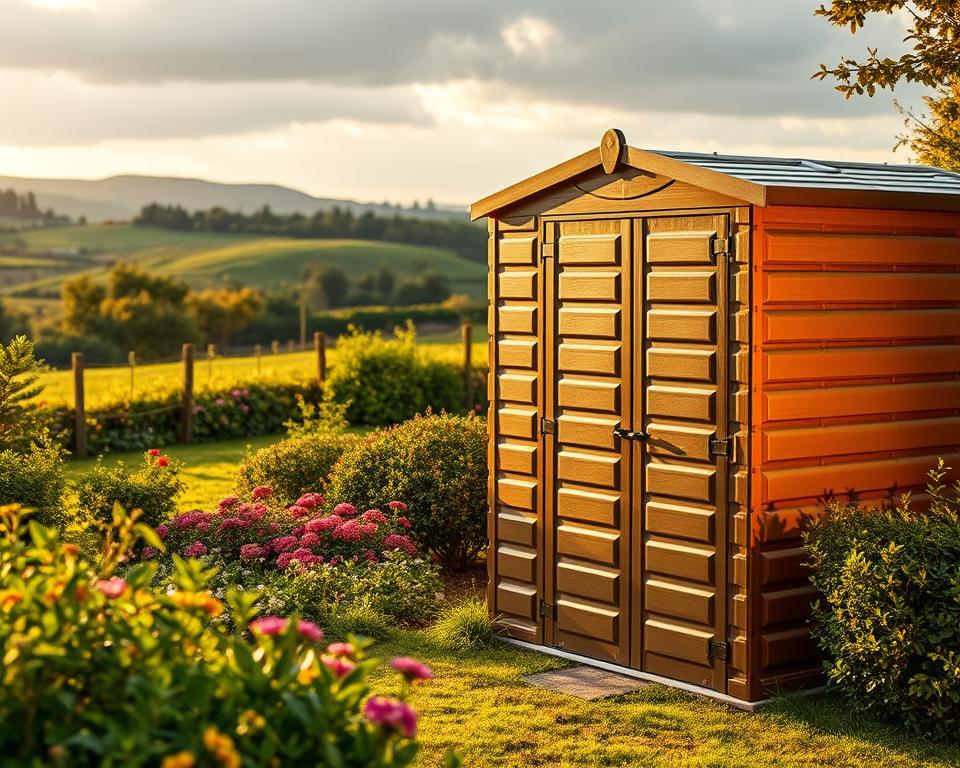
Proper placement provides the foundation for success. When positioned correctly, the shed already has half its battle against the weather won. This strategic positioning reduces exposure to driving rain and ground water.
For plastic structures specifically, silicone application offers crucial defence. A bead should be applied inside the frame to prevent ground water ingress. This technique, though often missing from installation guides, provides essential protection.
Every potential entry point requires attention. Corner joints need sealing even when panels appear flush. Air vents, bolt holes, and base rails all represent pathways for moisture penetration.
This systematic way of thinking creates layered defence against rain and moisture. It addresses both new installations and existing structures showing wear. The approach bridges assessment with practical material application.
Preventing water ingress at every vulnerable spot ensures the plastic shed remains dry inside. This comprehensive strategy significantly extends the structure’s functional life, preserving stored contents from moisture damage.
Preparing and Applying Weatherproofing Solutions
Before applying any protective materials, the shed surface requires careful attention. Proper preparation ensures optimal adhesion and long-lasting results. This phase bridges assessment with practical application.
Cleaning and Preparing the Shed Surface
Thorough cleaning forms the essential first step. Remove all dirt, grime, and contaminants using soap and water. Make sure the entire plastic surface is free from debris.
Allow the structure to air dry completely. Any residual moisture can compromise the protective coating’s effectiveness. Proper drying prevents trapped water beneath the applied layer.
Correct Application Techniques for Even Coverage
Select appropriate materials based on local weather conditions. The right way to apply them ensures comprehensive protection. Work systematically across each area.
Use a brush or roller for even distribution. Pay special attention to corners and edges where protection is most needed. Apply the paint or sealant in smooth, consistent strokes.

Allow sufficient drying time between coats. Follow manufacturer instructions regarding specific conditions. Multiple thin layers often provide better protection than one thick application.
| Application Method | Best For | Coverage Tips |
|---|---|---|
| Brush | Corners and detailed areas | Use firm pressure for penetration |
| Roller | Large flat surfaces | Maintain wet edge to avoid overlaps |
| Spray | Complex geometries | Apply light, even mist coats |
Safety precautions are essential during application. Wear protective gloves and goggles in well-ventilated spaces. Complete coverage protects the shed from all weather elements.
Optimising Shed Location and Foundation
Selecting the right spot and building a solid foundation are the most critical steps for long-term protection. These initial actions prevent moisture problems more effectively than any later treatment.
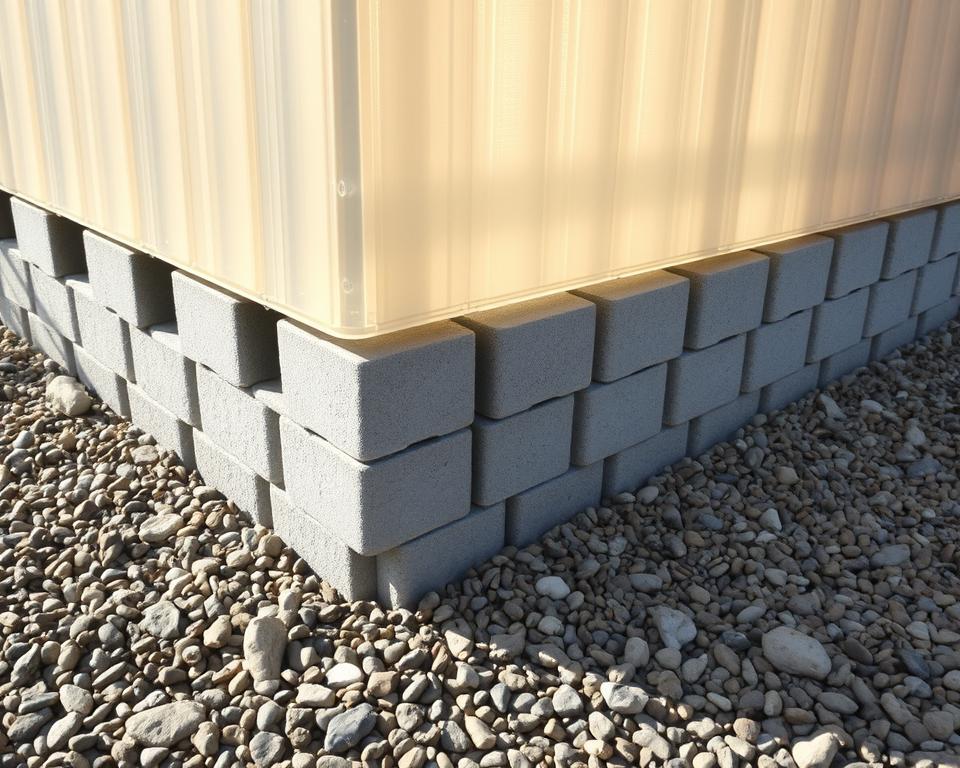
An elevated, well-drained area of the garden is essential. It should receive plenty of sunshine. This helps rainwater drain away and keeps the ground dry.
Avoid low-lying spots where water naturally pools. Heavy soil becomes saturated, promoting rot and compromising the shed base. Good air circulation under the floor is vital.
Choosing the Driest, Elevated Spot
Position the unit away from overhanging trees. Their roots can damage the foundation. Falling leaves clog gutters, causing water to overflow and soak the walls.
Keep adjacent lawns short. This allows the structure to breathe and avoids constant dampness. An open location is best for all types of plastic sheds.
Creating a Secure, Level Base
Raising the shed off the ground is non-negotiable. A level base prevents twisting and sagging. Misalignment causes doors to stick and water to pool.
For smaller units, good-quality paving slabs can suffice. For larger, heavy-duty models, a concrete plinth with a damp-proof membrane is highly recommended. It provides immense stability.
A robust concrete floor reduces stress on the entire structure. It counters ground movement that can compromise integrity over time. For maximum durability, consider a concrete base with rebar anchors.
| Foundation Type | Best For Shed Size | Key Benefit |
|---|---|---|
| Paving Slabs | Small to Medium | Good drainage, simple installation |
| Concrete Plinth | Medium to Large | Superior stability, long-lasting |
| Concrete with Rebar | Heavy-Duty | Maximum durability, resists ground movement |
Installing a proper shed base is a manageable DIY project. It requires minimal tools. For complex sites, hiring a professional ensures a perfectly level and secure foundation.
Maintenance and Upkeep for Long-Lasting Protection>
The effectiveness of any protective measures diminishes without regular maintenance routines. Consistent care ensures the initial weatherproofing investment continues to deliver value over many years.
Regular Cleaning and Debris Removal
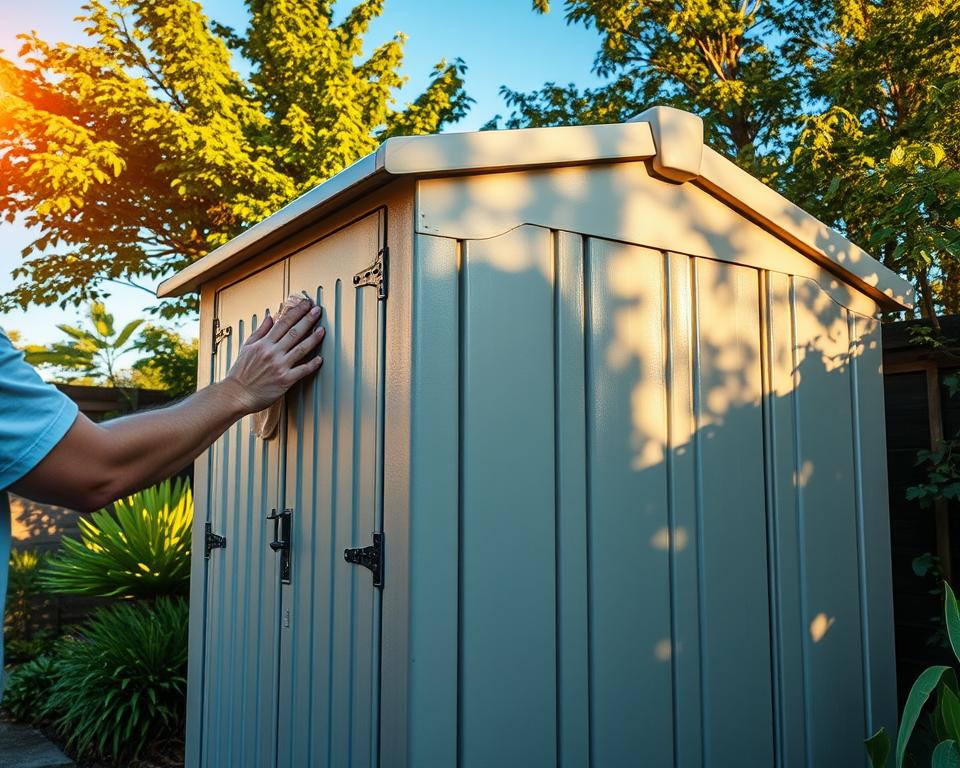
Establishing a cleaning schedule is essential for preservation. Hosing down the exterior every few weeks removes dirt and prevents algae growth. This simple practice helps maintain the structure’s appearance and integrity.
Pay special attention to roof areas where debris accumulates. Falling leaves during autumn months can trap moisture, creating ideal conditions for mould. Regular roof inspection prevents these issues from developing.
Gutters require particular focus to avoid clogging. Clean them out regularly and consider installing leaf guards. This prevents water overflow that could damage the shed’s foundation.
Periodic Resealing and Touch-ups
Even the best sealants degrade over time. Plan for resealing every few years, depending on exposure conditions. This maintenance step is crucial for ongoing protection.
Inspect all joints and seams during routine checks. Look for signs of wear or loosening screws caused by strong winds. Early detection allows for prompt repairs before major damage occurs.
Make sure to address minor issues immediately. Small cracks or gaps can expand if neglected, leading to rot in adjacent wood features. Timely touch-ups preserve the entire structure’s longevity.
Enhancing Ventilation and Moisture Prevention
Effective moisture control extends beyond keeping water out of the structure. It also involves managing the air and humidity levels inside. Proper ventilation is the key to preventing mould and mildew, which can damage stored items.
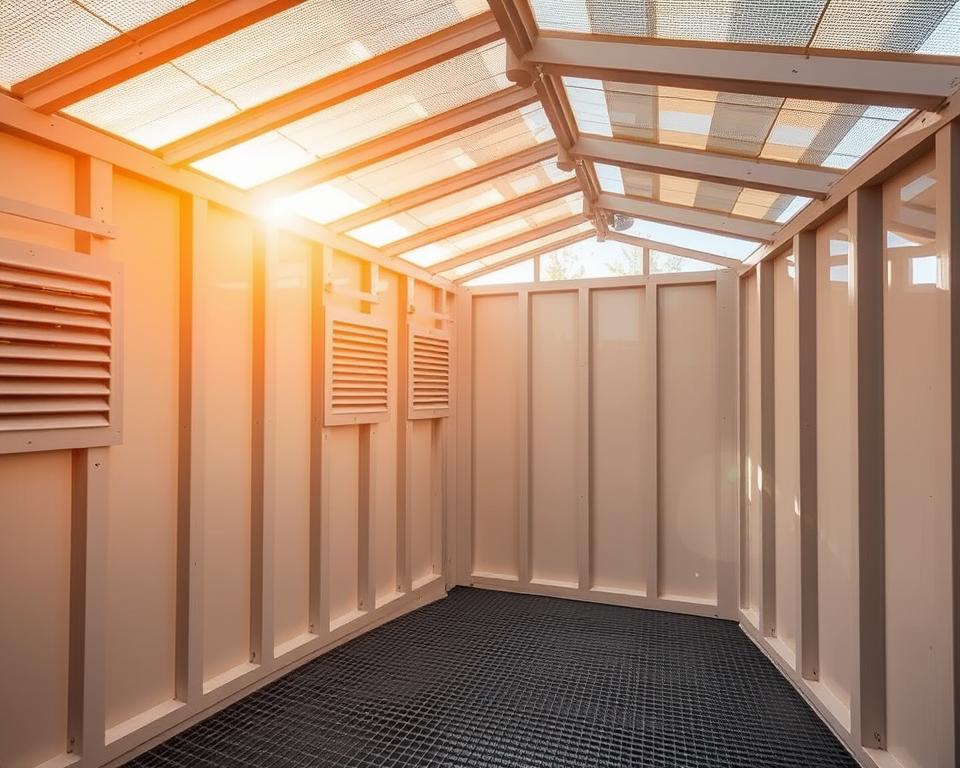
Many units come with pre-installed vents. These need to stay clear of dust and debris. A simple brush every few months ensures air can circulate freely.
Ensuring Proper Air Circulation
Condensation is often mistaken for a leak. It occurs when warm, moist air from the foundation rises. This air then hits cooler wall and roof panels, forming water droplets.
These droplets fall and the cycle repeats. A correctly built base with a damp-proof membrane is the first line of defence. It stops ground moisture from entering the air inside the building.
Sealing Windows, Doors and Joints Against Condensation
Windows and doors are common weak spots. Fixed panes should be sealed with silicone. For opening windows, rubber weather strips help block rain.
Most storage buildings do not have door seals. This makes them vulnerable to water ingress. Applying suitable weather strips significantly reduces this risk.
| Area | Potential Issue | Preventative Solution |
|---|---|---|
| Vents | Blocked by debris | Regular brushing |
| Foundation | Moisture rising | Damp-proof membrane |
| Windows | Water penetration | Silicone sealant |
| Doors | Lack of seals | Weather strips |
If condensation is already present, consider using a moisture absorber. Insulating the walls can also stop warm air from condensing on cold surfaces.
Conclusion
A robust garden shed provides excellent storage for many years. It shields tools from the weather and elements. However, its resilience relies on a consistent care routine.
This guide has shown that a complete approach is vital. It combines a solid base, correct sealing, and regular checks. This process defends against rain, moisture, and potential damage.
Every part of the structure matters. The shed roof, walls, floor, and windows all need attention. Proper care prevents issues like rot in wooden features.
Ultimately, a little effort protects your garden investment significantly. It ensures your storage space remains dry and secure through all conditions.
FAQ
How often should a plastic shed be weatherproofed?
For optimal protection, a thorough weatherproofing treatment is recommended every one to two years. However, this schedule can vary depending on local weather conditions and the shed’s exposure to the elements. Regular inspections every few months help identify when maintenance is needed.
Can standard wood paint be used on a plastic shed?
No, standard wood paint is not suitable for plastic sheds. It will not adhere properly and is likely to peel. Specialist paints formulated for plastic materials, such as plastic-specific spray paints, are required for a durable and attractive finish that withstands the weather.
What is the best base for a plastic shed to prevent moisture damage?
A solid, level foundation is crucial. A concrete base or paved slabs are excellent choices as they provide stability and elevate the shed’s floor away from ground moisture. This prevents water pooling and reduces the risk of damp and rot affecting the structure’s interior.
Why is ventilation important in a weatherproofed shed?
Proper ventilation is essential to prevent the build-up of condensation inside the shed. Without adequate air circulation, moisture can accumulate, leading to mould and mildew growth on stored items. Ventilation grilles or small gaps ensure a flow of air, keeping the interior dry.
How can small cracks in a plastic shed be repaired?
Small cracks can be effectively sealed using a flexible exterior-grade silicone sealant. The area must be clean and dry before application. For larger cracks or holes, a plastic welding kit or a patch made from a similar material may be necessary for a permanent repair.
Is a tarpaulin a good long-term solution for shed protection?
A tarpaulin is best used as a temporary measure against severe weather or while organising permanent repairs. It is not a substitute for proper weatherproofing. Long-term use can trap moisture against the shed’s surface and may cause damage due to abrasion or inadequate securing.