Innovative Ways to Maximise Your Large Shed

A large shed in the garden offers so much more potential than just a place for storage. Many homeowners find their outbuilding becomes a cluttered space, underused and inefficient. This guide shows how to transform it into a valuable extension of your home.
With clever planning and thoughtful design, a shed can become a versatile hub. It can serve as a workshop, a home gym, or a peaceful retreat. The key is to see the potential in every corner.
This article provides practical strategies to overcome common challenges. It focuses on creating organised, accessible environments. Readers will learn how to reclaim valuable space and enhance their quality of life.
Inhaltsverzeichnis
Key Takeaways
- A large shed presents significant potential beyond basic storage.
- Thoughtful planning is essential for creating a multifunctional space.
- Efficient organisation systems help combat clutter and maximise capacity.
- Vertical space is often an underutilised asset in a garden building.
- Practical solutions can be adapted to various shed sizes and purposes.
- A well-organised shed can become a valuable extension of your home.
Introduction and Shed Potential
Garden sheds have evolved far beyond their traditional role, offering homeowners expansive opportunities for creative space utilisation. These structures now serve as versatile extensions of the main property.
Overview of Large Shed Opportunities
Modern garden buildings provide abundant internal space for diverse activities. Homeowners can create dedicated areas for hobbies, work, or relaxation. The flexibility allows for customisation based on individual needs.
These spaces accommodate everything from garden tool storage to professional workshops. With clever design, a single shed can serve multiple purposes simultaneously. This versatility makes them valuable assets for any property.
Why Optimisation Matters for Home and Garden
Proper shed organisation delivers significant benefits to the entire property. It reclaims valuable indoor space by moving items outdoors. This creates more organised living environments inside the home.
Efficient use of shed space enhances garden aesthetics and functionality. It provides a dedicated area for tools and equipment. This systematic approach saves time and reduces daily stress.
| Shed Usage | Primary Benefits | Space Requirements | Recommended For |
|---|---|---|---|
| Garden Tool Storage | Organised equipment access | Compact to medium | Regular gardeners |
| Workshop Area | Dedicated project space | Medium to large | DIY enthusiasts |
| Home Office | Quiet working environment | Small to medium | Remote workers |
| Leisure Space | Personal retreat area | Medium to large | Family use |
The table above demonstrates how different shed configurations serve various purposes. Each option offers unique advantages for homeowners. Selecting the right setup depends on available space and personal requirements.
Investing time in proper shed planning pays dividends in daily convenience. A well-organised garden building enhances both property value and quality of life. It represents a smart way to expand usable space.
Understanding Your Shed’s Full Potential
Beyond housing lawn equipment, these outdoor buildings can serve as dedicated zones for various activities. Many property owners discover their garden structure holds untapped possibilities.

Exploring Versatile Uses
A well-planned garden building becomes more than just storage. It transforms into a personal haven for hobbies and work. Creative pursuits like painting or woodworking benefit from a dedicated room.
Fitness enthusiasts appreciate having a private gym space. Remote workers find garden offices ideal for productivity. Each use requires specific planning for the environment.
Benefits Beyond Basic Storage
The advantages extend throughout the property. A multi-functional shed reduces indoor clutter significantly. It creates specialised zones for different activities.
This approach enhances overall organisation. It provides room for tools and materials. The result is a more efficient use of available space.
| Intended Use | Key Considerations | Space Needed | Ideal For |
|---|---|---|---|
| Hobby Room | Good lighting, work surfaces | Medium | Creative projects |
| Home Gym | Ventilation, flooring | Medium | Fitness routines |
| Garden Office | Power, insulation | Compact | Remote work |
| Workshop | Storage, workbench | Large | DIY projects |
Proper planning ensures the space supports its intended purpose effectively. Each configuration offers unique benefits for different lifestyles.
Assessing Space and Storage Requirements
A systematic approach to storage planning can transform how you use your outdoor building. Homeowners should begin by evaluating their current storage situation.

Identifying Storage Challenges
Many garden buildings suffer from common organisational problems. Cluttered floor areas make it difficult to access essential items. Inefficient use of vertical space often leaves valuable storage capacity unused.
Items frequently get buried behind other belongings. This creates frustration when searching for specific tools. Proper assessment helps identify these issues early.
Planning Your Garden and Workshop Zones
Effective planning creates distinct functional areas within the same space. Garden tools might occupy one zone while workshop equipment uses another. This separation improves workflow and accessibility.
Strategic placement considers usage frequency and safety requirements. Heavy items belong on the floor to prevent accidents. Frequently used tools should be at eye level for convenience.
| Storage Zone | Recommended Items | Placement Strategy | Safety Considerations |
|---|---|---|---|
| Floor Level | Heavy equipment, bulky items | Easy access, stable placement | Prevent tipping hazards |
| Eye Level | Frequently used tools | Middle shelving, pegboards | Clear visibility |
| Upper Storage | Seasonal items, rarely used | Top shelves, ceiling racks | Secure fastening |
| Workshop Area | Power tools, workbench | Dedicated space, good lighting | Adequate ventilation |
This zoning approach ensures every item has a logical home. It maximises the available area while maintaining safety standards.
Creative Transformations for Multifunctional Spaces
Creative transformations unlock the true versatility of a garden building. Standard sheds become specialised environments through thoughtful planning. Each conversion serves specific purposes while maximising the available room.
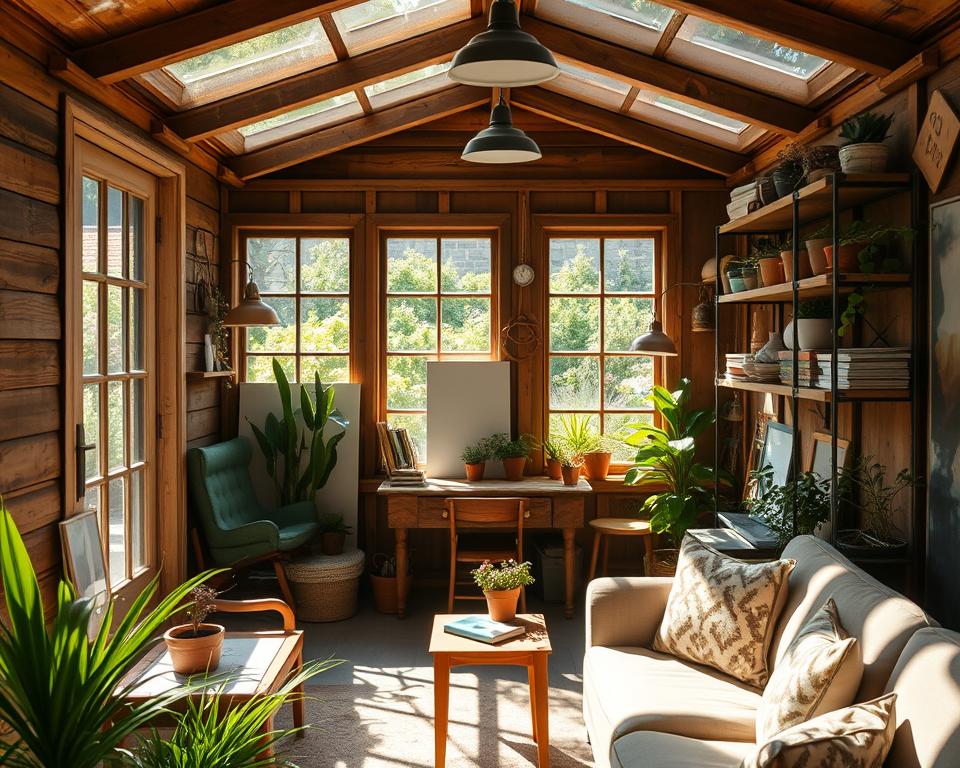
Converting the Shed into a Hobby Room or Garden Office
Transforming a shed into a hobby room requires careful design considerations. Large windows flood the space with natural light, creating an inspiring environment. This approach enhances artistic pursuits and creative work.
Garden office conversions provide dedicated workspace separate from home distractions. The space can be customised to reflect personal style. Necessary technology and amenities support seamless remote work.
Lighting design combines natural sources with artificial options. This ensures functionality during evening sessions or darker months. The right illumination creates a productive atmosphere.
Designing a Dedicated Workshop Area
Workshop conversions focus on functionality and durability. Sturdy workbenches and organised tool storage create efficient workspace environments. The design must accommodate various projects.
Appropriate flooring withstands heavy equipment and messy activities. This maintains the shed’s structural integrity while ensuring safety. Ventilation systems keep air quality high during extended use.
Successful transformations consider practical elements like insulation and electrical installations. Each design should adapt as needs change over time. This ensures long-term satisfaction with the converted space.
Vertical and Ceiling Storage Solutions
One of the most effective strategies for shed organisation involves looking upwards, towards the often-neglected vertical surfaces and ceiling. These areas hold immense potential for creating a more functional and spacious environment.
By utilising the full height of the structure, homeowners can dramatically increase their available storage capacity. This approach keeps the valuable floor space clear for larger items or movement.

Maximising Wall and Ceiling Space
The ceiling is a prime location for storing bulky or seasonal items. Simple plywood boards fixed between rafters create out-of-the-way shelves. For specific gear, like fishing rods, PVC pipes strung from the rafters offer a perfect custom holder.
Bicycles and other large equipment can be hoisted safely using pulley systems. This clears a significant amount of room below. These solutions ensure every cubic foot of space in the shed works hard.
Integrating Shelving, Hooks, and Pegboards
Wall-mounted systems are the backbone of an organised space. Pegboard panels fixed to the wall provide incredible flexibility. Their grids of holes accept various hooks, brackets, and even small shelves.
Tools and accessories hang neatly, always visible and accessible. S-hooks offer a quick, drill-free installation method. They can be hung over existing rails or frames.
A classic tool wall involves arranging items on a bench first. Then, transfer the layout to the wall using nails and hooks. Drawing silhouettes around each item designates its permanent home, maintaining order.
Innovative Ways to Maximise Your Large Shed
Effective organisation turns a simple garden building into a highly functional area. It requires a smart approach that goes beyond simply stacking items. The goal is to create a system that works efficiently.
Expert tips focus on building a comprehensive storage system. This design should anticipate future needs, not just current ones. Careful planning is the foundation of this process.

Implementing a Flexible Storage Framework
A great solution is to create designated zones for different activities. This method helps to store items logically. It keeps the space organised and easy to navigate.
Modular storage units are a brilliant way to achieve flexibility. They allow the system to adapt as requirements change. Homeowners can start small and expand their storage over time.
Customised Organisation Systems
Tailoring the space to specific needs maximises its utility. Magnetic strips provide a clever solution for metal tools. Repurposed furniture, like an old chemist cabinet, offers unique storage with character.
For garden tools, a simple rack made from pallets keeps them tidy. Baskets and mounted bins are perfect for smaller items. This custom design ensures everything has a proper place.
| Storage Method | Best For | Key Benefit |
|---|---|---|
| Magnetic Strips | Metal tools, paintbrushes | Keeps items visible and accessible |
| Repurposed Furniture | Seeds, small supplies | Adds character and cost-effective storage |
| Plywood Racks | Shovels, long-handled tools | Prevents clutter on the floor |
| Mounted Baskets | Small items, fasteners | Uses vertical space efficiently |
DIY Upgrades and Customisation Tips
Custom upgrades transform a basic shed into a distinctive feature that reflects personal style while improving functionality. These projects allow homeowners to enhance their garden building’s appearance and durability over time.

Exterior Improvements and Painting Ideas
Painting represents one of the most impactful DIY projects. Colour choices significantly affect how the shed integrates with garden design. Bright colours create focal points, while neutral tones help the structure blend with surrounding plants.
Dark shades like deep blue can make walls appear to recede, creating an illusion of space. This way of using colour works well in compact gardens.
Installing Functional Fixtures and Lighting
Adding windows and light fixtures dramatically improves usability. Proper light enables evening use throughout the year. Gutters and drainpipes serve dual purposes, protecting walls while collecting rainwater.
One homeowner shared: “Adding solar-powered lighting transformed how we use our garden building after dark.”
Choosing the Right Materials for Longevity
Selecting appropriate materials ensures upgrades withstand British weather. Durable materials prevent frequent repairs. The roof particularly benefits from weather-resistant materials.
Green roof installations use specific materials to support plant life. This approach provides insulation and wildlife benefits.
| Upgrade Type | Materials Required | Time Estimate | Skill Level |
|---|---|---|---|
| Exterior Painting | Paint, primer, brushes | 1-2 days | Beginner |
| Gutter Installation | Guttering, brackets | Half day | Intermediate |
| Window Fitting | Window frame, sealant | 1 day | Advanced |
| Lighting Setup | Lights, wiring, switches | 2-3 hours | Intermediate |
“The right upgrades can extend a shed’s lifespan significantly while enhancing its visual appeal.”
These tips help homeowners create a garden building that complements their house style. Thoughtful design choices ensure the shed remains functional for years.
Repurposing Ideas and Organisational Strategies
Organisational efficiency in outdoor structures often begins with imaginative reuse of household items no longer serving their original purpose. This approach combines cost-effectiveness with creative problem-solving for storage challenges.

Transforming Old Furniture Into Functional Storage
Homeowners can get started by assessing unused furniture from their home. Old chemist cabinets and library-catalogue-card drawers make perfect seed storage units when kept dry.
Vintage cupboards and filing cabinets organise odds and ends effectively. These ideas give new life to discarded items while adding character to the shed.
Creating a Robust Tool Wall and Clever Shelving
Building a functional tool wall requires methodical planning. Homeowners should arrange their tools on a table first to find optimal placement.
They can then transfer this arrangement to the walls using appropriate hooks and brackets. Drawing silhouettes around each tool designates its permanent place.
Clever shelves arrangements maximise vertical space while maintaining clear organisation. This system ensures items remain accessible and the area stays tidy for work.
Conclusion
The journey to optimise an outdoor building represents a valuable investment in enhancing one’s living environment. With thoughtful planning and the right design approach, a garden shed transforms from basic storage into a versatile extension of the home.
Homeowners who dedicate time to this process create organised spaces that serve multiple purposes. Whether establishing a dedicated workspace or creating storage solutions, the benefits extend throughout the property. Proper material selection and strategic placement of windows contribute to a functional environment.
This ongoing project allows for adjustments as needs evolve. The principles of vertical storage, flexible systems, and creative repurposing ensure every area serves a clear purpose. A well-organised shed becomes an asset that supports hobbies, reduces clutter, and enhances daily life.
By applying these practical tips, anyone can transform their garden building into an extraordinary space. The result is a purposeful environment that complements both house and garden style while providing organised solutions for years to come.
FAQ
What are the first steps to take when planning to maximise a large shed?
The initial step involves a thorough assessment of the space and identifying specific storage or functional needs. Planning different zones for activities, such as a workshop area or garden tool storage, helps create an efficient layout from the start.
How can vertical space be effectively used in a large shed?
Utilising wall space with sturdy shelving, pegboards, and heavy-duty hooks allows for organised storage of tools and equipment. This approach keeps the floor clear and makes items easy to access.
Can a large shed be converted into a comfortable garden office?
Absolutely. With proper insulation, adequate lighting, and power sources, a large shed can become an excellent garden office. Adding windows and quality flooring enhances the comfort and usability of the space.
What are some budget-friendly tips for upgrading a large shed?
Repurposing old furniture for storage, such as bookshelves or cabinets, is a cost-effective strategy. A fresh coat of paint and DIY shelving solutions can also dramatically improve the shed’s appearance and functionality without a large investment.
Why is it important to consider the shed’s environment?
A well-ventilated and dry environment protects stored items from moisture damage and rust. It also makes the space more pleasant to work in, whether it’s used for storage, as a workshop, or a hobby room.
What type of flooring is best for a large shed used as a workshop?
For a workshop, durable flooring like rubber mats or epoxy-coated concrete is ideal. These materials withstand heavy use, are easy to clean, and provide a comfortable surface for standing during projects.