Minimalist Garden Ideas for an Uncluttered Outdoor Space Explained

Many homeowners across the UK seek to create a peaceful haven just beyond their back door. The desire for a calm, organised retreat from modern life’s hustle is stronger than ever. This guide explores how to achieve that serenity through intentional design.
This approach to landscaping prioritises simplicity and functionality above all else. It focuses on eliminating visual noise while maximising both aesthetic appeal and practical use. The result is an outdoor space that feels both spacious and deeply personal.
Through careful planning and thoughtful choices, anyone can cultivate such an environment. This design philosophy not only creates beauty but also often leads to less maintenance. It delivers greater visual impact and tranquillity with fewer elements.
This comprehensive article will cover everything from foundational principles to specific plant selections and furniture choices. Each section builds upon core concepts of clean lines and purposeful placement. Readers will gain actionable ideas to create their own uncluttered sanctuary.
Inhaltsverzeichnis
Key Takeaways
- This design style focuses on creating calm, organised spaces that serve as a peaceful sanctuary.
- The core principles are simplicity, functionality, and the intentional placement of every element.
- A well-executed plan can result in a garden that requires less upkeep whilst offering more visual appeal.
- The guide covers foundational design concepts, plant choices, hardscaping, and furniture selection.
- The ultimate goal is to achieve a contemporary, highly functional outdoor space free from clutter.
- Anyone can apply these principles to transform their existing plot into a minimalist garden.
Introduction to a Minimalist Garden
A deliberate movement in contemporary horticulture focuses on creating outdoor environments that celebrate space and simplicity above all else. This approach represents a significant departure from traditional, heavily planted landscapes.
Understanding the Minimalist Aesthetic
The minimalist aesthetic in landscaping embraces clean lines and purposeful placement. Every element serves a clear function, whether practical or visual. This philosophy draws inspiration from Japanese Zen traditions and Scandinavian design principles.
Both styles value restraint and natural materials. They appreciate the beauty of empty space as much as filled areas. This creates a harmonious balance between form and function.
The Importance of Decluttered Outdoor Spaces
Decluttered environments offer significant psychological benefits. They provide calming retreats that reduce stress and promote mental clarity. This contrasts sharply with busy modern lifestyles.
Simplified layouts also bring practical advantages. They typically require less maintenance and consume fewer resources. This makes them easier to manage throughout changing seasons.
| Aspect | Traditional Approach | Minimalist Approach |
|---|---|---|
| Plant Selection | Diverse species, mixed planting | Limited palette, repeated specimens |
| Hard Landscaping | Ornamental features, varied materials | Clean lines, consistent materials |
| Maintenance Level | High upkeep, regular pruning | Low maintenance, strategic care |
| Visual Impact | Busy, detailed appearance | Calm, spacious feeling |
Benefits of Adopting a Minimalist Garden Style
Adopting a restrained design philosophy for exterior spaces delivers measurable improvements in daily use. This approach transforms outdoor areas into highly efficient environments that serve modern lifestyles exceptionally well.
The streamlined nature of this garden style creates spaces that are both beautiful and profoundly practical. Homeowners discover significant advantages beyond mere visual appeal.

Enhanced Functionality and Low Maintenance
Every element in this type of garden serves a clear purpose, maximising usable space effectively. The elimination of decorative clutter enhances overall functionality dramatically.
This design approach prioritises low maintenance requirements through careful plant selection. Hardy species like succulents and ornamental grasses thrive with minimal intervention.
The simplified layout reduces ongoing care needs substantially. Homeowners save time and resources while enjoying a consistently attractive outdoor space.
This garden style proves cost-effective over time through reduced expenditure on tools and professional services. The focus on local climate-appropriate plants ensures greater resilience to seasonal changes.
Sustainability becomes an inherent benefit with lower water consumption and chemical usage. The entire approach aligns perfectly with contemporary environmental consciousness.
Essential Hardscaping for a Clutter-Free Layout
Creating clear boundaries and surfaces forms the essential framework for organised exterior spaces. This structural approach ensures every element has its place. The result is a streamlined layout that feels both spacious and intentional.

Well-defined edges prevent visual chaos and maintain order. They create a crisp, modern appearance that requires minimal upkeep.
Defining Garden Borders with Stone, Gravel, and Concrete
Hardscape edging materials establish permanent boundaries that withstand weather and time. Stone offers natural texture and durability for lasting appeal. Gravel provides flexible definition with excellent drainage properties.
Concrete delivers clean lines and contemporary styling. Mixing materials can add subtle contrast while maintaining cohesion. For example, stone paired with gravel creates visual interest.
| Material | Benefits | Maintenance | Best Use |
|---|---|---|---|
| Stone | Natural look, durable | Low | Flower bed borders |
| Gravel | Flexible, good drainage | Moderate | Pathways and ground cover |
| Concrete | Clean lines, modern | Very low | Patio areas and pathways |
Replacing Lawns with Hard Landscape Elements
Traditional lawns demand constant attention with watering and mowing. Hard landscape elements offer practical alternatives that save time and resources. Large concrete pavers create sleek surfaces for outdoor living.
These materials work together to form functional spaces for relaxation. The combination reduces maintenance while enhancing usability. Neutral colours and simple shapes maintain visual harmony.
Strategic placement of these elements transforms the entire layout. They create defined zones for different activities while preserving openness.
Choosing Minimalist Outdoor Furniture and Accessories
Well-chosen exterior furnishings transform gardens into functional extensions of the home environment. The right pieces create comfortable areas for relaxation while maintaining visual harmony throughout the space.
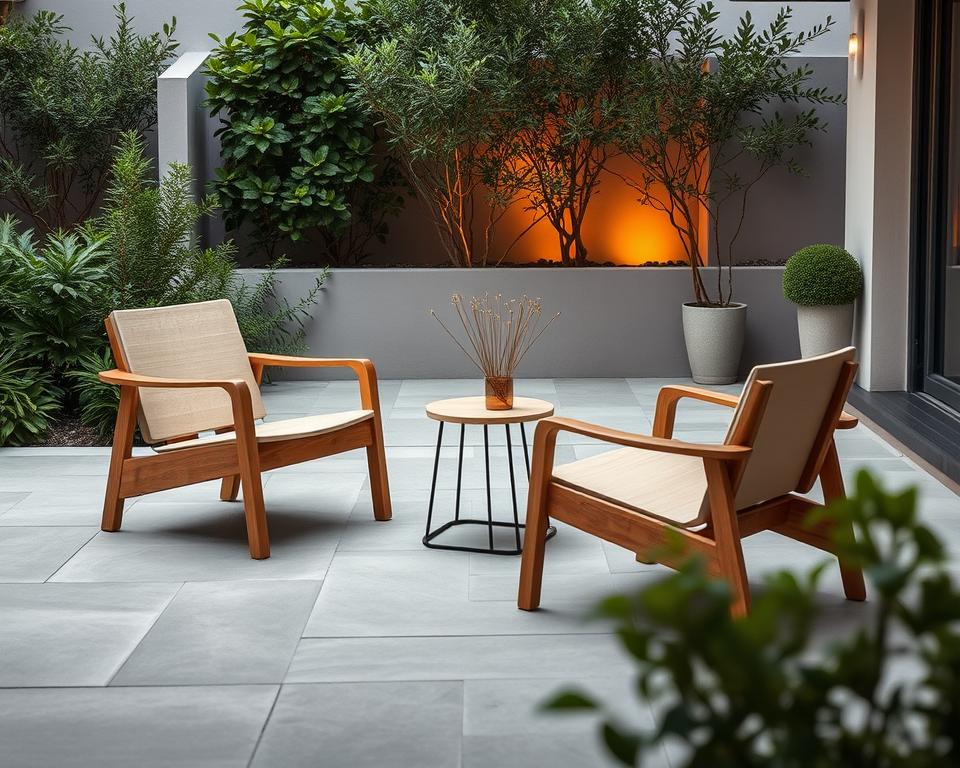
This approach focuses on selecting items that serve practical purposes without overwhelming the overall design. Each piece should contribute to the tranquil atmosphere.
Simple, Functional Pieces with Clean Lines
Priority goes to furniture with geometric forms and neutral colour palettes. These selections complement rather than dominate the outdoor area. The emphasis remains on functionality over decorative elements.
Contemporary materials like powder-coated metal and synthetic rattan offer excellent durability. They withstand British weather conditions while maintaining a sleek aesthetic. Treated hardwoods also provide long-lasting performance.
Strategic placement proves crucial for maintaining visual flow. Pieces should create distinct zones without crowding any single area. Modular systems allow flexible configurations as needs change.
| Material | Key Benefits | Maintenance Level | Best Applications |
|---|---|---|---|
| Powder-coated Metal | Weather-resistant, architectural quality | Low | Dining sets, architectural pieces |
| Synthetic Rattan | Lightweight, contemporary look | Moderate | Lounge seating, conversation areas |
| Treated Hardwood | Natural appearance, longevity | Moderate | Benches, tables, structural elements |
Accessories should be limited to essential comfort items. Weatherproof cushions in neutral tones add comfort without visual complexity. This maintains the streamlined aesthetic central to the design philosophy.
Simplifying Your Garden Colour Palette
Colour coordination represents one of the most impactful decisions in landscape design. A restrained palette creates immediate visual cohesion and prevents chaotic appearances from competing hues.
This approach focuses on establishing a harmonious foundation that allows architectural elements to shine. The result is a sophisticated outdoor environment with remarkable depth.
Neutral Tones and Muted Accents
Neutral colours form the essential backbone of this design style. Shades of grey, white, cream and natural wood provide a calming backdrop for the entire space.
These tones create a sense of balance that feels both contemporary and timeless. They allow plant forms and structural features to take centre stage.
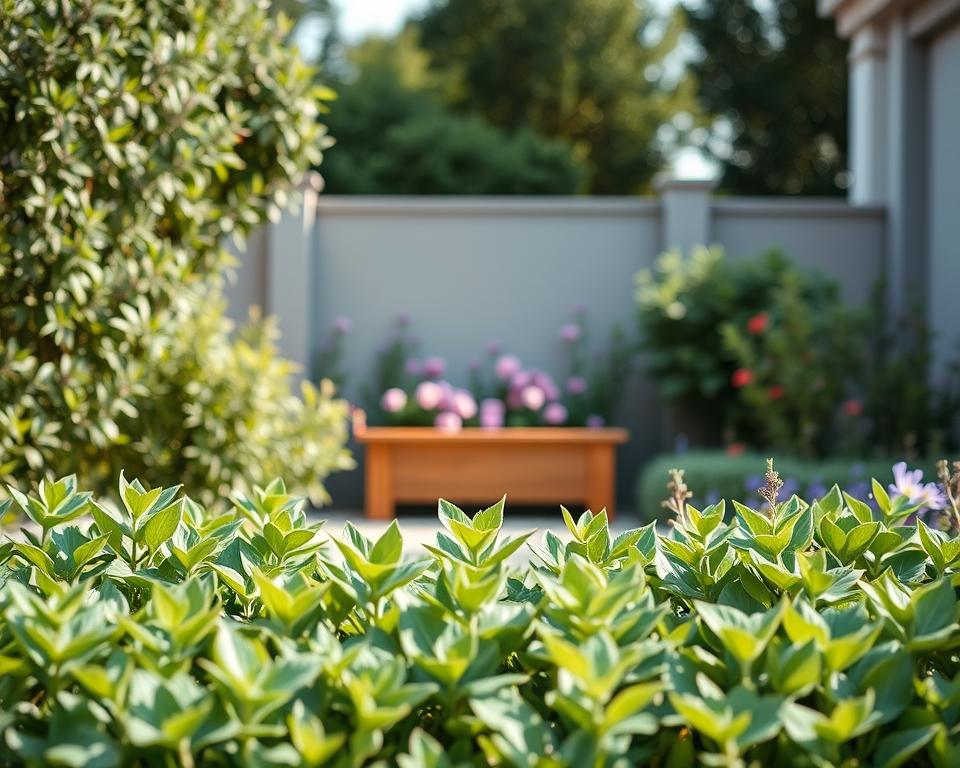
Muted accents introduce subtle interest without overwhelming the aesthetic. Soft blues, sage greens or dusty mauves work beautifully when used sparingly. This maintains the tranquil atmosphere while adding visual variety.
The limited palette should extend to all materials within the garden. Concrete, stone and wood selections contribute significantly to the overall colour scheme.
| Colour Category | Recommended Shades | Best Applications | Visual Effect |
|---|---|---|---|
| Neutral Base | Light grey, white, natural wood | Hardscaping, furniture | Creates calming foundation |
| Muted Accents | Sage green, dusty blue, warm taupe | Planters, cushions | Adds subtle interest |
| Earthy Tones | Terracotta, olive green, moss green | Plant selections, decorative elements | Provides natural warmth |
Monochromatic schemes using varying shades of one colour family create particularly sophisticated results. This approach maintains simplicity while achieving remarkable visual depth. Even plant selections should respect the established palette throughout seasonal changes.
Incorporating Low-Maintenance Plants
Selecting the right greenery is fundamental to achieving a serene and manageable landscape. The focus should be on species that offer strong visual impact with minimal upkeep. This approach ensures the space remains beautiful without demanding constant attention.
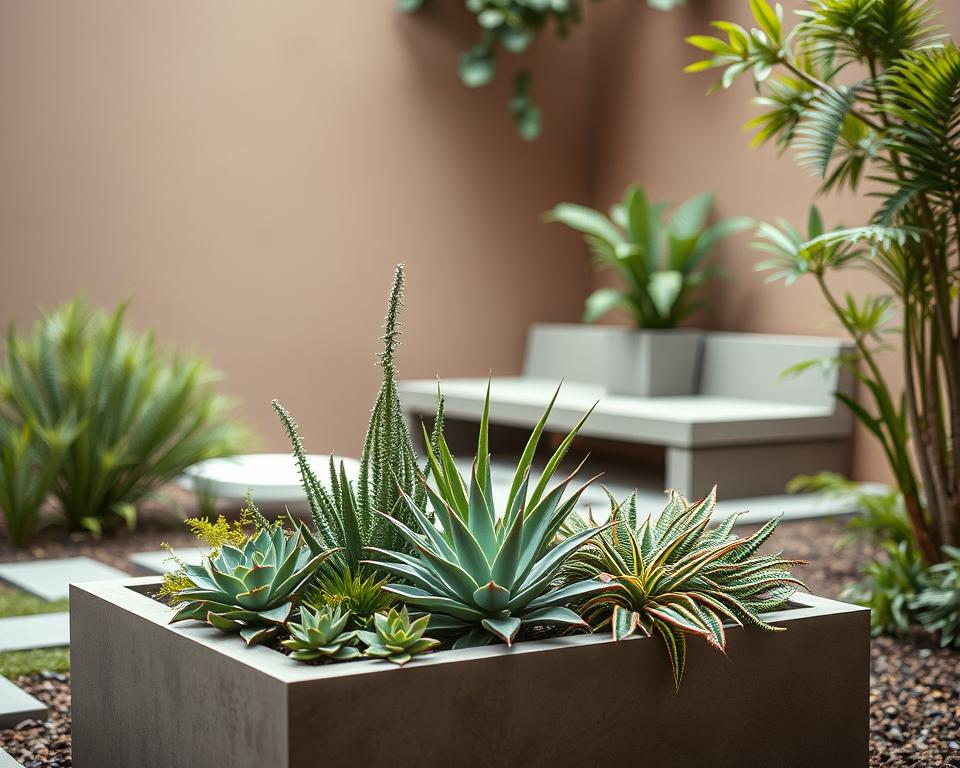
Selecting “Living Sculptures” like Aloe, Agave, and Boxwood
Plants with architectural forms act as natural focal points. Aloe trees provide striking vertical elements with their symmetrical, succulent leaves. They thrive in sunny spots with very little water.
Agave plants offer dramatic presence with their thick, fleshy leaves arranged in rosettes. Once established, they require virtually no maintenance. Boxwood shrubs deliver classic structure with dense foliage that shapes easily.
These specimens serve as living sculptures, adding year-round interest. Their geometric shapes complement clean-lined hardscaping perfectly.
Using Ornamental Grasses and Creeping Thyme for Texture
Ornamental grasses introduce soft movement and appealing texture. Varieties like fountain grass create naturalistic, flowing borders. They add life to the design with minimal care needed.
Creeping thyme is excellent as a ground cover. It fills gaps between paving stones, softening edges with its low-growing, aromatic foliage. This plant tolerates light foot traffic beautifully.
Sticking to one or two types of grasses maintains visual simplicity. This careful selection ensures the planting beds enhance the overall tranquillity.
Creative Storage Solutions in the Garden
Practical storage represents the unsung hero of maintaining a clean outdoor aesthetic. Even the most carefully designed landscape can be undermined by visible tools and equipment. Strategic concealment ensures the space remains visually harmonious.
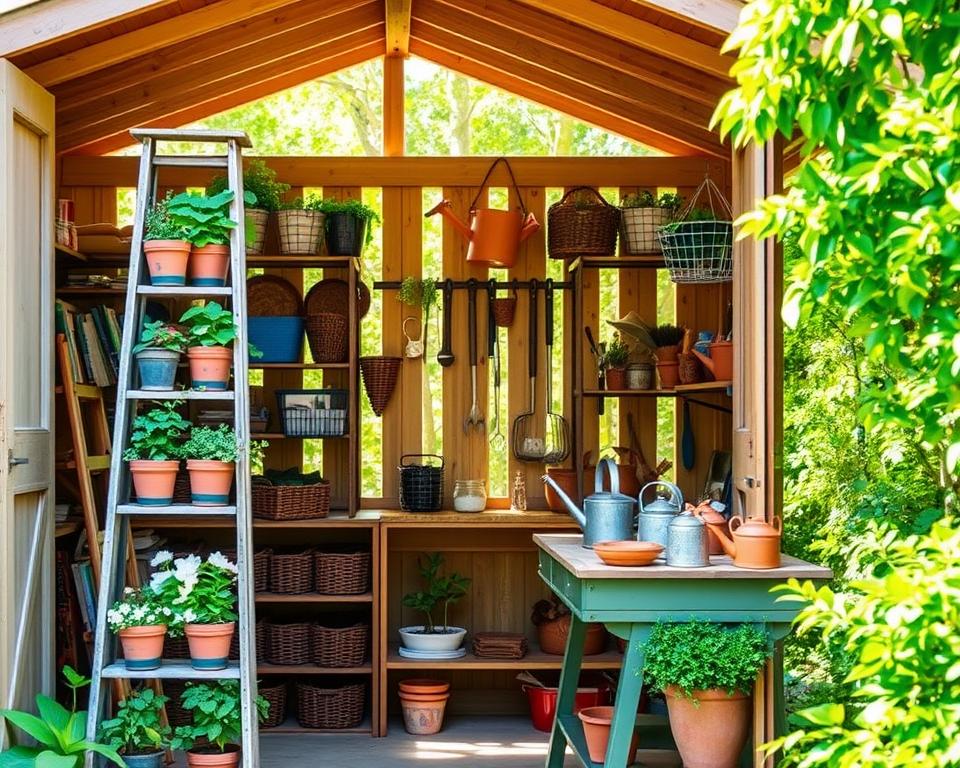
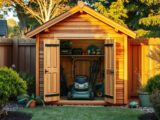
Investing in dedicated storage structures provides the foundation for organisation. A well-proportioned shed, such as an 8×6 model, offers ample capacity without dominating the area. This approach keeps essential items protected while preserving the garden’s clean appearance.
Investing in a Garden Shed for Outdoor Gear
A quality shed serves as the central hub for gardening tools and seasonal items. It removes visual clutter from patios and lawns, including unsightly wheelie bins. The structure’s placement should complement the overall layout rather than interrupt it.
Internal organisation proves equally important for maximum functionality. Shelving systems and wall-mounted racks create designated zones for different item categories. This prevents the storage space from becoming chaotic over time.
| Storage Solution | Primary Benefit | Ideal For | Maintenance Level |
|---|---|---|---|
| Garden Shed | Comprehensive weather protection | Tools, furniture, bulk items | Annual treatment |
| Built-in Seating | Dual functionality | Cushions, small equipment | Minimal |
| Bin Storage Unit | Visual screening | Wheelie bins, recycling | Occasional cleaning |
Decluttering with Organised Storage Ideas
Built-in seating with hidden compartments offers clever dual-purpose solutions. These installations provide comfortable resting spots while concealing items like cushions or garden games. The integrated design maintains visual consistency throughout the space.
During summer months, efficient storage becomes particularly valuable. Everything should have a designated place to prevent gradual clutter accumulation. This systematic approach preserves the intended aesthetic year-round.
Lighting and Water Features for a Modern Touch
Thoughtful illumination and water elements provide the final, sophisticated layer to a modern landscape. These features extend the enjoyment of the space into the evening, adding both visual interest and a calming auditory dimension.
Utilising Energy-Efficient LED Garden Lighting
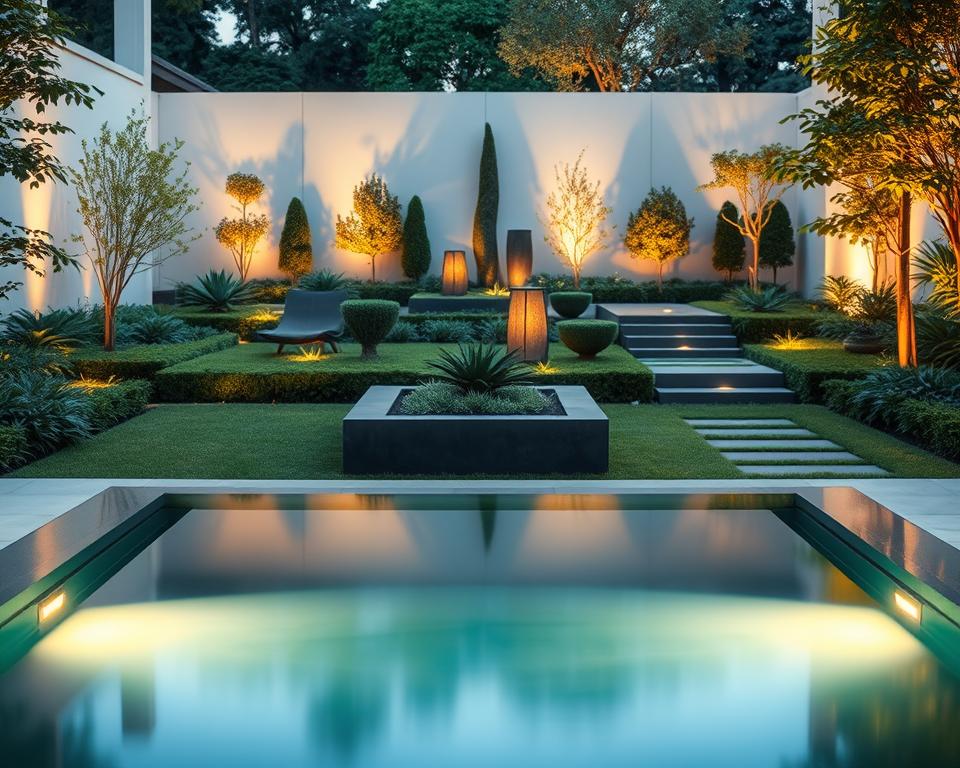
Strategic outdoor lighting is key to highlighting a landscape’s best assets after dark. Energy-efficient LED technology is ideal for this purpose. It offers long-lasting, sustainable lighting with low energy consumption.
Techniques like uplighting can dramatise architectural plants. In-ground fixtures can subtly define pathways. The compact design of LED fixtures helps maintain a clean look.
Integrating Minimalist Water Features
A simple water feature serves as an elegant focal point. Choices like a linear fountain or a reflecting pool align with a restrained aesthetic. The sound of moving water creates a tranquil sense of calm.
Integrating subtle lighting within these water features enhances their impact at night. This illuminates the flow, adding a touch of magic without clutter.
Geometric Shapes and Structural Elements in Garden Design
The deliberate use of geometric forms establishes a strong architectural foundation in contemporary landscape design. These shapes bring order and visual clarity to exterior spaces. They create rhythm and definition that distinguishes modern approaches from informal styles.
Implementing Clean Lines with Paving and Edging
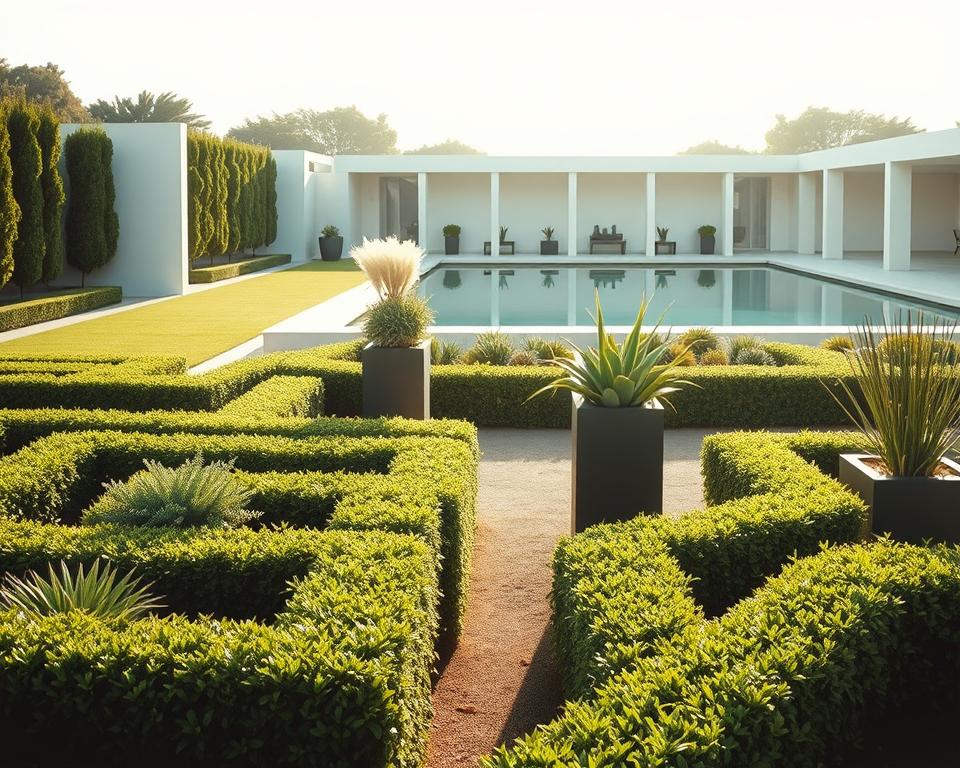
Precise edging and paving create the streamlined appearance essential to this aesthetic. Crisp boundaries prevent visual confusion throughout the space. Rectangular or square paving stones define pathways with architectural precision.
Hexagonal patterns offer an alternative geometric approach. They introduce visual interest through tessellation while maintaining structure. This creates organised patterns that guide movement naturally.
Raised planting beds in geometric forms serve dual purposes. They define areas with architectural accuracy while adding dimension. The repetition of shapes across different elements creates visual unity.
Structural features should echo the geometric theme through their proportions. Precision in execution proves crucial for maintaining clean, professional results. Every element contributes to a cohesive design language.
Optimising Outdoor Space with Multifunctional Areas
Creating adaptable exterior environments allows homeowners to extract maximum value from every square metre. This approach to landscape planning ensures each area serves multiple purposes throughout different seasons.

Pergolas demonstrate excellent versatility in exterior planning. They provide shade, define boundaries, and support climbing plants. Many homeowners integrate retractable canopies for adjustable coverage.
Flexible furniture arrangements adapt to changing needs. Modular seating systems can reconfigure for intimate gatherings or larger parties. Foldable elements store efficiently when not in use.
Built-in cooking areas serve multiple functions. They accommodate food preparation, serving, and dining activities. Integrated storage keeps equipment hidden, maintaining clean lines.
| Multifunctional Element | Primary Functions | Key Benefits |
|---|---|---|
| Pergola with Retractable Canopy | Shade provision, spatial definition, plant support | Weather adaptability, architectural interest |
| Modular Seating System | Flexible seating, space division, storage | Adaptable configurations, efficient use |
| Built-in Cooking Area | Food preparation, dining, storage | Streamlined appearance, integrated functionality |
| Vertical Green Wall | Privacy screening, plant display, boundary definition | Space efficiency, visual appeal |
Technology integration enhances performance without visual complexity. Smart irrigation and automated lighting systems operate efficiently. These features optimise the exterior environment throughout changing conditions.
This comprehensive approach to exterior planning creates highly functional living areas. Each element contributes to a cohesive design that serves diverse needs.
Minimalist Garden Ideas for an Uncluttered Outdoor Space
Achieving true minimalism in landscape design requires a holistic approach that permeates every decision. This philosophy extends beyond individual components to create a cohesive environment where each element serves a clear purpose.

Integrating the Core Concept into Every Element
The “less is more” mindset proves essential for maintaining an uncluttered outdoor space. Each addition should undergo careful evaluation against minimalist criteria. Does it serve a practical function? Does it enhance the overall aesthetic?
Successful integration demands consistency across materials, colours, and proportions. Different elements must harmonise rather than compete for attention. This creates a sense of balance that feels both intentional and peaceful.
The process involves considering how various components interact. Materials should complement each other while maintaining visual simplicity. Thoughtful placement ensures each feature contributes to the whole.
These garden ideas adapt flexibly to individual circumstances and personal preferences. The framework allows for personal expression within disciplined boundaries. This approach ultimately reduces maintenance while enhancing daily enjoyment.
Conclusion
A thoughtfully executed design culminates in a personal haven for relaxation and enjoyment. This comprehensive guide has outlined the core principles and practical steps to achieve such a transformation. The focus on simplicity and purposeful design leads to a deeply satisfying outdoor living area.
This approach offers significant rewards, including less maintenance and a greater sense of tranquillity. The balance achieved through intentional choices creates a space that feels both spacious and welcoming. It becomes a true extension of the home.
Ultimately, the success of this design philosophy lies in its adaptability. Whether your plot is large or compact, the core tenets of quality and intentionality remain the same. This guide provides a strong foundation for your project.
By embracing these concepts, you cultivate an environment for peaceful summer evenings and year-round appreciation. The investment yields a timeless sanctuary, offering a serene escape and lasting enjoyment for years to come.
FAQ
What is the core principle of a minimalist garden design?
The core principle centres on simplicity and intentionality. It focuses on creating a serene outdoor space by using a limited palette of materials, plants, and features. The goal is to achieve a sense of balance and order, prioritising quality over quantity in every element.
How can I make my garden more functional with a minimalist approach?
Functionality is enhanced by designing distinct zones for different uses, such as a patio for dining or a gravel area for contemplation. Choosing simple, durable outdoor furniture and incorporating clever storage solutions, like a garden shed, keeps the area organised and easy to maintain.
What are the best low-maintenance plants for this style?
Ideal plants are those that offer strong form and texture with minimal upkeep. “Living sculptures” like Aloe, Agave, and neatly clipped Boxwood are excellent. Ornamental grasses and creeping thyme also provide visual interest and ground cover without demanding constant care.
Which materials are commonly used in hardscaping for a clean look?
Popular materials include smooth concrete, natural stone, and gravel. These elements are used to create clean lines with paving, define borders, and replace traditional lawns. Their neutral tones and simple shapes contribute significantly to the uncluttered aesthetic.
How can lighting and water features enhance a minimalist space?
Subtle, energy-efficient LED lighting can highlight architectural plants and pathways, adding depth and ambience. A simple water feature, such as a slender fountain or a still reflecting pool, introduces a calming, modern touch and enhances the tranquil atmosphere.
Is a minimalist garden suitable for a small outdoor space?
Absolutely. This design philosophy is particularly effective in smaller gardens. By avoiding clutter and using a restrained selection of features, the layout can make a compact area feel more spacious and intentional. Multifunctional areas are key to optimising the available space.