Plant Picks for Your Vertical Garden
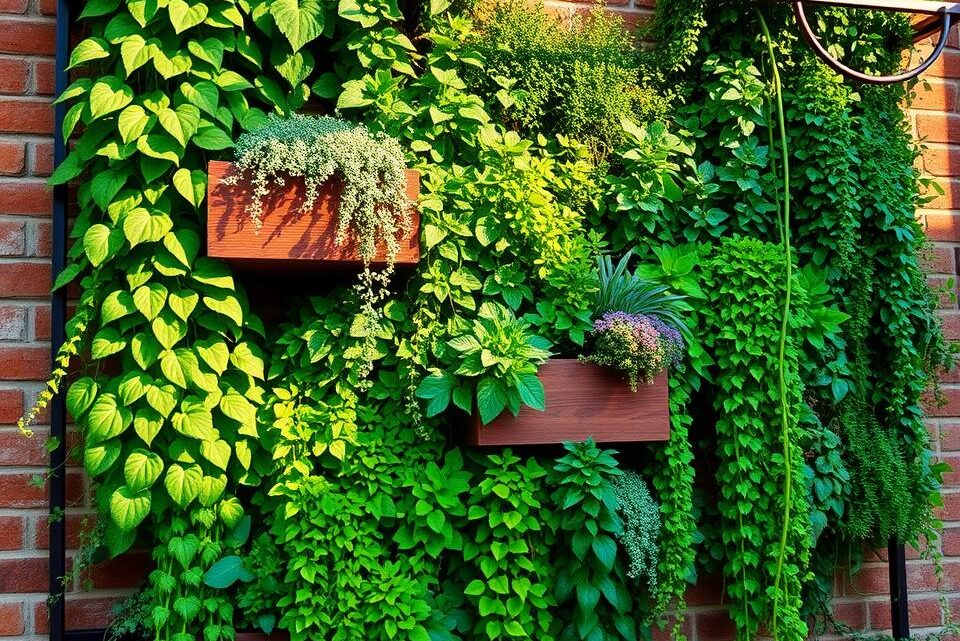
City living often means limited outdoor space. Balconies become tiny terraces and patios shrink to mere footprints. Traditional gardening can feel like an impossible dream. But there is a brilliant solution: vertical gardening.
This innovative approach turns bare walls into vibrant, living tapestries. It uses upward growth patterns to create stunning displays of greenery. Even the smallest urban space can host a lush, cascading oasis.
This guide focuses on selecting the ideal specimens that thrive in these unique conditions. It is not just about survival, but about creating a visually spectacular garden feature.
Whether you have a compact courtyard or a sunny balcony, this method offers a practical and beautiful alternative. It redefines what it means to cultivate plants in the modern world.
Readers will discover expert advice on choosing the right greenery. The article will cover essential care routines and clever design ideas to maximise any vertical surface.
Inhaltsverzeichnis
Key Takeaways
- Vertical gardening is an innovative solution for maximising greenery in space-constrained urban environments.
- This method utilises upward growth patterns to transform walls and fences into lush, living displays.
- Successful cultivation relies on selecting species specifically suited to vertical configurations.
- Even the smallest balconies or patios can accommodate a thriving vertical garden.
- The approach offers a practical and aesthetically pleasing alternative to traditional gardening.
- Expert guidance on plant selection, care, and design is essential for creating a stunning display.
Embracing the Vertical Gardening Trend
Urban environments across the UK are witnessing a green revolution that defies spatial limitations. This innovative approach transforms underutilised vertical surfaces into thriving ecosystems.
Benefits and Space Optimisation
The primary advantage of this cultivation method lies in its exceptional space efficiency. By utilising walls and fences, gardeners maximise their growing area without expanding their physical footprint.
These living installations serve as natural air purifiers. They filter pollutants and capture dust particles, significantly improving local air quality. This environmental benefit makes vertical gardening particularly valuable in dense urban settings.
Biodiversity flourishes as these green walls provide habitats for beneficial insects and pollinators. The improved air circulation between properly spaced specimens reduces disease risks.
Aesthetic Enhancements in Urban Spaces
Beyond functional benefits, vertical installations add remarkable visual appeal. They transform barren surfaces into vibrant, living artworks that enhance urban beauty.
This approach represents a sustainable solution for contemporary garden enthusiasts. It combines practical benefits vertical systems offer with undeniable aesthetic value.
Key Factors to Consider in Vertical Garden Design
Before installing any greenery, thoughtful planning of essential factors is crucial. A successful vertical garden depends on understanding environmental conditions and spatial requirements.
Assessing Sunlight and Watering Needs
The available light determines which specimens will thrive. Different species require varying amounts of sunshine. Some need full sun exposure, while others prefer shaded conditions.
Water management presents unique challenges in vertical systems. Proper drainage and moisture retention must be considered. The soil composition affects how water moves through the installation.
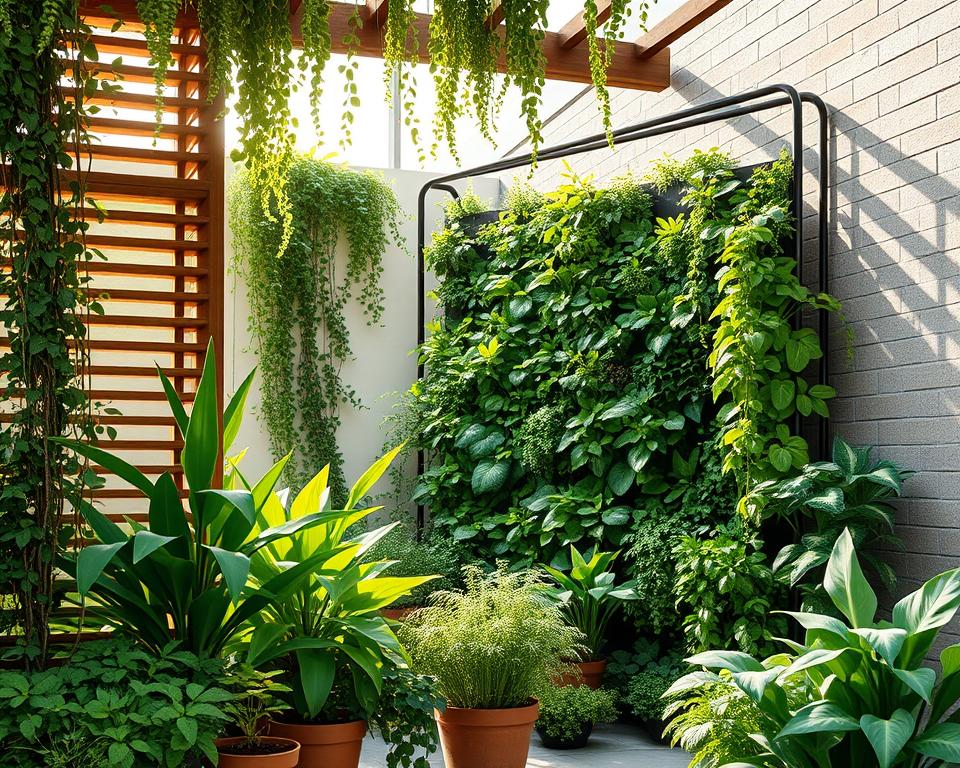
Gardeners should evaluate their watering capabilities. Some systems require frequent attention, while others feature automated solutions. Choosing appropriate plants for the available conditions prevents future issues.
Maximising Available Space
Vertical gardening makes efficient use of limited areas. Careful measurement of the intended surface ensures proper capacity. Overcrowding can lead to competition for resources.
It’s important to keep growth patterns in mind. Some varieties spread aggressively, while others maintain compact forms. Strategic placement creates an attractive, balanced display.
These considerations form the foundation of successful vertical gardening. Proper planning at this stage leads to a thriving, sustainable installation.
Plant Picks for Your Vertical Garden
Choosing the right specimens is crucial for creating sustainable vertical installations. The selection process considers environmental factors and aesthetic goals.
Indoor Versus Outdoor Selections
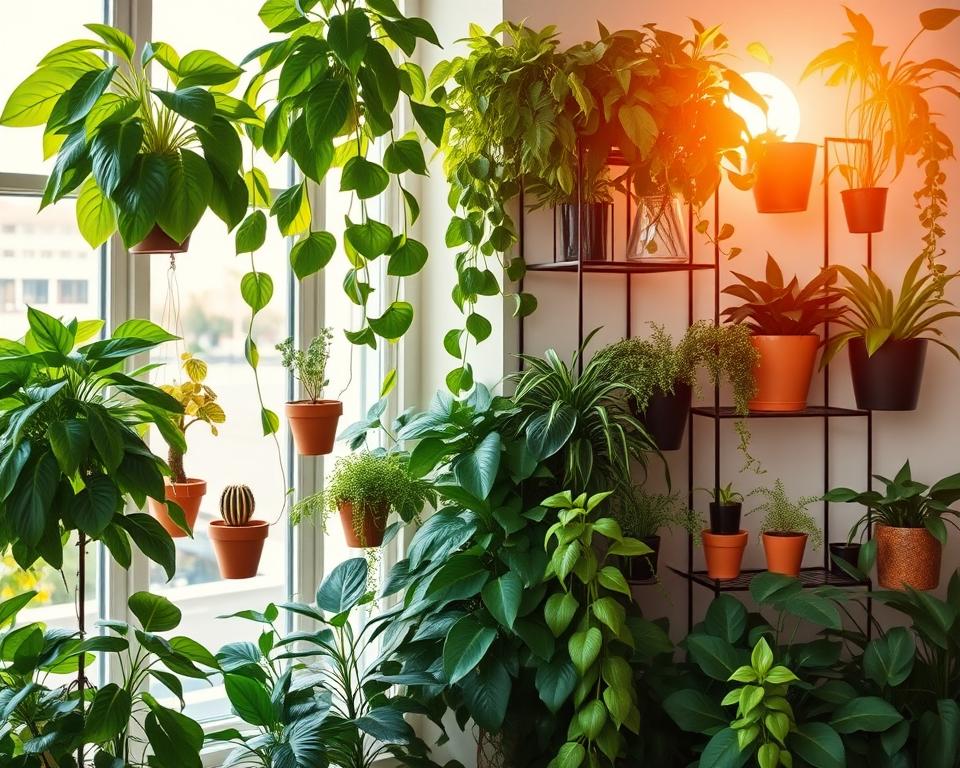
Indoor arrangements thrive with species that tolerate controlled environments. These specimens often prefer consistent temperatures and indirect light.
Outdoor selections must withstand weather variations. They typically require more sunlight and robust growth habits.
| Feature | Indoor Plants | Outdoor Plants |
|---|---|---|
| Light Requirements | Low to moderate | Full sun to partial shade |
| Temperature Tolerance | Consistent indoor climate | Weather fluctuations |
| Watering Frequency | Moderate, controlled | Varies with weather |
| Container Preference | Pots and mounted systems | Ground or large containers |
The right plant in the right place creates a thriving vertical ecosystem.
Unique Varieties for Every Garden
Diverse options suit different spaces and preferences. Trailing varieties create beautiful cascading effects.
Upright specimens provide structural interest. They work well in various pot configurations without needing ground planting.
These unique varieties offer versatility for different gardening applications. They transform any vertical surface into a living masterpiece.
Highlighting Top Trailing Plants and Vines
The selection of vining varieties can dramatically transform any vertical surface into a living tapestry. These specimens with cascading growth habits create stunning visual effects as they mature.
Low-Maintenance Choices
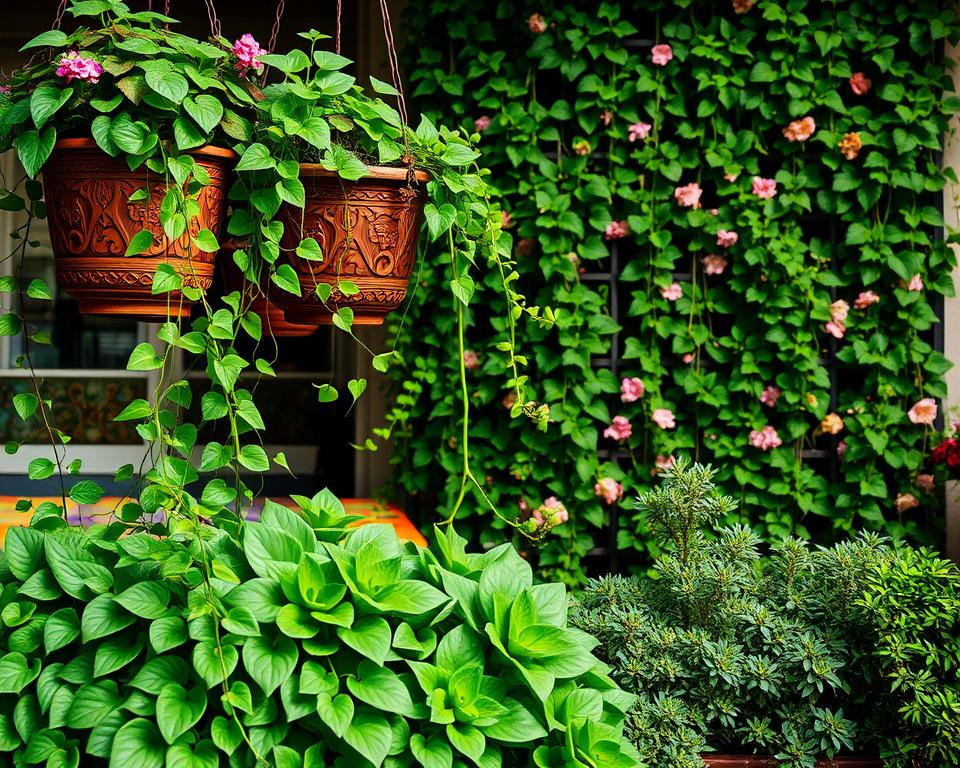
Pothos stands out with its heart-shaped leaves and vigorous growth habit. This adaptable species thrives in various light conditions and purifies indoor air.
English Ivy develops dense foliage that effectively covers walls and trellises. Its trailing habit provides natural insulation and privacy screening.
Spider plants feature arching leaves with distinctive white stripes. They produce plantlets that dangle elegantly, making excellent choices for hanging displays.
Wandering Jew showcases striking purple and green foliage. Its vining stems cascade beautifully, requiring minimal maintenance.
Expert Care Tips
Proper support is essential for vining plants to grow successfully. Ensure adequate structural backing for their climbing growth habit.
Monitor soil moisture levels carefully. Most trailing varieties prefer well-draining soil that dries slightly between waterings.
Regular pruning maintains desired shape and encourages bushier growth. These simple tips help specimens thrive in vertical arrangements.
Ferns add textural contrast with their delicate fronds. They prefer indirect light and benefit from regular feeding during active growth periods.
Diverse Options: Herbs, Ferns and Flowering Vines
Beyond structural vines, a diverse range of species offers both culinary and decorative opportunities. These selections transform vertical spaces into multi-functional gardens that serve practical and aesthetic purposes.
Herb Selections for Vertical Spaces
Herbs like basil, mint, and thyme thrive in vertical arrangements. They adapt well to hanging baskets and wall-mounted containers.
This approach brings fresh ingredients within easy reach. It adds a practical touch to urban gardening while releasing pleasant fragrances.
Adding Colour With Flowering Varieties
Flowering vines introduce vibrant colour and visual interest to vertical installations. They can climb several feet high, creating dramatic displays.

Peas represent excellent climbing choices for edible gardens. Their delicate tendrils grasp supports effortlessly. Gardeners should select climbing varieties rather than bush types that stay close to the ground.
Combining herbs, ferns, and flowering plants creates layered gardens with textural variety. This diversity maximises the utility of vertical growing spaces beyond mere aesthetics.
Choosing the Right Trellis and Support Structures
The foundation of any successful vertical arrangement lies in selecting the proper framework that will support growth over time. These structures form the essential backbone that allows specimens to thrive in elevated conditions.
Wooden and Metal Trellis Comparisons
Wooden frameworks offer a natural, rustic aesthetic that blends beautifully with outdoor spaces. They provide excellent customisation options for specific areas and design preferences. Many gardeners combine wooden structural elements with metal trellising for enhanced durability.
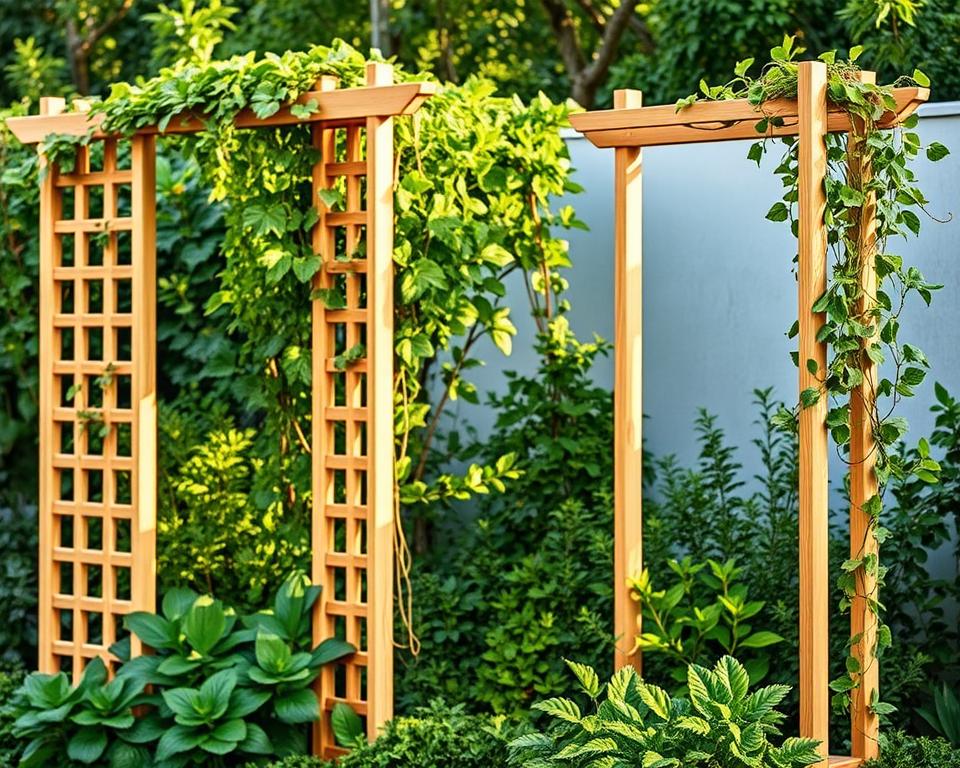
Metal alternatives boast exceptional strength and weather resistance. They withstand harsh conditions while supporting heavier crops without bending. The variety of designs ranges from ornate patterns to minimalist styles.
| Feature | Wooden Trellis | Metal Trellis |
|---|---|---|
| Aesthetic Appeal | Natural, rustic look | Modern, durable appearance |
| Durability | Moderate, requires treatment | High, weather-resistant |
| Weight Capacity | Good for light to medium specimens | Excellent for heavy crops |
| Customisation | High, easy to modify | Limited, prefabricated options |
Wall-mounted systems maximise limited ground space effectively. They enable growth directly against vertical surfaces. DIY options using reclaimed materials offer budget-friendly alternatives.
Proper anchoring ensures the structure remains stable under weight. Inadequate support can lead to collapse and damage. The right framework combines reliability with visual appeal.
Matching the trellis to specimen requirements considers height, weight and climbing mechanisms. This careful selection creates sustainable displays that flourish season after season.
Seasonal Considerations and Growth Habits
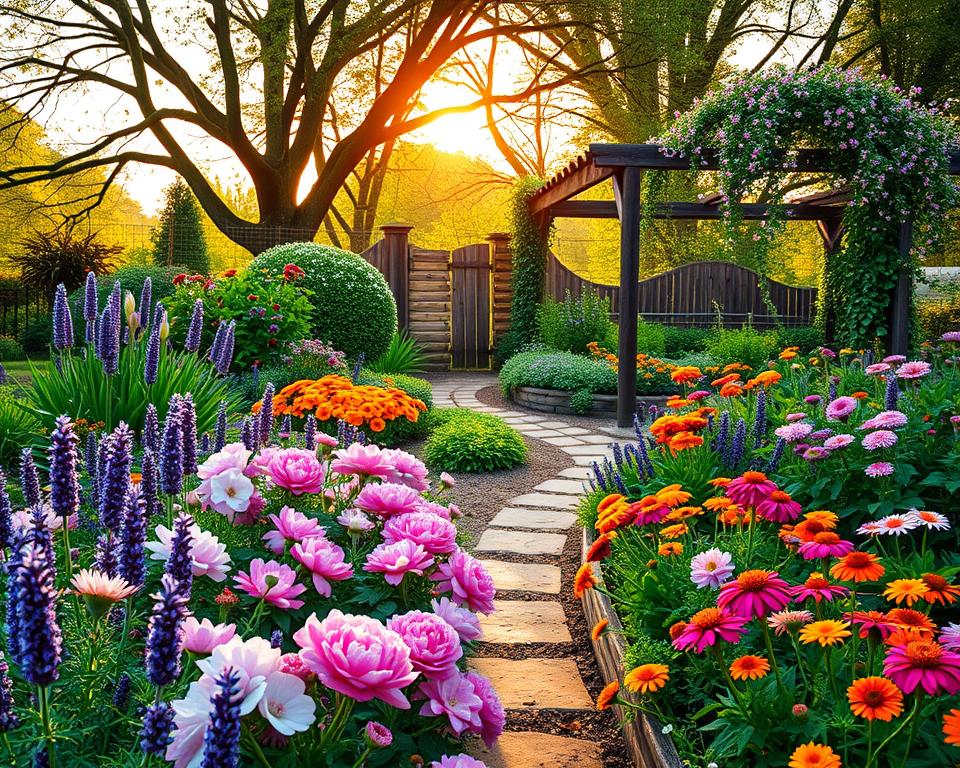
Successful vertical cultivation requires understanding how seasonal changes affect plant development. The annual cycle influences watering needs, nutrient requirements, and overall vitality. Gardeners must adjust their approach as light levels and temperatures shift.
Adapting Care Through the Seasons
Spring demands preparation as plants grown vertically awaken from dormancy. This is the ideal time for soil amendment and establishing fertilisation schedules. Proper timing ensures robust establishment before summer’s peak growth.
Summer brings increased watering demands and intense light exposure. Monitoring soil moisture becomes critical during hot spells. Some specimens may need protection from excessive heat.
Autumn requires deadheading spent flowers and harvesting mature crops. Gardeners should prepare perennial specimens for colder months. Tender varieties need protection from approaching frost.
Winter care focuses on structural protection and planning for the next season. Evergreen varieties still require attention despite slower growth. This quiet period offers opportunity for garden assessment.
Pruning and Maintenance Practices
Regular pruning controls shape and encourages bushier habits in vertical arrangements. Proper trimming techniques promote more abundant flowering. These maintenance tips help maintain the garden’s visual appeal.
Gardeners should recognise signs of stress in each plant. Early intervention prevents problems from escalating. Seasonal adaptation ensures plants grown vertically remain healthy year-round.
This cyclical approach to gardening creates sustainable vertical displays. Understanding seasonal rhythms transforms maintenance from chore to rewarding practice. The garden evolves beautifully through each season.
Innovative Ideas to Enhance Your Garden’s Aesthetic Appeal
Creative design transforms functional vertical gardens into captivating visual displays. These living installations become artistic features that elevate outdoor spaces.
Creative Layouts and Design Tips
Tall, slender specimens serve as exclamation points in the landscape. They break the monotony of eye-level viewing. This technique adds dramatic height without consuming valuable ground space.
Designers employ three primary approaches for maximum impact. Single specimens create focal points that draw attention. Paired arrangements signal transitions between garden areas. Groupings define boundaries within larger spaces.
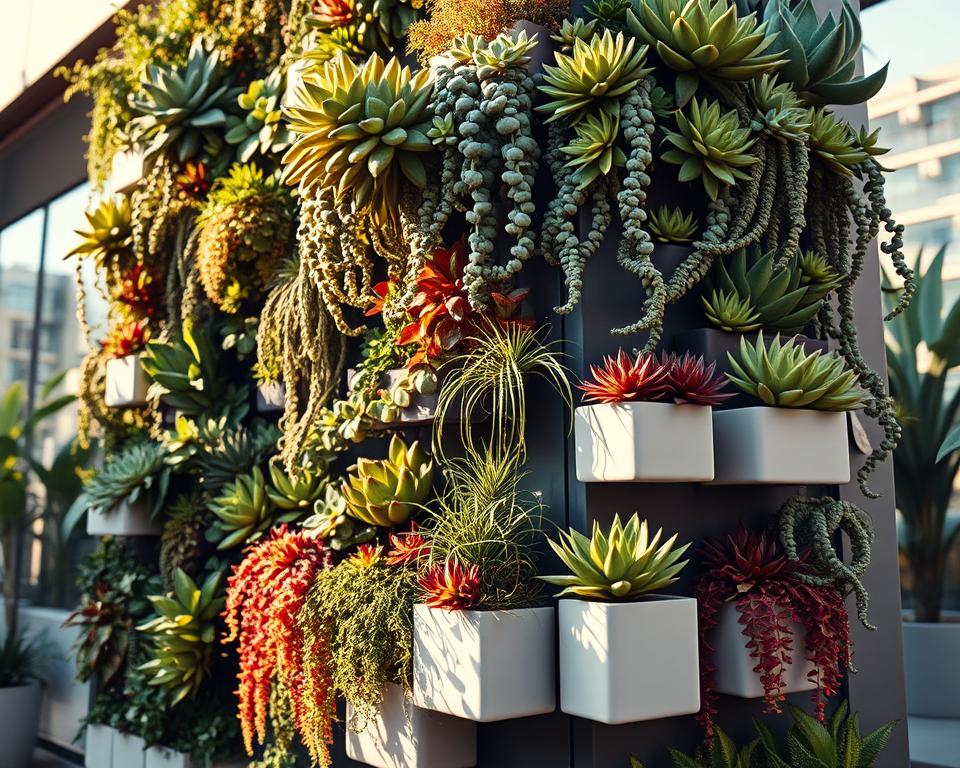
Modular systems and stacked pots enable creative three-dimensional designs. They allow for dynamic compositions combining various foliage textures and colours.
| Design Approach | Visual Impact | Space Requirement |
|---|---|---|
| Single Specimen | Creates focal point | Minimal footprint |
| Paired Arrangement | Signals transition | Moderate space |
| Grouped Boundary | Defines areas | Larger installation |
Strategic lighting extends enjoyment into evening hours. It highlights textural details and creates dramatic shadows. This final touch transforms vertical gardens into living sculptures.
Conclusion
Modern gardening enthusiasts now possess the knowledge to transform any vertical surface into a thriving, living ecosystem. Vertical gardening represents an innovative approach that addresses spatial limitations while delivering substantial aesthetic and environmental benefits.
Successful installations depend on careful consideration of light availability, appropriate specimen selection, proper support structures, and consistent seasonal maintenance. This method allows greenery to grow vertically rather than outward, creating impressive displays that reach several feet in height without consuming valuable ground space.
The diverse range of suitable specimens includes trailing vines with cascading leaves and lush foliage, alongside upright varieties providing architectural interest. These living walls serve as natural air purifiers, bringing vital greenery into urban environments.
With proper planning and attentive care adapted to seasonal requirements, anyone can create flourishing vertical displays that enhance their living spaces. This approach opens new possibilities for integrating nature into daily life, transforming limited areas into verdant sanctuaries offering beauty, fresh air, and personal satisfaction.
FAQ
What are the primary benefits of vertical gardening?
Vertical gardening offers significant space optimisation, allowing for a greater number of plants in a smaller footprint. It also improves air circulation around foliage and can transform a plain wall into a stunning living feature, enhancing the aesthetic appeal of any urban space.
How do I select the right plants for a vertical system?
Choosing suitable varieties depends on the garden’s location. Assess sunlight exposure and watering needs first. For structures like trellises, opt for species with a natural climbing or trailing growth habit, such as certain herbs, ferns, and flowering vines, ensuring they are compatible with your local climate and season.
Can herbs be grown successfully in a vertical garden?
Absolutely. Many herbs make excellent choices for vertical spaces. Varieties like thyme, mint, and trailing rosemary thrive in pots or pockets on a wall. Their compact growth and frequent use in cooking make them a practical and beautiful addition to any vertical gardening project.
What type of support structure is best for climbing plants?
The ideal support depends on the plant’s weight and growth rate. Wooden trellises offer a natural look and good support for lighter vines, while metal structures provide greater durability for heavier, more vigorous growers. Always ensure the trellis is securely fixed to bear the load.
How does maintenance change with the seasons for a vertical garden?
Seasonal care is crucial. During warmer months, watering needs increase. In autumn, pruning may be necessary to control growth and prepare plants for winter. It’s important to adapt your care routine, considering factors like light levels and temperature shifts throughout the year.
What are some creative ways to enhance a vertical garden’s design?
To boost visual interest, consider mixing plants with different leaf textures and colours. Using hanging baskets at varying heights or incorporating a modular living wall system can create depth. The key is to plan the layout with the overall aesthetic and the plants’ growth habits in mind.