Having a Shed on Decking: What You Need to Know
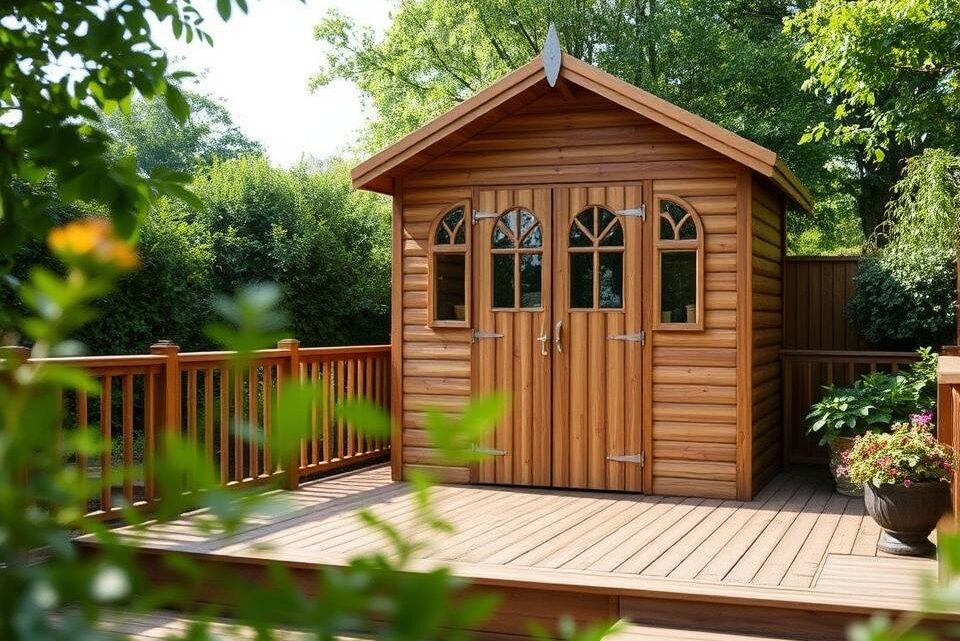
Many homeowners consider placing a garden storage structure on their existing decking. This approach can maximise usable space and avoid extensive groundwork. However, this installation requires careful planning and preparation.
The success depends on the structural capacity of the existing decking. Most standard decking areas are built for lighter loads like furniture. They may not support the weight of a garden shed without reinforcement.
Proper installation involves assessing the decking’s strength and the shed’s size. Adequate ventilation underneath prevents moisture damage. Secure anchoring methods are essential for withstanding UK weather conditions.
When done correctly, this approach offers benefits like a cohesive garden aesthetic. It creates an elevated, well-drained foundation. This protects the structure from ground moisture and potential rot.
Inhaltsverzeichnis
Key Takeaways
- Assess the structural integrity of existing decking before installation
- Consider the size and weight of the intended garden storage unit
- Ensure proper ventilation beneath the structure to prevent moisture
- Use secure anchoring methods suitable for UK weather conditions
- Plan for adequate support and reinforcement of the decking base
- Consider long-term maintenance requirements for the combined structure
Shed on Decking: What You Need to Know
Installing an outdoor storage structure on an elevated timber platform requires careful evaluation. This approach can be practical but demands thorough preparation.
Understanding the Project Requirements
Before beginning, homeowners must assess several critical factors. The current condition and load-bearing capacity of the timber platform are vital. The dimensions and specifications of the intended storage unit also matter greatly.
The surface must be completely level and structurally sound. Intact joists and cross-beams are essential. Pressure-treated timber or equivalent weather-resistant materials are necessary for longevity.
The intended use significantly impacts weight requirements. A small structure for tool storage differs from one housing heavy equipment. Proper planning prevents future issues.
Benefits and Limitations of Using Decking as a Shed Base
This method offers significant advantages. It eliminates labour-intensive groundwork like excavating and concrete pouring. Considerable time and cost savings result from this approach.
Natural elevation promotes superior drainage compared to ground-level installations. Rainwater drains away efficiently, preventing moisture accumulation. This elevation also keeps the structure away from mud and pests.
However, limitations exist. Most existing timber platforms weren’t designed for concentrated heavy loads. Without proper reinforcement, boards may shift and joists may sag over time.
Inadequate ventilation creates moisture problems. Securing methods are more complex than on concrete foundations. Size limitations typically apply to prevent structural damage.
Assessing Decking Structure and Weight Capacity
The foundation for a successful installation lies in a comprehensive structural assessment. Homeowners must verify the timber platform is strong enough to handle the permanent weight of a garden building.
Inspection and Reinforcement of Existing Decking
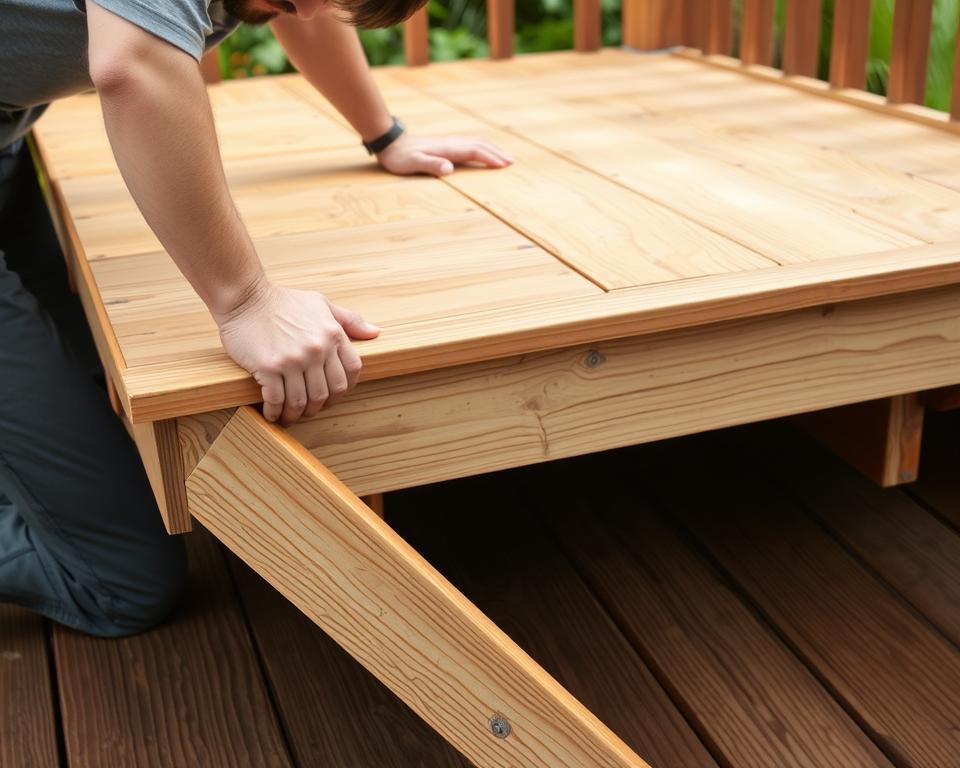
A detailed inspection is essential. Walk across the entire surface, paying attention to any movement or soft spots. Gently bouncing can reveal weaknesses not visible to the eye.
Look closely for these key issues:
- Soft, spongy areas indicating rot or decay.
- Water pooling, which suggests drainage problems.
- Gaps between boards or loose, corroded screws.
Using a spirit level is critical. The surface must be perfectly level in all directions to ensure the building sits evenly. An uneven foundation leads to door misalignment and structural stress.
Evaluating the Load-Bearing Capacity for Garden Sheds
Standard decking is designed for distributed loads, not the concentrated weight of a storage structure. Its weight capacity must be evaluated against the empty and loaded weight of the intended building.
Larger buildings or those storing heavy equipment often exceed the deck’s capacity. Creaking sounds underfoot signal insufficient rigidity, meaning reinforcement is needed immediately. This may involve adding extra support beams or reducing joist spacing to improve stability and prevent damage.
Choosing the Right Shed, Base Materials and Planning Options
Selecting appropriate materials for both the storage building and its foundation is crucial when working with an existing timber platform. The right choices ensure structural stability and long-term performance.
Selection of Shed Types: Wooden vs Plastic
Many people assume plastic storage buildings are lighter, but the opposite is often true. Wooden sheds typically weigh less than their plastic counterparts. This makes them preferable for decking installations.
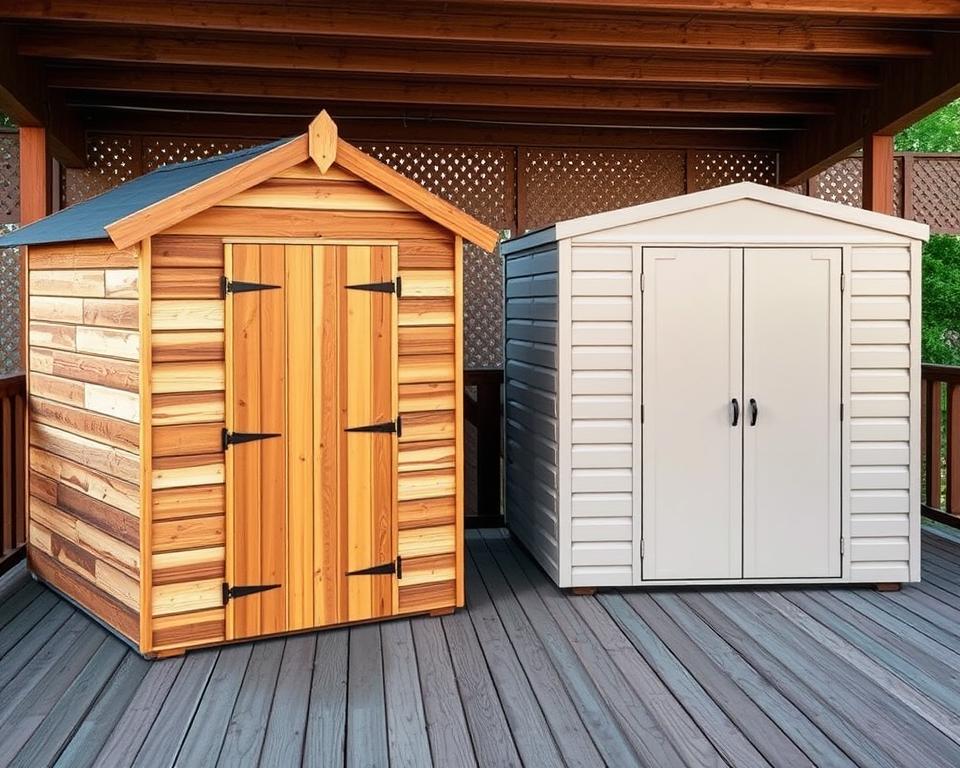
Wooden structures offer greater flexibility for securing methods. They work well with timber-to-timber fixing techniques. This creates secure connections without compromising the underlying structure.
Size limitations are important to consider. Structures larger than 8×6 feet may exceed weight capacities. Roof design also matters—pitched roofs are lighter than flat alternatives.
Comparing Base Material Options
Pressure-treated timber bearers provide an excellent shed base solution. They can be screwed directly into decking joists. This creates effective ventilation gaps and distributes weight evenly.
Concrete blocks offer maximum stability for heavier loads. However, they add significant weight to the overall system. Careful positioning is essential to align with structural supports.
Plastic grid systems are the lightest foundation option. These interlocking panels offer superior drainage. They can be filled with gravel for enhanced stability while maintaining adequate ventilation.
Step-by-Step Guide to Installing a Shed on Decking
A systematic approach is vital for a successful installation of a garden storage unit on an elevated timber platform. This guide breaks down the process into manageable steps.
Preparing the Decking Area and Marking Out the Shed Position
Begin with a thorough inspection of the pre-installed timber surface. Walk across it, checking for soft spots, rot, or loose fixings. Any issues must be repaired before proceeding.
Use a spirit level to confirm the area is perfectly flat. An uneven base causes structural stress. If necessary, use paving stones or a mix of concrete and gravel to achieve a level surface.
Next, mark the exact position for the garden shed decking project. Use chalk lines or string to outline the footprint. Crucially, allow at least 30-50cm of space around all sides. This space is essential for future maintenance and ensures doors can open fully.
Raising the Shed and Ensuring Proper Ventilation
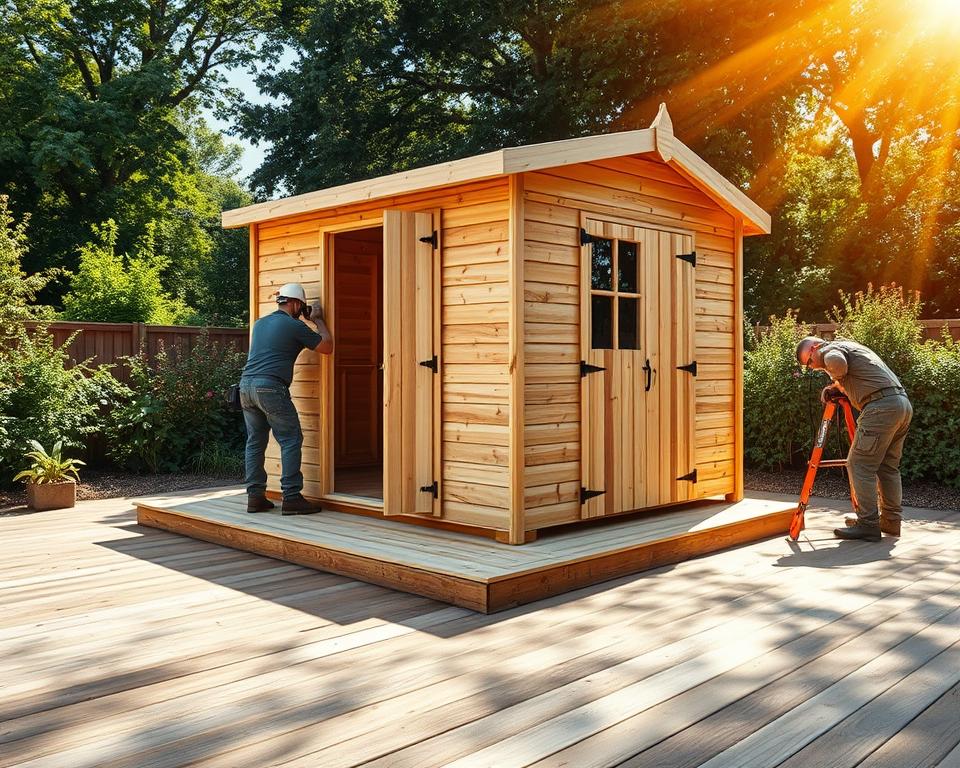
Even on an elevated platform, the structure must be raised slightly above the decking. This creates a vital air gap to prevent moisture buildup and rot over time. It also aids drainage.
There are three primary methods for achieving this elevation. Each distributes the weight effectively and promotes air circulation.
| Method | Key Features | Best Suited For |
|---|---|---|
| Pressure-Treated Timber Bearers | Screwed directly into joists for linear support. | Small to medium-sized wooden structures. |
| Concrete Blocks/Slabs | Offers maximum stability for heavier loads. | Larger buildings or those storing heavy equipment. |
| Plastic Grid Systems | Lightweight, filled with gravel for excellent drainage. | Areas with persistent water pooling. |
Choosing the right method is a key part of installing shed structures correctly. For poor drainage, consider adding a gravel tray beneath the raised base. This simple step channels water away, protecting the timber from ground moisture.
Maintenance, Safety and Regulatory Considerations
After the garden building is in position, the focus shifts to ensuring its long-term security and compliance. This final phase addresses critical factors that protect the investment and ensure safety.

Proper attention to these details prevents future issues and maintains the structure’s integrity.
Securing the Shed to the Decking: Fixings and Anchoring
Anchoring the structure is non-negotiable for stability. High winds and severe weather can compromise even a heavy building.
Anchor bolts are the most effective method. They connect the frame directly to the timber platform. For the best hold, bolts should pass through the base and screw into the underlying joists.
Galvanised or stainless steel fixings resist rust. Always pre-drill holes near board edges to prevent splitting. Apply sealant around bolts to stop water penetration.
Addressing Moisture, Rot and UK Local Regulations
Despite being elevated, moisture remains a threat. Inadequate ventilation traps water vapour, leading to rot over time.
Ensure a continuous air gap exists beneath the building. This promotes drainage and evaporation. Using pressure-treated timber for all contact points minimises damage.
Regarding planning, most garden structures are permitted development. They must meet height limits and boundary distances. Check with your local authority, especially in conservation areas.
Long-Term Maintenance and Safety Inspections
Regular checks are essential. Inspect the building and its supporting platform seasonally.
- Look for signs of movement, sagging, or wear.
- Clean surfaces to prevent debris buildup.
- Verify that all fixings remain tight and secure.
- Check for early signs of rot or water damage.
This proactive approach ensures the garden building remains a safe and valuable asset for years.
Conclusion
Achieving a durable and functional storage space above ground level requires addressing several critical considerations. This approach proves entirely feasible when homeowners follow systematic guidelines.
Success hinges on thorough assessment of the existing structure and careful planning. Multiple factors must be evaluated, including weight capacity and weather conditions. Proper preparation ensures long-term stability.
The benefits of using an elevated foundation are significant. Superior drainage and easy access enhance garden utility. These advantages materialise only with correct installation techniques.
Regular maintenance protects the investment over time. Homeowners who methodically address each consideration create a valuable outdoor asset. This approach maximises space while preserving the integrity of the supporting structure.
FAQ
Can any type of decking support a garden shed?
Not all decking structures are strong enough. The decking must be robust, level, and designed to handle the significant weight of a full storage building. An inspection of the foundation and joists is essential before planning to install a shed.
What are the main risks of placing a shed directly on decking?
The primary concerns are moisture damage and instability. Without proper ventilation, trapped water can lead to rot in both the decking timber and a wooden shed’s floor. The structure may also become unstable if the decking shifts or lacks adequate weight capacity.
How can I reinforce my decking to support a shed?
Reinforcement often involves adding extra joists or concrete footings beneath the decking frame to increase its load-bearing capacity. Ensuring all fixings are secure and the foundation is solid is a critical step for safety and longevity.
Are plastic sheds a better option for decking than wooden ones?
Plastic sheds are generally lighter and more resistant to rot, making them a suitable option for decking situations where weight and moisture are concerns. However, even a lighter structure requires a stable, strong base to prevent movement.
What is the best way to secure a shed to decking?
Using heavy-duty fixings like coach screws or specialised anchoring kits to attach the shed’s base directly to the decking joists is recommended. This prevents the building from shifting in high winds and adds crucial stability.
Do I need to consider local regulations for a shed on decking?
Yes. In the UK, planning permission may be required if the total structure exceeds certain height limits or if the property has permitted development rights removed. It is always advisable to check with the local council before proceeding.