Description
Playhouses special offers bring timber cabins, compact cottages and charming garden hideaways into reach, with designs for climbing, role play and shared outdoor fun across a range of sizes and styles.
Little Worlds with a Door
A playhouse is more than a box with windows. It is a tiny stage for stories, games and busy afternoons in the garden. In this category, the focus is on discount playhouses, children’s garden playhouses and seasonal playhouse deals that cover different shapes, layouts and finishes without losing the feel of a proper little retreat.
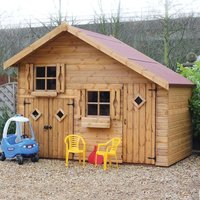
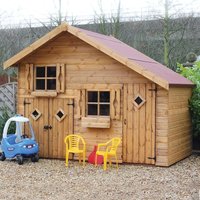
There are neat square huts, peaked-roof cottages, timber cabins with shuttered windows, and models that sit slightly raised from the ground. Some are made for a single child and a chair, others stretch wider and invite a friend or two inside. That difference in footprint matters: a narrow house slips into a smaller lawn, while a wider design gives room for a shop counter, a pretend kitchen or a reading corner.
Short sentences matter here. So does space. A bright doorway changes the mood at once.
Shapes That Tell a Different Story
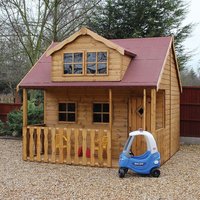
One of the most useful things about playhouses is how much the shape changes the play. A simple gabled hut often feels like a classic “home” set-up, where children copy real life with tea parties, post letters and guard the front step. A tower-style house, by contrast, sits higher and gives the feeling of a lookout post, den or pirate berth. Flat-roofed designs lean more modern and can feel more like a tiny studio or garden cabin.
Some playhouses have open fronts or half walls, which keeps them airy and easy to use for social games. Others have full walls, a closing door and window shutters, so the inside feels separate from the garden around it. For children who like make-believe and quiet corners, that enclosed feel can shape the game in a different way from an open-sided frame.
Even the roof line changes the mood. A steep roof gives that storybook cottage look. A level roof brings a cleaner, boxier outline. The choice is not only visual; it also changes headroom and how the interior is arranged.
From Cottage to Cabin
The under-types in this section each bring their own character:
- Classic cottage playhouses with windows, door details and a homely look
- Cabin-style playhouses with sturdier lines and a more woodland feel
- Raised playhouses that sit on a platform, often with a small step or ladder
- Compact playhouses for tighter spaces and smaller patios or lawns
- Multi-opening designs that let children move in and out from different sides
The cottage style usually suits children who enjoy pretend home play. The cabin style tends to feel more robust and can work well beside larger garden structures. Raised versions add a hint of adventure and help create a clear “up there” space without turning it into a full climbing frame. Compact houses are easier to place, and that can be the deciding factor when the garden is not wide.
Why Special Offers Catch the Eye
Special offers do not only mean a lower price tag. They also make certain layouts easier to choose when the budget is fixed and the wish list is not. A reduced line might include a timber house with a front opening, a painted finish, or a model with decorative windows already built in. That makes the category useful for families comparing sizes, materials and play style rather than just looking at one single form.
There is also a practical side. A special offer can open the door to a slightly larger design than expected, or to a playhouse with more detail than a plain basic hut. In other cases, it means a simpler shape that leaves more of the garden free for other things. Both outcomes can be useful, depending on the space available and the way the playhouse will be used.
Offers are often searched by the shape, too. Some buyers want a “little house” look. Others search for a “garden cabin” or “kids’ den”. This category gathers those styles under one roof so the differences are easy to scan.
What Sets Each Style Apart
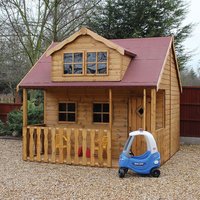
Small details change the whole feel. A tiny verandah gives a house a front porch mood, useful for putting out toys, a stool or a pretend doorstep market. Shuttered windows create a more domestic appearance and can make the inside feel cosy. Larger openings make supervision easier and give the house a more social, breezy feel.
Some playhouses lean decorative, with cut-out shapes and painted trim. Others are pared back and shape-led, relying on wood grain, angles and plain panels. Decorative versions often suit gardens where the playhouse is meant to stand out as a feature. Simpler forms can sit more quietly among plants and fencing.
It is also worth noticing the entry style. A low doorway gives a snug, den-like impression. A taller opening feels less enclosed and may be easier for children who want quick movement in and out. Side windows matter as well, especially where the house is used by more than one child at a time.
Good Things Hidden in Plain Sight
Playhouses bring a set of benefits that show up in the way children use them, not in a polished sales line. They give a fixed place for role play, so stories have a base and props have somewhere to live for the day. A shop game, for example, becomes easier when there is a counter-like sill or a front opening that can act as a serving hatch. A cottage with shutters can become a post office, a bakery or a secret club in one afternoon and a castle gate the next.
They also help with shared play. Two children inside a small house must make room, take turns and work out the game together. A larger house can support more elaborate pretend worlds, with one child keeping watch and another running the “kitchen” or “ticket desk”.
For the garden itself, a playhouse creates a clear focal point. It gives structure to a lawn or corner that might otherwise feel empty. That is especially noticeable in narrower outdoor spaces where a single feature can define the whole layout.
Picking by Footprint, Not by Guesswork
The main difference between playhouse types is often size. A compact design works best when there is only a modest patch to use, or when the garden already carries other features. A wider model needs more breathing room, but it may also offer better flow inside, especially if children like to place chairs, baskets or toy food around them.
Height matters too. A low playhouse feels contained and can suit younger children who like a sheltered space. A taller model gives a more grown-up little house feel and may remain useful for longer because it has more standing room. Raised houses add another level of distinction, making the play area feel more like a destination than a ground-level nook.
Look at the outline from a distance. A steep roof, overhang or side extension will change how much visual space the playhouse takes up, even when the base area seems modest. In a small garden, this can matter as much as width.
Details That Shape the Game
Some of the most useful features are the modest ones. A broad window ledge can become a market stall. A front opening can turn into a café hatch. A side window can act as a stage frame. A little bench attached to the outside gives children a spot for shoes, toys or a pretend picnic without needing extra furniture.
Door style also affects the experience. A solid door gives a proper house-like feel. An open doorway keeps the house accessible and lets the game spill out into the garden. Double openings can help if more than one child is moving in and out, or if the playhouse is used as part of a bigger set-up with sand, garden toys or a seating area nearby.
Some designs have a more formal front, where windows and door are aligned neatly. Others are asymmetrical and feel more playful or rustic. Neither is better in general; the difference is in the atmosphere they create.
Helpful Tips for Choosing the Right One
Start with the play style, not just the price. If children like shops, cafés or front-door games, a house with a serving-style opening may get more use than a closed cabin. If they enjoy hide-and-seek, a more enclosed shape with a real door and a couple of windows will suit that rhythm better.
Then think about the garden layout. A square or rectangular playhouse is easier to position beside a fence, hedge or path. A raised model can work well where the ground is uneven, while a compact hut may fit into a corner that would otherwise stay unused. Leave space in front of the door so the area does not feel cramped when several children gather.
Finally, compare the style of the house to the rest of the garden. A painted cottage can add a cheerful focal point. A plain timber cabin blends more quietly with planting and decking. That contrast helps the playhouse feel like part of the space rather than an object simply placed on it.
Quick Glance Reasons
- Different shapes support different kinds of pretend play
- Compact and larger options suit different garden sizes
- Raised designs add a stronger sense of adventure
- Shutters, windows and front openings change the way games unfold
- Special offers make it easier to compare styles side by side
A Small House, a Large Set of Stories
The appeal of playhouses lies in their variety. One may look like a storybook cottage, another like a woodland den, another like a tiny cabin with a neat front step. Each form changes how children enter, sit, share and imagine. That is why this category works so well when the aim is to browse by shape, size and feature rather than by a single look.
For families comparing playhouse specials, the useful question is often simple: what kind of story should this space hold? A shop counter, a secret meeting place, a tiny home, a lookout, a garden café. The right shape makes that easier to set up.
Small roof. Big plot.
One door. Many games.
Wood, windows and make-believe.
Pick the outline that fits the garden and the sort of play that keeps returning. That is where the best use usually shows itself, without any fuss and with plenty of room for a child’s own rules.