Description
Solar lighting special offers for garden paths, patios and borders bring clean, cable-free glow to outdoor spaces, with lanterns, spikes, wall lamps and string lights in one handy range.
Light that arrives with the sun
Solar lighting works with a small rhythm that feels almost old-fashioned: daylight in, evening glow out. In a garden shop category built around special offers, that means shoppers can compare several forms side by side without hunting through separate ranges. Solar garden lights are powered by a panel that gathers daylight and stores it in a rechargeable battery, then releases it after dusk through LEDs. No plug sockets. No trenching. No visible cables across beds or paving.
For outdoor buying, that matters because the category is not only about price. It is also about shape, mounting style, brightness and the type of light each item throws. A slim stake light along a border behaves very differently from a wall-mounted lantern near a gate. String lights make a soft line through a pergola, while a motion-sensing lamp gives a firmer burst at the edge of a drive. Same sun. Different jobs.
Small glow. Big mood.
Shapes that change the whole scene
Special offers in solar lighting usually cover a mix of forms, and each one changes how a garden reads after dark. The shape is not just decoration; it decides where the beam goes, how the fixture sits in the space and whether the light is for guidance, atmosphere or a sharper point of visibility.
- Solar stake lights sit low in soil or planters and mark routes, edges and planting lines with a neat, upright profile.
- Solar wall lights fix to fences, sheds and house walls, throwing light outwards or downwards near entrances and narrow paths.
- Solar lanterns bring a more decorative silhouette, often with open frames, glass-look panels or hanging handles for tables and hooks.
- Solar string lights trace a soft thread of light through trellis, pergolas, parasols and shrubbery, creating a dotted line rather than a single pool.
- Solar spot lights aim a narrower beam at a tree, sculpture or planting feature, giving one area a stronger outline after dark.
- Solar deck lights stay low and tidy along steps, rail edges and platform corners, helping define level changes with a discreet finish.
- Solar path markers are built for direction first, often with a simple lens and a steady shine rather than showy detail.
These forms are useful to compare because a special-offer category can mix practical and decorative items in one shelf view. That makes it easier to match the lamp to the space rather than to a picture on the box. A lantern can soften a seating corner. A spot light can pull a small tree out of the dark. A stake light can stitch a border together, one point at a time.
Warm, cool, steady and shifting tones
Another difference hidden inside solar lighting is colour temperature. Some lights lean warm and amber, some sit in a crisp white range, and some give a colour-changing effect that is more playful than formal. This is where the category starts to feel less like a pile of products and more like a set of lighting moods.
Warm white solar lights tend to suit timber, brick, terracotta and lush planting because the tone sits softly beside natural surfaces. They can make patios feel quieter and more settled. Cool white solar lights give sharper contrast around steps, railings and modern materials such as slate or pale stone. Their look is cleaner, with edges that stand out more clearly at night. Colour-changing lights are different again: they are often used for seasonal display, children’s areas or casual gatherings where movement and variety matter more than a fixed tone.
Some fittings offer a single steady output, while others switch through stages. That difference is useful for buyers who want a constant line of guidance compared with those who want a little movement in the garden after dusk. It is not just about brightness. It is about the tone that sits well with the rest of the setting.
Soft on brick. Bright on stone.
Why shoppers look at special offers first
A special-offers section is not only a place for lower prices. It is a quicker way to compare mixed outdoor lighting styles without scattering the search across several categories. For solar lighting, this matters because the range often includes a blend of practical and decorative items, and the differences are easy to miss when browsing one by one.
Low-running-cost lighting is one of the main draws. Once bought, the units use daylight rather than grid electricity for everyday operation. That removes the need for cable runs and can make certain spots easier to light, especially where mains access is awkward. It also gives more freedom for seasonal changes. A lamp can be moved from a border to a fence post, or from a table edge to a porch, without calling for a socket nearby.
There is also the value of variety. In a single category you may find mesh lanterns, spike lights, hanging orbs, wall-mounted fittings, and compact deck markers. Each one solves a slightly different problem. Each one looks different in daylight, too. Some are almost invisible until night. Others add daytime shape as well as evening glow. This is useful in small gardens, where the same item needs to earn its place twice.
Brightness, beam and the job each light does
Solar lights are often grouped by appearance, but brightness and beam pattern matter just as much. A low-lumen marker light is not trying to do the same work as a spotlight. The right choice depends on whether the user wants guidance, accent, or a fuller wash of light across a feature.
Wide-angle solar lamps spread light across a broader area, which suits walls, patios and seating zones. Narrower beams suit highlights and feature planting, because the light is concentrated rather than scattered. Path markers usually sit somewhere in the middle, offering enough glow to guide movement without flattening the garden into one bright plane. String lights are different again: their charm lies in points of brightness rather than one large beam, so the whole effect feels lighter and less formal.
The output can also vary by fitting height. A light fixed higher on a fence or wall can cover more ground than the same kind of lamp placed low in a bed. This is useful for shoppers comparing offers, because a bigger fixture is not always the stronger one. The angle of the lens, the position of the panel and the shape of the body all play a part in how the finished light appears.
- Low lights suit edges, steps and borders.
- Mid-height fittings suit fences, posts and small walls.
- Higher positions suit entrances and wider zones.
Panels, batteries and what sits behind the shine
Even in a category focused on looks, the hidden parts matter. Solar lighting depends on the relationship between panel size, battery storage and LED efficiency. Special offers often bring these details into view, because shoppers can compare several designs before deciding what suits their space.
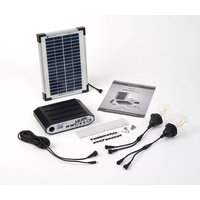
Some lamps have the solar panel built directly into the top of the fitting. Others separate the panel from the lamp head, which gives more flexibility in placement. That difference is important where the best light falls in one place, but the best display spot is somewhere else. A separate panel can sit in stronger sun while the lamp itself remains under a pergola, along a wall or in a shaded corner.
Battery capacity affects how long the light stays on after dusk. A larger battery may support a longer run time, while a smaller one can still be useful for shorter evening periods. LED efficiency matters too, because a smaller but well-designed LED unit can produce clear light with lower demand. That is one reason solar lighting varies so widely even when the products look similar at a glance.
Daylight-charged fixtures depend on placement, so a product that catches sun for most of the day will usually behave better than one tucked under branches or deep overhangs. The category is most useful when buyers compare not just style, but the way the panel faces the sky and the way the lamp sits in the landscape.
Where each type earns its place outdoors
Different solar lights suit different outdoor scenes. A special-offers page is helpful because it can show the span of use, from narrow access routes to social spaces and planting features. The job changes from one part of the garden to another, and the light should follow that logic rather than fight it.
Boundary lighting often relies on wall lamps or fence-mounted fittings, because the aim is to mark edges and improve visibility near entrances. Path marking is usually better handled by stakes or deck lights, since the line of light should sit low enough to guide the eye without crowding the route. Feature lighting works well with spot lights, especially where a tree trunk, topiary form or textured wall deserves a separate highlight.
For seating areas, string lights and lanterns bring a softer note. They do not need to flood the scene. Their strength lies in atmosphere, shape and rhythm. A pergola strung with compact bulbs reads differently from a patio lined with close-set markers. One gives a canopy effect. The other gives a border. Both are solar. Both are useful. Their difference is in the way they frame the space.
Little details that change the buying choice
When a shopper scans solar special offers, the small details often decide the final pick. Lens style can change the look from plain to patterned. Housing material can set the tone between rustic, modern and neat. Mounting method decides whether the light can be moved about or needs a fixed place. Even the presence of a switch or mode button changes how the fitting fits into daily use.
Stake-mounted designs are easy to reposition across a bed or lawn, which is useful when the garden layout changes through the seasons. Fixed wall fittings have a firmer presence and can look more deliberate around gates, sheds and porches. Hanging lanterns work in the air space, which makes them handy where floor or wall room is tight. Deck lights stay tucked away, reducing visual clutter while still giving a clear line of shine.
Some lamps include decorative cut-outs or textured covers that shape the glow into patterns. Others keep the look stripped back. That contrast matters. A patterned lantern can cast a small shadow lace over a table or fence, while a plain diffuser gives a smoother spread. The choice is not just visual; it changes how much the garden feels animated after dark.
Hints for choosing from a mixed offer page
It helps to read a solar lighting offer as a series of matching clues rather than a single product blurb. Is the light meant to show a route, or to sit quietly in the background? Does it need to throw a beam, or simply glow? Is the panel part of the fixture, or separate? Those answers reveal more than a catchy photo ever could.
Look for the form that fits the space first. A narrow side passage may suit compact wall lights. A broad border may call for repeated stakes. A pergola may ask for string lights that do not dominate the frame. A shrub border may take well to small markers that repeat in a line. The best comparison is always between the shape of the space and the shape of the light.
Solar decorative lighting is worth considering where daytime appearance matters as much as evening effect. In a garden with visible seating, stepping stones or timber features, the lamp should look tidy even when it is off. In a more functional setting, the priority may be clearer guidance and a stronger beam at the edges.
- Check whether the light is for accent or direction.
- Match the mounting style to the surface available.
- Compare warm and cool tones against the garden materials.
- Choose panel placement that can actually meet daylight.
When one light is not enough
One solar lamp can do a small job neatly. A group of them can shape the whole night-time view. This is where special offers become especially useful, because repeated designs can be bought together to build a line, frame or pattern without the visual mismatch that sometimes happens when products are chosen one at a time.
Coordinated sets work well for paths and borders where regular spacing creates calm. A repeated lantern style can link seating, planting and entrances with a shared family look. Mixed forms can also work, but they should be mixed with purpose. For example, wall lights can handle the perimeter while stake lights run along the inner beds. String lights can sit above, and spots can highlight one or two anchor features below.
The difference between one light and a small collection is not just in brightness. It is in visual rhythm. Repetition can settle a space. Variation can keep it lively. Solar lighting offers both possibilities, which is why category browsing is useful: it lets the eye compare shapes, heights and beam styles before the choice is made.
What the special-offer shelf says at a glance
A good solar lighting offer page gives a quick read on style and use. The strongest pages do not hide the differences. They show them. A compact deck light sits near a hanging lantern. A path marker appears beside a spot light. A warm-glow orb shares space with a cool white wall fitting. That contrast helps the buyer work out what belongs where.
Outdoor glow solutions like these are easy to skim when the category is set out clearly. The useful parts are the visual clues: fixed or movable, broad or narrow beam, warm or cool tone, low or high placement, decorative or task-led finish. Together they form a simple map for anyone trying to brighten a garden without bringing in cables or bulky hardware.
Solar lighting special offers are therefore not just reduced-price items. They are a compact way to compare the many small decisions that shape evening light outdoors. From the first soft marker along a path to the final lantern under a pergola, each fitting adds its own line, point or hush of brightness. The garden changes. The night does too.