Discover What Can You Grow in a Growhouse?

A greenhouse offers gardeners a remarkable opportunity to extend their growing season and cultivate diverse plants. This transparent structure creates a controlled environment where temperature, humidity, and light levels can be carefully managed. Gardeners can protect their crops from Britain’s unpredictable weather while providing optimal conditions for growth.
These versatile structures range from compact garden sheds to spacious commercial buildings, making greenhouse gardening accessible to enthusiasts with various space constraints. The ability to regulate the internal climate allows for year-round cultivation, overcoming the limitations of traditional outdoor gardening in the UK.
This comprehensive guide explores the wide variety of vegetables and ornamental species that thrive within these protected spaces. From tender salad leaves to exotic fruits, the possibilities are extensive. The following sections provide practical advice for successful cultivation in this unique environment.
Inhaltsverzeichnis
Key Takeaways
- Greenhouses provide protection from Britain’s variable weather conditions
- Temperature and humidity can be precisely controlled for optimal plant growth
- Structures are available in various sizes to suit different garden spaces
- Year-round cultivation becomes possible with proper environmental management
- Both vegetables and ornamental plants flourish in greenhouse conditions
- The controlled environment extends growing seasons significantly
- Practical guidance helps beginners achieve successful results
Introducing Growhouse Gardening for Beginners in the UK
For novice gardeners in Britain, a growhouse serves as a protective shield against the elements. It creates a stable, controlled environment where external weather has minimal impact. This stability is crucial for healthy plant development.
Gardeners can precisely manage internal conditions, including temperature and humidity. This level of control is unattainable in a standard outdoor plot. It significantly reduces stress on plants, leading to more vigorous growth.
Benefits of a Controlled Environment
A key advantage is protection from unpredictable British weather. Frost, heavy rain, and strong winds are mitigated within the structure. Tender specimens thrive where they might otherwise fail outdoors.
Optimal conditions can be maintained consistently. This ensures plants receive the ideal warmth and moisture they need. The result is often healthier plants and more substantial yields.
| Factor | Outdoor Garden | Greenhouse |
|---|---|---|
| Temperature Control | Subject to daily and seasonal fluctuations | Can be regulated and stabilised |
| Frost Protection | Limited; relies on covers or cloches | High; structure provides inherent defence |
| Humidity Management | Dependent on natural rainfall and evaporation | Can be adjusted via watering and ventilation |
Extending Your Growing Season
The ability to extend the growing season is a transformative benefit. Cultivation can start several weeks earlier in spring. Harvests can also continue later into autumn and even winter.
A productive greenhouse can be in use for most of the year. While heated models enable true year-round use, they are often impractical for hobbyists due to cost. Even unheated structures dramatically extend the growing season.
What Can You Grow in a Growhouse?
The protected environment of a greenhouse opens up extensive possibilities for cultivating a wide range of plants throughout the year. This controlled setting enables gardeners to experiment with both traditional and exotic species.
Ideal Crops for New Gardeners
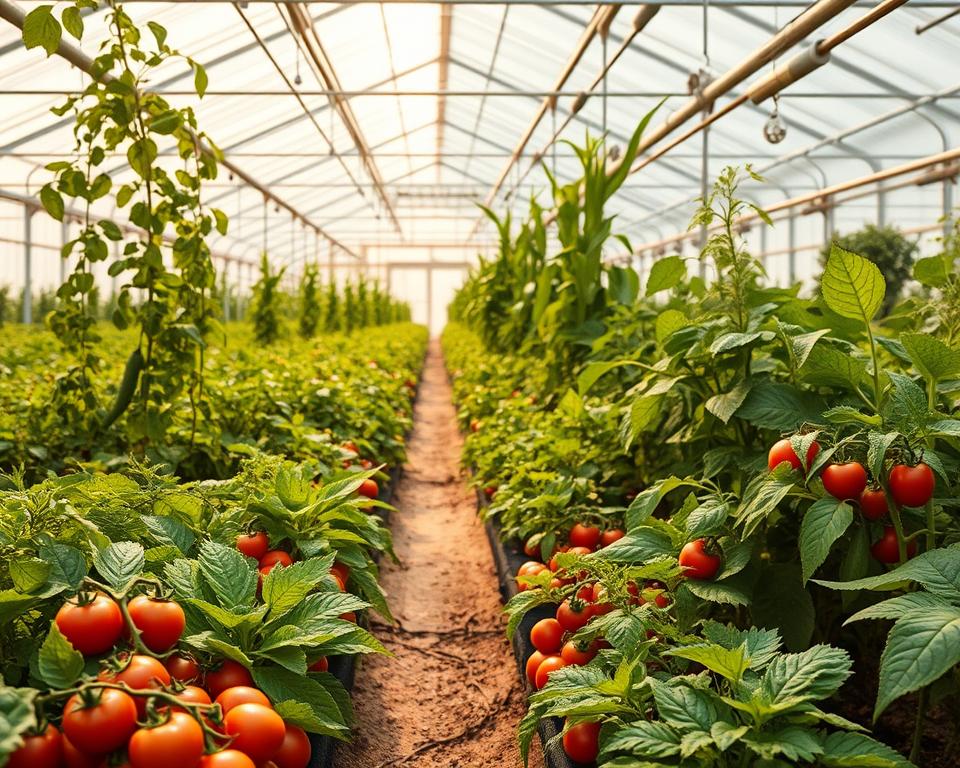
Novice gardeners will find certain plants particularly forgiving and rewarding. Lettuce varieties offer quick results with minimal effort. Tomatoes thrive in the warm greenhouse environment.
Herbs like basil and parsley adapt well to container cultivation. Cucumbers and peppers produce abundant harvests with proper care. Radishes provide rapid gratification for beginners.
Melons can surprise with their success in the protected conditions. These seven starter crops demonstrate the versatility of greenhouse cultivation.
Selecting Suitable Varieties for British Climates
Choosing the right plant varieties is crucial for success in the UK’s variable weather patterns. Many vegetables perform exceptionally well under glass.
Seasoned gardeners often expand their selection to include aubergines, spinach, and carrots. Broccoli and squash benefit from the extended growing season. Bean sprouts and beets adapt well to container growing.
Garlic, onions, and celery round out the comprehensive list of greenhouse-friendly vegetables. The key is selecting cultivars bred for cooler conditions and shorter growing seasons.
Planning Your Growhouse Setup
Effective organisation is the foundation of a productive greenhouse. Careful planning of the space and layout before planting saves considerable time and effort later. It ensures every plant has the room and resources it needs to thrive.
Choosing the Perfect Space and Layout
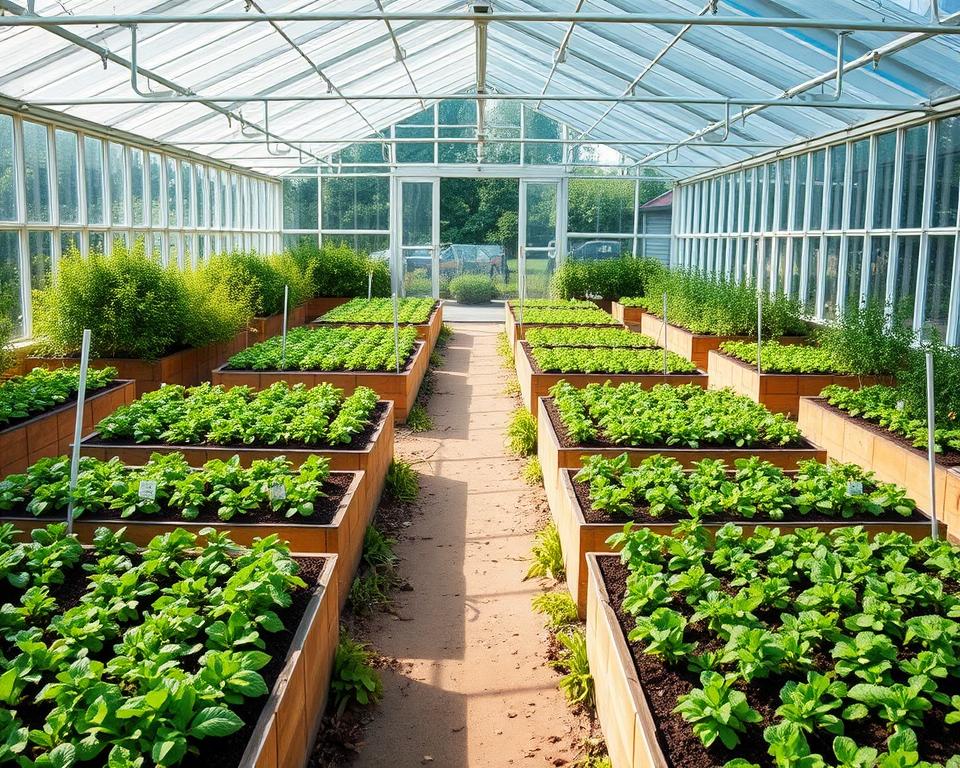
Begin by measuring the interior area. Allocate specific zones for greenhouse beds and growbags. It is crucial to make sure there is adequate room to space out all planned summer crops.
Benches are essential for holding seed trays during propagation. Many seedlings will be moved outdoors when the space is required for more mature plants. This rotation maximises the available area.
Climbing varieties need special consideration. Cucumbers and melons require sturdy frameworks for support. Tomatoes benefit from being tied into strings or canes as they grow.
Must-Have Greenhouse Accessories
Investing in the right accessories streamlines gardening tasks. A potting bench provides a dedicated area for working with soil and pots. This keeps the workspace organised and makes potting more efficient.
Greenhouse staging is invaluable for utilising vertical space. It allows gardeners to grow more in a limited area. Always use clean pots and containers to prevent the spread of disease between plants.
| Accessory | Primary Function | Benefit |
|---|---|---|
| Potting Bench | Organises potting materials | Speeds up planting tasks |
| Greenhouse Staging | Creates vertical growing levels | Maximises available space |
| Support Canes | Provides structural support | Guides growth of climbing plants |
Temperature Control and Ventilation Techniques
The ability to regulate internal climate conditions separates greenhouse gardening from traditional outdoor methods. Precise temperature management ensures optimal plant health and productivity throughout the year.
Heating and Cooling Strategies
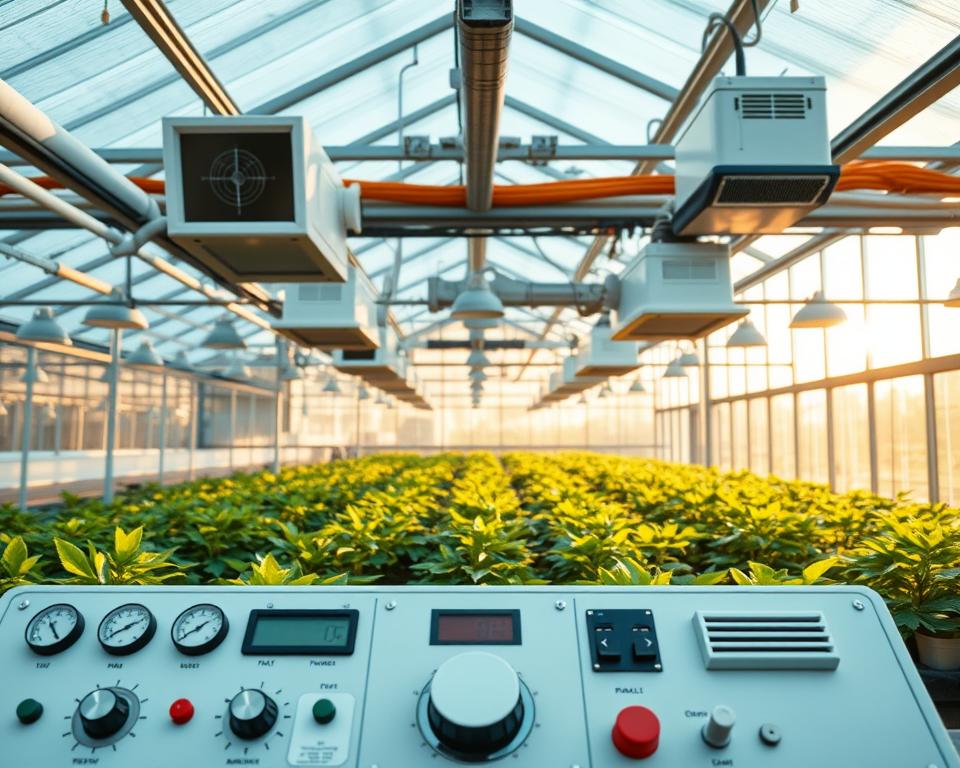
Different crops require specific temperature ranges for successful cultivation. Tomatoes thrive above 10°C, while lettuce prefers cooler conditions between 13-21°C. Spinach grows well at 10-24°C.
During winter months, greenhouse heaters maintain suitable environments for tender plants. They protect against frost damage when outdoor temperatures drop significantly.
Summer brings challenges with overheating. Proper cooling prevents plant stress and yield reduction. Ventilation systems help distribute heat evenly.
Using Automatic Roof Vents and Louvres
Automatic roof vents provide passive temperature regulation. They open when conditions become too warm, offering cooling without constant monitoring.
Louvre window vents enhance air circulation significantly. They reduce humidity levels, preventing fungal diseases in stagnant, moist conditions.
Peppers exemplify plants needing balanced humidity at 65-85%. Good ventilation ensures even heat distribution for optimal growth.
Regular monitoring with thermometers allows adjustments based on seasonal changes. Weather forecasts help anticipate necessary ventilation modifications.
Watering, Drainage and Soil Management
Effective moisture management forms the cornerstone of successful greenhouse cultivation. Both overwatering and underwatering present common challenges for gardeners. Proper techniques ensure optimal plant health and vigorous growth.
Proper Watering Methods and Timing
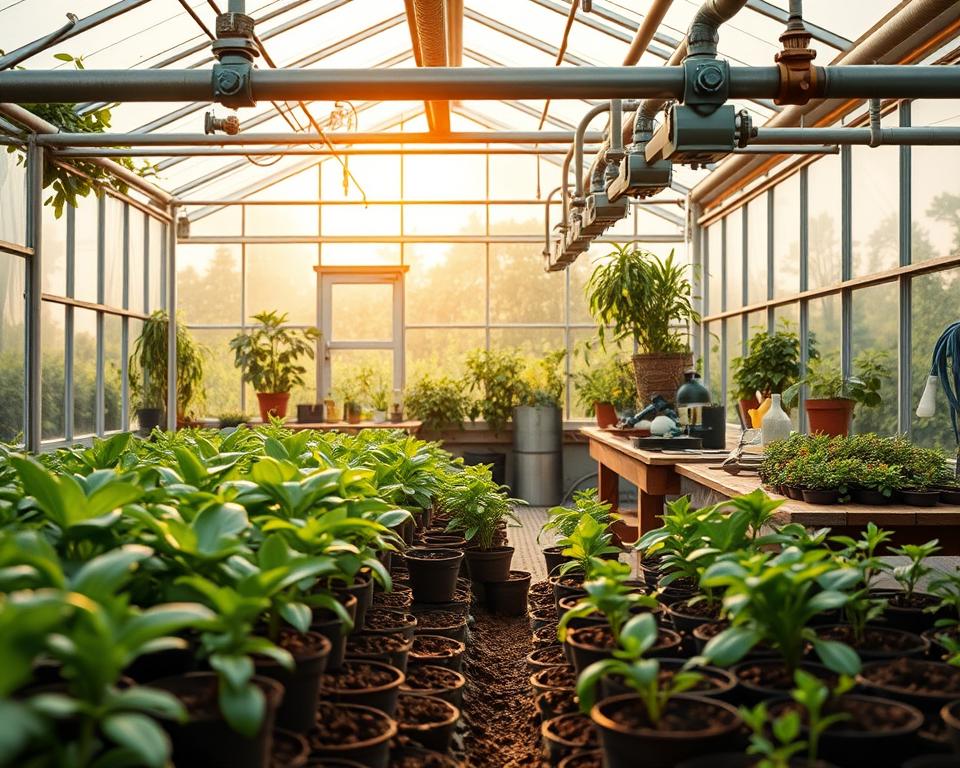
Morning watering provides plants with adequate moisture throughout the day. This timing allows foliage to dry before nightfall, reducing fungal disease risks. Different crops have specific hydration requirements.
Cucumbers prefer consistently moist soil, needing two to three litres of water per square foot. Chillies require their soil to dry slightly between watering sessions. Always use clean pots to prevent disease transmission.
Ensuring Adequate Drainage and Soil Health
Proper drainage prevents waterlogging, which can harm root systems. Gardeners should make sure all containers have sufficient drainage holes. Healthy soil supports robust plant development.
For greenhouse borders, replace the soil every three to five years. This practice reduces soil-borne disease build-up. Use quality topsoil or garden loam for the best results.
Managing Pests and Diseases Naturally
The same warm conditions that promote plant growth can unfortunately accelerate pest populations. Regular monitoring saves considerable time by catching issues early. Prevention remains the most effective strategy against greenhouse infestations.
Preventive Measures and Regular Inspections
Gardeners should make sure to inspect plants weekly for early warning signs. Check both sides of leaves where many pests hide. Catching a few insects prevents full-scale infestations.
Good hygiene practices reduce disease risks significantly. Always use clean pots and remove old potting soil between plantings. This prevents soil-borne diseases from spreading through the greenhouse.
Effective Natural Pest Control Methods
Yellow sticky traps provide excellent monitoring for flying pests like whiteflies. They serve as early warning systems when pest numbers increase. Biological controls offer chemical-free solutions.
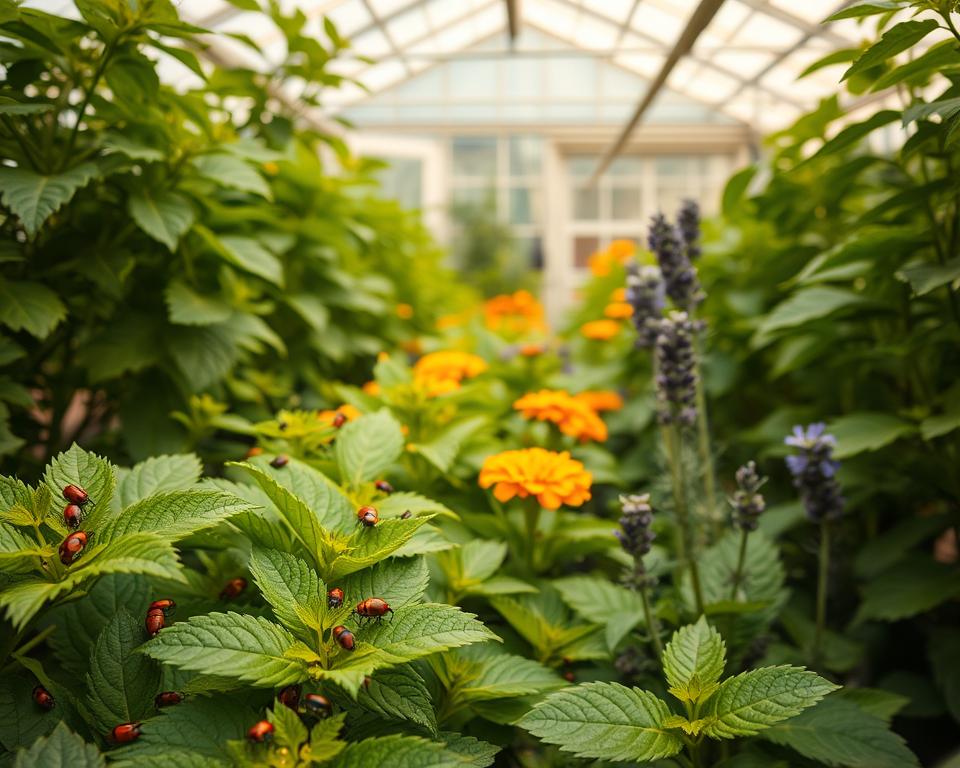
Introducing ladybirds tackles aphid populations naturally. These beneficial insects help maintain ecological balance within the protected environment. They specifically target problematic pests without harming plants.
| Pest/Disease | Identification Signs | Natural Control Method |
|---|---|---|
| Glasshouse Whitefly | Tiny white insects on leaf undersides | Yellow sticky traps, Encarsia formosa wasps |
| Aphids | Clusters on new growth and leaves | Ladybirds, soap spray |
| Powdery Mildew | White powder on plant leaves | Improved ventilation, baking soda spray |
Common diseases include damping off and grey mould. Proper air circulation helps prevent these fungal issues. Healthy plants naturally resist many common greenhouse problems.
Seasonal Planting Guide for Year-Round Harvests
A well-planned seasonal schedule transforms a greenhouse into a continuously productive space. It allows gardeners to work in harmony with the natural rhythm of the year, while the protected environment buffers against the UK’s variable weather. This approach ensures a steady supply of fresh produce.

The structure enables cultivation to begin long before outdoor conditions are suitable. Strategic planning is key to maximising the potential of every season.
Early Spring and Winter Growing Strategies
From late winter into early spring, the focus is on sowing hardy vegetables. Seeds for Brussels sprouts, cabbage, and early leeks are started indoors. Onions, peas, and various types of lettuce can also be sown during this period.
These seedlings are nurtured within the protected greenhouse environment. They develop strength before being transplanted outside once the threat of frost has passed. This head start is invaluable for a successful growing season.
Maximising Summer and Autumn Crops
As spring progresses into summer, attention shifts to warmth-loving crops. Tender plants like courgettes, squashes, and cucumbers are sown. Tomatoes and peppers are moved to their final positions inside the greenhouse.
By late summer, gardeners can begin sowing lettuces and spicy salad leaves for autumn harvests. This succession planting technique is an effective way to extend growing activities.
Adapting to the Changing UK Weather
Autumn is a time for clearing spent summer crops and preparing for cooler months. Lettuces planted in beds or growbags can be harvested throughout winter. The protective nature of the greenhouse is especially beneficial during this season.
This year-round calendar demonstrates how a greenhouse turns gardening into a continuous process. It allows for adaptation and consistent production.
Space-Saving and Vertical Gardening Solutions
Vertical gardening techniques offer a powerful solution for limited growing areas. They enable gardeners to maximise every available inch within a protected structure. This approach is ideal for cultivating a diverse range of crops.
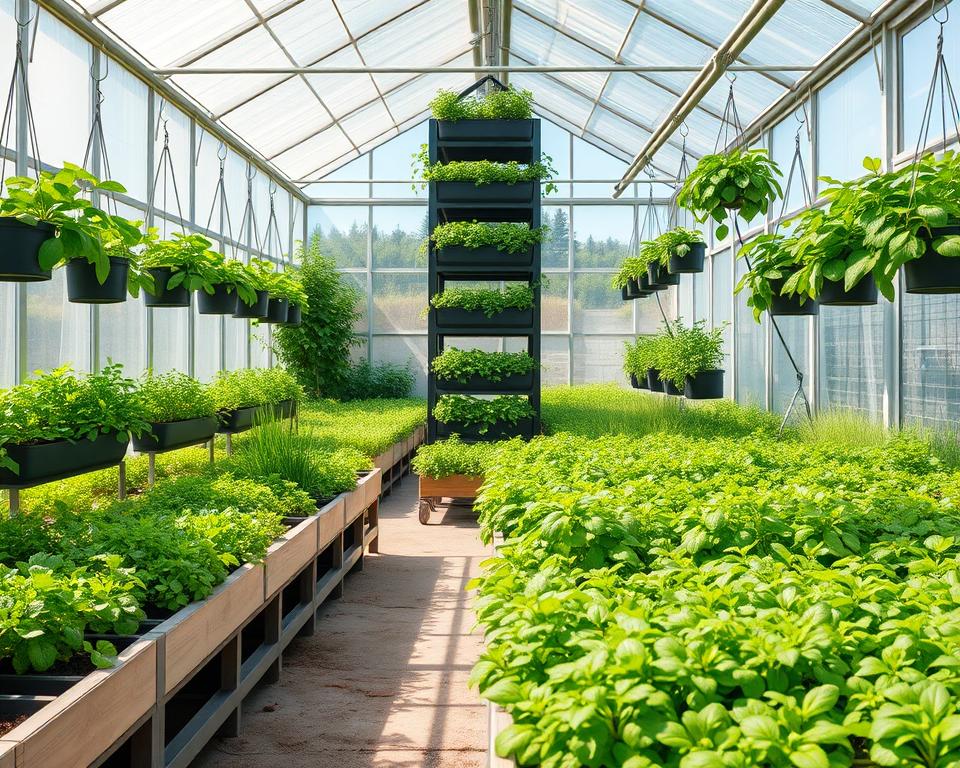
Efficient use of vertical space transforms a compact greenhouse into a highly productive environment. It allows for the cultivation of different crops simultaneously while maintaining excellent organisation.
Innovative Potting Bench and Seed Tray Setups
A dedicated potting bench is invaluable. It provides a clean, organised station for sowing seeds and handling pots. This setup keeps essential supplies within easy reach, streamlining the entire process.
“The greatest resource in gardening is not land, but space, and the clever gardener knows how to create it.”
Greenhouse staging takes advantage of height. It provides multiple levels for plants, perfect for young seedlings and compact varieties. This method supports healthy growth by improving air circulation.
Many crops adapt brilliantly to these space-efficient methods. Radishes thrive in a variety of containers, from borders to large pots. Herbs are naturally suited to vertical setups, growing upwards to save valuable bench space.
Lettuce is another excellent choice. Its adaptability makes it perfect for beds or containers, allowing for succession planting. This technique ensures a continuous harvest from a small footprint.
| Plant | Recommended Container | Space-Saving Benefit |
|---|---|---|
| Herbs (Basil, Parsley) | Vertical planters / hanging pots | Utilises vertical space, frees up staging |
| Lettuce | Shallow trays / greenhouse beds | High-density planting, fast turnover |
| Radishes | Deep pots / borders | Can be grown in narrow spaces |
Ultimately, strategic planning allows gardeners to grow greenhouse produce abundantly, even with limited room. Embracing vertical space is the key to a flourishing and diverse greenhouse.
Conclusion
Mastering the art of greenhouse cultivation unlocks a world of horticultural potential for gardeners across the UK. This guide has illustrated how these structures enable the growth of a remarkable variety of vegetables, from staple tomatoes and crunchy cucumbers to vibrant peppers and various crops.
The primary advantage is the ability to extend the growing season significantly, offering protection from unpredictable weather. This controlled environment facilitates year-round gardening, ensuring a continuous harvest.
Success depends on managing key factors like temperature, watering, and soil health while monitoring for pests and diseases. Beginners should start with straightforward plants like lettuce to build confidence.
Careful planning of space and support structures is crucial. By following a seasonal guide, gardeners can ensure their greenhouse remains productive through every season.
With dedication and the right knowledge, anyone can achieve abundant harvests, enjoying fresh, homegrown produce regardless of the conditions outside.
FAQ
What are the primary benefits of using a growhouse in the UK?
A growhouse offers a protected, controlled environment that shields plants from harsh British weather. It significantly extends the growing season, allowing for cultivation in early spring and late autumn. This protection also helps manage humidity and reduces problems with common pests and diseases.
Which crops are most suitable for a beginner’s growhouse?
Beginners often find success with hardy, fast-growing crops. Lettuce, radishes, and herbs like basil are excellent choices. For those wanting to try fruiting plants, compact varieties of tomatoes and peppers are ideal as they thrive in the stable conditions a greenhouse provides.
How can one effectively control the temperature inside a greenhouse?
Temperature control is achieved through a combination of strategies. Automatic roof vents and louvres allow excess heat to escape during summer. For colder months, a greenhouse heater can maintain a minimum temperature. Shading is also crucial in summer to prevent scorching and protect delicate leaves.
What is the best approach to watering plants in a growhouse?
Consistent but careful watering is key. The enclosed space means soil dries out differently than in an open garden. It is best to water early in the morning, directing water to the soil base to keep leaves dry and prevent diseases. Using a moisture meter can take the guesswork out of timing.
How can gardeners prevent pests and diseases naturally?
Prevention starts with good hygiene and plant health. Regular inspections of leaves and stems help catch issues early. Introducing beneficial insects, like ladybirds for aphids, is an effective natural method. Ensuring good air circulation and avoiding overwatering also discourages many common fungal diseases.
Can a growhouse be used for gardening throughout the winter?
Absolutely. With some insulation and perhaps a small heater, a growhouse can support cold-hardy vegetables like kale, spinach, and certain varieties of lettuce during winter. It also provides a perfect environment for starting seeds much earlier than the outdoor season allows.
What are some space-saving solutions for a small growhouse?
Utilising vertical space is essential. Hanging baskets, tall potting benches, and tiered seed tray stands maximise growing area without increasing the footprint. Training crops like cucumbers and beans to grow upwards on supports is another excellent way to save space.