What is a SIP Building?
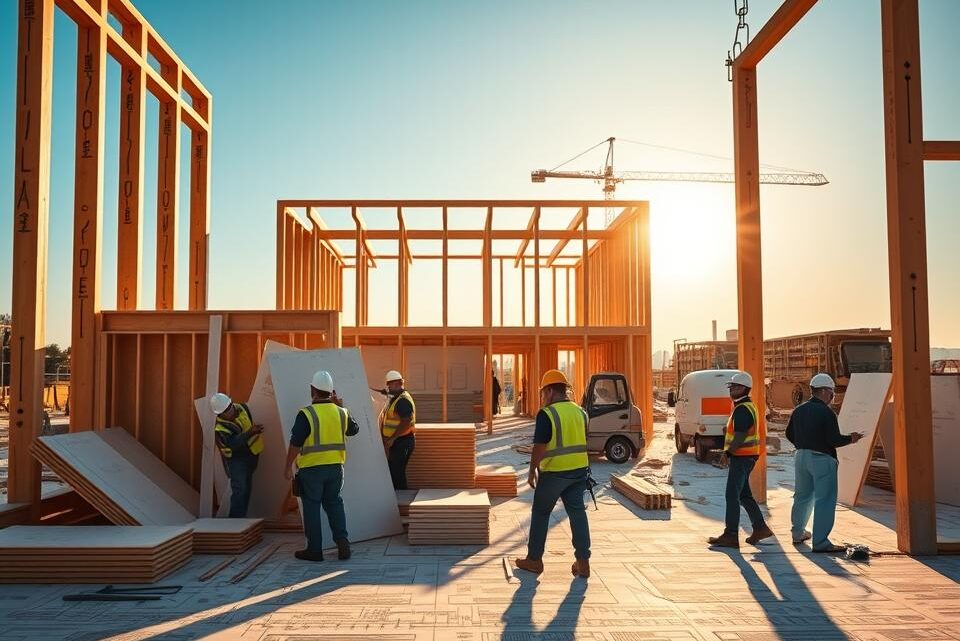
Structural insulated panels represent an innovative approach to modern construction that is revolutionising the UK building industry. These advanced engineering solutions combine superior thermal performance with exceptional structural integrity.
This comprehensive guide explores the manufacturing processes, performance benefits, and growing popularity of sips across residential, commercial, and educational projects. The methodology offers a contemporary alternative to traditional construction techniques.
Insulated panels deliver enhanced energy efficiency, significantly reduced building times, and improved sustainability credentials. Understanding this technology becomes essential amidst rising energy costs and stringent UK building regulations.
The following sections examine technical specifications, manufacturing details, performance data, design flexibility, and industry standards. This analysis positions sips within the broader context of sustainable construction and Britain’s commitment to reducing carbon emissions.
Inhaltsverzeichnis
Key Takeaways
- SIP buildings utilise structural insulated panels for modern construction
- They offer superior thermal performance and energy efficiency
- Construction times are significantly reduced compared to traditional methods
- These buildings support sustainability goals and reduced carbon emissions
- The technology meets stringent UK building regulations and standards
- SIP construction is suitable for residential, commercial, and educational projects
- Understanding this method is crucial in today’s energy-conscious climate
Understanding Structural Insulated Panels
Composite structural panels offer a revolutionary approach to modern construction. These systems combine structural strength with exceptional thermal performance.
Definition and Core Components
Structural insulated panels feature a unique sandwich design. Two oriented strand board facings enclose a rigid polyurethane insulation core. This creates an autohesive bond for superior performance.
The OSB/3 board provides remarkable rigidity and strength. Meanwhile, the polyurethane core delivers outstanding insulation properties. This dual functionality eliminates separate structural and insulation systems.
Alternative materials like EPS and XPS require additional adhesives. These options are less thermally efficient than polyurethane-core panels. The integrated design performs both insulation and load-bearing functions.
Comparison with Traditional Construction Methods
Compared to traditional timber frame construction, these insulated panels use 35% less timber. They provide superior structural integrity and thermal performance. The system streamlines the entire construction process.
Versus masonry construction, panel structures offer excellent strength in smaller sections. This creates more internal floor space within the same external dimensions. The integrated approach reduces multiple trade requirements.
Factory-bonded panels ensure consistent quality and durability. The autohesive bonding process in PUR-core systems outperforms adhesive-dependent alternatives. This results in long-term reliability and weathertight performance.
What is a SIP Building? Exploring the Basics
The ‘Fabric First’ principle underpins SIP methodology, forming comprehensive structural shells with exceptional performance. This approach integrates panels to create complete building envelopes for walls, floors, and roofs.

Key Features of SIP Structures
These structures showcase remarkable lightweight strength through composite panel design. The high strength-to-weight ratio enables efficient installation of large sections. This characteristic distinguishes them from conventional construction methods.
SIP buildings integrate seamlessly with various systems including steel frames and glulam beams. They accommodate intermediate floors and complex roof designs with flexibility. Traditional foundations work effectively with this advanced approach.
The system delivers pre-integrated insulation that eliminates cold bridging completely. Superior airtightness minimises heat loss significantly. Dimensionally stable panels maintain consistent performance throughout the building’s lifespan.
From residential homes to commercial developments, these structures demonstrate remarkable versatility. The solid core construction creates a noticeably robust feel. Direct fixing of finishes to panel faces enhances structural solidity.
Continuous polyurethane cores running through walls and roofs provide characteristic strength. Insulated splines maintain thermal integrity at all joints. Wood-based architectural designs maximise both appearance and performance benefits.
Materials and Manufacturing of SIPs
Factory-controlled production processes ensure structural insulated panels meet exacting quality standards from raw materials to finished components. This approach guarantees consistency across every project while minimising environmental impact.
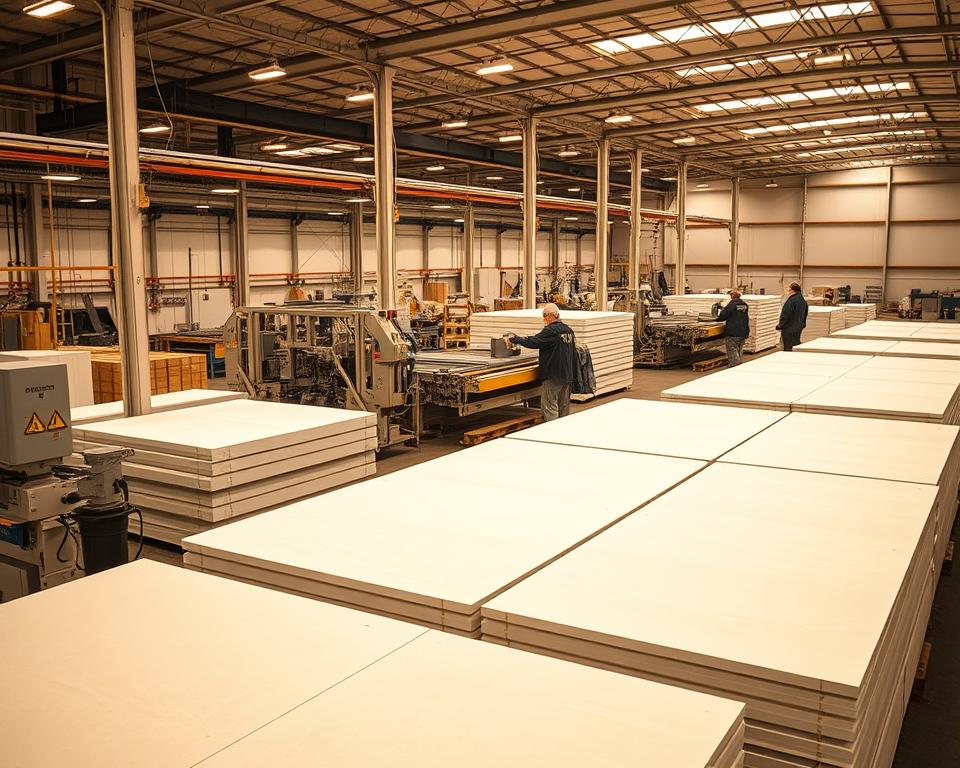
Insulated Panels and Sustainable Timber
The materials selection begins with responsibly sourced timber from PEFC or FSC certified plantations. These panels utilise 35% less timber than traditional timber frame systems while maintaining superior strength.
Oriented strand board facings provide the structural facing for the insulation core. The polyurethane core features zero Ozone Depletion Potential and low Global Warming Potential. This combination creates an environmentally responsible building material.
Sustainability is embedded throughout the manufacturing process. Timber sequesters carbon dioxide while producing oxygen, making it the only truly renewable construction material.
Factory-Controlled Fabrication Process
Precision engineering occurs in controlled factory environments using specialist 3D CAD software. Each panel is custom-cut to exact project specifications, eliminating on-site waste.
The manufacturing process offers five thickness options from 125mm to 225mm. Standard 1200mm widths and lengths up to 7.5 metres accommodate diverse project requirements. This flexibility supports efficient build programmes.
Quality control inspections occur at every stage, ensuring dimensional accuracy and performance standards. The pre-engineered approach results in minimal defects and significantly reduced wastage compared to traditional construction methods.
Rapid deployment is a key advantage of this manufacturing system. Weatherproof super-structures can be completed within days of ground floor preparation, accelerating the overall build timeline dramatically.
Performance, Efficiency and Energy Savings
Energy-efficient homes built with advanced panel systems demonstrate superior insulation performance and heating cost savings. The continuous polyurethane core delivers exceptional thermal properties that maintain consistent comfort levels.
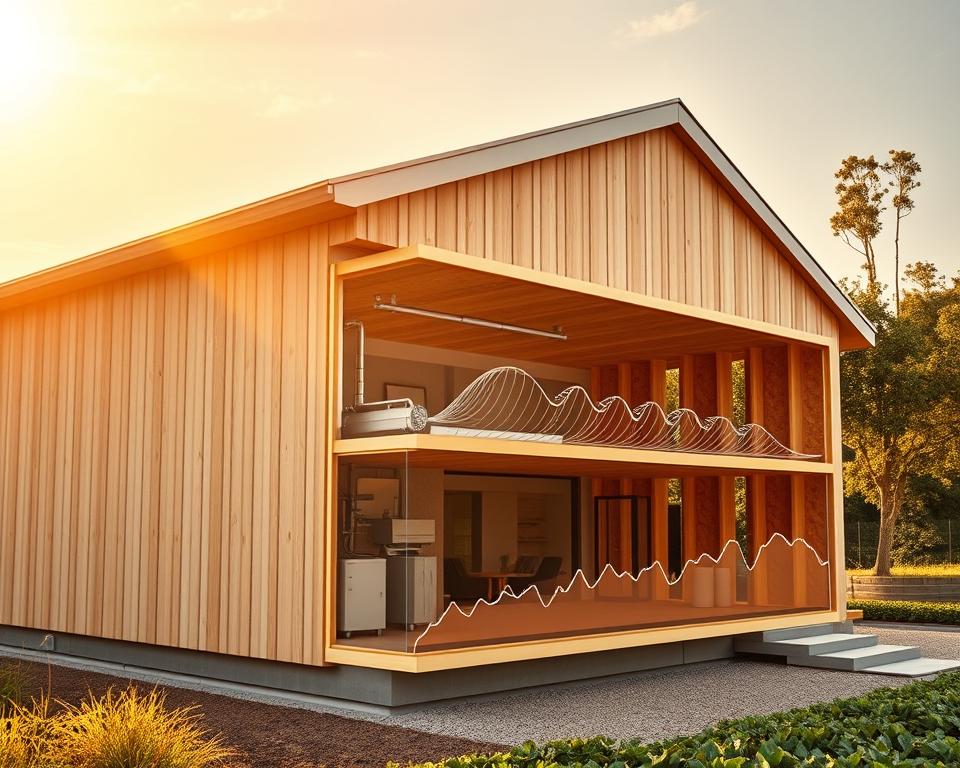
Thermal Efficiency and Insulation Performance
These structures achieve remarkable U-values as low as 0.10 W/m²K, significantly exceeding building regulation requirements. The solid insulation core eliminates cold spots and thermal bridging common in traditional construction.
Continuous insulation connected by insulated splines creates an unbroken thermal envelope. This design prevents heat loss through gaps that plague conventional building methods.
Impact on Heating Bills and Energy Control
Homeowners experience dramatic reductions in heating costs due to superior airtightness and insulation performance. The system provides real control over living environments and utility expenses.
Mechanical Ventilation with Heat Recovery (MVHR) systems complement the airtight construction. They recirculate generated heat while introducing fresh, filtered air.
This combination creates predictable energy consumption and maintains comfort throughout all seasons. The building fabric performance exceeds Code for Sustainable Homes Level 4 standards, future-proofing properties against evolving regulations.
Design Flexibility and Construction Advantages
Design flexibility emerges as a key benefit when utilising advanced structural panel systems. These innovative approaches transform traditional construction methodologies through superior programme control and integrated benefits.

Speed of Erection and Reduced On-Site Waste
Standard houses using these systems can be erected in as little as ten days. Typical project completion occurs within two to four weeks, representing up to three times faster construction.
The high strength-to-weight ratio enables large wall and roof sections installation as single units. Factory precision cutting minimises on-site waste dramatically, reducing landfill contributions and transport costs.
Weather-independent fabrication ensures predictable build programmes. This eliminates traditional delays while allowing accurate trade scheduling.
Seamless Integration with Follow-on Trades
Panels engineered to exact tolerances create plumb walls and level floors. This precision eliminates extensive packing and scribing typically required with conventional methods.
Metal open web joists maximise trade efficiency by providing clear pathways for services. Doors and windows install easier due to dimensional stability.
The reduced number of trades on-site creates cleaner, safer working environments. Additional habitable space becomes available without traditional roof trusses.
These sips systems create more internal floor space within the same external dimensions. The structure eliminates the need for additional timber supports required in timber frame construction.
Industry Standards and Certification
Certification by leading UK authorities validates the performance and reliability of advanced building methods. This independent approval process gives developers and homeowners confidence in the long-term quality and sustainability of their investment.
Compliance with British Building Regulations
The SBS building system holds full certification from the British Board of Agrément (BBA). This confirms its compliance with all UK building regulations for structural integrity, thermal efficiency, and fire safety.
Furthermore, these sips systems are accepted by the NHBC for warranty provision. This covers new homes and provides essential peace of mind.
The integrated design simplifies the approval process for any project. It reduces the need for complex, bespoke calculations.
Quality Control and Accreditation
Rigorous factory quality control ensures every panel meets exacting standards before dispatch. Documented inspection records provide full traceability for building control.
These sips contribute significantly to the Code for Sustainable Homes. The exceptional building fabric typically exceeds Level 4 standards.
The nine sustainability criteria assessed include:
- Energy and CO2 Emissions
- Materials and Waste
- Health and Well-being
This high performance results in low running costs, making certified homes highly attractive on the market. The benefits of this accredited approach are clear for modern construction.
Conclusion
Advanced structural systems featuring insulated panels deliver unprecedented performance in thermal efficiency and construction speed. These sips buildings combine responsibly sourced timber with polyurethane core insulation to create homes with exceptional energy control.
The benefits extend beyond reduced heating costs to encompass accelerated build time and enhanced design flexibility. Factory-controlled processes ensure minimal waste while maximising sustainability throughout the project lifecycle.
This building system achieves superior strength in walls, roof, and floor structures while creating more usable space. With industry certification and proven materials performance, structural insulated panels represent the future of high-performance construction.
FAQ
How does a SIP building differ from a traditional timber frame construction?
A SIP building uses structural insulated panels that combine framing and insulation into one component. Traditional timber frame construction separates these elements. This integration in SIP construction results in superior thermal performance and faster assembly times.
What are the primary benefits of using structural insulated panels for a self-build project?
Key benefits include exceptional energy efficiency, leading to lower heating costs. The system also offers rapid construction, reduced material waste on-site, and high structural strength. These factors provide significant advantages for self-builders.
Can SIPs be used for both walls and roofs?
A>Yes, structural insulated panels are versatile and are commonly used for both external walls and roof construction. This creates a continuous, high-performance building envelope that minimises thermal bridging and air leakage.
How does the thermal performance of a SIP building compare to other methods?
SIP buildings achieve excellent thermal performance due to the continuous insulation core. This minimises heat loss, significantly outperforms many traditional construction methods, and contributes to lower energy bills and enhanced comfort.
Are SIP buildings considered a sustainable choice?
Yes, SIP buildings are a strong sustainable option. The panels often use timber from certified sustainable sources. The factory-controlled fabrication process reduces material waste, and the superior energy efficiency lowers the building’s carbon footprint over its lifetime.
Do SIP structures comply with UK Building Regulations?
Absolutely. When designed and installed by accredited suppliers and builders, SIP structures fully comply with UK Building Regulations. This includes standards for structural integrity, energy performance, and fire safety.
What is the typical lifespan of a building constructed with SIPs?
With proper maintenance, a building constructed with structural insulated panels can have a very long lifespan, comparable to traditional buildings. The durable materials and robust construction method ensure long-term performance and structural integrity.
How quickly can a SIP building be erected?
The erection process is notably fast. As panels are manufactured off-site, the main structure can often be assembled in a matter of days, depending on the project’s scale. This speed reduces overall build time and labour costs.