what is the maximum size summerhouse without planning permission?

Thinking about adding a summerhouse? The first question is simple: how big can it be without applying for planning consent UK. Under permitted development rights, many garden outbuildings are allowed if they meet strict rules on size, height, and use. This guide explains those summerhouse size limits in plain terms, so you can plan with confidence.
We focus on UK planning rules and the difference between building regulations vs planning. Most domestic structures used for incidental use within the curtilage of a dwelling can be lawful without an application, provided they comply with the standards set out in national guidance and legislation. We also flag where England, Scotland, Wales and Northern Ireland take different approaches.
We draw on official sources, including guidance from the Department for Levelling Up, Housing and Communities, the Planning Portal, the Scottish Government, the Welsh Government, and the Department for Infrastructure in Northern Ireland. You will learn the measurements that typically trigger a referral, and how to avoid common pitfalls when siting garden outbuildings.
By the end, you will understand the key limits on height, footprint and placement, and how incidental use affects compliance. That way, you can design a practical space that respects the curtilage of your home and stays within the law.
Inhaltsverzeichnis
Key Takeaways
- Most garden outbuildings are allowed under permitted development rights if they meet size, height and placement rules.
- UK planning rules differ across England, Scotland, Wales and Northern Ireland, so check local guidance.
- Planning consent UK is separate from building regulations vs planning; you may need one, both, or neither.
- Use must be incidental use to the home, not self-contained living space.
- Limits often depend on overall height, eaves height, footprint and where the building sits within the curtilage.
- Design choices and siting near boundaries can change whether a summerhouse needs consent.
- Measure carefully and keep records to demonstrate compliance with summerhouse size limits.
Understanding UK permitted development rights for outbuildings
Many garden projects progress under householder permitted development without a full application. The UK’s GPDO sets limits and conditions for structures placed within the curtilage of a dwellinghouse, including summerhouses and sheds. These rules are strict on where you build in relation to the principal elevation and on what you build on designated land, such as conservation areas and National Parks.
How permitted development applies to garden buildings
In England, most garden rooms sit under Class E outbuildings, which covers buildings incidental to the enjoyment of the home. Typical uses include a studio, store, or hobby room, not a separate dwelling.
To benefit, the structure must be within the curtilage of a dwellinghouse and placed behind the principal elevation that fronts a highway. On Article 1(5) land, extra limits apply, and side gardens may be restricted. Similar concepts exist across the nations, but wording and thresholds vary.
Key conditions that determine if consent is needed
- Location: not forward of the principal elevation facing a highway, and mindful of designated land where controls tighten.
- Height: typical English limits under the GPDO include eaves up to 2.5 m, with overall height capped depending on roof form and distance to boundaries.
- Use: incidental only; primary sleeping use or forming a separate unit needs permission.
- Features: verandas, balconies, or raised platforms above modest levels often fall outside householder permitted development.
- Coverage: ensure the footprint and any cumulative area sit comfortably within the curtilage of a dwellinghouse rules for your nation.
Differences between England, Scotland, Wales and Northern Ireland
England relies on Class E outbuildings under the GPDO, with detailed height and siting controls. Wales follows a similar GPDO framework but may vary on eaves, overall height, and placement near boundaries and the principal elevation.
Scotland tends to use footprint and height thresholds, with common limits for ridges and other parts of the roof and a focus on cumulative area within the garden. Northern Ireland’s GPDO also provides a route for incidental buildings, with position, height, and coverage limits set out by its own order. Always review any extra rules for designated land and check whether the site lies on Article 1(5) land before you build.
Dimensions that typically trigger planning permission for summerhouses
A summerhouse often sits on the edge of what is allowed without consent. The main checks are height, scale and where it sits in the garden. Apply the 2.5 metre rule near boundaries, watch ridge height limits, and keep an eye on cumulative massing under 50% garden coverage.
Maximum overall height and eaves height limits
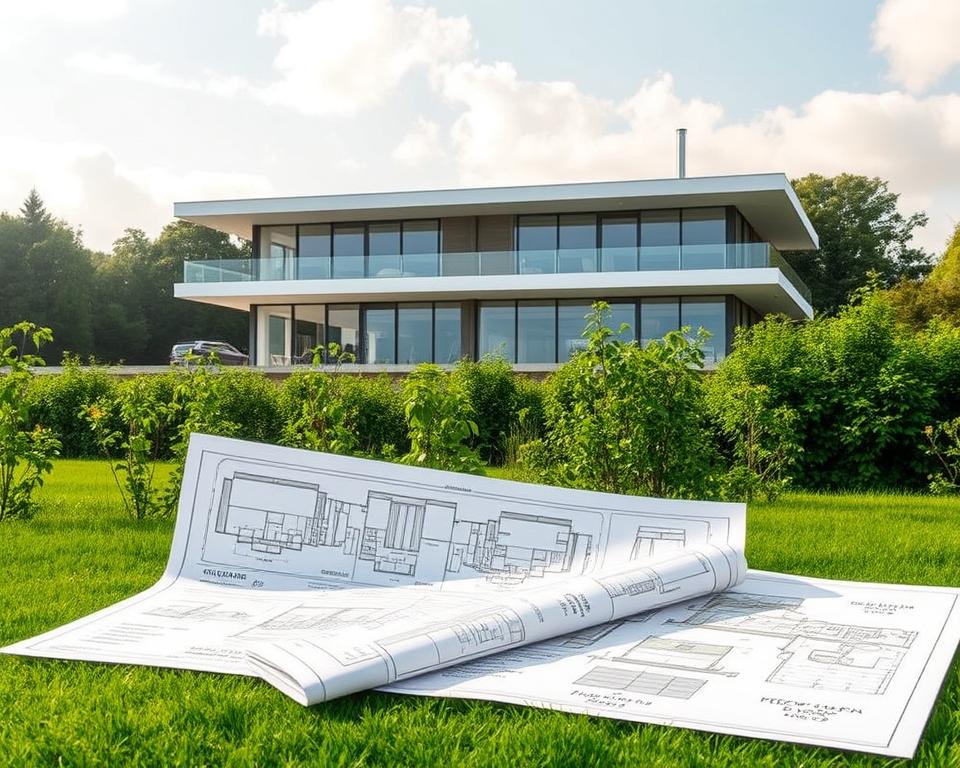
Under typical Class E principles in England, eaves height 2.5 m is the ceiling for most compliant builds. If the building is within 2 m of a boundary, the 2.5 metre rule also caps the overall height. Move it further out and higher ridge height limits can apply.
A 4 m dual-pitched roof is usually the upper allowance for overall height when the structure sits more than 2 m from the boundary. For flat or mono-pitched designs, expect lower caps. Measure from the highest ground next to the walls to avoid a hidden breach.
Footprint, floor area and volume considerations
There is no single national cap on internal size, but floor area limits arise in practice through site coverage and visual impact tests. The golden yardstick is 50% garden coverage, which counts all outbuildings and fixed containers within the curtilage.
Some administrations assess total volume or cumulative footprint across outbuildings. Keep glazing, thickness of walls, and canopy depths in mind, as they can nudge a scheme past informal thresholds even where headline dimensions appear modest.
Distance from boundaries and location within the curtilage
Proximity matters. The boundary distance rules mean that being within 2 m of a fence or wall can pull the overall height down to 2.5 m, steering many designers toward flat or mono-pitch roofs. Beyond 2 m, higher ridges may be possible within the same curtilage.
Siting forward of the principal elevation that faces a highway is generally not permitted. Corner plots, rights of way and watercourses add further layers, so confirm exact positions on a scaled plan before committing to materials or foundations.
what is the maximum size summerhouse without planning permission?
Across the UK, the practical answer depends on height, siting, and how much of the garden you cover. Under Class E in England, there is no single square‑metre cap for the maximum size summerhouse. Instead, permitted development size limits focus on roof height, eaves height, and position relative to boundaries and the principal elevation.
The result is that garden room dimensions can be generous where plots allow. Keep eaves at or below 2.5 m, watch the distance to boundaries, and ensure total outbuildings do not exceed half of the curtilage. Scotland, Wales, and Northern Ireland use similar envelopes, though local conditions can vary.
Common maximums under permitted development guidance
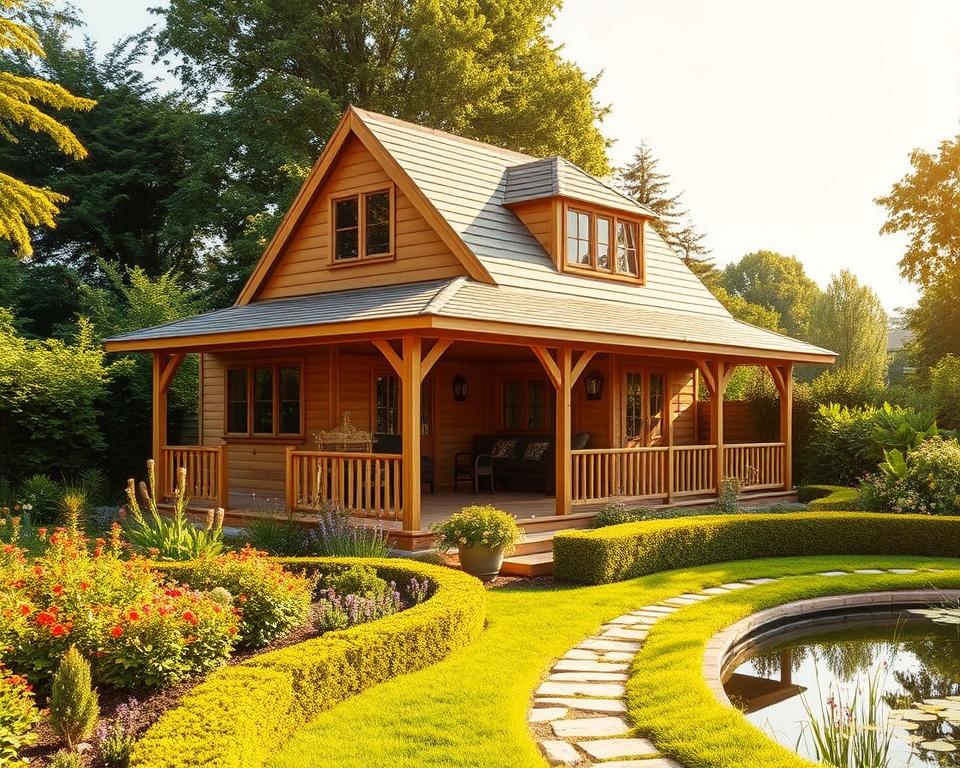
The most cited benchmarks are simple. A 2.5 m height within 2 m boundary can sit anywhere on the plot if other rules are met. Move further than 2 m from any boundary and the roof can rise: up to 3 m for flat or mono‑pitch profiles, or a 4 m ridge height dual-pitch with eaves at 2.5 m.
These permitted development size limits apply alongside the 50% curtilage coverage test and the ban on placing buildings forward of the principal elevation. On designated land, or where Article 4 Directions apply, check local guidance before you order.
When larger footprints may still comply
Bigger garden room dimensions can be lawful if massing stays within the height and siting rules. A wide plan can work in a deep garden, provided outbuildings together do not cover more than half of the land around the original house.
Watch details that shift compliance. Raised platforms over 0.3 m count against you. Keep the building single storey, and avoid balconies or verandas that push overall bulk. These choices allow a larger footprint to remain within the permitted envelope.
Examples of compliant sizes for pitched and flat roofs
Flat roof summerhouse sizes close to a boundary are often limited by overall height. A compact unit at 2.5 m high can sit 0.5 m from a fence if it stays behind the principal elevation and within coverage rules. With more space, a dual‑pitch set beyond 2 m can reach a higher ridge while maintaining 2.5 m eaves.
Across England and Wales, these patterns are common, while Scotland and Northern Ireland use similar height bands with local nuances. Use the examples below as a sense‑check when planning the maximum size summerhouse for your plot.
| Roof type | Example garden room dimensions | Boundary distance | Indicative height envelope | Why it can comply |
|---|---|---|---|---|
| Flat roof | 3.5 m × 3 m | 0.5 m from boundary | 2.5 m overall | Meets 2.5 m height within 2 m boundary and stays within curtilage coverage. |
| Mono‑pitch | 6 m × 3 m | Over 2 m from all boundaries | Up to 3 m overall | Beyond 2 m, mono‑pitch may reach 3 m while keeping eaves at or below 2.5 m. |
| Dual‑pitch | 5 m × 4 m | 2.5 m from all boundaries | 2.5 m eaves, 3.8–4 m ridge | 4 m ridge height dual-pitch permitted when set beyond 2 m and eaves ≤ 2.5 m. |
| Dual‑pitch (large plot) | 6 m × 4 m | 2.5 m from all boundaries | 2.4 m eaves, 3.9 m ridge | Complies with height and siting while keeping total outbuildings under 50% of curtilage. |
| Flat roof (small plot) | 3 m × 2.5 m | 0.5 m from boundary | 2.5 m overall | Flat roof summerhouse sizes fit the 2.5 m rule and avoid the principal elevation. |
Placement rules near boundaries, highways and listed buildings
Where a summerhouse sits can decide if it falls under permitted development. Avoid any siting forward of the principal elevation fronting a highway, as this will usually need permission. Corner plots demand care; determine which face meets the road before fixing a position.
Boundary proximity also matters. In England, if any part lies within 2 metres of a boundary, keep overall height to 2.5 metres. Similar limits apply elsewhere in the UK, but wording varies. Measure from natural ground level and record the datum to prevent disputes.
Positioning relative to the principal elevation
The cleanest approach is to site a building behind the front wall line. If your garden faces two streets, identify the true front by main access and architectural emphasis. A build placed ahead of the principal elevation fronting a highway will not be permitted development and may attract enforcement.
Keep scale modest near streets. Even a compliant height can appear dominant on a shallow forecourt, so step the mass back, reduce ridge height, and soften edges with planting.
Rules within conservation areas and Areas of Outstanding Natural Beauty
Expect tighter controls where designated land restrictions apply. In many places, Class E excludes side siting for conservation area outbuildings, National Parks and World Heritage Sites. Rear placement is usually safer, yet design, materials, and reflectivity still face scrutiny.
Under AONB rules, avoid prominent roof forms and excessive glazing that catches distant views. Low eaves, muted finishes, and careful orientation reduce glare and landscape impact.
Restrictions for listed buildings and their curtilage
For listed properties, treat outbuildings as curtilage structures that are rarely PD. Most works will need planning permission, and many also require listed building consent from the local planning authority. Place proposals where historic fabric and key sightlines remain unharmed.
Check Article 4 Directions that may remove PD locally. On Article 1(5) land, side development can be excluded outright; verify coverage before ordering a kit or groundworks.
Height, roof style and design features that influence compliance
Design choices decide whether a garden room stays within permitted development. The interaction between roof pitch and PD limits, the base level, and details like gutters can shift the measured height. Keep the mass light, measure from the highest ground, and plan openings to the garden side to support incidental use.
Flat, mono-pitched and dual-pitched roof implications
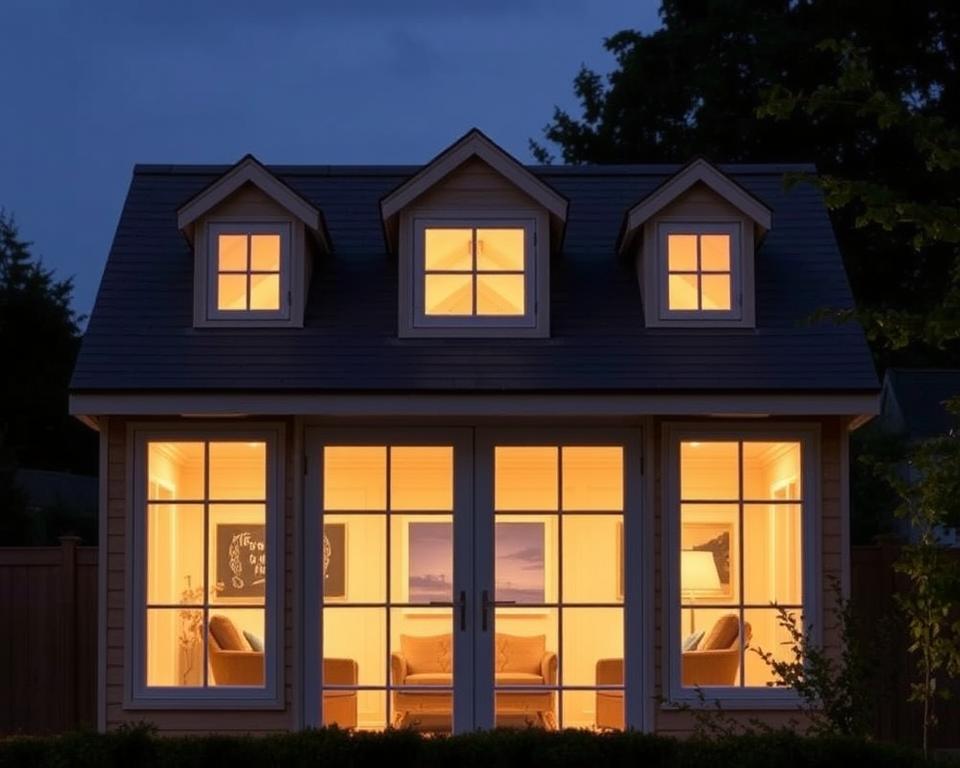
Roof form controls the cap. A flat or mono-pitched roof is usually limited to 3 m where more than 2 m from a boundary, while a dual-pitched roof may reach 4 m in the same position. If the building sits within 2 m of a boundary, the overall height cannot exceed 2.5 m for any roof type.
Set the roof early, then run a careful ridge calculation. A shallow angle can help meet roof pitch and PD limits, yet drainage still needs fall and adequate guttering. Low-profile bargeboards and compact fascias reduce projection that could affect outbuilding massing near a fence.
Eaves height, ridge height and overall massing
Eaves measurement must not exceed 2.5 m. That figure holds regardless of distance to the boundary. Use a clear datum and confirm the eaves line after cladding and soffits are specified.
Measure from the highest natural ground next to the walls. Decorative finials and deep gutters can count towards overall height, so keep details slim. Balance wall height and span to keep the ridge calculation within the envelope while maintaining a modest outbuilding massing that sits well in the plot.
Foundations, raised platforms and verandas
Foundations alter finished floor level. A concrete slab, pads, or ground screws can add depth, so confirm the final datum before ordering the kit. The raised decking 0.3 m rule applies to platforms: anything over 0.3 m is not allowed under Class E.
Small steps or ground-level patios usually comply, but continuous decking above the threshold risks breach. Apply veranda restrictions with care; shallow canopies and minimal posts can achieve shelter without implying a balcony. Cross-check the eaves measurement after adding trims, and rerun the ridge calculation if the base height changes to keep roof pitch and PD limits intact.
Usage, outbuilding class and incidental use limitations
Permitted development turns on use, not just size. An outbuilding must serve the main home in a subordinate way, often called incidental residential use. Typical examples are a summerhouse, hobby studio, gym, study, or store. Once it starts to look like primary living space, different rules apply.

Many households plan a workspace, so clarify home office vs business use. A quiet desk for occasional calls is usually fine. Regular staff, client visits, or deliveries can suggest a material change of use. That may fall outside permitted development and draw planning control.
Fitting a WC or a small sink does not, by itself, breach rules. But a kitchen, shower, or a fixed bed raises sleeping accommodation restrictions. Those features point to day‑to‑day living and can trigger consent and a higher compliance bar.
Be alert to separate dwelling risk. A lockable unit with its own bathroom, cooking, and mail point can be read as a self‑contained home. That would not be incidental residential use and is likely to require full permission before occupation.
There is also building regulations applicability. Even when planning is not needed, electrics must meet Part P in England and Wales. Near a boundary, fire performance under Part B may apply. Insulation, ventilation, and structure can also be checked if the space is heated or larger than set thresholds.
Add‑ons can pull in other rules. A flue for a wood‑burner, a heat pump, or external plant may need separate consent or engage different permitted development classes. Keep the use modest, support the main house, and document what you install and how it is used.
- Keep it ancillary: storage, hobbies, light study, or fitness align with incidental residential use.
- Avoid primary living: beds, showers, and cooking facilities heighten sleeping accommodation restrictions.
- Mind compliance: assess building regulations applicability early, especially for power, heating, and boundaries.
- Watch intensity: reconsider home office vs business use if traffic, noise, or staffing increases.
- Prevent sub‑division: design to reduce separate dwelling risk, with shared services and obvious dependency on the main house.
Case studies and size scenarios for typical UK gardens
Real plots vary, yet the rules stay steady. These case studies show how scale, siting and roof choice interact with the boundary height constraint. The aim is a practical read on what can work for a small garden summerhouse, a medium garden office, and a large plot garden room without breaking permitted development limits.

Compact urban gardens: small-footprint solutions
Tight sites often sit close to fences, so height control is key. A 2.4 m × 2.4 m flat-roof unit at 2.5 m overall height, set about 0.6 m off the boundary, can meet the boundary height constraint in England when placed behind the home’s principal elevation.
On long, narrow plots, a 3 m × 2 m mono-pitch at 2.5 m overall height maximises storage and workspace while staying discreet. This scale suits a small garden summerhouse that doubles as a bike store or reading nook, with slim fascias and low-profile vents to keep massing tidy.
Suburban plots: medium-sized compliant builds
With more room, stepping away from edges unlocks headroom. A 4.5 m × 3 m dual-pitched layout at 2.4 m eaves and 3.7 m ridge, set around 2.2 m from all boundaries, is a common medium garden office strategy. It balances usable width with comfortable height for desks and shelving.
Details matter. Keep foundations flush, choose compact gutters, and specify restrained soffits. These moves protect overall height and preserve the crisp profile expected under dual-pitch example sizes while safeguarding daylight to neighbours.
Large gardens: balancing scale with regulations
Generous plots can host broader spans if coverage stays modest and use remains incidental. A 7 m × 4 m dual-pitched large plot garden room, with a ridge near 3.9 m and ample separation from boundaries, can align with permitted development in England.
Check local factors before breaking ground. In designated landscapes or where Article 4 Directions apply, permission may still be needed. In Scotland, some councils steer footprints to suit garden size, while Wales and Northern Ireland apply specific siting controls that affect massing and outlook.
| Garden context | Illustrative size | Roof style | Typical height profile | Siting guide | Use fit |
|---|---|---|---|---|---|
| Compact urban | 2.4 m × 2.4 m | Flat or mono-pitch | Up to 2.5 m overall | ≈0.6 m off boundary; behind principal elevation | Small garden summerhouse; storage nook |
| Long narrow plot | 3 m × 2 m | Mono-pitch | Up to 2.5 m overall | Set along the long edge; minimise overhangs | Compact studio; hobby space |
| Suburban | 4.5 m × 3 m | Dual-pitched | 2.4 m eaves / 3.7 m ridge | ≈2.2 m clear from boundaries | Medium garden office; garden lounge |
| Large garden | 7 m × 4 m | Dual-pitched | ≈3.9 m ridge | Well away from boundaries; low-impact gutters | Large plot garden room; studio-gym |
| Design checkpoint | — | — | Respect boundary height constraint | Confirm designated land limits locally | Reference dual-pitch example sizes where relevant |
Measuring correctly and documenting compliance
Accurate survey measurements prevent enforcement issues and delays. Establish a reliable ground level datum along the side with the highest natural level. Measure overall height from this point to the ridge or top of a flat parapet. If you are unsure how to measure eaves height, take a vertical line to the point where the wall meets the roof slope, ignoring trims or gutters.
Record boundary offsets from the outermost projection, including gutters, measured perpendicular to the boundary. Create a clear site plan that shows the house, curtilage boundary, nearby highways, and the proposed summerhouse with all key dimensions and heights. Photograph ground levels before you start so the datum is beyond doubt.
Keep the manufacturer’s specifications, foundation drawings, and roof pitch details with your file. Refer to Planning Portal guidance for forms, fees, and checklists. If uncertainty remains, apply for a lawful development certificate (LDC) for legal certainty. Check for Article 4 Directions and any title covenants before ordering materials.
For Building Regulations, retain Part P electrical certificates and any structural calculations for wide spans. Keep invoices and delivery notes to evidence installation dates, which helps during conveyancing or future sales. Good notes, clear photos, and consistent survey measurements make compliance easy to prove.
| Task | What to Record | Method | Why It Matters |
|---|---|---|---|
| Set ground level datum | Highest natural ground next to the build | Levels taken before excavation | Fixes a fair baseline for height checks |
| Overall height | Ridge or parapet level | Measure vertically from the datum | Confirms compliance with PD height limits |
| How to measure eaves height | Intersection of wall plane and roof slope | Vertical line; exclude trims and fascias | Prevents overstating or understating height |
| Boundary distances | Perpendicular from outermost projection | Include gutters and overhangs | Ensures correct set‑backs from edges |
| Site plan | House, curtilage, highways, summerhouse | Scaled diagram with dimensions and heights | Clear evidence for planners and neighbours |
| Planning Portal guidance | Forms, fees, validation lists | Follow current national advice | Reduces risk of invalid submissions |
| Lawful development certificate (LDC) | Proposed plans, photos, measurements | Submit to local planning authority | Provides legal certainty on status |
| Technical records | Specs, Part P, structural calcs | File with invoices and delivery notes | Supports Building Regulations and conveyancing |
Conclusion
The practical answer to “what is the maximum size summerhouse without planning permission?” is that there is no single UK-wide square-metre cap. The safe route is to follow the rules on height, siting and use set out in the General Permitted Development Order. In England, you can place a building up to 2.5 m high near a boundary. If it sits more than 2 m from boundaries, the overall height can rise to 3 m for flat or mono-pitch roofs, or 4 m to the ridge for dual-pitch roofs, with eaves capped at 2.5 m. Do not site it forward of the principal elevation, and keep total outbuildings to under 50% of the curtilage.
Designated land and listed buildings bring tighter control and may remove rights entirely. Scotland, Wales and Northern Ireland share similar ideas but have their own GPDO wording and thresholds, so check local rules before you buy or build. A clear permitted development summary helps you plan a scheme that blends size, roof form and placement without risk.
Measure wall-to-wall, confirm eaves and ridge points, and record the layout on a simple plan for garden building compliance. Keep the use incidental to the house, such as a hobby room or store, and avoid sleeping accommodation. If any part is unclear, seek a Lawful Development Certificate or request planning permission advice from your local authority.
In short, the maximum summerhouse size UK depends on the site, height and roof style rather than a fixed floor area. By checking boundaries, heights and coverage, and by documenting your decisions, you can achieve a neat, compliant build that adds value without delay.
FAQ
What is the maximum size summerhouse without planning permission in the UK?
There is no single UK-wide square-metre cap. In England under Class E of the Town and Country Planning (General Permitted Development) (England) Order 2015, compliance depends on height, siting and use. Eaves must be 2.5 m or lower. If within 2 m of a boundary, overall height must not exceed 2.5 m. Beyond 2 m, flat or mono-pitched roofs can reach 3 m overall, and dual-pitched roofs can reach 4 m to the ridge. Outbuildings cannot sit forward of the principal elevation that fronts a highway, and total coverage across the garden must not exceed 50% of the curtilage excluding the original house.
Do the rules differ between England, Scotland, Wales and Northern Ireland?
Yes. Each nation has its own General Permitted Development Order. England uses Class E for incidental outbuildings. Scotland’s order sets similar height limits but adds footprint and boundary-distance nuances. Wales mirrors many English parameters with some wording differences. Northern Ireland also limits height, position and garden coverage under its GPDO. Always check current national guidance and your local planning authority’s advice.
What counts as “incidental use” for a summerhouse?
Incidental use supports the enjoyment of the dwellinghouse, such as a hobby room, garden office, home gym, studio or storage. Creating primary living accommodation, regular sleeping space or a self-contained dwelling falls outside permitted development and normally needs planning permission and Building Regulations approval.
How tall can my summerhouse be without consent?
In England, eaves must be no higher than 2.5 m. If any part is within 2 m of a boundary, the whole building must not exceed 2.5 m in overall height. If more than 2 m from boundaries, the limit is 3 m overall for flat or mono-pitched roofs and 4 m to the ridge for dual-pitched roofs. Similar limits apply in Wales and Scotland with minor variations; check the relevant GPDO.
Is there a maximum footprint or floor area under permitted development?
England does not set a fixed square-metre cap for one outbuilding, but all additions and structures in the garden must not cover more than 50% of the curtilage, excluding the original house. Scotland and Northern Ireland may apply cumulative footprint or volume considerations in some contexts. Large gardens can host larger summerhouses if height and siting rules are met.
Can I place a summerhouse in the front garden?
Generally no. Under Class E in England, outbuildings are not permitted forward of the principal elevation of the original house where it fronts a highway. Corner plots need careful assessment of which elevation fronts the highway. Similar restrictions apply in the other UK nations.
What are the rules near boundaries?
In England, the “within 2 m” rule caps overall height at 2.5 m if any part is closer than 2 m to a boundary. If you can site the building more than 2 m away, higher roof envelopes apply. Include gutters and overhangs when measuring to boundaries. Scotland, Wales and Northern Ireland have comparable concepts; verify local thresholds.
Are there extra controls in conservation areas, National Parks or AONBs?
Yes. On designated land such as conservation areas, National Parks, Areas of Outstanding Natural Beauty and World Heritage Sites, permitted development rights for side garden outbuildings may be restricted. Rear garden locations are usually safer, but always check local guidance and any Article 4 Directions that remove PD rights.
What if my house is listed?
If your property is listed, most outbuildings within its curtilage will require planning permission, and many works also need Listed Building Consent. Consult your local planning authority and review Historic England guidance before proceeding.
Do verandas, balconies or raised decks affect permitted development?
In England, Class E does not permit verandas, balconies or raised platforms above 0.3 m. A raised deck over 0.3 m can remove PD status. Keep foundations and platforms low and measure height from the highest natural ground adjacent to the building.
Can I include a toilet or kitchenette in a summerhouse?
A small WC or sink can be acceptable for incidental use, but installing a full kitchen, shower or sleeping space suggests primary accommodation and can require planning permission. Building Regulations may apply to drainage, electrics and thermal performance.
How do I measure height and distances correctly?
Measure overall height from the highest ground next to the building to the highest point of the roof. Measure eaves height to the junction of the wall and roof plane. Measure boundary distances perpendicular to the boundary from the outermost projection, including gutters. Keep dated photos, drawings and specifications to document compliance.
What documentation helps avoid disputes?
Prepare a simple site plan with dimensions, show the principal elevation and boundaries, note heights and roof type, and keep manufacturer details. If in doubt, apply for a Lawful Development Certificate via the Planning Portal for certainty before construction.
Are there building regulation issues even if planning permission is not needed?
Possibly. Electrical work must meet Part P (England and Wales). Proximity to boundaries can trigger fire resistance requirements under Part B. Larger insulated garden rooms may need compliance for structure, ventilation and energy. Check with Building Control.
What sizes typically comply for common roof types?
Examples in England include: 3.5 m × 3 m at 2.5 m overall height within 2 m of a boundary; 5 m × 4 m dual-pitched at 2.5 m eaves and about 3.8–4 m ridge when more than 2 m from boundaries; 6 m × 3 m mono-pitch at up to 3 m overall height beyond 2 m from boundaries. Ensure total garden coverage remains under 50% and the building sits behind the principal elevation.
Do raised ground levels or plinths change the height calculation?
Yes. Heights are taken from the highest ground level adjacent to the building. Raising the base, adding a plinth or tall foundations can reduce the allowable apparent height and push the design beyond PD limits.
What about Article 4 Directions and covenants?
Local planning authorities can issue Article 4 Directions that remove permitted development rights in specific streets or estates. Title covenants can also restrict outbuildings. Check with your council and review your property’s deeds before ordering a summerhouse.
Where can I find official guidance?
Use the Department for Levelling Up, Housing and Communities Householder Technical Guidance and the Planning Portal for England. Refer to the Welsh Government Planning Portal, the Scottish Government guidance on Householder Permitted Development Rights, and the Department for Infrastructure resources in Northern Ireland. Historic England provides advice for listed buildings and curtilage structures.