How to Dispose of an Old Shed: Tips and Best Practices

Garden sheds are fantastic for storage, but they don’t last forever. Eventually, these structures become worn out, damaged, or simply unwanted. Dealing with a large garden building can feel like a major task. This guide provides clear, practical advice for UK homeowners.
The right approach depends heavily on the shed’s material. Wood, metal, and plastic each require specific handling methods. Homeowners must also decide between a do-it-yourself project and hiring professional rubbish removal services.
Legal compliance is crucial. All disposal must follow local council regulations. Using registered Household Waste Recycling Centres (HWRCs) or licensed waste carriers ensures environmental responsibility and avoids potential fines.
This comprehensive resource answers common questions about timing, costs, and safety. It breaks down the process into manageable steps, from dismantling to site clearance. Proper planning turns a daunting job into a straightforward project.
Inhaltsverzeichnis
Key Takeaways
- Garden storage buildings have a finite lifespan and require specific disposal methods.
- The material composition—wood, metal, or plastic—dictates the correct handling process.
- Homeowners can choose between DIY dismantling and professional removal services.
- Compliance with local council rules and using registered facilities is legally essential.
- Painted or treated wood often cannot be recycled and goes to general waste.
- Understanding costs, safety measures, and site preparation simplifies the entire process.
Understanding the Need for Shed Disposal
The decision to remove a garden building often stems from evolving lifestyle requirements rather than structural failure. Homeowners frequently find that their needs change over time, making existing storage solutions impractical.
Property changes, such as moving into a new home or redesigning outdoor areas, can render functional sheds redundant. A garden overhaul with decking or gravel might require different storage arrangements.
Reasons for Removing an Outdated Shed
Natural deterioration becomes inevitable after many years of exposure to British weather conditions. Rain, humidity, and temperature fluctuations gradually compromise structural integrity.
Visible signs like mould growth, wood rot, and metal rust indicate when repair costs outweigh benefits. Structural instability often makes continued use unsafe.
Older constructions may contain hazardous materials requiring professional attention. Asbestos presence in pre-1970s buildings demands immediate specialist handling due to serious health risks.
Benefits of Clearing Unwanted Structures
Space reclamation represents the most immediate advantage of removal. Homeowners gain valuable garden area for landscaping, entertainment spaces, or upgraded storage solutions.
Eliminating deteriorating structures enhances property safety and aesthetic appeal. The process often increases overall property value while improving outdoor living quality.
| Common Removal Reasons | Resulting Benefits | Time Considerations |
|---|---|---|
| Structural deterioration | Enhanced safety | Immediate action needed |
| Garden redesign plans | Better space utilisation | Seasonal planning possible |
| Health hazard concerns | Risk elimination | Urgent professional required |
| Lifestyle changes | Improved functionality | Flexible timing available |
Understanding these factors helps homeowners make informed decisions about timing and method selection. Proper planning turns potential challenges into opportunities for garden enhancement.
Assessing Your Shed’s Condition and Materials
Understanding the exact condition and composition of your outdoor storage building is essential for proper disposal planning. This assessment determines the most appropriate removal approach.
Homeowners should invest time in a thorough evaluation before beginning any work. The process identifies potential safety hazards and recycling opportunities.
Identifying Signs of Decay and Damage
A detailed inspection reveals the structure’s true condition. Look for structural problems like water damage, wood rot, or metal corrosion.
Check wall panels, foundations, and roof integrity carefully. Soft or spongy wood indicates advanced decay. Visible rust holes in metal structures signal significant deterioration.
Compromised structural joints and door functionality affect stability. These signs help determine if repair or removal is the better option.
Material Types: Wood, Metal, Plastic and More
Material identification directly impacts disposal costs and recycling possibilities. Common construction materials include timber, steel, aluminium, and various plastics.
Treated or painted wood often cannot be recycled. Metal components should be separated from non-metal elements for optimal recycling value.

Different materials require specific handling methods. Accurate identification ensures compliance with local waste management regulations.
| Material Type | Common Signs of Damage | Disposal Considerations |
|---|---|---|
| Timber/Wood | Wood rot, soft spots, mould | Treated wood may not be recyclable |
| Metal | Rust, corrosion, holes | Separate from other materials |
| Plastic/PVC | Cracking, brittleness | Check local recycling guidelines |
| Composite | Delamination, warping | May require specialist handling |
This assessment provides a clear way forward for the removal process. It helps homeowners make informed decisions about the best course of action.
How to Dispose of an Old Shed Safely
Systematic deconstruction begins with thorough preparation and the right equipment. Before starting any work, homeowners should assess the structure’s stability and plan their approach carefully.
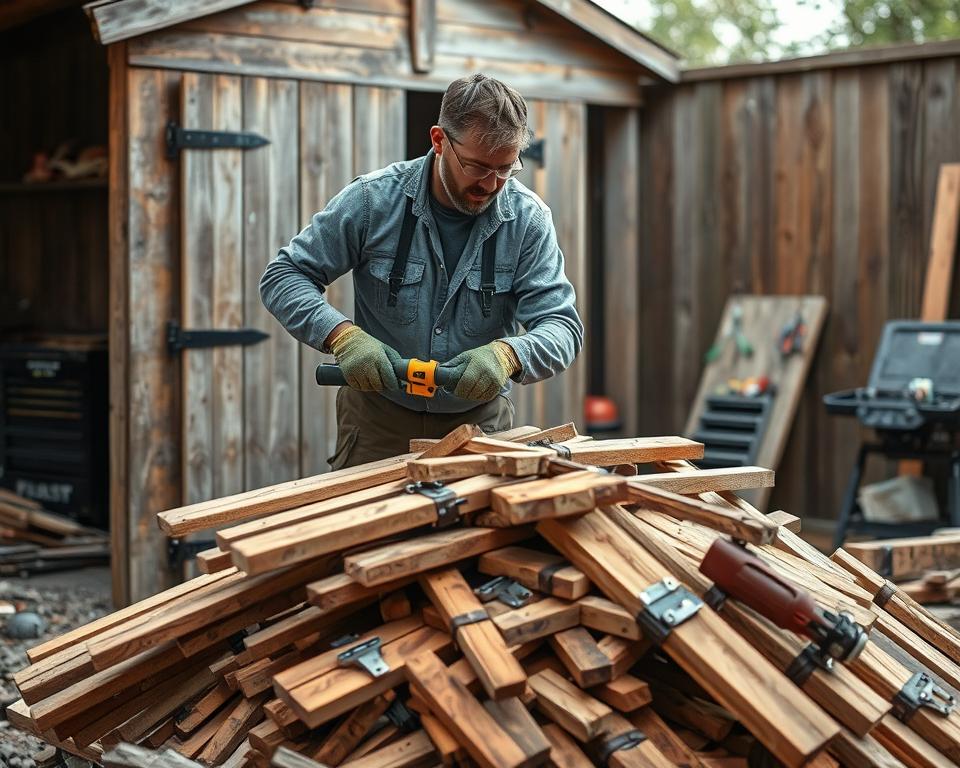
Personal protection forms the foundation of safe removal practices. Sturdy gloves, safety goggles, and appropriate footwear prevent injuries from sharp edges or falling debris.
Step-by-Step Dismantling Process
The first stage involves removing roof panels while maintaining stability. Working from the top down prevents structural collapse during the process.
Wall sections come next, with careful attention to fasteners and connections. For metal constructions, screws and bolts require patient removal without forcing stuck components.
Final disassembly focuses on the base structure and foundation. This systematic approach ensures materials remain intact for potential recycling opportunities.
Essential tools include screwdrivers, spanners, hammers, and crowbars. Larger structures may benefit from power tools for efficiency.
Having assistance available proves invaluable when handling large panels. Working methodically rather than rushing reduces accident risks significantly.
Proper technique not only protects individuals but also preserves material quality. This careful approach supports environmental responsibility through effective recycling.
Choosing Between DIY and Professional Removal
When tackling a garden structure clearance, homeowners face a critical decision between independent work and professional assistance. This choice significantly impacts the project’s efficiency, cost, and legal compliance.

Engaging a licensed removal service offers distinct advantages for many situations. Professionals handle both dismantling and disposal with remarkable speed.
Advantages of Hiring Licensed Removal Services
Expert teams complete the job efficiently, often in half the time of DIY attempts. They possess the right tools and experience to manage complex structures safely.
Legal protection represents a crucial benefit. Homeowners remain responsible for waste destination, making licensed carriers essential. These professionals provide waste transfer notes as proof of proper disposal.
The UK government website allows verification of waste carrier credentials. This simple check prevents potential issues with unlicensed operators.
Cost Implications and Time Considerations
DIY approaches save money but demand significant time investment. They require appropriate tools and physical capability to handle materials safely.
Professional services prove particularly valuable for difficult-to-access locations or hazardous materials. The convenience factor often justifies the additional cost for busy homeowners.
Ultimately, the choice depends on individual circumstances including budget, timeline, and confidence in personal abilities. Each option serves different needs effectively.
Disposal Methods for Wooden Sheds
Timber structures represent the most common type of garden storage building found across UK properties. Their disposal requires specific approaches that differ from metal or plastic alternatives.

Proper planning ensures efficient removal while maximising recycling opportunities. Homeowners should understand the distinct requirements for different wood treatments.
Dismantling and Recycling at a Household Waste Recycling Centre
Complete dismantling precedes transport to registered facilities. Metal fittings like nails and screws often need removal before timber acceptance.
Untreated wood typically qualifies for recycling programmes. Many Household Waste Recycling Centres accept clean timber for processing.
Some councils classify this material as DIY waste. Charges may apply based on quantity and vehicle type used for transport.
Handling Painted or Treated Wood
Chemically treated timber presents different challenges. These materials are unlikely to be recyclable through standard channels.
Burning treated wood releases harmful chemicals into the atmosphere. Painted surfaces, particularly older ones, may contain hazardous lead-based coatings.
Such materials usually require general waste disposal. Bulky waste collection services or licensed contractors provide alternative routes.
Homeowners should always check local council policies before visiting facilities. This prevents wasted journeys and ensures regulatory compliance.
Disposal Options for Metal and Plastic Sheds
The recycling potential of metal and plastic storage buildings offers environmentally responsible disposal pathways. These materials often provide superior recycling opportunities compared to traditional wooden structures.

Proper handling ensures maximum material recovery and compliance with local regulations. Homeowners should understand the specific requirements for each material type.
Preparing Metal Components for Recycling
Metal sheds constructed from steel or aluminium alloys have significant scrap value. Most councils do not collect these materials through regular bin collections.
Before transport to scrap yards or recycling centres, thorough preparation is essential. Remove all screws, bolts, and non-metal attachments like rubber seals. Cleaner metal typically receives better prices at scrap facilities.
Guidelines for Recycling Plastic Parts
Plastic sheds made from polyethylene (PE) and high-density polyethylene (HDPE) are widely accepted at Household Waste Recycling Centres. However, polyvinyl chloride (PVC) materials may face restrictions.
Rules vary significantly between facilities, requiring homeowners to check specific acceptance policies. When local centres refuse plastic components, private recycling companies offer alternative disposal routes.
Health, Safety and Environmental Considerations
Comprehensive safety protocols are essential when dealing with potentially hazardous materials in older garden buildings. Homeowners must keep environmental responsibility in mind throughout the removal process.
Dealing with Hazardous Materials and Asbestos
Asbestos represents the most serious hazard in shed disposal. The Health and Safety Executive estimates 5,000 people die annually from asbestos-related illnesses.
This material appears in structures built before the asbestos ban. Professional removal is strongly recommended for safety.

Homeowners choosing DIY asbestos removal need specialist protection. This includes gloves, safety goggles, disposable coveralls, and dust masks.
Asbestos waste requires double-bagging before disposal. Approved options include council services or licensed contractors.
Proper Use of Tools and Protective Gear
Basic safety equipment prevents common injuries during dismantling. Sturdy gloves protect against sharp edges and rusty nails.
Safety goggles shield eyes from flying debris. Proper footwear provides stability on uneven surfaces.
Homeowners should work methodically and avoid forcing stuck panels. Never work alone on large structures for safety.
Keeping these precautions in mind protects people and the environment. Responsible practices ensure a successful project.
Post-Removal Site Preparation and Garden Repurposing
Repurposing the area where a garden building once stood presents exciting opportunities for enhancement. Many homeowners focus solely on removal without considering the potential that emerges.
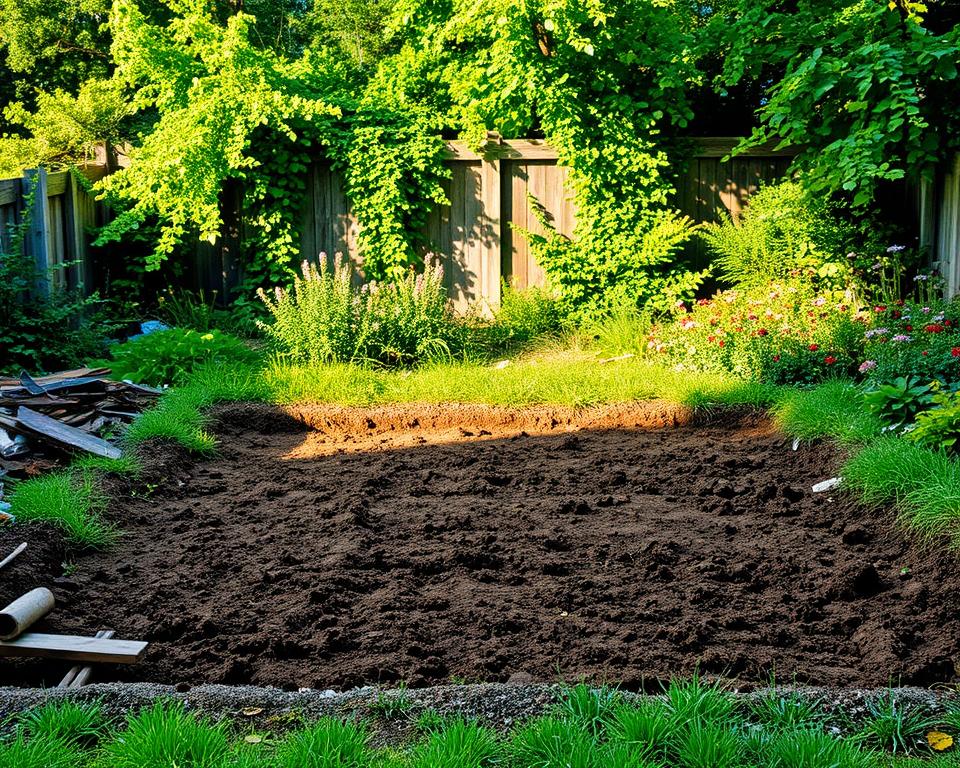
The ground beneath long-standing structures often reveals significant changes. Years of compression and limited sunlight create unique conditions requiring attention.
Clearing Debris and Levelling the Ground
Thorough debris clearance is the essential first step. Homeowners should remove all remnants including foundation materials and accumulated waste.
Weed growth and soil compaction are common issues. These problems developed over the structure’s life span and need addressing.
Proper levelling creates a blank canvas for future projects. This process transforms neglected areas into valuable garden assets.
| Ground Condition | Common Issues | Recommended Solutions |
|---|---|---|
| Weed growth | Persistent roots, seed spread | Complete removal, soil treatment |
| Soil compaction | Poor drainage, hard surface | Aeration, soil amendment |
| Moisture accumulation | Damp patches, poor absorption | Improved drainage, grading |
| Foundation remnants | Concrete bases, paving slabs | Removal or incorporation |
Planning future use while the space is clear proves advantageous. Homeowners can visualise different options without obstruction.
Popular choices include extending lawns, creating patio areas, or installing new garden sheds. Each option adds value and functionality to outdoor spaces.
Addressing drainage and soil quality during preparation prevents future issues. This proactive approach ensures long-term success for any garden enhancement project.
FAQ
What is the safest way to begin removing a garden shed?
The safest method involves a careful inspection first. Individuals should check for hazardous materials like asbestos, especially in older roofing panels. They must also ensure they have the correct tools and protective gear before starting any dismantling work.
Can I recycle all parts of my old wooden shed?
A> While much of the timber can be recycled, it depends on its condition. Clean, untreated wood is often accepted at household waste recycling centres. However, painted or treated wood may require special disposal as it is classified as hazardous waste.
Is it better to hire a professional removal service or do the job myself?
This choice depends on the project’s scale and the individual’s DIY skills. A professional shed removal service saves time and handles heavy lifting and waste disposal. For a small, simple structure, a DIY approach may be cost-effective, but safety should always be the priority.
How should I dispose of a metal shed?
Metal sheds are highly recyclable. After dismantling, the metal components should be taken to a local scrap metal yard or a recycling centre that accepts metal. It is a sustainable option that gives the materials a new life.
What should I do if I suspect my shed contains asbestos?
If asbestos is suspected, work must stop immediately. Disturbing it can release dangerous fibres. Homeowners must contact their local council or a licensed asbestos removal specialist for safe testing and disposal. They should never attempt to handle it themselves.
What are the main benefits of clearing an old shed from my garden?
Removing an outdated structure frees up valuable garden space for new uses. It also eliminates potential safety hazards from rotting wood or unstable panels. The cleared area can be repurposed for a lawn, patio, or a new building, enhancing the garden’s overall appeal.
Are there specific regulations for disposing of shed waste?
Yes, regulations can vary by local authority. People must check local guidelines for disposing of construction and demolition waste. Some materials, like certain plastics or treated timber, have specific rules to protect the environment.