How to Lay a Summerhouse Base Correctly and Safely
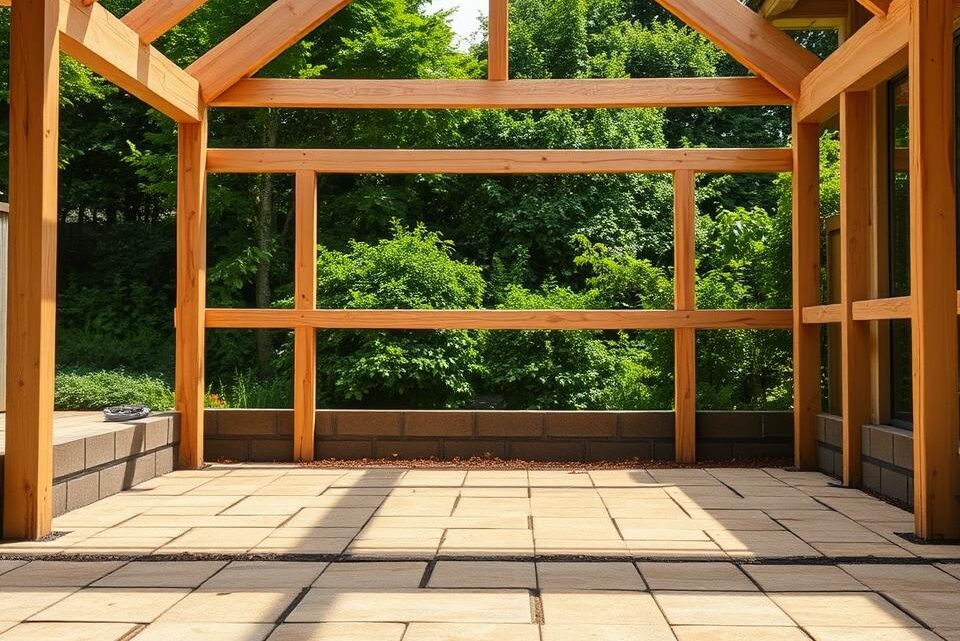
Creating a beautiful and functional garden retreat starts from the ground up. The foundation upon which a garden building sits is its most critical component. This comprehensive guide provides expert knowledge for homeowners.
A properly constructed foundation is fundamental. It prevents costly damage, structural warping, and premature deterioration. Without this solid start, even the finest summerhouse can fail.
This article covers essential preparation techniques, material selection, and step-by-step construction processes. It is suitable for various skill levels, from novice to experienced DIY enthusiasts.
Readers will discover the critical importance of achieving a perfectly level surface and ensuring proper drainage. These factors are vital for protecting a property owner’s investment for years to come.
Whether choosing concrete, paving slabs, or a timber sub-frame, this guide equips individuals with the knowledge to make informed decisions. The instructions follow professional building standards while remaining accessible.
Inhaltsverzeichnis
Key Takeaways
- A robust foundation is essential for the structural integrity of any garden building.
- Correct preparation prevents future issues like subsidence and water damage.
- Selecting the right materials is a crucial step in the construction process.
- Achieving a perfectly level surface is non-negotiable for stability.
- Proper drainage safeguards the building from moisture-related problems.
- Following established building standards ensures a safe and durable result.
Understanding the Importance of a Solid Summerhouse Base
The structural integrity of any garden building is fundamentally dependent on its foundation. A robust base is not merely a suggestion; it is a critical requirement for ensuring the structure’s safety, durability, and performance over its entire lifespan.
Enhancing Stability and Longevity
A primary function of a solid base is to distribute the building’s weight evenly across the ground. This prevents uneven settling, which is a common cause of structural damage. Without this stable platform, doors and windows can warp, and the main frame may twist.
Hard materials like concrete or paving slabs provide exceptional stability. They eliminate any rocking motion when people are inside, protecting the joints and fixings from unnecessary stress. This directly contributes to a longer life for the entire structure.
Protecting Against Moisture and Ground Shifting
Elevating the building off the ground is essential for moisture protection. This creates a vital barrier that stops dampness from seeping into wooden floors and walls. Preventing this water damage is key to avoiding rot, mould, and decay.
Furthermore, the ground itself is not static. Seasonal changes, frost, and soil composition can cause shifting. A properly constructed foundation acts as a buffer against these movements, safeguarding the building’s integrity.
| Threat | Consequence without a Base | How a Base Protects |
|---|---|---|
| Uneven Weight Distribution | Structural warping and frame damage | Creates a level surface for even support |
| Ground Moisture | Rot, mould, and decay in timber floors | Elevates the structure, creating a dry barrier |
| Soil Movement | Instability, misaligned doors/windows | Provides a stable, immovable platform |
Investing in a quality base from the outset is a proactive measure. It prevents costly future repairs and ensures your garden building remains a valuable and enjoyable feature for decades.
Materials and Options for Your Base
Selecting the appropriate foundation material is a pivotal decision in the construction of a garden building. The chosen type of base directly influences the project’s cost, installation complexity, and long-term maintenance needs. Property owners typically consider three main options.
Concrete Base – Durability and Considerations
A poured concrete slab offers unmatched stability and longevity. This base is ideal for heavy structures and provides decades of service with minimal upkeep.
However, this option requires significant preparation, including excavation and curing time. Potential drainage issues must also be carefully managed during installation.
Paving Slab and Timber Sub-Frame Alternatives
Paving slab foundations present a more flexible option. Individual slabs are laid on a compacted gravel sub-base, allowing for adjustments. They can be secured with mortar for added stability.
Timber sub-frames, constructed from treated wood, are a cost-effective solution when used atop existing concrete pads. This type of frame is quick to assemble but requires regular treatment to protect against rot.
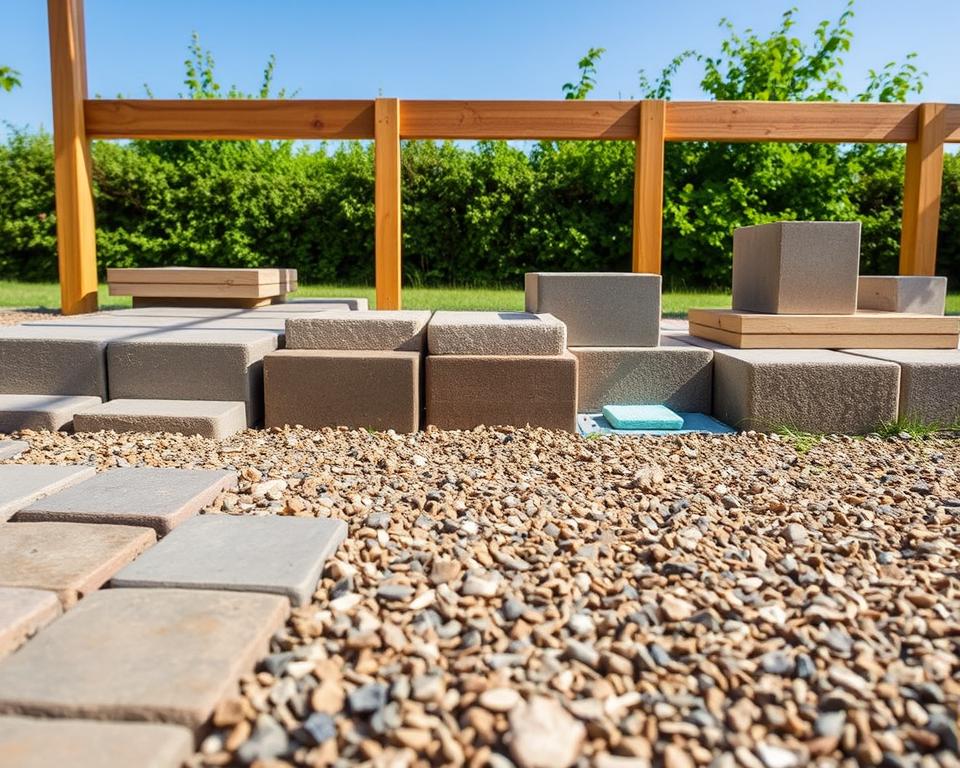
| Material Type | Key Advantage | Primary Consideration |
|---|---|---|
| Concrete | Superior durability and load-bearing capacity | Higher initial cost and complex installation |
| Paving Slab | Adjustable and aesthetically versatile | Can shift over time and may need re-levelling |
| Timber Sub-Frame | Cost-effective and quick to install | Requires ongoing maintenance to prevent decay |
Preparation and Site Clearing for a Level Base
Before any construction begins, thorough site clearing establishes the essential groundwork. This initial phase determines the success of the entire project. Proper preparation prevents future settlement issues.
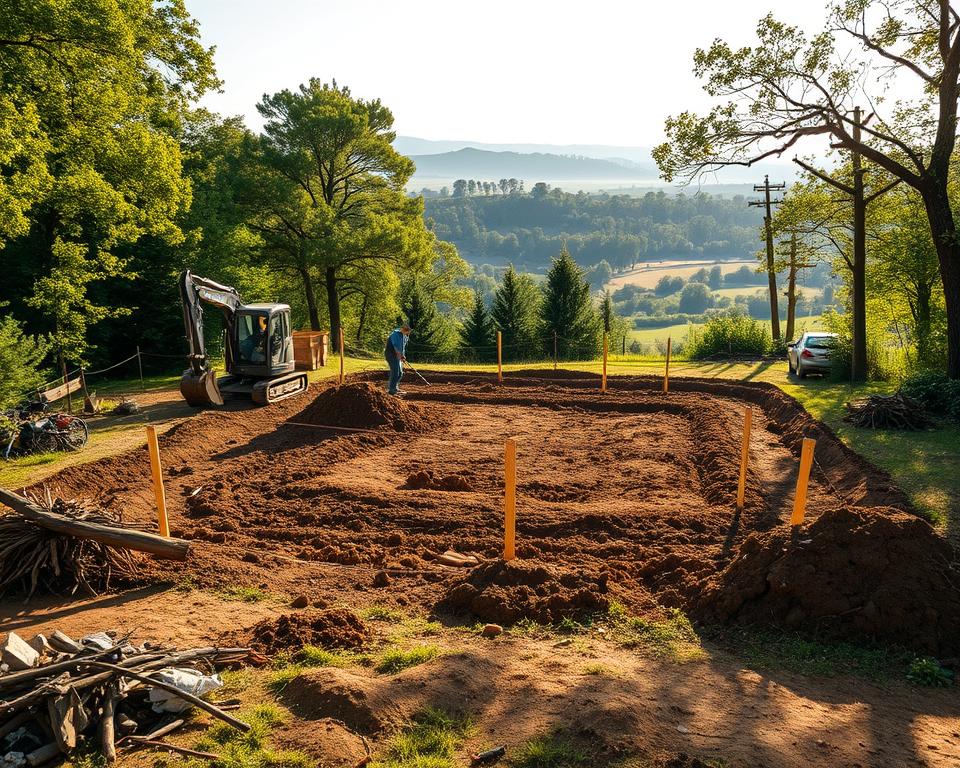
The process requires specific tools: wooden pegs, string, a mallet, spade, and measuring tape. These items help create precise boundaries for the foundation area.
Marking Out the Area with String and Pegs
Begin by positioning four pegs at each corner of the planned space. Connect them with taut string to outline the exact footprint. This creates a visual guide for the entire operation.
Measure diagonally between opposite corners to ensure perfect square alignment. Equal measurements confirm accurate angles. The string lines serve as a constant reference throughout the project.
Clearing Debris and Excavating Consistently
Remove all vegetation, rocks, and organic matter from the designated area. This step eliminates potential voids beneath the foundation. The ground must be completely clear before excavation.
Excavate to a consistent depth of 175-225mm across the entire space. Maintain the string boundaries as a guide. This approach simplifies subsequent levelling work for the shed base.
How to Lay a Summerhouse Base
Executing the foundation work demands precision and careful attention to detail from the very first step. This phase transforms planning into a physical, stable structure. A systematic process is essential for success.
Step-by-Step Installation Process
The installation follows a logical sequence where each action builds upon the last. Rushing the initial preparatory work compromises the entire project’s stability. Once the area is fully prepared, the actual construction can begin.
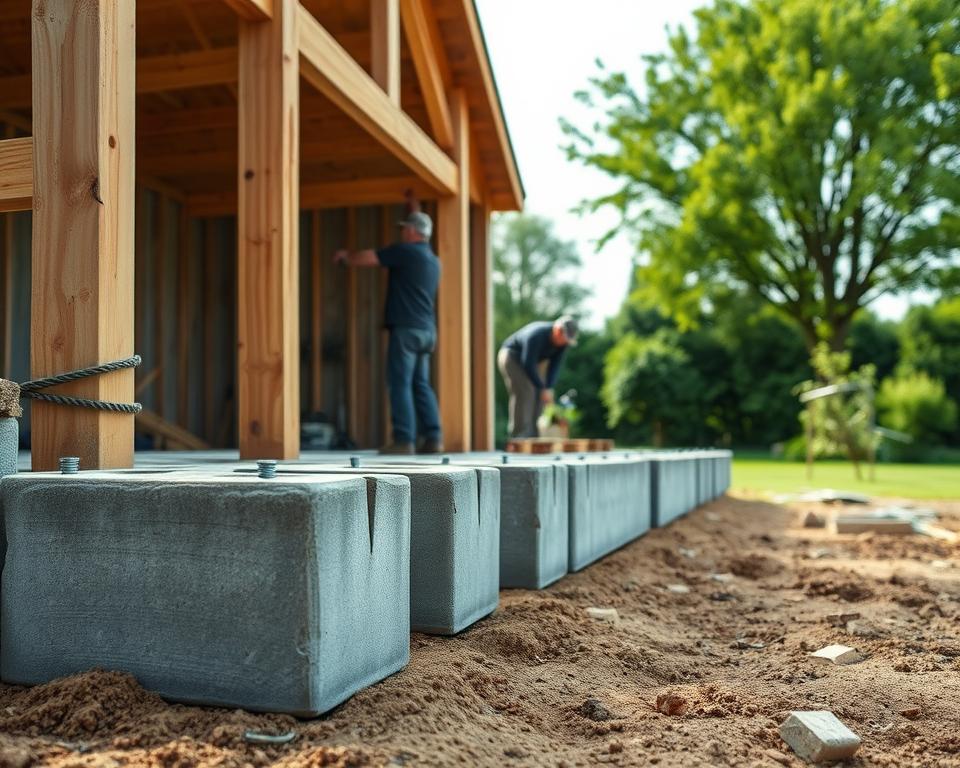
For projects involving a concrete base, timing is critical. The material begins to set within approximately two hours of mixing. This makes efficiency and having assistance vital for a smooth workflow.
Ensuring Correct Levels Using a Spirit Level
The spirit level is the most important tool for verifying accuracy. It must be used continuously, not just at the end. Checking as you progress allows for easy corrections.
Place the tool in multiple directions across the surface. Look for any high or low spots that need adjustment. This meticulous checking ensures the final base is perfectly flat.
A foundation out of level by mere millimetres can lead to significant structural issues over time. Precision during installation prevents future headaches.
| Checking Method | Purpose | Ideal Result |
|---|---|---|
| Lengthwise Placement | Verifies front-to-back level | Bubble centred in the vial |
| Widthwise Placement | Checks side-to-side level | Bubble centred in the vial |
| Diagonal Placement | Identifies twisting or warping | Consistent reading across diagonals |
This guide emphasises that patience and willingness to make adjustments are as important as the instructions themselves. Whether building a shed base or a larger foundation, this careful approach guarantees integrity.
Detailed Steps for Ground Levelling and Base Installation
The longevity of a garden structure depends heavily on the quality of subsurface preparation. This phase requires careful execution to ensure the finished foundation provides lasting support.
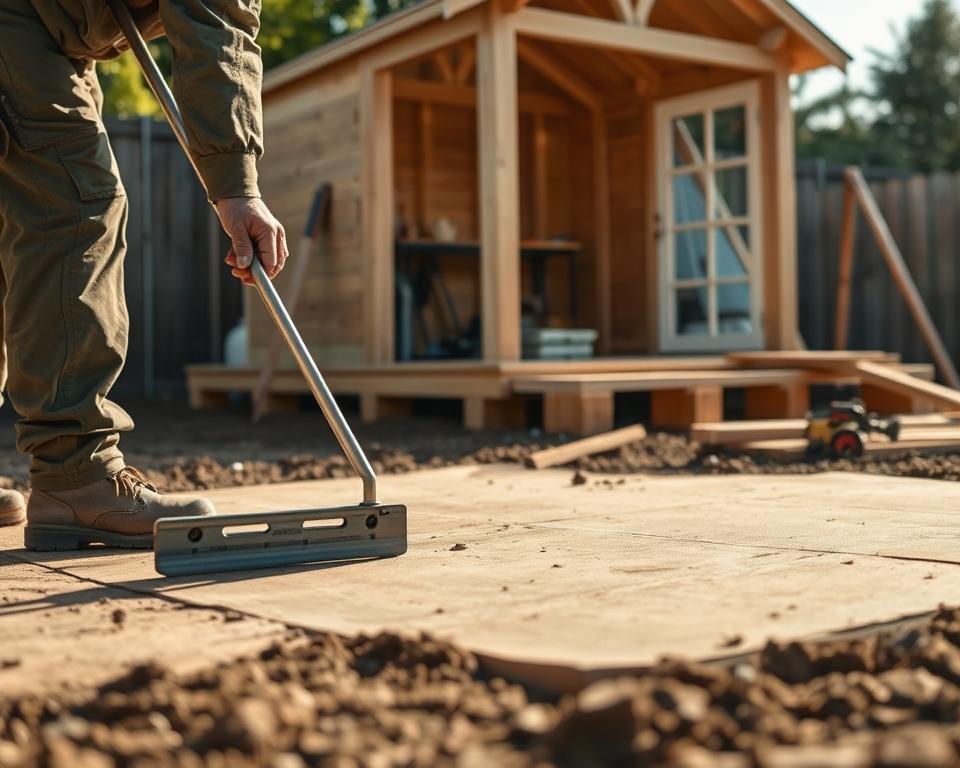
Compacting the Soil and Adding Sub-Base Materials
Excavation begins the process, with a consistent depth of 175mm for smaller sheds and 225mm for larger garden buildings. The entire area must maintain uniform depth to prevent uneven settling.
Next, add a layer of MOT type 1 stone or gravel to the dug-out ground. This sub-base should be 100mm deep for sheds and 150mm for heavier structures. Proper compaction using a wacker plate eliminates air pockets.
A layer of sharp sand covers the compacted stone, filling voids and protecting the damp-proof membrane. This membrane prevents moisture rising into the building’s floor.
Mixing, Pouring, and Finishing the Concrete or Laying Paving Slabs
For concrete work, mix cement, sand, and aggregate in a 1:4:1 ratio. Add water gradually until the mixture is stiff enough to support itself on a shovel. Mortar plasticiser improves workability.
Spread the concrete evenly across the area, slightly above the timber frame. Level the surface using a straight edge resting on the frame. A stiff broom creates a non-slip texture.
Weather protection is crucial during curing. Cover with polythene in wet conditions for 24 hours. Allow three days minimum curing time before light use.
When working with paving slabs, start from one corner and work systematically. Check each slab with a spirit level and adjust as needed. Mortar in the joints secures the paving slabs permanently.
Maintenance and Long-Term Tips for Your Garden Building Foundation
Regular upkeep protects the investment made in constructing a solid foundation. Proper maintenance ensures the foundation continues to support the garden building effectively for years.
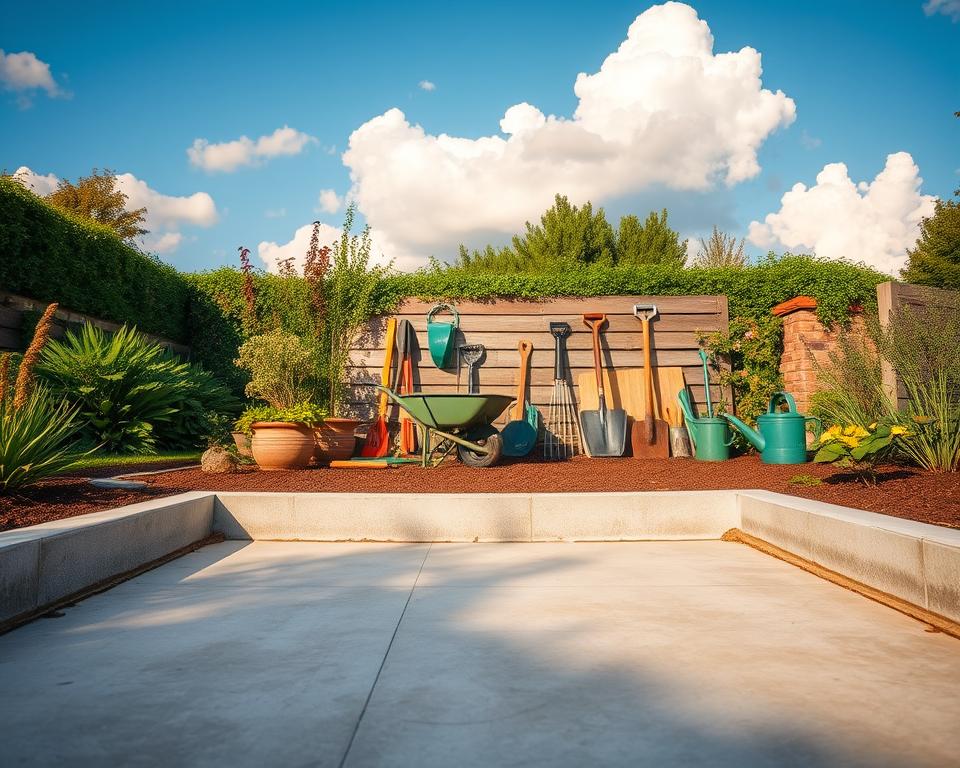
Regular Inspections and Adjustments
Different base materials require specific care routines. Concrete offers excellent durability with minimal maintenance, needing only periodic checks for cracks.
Paving slabs may shift over time, requiring re-levelling to maintain stability. Timber sub-frames demand the most attention, with annual treatment to prevent wood decay.
Seasonal inspections help identify issues before they cause significant damage. Check the space beneath the building for moisture or pest activity.
Preventing Damp and Structural Damage
Water management around the base perimeter is critical. Ensure proper drainage to prevent pooling that accelerates deterioration.
Clear vegetation growing against the foundation promptly. Roots can disrupt the surface and organic matter retains moisture.
Maintain clearance between wood components and ground-level moisture sources. This prevents floor damage in garden buildings.
Addressing issues early preserves the base‘s integrity. This proactive approach safeguards your shed or summerhouse investment.
FAQ
What is the best type of base for a summerhouse?
The best type of base depends on the building’s size and the ground conditions. A concrete slab offers exceptional durability and stability for larger, heavier structures. For lighter garden buildings, a well-constructed timber frame or a bed of paving slabs on compacted sand and gravel provides a solid, effective foundation.
How deep should a concrete base for a summerhouse be?
A concrete base should typically be at least 100mm (4 inches) thick. For larger constructions or in areas with poor ground, a depth of 150mm is advisable. The excavation must also account for a sub-base layer of around 75-100mm of compacted hardcore to ensure proper drainage and prevent shifting.
Can I lay a summerhouse base directly on soil or grass?
It is not recommended. Placing a summerhouse directly on soil or grass invites moisture, leading to rot in the timber frame and potential structural damage. It also fails to provide a level surface, causing doors and windows to warp over time. A proper base is essential for the building’s longevity.
How do I ensure my summerhouse base is perfectly level?
Use string lines attached to wooden pegs to mark the perimeter. A spirit level is crucial for checking both the strings and the surface during construction. When pouring concrete or laying slabs, constantly check for levelness across the entire area to avoid future problems with the building’s installation.
Is a damp-proof membrane necessary for the base?
Yes, a damp-proof membrane is highly recommended. It acts as a vital barrier, preventing ground moisture from rising into the summerhouse floor. This simple addition significantly reduces the risk of damp and extends the life of the building, especially for timber-framed structures.
How long should a concrete base cure before building on it?
A concrete base requires adequate time to cure and gain full strength. It is generally advised to wait at least 48 to 72 hours before placing light loads on it. For full construction, allowing the concrete to cure for up to seven days ensures a solid, stable foundation.