Discover How to Create Your Own Garden Mulch Easily

Transforming garden waste into valuable organic matter represents a fundamental practice for sustainable horticulture. This comprehensive guide explores the straightforward process of producing homemade mulch, a technique accessible to gardeners of all experience levels throughout the United Kingdom.
The practice offers significant advantages for soil health and plant development. Homemade mulch contributes to moisture conservation, weed management, and temperature stability in planting beds. It gradually releases nutrients as it decomposes, supporting robust plant growth throughout the seasons.
Many households already possess the necessary materials for this DIY project. Kitchen scraps, fallen leaves, and grass clippings can be repurposed effectively. This approach reduces reliance on commercial products while supporting environmental sustainability goals.
Following the guidance in this article enables gardeners to establish a continuous cycle of organic recycling. This practice enhances soil structure and microbial activity, creating optimal conditions for diverse plant species. The result is a healthier, more productive outdoor space.
Inhaltsverzeichnis
Key Takeaways
- Homemade mulch improves soil health through natural decomposition processes
- This practice helps conserve moisture and suppress weed growth effectively
- Most materials can be sourced from household waste and garden debris
- The technique supports sustainability by reducing landfill contributions
- Proper mulch application regulates soil temperature throughout the year
- This approach enhances microbial activity and nutrient availability
- Gardeners can establish a continuous organic recycling system
Understanding the Benefits of Homemade Garden Mulch
The strategic application of homemade mulch unlocks several core benefits that are fundamental to a thriving garden. This natural layer acts as a multifunctional resource, directly contributing to plant vitality and soil ecosystem stability.
Nutrient Enhancement and Soil Health
Organic mulches slowly decompose, releasing essential nutrients that feed plants. This process creates a sustained fertilisation system, promoting robust growth.
Earthworms and microorganisms are attracted to the decomposing material. Their activity improves soil structure, enhancing its ability to retain moisture and drain effectively. This leads to healthier root development.
A good mulch is like a blanket and a meal for your soil, protecting it and feeding it slowly over time.
Weed Suppression and Moisture Retention
A thick layer of mulch blocks sunlight, preventing most weed seeds from germinating. This reduces competition for resources, allowing desired plants to flourish with less maintenance.
The physical barrier significantly reduces water evaporation from the soil surface. This moisture retention means less frequent watering is needed, helping plants endure drier periods.
| Benefit | Primary Effect | Secondary Advantage |
|---|---|---|
| Nutrient Release | Slow fertilisation | Improved plant health |
| Weed Control | Light blockage | Reduced manual labour |
| Moisture Conservation | Reduced evaporation | Drought resistance |
| Soil Insulation | Temperature moderation | Root protection |
These combined effects foster a resilient and productive growing environment. The practice supports a natural cycle of improvement within the garden.
Preparing the Materials for Your Mulch
Assembling the correct organic materials forms the foundation for producing high-quality garden mulch. The right combination of ingredients ensures efficient decomposition and a nutrient-rich final product.
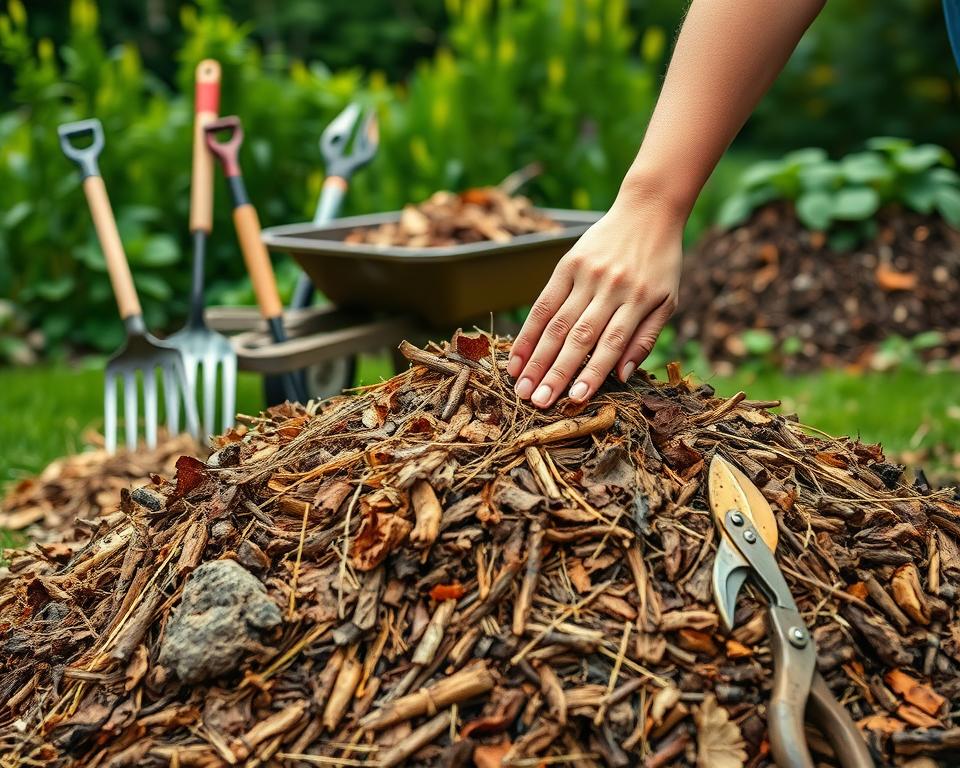
Successful preparation starts with gathering a diverse mix of organic matter. Autumn leaves are a particularly valuable resource. Shredding them into smaller pieces significantly speeds up their breakdown.
Selecting Organic Ingredients like Leaves, Straw and Grass
Grass clippings offer a nitrogen boost but should be dry to prevent matting. Straw and hay provide essential carbon, balancing the mixture. Kitchen scraps like vegetable peelings and coffee grounds add further nutrients.
Shredded cardboard and newspaper are also excellent carbon sources. They help create structure within the compost pile.
| Material Type | Primary Role | Preparation Tip |
|---|---|---|
| Leaves (Brown) | Carbon Source | Shred for faster decomposition |
| Grass Clippings (Green) | Nitrogen Source | Use dry to avoid clumping |
| Straw (Brown) | Carbon & Structure | Excellent for bulk and aeration |
| Kitchen Scraps (Green) | Nutrients | Avoid meat, dairy, cooked foods |
Avoiding Pesticide-Treated Materials
Selecting chemical-free materials is absolutely critical. Residues from pesticides or herbicides can persist and harm sensitive plant life.
Always ensure that grass, straw, and other ingredients originate from untreated sources. This guarantees the organic integrity and safety of the finished mulch for your garden.
How to Create Your Own Garden Mulch
Embarking on a homemade mulch project unlocks the potential for significant customisation and savings. This approach turns household and garden waste into a valuable resource. It represents a core DIY gardening practice that benefits both plants and the planet.

The financial advantage is considerable. By using materials like leaves and kitchen scraps, gardeners avoid the expense of commercial products. This makes soil improvement highly economical.
Tailoring the mixture is another key benefit. Gardeners can adjust nutrient levels and texture for specific plants. This personalised approach supports optimal growth in different garden areas.
Exploring Natural and DIY Approaches
A variety of techniques exist, suitable for all enthusiasm levels. Simple methods like creating leaf mould require minimal effort. They involve piling autumn leaves and allowing nature to take its course.
More involved techniques, like hot composting, produce results faster. These methods require managing material ratios, moisture, and aeration. They accelerate decomposition through increased temperature.
| Method | Level of Involvement | Time to Maturity |
|---|---|---|
| Leaf Mould | Low (Passive) | 12-24 months |
| Cold Composting | Medium (Occasional Turning) | 6-12 months |
| Hot Composting | High (Active Management) | 2-4 months |
Essential tools are basic and often already owned. A garden fork, spade, and perhaps a shredder are sufficient. This accessibility makes the project feasible for anyone interested in DIY gardening.
Beyond cost, the environmental rewards are profound. This practice reduces landfill waste and carbon footprint. It embodies a sustainable cycle of organic recycling right in the garden.
Step-by-Step Process for Mulch Production
>
>
compost: 4, water: 2, pieces: 2, small pieces: 2, mulching: 2, temperature: 2, material: 1, leaves: 2
Flesch Reading Ease: ~65 (8th-9th grade level)
>
compost: 4, water: 2, pieces: 2, small pieces: 2, mulching: 2, temperature: 2, material: 1, leaves: 2
Flesch Reading Ease: ~65 (8th-9th grade level)
>
compost: 4, water: 2, pieces: 2, small pieces: 2, mulching: 2, temperature: 2, material: 1, leaves: 2
Flesch Reading Ease: ~65 (8th-9th grade level)
>
compost: 4, water: 2, pieces: 2, small pieces: 2, mulching: 2, temperature: 2, material: 1, leaves: 2
Flesch Reading Ease: ~65 (8th-9th grade level)
>
compost: 4, water: 2, pieces: 2, small pieces: 2, mulching: 2, temperature: 2, material: 1, leaves: 2
Flesch Reading Ease: ~65 (8th-9th grade level)
>
Customising Your Mulch for Specific Garden Needs
The art of customising organic matter mixtures enables precise nutrient delivery to support specific plant requirements. This approach moves beyond generic applications to address the unique characteristics of each horticultural setting.

Adjusting the Green-to-Brown Ratio
Balancing nitrogen-rich green materials with carbon-heavy brown components forms the foundation of effective customisation. Green materials like grass clippings provide rapid nutrient release. Brown elements such as dried leaves contribute to soil structure.
The ideal ratio varies depending on the intended application. A higher proportion of green materials benefits nutrient-demanding specimens. This mixture supports vigorous growth in vegetable plots.
Tailouring Mulch for Different Plant Types
Various species thrive under distinct soil conditions. Acid-loving specimens like rhododendrons respond well to leaf-based mixtures. These mimic their natural woodland habitat.
Mediterranean varieties prefer leaner, faster-draining compositions. Understanding individual requirements ensures optimal development. Soil testing provides a valuable baseline for these adjustments.
Strategic customisation allows gardeners to address specific deficiencies. It also supports the unique needs of different garden zones throughout the growing season.
Troubleshooting Common Mulching Issues
Even the most beneficial gardening practices can encounter challenges when applied incorrectly. Understanding these potential problems helps gardeners maintain optimal conditions for their plants.

Several common issues may arise during mulching activities. Recognising early signs prevents long-term damage to garden beds.
Identifying Over-Mulching and Excess Moisture
Applying too thick a layer represents a frequent error. This can prevent bulbs and herbaceous plants from emerging properly.
The ideal depth balances weed suppression with plant accessibility. Approximately 5 centimetres provides effective coverage without smothering growth.
Excess moisture problems often develop beneath thick layers. Poor drainage creates conditions favouring root rot and fungal diseases.
Regular monitoring ensures the soil remains damp but not saturated. Adjust watering practices to maintain healthy oxygen levels around roots.
Weed emergence through mulch indicates insufficient depth or contaminated materials. Proper composting temperatures eliminate viable seeds before application.
When problems are identified, careful raking thins excess material from plant bases. This simple action improves air circulation and growth conditions.
Regular maintenance includes checking for compaction and periodically aerating the layer. This preserves the mulch’s beneficial structure and moisture management properties.
Sustainable Practices and Cost Benefits
Adopting sustainable practices in the garden yields substantial rewards, both financially and environmentally. This approach transforms waste into a valuable resource, creating a circular system that benefits the entire outdoor space.

Embracing Eco-Friendly Recycling Methods
Homemade compost production epitomises eco-friendly recycling. It diverts kitchen scraps and garden debris from landfills, where they would release harmful methane gas.
This method significantly reduces a household’s carbon footprint. Prestigious institutions like Kew Gardens validate this approach, incorporating organic materials like stable manure into their large-scale operations.
Applying this nutrient-rich matter around fruit trees is particularly effective. It conserves essential moisture during fruit formation and promotes plant health.
Achieving Long-Term Savings in Your Garden
The financial advantages of this DIY method are considerable. Gardeners eliminate recurring costs for commercial bagged mulch and fertilisers.
Savings can amount to hundreds of pounds annually for active gardens. Efficient systems work in any available space, from small urban plots to larger properties.
Establishing a base routine for mulch application streamlines garden management. It reduces time spent on weeding and watering, allowing focus on cultivation.
| Aspect | Environmental Benefit | Financial Advantage |
|---|---|---|
| Waste Reduction | Lower landfill methane emissions | Eliminated disposal costs |
| Soil Health | Enhanced microbial diversity | Reduced need for bought amendments |
| Resource Efficiency | Closed-loop nutrient cycling | Savings on water and weed control |
These combined benefits create a thriving, cost-effective garden ecosystem. Sustainable practices ensure long-term vitality for all plants.
Conclusion
Embracing the production of homemade mulch offers a powerful step towards a more resilient and beautiful outdoor space. This rewarding practice turns everyday organic materials into a vital resource for plant health.
Gardeners can significantly improve their soil structure and fertility. They support a natural cycle of growth and renewal. This approach is both cost-effective and environmentally sound.
The techniques shared provide a solid foundation for success. Applying these methods allows for tailored care of trees, shrubs, and flower beds. The benefits extend across the entire garden.
Ultimately, this sustainable approach enriches the gardening experience. It fosters a deeper connection to the natural world while yielding a thriving landscape.
FAQ
What are the primary advantages of making my own garden mulch?
Creating your own mulch offers significant benefits for soil health and plant growth. It recycles garden waste into valuable nutrients, improves moisture retention, and naturally suppresses weeds. This DIY approach is a cost-effective and sustainable method to enhance a garden’s vitality.
Which materials are best for a homemade compost pile?
Excellent materials include fallen leaves, untreated grass clippings, and straw. These organic ingredients break down effectively. It is crucial to avoid any materials treated with pesticides to protect the beneficial organisms that drive the decomposition process.
How does one build a compost pile for mulch production?
Start by selecting a suitable space and creating a base layer of coarse materials like small twigs for aeration. Then, alternate layers of green materials, such as grass, and brown materials, like dried leaves. This layering encourages efficient decomposition and produces a rich, balanced compost.
Why is it important to turn the compost pile?
Regularly turning the pile introduces oxygen, which is essential for the decomposition process. This action helps maintain an optimal temperature, speeds up breakdown, and prevents unpleasant odours. Monitoring the pile’s moisture is also key to successful mulch creation.
Can I tailor mulch for different plants in my garden?
Absolutely. Different plants have unique needs. By adjusting the ratio of green to brown matter in your compost, you can influence the nutrient content and texture of the final material. This customisation supports the specific growth requirements of various plants, from vegetables to ornamentals.
What is a common issue to avoid when mulching?
Over-mulching is a frequent problem. Applying too thick a layer can lead to excess moisture around plant stems, potentially causing rot. A layer of 5-7 centimetres is generally sufficient to suppress weeds and retain moisture without harming plant health.
How does creating my own mulch support sustainable gardening?
This practice is a form of eco-friendly recycling. It diverts garden waste from landfills and reduces the need for purchased, often plastic-packaged, products. This method supports a closed-loop system within the garden, promoting long-term environmental and financial savings.