How to Build a Greenhouse Cheap: A Step-by-Step Guide

Many gardening enthusiasts dream of a personal greenhouse but worry about the costs and skills required. This guide demonstrates that a functional, protective structure is surprisingly accessible. With careful planning and simple materials, anyone can create their own growing space for as little as £75-£100.
The primary aim is to show that constructing a DIY greenhouse is achievable for all skill levels. Homesteaders and casual gardeners alike can benefit from this project. It opens up possibilities for year-round cultivation without a significant financial investment.
A personal greenhouse offers substantial advantages for any gardening project. It extends the growing season considerably, allowing for earlier seed starting in spring. Tender plants also gain vital protection from the UK’s unpredictable and often harsh weather.
Common misconceptions suggest these structures need expensive kits or specialist knowledge. In reality, excellent results come from basic techniques and readily available supplies. This comprehensive guide covers everything from initial planning to seasonal management strategies.
Readers will discover a professional approach that remains clear and practical for beginners. The step-by-step instructions ensure confidence throughout the entire building process. This project empowers individuals to take control of their gardening ambitions.
Inhaltsverzeichnis
Key Takeaways
- An affordable greenhouse can be constructed for a budget of approximately £75-£100.
- The project is designed to be accessible for gardeners of all experience levels.
- Key benefits include extending the growing season and protecting plants from weather.
- Successful construction relies on simple materials and basic DIY techniques.
- The guide provides a comprehensive, professional approach suitable for beginners.
- Effective planning is crucial for a successful and cost-effective build.
- Seasonal management strategies are included for long-term success.
Introduction to DIY Greenhouses on a Budget
The journey towards year-round cultivation begins with understanding accessible greenhouse options. A personal growing space offers significant advantages for any gardener seeking to extend their growing capabilities.
Benefits of a Cost-Effective Greenhouse
One major advantage is the extension of growing seasons. Tender plants gain protection from unpredictable weather patterns, including frost and excessive summer heat.
Financial benefits accumulate over time. Growing vegetables and herbs at home can offset grocery expenses significantly. This approach provides fresh produce when shop prices are highest.
These structures create a controlled microclimate for optimal plant growth. They shield delicate specimens from harsh winds and temperature fluctuations.
An Overview of DIY Approaches and Design Options
Various design approaches suit different requirements. Hoop houses using PVC frames offer simplicity and effectiveness. Window greenhouses made from salvaged materials provide excellent space utilisation.
Compact cold frames serve those with limited garden area. Raised bed greenhouses with protective covers combine planting and shelter functions. Each option serves specific gardening goals.
Selection depends on available space, climate considerations, and construction skills. A well-planned structure can serve for many years with proper maintenance. This makes it a worthwhile long-term investment.
Planning and Design for Your Budget-Friendly Greenhouse
Careful planning forms the foundation of any successful gardening structure. This initial phase determines how well the final product will function and serve its purpose.

Sketching Out Your Design and Measurements
Gardeners should begin by assessing their available area. They need to consider sun exposure, water access, and protection from winds. The chosen space must have good drainage and level ground.
Determining the right size is crucial. Common dimensions include 10×20 feet or 12×20 feet. A 10×20 foot greenhouse can fit two 4×20 foot beds with a central walkway.
The design process starts with paper sketches. Gardeners should outline dimensions, door placement, and internal layouts. This way of planning helps visualise the final structure.
Marking the footprint on the ground with stakes and rope creates a precise rectangle. Ensuring 90-degree corners maintains structural integrity. This design approach prevents future issues.
Choosing between frame styles like hoop or peaked roof affects the greenhouse design. Each option offers different benefits for the available area. The selected size should balance growing ambitions with practical constraints.
Considering future needs during planning allows for potential expansion. Proper preparation at this stage ensures the greenhouse will serve well for years.
How to Build a Greenhouse Cheap: Step-by-Step Instructions
Frame construction marks the transition from planning to physical implementation of the gardening structure. This phase requires methodical execution to ensure stability and longevity.
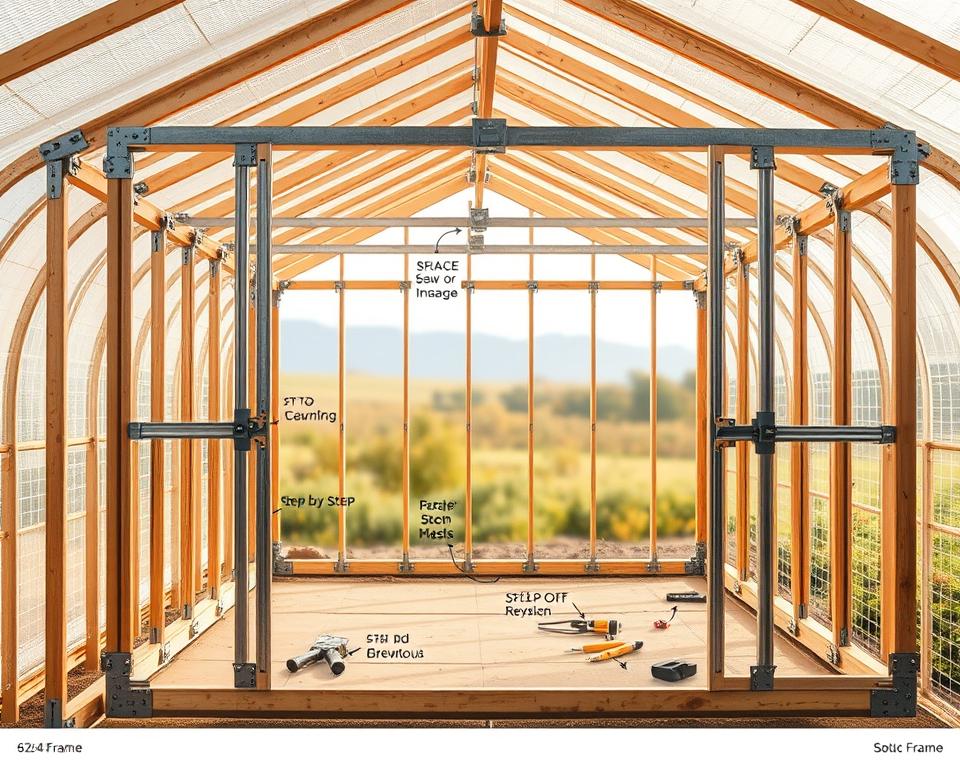
Assembling the Frame Using Recycled Materials and PVC
The initial step involves creating two 4×20 foot raised beds using repurposed timber. These beds serve as the foundation for the entire structure. Gardeners should ensure the wood is treated for outdoor durability.
For the PVC method, UV-resistant conduit pipes are screwed to the bed exteriors. Each pipe naturally bends into a dome shape when secured to the opposite bed. This creates the characteristic hoop design without complex tools.
Horizontal PVC braces provide essential reinforcement along both sides. This crucial step prevents frame distortion during adverse weather conditions.
| Method | Materials Required | Skill Level | Estimated Cost |
|---|---|---|---|
| PVC Hoop | UV-resistant pipes, wood, screws | Beginner | £60-£80 |
| Rebar Alternative | Rebar, pipe sections, irrigation hose | Intermediate | £65-£70 |
| Raised Bed Base | Repurposed timber, fixings | Beginner | £40-£60 |
Installing Supports and Securing with Rope and Rebar
The rebar approach offers simplicity without power tools. Short pipe sections are pounded into the ground at 4-foot intervals. Rebar pieces then bend naturally into position within these anchors.
Safety gloves are essential when handling rebar. Each piece requires careful manipulation to achieve the proper curve. Irrigation hose covers sharp ends to protect the eventual plastic covering.
Rope bracing completes the structural integrity. Permanent stakes placed 6 feet from each end support the tensioning system. This final step ensures wind resistance across the entire greenhouse length.
Material Selection and Cost-Effective Sourcing
The success of a budget-conscious greenhouse project hinges significantly on strategic material selection. This phase offers the greatest potential for savings without compromising the structure’s functionality.
Builders have three primary frames options: wood, PVC, and upcycled materials. Each presents distinct advantages for a diy greenhouse.
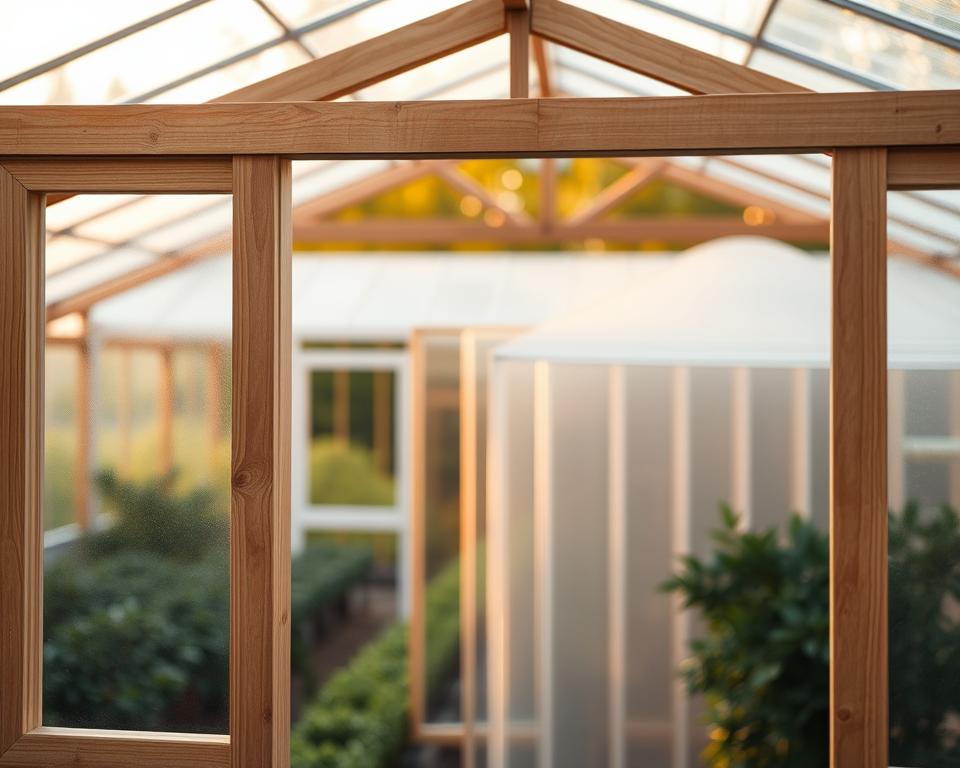
Comparing Wood, PVC, and Upcycled Options
Wood provides excellent strength and longevity. New timber, like 2×3 lumber, is a cost-effective option for door and window frames. Repurposed wood from old projects can reduce this cost to virtually nothing.
UV-resistant electrical conduit pvc is a lightweight and simple alternative. It withstands sun exposure far better than standard plumbing pvc. This makes it a durable choice for hoop-style frames.
Upcycled materials demand creativity but offer the most economical path. Sourcing salvaged windows and timber requires patience. The reward is a uniquely personalised and incredibly low-cost greenhouse.
Sourcing Second-Hand Windows and Affordable Greenhouse Film
Functional second-hand windows are readily available online or at salvage yards. A single window that opens and closes is sufficient; fancy new units are unnecessary.
For the covering, standard 4-mil plastic sheeting performs adequately. A large 20×100 foot roll costs around £75. Alternatively, connecting smaller sheets with clips can cost approximately £51.
Reinforced plastic offers greater wind resistance at a higher price. For basic diy applications, standard hardware shop plastic is often the most practical option.
Constructing the Structural Elements and Ventilation Features
The integration of doors and windows transforms the basic frame into a fully operational growing environment. These elements provide essential access while managing the internal climate for plant health.

Building Doors, Windows, and Ventilation Points
Construction begins with the door frame using 2×3 lumber. Builders attach this frame to raised beds or ground posts for stability. The door itself uses remaining timber wrapped in plastic sheeting.
Inexpensive hinges and a homemade latch complete the assembly. For maximum savings, an alternative approach uses extended plastic covering. This flap system lifts for entry without wooden framing.
Window installation requires careful support placement. For front windows, the door frame provides one side support. The opposite stud screws into the bed top and PVC hoop.
Proper ventilation separates successful greenhouses from stagnant growing spaces. Air movement prevents humidity buildup and temperature extremes.
Back windows need two studs since no door frame exists. Strategic positioning creates cross-ventilation across the structure. This airflow regulates temperature effectively.
| Ventilation Method | Construction Complexity | Cost Estimate | Effectiveness |
|---|---|---|---|
| Traditional Windows | Medium | £15-£30 | High |
| Plastic Flap Doors | Low | £0-£5 | Medium |
| Roof Vents | High | £20-£50 | Excellent |
Roof ventilation options include adjustable vents or opening panels. Hot air escapes through the top while drawing cooler air below. This natural circulation prevents plant stress.
Position doors on the calmer wind side for easier access. Even small gaps in covering provide sufficient air movement. The entire system maintains a healthy environment for growth.
Insulating, Securing and Finishing Touches
Proper securing of the plastic covering represents the final critical phase in greenhouse assembly. This stage determines how well the entire structure withstands seasonal challenges and protects delicate plants.

Using Rope Braces and Clamps to Fasten Plastic Sheets
After wrapping the frame, gardeners should staple the plastic sheets to wooden elements like door frames and garden bed edges. The covering must be tight-fitting to prevent flapping in strong winds.
Creative clamping solutions enhance security. Old water hose sections cut into 4-inch pieces work effectively. These are slit open, placed over the plastic, and screwed into PVC pipes for a firm hold.
Heavy-duty clips or quality duct tape join multiple plastic sheets when necessary. A criss-cross rope pattern over the entire structure prevents billowing during high winds.
Ensuring Weatherproofing and Structural Durability
The bottom edges require special attention. Heavy pipes, rocks, or sandbags weigh down the plastic perimeter. This prevents wind from getting underneath and lifting the cover.
The windward side deserves extra reinforcement. Once one side becomes loose, the entire plastic covering can shift and detach. Both 4-mil and 6-mil plastic perform adequately for this purpose.
Gardeners should avoid creating an airtight seal. Some airflow maintains healthier plant conditions by preventing excessive humidity buildup.
Final checks include covering sharp edges and ensuring smooth operation of doors and windows. This thorough approach guarantees long-term functionality for the growing space.
Seasonal Adjustments and Maximising Growth
Understanding the rhythm of the seasons allows gardeners to maximise their greenhouse’s productivity. This structure provides a controlled environment that can be finely tuned to protect plants from harsh weather and extend the growing season significantly.
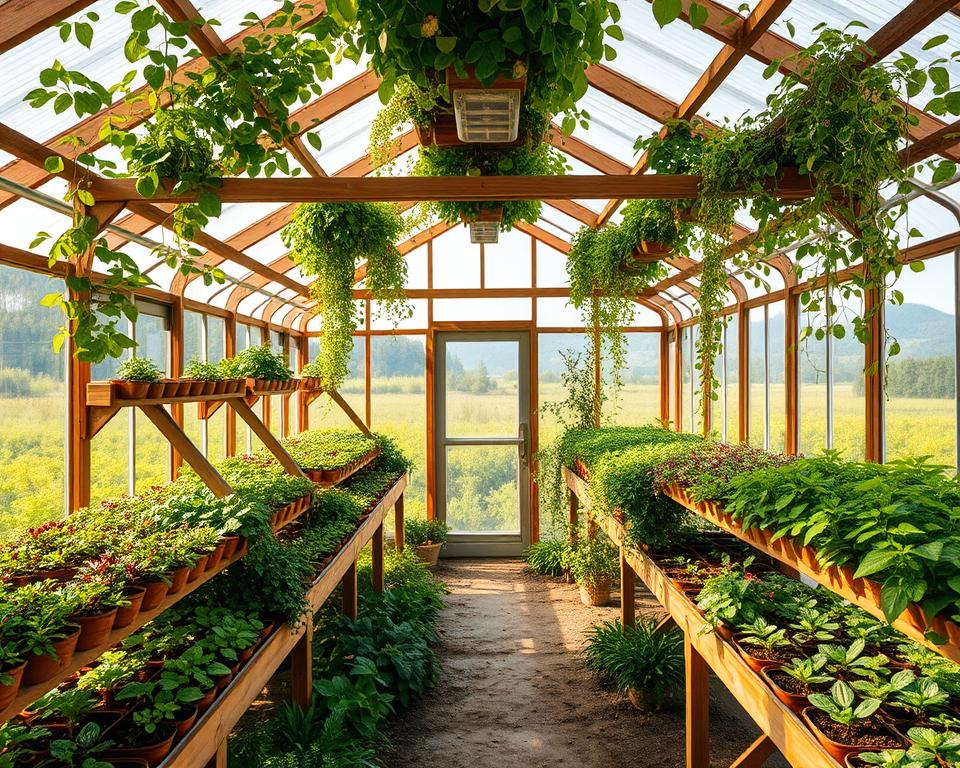
Overwintering Techniques and Insulation Strategies
Overwintering involves establishing autumn crops before the first freeze. The protected space insulates them from frost and harsh winds. Certain hardy vegetables will continue to grow a bit during the colder months.
Most crops started in late autumn remain in a state of preservation. This allows for fresh harvests throughout winter when outdoor gardening is impossible. Successful winter harvests often include spinach, kale, lettuce, carrots, and various herbs.
In spring, the greenhouse offers a significant advantage. Plants can be started several weeks earlier than outdoors. This head start results in much earlier harvests and a longer productive period.
When summer weather brings intense heat, the greenhouse requires adjustment. Strategic use of shade cloth is essential. It shields tender vegetables and fruit from sun scald and excessive heat.
This cloth provides just enough coverage whilst allowing pollinators access. It creates a cooler microclimate underneath, which can be the difference between life and death for plants like tomatoes during a heatwave.
Temperature regulation is a daily task. Gardeners should close all doors and windows to retain warmth when needed. Conversely, cracking a window or opening a door allows for cooling on a warmer day.
The covering itself is adaptable. Plastic sheeting is used in colder months for insulation. It is often replaced with shade cloth during hot periods to prevent overheating. This simple switch makes the greenhouse a versatile, year-round asset.
| Season | Primary Adjustment | Key Benefit | Example Crops |
|---|---|---|---|
| Autumn/Winter | Plastic covering for insulation | Frost protection & extended harvests | Spinach, Kale, Carrots |
| Spring | Early seed starting | Head start on outdoor season | Tomatoes, Peppers, Lettuce |
| Summer | Shade cloth for cooling | Protection from sun scald & heat | Greens, Herbs, Tomatoes |
On a sunny winter day, sitting inside the warm, peaceful environment can be a cure for the seasonal blues. It offers a therapeutic connection to growing things even during the darkest months, with fresh harvests possible right into the new year.
Conclusion
This guide has demonstrated that creating a sheltered plant haven is a realistic project. For a modest budget of under £100, gardeners can establish a durable diy greenhouse that withstands harsh winds and extreme weather. Whether one chooses a pvc hoop design or a traditional frame, the result is a valuable garden asset.
The effort invested yields returns for many years. This structure extends the growing season dramatically, allowing for early seed starting and winter harvests. It provides a protected space where plants thrive throughout the seasons.
With the guidance provided, any gardening enthusiast can achieve this rewarding addition to their home. The way to enhanced cultivation and fresh produce is clear. A well-built greenhouse truly transforms one’s gardening experience.
FAQ
What are the main benefits of building a greenhouse oneself?
Constructing a greenhouse offers significant control over the growing environment, extending the gardening season for vegetables and plants. It provides a cost-effective way to nurture seedlings and protect crops from harsh weather conditions.
Which materials are most suitable for a budget-conscious greenhouse frame?
For a low-cost frame, wood and PVC are excellent choices. Wood offers durability and strength, while PVC is lightweight and easy to work with. Upcycled materials, such as old windows and doors, can further reduce expenses.
How can one ensure the structure remains stable in windy conditions?
Securing the frame properly is essential. Using rope braces and anchoring the base with rebar into the ground greatly enhances stability. This method helps the structure withstand strong winds.
What is the best way to source affordable covering materials?
Greenhouse film or plastic sheeting is a cost-effective covering option. One can often find these materials at garden centres or online. For a more robust solution, second-hand windows or polycarbonate sheets offer good value.
Why is ventilation important in a greenhouse design?
Proper ventilation regulates temperature and humidity, preventing overheating and disease. Incorporating windows, vents, or a door that can be opened allows for essential air circulation.
Can a DIY greenhouse be used during the winter months?
Yes, with adequate insulation and protection. Techniques such as using thermal mass, like water barrels, or adding bubble wrap lining can help maintain warmer temperatures for overwintering plants.
What steps should be taken to weatherproof the greenhouse?
Ensuring all coverings are taut and securely fastened with clamps or battens is crucial. Sealing gaps around doors and windows prevents drafts and keeps the interior environment stable.