How to Build a Concrete Log Cabin Base

A sturdy foundation is the cornerstone of any successful garden building project. For a log cabin, this initial step is not merely about placement; it is about ensuring long-term durability and structural integrity. A well-constructed base prevents future issues like warping doors and windows.
Among the various options available, a concrete foundation stands out. It offers superior strength and provides a firm, level footing. This type of construction distributes the weight of the structure evenly, guarding against subsidence over many years.
The process of creating this essential support can be broken down into three clear stages. With proper planning and guidance, it becomes an accessible project. This guide offers professional advice for each step, from initial preparation to the finishing touches.
Understanding the importance of this work helps avoid common mistakes. It protects your investment and ensures your cabin remains a stable and valuable addition to your garden for decades to come.
Inhaltsverzeichnis
Key Takeaways
- A robust foundation is crucial for the stability and longevity of a log cabin.
- Concrete offers exceptional strength and durability for this purpose.
- Proper construction prevents structural issues like warping and subsidence.
- The project can be approached in three main, manageable stages.
- Careful planning is essential to avoid costly errors.
- Following a detailed guide ensures a professional and lasting result.
Gathering Materials and Preparing the Site
The success of any structural project hinges on thorough groundwork and having the right resources at hand. This initial phase sets the stage for efficient construction and long-term stability.
Essential Tools and Materials
Having the correct equipment before starting prevents delays. Proper tools ensure accuracy throughout the foundation work.
| Tool/Material | Primary Purpose | Key Features | Recommended Quantity |
|---|---|---|---|
| Spade | Ground excavation | Sturdy steel blade | 1-2 depending on site size |
| Sand & Cement | Concrete mixture | Fine aggregate quality | Based on base dimensions |
| Timber | Formwork construction | Pressure-treated wood | Enough for perimeter frame |
| String Line & Level | Precision alignment | High-visibility string | Complete set |
Marking Out the Construction Area
Accurate measurement of the working space is crucial. The marked area should exceed the cabin’s dimensions by approximately 20cm on all sides.
This additional space allows for proper weight distribution. For example, a 4m x 4m structure requires a 4.4m x 4.4m foundation area.
Using wooden pegs and string creates straight lines. Checking diagonal measurements confirms perfect right angles before excavation begins.
Excavation and Formwork Construction
The transition from site marking to actual construction begins with careful excavation and framework installation. This phase transforms the planned area into a prepared space ready for concrete pouring.
Digging to the Correct Depth
Excavation represents the first physical step in creating the foundation. For standard structures, dig to approximately 4-6 inches (15cm) depth. Larger cabins require deeper excavation up to 225mm.
Consistent depth across the entire area ensures the finished base sits flush with surrounding ground. This uniformity provides even support for the log cabin structure.
Setting Up a Secure Wooden Frame
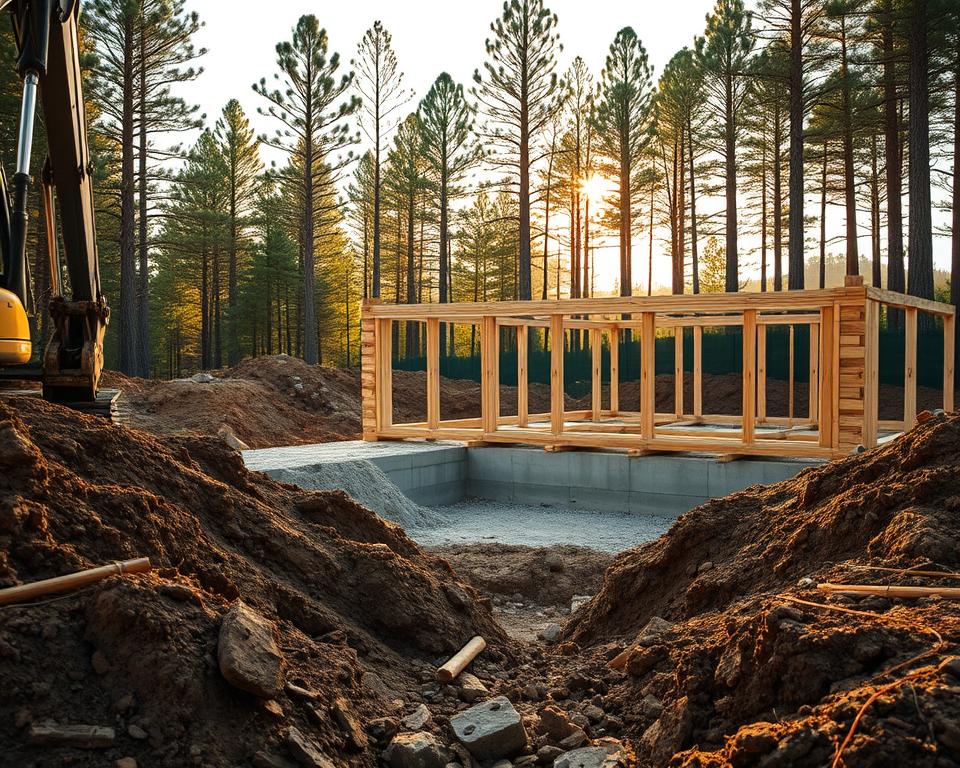
Constructing the formwork involves building a timber frame around the excavated space. Use 100mm timber rails to create a sturdy perimeter that contains the concrete mixture.
Secure each beam with screws at the corners. Check all joints form perfect right angles. This determines whether the finished foundation will be square and true.
Using a String Line and Level to Ensure Accuracy
A string line stretched across the frame verifies straight sides and proper alignment. Combine this with a spirit level to confirm horizontal accuracy of the timber framework.
After establishing the frame, spread a 75mm layer of compacted MOT type 1 stone. This sub-base prevents future subsidence. Add a protective sand layer before installing the damp-proof membrane.
How to Build a Concrete Log Cabin Base
Proper mixing and pouring techniques determine the long-term stability of the structure. This phase transforms prepared materials into a solid foundation.
Mixing the Perfect Concrete Mixture
Creating the ideal blend requires precision with ratios. A common formula uses four parts cement to one part sand or gravel.
An alternative approach combines one bag of cement with four bags of sand and one bag of gravel. Water quantity is crucial—approximately half a litre per kilogram of cement.
| Mixture Type | Cement | Sand | Gravel | Water (per kg cement) |
|---|---|---|---|---|
| Standard Mix | 4 parts | 1 part | – | 0.5 litres |
| Alternative Mix | 1 part | 4 parts | 1 part | 0.5 litres |

Mortar plasticiser enhances quality at 150ml per 25kg of cement. It improves frost resistance and creates a smoother finish.
Pouring, Levelling and Allowing Proper Curing Time
Spread the mixture evenly within the frame, slightly above the timber rails. Use a straight edge to level the surface with a sawing motion.
The mix should be stiff enough to support itself on a shovel. For larger projects, a cement mixer ensures consistency.
Curing requires a minimum of three days, though a full week is ideal. Protect the surface from weather during this critical period.
Finishing Touches and Long-Term Care
The final phase of foundation work focuses on surface finishing and ongoing maintenance. These concluding steps ensure the structural integrity and longevity of the entire construction.

Creating a Textured, Non-Slip Surface
Once the concrete surface has been smoothed, use a stiff broom to lightly brush across the base. This technique creates a textured, non-slip finish that provides better traction and safety.
Weather protection during the curing period is critical for preventing surface damage. Cover the area with polythene sheeting if wet weather threatens, or use damp hessian sacking in hot conditions to prevent rapid drying.
The minimum curing time is three days, though waiting longer ensures the base develops adequate strength. This patience prevents future structural issues with doors, windows, and roof alignment.
After full curing, carefully remove the timber formwork rails. Fill the resulting perimeter space with pea gravel to improve drainage and create an attractive border.
Regular inspection of the concrete surface helps identify minor cracks or settling over time. Proper drainage around the perimeter directs water away from walls, protecting the construction from moisture damage.
Conclusion
Constructing a robust foundation is a critical undertaking for any significant garden building. This detailed guide has outlined the complete process for creating a durable concrete base that guarantees the long-term stability of your log cabin.
Following each step with care, from initial planning to the final curing of the slab, ensures a professional result. The effort invested pays dividends by preventing future issues with walls, roof, and doors.
While some may prefer to hire a contractor, this advice empowers confident DIY construction. A properly built base provides a level, permanent platform, protecting your investment for years to come.
FAQ
What is the primary purpose of a concrete base for a log cabin?
A concrete foundation provides a stable, level, and durable platform. It prevents ground movement, protects the timber frame from moisture, and ensures the entire structure remains square and secure for years.
How deep should the excavation be for a standard garden building base?
For most single-storey cabins, a depth of 150mm to 200mm is typically sufficient. However, the final depth depends on local ground conditions and the size of the construction. It is crucial to dig below the topsoil to reach stable ground.
Can I use ready-mix concrete for the slab, or should I mix it myself?
Both options are viable. Ready-mix concrete is convenient for larger projects, ensuring a consistent mix. For smaller cabins, mixing on-site with cement, sharp sand, and gravel can be more cost-effective and allows for better control over the quantity.
How long does the cement need to cure before I can build on it?
The concrete slab requires adequate time to gain strength. It is generally advised to allow at least 48 to 72 hours before light work begins. For full curing and maximum strength before constructing the walls, a period of seven days is recommended, keeping the surface damp.
Is a layer of gravel necessary under the concrete?
Yes, a compacted sub-base of hardcore or gravel is essential. This layer, typically 75-100mm thick, improves drainage, prevents water pooling under the slab, and adds stability to the foundation, especially on softer ground.
What is the best way to create a non-slip surface on the finished base?
A slightly textured finish is ideal. After levelling the wet cement, a light pass with a stiff-bristled brush or a wooden float creates a subtle texture. This provides grip underfoot without being overly rough, which is important for the cabin floor.