Do Plastic Sheds Need a Base?

Many homeowners and garden enthusiasts face an important question when acquiring a new outdoor storage solution. The installation of a proper foundation is crucial for long-term performance and stability.
Whilst these lightweight structures may appear self-sufficient, the decision regarding a foundation significantly impacts their durability. Proper planning prevents common issues like structural instability and moisture damage.
This comprehensive guide offers professional insights into foundation requirements. It covers everything from basic necessity to installation techniques specific to these outdoor structures.
The article examines various scenarios and foundation types. Practical considerations that influence the decision-making process are thoroughly explored. Understanding these requirements ensures your investment remains secure for years to come.
Inhaltsverzeichnis
Key Takeaways
- A proper foundation significantly enhances the stability and longevity of your garden shed
- Moisture protection is essential for preventing premature deterioration of the structure
- Different base types offer varying levels of support and installation complexity
- Professional planning ensures optimal performance and prevents common problems
- Local ground conditions should influence your foundation choice
- Proper installation techniques are crucial for long-term structural integrity
- Investment in a quality base protects your storage solution for many seasons
Introduction to Plastic Shed Bases
Successful installation begins with understanding the role of a stable foundation. The right support system transforms how an outdoor storage unit performs over time. It ensures proper weight distribution and prevents common issues.
Understanding the Importance of a Shed Base
A quality shed base provides essential stability for the entire structure. It creates a level surface that evenly distributes weight across the ground. This prevents sinking, tilting, or uneven settling that can compromise the shed’s integrity.
Proper airflow underneath the unit is another critical benefit. This ventilation helps prevent moisture accumulation and water pooling. Without adequate support, doors and windows may bind or fail to open correctly.
Long-Term Durability and Moisture Control
Moisture control represents a vital function of any foundation system. Ground moisture seeping upward can cause significant damage over time. This includes rot, mould development, and degradation of the floor area.
Investing in a solid base protects against accelerated deterioration. It ensures the structure withstands adverse weather conditions like strong winds or heavy rainfall. Properly based storage units typically last many years longer than those placed directly on unprepared ground.
Understanding these principles helps owners make informed decisions about installation. The initial investment in quality foundation work protects the overall structure considerably.
Essential Considerations: Do Plastic Sheds Need a Base?
Determining the necessity of a foundation for an outdoor storage unit involves careful evaluation of several factors. The decision is not always straightforward and depends on specific circumstances.
Ground stability is the primary consideration. Uneven or soft soil requires a solid foundation to prevent sinking and structural issues. A level surface is crucial for proper installation.

Manufacturer guidelines provide essential information for each model. Following these instructions ensures proper performance and maintains warranty coverage. Many companies specify exact foundation requirements.
Local weather patterns significantly influence this decision. Areas with strong winds, heavy rainfall, or snowfall benefit from a sturdy base. This protects against displacement and damage.
Long-term usage plans should guide the choice. Structures intended for extended periods gain substantial benefits from proper foundations. They prevent moisture damage and maintain structural integrity.
Some situations may not require a separate foundation. Integrated foundation kits or existing concrete surfaces can serve as suitable bases. Very small units for temporary storage might also be exceptions.
Professional assessment considers all these elements together. While most installations benefit from proper foundations, specific conditions might allow alternatives. Careful planning ensures the best outcome for your storage solution.
Assessing Your Garden and Shed Requirements
Before selecting a foundation type, careful evaluation of the garden space and shed specifications is essential. This initial planning step ensures the chosen base provides adequate support for the specific storage structure.
Evaluating Ground and Soil Conditions
The ground surface where the shed will sit requires thorough examination. Soil composition significantly impacts foundation stability. Clay-heavy or poorly draining soils demand more substantial support systems.
Proper drainage prevents water accumulation around the structure. Even slight slopes can cause significant issues over time. A level surface is crucial for preventing structural stress.
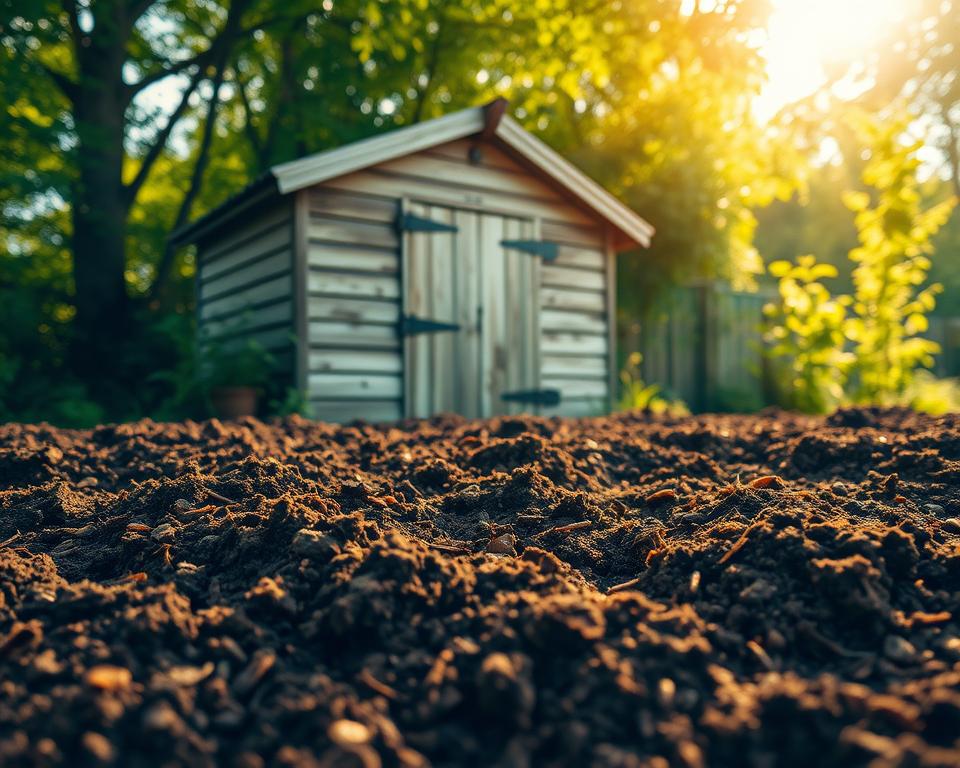
Climate conditions influence base selection. Areas with heavy rainfall benefit from foundations that promote water runoff. Frost-prone locations require deeper foundations to prevent shifting.
Heeding Manufacturer’s Instructions and Safety Guidelines
Each shed model comes with specific installation requirements. The manufacturer provides detailed instructions regarding load capacity and foundation type. Following these guidelines maintains warranty coverage.
Safety considerations include proper anchoring methods and wind resistance. Larger structures storing heavy equipment need robust foundations. Professional assessment ensures all requirements are met.
This comprehensive approach protects your investment from potential damage. It guarantees long-term stability for your garden storage solution.
Exploring Plastic Shed Base Options
The market offers diverse foundation solutions specifically designed to support garden storage buildings effectively. Property owners can choose from several material types that provide excellent stability and longevity.
Plastic Grid Systems and Pavers
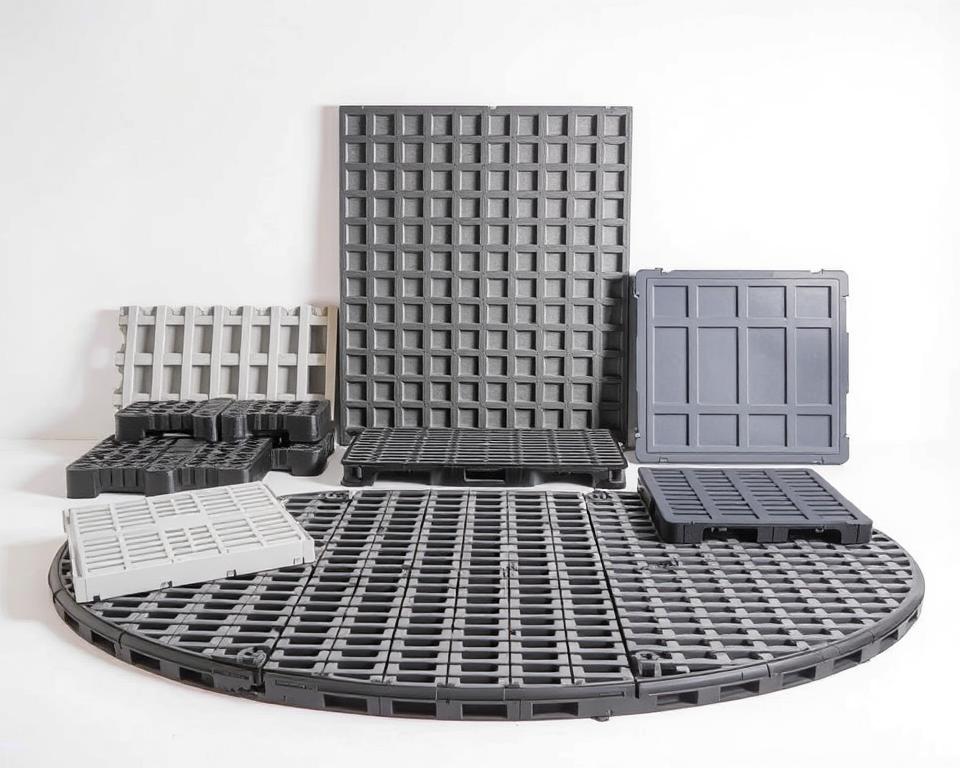
Interlocking grid systems create stable surfaces while allowing essential water drainage. These innovative designs feature panels that connect securely to form a robust foundation.
Grids are typically filled with gravel or soil for enhanced weight distribution. This combination provides superior moisture control and prevents ground penetration.
Solid pavers offer another durable option for outdoor structures. They resist weather damage and maintain their integrity over many seasons. Their level surface ensures proper installation alignment.
Recycled Plastic Bases and Foundation Kits
Environmentally conscious homeowners appreciate recycled plastic foundation materials. These sustainable options deliver performance without compromising durability.
Manufacturer-specific kits provide perfect dimensional compatibility. They’re engineered to match the exact requirements of each storage unit. The Ecobase Fastfit system exemplifies this approach with self-fastening connectors.
Alternative materials like concrete slabs and gravel pads remain viable choices. However, plastic-specific solutions often offer advantages in installation ease and drainage capability.
Step-by-Step Guide to Installing Your Plastic Shed Base
Proper installation of a garden storage foundation follows a systematic process that guarantees long-term performance. This guide outlines the essential stages for creating a stable support system.
Preparation and Ground Leveling
Thorough site preparation begins with clearing vegetation and debris. Creating a level surface prevents future structural issues and water pooling.
Soil compaction establishes a firm foundation that resists settling. This critical step ensures stability regardless of the final base material chosen.
Installation Techniques and Ensuring Proper Drainage
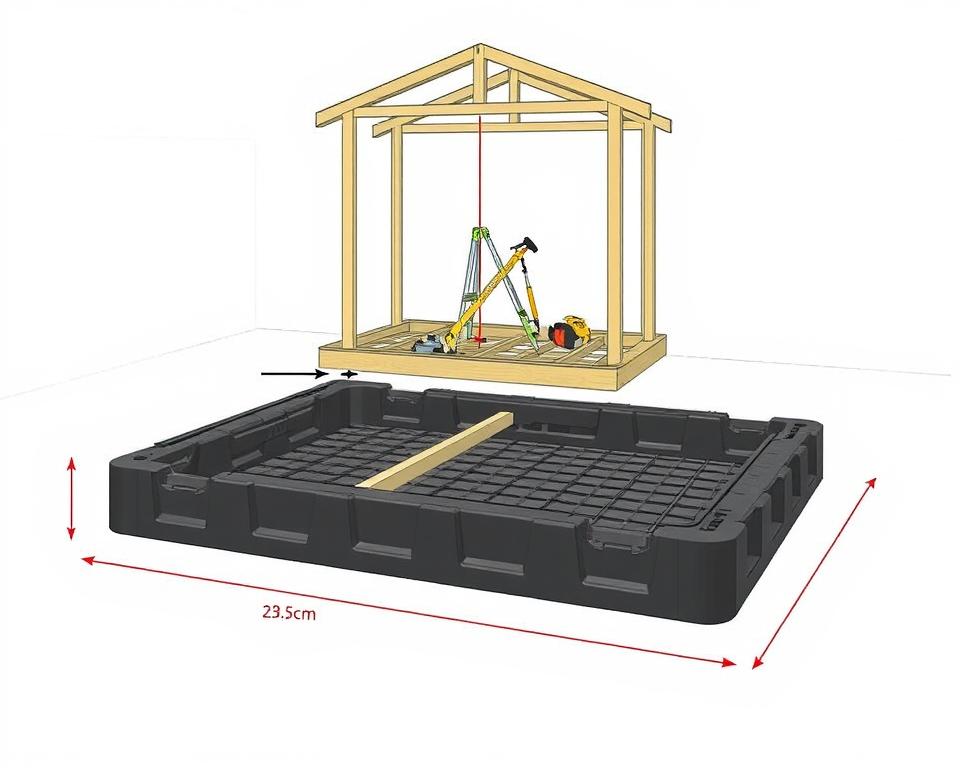
Different foundation types require specific installation methods. Gravel bases need edge restraints, while concrete requires proper curing times.
Drainage considerations include creating subtle slopes away from the structure. Permeable materials like gravel facilitate water movement and prevent moisture damage.
Final Adjustments for Stability
Verifying level accuracy across all dimensions ensures proper alignment. Using spirit levels and measuring tools confirms the foundation’s stability.
Anchoring the completed installation provides additional security in exposed locations. This final step protects against displacement during severe weather conditions.
Following manufacturer specifications maintains warranty coverage and ensures optimal performance. These adjustments guarantee your storage solution remains secure for years.
Conclusion
The final analysis confirms that establishing a proper foundation is non-negotiable for any serious garden storage installation. Neglecting this critical step invites predictable issues like structural weakness and moisture damage, which severely compromise the unit’s integrity.
Thankfully, a wide range of materials and options exist to suit different needs and ground conditions. From interlocking grids to concrete slabs, the correct choice ensures the shed remains level, secure, and functional.
This guide underscores that the initial effort invested in a quality base pays substantial dividends over many years. It protects your investment, enhances durability, and guarantees reliable performance for your plastic garden structure.
FAQ
Why is a base necessary for a plastic shed?
A foundation is vital for any shed to ensure stability, prevent shifting, and protect the structure from ground moisture. Without a solid base, the shed’s floor can warp, and doors may not close properly over time.
What type of base is best for a plastic shed?
The ideal choice depends on the shed’s size and local conditions. Plastic grid systems offer excellent drainage and are easy to install. A concrete slab provides maximum durability for heavier items, while a compacted gravel foundation is a cost-effective option.
Can a plastic shed be placed directly onto a lawn?
Placing a shed directly onto grass or soil is not recommended. The ground can settle unevenly, leading to an unstable structure. Moisture from the soil will also seep into the floor, potentially causing damage and reducing the shed’s lifespan.
How do you prepare the ground for a shed base?
Start by clearing the area of vegetation and debris. The ground must be levelled thoroughly. For most bases, excavating to a shallow depth and compacting the soil is the next step before laying the foundation material.
Are plastic shed bases a good investment?
Absolutely. These bases provide a strong, level surface that promotes good drainage. They resist rot and insect damage, making them a durable, low-maintenance solution that protects your investment in the shed itself.
What maintenance does a plastic shed base require?
One of the key benefits is minimal upkeep. Simply ensure that gutters and drainage points remain clear of leaves and debris to prevent water from pooling around the foundation.
How does a base prevent moisture problems?
A proper foundation elevates the shed slightly above ground level. This elevation stops water from soaking into the floor and improves air circulation underneath, effectively keeping the interior dry and mould-free.