How to Plant a Wildlife Hedge: Expert Advice for You
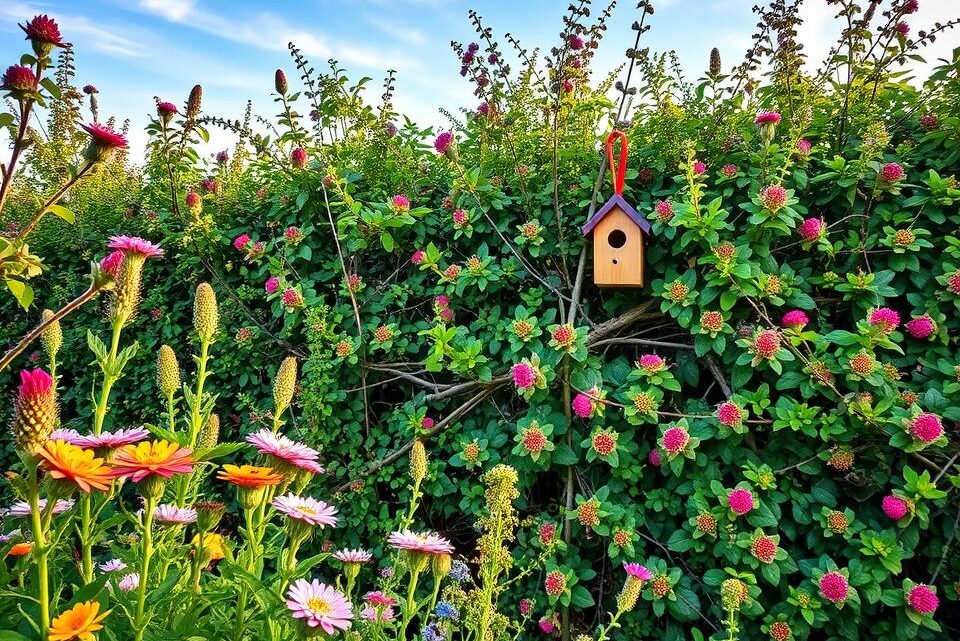
Creating a wildlife hedge in your garden can be a highly rewarding experience, providing a haven for local wildlife. By choosing the right plants, you can establish a thriving hedge that not only enhances your outdoor space but also supports the local ecosystem.
Unlike traditional fencing, a native hedge offers a dynamic boundary that changes with the seasons, providing different benefits throughout the year. This comprehensive guide will walk you through the process of selecting, planting, and maintaining a hedging solution that maximises its wildlife value.
By following our expert advice, you’ll be able to create a haven that enhances your garden’s biodiversity for years to come.
Inhaltsverzeichnis
Key Takeaways
- Understand the benefits of a wildlife hedge for your garden
- Learn how to select the right native plants for your hedge
- Discover the best practices for planting and maintaining your hedging
- Maximise the wildlife value of your hedge
- Enhance your garden’s biodiversity with a thriving native hedge
The Benefits of Wildlife Hedges
Wildlife hedges offer a multitude of advantages, enhancing your garden’s ecological value and aesthetic appeal. These hedges are not just a boundary; they are a dynamic part of your garden that changes with the seasons.
Ecological Advantages for Your Garden
A wildlife hedge supports local biodiversity by providing habitat and food for various species. In your garden, it can attract pollinators, birds, and other wildlife, creating a thriving ecosystem. The ecological benefits include:
- Supporting local wildlife by offering shelter and food.
- Enhancing soil health through root systems.
- Providing a natural barrier against pests.
Year-Round Appeal and Structure
A hedge looks stunning whatever the season, from the structural beauty of bare winter twigs and clouds of blossom in spring to lush foliage in summer and gold and jewel colours in autumn. Your wildlife hedge will transform throughout the seasons, providing year-round visual interest.
| Season | Appeal |
|---|---|
| Spring | Fresh foliage and blossoms |
| Summer | Lush foliage and shaded retreats |
| Autumn | Berries and changing leaf colours |
| Winter | Structural beauty of bare branches |
Best Native Plants to Plant a Wildlife Hedge
When planting a wildlife hedge, it’s essential to choose the right native species that will thrive and support biodiversity. A well-chosen mix of plants will provide a haven for local wildlife, offering shelter, food, and breeding grounds.
Deciduous Species for Wildlife Support
Deciduous species are a vital component of a wildlife hedge, providing seasonal benefits for wildlife. Some excellent options include:
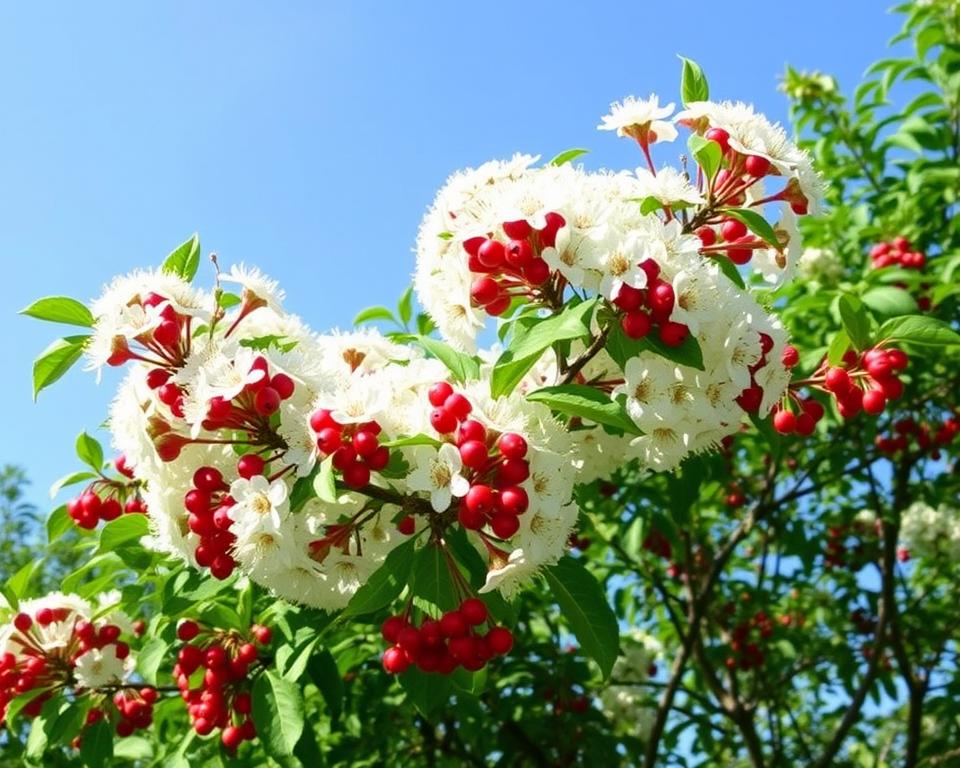
Hawthorn (Crataegus monogyna) is a popular choice, offering dense cover and a rich source of berries for birds. Create an image of Hawthorn in bloom
Evergreen Options for Year-Round Cover
Including evergreen species in your wildlife hedge provides essential year-round shelter and nesting opportunities. Some top choices are:
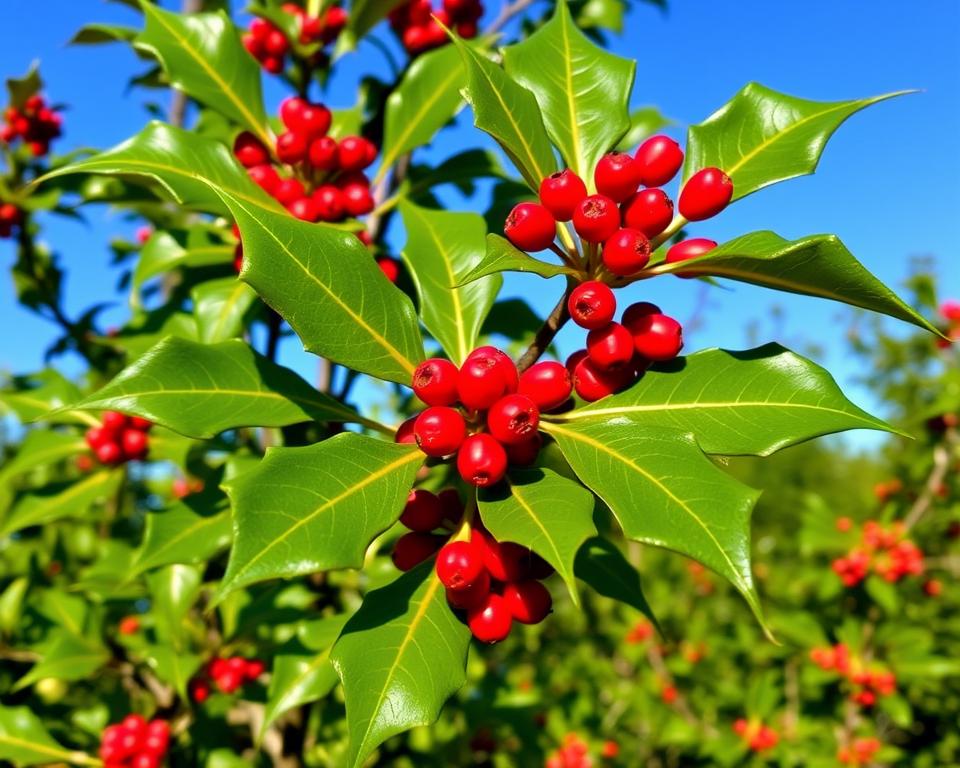
Holly (Ilex aquifolium) is an outstanding native evergreen that offers dense cover and bright red berries that persist through winter. Imagine Holly’s glossy leaves and vibrant berries
Other evergreen options like Yew (Taxus baccata) and Box (Buxus sempervirens) can be incorporated to create a diverse and resilient hedge structure. Mixing evergreens with deciduous species ensures that your wildlife hedge maintains its value throughout all seasons.
When and How to Plant a Wildlife Hedge
The success of your wildlife hedge depends on choosing the right time and method for planting. A well-planned hedge not only enhances your garden’s biodiversity but also provides a haven for local wildlife.
Optimal Planting Times
For most regions in the UK, the ideal time to plant a wildlife hedge is during the dormant season, typically from late autumn to early spring. This period allows the plants to establish their root systems before the onset of new growth in spring.
Preparing Your Site
Before planting, it’s crucial to prepare your site. Clear the area of weeds and debris, and mark out the planting area. For a standard wildlife hedge, space your plants 30-60cm apart in a single row. For a more substantial hedge, consider a double staggered row, positioning rows about 45cm apart.

Planting Techniques for Success
When planting bare-root stock, dig a trench rather than individual holes to ensure consistent planting depth. Plant at the same depth as the soil mark on the stem, firming soil gently around roots to eliminate air pockets. Water thoroughly after planting to settle the soil around the roots.
| Planting Method | Spacing | Benefits |
|---|---|---|
| Single Row | 30-60cm apart | Creates a denser hedge more quickly |
| Double Staggered Row | 45cm between rows, 90cm between plants | Provides a more substantial barrier and increased biodiversity |
By following these guidelines, you can create a thriving wildlife hedge that will provide a haven for local wildlife for years to come.
Essential Aftercare for New Hedges
After planting, your wildlife hedge requires careful aftercare to thrive. Proper care during the establishment phase is crucial for the long-term health and density of your hedge.
Watering and Mulching Guidelines
Watering is vital, especially during dry spells in the first few years after planting. Mulching around your hedge helps retain moisture, suppress weeds, and regulate soil temperature. Use a thick layer of organic mulch, such as wood chips or bark, to achieve these benefits.

Weed Control Strategies
Effective weed control is crucial during the establishment phase as weeds compete with your hedge plants for water, nutrients, and light. Keep a weed-free strip at least 30cm wide on either side of your hedge for the first 2-3 years. Hand weeding is preferable around young plants, taking care not to disturb shallow roots. Consider using biodegradable weed-suppressing mats or thick cardboard layers beneath your mulch for additional protection. Be particularly vigilant about weed control in spring and summer when both your hedge and competing weeds are in active growth, ensuring your hedge gets the best start in life.
By following these aftercare guidelines, you’ll support healthy growth and establish a robust and thriving wildlife hedge.
Pruning and Maintenance Tips
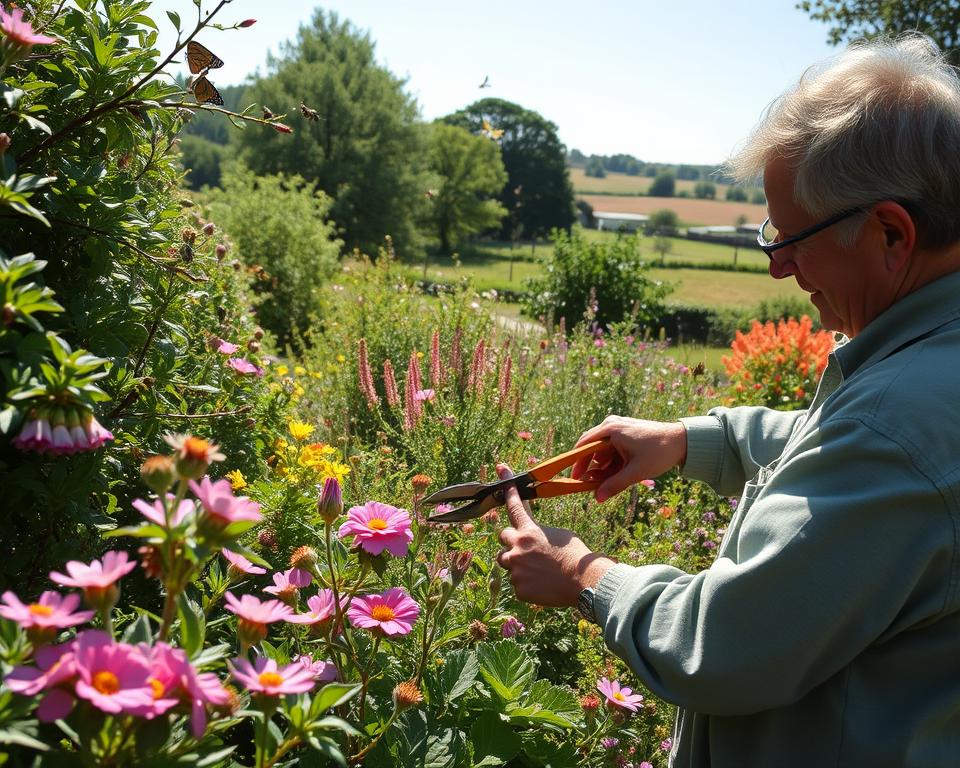
To keep your wildlife hedge thriving, regular pruning and maintenance are crucial. Pruning not only shapes your hedge but also encourages bushy growth and enhances its ability to support wildlife.
First-Year Pruning for Bushy Growth
In the first year, prune your hedge in late winter or early spring to promote dense growth. This initial pruning helps establish a strong foundation for your hedge, encouraging it to grow outward and become a haven for wildlife. Cut back the stems to about half their height to stimulate new growth.
Long-Term Maintenance Schedule
For long-term maintenance, avoid pruning during the bird nesting season, typically from March to August. The ideal time for the main annual trim is late winter (February), after birds have consumed berries but before nesting begins. Consider a three-year rotational pruning cycle for longer hedges to ensure some areas always provide habitat and food. This approach balances the needs of your hedge plants with their wildlife value throughout the seasons.
Conclusion
By choosing the right native plants and following proper planting and care techniques, you’ll establish a thriving wildlife hedge that enhances your garden‘s biodiversity. Planting a hedge is a rewarding experience that creates a living boundary, improving with age. Your new hedge will quickly become a wildlife haven, supporting birds, insects, and small mammals.
As your hedge matures, it will provide food, shelter, and nesting sites throughout the year, from spring flowers to autumn berries. With patience and proper care, your hedging project will offer decades of ecological benefits, requiring less maintenance than many other garden features.
FAQ
What are the benefits of having a native hedge in my garden?
A native hedge provides shelter and food for various species of birds, insects, and small mammals, enhancing biodiversity in your garden. It also offers a natural habitat for wildlife, supporting the local ecosystem.
How often should I water my newly planted hedge?
You should water your hedge regularly during its first year, especially during dry spells. Mulching around the base helps retain soil moisture and suppress weeds.
What is the best time to prune my wildlife hedge?
The ideal time for pruning depends on the species of your hedge. For deciduous hedges like hawthorn and blackthorn, prune in late winter or early spring. For evergreen hedges, prune in spring or summer after they’ve finished flowering.
Can I plant a double row of hedging plants?
Yes, you can plant a double row of hedging plants to create a denser hedge. This can provide better shelter and habitat for wildlife. Ensure the plants are spaced correctly to allow for proper growth.
How do I control weeds around my hedge?
To control weeds, apply a layer of mulch around the base of your hedge. Regularly remove any weeds that grow through the mulch to prevent competition for water and nutrients.
Will a native hedge attract pests to my garden?
A native hedge can attract various insects and birds, some of which might be considered pests. However, a balanced ecosystem typically keeps pest populations under control. A native hedge supports a diverse range of wildlife, promoting ecological balance.