Beautiful Hollyhocks in Pots: How to Care for Them Properly
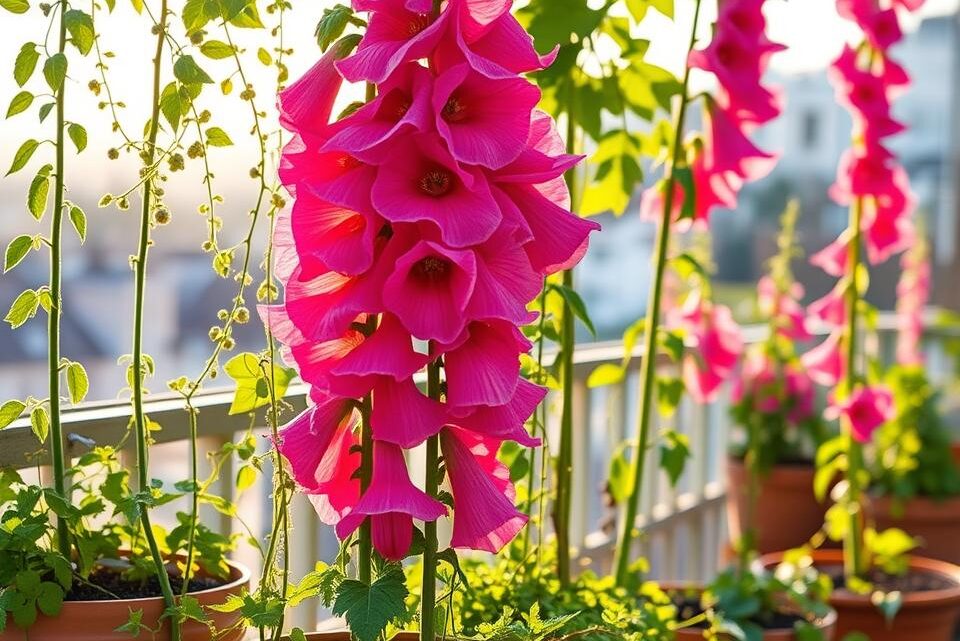
Growing hollyhocks in containers can be a rewarding experience, even for gardeners with limited space. Traditionally, these tall, stately flowers are a staple of the cottage garden, but with the right care, they can thrive in pots on a patio or balcony.
To successfully cultivate hollyhocks in containers, you need to understand their specific needs. These plants have deep taproots and can grow quite tall, requiring careful selection of container size and variety.
By following the right techniques, you can enjoy the dramatic beauty of hollyhocks even in small gardens. This guide will explore the challenges and provide practical advice for growing these classic flowers in pots.
Inhaltsverzeichnis
Key Takeaways
- Choose a container that is deep enough to accommodate the hollyhock’s taproot.
- Select a variety of hollyhock that is compact or dwarf.
- Ensure good drainage and aeration in the container.
- Provide support for tall hollyhock plants.
- Monitor for pests and diseases, such as rust.
Understanding Hollyhocks and Their Container Potential
To successfully grow hollyhocks in containers, you need to understand their growth habits and requirements. Hollyhocks (Alcea spp.) are herbaceous biennial or short-lived perennial plants known for their tall, stately spikes of colourful flowers.
What Makes Hollyhocks Special
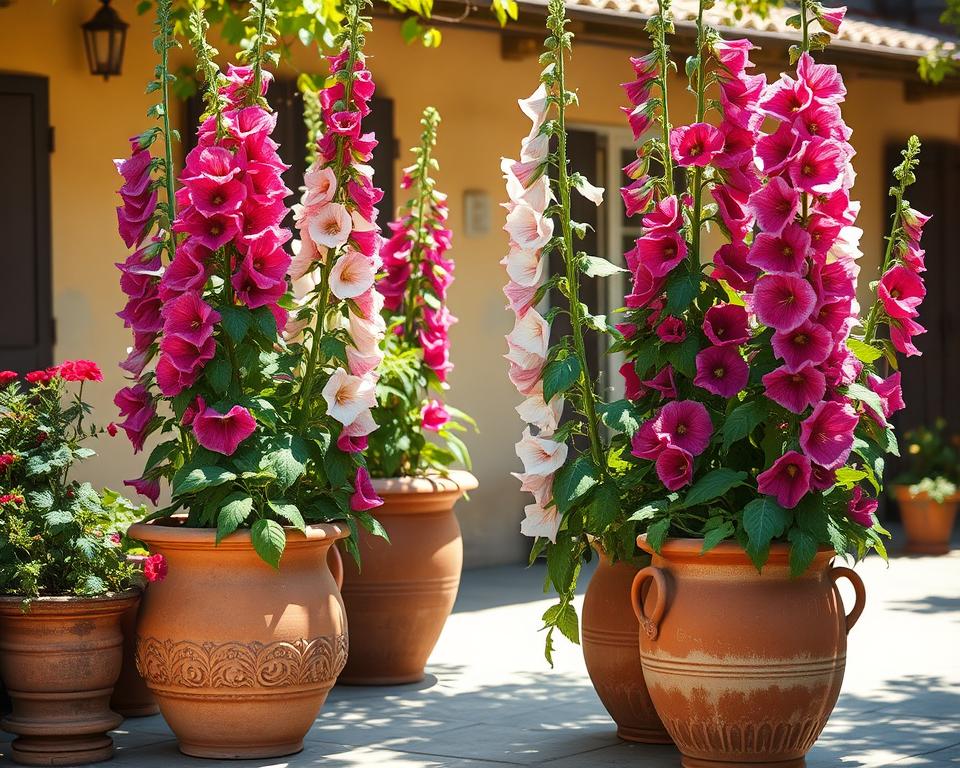
Hollyhocks are statuesque, whimsical plants that add dramatic vertical interest to gardens. They can grow up to 6 feet tall, with large, showy flowers in various colours, including shades of pink, red, white, and yellow. These plants are primarily biennials, meaning they develop foliage in their first year and produce their stunning flower displays in the second year.
| Characteristics | Description | Container Considerations |
|---|---|---|
| Growth Habit | Tall, upright spikes | Requires staking and a deep container |
| Root System | Deep taproots and lateral roots | Needs a container with sufficient depth and width |
| Flowering | Large, showy flowers in year two | Beneficial for container gardens with proper care |
Challenges of Growing Hollyhocks in Containers
Growing hollyhocks in containers presents several challenges, primarily accommodating their extensive root system. Hollyhocks naturally develop deep taproots that prefer unrestricted soil depth. Container-grown hollyhocks require more attention than those planted in the ground, particularly regarding watering, support, and protection from environmental stresses.
By understanding these challenges and taking appropriate measures, you can successfully grow hollyhocks in pots. Selecting the right variety and providing adequate space for root development are crucial steps.
Selecting the Right Hollyhock Varieties for Container Growing
For hollyhocks to flourish in pots, you must choose a suitable variety. When selecting a hollyhock variety for your container garden, look for ones that are more compact and have a bushier growth habit, rather than the tall, spindly varieties.
Compact Varieties Ideal for Pots
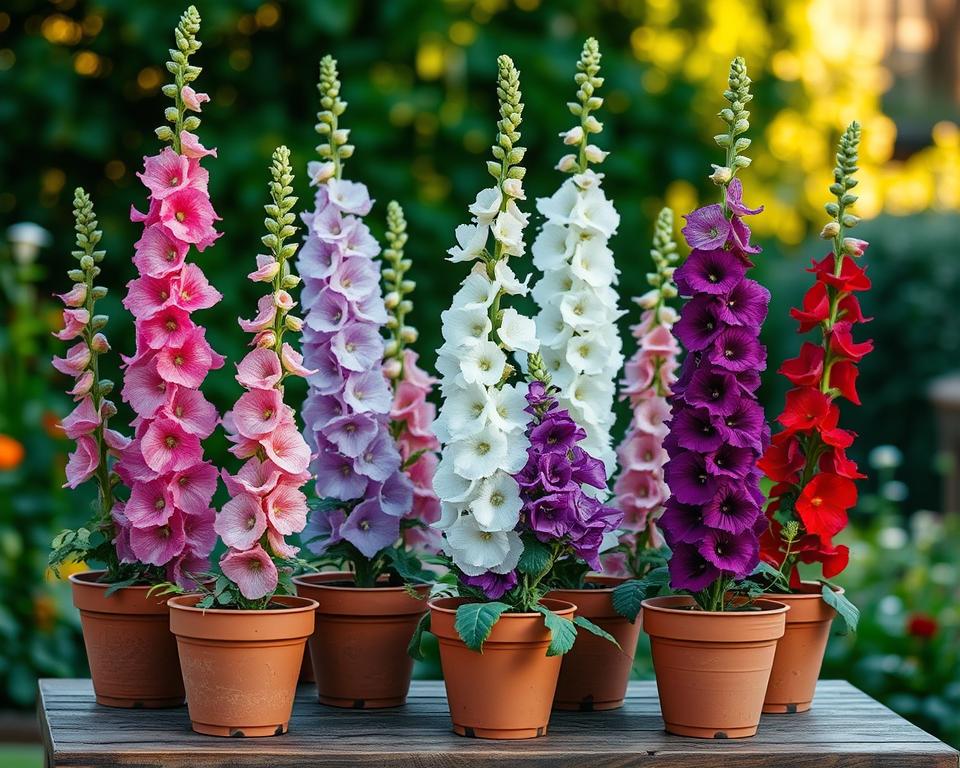
Some good options for hollyhocks in pots include ‘Peaches n Dreams’, ‘Summer Carnival’, and ‘Queeny Purple’. ‘Queeny Purple’ is one of the more compact varieties you can grow, reaching just 2-3 feet (60-90 cm) in height. This makes it perfect for compact gardens, containers, and beginners who aren’t confident with the more statuesque forms.
| Variety | Height | Notable Features |
|---|---|---|
| Queeny Purple | 2-3 feet | Ruffled blooms, compact growth |
| Peaches n Dreams | 6 feet | Pastel double flowers, requires support |
| Summer Carnival | Varies | Vibrant colours, contrasting centres |
Colour Options and Growth Habits
When selecting hollyhock varieties for container growing, prioritise compact or dwarf cultivars that won’t outgrow their pots. Consider the ‘Halo’ series for container growing, as these modern varieties offer improved disease resistance and come in vibrant colours. Balance your aesthetic preferences with practical considerations of pot size and available space to ensure successful container cultivation.
Choosing the Perfect Container for Hollyhocks
For hollyhocks to flourish in containers, it’s essential to start with the right container. The size and depth of the container are critical factors in supporting the extensive root system of hollyhocks.
Size and Depth Requirements
Ideally, your container should be at least 60cm wide and more than 1m deep to accommodate the deep roots of hollyhocks. Any container smaller than this will restrict root growth, leading to stunted plants with diminished flowering.
Material Options: Clay vs Plastic vs Wood
When choosing a container, consider the material: clay pots offer excellent drainage but are heavy; plastic containers are lightweight but may tip over; wooden containers provide good insulation but may deteriorate over time.
Ensuring Proper Drainage
Proper drainage is essential for hollyhocks in containers. Ensure your pot has multiple drainage holes and consider adding a layer of gravel or broken pottery at the bottom to prevent waterlogging.
By selecting an appropriately sized container and material, and ensuring good drainage, you can create a favourable environment for your hollyhocks to thrive.
Creating the Ideal Potting Mix for Beautiful Hollyhocks in Pots
The right potting mix is crucial for growing healthy hollyhocks in containers, as it directly affects their root development and overall growth. When you grow hollyhocks in pots, you need to make sure the soil conditions are optimal.
Soil Composition and pH Balance
Hollyhocks require a moist but well-drained soil to thrive. A peat-free soil or loam-based potting mix with plenty of organic matter is ideal. They can grow in a range of loamy and sandy soils but dislike compacted, clay soils. To ensure the best conditions, test your soil ahead of planting and make necessary amendments.
Aim for a neutral to slightly alkaline soil pH between 6.0-7.5. You can adjust your potting mix’s pH using garden lime to raise it or sulphur to lower it.
Adding Organic Matter and Nutrients
To create an ideal potting mix, start with a high-quality, peat-free compost as the base. Combine it with loam-based potting soil and coarse sand or perlite to improve drainage and aeration. Incorporating slow-release organic fertiliser or well-rotted manure will provide a steady supply of nutrients throughout the growing season.
- Create a custom potting mix that balances moisture retention with excellent drainage.
- Avoid using garden soil in containers, as it can become compacted and harbour pests and diseases.
- Invest in quality components specifically formulated for container cultivation.
By following these guidelines, you can create a potting mix that will support the healthy growth of your hollyhocks in pots. 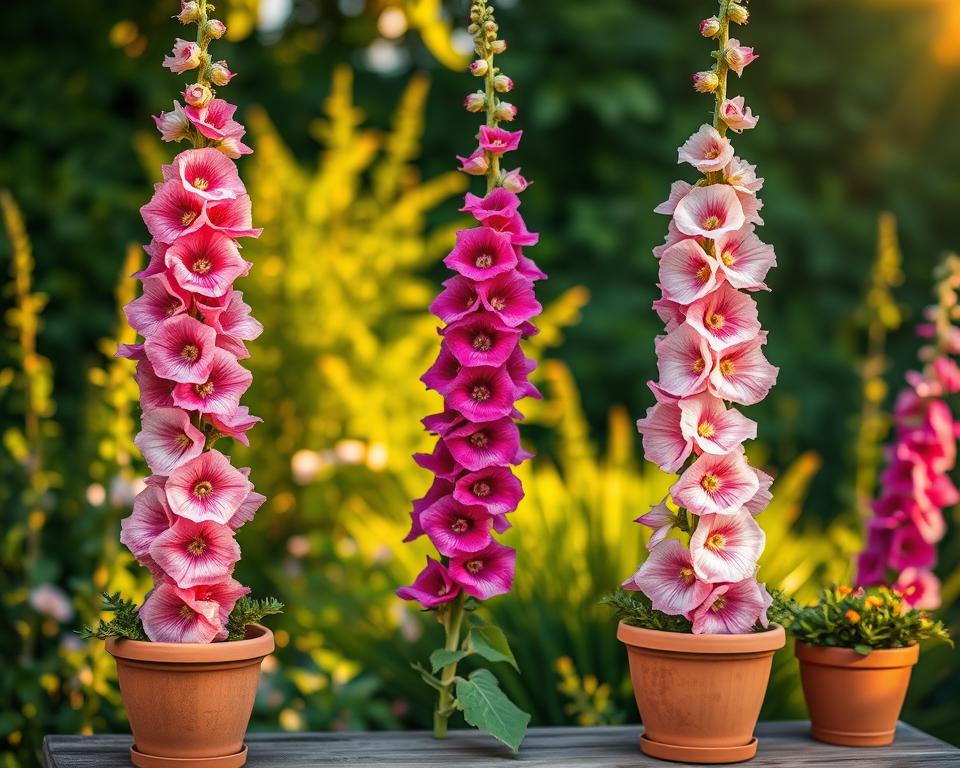
Planting Hollyhocks in Containers
The process of planting hollyhocks in containers involves several key steps that are crucial for their growth. Whether you’re starting from seeds or using transplants, understanding the proper techniques will help you achieve success with these beautiful plants.
Starting from Seeds vs Transplants
You can either start hollyhocks from seeds or use nursery-bought transplants. Starting from seeds is more economical, but it requires patience as the plants won’t flower until their second year. If you’re starting from seed, sow them directly in the final container in spring or early autumn, about 6mm deep and 18-24 inches apart.
Proper Planting Depth and Spacing
When sowing hollyhock seeds, it’s essential to get the spacing right. Plant them around 18-24 inches apart to give them enough space to grow, considering their eventual heights. For transplants, carefully position the plant in the container so the crown sits at the same level as it was in its nursery pot, handling the roots gently to avoid disturbance.
Initial Watering and Care
After planting, water thoroughly but gently to settle the soil around the roots without displacing seeds or disturbing young plants. Continue to keep the soil consistently moist until the plants are established. Consider adding a thin layer of mulch around newly planted hollyhocks to help retain moisture and suppress weeds.
By following these steps and providing the right care, you can enjoy beautiful hollyhocks in your containers. Remember, hollyhocks are short-lived perennials and may need to be replaced once they flower due to their susceptibility to rust.
Positioning Your Potted Hollyhocks
The placement of your hollyhocks in containers can significantly impact their growth and flowering. To maximise their potential, it’s crucial to position them in a suitable location that caters to their needs.
Sunlight Requirements
Full sunshine is critical for the health, longevity, and flowering potential of hollyhocks. You should give your plants access to 6-8 hours of direct sunlight daily, ideally in a south or west-facing position. While a little afternoon shade is welcome, the more sunshine your hollyhocks receive, the stronger the stems will be and the more prolific the flowers.
Protection from Wind and Elements
To protect your potted hollyhocks from strong winds, position them against a sunny wall or fence. This not only provides shelter but also offers additional warmth and potential support for taller varieties. Ensure adequate spacing between multiple containers to promote good air circulation, which helps prevent fungal diseases like rust that commonly affect hollyhocks.
- Positioning your potted hollyhocks correctly is crucial for their success, with full sun being essential for strong stem development and abundant flowering.
- Place containers where they will receive at least 6-8 hours of direct sunlight daily, ideally in a south or west-facing position.
- Protect your potted hollyhocks from strong winds by positioning them against a sunny wall or fence.
- Ensure adequate spacing between multiple containers to promote good air circulation.
- In hot climates, a location with some afternoon shade can help prevent stress during the hottest part of summer.
Watering and Feeding Regimen
The key to healthy hollyhocks in pots lies in a well-planned watering and feeding regimen. When growing hollyhocks in containers, it’s essential to strike a balance between keeping the soil moist and avoiding waterlogging.
Establishing a Watering Schedule
Watering potted hollyhocks requires careful attention, as containers dry out more quickly than garden soil, particularly during warm weather. To establish a consistent watering schedule, check the soil moisture by inserting your finger about an inch into the soil. Water deeply, ensuring that excess water drains away freely, and avoid wetting the foliage to prevent fungal diseases.
Fertilisation Needs Throughout the Growing Season
Container-grown hollyhocks benefit from regular feeding throughout the growing season. Use a balanced, slow-release fertiliser applied in early spring and again in midsummer. For optimal flowering, consider supplementing with a high-potassium liquid feed every 2-3 weeks during the blooming period. Avoid high-nitrogen fertilisers that promote lush foliage at the expense of flowers.
By following a thoughtful watering and feeding regimen, you can enjoy healthy, flowering hollyhocks in your containers.
Supporting Tall Hollyhocks in Containers
When growing hollyhocks in containers, it’s crucial to consider the support they need as they grow tall. Hollyhocks can become top-heavy when in bloom, making them prone to toppling, especially in windy conditions.
Staking Methods and Materials
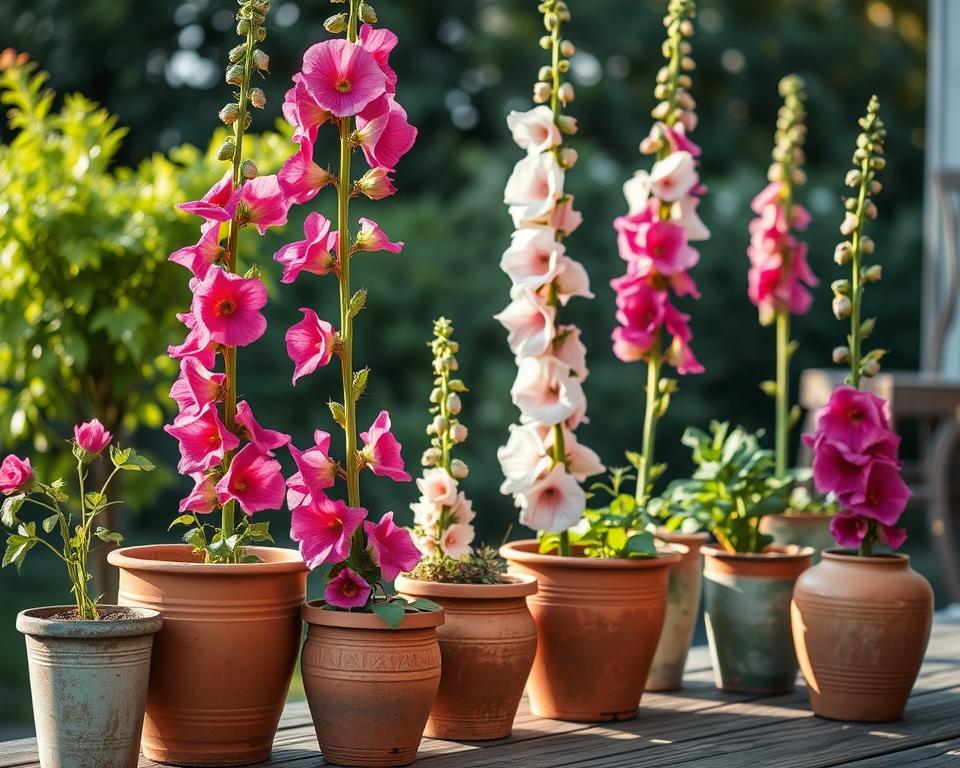
To prevent damage, it’s essential to install support structures early in the growing season. You can use sturdy bamboo canes or metal plant supports inserted deeply into the container. For taller varieties, consider positioning your hollyhocks against a wall or fence with additional support wires or a trellis system.
Tying and Training Techniques
When tying your hollyhocks to their supports, use soft garden twine or specific plant ties in a figure-eight pattern. This technique supports the stem without constricting growth or causing damage. By providing the right support at the right time, you can enjoy your hollyhocks in all their glory.
Managing Pests and Diseases in Potted Hollyhocks
Effective management of pests and diseases is vital for the well-being of your potted hollyhocks. To keep your plants thriving, you need to be aware of the common issues that can affect them.
Preventing and Treating Hollyhock Rust
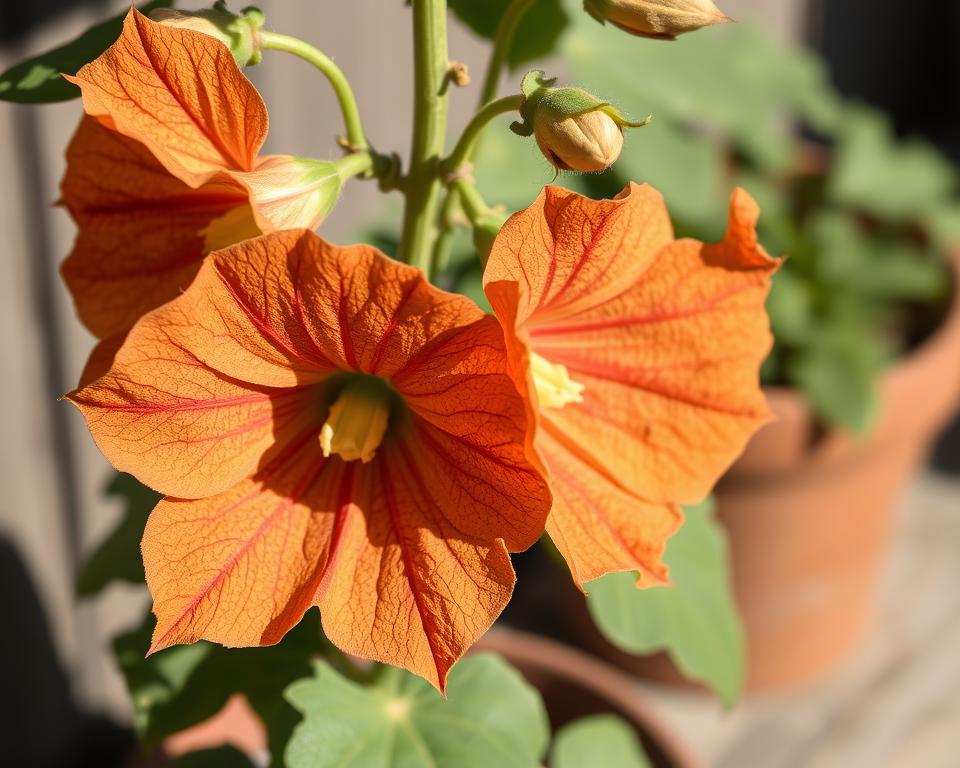
Hollyhock rust is a significant threat to hollyhocks, appearing as orange-yellow pustules on the undersides of leaves. To prevent this, ensure good air circulation around your plants by keeping them well-spaced. Water at the base of the plants rather than overhead to avoid wetting the leaves. If you notice signs of rust, remove the affected leaves immediately and dispose of them to prevent the spread of the disease.
Prompt removal of affected leaves and proper disposal are crucial in controlling the spread of hollyhock rust. Consider using rust-resistant varieties if you live in an area with humid conditions.
Dealing with Common Pests
Hollyhocks can be affected by various pests, including aphids, spider mites, and hollyhock weevils. Regular inspection of your plants is key to identifying these pests early. Use insecticidal soap or neem oil to control infestations. These treatments are effective against a range of pests and are suitable for organic gardening.
Maintaining Good Air Circulation
Good air circulation is essential for preventing fungal diseases like hollyhock rust. Ensure that your potted hollyhocks are not crowded and are positioned in a way that allows air to circulate freely around them. This simple practice can significantly reduce the risk of disease and pest issues.
Seasonal Care for Container Hollyhocks
As the seasons change, so do the needs of your container hollyhocks. Proper care throughout the year is crucial to ensure these beautiful plants thrive and produce stunning flowers.
Spring and Summer Maintenance
In spring, resume regular watering as growth begins, and apply a slow-release fertiliser to encourage strong development. During summer, maintain consistent watering, especially for container plants, and deadhead spent blooms to promote continued flowering. Regular monitoring for signs of rust or pests is also vital.
Autumn Preparation
As autumn approaches, reduce watering slightly and stop fertilising to allow hollyhocks to prepare for dormancy. This is also a good time to collect seeds for propagation in the following year.
Winter Protection Strategies
To protect hollyhocks during winter, apply a protective mulch around the base, being careful not to cover the crown. In colder regions, consider moving containers to a sheltered location or providing additional insulation. “Protecting your hollyhocks from harsh winter conditions is key to their survival,” as noted by gardening experts.
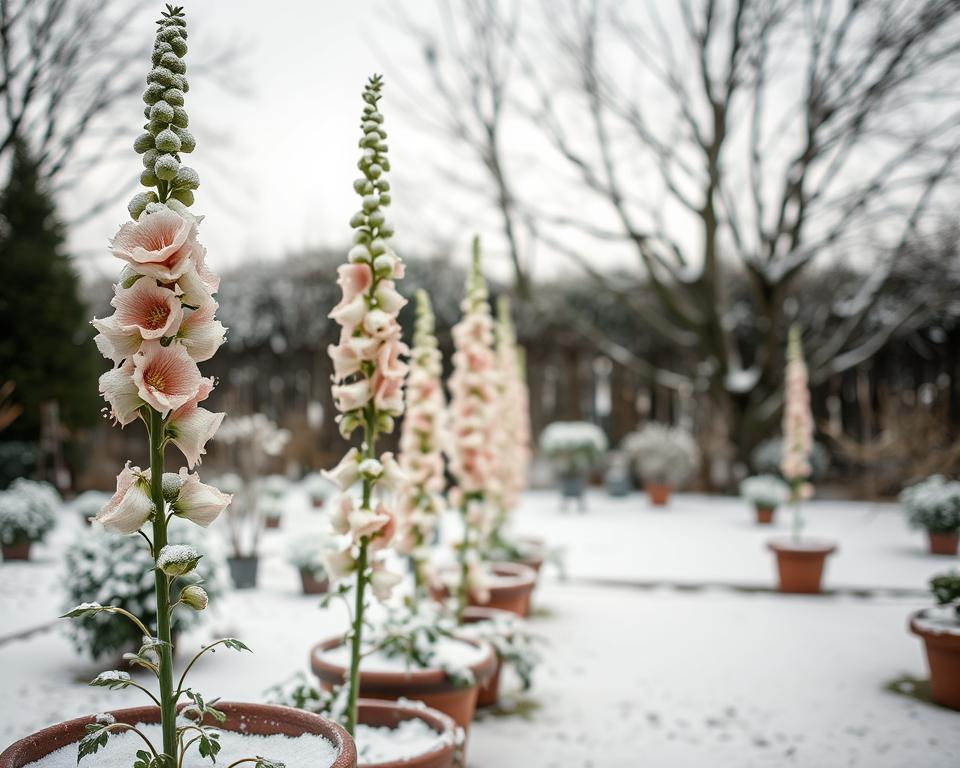
By following these seasonal care tips, you can enjoy healthy hollyhocks that flower beautifully year after year.
Conclusion
Growing hollyhocks in containers requires careful attention, but with the right conditions, these beautiful flowers can thrive. While they traditionally prefer ground planting, compact varieties can flourish in pots with proper care. Remember, hollyhocks are typically biennial, producing flowers in their second year. By choosing the right seed and following proper care guidelines, you can enjoy these stunning cottage garden favourites even in small spaces.
FAQ
What is the best way to prevent hollyhock rust in containers?
To prevent hollyhock rust, ensure good air circulation around your plants, and remove any infected leaves or stems. You can also treat the plants with a fungicide specifically designed for rust.
How often should I water my hollyhocks in pots during the summer?
Water your hollyhocks regularly during the summer, but make sure not to overwater. Check the soil moisture by inserting your finger into the soil, and water when the top inch of soil feels dry.
Can I grow hollyhocks in containers on a shaded wall?
Hollyhocks prefer full sun, so a shaded wall may not be the best location. However, if you have a wall that receives some direct sunlight, you can still grow hollyhocks, but they may not bloom as profusely.
How do I fertilise my hollyhocks in pots?
Feed your hollyhocks with a balanced fertiliser during the growing season. You can also add organic matter like compost to the potting mix to provide nutrients.
What is the ideal soil pH for growing hollyhocks in containers?
Hollyhocks prefer a slightly alkaline to neutral soil pH, ranging from 6.0 to 7.0. You can test your potting mix to determine its pH level and adjust it if necessary.
How do I protect my hollyhocks in pots during the winter?
To protect your hollyhocks during the winter, move the containers to a sheltered location, and mulch around the base of the plants to insulate the roots. You can also cover the plants with a breathable cloth to protect them from harsh weather.
Can I grow hollyhocks in containers from seed?
Yes, you can grow hollyhocks in containers from seed. Sow the seeds in the spring or autumn, and follow the instructions on the seed packet for the correct sowing depth and spacing.
How tall can hollyhocks grow in containers?
Hollyhocks can grow quite tall, up to 2.4 metres or more, depending on the variety. You may need to provide support using stakes or a trellis to keep the plants upright.