Buddha statues and their meaning: symbolism and spiritual significance

You may have noticed that Buddha statues are not just decorative pieces but hold a profound significance in Buddhist traditions. They represent the enlightened state achieved by Gautama Buddha, embodying his teachings on compassion, wisdom, and mindfulness.
These statues serve as focal points for meditation and contemplation, with each element carrying specific symbolism that reflects aspects of Buddhist philosophy and practice. By understanding the meaning behind these statues, you can enhance your appreciation of these sacred art forms and deepen your spiritual practice or aesthetic enjoyment.
Inhaltsverzeichnis
Key Takeaways
- Buddha statues embody the teachings of Gautama Buddha, representing compassion, wisdom, and mindfulness.
- Each element of a Buddha statue carries specific symbolism reflecting Buddhist philosophy.
- Understanding the meaning behind Buddha statues enhances appreciation and spiritual practice.
- Buddha statues are believed to emit positive energy, creating an atmosphere of peace.
- The symbolism in Buddha statues offers universal messages about inner peace and enlightenment.
The Origins and Historical Significance of Buddha Statues
The history of Buddha statues is deeply intertwined with the spread of Buddhism across various cultures. Although Gautama Buddha himself never preached about being idolized or worshiped as a god, after his death, his followers began to reverence him through statues.
The earliest Buddha statues are believed to have originated in the Gandhara region, now part of northern Pakistan and northeastern Afghanistan. These ancient statues marked the beginning of a rich tradition of Buddhist art.
Early Representations of Buddha in Art
Initially, Buddha was represented symbolically, such as through footprints or the Bodhi tree, rather than in human form. The transition to anthropomorphic representations signified a significant development in Buddhist art.
Evolution of Buddha Statues Across Different Cultures
As Buddhism spread throughout Asia, Buddha statues evolved to reflect local artistic traditions and aesthetic preferences. For instance:
- Chinese Buddha statues often feature fuller faces and elaborate robes.
- Japanese statues display refined elegance and serene expressions.
- Southeast Asian traditions developed statues with elongated features and stylized postures.
- Tibetan and Nepalese statues incorporate tantric elements and vibrant colours.
This cross-cultural evolution demonstrates how Buddhist teachings were adapted into diverse contexts while maintaining core symbolic elements.
Buddha Statues and Their Meaning: Symbolism and Spiritual Significance
Buddha statues serve as more than just ornaments; they are vessels for spiritual practice and contemplation. You can use these statues to inspire mindfulness and serenity in your space.
The Spiritual Purpose of Buddha Statues
The spiritual purpose of Buddha statues is multifaceted. They are used to facilitate meditation and inspire a sense of peace and wisdom. By placing a Buddha statue in your home or workspace, you create a focal point for your spiritual practice.
A Buddha statue can help you cultivate a deeper understanding of the teachings of Buddhism, promoting a path towards enlightenment.
Common Symbolic Elements in Buddha Statues
Buddha statues are rich in symbolic elements, each carrying significant meaning. The lotus symbol, often depicted in conjunction with Buddha, represents purity and spiritual awakening. Other symbolic elements include the ushnisha, or cranial protuberance, signifying expanded wisdom and enlightened consciousness.
The various symbols associated with Buddha statues, such as the elongated earlobes and the urna between the eyebrows, serve to remind you of the principles of Buddhism and the path to spiritual growth.

Different Types of Buddha Statues and Their Meanings
You can find numerous Buddha statues in different postures, each with its own story and symbolism. The various representations of Buddha are not just artistic expressions but embody the teachings and principles of Buddhism.
Sitting Buddha: Meditation and Enlightenment
The Sitting Buddha statue is a popular representation, depicting the Buddha in a meditative posture with his legs crossed and hands resting on his lap. This posture symbolizes the Buddha’s enlightenment, as he attained enlightenment while sitting under the Bodhi tree. The Sitting Buddha is often associated with meditation and inner peace.
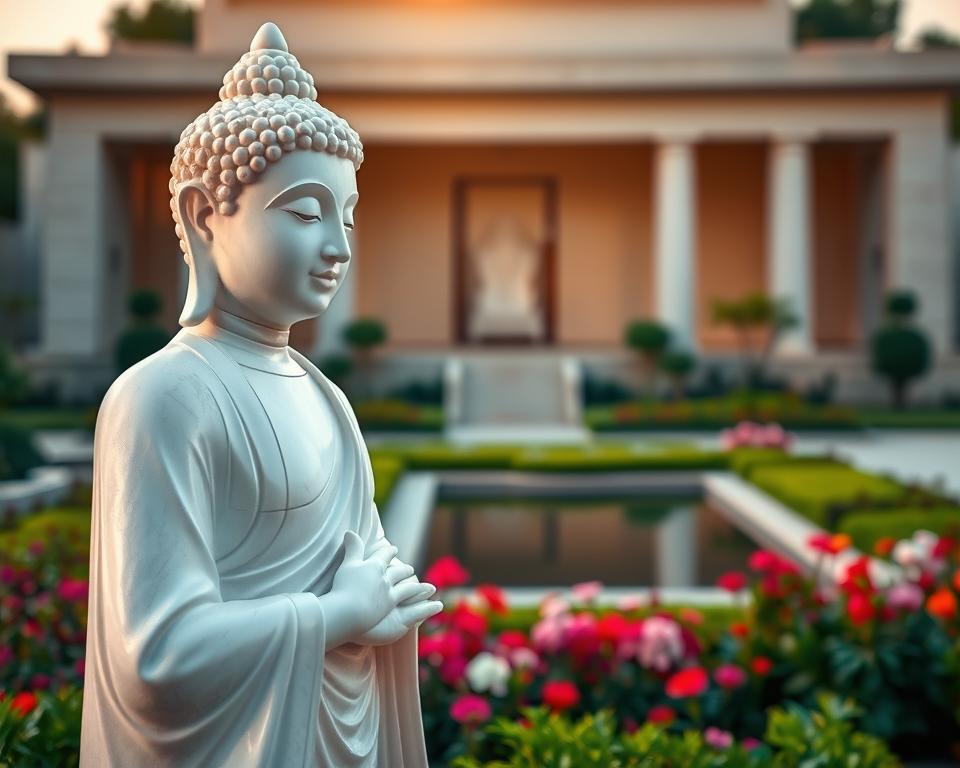
Standing Buddha: Blessing and Protection
The Standing Buddha statue represents the Buddha standing with his arms down by his sides, symbolizing his readiness to help and assist all sentient beings. This posture is often associated with blessing and protection. The Standing Buddha is a common sight in Buddhist temples and is revered for its symbolic significance.
Reclining Buddha: Peace and Nirvana
The Reclining Buddha statue depicts the Buddha lying on his side, with his head resting on a cushion or pillow, symbolizing his final moments before passing away into Nirvana. This posture is often associated with peace and the attainment of Nirvana. The Reclining Buddha is a powerful reminder of the Buddha’s teachings on impermanence.
| Buddha Statue Type | Posture | Symbolism |
|---|---|---|
| Sitting Buddha | Meditative sitting posture | Enlightenment, meditation |
| Standing Buddha | Standing with arms down | Blessing, protection |
| Reclining Buddha | Lying on side, head on cushion | Peace, Nirvana, impermanence |
Understanding Buddha Hand Gestures (Mudras)
You may have noticed that Buddha statues often feature distinct hand gestures, known as mudras, which are integral to Buddhist symbolism and practice. These mudras are not merely artistic expressions but carry profound spiritual significance, reflecting various aspects of Buddha’s teachings and life.
Abhaya Mudra: Fearlessness and Protection
The Abhaya Mudra, with the right hand raised and palm facing outward, symbolises fearlessness and protection. This gesture is a reassurance of peace and safety, dispelling fear and anxiety.
Bhumisparsha Mudra: Earth-Touching Gesture
Bhumisparsha Mudra, where the right hand touches the ground, signifies the moment of Buddha’s enlightenment. It represents his connection to the earth and his calling upon the earth to witness his attainment of enlightenment.

Dhyana Mudra: Meditation and Concentration
Dhyana Mudra, with both hands placed in the lap, one on top of the other, symbolises meditation and concentration. This gesture reflects the state of deep meditation and inner peace.
Varada Mudra: Charity and Compassion
Varada Mudra, performed with the left hand extended downward, signifies charity and compassion. It represents the Buddha’s boundless generosity and willingness to grant blessings. Often, this mudra is combined with the Abhaya Mudra in the right hand, creating a powerful message of protection and compassionate giving.
In Buddhist art, understanding these mudras enhances one’s appreciation of the spiritual depth and significance of Buddha statues. Each mudra offers a unique insight into the teachings and life events of Buddha, enriching the spiritual practice of those who encounter them.
Regional Variations of Buddha Statues
Buddha statues are not just religious symbols; they also reflect the cultural nuances of their regions. As Buddhism spread across various parts of Asia, the representation of Buddha evolved, incorporating local aesthetic sensibilities and philosophical concepts.
Indian Buddha Statues
Indian Buddha statues are characterized by their serene and contemplative expressions, often depicted in the lotus position. These statues typically feature slim body proportions and elongated earlobes, symbolizing spiritual wealth and enlightenment.
Thai Buddha Statues
Thai Buddha statues are renowned for their elegance and grace, often adorned with intricate decorations and precious stones. The Thai tradition emphasizes the subtlety of facial expressions and the flowing lines of the robes, reflecting a blend of Indian and local influences.
Chinese Buddha and the Laughing Buddha
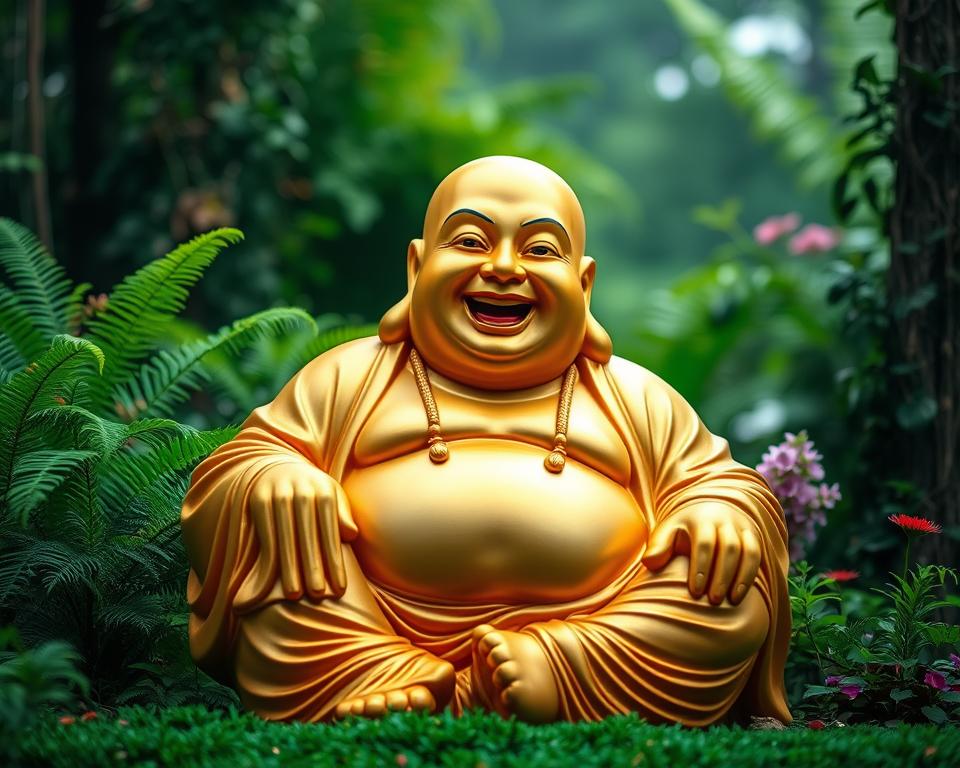
Chinese Buddha statues, including the Laughing Buddha (Budai or Hotei), embody a distinctly Chinese interpretation of Buddhist ideals. The Laughing Buddha, with his rotund belly and joyful expression, symbolizes good fortune, abundance, and wealth. His presence is believed to bring happiness and prosperity to people.
Conclusion: Incorporating Buddha Statues into Your Space
Incorporating a Buddha statue into your living space can be a powerful way to cultivate mindfulness and inner peace. When selecting a statue, consider both its aesthetic appeal and symbolic meaning, choosing a form that resonates with your spiritual aspirations.
Traditionally, Buddha statues are placed at eye level or higher and facing the entrance of a room. Many people create small shrines or altars around their statues, incorporating elements like candles and incense to enhance the sense of sacred space.
By understanding the meanings behind different Buddha statues, you can make informed choices that support your spiritual practice or aesthetic preferences, ultimately enriching your home with good fortune and wisdom.
FAQ
What is the significance of the lotus flower in Buddha imagery?
The lotus represents enlightenment and spiritual growth, symbolising the journey to inner peace and wisdom.
What does the Dhyana Mudra signify in a statue?
The Dhyana Mudra, or meditation gesture, signifies concentration and inner peace, often depicted with hands folded in the lap.
How does the Abhaya Mudra gesture convey fearlessness?
The Abhaya Mudra is a gesture of reassurance and protection, symbolising fearlessness and peace, often depicted with the right hand raised.
What is the symbolism behind a reclining Buddha?
A reclining Buddha represents the final nirvana, signifying the end of the cycle of rebirth and the attainment of ultimate peace.
What does the Laughing Buddha symbolise?
The Laughing Buddha, or Budai, symbolises abundance, wealth, and good fortune, often depicted with a smiling face and a generous belly.
How can Buddha statues be incorporated into your home for good fortune?
Placing a Buddha statue in your home can attract positive energy, promoting a sense of calm, peace, and good fortune.
What is the significance of the Bhumisparsha Mudra?
The Bhumisparsha Mudra, or earth-touching gesture, signifies the moment of enlightenment under the Bodhi Tree, representing a connection to the earth.
How do different hand gestures or mudras convey various aspects of Buddha’s teachings?
Different mudras convey various aspects of Buddha’s teachings, such as compassion, wisdom, and fearlessness, providing a visual representation of his principles.