Budget-Friendly Ideas for a Small Garden

Creating a beautiful outdoor area does not require a substantial financial investment. Numerous cost-conscious approaches enable homeowners to transform even the most modest plot into an attractive and functional space.
Whether working with a compact urban patio or a tiny back garden, strategic planning and creative thinking yield impressive results. These methods ensure household finances are not strained.
Owners of limited spaces face unique challenges. However, these constraints often inspire innovative solutions that maximise every square metre. The focus is on keeping costs minimal while achieving great impact.
Economical gardening involves making informed choices about materials, plants, and design. It prioritises value and longevity over expensive, short-term fixes. This guide explores practical ways to achieve this transformation.
By combining DIY projects, recycled materials, and clever design, anyone can create an outdoor space that enhances their quality of life. It proves that financial limitations need not restrict one’s gardening ambitions.
Inhaltsverzeichnis
Key Takeaways
- A beautiful garden is achievable without a large budget.
- Strategic planning is crucial for maximising a small outdoor area.
- Limited space can inspire creative and innovative design solutions.
- Informed choices on plants and materials ensure better value and longevity.
- DIY projects and upcycled items are excellent for keeping costs down.
- Financial constraints should not limit the potential of your garden.
Planning Your Garden Layout on a Budget
Thoughtful layout planning forms the cornerstone of transforming limited outdoor spaces. This preliminary stage ensures every decision aligns with both functional needs and financial constraints.
Effective garden design begins with strategic spatial organisation. Gardeners should consider how they intend to use their outdoor area before purchasing materials.
Defining Garden Zones and Functional Areas
Establishing clear zones prevents a cluttered appearance. Many experts recommend dividing the space into distinct areas for dining, planting, and relaxation.
A balanced approach works best. Aim for roughly equal proportions of soft landscaping and hard surfaces. This creates harmony without overwhelming the senses.
Utilising Vertical Space and Small Corners
Vertical surfaces offer untapped potential. Wall-mounted planters and climbing plants add greenery without consuming valuable floor space.
Awkward corners become features with clever planting. Shade-tolerant species can transform neglected spots into charming focal points.
Strategic division using screens or low hedges creates visual interest. This clever trick makes the area feel more expansive by concealing some views.
Budget-Friendly Ideas for a Small Garden
Focusing on high-impact, low-cost features allows gardeners to achieve remarkable results without excessive spending. This approach prioritises elements that deliver maximum visual appeal while keeping costs under control.

Identifying Cost-Effective Garden Features
Gravel represents an excellent option for ground coverage. It provides a practical alternative to expensive paving while creating planting opportunities between stones.
Rock gardens suit compact spaces particularly well. They require minimal maintenance and create striking displays with modest investment.
Salvaging existing materials before renovations can save money significantly. Many gardens contain reusable patio slabs, bricks, or timber that can be repurposed.
Multi-functional features maximise value by serving multiple purposes. Seating with integrated storage or planters that double as boundary markers eliminate the need for separate purchases.
Phasing improvements over seasons allows budgets to stretch further. This approach gives gardeners time to observe how the space functions and adjust plans accordingly.
Simple additions like improved lighting or freshly painted fences enhance appeal without substantial financial outlay. These ways of transforming outdoor areas prove that creative garden ideas need not strain household finances.
Creative DIY Gardening Projects
Creative repurposing transforms everyday objects into charming garden additions. These hands-on projects allow people to craft unique features for their outdoor space. The approach combines practicality with personal expression.

Many diy endeavours require minimal investment. They utilise readily available materials that might otherwise go to waste. This makes them accessible to most homeowners.
Transforming Pallets and Recycled Materials into Planters
Wooden pallets offer excellent potential for vertical planters. When stood upright and lined with fabric, they create perfect pockets for herbs and flowers. These planters maximise limited ground space effectively.
Recycled tin cans become charming containers after cleaning. They suit windowsills and balcony gardens perfectly. Even old kitchen items like colanders can host plants with character.
Constructing Bug Hotels and Upcycled Seating
Bug hotels provide habitats for beneficial insects. They’re built from natural materials like twigs and pine cones. These structures add ecological value to any garden.
Upcycled seating solutions include reclaimed timber benches. Old cable drums can become quirky stools. These projects combine functionality with sustainability.
| Project Type | Materials Needed | Skill Level | Estimated Cost |
|---|---|---|---|
| Pallet Planters | Wooden pallets, landscape fabric | Beginner | £0-£10 |
| Tin Can Planters | Used cans, outdoor paint | Beginner | £0-£5 |
| Bug Hotels | Twigs, pine cones, wooden box | Intermediate | £5-£15 |
| Upcycled Seating | Reclaimed timber, cushions | Intermediate | £10-£30 |
These diy approaches let people create a personalised garden. They prove that beautiful outdoor spaces don’t require large budgets. With some creativity, anyone can enhance their home environment sustainably.
Using Affordable Materials for Hard Landscaping
The choice of materials significantly influences both the aesthetic appeal and financial outlay of garden hardscaping projects. With rising costs affecting landscaping budgets, strategic selection becomes essential.

This approach to hard landscaping prioritises resourcefulness over expenditure. It demonstrates how careful planning can transform outdoor spaces economically.
Salvaging and Repurposing Patio Slabs and Gravel
Existing patio slabs often accumulate dirt and discolouration over time. Rather than replacement, vigorous brushing with stiff brushes can restore their appearance effectively. This way of maintaining surfaces avoids unnecessary spending.
When slabs occupy unsuitable locations, they present repurposing opportunities. These materials can form new pathways or seating areas. This method maximises value from existing resources.
Gravel offers one of the most economical options for hard landscaping. A bulk bag covering approximately 10m² provides substantial coverage. Selecting appropriate stone size ensures optimal performance for different applications.
Smaller gravel stones suit high-traffic pathways where even weight distribution matters. Larger decorative pebbles work better in planted areas. Locally sourced aggregates further reduce expenses.
Rejuvenating Old Fences and Creating DIY Trellises
Structurally sound fences require minimal intervention for improvement. Thorough cleaning followed by environmentally friendly timber paint dramatically enhances their appearance. This approach extends boundary lifespan considerably.
When replacement becomes necessary, standard 6ft x 6ft panels offer affordable solutions. DIY installation provides additional savings compared to professional services. These fence solutions maintain garden aesthetics within budget.
Simple DIY trellises constructed from pressure-treated timber or bamboo canes support climbing plants effectively. They create vertical interest at minimal costs. This landscaping technique adds dimension without occupying valuable ground space.
Low-Cost Plant Selection and Planting Methods
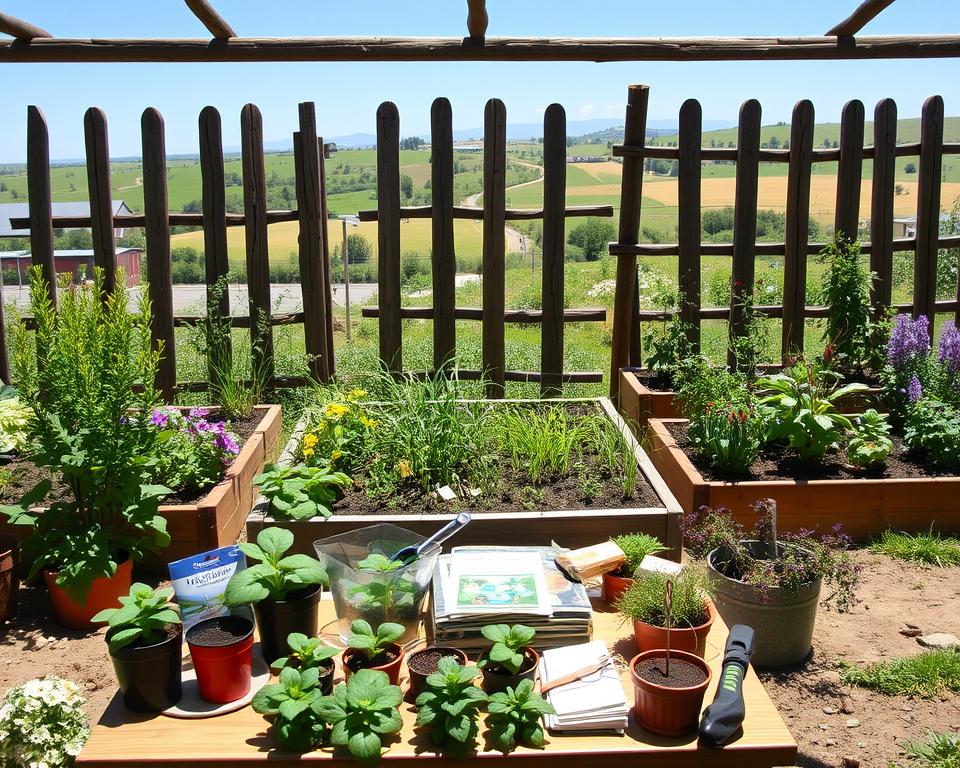
Choosing the right plants and propagation methods can dramatically reduce gardening costs without compromising on quality. Strategic selection focuses on plants that thrive in local conditions, reducing replacement expenses over time.
This approach to economical gardening prioritises long-term value. It ensures beautiful results without straining household budgets.
Growing from Seed on a Windowsill
Starting plants from seed represents the most cost-effective way to begin gardening. Seed packets costing just pounds can produce dozens of plants.
Many common garden plants and vegetables germinate successfully indoors. A warm windowsill provides ideal conditions without expensive greenhouse infrastructure.
This method works particularly well for herbs and seasonal flowers. Transplanting occurs after frost risk passes, ensuring healthy establishment.
Exploring Plant Swaps and Community Donations
Plant-swapping events organised by community groups offer excellent opportunities. Gardeners acquire unusual varieties and share surplus plants.
Local gardening clubs often distribute free plants, seeds, and containers. Allotment associations frequently have excess specimens available during planting seasons.
Bare root hedging plants cost from 60p to £3 per specimen. They establish quickly, developing into substantial boundaries within a few years.
Maximising Small Garden Space
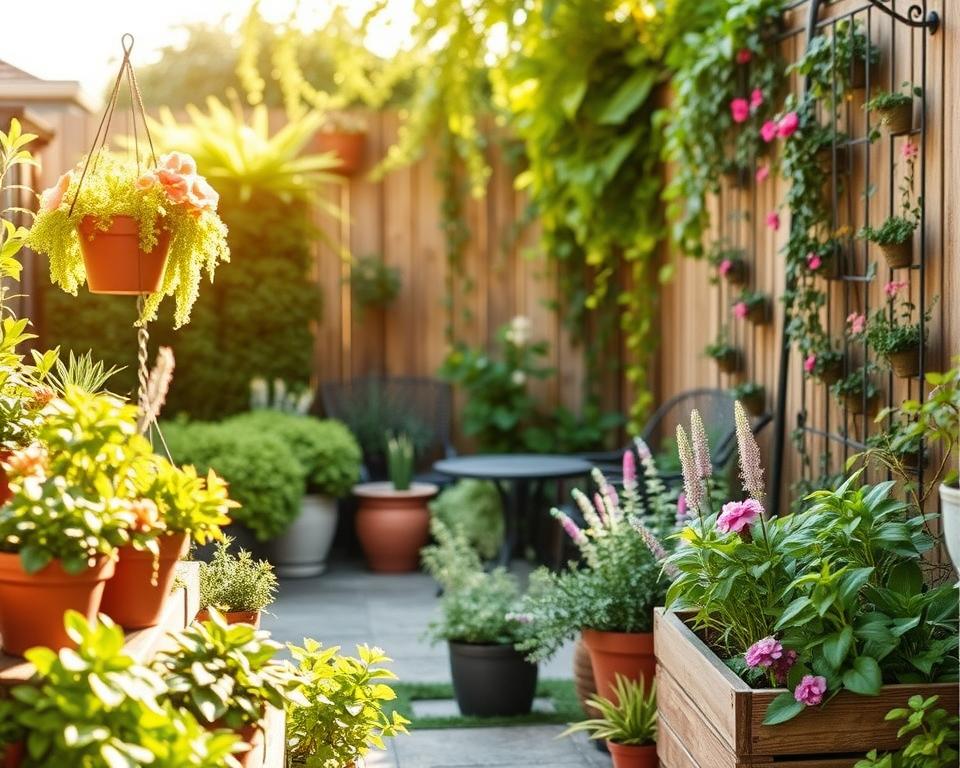
Vertical gardening techniques offer transformative potential for compact outdoor environments. These approaches allow gardeners to dramatically increase their planting opportunities without consuming valuable ground area.
Incorporating Climbers and Vertical Plantings
Climbing plants like clematis and jasmine can transform plain fences into lush green walls. They add depth and interest while disguising less attractive boundary structures.
Hanging baskets and wall-mounted planters utilise vertical surfaces effectively. These solutions provide substantial planting space without encroaching on patios or pathways.
Tall, narrow plants such as alliums and Verbena bonariensis add height without spreading widely. They create vertical interest in confined planting areas.
Designing Multi-Use Areas for Dining and Storage
Multi-functional spaces prevent compact gardens from feeling cramped. They create flexible areas adaptable to changing needs throughout the seasons.
Built-in seating with integrated storage compartments maximises patio functionality. Corner benches or boundary-hugging arrangements leave central areas open and uncluttered.
This approach eliminates the need for separate storage solutions. It ensures every element serves multiple purposes within the limited space.
Innovative Storage and Seating Solutions
Dual-purpose seating that incorporates hidden storage represents a practical approach to space management. This strategy addresses the common challenge of housing essential gardening supplies without compromising the area’s aesthetic appeal.
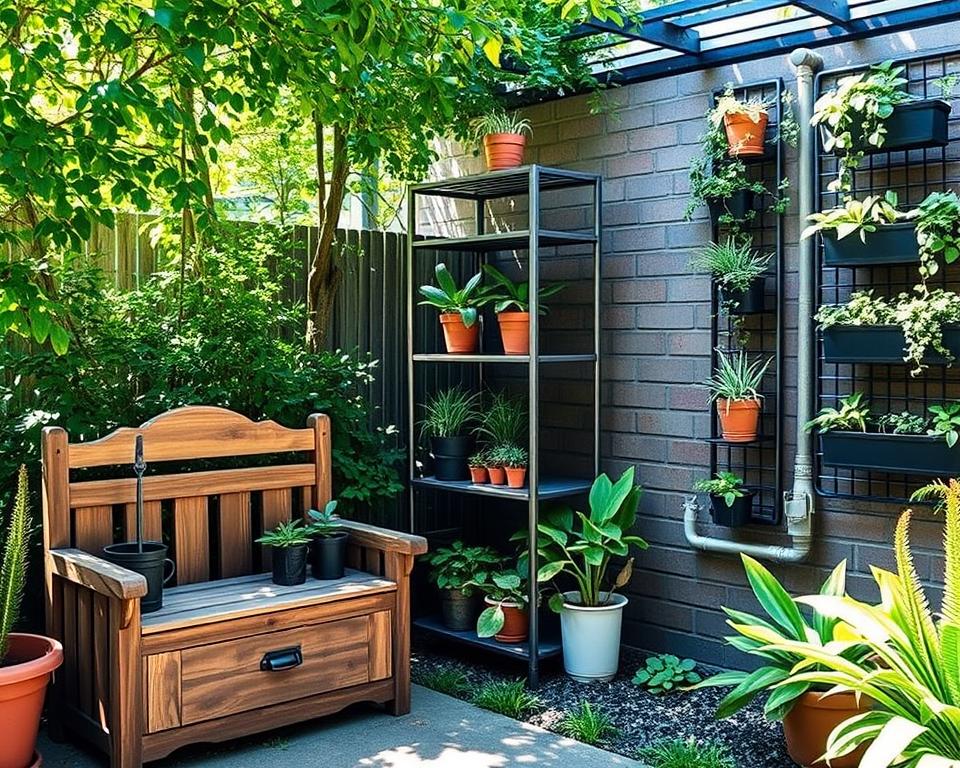
Custom-built bench seating with lift-up lids or pull-out drawers offers excellent dual functionality. These pieces provide comfortable places to sit while concealing garden equipment from view.
Building Bench Storage and Compact Furniture
Positioning seating along garden boundaries or in corners preserves valuable patio space. This arrangement makes the entire area feel larger and more inviting.
Compact folding furniture that stores flat during winter months prevents permanent fixtures from occupying space unnecessarily. Upcycled materials like reclaimed timber can be transformed into characterful garden furniture at a fraction of commercial prices.
| Storage Solution | Space Required | Cost Estimate | Skill Level |
|---|---|---|---|
| Built-in bench storage | Boundary areas only | £50-£150 | Intermediate |
| Folding furniture | Minimal when stored | £30-£80 | Beginner |
| Vertical shelf storage | Wall space only | £20-£60 | Beginner |
| Upcycled furniture | Variable | £10-£40 | Intermediate |
Reclamation yards frequently stock vintage garden furniture requiring minor repairs. Simple innovations like screwing jar lids to shelf undersides keep small items organised without cluttering surfaces.
Multi-functional furniture pieces that serve several purposes simultaneously deliver maximum value. These clever solutions ensure every element contributes meaningfully to the outdoor experience.
Enhancing Garden Design with Colour and Structure
Colour psychology in garden design offers powerful tools for manipulating spatial perception. Strategic selection of hues can transform how outdoor areas are experienced.

Using Cool Colours to Create a Sense of Depth
Cool colours from the blue and purple spectrum create visual recession. Plants like lavender and delphiniums appear to recede into the distance. This clever trick makes compact gardens feel more expansive.
Conversely, warm colours such as reds and oranges advance visually. They can make planting areas seem closer. A predominantly cool palette maximises the sense of space effectively.
Light-coloured landscaping materials reflect more light around the garden. Pale stone paving or cream gravel brightens areas noticeably. This enhances the feeling of openness compared to dark surfaces.
Repeating a limited selection of plants creates cohesive designs. This approach prevents layouts from appearing bitty or disjointed. Consistent colour themes establish rhythm and harmony throughout the space.
Structural planting with evergreen shrubs provides year-round framework. These elements ensure the garden maintains appeal during winter months. Thoughtful colour combinations work with structural plants to create balanced compositions.
DIY Tips for Sustainable and Affordable Gardening
Sustainable gardening techniques provide a practical pathway to creating a vibrant outdoor space while conserving resources. Many eco-friendly approaches naturally reduce costs while benefiting local wildlife.

These methods align environmental responsibility with careful budget management. They often utilise repurposed materials and natural processes.
Creating Compost Bins and Rainwater Collection Systems
Homemade compost bins transform kitchen scraps into rich soil. Old wooden pallets or boxes make excellent containers.
Balancing green waste like vegetable peels with brown matter like dry leaves is key. This process enriches garden beds for free.
Collecting water in barrels connected to downpipes is another smart diy project. It provides free irrigation throughout the year.
This system can significantly save money on utility bills. It is a simple yet effective gardening strategy.
Choosing Environmentally Friendly Materials
Selecting non-toxic, paint for fences and furniture rejuvenates them safely. Many colours are available.
Building features like bug hotels from natural materials supports beneficial insects. It enhances the garden‘s ecosystem.
Vertical planters for herbs maximise growing area. Even a small patio can host a productive garden.
Engaging the whole family in projects like creating miniature fairy gardens adds enjoyment. These ideas make gardening accessible and fun.
Conclusion
The journey of cultivating a limited outdoor space demonstrates that financial constraints need not restrict gardening ambitions. Thoughtful approaches can create beautiful, functional environments that enhance daily life.
These garden ideas showcase numerous ways to achieve impressive results. From repurposing materials to creative planting ideas, people can transform their outdoor areas without overspending.
Sustainable practices like composting and simple upgrades to fences deliver both environmental benefits and cost savings. Community connections through plant swaps enrich the experience while saving money.
Small gardens offer unique opportunities for personal expression. Every decision contributes to spaces that reflect individual tastes while staying within budget. The process itself builds skills and confidence that extend beyond the garden gate.
FAQ
What is the most important first step when designing a small garden on a budget?
The most crucial first step is careful planning. Before purchasing any plants or materials, one should define the garden’s functional areas, such as seating, planting beds, and storage. This prevents costly mistakes and ensures every bit of space is used effectively from the outset.
How can I save money on hard landscaping like patios and paths?
Significant savings can be made by salvaging materials. One can look for reclaimed patio slabs or bricks from local reclamation yards. Using gravel is another cost-effective option for paths, and it provides excellent drainage. For a personal touch, creating a mosaic with broken slabs can add unique character.
Are there affordable ways to add seating and storage to a compact outdoor space?
Absolutely. DIY projects are ideal for this. Old wooden pallets can be transformed into a stylish bench with integrated storage underneath. Upcycling an old wooden chest or crate also creates versatile seating that doubles as a place to store gardening tools or cushions.
What are the best low-cost plants for a small garden?
Growing from seed is remarkably economical. Starting herbs and flowers like marigolds on a windowsill is very affordable. Perennial plants, which return year after year, offer excellent value. One should also explore local plant swaps or community gardening groups for free or donated plants.
How can I make a small garden feel larger without spending much money?
Using design tricks can create an illusion of space. Painting a fence or wall a pale, cool colour like light grey or sage green can make it appear to recede. Incorporating vertical planting with climbers like clematis or sweet peas draws the eye upwards, maximising the sense of depth.
Can you suggest sustainable practices that also save money?
Two highly effective practices are composting and rainwater harvesting. Building a simple compost bin from old wooden pallets recycles kitchen and garden waste into free, nutrient-rich compost. Installing a water butt to collect rainwater reduces water bills and is better for plants.