Low Maintenance Ideas & Tips for Small Gardens
Many people dream of a lovely outdoor area but worry about the work involved. This is especially true for those with limited space. A compact garden should be a place of joy, not a source of chores.
This guide explores practical strategies for crafting a beautiful outdoor space. It focuses on designs that require little effort to maintain. The advice comes from experts like the Royal Horticultural Society.
Every square metre in a compact plot is valuable. The right approach can transform even a tiny courtyard. The goal is to create a stylish, functional area that looks good with only occasional attention.
Readers will discover how intelligent plant selection and smart design choices make a big difference. These methods reduce the workload significantly. They help create an outdoor space that feels professionally designed.
Inhaltsverzeichnis
Key Takeaways
- Focus on intelligent design to reduce regular chores.
- Select plants that thrive with minimal intervention.
- Maximise the impact of every part of your outdoor space.
- Incorporate features that serve multiple purposes.
- Plan for year-round interest with seasonal plants.
- Use surfaces and boundaries creatively to add depth.
- Prioritise quality over quantity in your choices.
Introduction to Low Maintenance Gardening in Compact Outdoor Spaces
The concept of effortless outdoor living is gaining traction as people seek beautiful spaces that don’t consume their weekends. This approach to garden design focuses on creating attractive areas that require minimal intervention while delivering maximum enjoyment.
Overview and Benefits of a Low-Maintenance Garden
This practical approach to outdoor space design significantly reduces the time and expertise needed to maintain an attractive garden throughout the year. According to the Royal Horticultural Society, implementing strategic choices creates beautiful gardens requiring far less work than traditional methods.
The advantages extend beyond time savings. Reduced water consumption and lower expenditure on plants represent significant benefits. This method also decreases the need for specialist equipment and reduces physical strain.
Why Small Gardens in the UK Require Special Design Considerations
Compact outdoor spaces in Britain present unique challenges. Limited growing area and overshadowing from neighbouring properties demand careful planning. Specific soil conditions and prominent boundaries also influence the design process.
Award-winning designer Lee Burkhill notes that time-poor clients view their gardens as outdoor rooms requiring fuss-free plantings. The UK climate makes selecting hardy plants suited to local conditions particularly valuable for sustainable gardening.
Low Maintenance Ideas & Tips for Small Gardens: Essential Strategies
The secret to an enjoyable small garden lies in strategic planning that minimises ongoing care requirements. This approach transforms outdoor spaces from demanding projects into relaxing retreats.

Embracing the No-Fuss Approach
According to RHS guidance, accepting natural processes creates more resilient outdoor spaces. Designing with uneven paving and exuberant planting means occasional weeds enhance rather than spoil the scene.
This philosophy values character over perfection. It dramatically reduces corrective work while creating a relaxed atmosphere. The approach celebrates slight imperfections as part of the garden’s natural charm.
Key Principles for Effortless Garden Maintenance
Strategic planning during the design phase prevents future work. Eliminating awkward corners and reducing pot numbers simplifies routines. Selecting self-clinging climbers avoids regular tying-in.
The ‘right plant, right place’ philosophy ensures natural thriving without constant intervention. Reducing plant varieties creates cohesive designs with simpler care requirements.
| Maintenance Approach | Time Commitment | Skill Level Required | Long-Term Sustainability |
|---|---|---|---|
| Traditional Formal Garden | High (weekly attention) | Advanced | Low |
| Balanced Low-Input Design | Moderate (seasonal tasks) | Intermediate | Medium |
| Wildlife-Friendly Natural Style | Low (occasional checks) | Beginner | High |
Garden designer Lee Burkhill emphasises providing clear maintenance schedules. This transforms garden care from overwhelming responsibility into manageable seasonal tasks. The right strategy makes a significant difference to time spent outdoors.
Choosing the Right Plants for Effortless Garden Care
Strategic vegetation choices can transform demanding outdoor spaces into self-sustaining retreats. The right selection ensures your garden remains vibrant throughout the year with minimal intervention. This approach represents the most effective way to create lasting beauty.
Understanding the ‘Right Plant, Right Place’ Concept
The Royal Horticultural Society emphasises matching plants to existing conditions. Their online plant selector tool helps gardeners find perfect matches for light levels and soil type. This eliminates the need for constant soil amendment or protective measures.
When plants naturally suit their environment, they thrive without supplementary watering systems. This fundamental principle reduces ongoing work significantly. It creates a harmonious planting scheme that maintains itself.
Selecting Award-Winning and Hardy Varieties
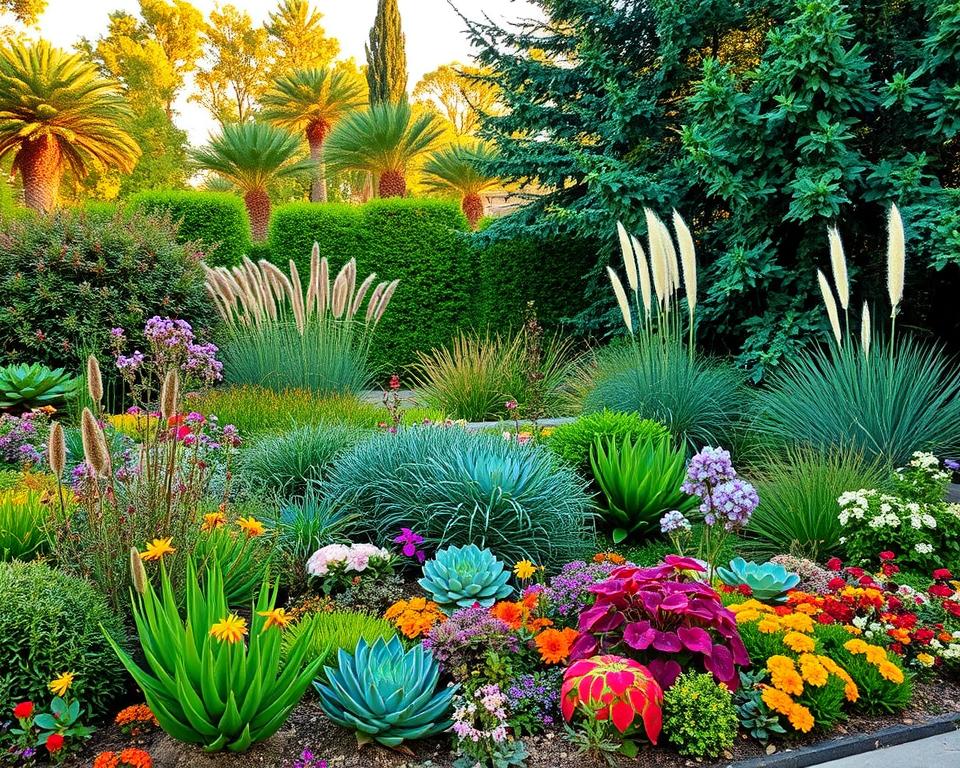
Plants with the Award of Garden Merit (AGM) label offer reliable performance in typical UK conditions. These certified varieties provide excellent value for any outdoor space. Mediterranean plants like lavender thrive in sunny gardens with dry soil.
Long-flowering perennials such as Erigeron karvinskianus provide continuous colour throughout summer. Hardy shrubs form the backbone of sustainable planting schemes. They maintain visual interest year-round with minimal leaf drop.
| Plant Type | Maintenance Level | Seasonal Interest | Best For |
|---|---|---|---|
| AGM Certified Plants | Very Low | Year-Round | Reliable Performance |
| Mediterranean Varieties | Low | Summer Focus | Sunny, Dry Areas |
| Long-Flowering Perennials | Moderate | Extended Seasons | Continuous Colour |
| Hardy Shrubs | Very Low | All Year | Structural Planting |
Repeat-flowering roses like Rosa ‘Flower Carpet Amber’ bloom for eight months. Groundcover plants naturally suppress weed growth while softening hard landscaping. This expert advice helps create beautiful gardens that care for themselves.
Space-Saving and Vertical Garden Solutions
The third dimension offers untapped potential for gardeners working with restricted floor areas. By utilising walls, fences and overhead spaces, planting opportunities expand dramatically without increasing the garden footprint.

Maximising Vertical Potential with Climbers and Hanging Baskets
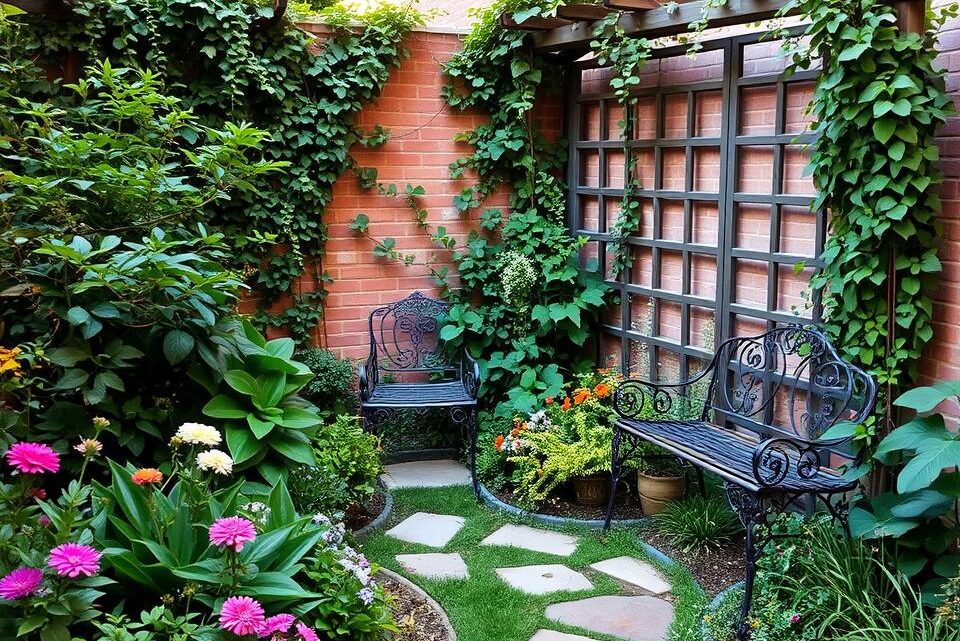
Self-clinging climbers represent the ultimate effortless vertical solution. Varieties like ivy, Virginia creeper and climbing hydrangea attach directly to surfaces using aerial roots.
This eliminates the need for support structures and regular maintenance. Preparing boundary surfaces before planting ensures a lasting backdrop that won’t require repainting.
Hanging baskets maximise overhead space effectively. They bring colour to eye level with long-flowering varieties like begonias and pelargoniums.
Innovative Ideas with Large Planters and Raised Beds
The Royal Horticultural Society advises using substantial containers rather than small pots. Larger planters hold more compost and water, drying out much slower during summer months.
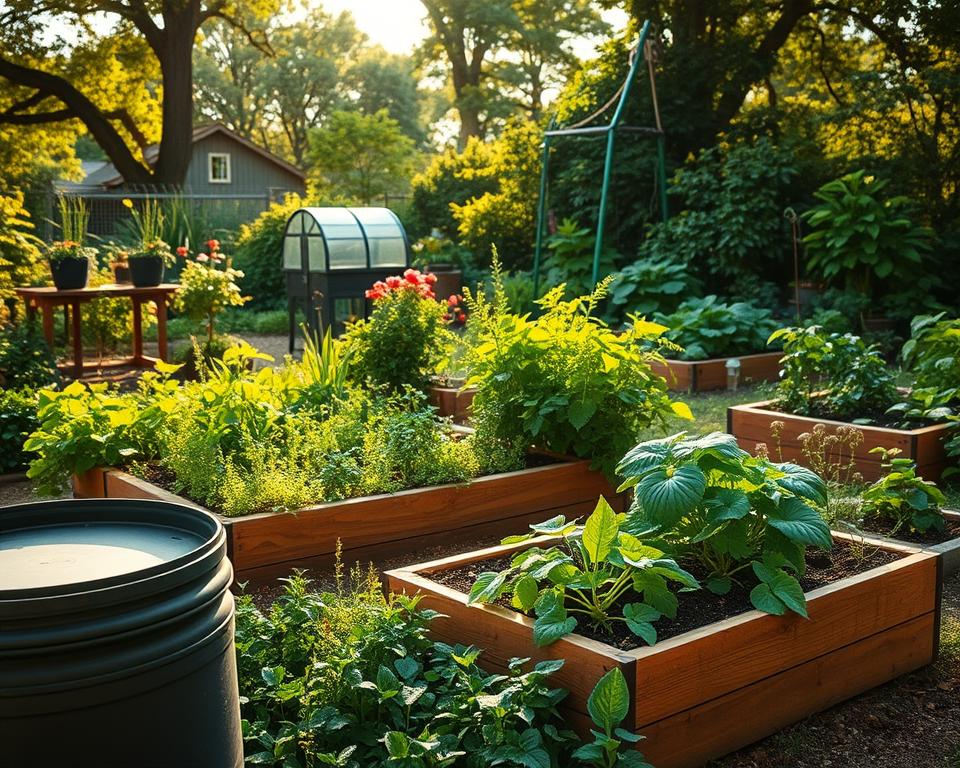
Grouping plants in raised beds proves valuable in urban gardens with limited soil. This approach consolidates maintenance tasks within defined areas while creating productive growing zones.
Trained fruit trees offer another clever space-saving method. Espaliers, fan-trained specimens and cordons allow fruit growing in minimal ground space.
| Vertical Method | Space Efficiency | Maintenance Level | Best Plants |
|---|---|---|---|
| Self-Clinging Climbers | High | Very Low | Ivy, Hydrangea |
| Hanging Baskets | Medium | Moderate | Begonias, Lobelia |
| Large Planters | Medium | Low | Shrubs, Herbs |
| Trained Fruit Trees | High | Low | Apples, Pears |
Practical Garden Design and Layout Ideas
Thoughtful spatial arrangement transforms compact outdoor spaces into harmonious extensions of the home. The layout should balance aesthetics with functionality, creating areas that serve multiple purposes while maintaining visual appeal.
Creating Balanced Borders and Colour Schemes
Professional garden design often follows a 50/50 ratio between planted areas and hard landscaping. This balance prevents overcrowding while ensuring sufficient greenery. Colour selection significantly influences spatial perception.

Cooler colours from the blue and purple spectrum create depth, making gardens appear more spacious. Light-coloured materials reflect available light, brightening shaded corners. Strategic planting in borders can divide space effectively.
Integrating Seating and Storage for Multi-Functional Areas
Built-in seating solutions maximise functionality in confined spaces. Corner benches and boundary-mounted options preserve central patio areas for circulation. These integrated designs often incorporate hidden storage compartments.
Repetition of elements like matching containers creates visual cohesion. A limited planting palette simplifies care while making a stronger design statement. This approach ensures every element serves multiple purposes.
| Zoning Technique | Space Impact | Functional Benefit |
|---|---|---|
| Low Hedges | Creates depth | Defines areas subtly |
| Screens | Adds privacy | Breaks up sightlines |
| Strategic Borders | Guides movement | Highlights features |
| Integrated Seating | Saves space | Multi-functional |
Incorporating Low-Maintenance Hardscaping Options
Hard landscaping decisions can significantly impact the ongoing care requirements of any outdoor space. The materials chosen for paths, patios, and surfaces determine much of the regular work needed to keep the area looking its best.
According to Royal Horticultural Society guidance, traditional grass areas often demand disproportionate attention in compact settings. For those without children needing play space, removing the lawn entirely creates opportunities for more creative planting schemes.
Alternatives to the Traditional Lawn
Eliminating grass represents one of the most effective strategies for reducing garden chores. Even modest lawns require regular mowing, feeding, and edging throughout the growing season.
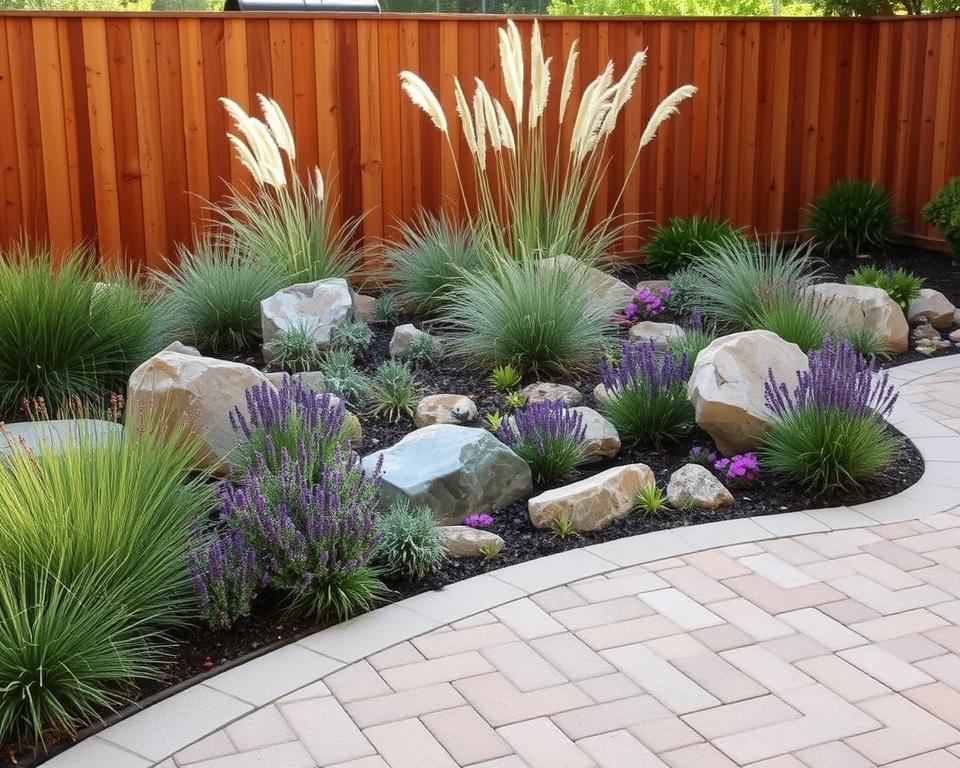
The RHS specifically recommends replacing lawns with generous planted borders surrounding paved, gravelled, or decked areas. This approach requires significantly less ongoing work while eliminating lawnmower storage needs.
For those retaining some grass, installing permanent edges using brick courses or paving strips set slightly below turf level saves considerable time. Simplifying lawn shapes by removing awkward angles makes mowing more efficient.
Gravel surfaces offer versatile alternatives, providing permeable drainage and natural weed suppression when properly installed. Decking creates level outdoor living space on sloping sites without expensive groundworks.
| Surface Option | Maintenance Level | Installation Complexity | Long-Term Durability |
|---|---|---|---|
| Traditional Lawn | High | Medium | Medium |
| Gravel | Low | Low | High |
| Decking | Medium | High | High |
| Permeable Paving | Low | High | Very High |
In very compact gardens, maximising planted borders and minimising central lawn areas creates more biodiverse spaces with greater visual interest throughout the seasons.
Expert Advice and Proven Techniques for a Sustainable Garden
Seasoned garden designers possess a wealth of knowledge for creating beautiful, self-sustaining spaces. Their insights help gardeners achieve stunning results with significantly less work. This guidance is invaluable for anyone seeking a more manageable outdoor area.
Award-winning designer Lee Burkhill highlights ornamental grasses as superb choices. Varieties like Carex ‘Evergreen’ and Stipa tenuissima need only a yearly trim. They provide structure and movement throughout the year.
Experts strongly advise against planting annuals. These plants demand constant attention for feeding, watering, and deadheading. Shrubs, grasses, and perennials are far more practical for a low-maintenance approach.
Simplifying the planting scheme reduces time spent on chores. Reducing the number of species by a third creates bold, impactful blocks of colour. Dense planting also naturally suppresses weeds by leaving no room for them to establish.
The Royal Horticultural Society recommends mulching bare soil between plants. Bark chippings or gravel conserve moisture and prevent weeds. This simple step makes a substantial difference to the amount of watering required.
- Choose plants for year-round interest, like multi-season trees.
- Select climbers suited to sun or shade for vertical impact.
- Opt for fewer, larger pots to reduce watering frequency.
Following this professional advice ensures a garden that remains attractive across all seasons. It becomes a space for enjoyment rather than endless work.
Conclusion
Transforming a compact outdoor area into a personal sanctuary requires careful consideration from the outset. The principles outlined provide a solid foundation for creating an appealing space that demands minimal attention.
Strategic plant selection and intelligent design choices make a significant difference to the amount of work involved. By following expert guidance, even the tiniest plot can become a beautiful, self-sustaining environment.
The initial investment of time in planning pays long-term dividends as plants mature and establish themselves. This approach respects both the garden’s needs and the gardener’s lifestyle, creating a harmonious balance.
Each implemented change brings the vision closer to reality. The result is an outdoor space that serves as a source of joy rather than constant labour.
FAQ
What are the best low-maintenance plants for a small garden?
Hardy shrubs, evergreen grasses, and perennials like lavender and sedum are excellent choices. They require minimal care once established and provide structure and colour throughout the year.
How can I reduce the amount of time spent weeding?
Applying a thick layer of mulch to borders and beds significantly suppresses weed growth. Alternatively, using weed control fabric beneath gravel or bark chippings offers a long-term solution.
Is it possible to have a lawn in a low-maintenance garden?
Yes, but consider reducing its size or replacing some areas with paving, gravel, or ground cover plants. For the remaining lawn, a hard-wearing grass mix requires less frequent mowing.
What hardscaping materials are recommended for easy upkeep?
Paving, gravel, and decking are popular low-maintenance options. They create clean, durable surfaces for patios and pathways that need little attention beyond occasional cleaning.
How can I add colour without planting lots of seasonal flowers?
Incorporate colour through hardscaping elements, furniture, or decorative pots. Planting shrubs with colourful foliage or bark ensures visual interest across different seasons with minimal effort.
Are there specific design tricks to make a small garden feel larger?
Using simple layouts, limiting the colour palette, and incorporating mirrors or vertical planting can create an illusion of space. Clever design draws the eye upwards and across the garden.
What is the single most important tip for creating an easy-care garden?
Good preparation is crucial. Investing time in proper soil preparation, installing irrigation for pots, and choosing the right plants for your space will drastically reduce future work.