Build a Natural Stone Fountain Yourself – How to Do It Right
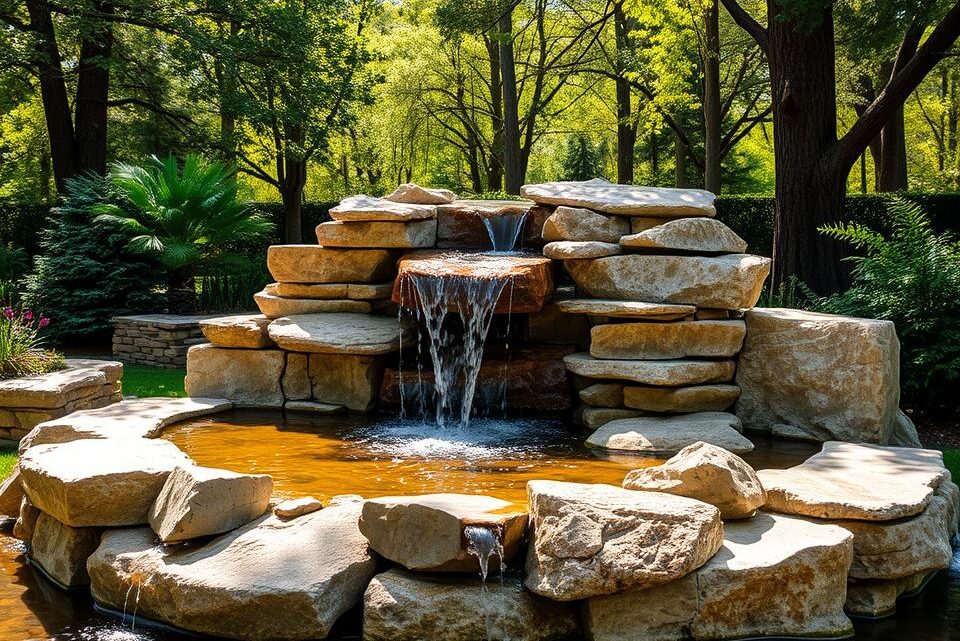
Creating a beautiful water feature in your garden can be a rewarding DIY project. A natural stone fountain adds a soothing element to your outdoor space, creating a tranquil oasis.
You can transform your garden into a serene escape by building a fountain that incorporates the gentle sound of flowing water. This comprehensive guide will walk you through every step of the process, from initial planning to finishing touches, ensuring that your fountain is both functional and aesthetically pleasing.
Inhaltsverzeichnis
Key Takeaways
- Learn how to plan and execute a successful DIY fountain project.
- Understand the essential components and materials needed for your water feature.
- Discover expert techniques for working with natural stone.
- Avoid common pitfalls in fountain construction.
- Ensure your fountain operates efficiently for years to come.
Understanding the Basics of Stone Fountains
A stone fountain is a beautiful water feature that can transform your garden into a tranquil oasis. By understanding the basics of stone fountains, you can create a stunning focal point in your outdoor space.
Components of a Natural Stone Fountain
A natural stone fountain typically consists of several key components, including a basin, pump, and stones. The basin holds the water, while the pump circulates it, creating a soothing sound. The stones are arranged to create a visually appealing feature that complements your garden design.
Benefits of Adding a Water Feature to Your Garden
Adding a fountain to your garden offers numerous benefits. Some of these advantages include:
- Creating a peaceful atmosphere by masking unwanted noise
- Attracting beneficial wildlife, such as birds and butterflies
- Enhancing the aesthetic appeal of your outdoor space
- Improving the microclimate around the fountain
- Increasing property value with a well-designed feature
| Benefits | Description |
|---|---|
| Peaceful Atmosphere | Masks unwanted noise, creating a serene environment |
| Wildlife Attraction | Attracts birds, butterflies, and other beneficial wildlife |
| Aesthetic Appeal | Enhances the visual appeal of your garden |
Planning Your Fountain Project
To create a stunning water feature, you need to plan your project meticulously. A well-thought-out plan will help you achieve a beautiful and functional fountain that complements your garden.
Choosing the Perfect Location
When selecting a location for your fountain, consider the overall aesthetic you want to achieve. Think about the viewing angles and how the fountain will look from different positions in your garden, including from inside your home looking out. Ensure the location is level and stable to support the weight of the stone and water.
Determining the Right Size and Style
The size and style of your stone fountain should be proportional to your garden space. Consider the following factors:
- The size of your garden and the space available for the fountain
- The style of your garden, whether modern, rustic, or classical
- The sound you wish to create, whether a gentle trickle or a more dramatic flow
- The type of stones that will complement your garden’s existing aesthetic
A large, ornate fountain might overwhelm a small patio, while a tinyfeaturecould get lost in a spacious yard. Consider your garden’s theme and choose a fountain style that complements it.

Essential Tools and Materials
Before starting your fountain project, it’s crucial to have the necessary tools and materials at hand.
Required Tools for Fountain Construction
To construct your natural stone fountain, you’ll need a variety of tools. These include a drill for making holes in the stones, a chisel for shaping and carving, and a level to ensure everything is properly aligned.
Other essential tools are a trowel for applying adhesive and a rubber mallet for tapping stones into place gently.
Materials Checklist
The materials required for your DIY stone fountain include a high-quality submersible pump that can handle between 250-1000 gallons per hour, depending on your fountain’s size and desired water flow.
A durable waterproof basin or reservoir is also necessary, typically made from heavy-duty plastic, to hold the water and house the pump beneath your stone arrangement.
You’ll also need copper or PVC piping to carry water from the pump to the top of your fountain, with the diameter affecting flow rate and pressure.
Natural stones in various sizes will form the visible structure of your fountain. Select pieces with interesting textures, colours, and shapes that complement each other.
Additional materials include drainage gravel for the basin base, a rigid mesh screen to protect the pump from debris, and waterproof silicone adhesive to secure stones in their final positions.
Selecting the Perfect Stones
The selection of stones for your fountain is a vital part of the construction process, influencing both its appearance and its operation. When choosing stones, consider not just their aesthetic appeal but also their functionality in creating a harmonious water feature.
Types of Stones Suitable for Fountains
You can use various types of rock for your fountain, but it’s essential to select those that are durable and can withstand constant water exposure. Some popular choices include granite, basalt, and limestone, each offering unique textures and colours that can enhance the visual appeal of your fountain.
Tips for Stone Selection and Arrangement
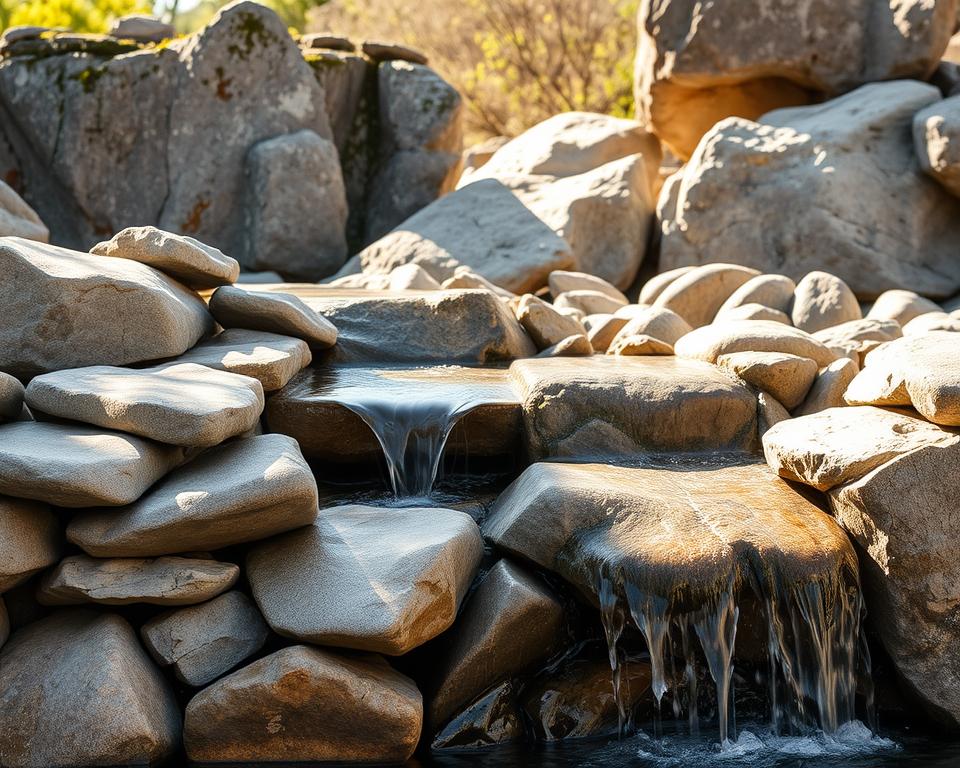
To create an aesthetically pleasing fountain, consider the arrangement of your stones carefully. Look for stones with at least one flat side to ensure stability when stacking. Also, choose stones with natural depressions or channels that can guide water flow in visually appealing ways. Consider the weight and size of the stones to ensure they can be safely transported and positioned. Temporarily arrange your selected stones before finalizing to visualize the final effect and make necessary adjustments.
Choosing the Right Pump
The pump is the heart of your fountain’s operation, and choosing the right one is vital for its success. A submersible pump, which sits below the water line in the basin, is typically used for natural stone fountains. It recirculates and fine-filters the runoff from above, ensuring a clean and serene water flow.
Understanding Pump Specifications
When selecting a pump, it’s essential to understand its specifications. The pump’s capacity, measured in gallons per hour, should be able to circulate the fountain‘s water volume completely every 1-2 hours. Consider the vertical distance from the pump to the fountain’s highest point, as each foot of height requires additional pump power.
Matching Pump Size to Your Fountain Design
To match the pump size to your feature, consider the following factors:
– Calculate your fountain’s water volume by measuring your basin’s capacity in gallons, then select a pump that can circulate this volume completely every 1-2 hours.
– For cascading or multi-tiered stone arrangements, choose a pump with 20-30% more capacity than calculated.
– Smaller, more delicate water features benefit from pumps with built-in flow adjusters.
– Ensure the pump is not too powerful, causing excessive splashing, or too weak, failing to create the desired effect.
By carefully selecting the right pump, you can create a beautiful and functional fountain that enhances your garden’s ambiance.
Build a Natural Stone Fountain Yourself – How to Do It Right
Constructing a natural stone fountain involves several key steps that, when followed, will result in a stunning water feature. To achieve a beautiful and functional fountain, attention to detail is crucial.
Preparing the Site
You start by preparing the site where your fountain will be located. Ensure the ground is level and firm. If you’re placing the fountain on soft ground or gravel, lay a stable base to prevent settling or shifting.
Installing the Basin and Pump
Next, install the basin and pump according to the manufacturer’s instructions. The basin should be large enough to hold sufficient water to supply the fountain’s needs. Ensure the pump is appropriately sized for your fountain’s design.

Drilling and Arranging the Stones
To create the fountain’s structure, you’ll need to drill holes in the stones. Use a hammer drill fitted with a masonry bit slightly larger than your tubing diameter. Before drilling, arrange your stones in the desired formation to ensure they stack stably and create the water flow pattern you want. Mark each stone’s position and orientation using chalk or a pencil on the underside to maintain your arrangement after drilling.
When drilling, keep the drill bit cool by periodically dipping it in water or having an assistant spray water on the drilling area to prevent overheating. For thicker stones, drill from both sides toward the middle to prevent chipping and breakage at the exit point.
Step-by-Step Assembly Process
To bring your stone fountain to life, follow this step-by-step assembly guide. The process involves several critical steps that ensure your fountain is both aesthetically pleasing and functional.
Setting Up the Foundation
Begin by preparing the site where your fountain will be located. Ensure the ground is level and firm. You will need to place your fountain basin or container in the desired location. Make sure it is stable and even.
Connecting the Plumbing
Thread your pre-drilled stones over the vertical water tube, starting with the largest at the bottom and working your way up. Adjust each stone‘s position to achieve the desired water flow pattern. Once satisfied with the arrangement, mark the tubing just below the top stone and trim it to the appropriate height.
Positioning and Securing the Stones
Apply waterproof silicone adhesive between stones that might shift, allowing it to cure fully before running water through the system. Finally, add smaller decorative rock around the base of your fountain to conceal the foundation and create a natural transition to the surrounding landscape.
| Step | Description |
|---|---|
| 1 | Prepare the site and ensure it’s level. |
| 2 | Thread stones over the vertical water tube. |
| 3 | Secure stones with waterproof silicone adhesive. |
Creating Water Flow and Effects
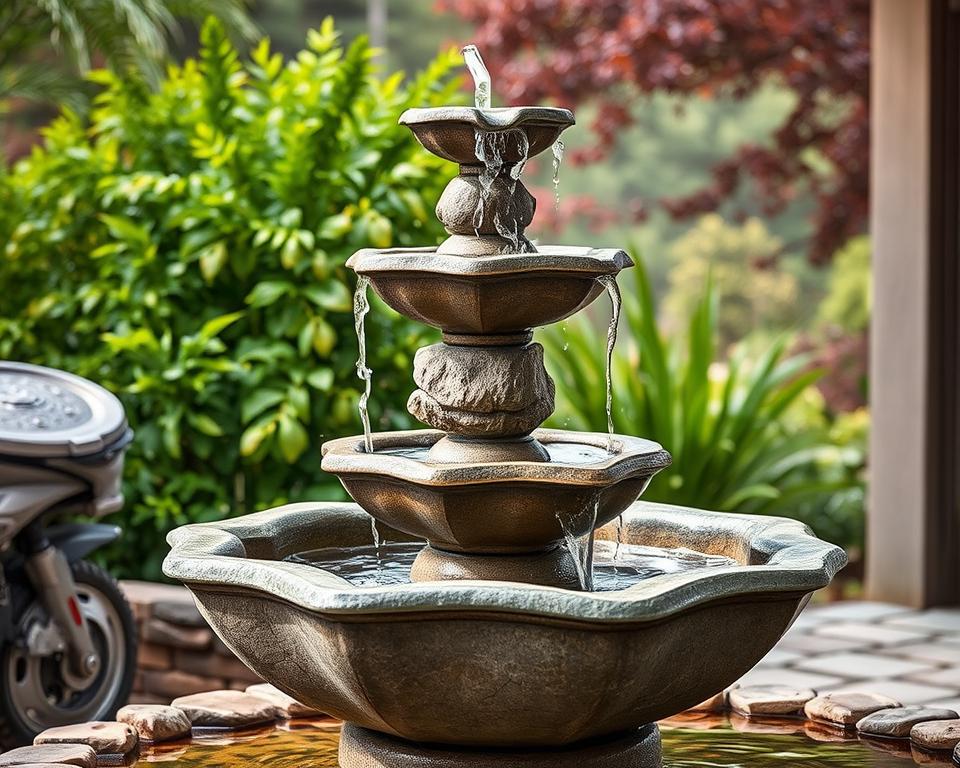
With your fountain’s structure in place, you can now turn your attention to crafting the water flow and effects that will bring it to life. The pipe that carries the water to the top of the sculpture screws onto the pump and includes a small ball valve, allowing you to adjust the fountain’s flow.
Adjusting Water Pressure and Direction
The ball valve is a crucial component in controlling the water pressure and direction. By adjusting this valve, you can achieve a range of effects, from a gentle trickle to a more dramatic display.
Achieving Different Water Patterns
You can create various water patterns by arranging the stones in different configurations. Here are some ideas to consider:
- Create a cascading effect by positioning flat stones with slight overlaps, allowing water to flow from one level to the next in a stepped pattern.
- Achieve a gentle bubbling effect by directing water to emerge from a small depression in the top stone, creating a dome-like formation.
- Produce a sheet-like water curtain by using flat, smooth stones with straight edges where water can flow evenly across the surface.
- Generate a more dramatic, splashing effect by incorporating stones with irregular surfaces that break up the water flow.
- Experiment with directing water to flow through channels or grooves in your stones to create unique patterns that highlight your fountain’s individual character.

Finishing Touches and Landscaping
The final stage of creating a beautiful natural stone fountain involves blending it seamlessly into your garden. This process not only enhances the aesthetic appeal of your fountain but also creates a harmonious balance with the surrounding landscape.
Concealing Technical Elements
To achieve a natural look, it’s essential to conceal the technical elements of your fountain, such as the pump and plumbing. Surround your fountain with water-loving plants to create a lush, natural appearance. Using rocks, pebbles, or mulch around the base will help blend it with the surrounding landscape, making the technical aspects less noticeable.

Integrating the Fountain into Your Garden
To fully integrate your water feature into your garden, consider adding complementary elements. Select plants that thrive in the microclimate created by your fountain, with moisture-loving species near the base and more drought-tolerant varieties at the perimeter. Create a seating area oriented toward your fountain to maximise enjoyment of its visual appeal and soothing sounds. Incorporating landscaping elements like decorative gravel, stepping stones, or ground cover plants will create a cohesive design, making your fountain a beautiful feature in your backyard.
Maintenance and Care Tips
To keep your natural stone fountain in optimal condition, regular maintenance is crucial. A well-maintained fountain not only enhances your garden’s aesthetic appeal but also prolongs its lifespan.
Routine Cleaning Procedures
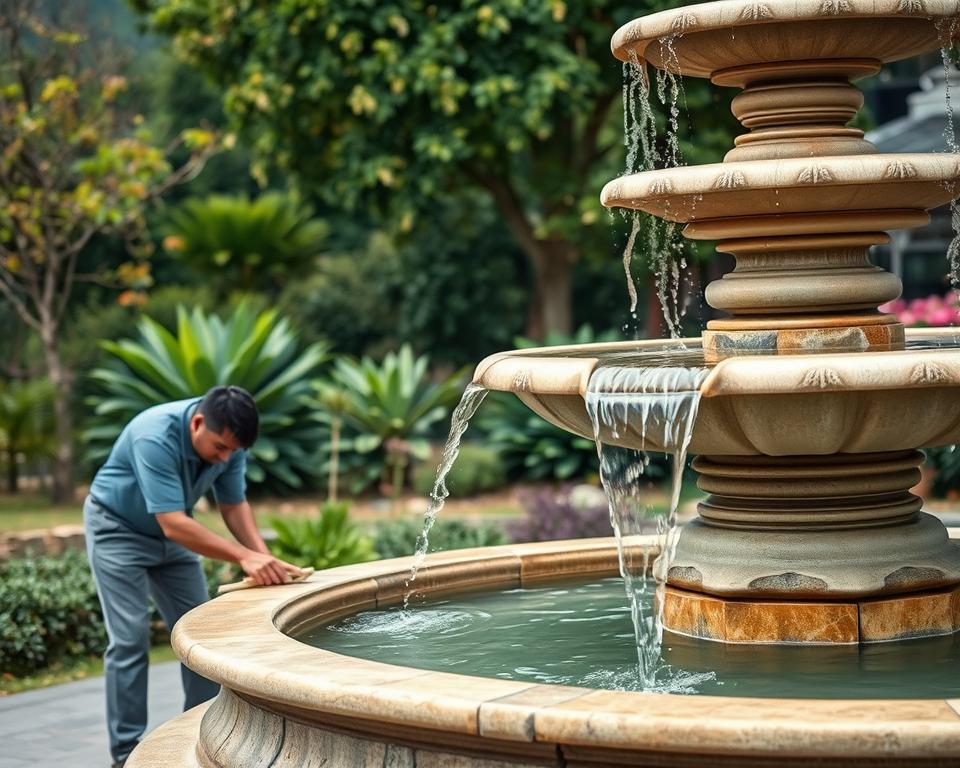
Regular cleaning is essential to prevent the buildup of debris and algae in your fountain. You should clean the pump intake if you notice a decrease in water flow. This simple step can often restore your fountain’s original function.
Seasonal Maintenance Requirements
During different seasons, your fountain may require specific care. For instance, in colder climates, it’s essential to winterize your fountain to prevent damage from freezing temperatures. At the same time, checking the pump and ensuring it’s fully submerged in water can help maintain its efficiency.
Troubleshooting Common Issues
If you notice issues such as diminished water flow or unusual noises from the pump, addressing these problems promptly can save you time and cost in the long run. Regularly inspecting your fountain’s components can help identify and resolve issues early.
Enhancing Your Fountain
Your fountain’s beauty can be further enhanced with a few simple additions. To create a truly captivating water feature, consider both functional and aesthetic enhancements.
Lighting Options for Nighttime Appeal
Outdoor fountain lighting can dramatically transform your yard’s ambiance in the evening. By installing appropriate lighting, you can highlight the fountain’s features and create a warm, inviting atmosphere.

Adding Plants and Decorative Elements
Surround your fountain with water-loving plants to create a lush, natural look. You can select moisture-loving plants like hostas, astilbes, or Japanese forest grass to thrive in the humid microclimate around your fountain.
- Consider adding aquatic plants such as miniature water lilies or water iris in the basin itself if space allows, creating a more natural pond-like appearance.
- Incorporate decorative elements like ceramic ornaments, small sculptures, or coloured glass pebbles to add personal character to your water feature.
- Create a cohesive look by using plants that echo your garden’s existing colour scheme and style, whether formal or naturalistic.
- Remember to choose plants appropriate for your climate zone and the specific light conditions around your fountain to ensure they thrive long-term.
Using rocks, pebbles, or mulch can also help blend the fountain base with the surrounding landscape, enhancing the overall aesthetic of your yard.
Conclusion
The process of creating a natural stone fountain is as rewarding as the end result. By following this guide, you’ve successfully undertaken a DIY project that not only enhances your garden’s aesthetic appeal but also brings the soothing sound of water to your outdoor space.
Your new fountain is a significant addition, transforming your garden into a tranquil oasis. To keep it functioning at its best, regular maintenance is crucial. This includes routine cleaning and seasonal checks on the pump and other components.
Don’t hesitate to personalise your fountain with unique stones or decorative elements that reflect your style. Whether simple or elaborate, your natural stone fountain is a testament to your craftsmanship and a beautiful focal point in your garden.
FAQ
What is the ideal location for a stone fountain in my garden?
The ideal location for a stone fountain is a spot that is level, stable, and visible from a distance. Ensure the area is clear of overhanging trees and branches to minimise debris and maintenance.
How often should I clean my stone fountain?
You should clean your stone fountain regularly, ideally every week, to prevent algae buildup and maintain water clarity. Use a soft brush and mild detergent to clean the stones and basin.
What type of pump is suitable for my stone fountain?
The type of pump suitable for your stone fountain depends on the fountain’s size and design. Choose a pump that matches the fountain’s water flow requirements, and consider a submersible pump for ease of installation and maintenance.
Can I use any type of stone for my fountain?
Not all types of stone are suitable for fountains. Choose stones that are durable, weather-resistant, and non-porous to prevent water damage and staining. Popular options include granite, basalt, and limestone.
How do I prevent water from freezing in my fountain during winter?
To prevent water from freezing, drain the fountain or use a fountain heater. Alternatively, you can use a freeze-proof pump or install a drainage system to allow water to drain from the fountain during winter.
What maintenance is required for the plumbing in my stone fountain?
Regularly inspect the plumbing for signs of wear, damage, or blockages. Clean or replace the plumbing as needed, and ensure all connections are secure to prevent leaks.
Can I add plants to my stone fountain?
Yes, you can add plants to your stone fountain to enhance its aesthetic appeal. Choose plants that thrive in wet conditions, such as water lilies or irises, and ensure they do not obstruct the water flow or pump.
How do I achieve different water patterns in my fountain?
Adjust the water pressure and direction using the pump and nozzle to achieve different water patterns. Experiment with different settings to create the desired effect, from gentle trickles to dramatic sprays.