Garden Shed Gutter System Installation Guide
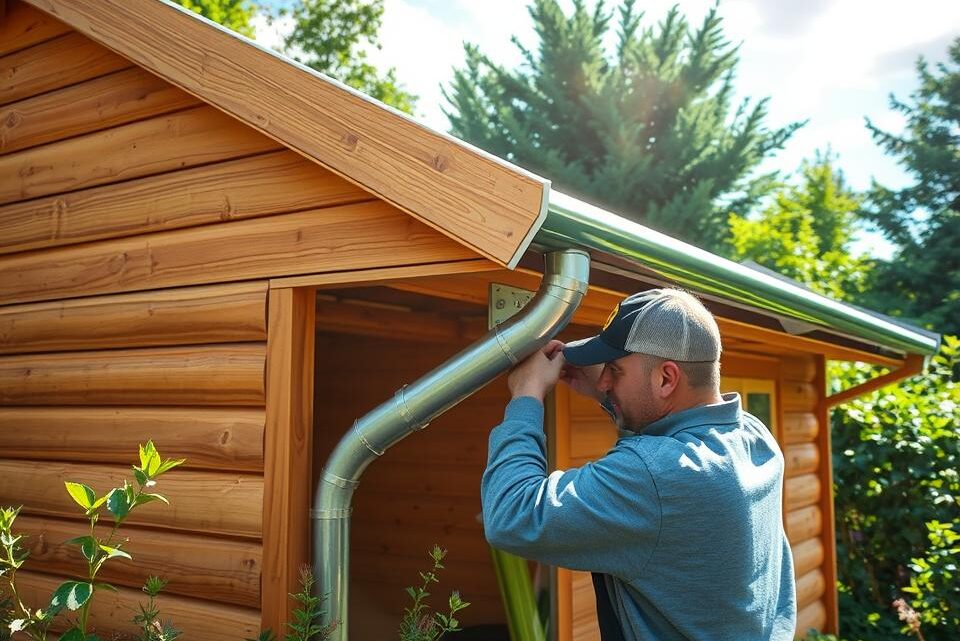
This guide explains installing a gutter system on a garden shed for UK homeowners and DIYers. It sets out clear, practical steps to plan, select and fit a durable guttering solution. The aim is efficient rainwater management for sheds, protecting timber, metal and plastic outbuildings from water damage and soil erosion.
We focus on safety, suitable materials and compliance with local rules. Frequent rain, seasonal leaf fall and variable temperatures in the United Kingdom make reliable garden shed gutters essential. Readers will find advice tailored to typical shed types and common site conditions.
The full article covers: why a gutter system matters, common gutter types, assessing your shed, step‑by‑step installation, safety, sealing and weatherproofing, drainage options, maintenance, troubleshooting, cost considerations and relevant regulations. Use the suggested anchors to jump to sections such as Why a Gutter System Matters and Installing a Gutter System on a Garden Shed.
Inhaltsverzeichnis
Key Takeaways
- Installing a gutter system on a garden shed prevents water damage and protects foundations.
- Choose materials and profiles that suit shed construction and the UK climate.
- Assess roofline, pitch and downpipe positions before buying components.
- Follow safety and weatherproofing steps to ensure long‑lasting performance.
- Consider drainage options like soakaways or rainwater harvesting for sustainable rainwater management for sheds.
Why a Gutter System Matters for Garden Sheds
Rainwater that runs unchecked from a shed roof causes a chain of problems. A simple gutter system redirects runoff so timber stays drier, paint and cladding last longer, and base materials are spared constant wetting. The benefits of shed gutters extend beyond neatness; controlled drainage can significantly reduce the risk of moisture-related decay and extend the useful life of the building.
Continuous splashback from unchannelled rain accelerates timber rot and blistering paint. When water soaks into cladding or baseboards, damp can creep into bearers and joists, shortening service life. Even concrete pads can suffer from undermining if soil is washed away. Installing gutters and directing flow away from the base helps protect shed foundations and keeps structural components dry.
Preventing soil erosion and water pooling
Concentrated discharge at ground level erodes soil around the shed, leaving exposed footings and creating uneven ground. That same runoff creates boggy patches that damage lawns and planting beds. Pooled water invites pests and promotes moss and algae on nearby paving, raising slip hazards. Small-scale garden drainage solutions such as downpipes into soakaways or run-off channels prevent soil erosion and reduce standing water.
Preserving surrounding landscaping and pathways
Persistent wetting stains paving and causes mud splatter on walls and doors. That soiling increases cleaning and maintenance for borders and paths. A well-fitted gutter system keeps borders drier, protects paving from green growth and staining, and lowers internal humidity that can harm stored tools. For homeowners seeking practical garden drainage solutions, gutters are a low-cost measure with clear payback in reduced upkeep.
Common Types of Gutters Suitable for Garden Sheds
Choosing the right gutter system begins with the material and profile. Small roofs demand sensible choices that balance cost, durability and appearance. Below is a concise guide to common options used across the UK for garden outbuildings.

Materials overview
uPVC, commonly sold as PVC gutters, is the most popular choice for garden sheds. It is lightweight, corrosion‑resistant and easy to cut and install. With basic cleaning, uPVC can last 20+ years on a shed without specialised maintenance.
Aluminium gutters offer a longer lifespan, typically 25+ years, and resist rust. They suit homeowners who want a painted finish that matches cladding or fascias. Aluminium gutters are still light enough for DIY fitting and have wide availability of fittings.
Galvanised steel gives greater strength for exposed positions. The protective zinc coating prevents corrosion, but damage to this layer can lead to rust over time. Lifespan varies with maintenance and coastal exposure. Cast iron alternatives provide a traditional look and excellent durability, yet they are heavy and often over‑specified for small sheds.
Profiles and capacities
Half‑round gutters remain a classic. Their smooth, curved shape helps debris wash through and reduces standing water. Half-round gutters suit modest roof areas where a tidy aesthetic is wanted.
K‑style gutters, sometimes called ogee, carry more water for a given width. K-style gutters are common on houses and perform well in heavy rain. They can look bulky on a tiny shed, so choose narrower sizes if using them.
Square or box gutters suit flat roofs and compact eaves. They give a modern, clean line and can be sized to match small shed roof areas. For most garden sheds, widths in the 65–100mm range handle typical roof runs effectively.
Pros and cons for small-scale installations
For many shed owners, PVC gutters and half-round gutters provide the best mix of low cost and DIY friendliness. Components are cheap, fittings are plentiful and installation needs only basic tools.
Aluminium gutters suit those seeking longevity and colour matching. They cost more but reduce the need for replacement. Aluminium gutters work well where a sleeker finish is required.
Galvanised steel can be chosen for robustness, but bear in mind potential corrosion and heavier fittings. Cast iron alternatives match heritage outbuildings, yet their weight and expense usually rule them out for simple garden sheds.
When selecting gutter materials for sheds, think about roof size, local weather and the look you want. Availability of compatible fittings and the ease of maintenance should guide the final choice.
Assessing Your Garden Shed for Gutter Installation
Before you buy materials, inspect the shed to establish exact sizes, fixings and runoff points. A clear assessment lets you measure shed roofline accurately, calculate gutter length with confidence and plan safe downpipe placement. Take photographs and note any obstructions such as doors, windows or narrow paths that might affect installation.
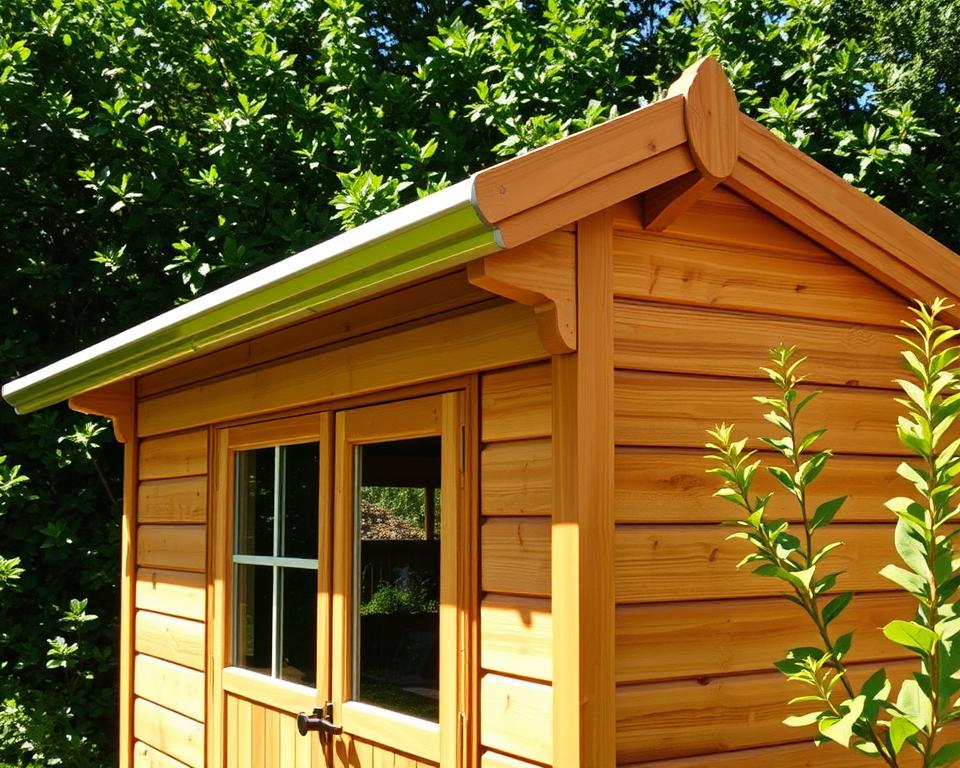
Measuring the roofline and calculating gutter length
Measure the eaves length along each run from corner to corner. Include the full perimeter and add allowances for corner overlaps and mitred joints. For joints allow one overlap per connection, typically 50–100mm depending on the profile. Use this simple method to calculate total run: add all run lengths, then add overlap allowance (number of joins × overlap length).
Estimate the number of joints and end caps by dividing the total run by the maximum single-piece length of your chosen gutter (often 3–4m for aluminium, 5–6m for PVC). To size the gutter, calculate roof catchment area: run length × half the roof span for a mono or dual pitched shed. Use that area to match gutter capacity to expected rainfall for your location.
Determining appropriate downpipe positions
Identify where runoff concentrates, usually at valleys and the ends of long runs. For short runs under 6–8m a single downpipe is often sufficient. For longer runs or steep roof pitch assessment that shows rapid runoff, plan two or more downpipes to avoid overload.
Place downpipes where they can drop to a soakaway or connect to an existing drain without obstructing access. Keep them clear of doors, windows and paved routes. Allow for a straight vertical drop where possible; if obstructions exist use offsets or short runs of pipework with accessible brackets to maintain flow and clearance.
Evaluating roof pitch, eaves and overhangs
Carry out a roof pitch assessment by measuring rise over run or using a pitch gauge. Steeper pitches can deliver fast runoff and need sufficient fall in the gutter. Shallow pitches yield slower flow but still require correct gutter capacity and a minimal fall to avoid pooling.
Check eaves depth and overhangs for bracket fixing. A full fascia makes fitting simpler. If the shed lacks a fascia, plan alternatives: rafter-tail brackets, top-fix clips into the roof timbers or continuous fascia profiles fixed to the rafters. Small sheds often have narrow or absent fascias, so choose compact brackets and permit extra clearances for fascia-less fixes.
| Task | Action | Rule of Thumb |
|---|---|---|
| Measure roofline | Measure each eaves run; add corner overlaps | Total run = sum of runs + (joins × overlap mm) |
| Calculate gutter length | Divide total run by max length of profile; count joins and end caps | Choose pieces to minimise joins while allowing transport |
| Downpipe placement | Locate at runoff concentration; avoid obstructions | 1 downpipe |
| Roof pitch assessment | Measure rise/run; match gutter fall to pitch | Steep pitch needs higher capacity and fall |
| Eaves and fixings | Check fascia depth; plan brackets or rafter fixes | No fascia = rafter brackets or top-fix clips |
Installing a Gutter System on a Garden Shed
Start by planning the work and assembling the right kit. Clear the roofline, check fascia boards and gather measurements. A calm, dry day makes fitting simpler and safer when installing a gutter system on a garden shed.
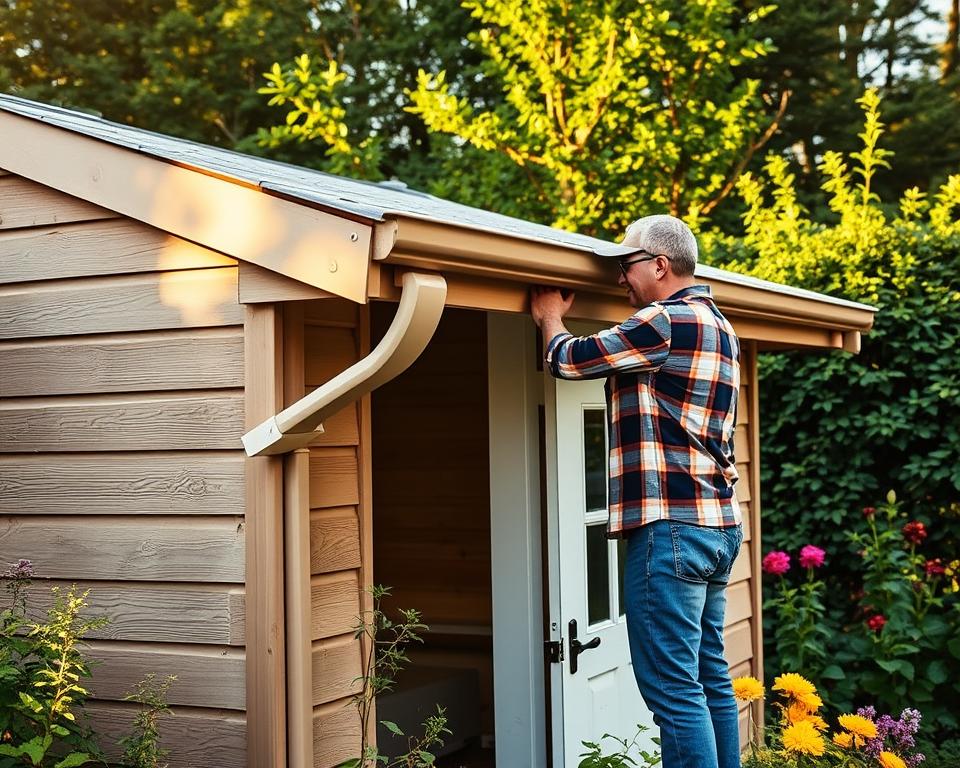
Preparing tools and materials for a typical UK installation
Collect measured lengths of uPVC or aluminium gutter and downpipe, brackets or clips, end caps, outlets and sealant. For fastenings use screws and wall plugs suited to timber, brick or block. Cutting tools such as a mitre saw for aluminium or a hacksaw for plastic, a drill, tape measure and spirit level are essential. Work gloves, a ladder and a silicone gun complete the kit. Buy reputable supplies from Wickes, Screwfix, B&Q or Jewson for reliable quality.
Marking fall and fixing points for optimal drainage
Set the fall at about 1:600 to 1:800, which equates to a drop of roughly 2–5mm per metre. Measure the high and low points, snap a chalk line and mark bracket positions at regular intervals. Place a bracket near each outlet for extra support. Leave small gaps at joints to allow thermal movement in long runs.
Fitting gutter runs, joints and end caps securely
Cut lengths to size and dry‑assemble before fixing. Use preformed corners where possible or mitre joints with corner connectors. Apply silicone or proprietary gutter sealant at joints and inside end caps. Start fixing at the outlet end and work outwards, securing brackets typically every 600–900mm.
Attaching downpipes and connecting to drainage or soakaway
Fit the outlet, attach the downpipe and secure with clips spaced per manufacturer guidance. Use offsets or bends to avoid obstructions and keep the run straight to prevent kinks that slow flow. Terminate into a splash block, connect to yard drainage channels or link to a soakaway or rainwater harvesting tank using an appropriate adapter.
| Task | Key items | Typical spacing or value |
|---|---|---|
| Gutter lengths | uPVC or aluminium gutter runs | Cut to roofline length |
| Brackets/clips | Brackets, screws and wall plugs | Every 600–900mm |
| Sealant & end caps | Silicone or proprietary gutter sealant | Seal all joints and end caps |
| Downpipe | Pipe, bends, offsets and clips | Clips per manufacturer; avoid sharp bends |
| Tools | Spirit level, tape measure, saw, drill, silicone gun | Essential for shed gutter installation steps |
| Drainage options | Splash block, channel, soakaway adaptor | Choose to suit site and regulations |
Step-by-Step Safety and Preparation Tips
Before starting any gutter work, take a moment to plan the job. Good preparation lowers risk and speeds the job. This short guide outlines clear steps for safe handling, correct PPE and sensible timing for working on garden sheds.
Ladder choice and setup
Pick a ladder of the right type and length for your shed. An extension ladder that reaches at least one metre above the gutter line gives a safe handhold. Use non-slip feet and place the ladder on firm, level ground.
Keep three points of contact while climbing and avoid overreaching. Fit a ladder stabiliser if the roof edge is narrow or the gutter sits above a fragile fascia. For tall or awkward roofs, consider scaffold or a mobile elevating work platform.
Legal duties and when to call a pro
Homeowners should follow the Construction (Design and Management) principles for safety responsibility. If the roof height, complexity or access looks risky, hire a qualified installer from a recognised trade body such as the Federation of Master Builders.
Personal protective equipment and tool safety
Use PPE for gutter installation on every job. Wear cut‑resistant gloves for handling metal gutters, safety glasses when cutting or drilling and ear protection with noisy power tools. Sturdy, closed‑toe footwear helps prevent slips.
Secure long gutter lengths during lifting. Lift with your legs not your back and ask a helper for awkward sections. When using saws or drills, fit guards, use the correct bits and clamp workpieces to prevent movement.
Weather planning and interruptions
Check short-term weather forecasts before you start. Schedule gutter fitting for dry, calm weather to keep ladder footings secure and to allow sealants to cure properly. Cold conditions slow curing times and can affect product performance.
Have a contingency for sudden rain: cover exposed sealant joints and move power tools indoors. Postpone final silicone sealing if dampness is present; wait for a sustained dry spell to ensure a watertight finish.
| Risk | Action | Recommended PPE |
|---|---|---|
| Unstable ladder footing | Use levelling pads or board; place ladder on compacted surface | Sturdy footwear, gloves |
| Overreaching from ladder | Move ladder or use stabiliser; employ scaffold for wide runs | Helmet, gloves |
| Cutting or drilling gutters | Secure workpiece; use correct blade; wear eye and ear protection | Safety glasses, ear defenders, gloves |
| Selling or sealing in damp/cold | Delay sealing until dry; store silicone at recommended temp | Protective gloves |
| Heavy or long gutter sections | Use two-person lift or mechanical aid; plan carrying route | Cut‑resistant gloves, safety boots |
Sealing, Joining and Weatherproofing Gutter Components
Proper sealing and joining keep a garden shed’s gutter system working through wet UK weather. Use approved products, follow simple preparation steps and allow for material movement. Small, correct details stop persistent leaks and cut maintenance time.

Sealants and adhesives suitable for gutter joints
Choose sealants rated for exterior gutter use. Neutral-cure silicone, polyurethane sealants and manufacturer-recommended proprietary options from brands like Everbuild and Dow Corning work well. Clean surfaces of dust, old sealant and oil before applying a continuous bead. Smooth the bead with a suitable tool and respect the cure time specified by the maker to ensure a durable bond.
Ensuring watertight connections at corners and outlets
Preformed corner pieces and internal or external corner connectors give the neatest results. Fit connectors with the correct adhesive and add mechanical fixings where the manufacturer recommends them. For outlets, seat the spigot or socket correctly and apply sealant around the joint. Test installations by running water along the run, check for drips at corners and outlets and re-seal any fault points until you achieve watertight gutter joints.
Dealing with thermal expansion and contraction
Different materials move at different rates; uPVC expands more than aluminium. Plan for thermal expansion in gutters by using slotted holes in brackets and leaving small gaps at joins. Expansion couplings work well for longer runs. Avoid over-tightening joints or clamps since this can warp sections and create stress points that lead to leaks.
| Issue | Recommended Product or Method | Key Action |
|---|---|---|
| Dirty joint surfaces | Isopropyl alcohol or brush, neutral-cure silicone | Clean thoroughly, apply continuous bead, tool smooth |
| Corner leaks | Preformed corner connector, polyurethane sealant | Fit connector, seal edges, add fixings if required |
| Outlet seepage | Proper spigot seating, Everbuild or Dow Corning sealant | Ensure correct seating, seal around socket, pressure test |
| Long runs with movement | Expansion coupling, slotted bracket holes | Allow gaps at joints, use couplings, avoid tight clamps |
| Material mismatch | Compatible adhesive, isolation tape or flashing | Use suitable sealant and barrier to prevent galvanic reaction |
Managing Rainwater with Downpipes and Drainage Solutions
Good rainwater management protects your shed and the surrounding garden. Practical downpipe solutions and thoughtful drainage keep water away from timbers and masonry. The short paragraphs below explain simple fixes, underground options and how to tie into yard systems.
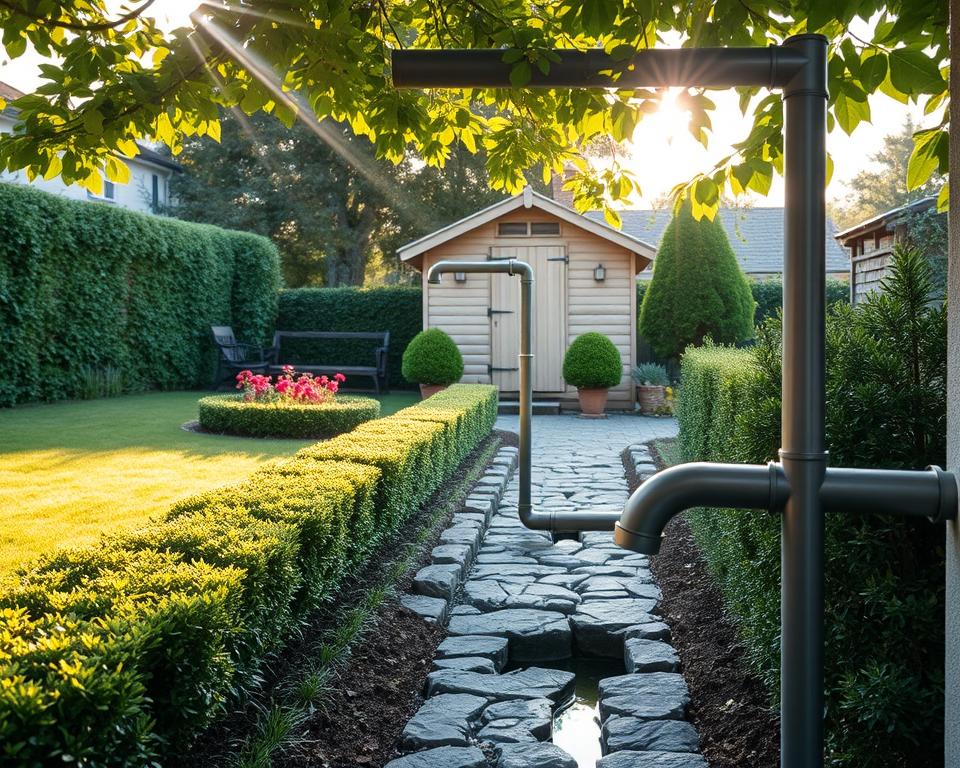
Practical ways to divert water from foundations
For a quick remedy, extend the downpipe discharge with a rigid or flexible extension to at least 1–2 metres from the shed base. Fit a concrete or plastic splash block beneath the outlet to prevent local erosion. Regrade soil around the shed so the surface slopes away; this encourages runoff to leave the foundation zone.
Underground drainage, soakaways and rainwater harvesting
You can connect gutter to soakaway by routing a downpipe into an underground perforated pipe or a purpose-built soakaway pit. In the UK, design to BRE 365 guidance for sizing and position. An alternative is to divert downpipe flow into a rainwater harvesting cistern for garden use; tanks sized to roof area and local rainfall capture more useful water for watering plants and washing tools.
Basic sizing: a 3m x 2.5m shed roof yields about 7.5m² of catchment. A 100-litre tank stores the first flush from moderate showers; larger storage helps through dry spells. For properties with poor ground infiltration, consult a drainage specialist before you excavate or install a soakaway.
Connecting to existing yard drainage systems
Tie-ins to yard channels or existing pipes require correct adapters and secure joints to prevent leaks and backflow into the shed. Use inspection chambers or access points where the downpipe meets the buried run to allow rodding and maintenance. Check with your local water authority; discharging to surface water sewers can need consent in some areas.
| Option | Typical use | Key benefit | When to consult a professional |
|---|---|---|---|
| Downpipe extension + splash block | Short-term or DIY | Fast way to divert water from foundations | If soil does not shed water or outlet floods |
| Surface-run pipe to garden | Direct to planting beds or soakaway area | Cost-effective and simple to install | On uneven sites or near neighbours’ boundaries |
| Connect gutter to soakaway | Permanent underground solution | Reduces surface water and prevents pooling | Poor infiltration or close to listed structures |
| Rainwater harvesting for sheds | Store water for irrigation and small tasks | Conserves mains water and lowers bills | When large tanks are needed or regulations apply |
| Tie-in to existing yard drainage | Integrates with site-wide drainage | Neat, concealed solution with inspection access | When connecting to sewers or shared systems |
Maintaining Shed Gutters for Longevity
Regular care keeps a shed gutter system working and prevents costly repairs. A simple routine reduces blockages, protects the shed structure and ensures water flows away from foundations. Below are practical steps for routine checks, ways to prevent debris build-up and seasonal gutter maintenance tailored to the UK climate.
Routine cleaning schedules and inspection points
Inspect gutters at least twice a year: once in spring and once in autumn. Add an extra check after any major storm. Focus on fixings, joints, seals and any signs of sagging. Test downpipe flow by flushing with a hose and note areas where water pools or runs slowly.
For cleaning, remove leaves and loose debris by hand or with a small scoop. Flush the run to confirm clear flow, then tighten loose brackets and reseal failing joints. Record any corrosion or damage so repairs can be planned before winter.
Preventing blockages: leaf guards and gutter guards
Choose from mesh inserts, foam fillers, micro‑mesh covers or branded proprietary systems. Mesh and micro‑mesh are good for fine debris; foam is simple to fit but may compress over time. Proprietary systems often match a gutter profile and give strong protection for higher tree cover.
Gutter guards UK cut down maintenance but still need occasional clearing of surface debris. Some guards trap grit and small particles, so inspect them during your clean gutters schedule and remove any build-up to keep flow free.
Seasonal maintenance tips for the UK climate
Late autumn: clear fallen leaves before they compact and block outlets. Winter: ensure downpipes and outlets are free so flowing water cannot freeze and cause ice damage. After long cold spells, check for split seals and cracked plastic joints.
Spring: inspect after storms for loose fixings, displaced end caps or clogged outlets. If you harvest rainwater, consider simple antifreeze precautions for water butt connections to protect pumps and fittings during cold snaps. Keeping a steady clean gutters schedule and following seasonal gutter maintenance helps extend the life of your system and reduces emergency repairs.
Common Problems and How to Troubleshoot Them
Small garden shed gutters often show clear signs before they fail. A quick inspection and simple tests will save time and prevent water damage. Use the steps below for practical gutter troubleshooting and decide whether to fix, repair or replace.
Finding leaks and patching runs
Start with a visual check along the gutter line and at joints. Look for rust, cracks, blobs of old sealant and split seals. Run a garden hose over the roof while someone watches from ground level. Note where water escapes and mark those spots.
To fix leaking gutter areas, dry the joint and remove loose sealant. Apply a suitable exterior-grade sealant or a rubber repair patch rated for uPVC or aluminium systems. If the leak comes from a corroded joint, replace the connector or refit the section with a new union. For persistent leaks at multiple joints, consider larger repairs.
Dealing with sagging runs
Check bracket spacing along the run. Brackets should sit at regular intervals and be securely fixed to sound fascia or rafter tails. If the fascia has rot, refastening will fail. Remove suspect fixings and inspect behind the gutter.
Sagging gutter repair may require adding new brackets, replacing corroded clips, or fitting a timber fascia reinforcement. For metal gutters that have bent out of shape, replace damaged brackets and gently reshape or swap the affected section to restore correct fall.
Poor flow and standing water
Standing water usually points to insufficient fall, blocked outlets or an undersized system. Inspect outlets, gullies and downpipes for debris. Check for kinks in flexible downpipes and for misaligned joints that trap water.
To correct flow problems, clear blockages and test the fall by running water from the highest point. Reposition brackets to re-establish a steady fall toward the outlet. If the gutter capacity is too small for the roof area, add a second downpipe or upgrade to a larger profile.
When repair is not enough
Extensive corrosion, warped profiles or repeated leaks at many joints are signs repair will be short lived. Material failure, such as brittle uPVC or perforated steel, calls for action.
You may replace guttering by swapping only damaged lengths and fittings. Partial replacement suits isolated damage and keeps costs down. If the run shows systemic problems, replace the entire system with a more durable material like aluminium for longer life and reduced maintenance.
Quick diagnostic checklist
- Visual scan for rust, splits and loose joints.
- Water test from the roof to pinpoint leaks.
- Measure bracket spacing and inspect fixings for sagging.
- Clear outlets and check downpipe condition for flow issues.
- Decide between repair, section replacement or full replacement based on spread of damage.
Cost Considerations and Budgeting for Installation
Budgeting for a shed gutter run needs clear figures and a simple plan. Prices vary by material, length and access. Small runs of uPVC guttering and fittings for a typical 2–6m shed start from around £30 and can reach £120 for higher-quality profiles. Aluminium systems sit higher, roughly £80–£250 for comparable lengths. Additions such as downpipes, brackets and sealant push the total up.
Labour is often the largest variable. For a straightforward job, a tradesperson may charge between £150 and £350 in the UK. Accessibility, ladder work and drainage tie-ins raise that figure. When replacing old materials remember to factor in disposal costs and the price of any repairs to fascias or soffits before work begins.
Estimating material and labour costs
- uPVC gutters and basic fittings: approximately £30–£120 for small sheds.
- Aluminium options: roughly £80–£250 depending on finish and length.
- Typical labour for a small installation: £150–£350, depending on complexity.
- Accessories and disposal: allow a contingency sum for brackets, sealant and waste removal.
DIY versus professional choices
DIY installation saves on labour, so the overall cost of shed gutters can be lower if the run is simple and you are comfortable working at height. Good practices include checking the fall, sealing joints correctly and using suitable fixings.
Engaging a professional brings technical knowledge, guarantees and safer access for higher or awkward roofs. Professionals reduce risk of poor fall or persistent leaks that would increase long-term costs. For complex drainage connections or taller sheds the trade-off often favours hiring a qualified installer.
Comparing pros and cons
- DIY: lower upfront cost, control over materials, greater time investment and some safety risk.
- Professional: higher initial spend, skilled installation, warranties and reduced call-back risk.
Long-term budgeting and benefits
Thinking in lifecycle terms gives a clearer picture of value. Spending a little more on robust materials such as quality uPVC or aluminium extends service life. This reduces frequency of replacement and lowers cumulative cost over years.
Effective gutters also cut repair bills tied to wood rot, soil erosion and damage to nearby paving. Installing a water butt or linking to a tank brings measurable rainwater management savings through reduced mains use for watering and cleaning.
| Item | Typical UK cost (small shed) | Notes |
|---|---|---|
| uPVC gutters and fittings | £30–£120 | Depends on quality and length; common choice for ease of fitting |
| Aluminium gutters | £80–£250 | Longer life and better finish; higher upfront cost |
| Downpipe, brackets, sealant | £20–£70 | Ancillaries vary by system and need |
| Labour for small job | £150–£350 | Access and drainage tie-ins affect final quote |
| Waste disposal and minor repairs | £30–£100 | Remove old gutters; repair rot or damaged fascias if needed |
Obtain multiple quotes and compare fixed prices, not guesses. Ask installers for references and written guarantees. For DIY projects, follow manufacturer instructions and check local guidance on working at height. Thoughtful planning helps manage the gutter installation cost UK while balancing immediate outlay against rainwater management savings and long-term protection for the shed and surrounding landscaping.
Regulations, Permits and Environmental Considerations
Small garden outbuildings usually sit within permitted development rights, but practical limits exist. Check roof height, proximity to boundaries and any conservation area rules before fitting gutters. Local authority planning officers can clarify whether your project needs formal approval or if it can proceed under standard domestic rules.
Planning and building control
Most simple gutter runs for a shed do not trigger full planning applications. Be aware that connecting downpipes to a foul sewer or making complex drainage alterations may fall under building regulations. Contact your local council or a building control officer when drainage ties-in are unclear, and keep records of any approvals.
Permits and permissions
Permits for shed gutters are rarely required for straightforward installations. Exceptions include listed buildings, conservation areas and sites with restrictive covenants. For larger schemes or when linking into shared drains, obtain written permission from the sewer owner or local authority before work begins.
Environmental best practice for rainwater disposal
Directing clean roof water to a soakaway or rainwater harvesting tank reduces pressure on public sewers and helps groundwater recharge. Where space is limited, use a water butt or connect to a permeable garden feature to slow runoff. Avoid sending roof water into foul drains.
Do not send contaminated runoff into soakaways or watercourses. Roof coverings with asbestos, lead flashings or areas with heavy pollutant loads should be treated as potentially hazardous. Seek specialist advice before choosing a disposal route for such roofs.
Recycling and responsible disposal
When replacing old gutters, aim to recycle materials rather than landfill. uPVC is accepted at many council recycling points and merchant trade centres. Aluminium and steel fetch good rates at scrap yards and can be reprocessed efficiently.
For large removals, use a registered waste carrier and check Environment Agency guidance if residues are hazardous. Retain receipts and waste transfer notes to show compliant disposal.
| Issue | Practical action | Why it matters |
|---|---|---|
| Permitted development | Confirm height and siting with council guidance | Avoids retrospective enforcement and delays |
| Permits for shed gutters | Seek written permission for shared or complex drains | Prevents disputes with neighbours and utility owners |
| Drainage connections | Do not connect downpipes to foul sewers; consult building control | Protects public sewer capacity and public health |
| Environmental rainwater disposal | Use soakaways, rainwater butts or harvesting systems where feasible | Reduces flood risk and supports sustainable water use |
| Contaminated roofs | Seek specialist advice before directing runoff to ground | Prevents pollution of soil and waterways |
| Recycle old gutters | Take uPVC to council sites; sell aluminium/steel to scrap yards | Reduces waste and recovers materials for reuse |
| Waste removal | Use registered waste carriers and keep transfer notes | Ensures legal compliance and traceability |
Conclusion
Installing a gutter system on a garden shed is an effective way to protect the building, stop soil erosion and preserve adjacent landscaping. Assess the shed carefully, choose materials and a profile that suit the roof pitch and exposure, and plan gutter fall and downpipe positions to ensure effective shed drainage.
Fit joints, end caps and outlets with suitable sealants and secure fixings to prevent leaks and sagging. Select products built for UK weather and local site conditions; aluminium or PVC often balance cost and durability. For complex drainage runs or working at height, consider hiring a professional to reduce risk and long‑term expense.
Next steps: draw a measured sketch, make a parts list and source materials from mainstream UK suppliers such as B&Q, Screwfix, Wickes or Travis Perkins. Consult British Standards or BRE guidance for soakaways and contact building control if you are uncertain about drainage connections. Plan the job carefully to achieve a safe, long‑lasting installation and effective shed drainage.
FAQ
What is the purpose and scope of this Garden Shed Gutter System Installation Guide?
This guide helps UK homeowners, gardeners and DIY enthusiasts plan, select and install a gutter system for garden sheds and small outbuildings. It offers practical, safety‑conscious, regulation‑aware steps for ensuring efficient roof drainage, protecting shed fabric and surrounding landscaping. Expect clear instructions on materials, measurements, fixing, drainage options, sealing, maintenance and troubleshooting, plus links to further resources and a checklist to download.
Which readers will benefit most from these instructions?
The guide targets UK homeowners, smallholding owners, gardeners and DIYers who need durable, cost‑effective solutions for diverting shed roof runoff. It takes account of the UK climate—frequent rain and autumn leaf fall—and typical shed materials such as timber, metal and plastic. Advice is tailored to small‑scale installations where ease, longevity and appearance matter.
Why are gutters important for a garden shed?
Gutters prevent uncontrolled runoff that accelerates timber rot, damages cladding and undermines foundations. They reduce soil erosion, stop water pooling that attracts pests and moss, and protect borders, paving and paths from staining and mud splatter. Controlled drainage prolongs shed life and lowers repair and landscaping costs.
What gutter materials and profiles are best for sheds?
Common UK options include uPVC (lightweight, low cost, ~20+ years), aluminium (durable, rust‑resistant, ~25+ years) and galvanised steel (strong but potentially corrosive if damaged). Profile choices are half‑round, K‑style and square/box. For small sheds uPVC half‑round or small K‑style is often best for cost and DIY ease; aluminium suits long‑term performance and colour matching.
How do I measure my shed to determine gutter length and capacity?
Measure the eaves length along each run, include corners and overlaps, and total the lengths to order materials. Estimate roof catchment area (run length × half the roof span for simple pitched roofs) to choose gutter width—65–100mm is typical for small roofs. Count joins, end caps and outlets when calculating parts.
Where should I position downpipes on a shed?
Put downpipes where roof runoff concentrates and where discharge can be routed safely away from the shed. For short runs (under ~6–8m) one downpipe often suffices; longer or steep roofs may need two. Avoid doors, windows and paths; plan for extensions, offsets or bends to lead water to a soakaway, rainwater tank or drainage run.
What fixings do I need if the shed has no fascia board?
If there’s no fascia, use rafter brackets, top‑fix clips or a specialist fascia profile to secure gutters. Alternatively attach to the rafter tails or use wall brackets fixed into the shed cladding substrate with suitable plugs and screws. Ensure bracket spacing (typically 600–900mm) and allow for thermal movement.
What tools and materials are essential for a typical UK shed installation?
Essentials include measured gutter lengths and downpipe (uPVC or aluminium), brackets/clips, end caps, outlets, neutral‑cure silicone or proprietary sealant, screws and wall plugs, mitre saw or hacksaw, spirit level, chalk line, tape measure, drill, ladder and PPE. Brands commonly used in the UK include B&Q, Screwfix, Wickes and Jewson.
How much fall should I set in the gutter run?
Aim for a fall of about 1:600 to 1:800—roughly 2–5mm drop per metre. Mark the high and low points with a chalk line and check with a spirit level. Start fitting from the outlet end to ensure proper drainage toward the downpipe, and allow for thermal movement when fixing joints.
How do I seal joints and ensure watertight corners?
Use manufacturer‑recommended sealants such as neutral‑cure silicone or polyurethane. Clean mating surfaces, apply a continuous bead, assemble and smooth the joint, then allow the cure time specified. Use preformed corner pieces or corner connectors and seal around outlets. Test with a hose and re‑seal any leaks.
How should I manage thermal expansion in gutters?
Different materials expand at different rates (uPVC expands more than aluminium). Allow movement by using slotted holes in brackets, leaving small gaps at butt joints, and using expansion couplings where recommended. Avoid over‑tightening fittings which can distort profiles and cause leaks.
What are the practical options for discharging downpipe water?
You can extend the downpipe to discharge at least 1–2m from the shed base, use a splash block to prevent erosion, connect to an existing yard drainage channel, link into a soakaway built to BRE guidance, or feed a rainwater harvesting tank. For permanent underground connections consult a drainage specialist and check local regulations.
How often should I inspect and clean shed gutters?
Inspect gutters at least twice a year—spring and autumn—and after major storms. Remove leaves and debris by hand or scoop, then flush with a hose to check flow. Check fixings, seals and downpipe flow. Cleaning frequency should increase if trees overhang the shed; consider mesh or micro‑mesh guards to reduce debris ingress.
Are gutter guards worth fitting on a small shed?
Guards reduce maintenance but are not maintenance‑free. Options include mesh inserts, foam fillers or micro‑mesh covers. They prevent large debris but may trap smaller grit and require occasional clearing. Choose a guard compatible with your gutter profile and local tree cover for best results.
What common problems should I look out for and how do I fix them?
Typical issues are leaks, sagging runs, standing water and blocked outlets. Diagnose leaks with a hose test and inspect seals; re‑seal or replace faulty joints. For sagging, add or reposition brackets and check the underlying fascia or rafter fixings. Standing water usually indicates insufficient fall, blocked outlets, undersized gutters or kinked downpipes—correct by re‑setting fall, clearing blockages or increasing capacity.
When is it better to replace gutter sections rather than repair them?
Replace sections when there is extensive corrosion, repeated leaks at many joints, persistent deformation, or material failure. Partial replacement of sections and fittings can solve localised problems; consider a full upgrade (for example from basic uPVC to higher‑grade uPVC or aluminium) when longevity and lower lifetime maintenance are priorities.
How much will a typical shed gutter installation cost in the UK?
For 2024–25 ballpark figures: uPVC gutter runs and fittings for a small shed (2–6m) often cost £30–£120; aluminium options £80–£250. Accessories—downpipe, brackets and sealant—are additional. Labour for a simple tradesperson job might range £150–£350 depending on access and complexity. Always obtain multiple quotes and factor in disposal of old materials.
Should I DIY or hire a professional?
DIY saves on labour and suits straightforward, low‑risk installs. However, incorrect fall, poor sealing or unsafe working at height are common DIY pitfalls. Hire a professional for high sheds, complex drainage tie‑ins, or where building control and planning issues may apply. Professionals offer experience, appropriate guarantees and safer working practices.
What regulatory and environmental considerations apply to shed gutter drainage?
Most small shed guttering is permitted development, but drainage connections may be regulated. Never connect downpipes to foul sewers. Where possible, direct clean roof water to soakaways or rainwater harvesting to reduce sewer loads. For soakaways follow BRE 365 guidance and check with your local council or building control for consent requirements on drainage tie‑ins.
How should I dispose of old guttering responsibly?
Recycle where possible: uPVC can be accepted at some council or trade recycling centres; aluminium and steel have scrap value at local yards. Avoid landfill—use licensed waste carriers for larger removals and follow Environment Agency guidance for any hazardous residues. Recycling reduces environmental impact and can recover some value.
Where can I buy parts and further guidance in the UK?
Major suppliers include B&Q, Screwfix, Wickes, Travis Perkins and local builders’ merchants such as Jewson. For technical guidance consult manufacturer datasheets, British Standards and BRE documents for soakaways. If unsure about drainage connections or planning constraints, contact your local council building control or a qualified drainage specialist.
What are the next practical steps before starting an installation?
Measure the eaves and roof catchment, draw a measured sketch, list parts and tools, choose materials suited to your shed and budget, and pick a dry, calm day for work. Download a checklist, source materials from reputable UK suppliers and decide whether to DIY or obtain quotes from local installers. Ensure you have suitable PPE and a safe working method for the roof height involved.