Chrysanthemums in Pots & the Garden – Care & Pruning + List of Hardy Varieties

Hardy chrysanthemums have shed their reputation as fussy perennials, becoming a staple in autumn gardens over the past 20 years. These plants bring a vibrant splash of colour when other flowers are fading.
They provide late nectar for pollinators and make excellent cut flowers. Our comprehensive guide will help you grow, care for, and enjoy chrysanthemums in both garden beds and containers.
Inhaltsverzeichnis
Key Takeaways
- Discover how to care for chrysanthemums in pots and garden beds.
- Learn about the hardiness of different chrysanthemum varieties.
- Understand how to protect your plants during the winter months.
- Explore expert tips on pruning and pinching for more abundant bloom.
- Find out which types of chrysanthemums thrive in British gardens.
Understanding Chrysanthemums: A Garden Staple
With their rich history and diverse benefits, chrysanthemums are a must-have for any gardener. These plants have been cultivated for centuries, not only for their beauty but also for their medicinal and symbolic significance.
The History and Popularity of Chrysanthemums
Chrysanthemums have a long history dating back to ancient China, where they were cultivated as a symbol of longevity and honour. Their popularity spread across the world, and today they are cherished in many cultures for their beauty and significance. The pleasing mass of silvery foliage is an excellent foil for other plants earlier in the year, and as the frosts begin to nip, there are few flowers for which a gardener can feel so grateful.
Benefits of Growing Chrysanthemums
Growing chrysanthemums offers numerous benefits. Some of the key advantages include:
- Extending the flowering season in your garden, providing vibrant colour well into autumn when most other plants have finished blooming.
- Attracting late-season pollinators, particularly bees and butterflies, which benefit from the nectar source when other flowers have finished.
- Providing attractive silvery foliage throughout the growing season before the spectacular autumn flowers appear.
- Requiring relatively low maintenance once established, producing abundant blooms year after year.
By incorporating chrysanthemums into your garden, you can enjoy their beauty and benefits for months to come. Their diverse range of colours and bloom forms make them an excellent choice for adding interest to your outdoor space.
Hardiness and Flowering Times
Understanding the hardiness and flowering times of chrysanthemums is crucial for gardeners who want to make the most of these beautiful flowers. Chrysanthemums are known for their vibrant blooms that add colour to the garden in late summer and autumn.
How Hardy Are Chrysanthemums?
Chrysanthemums are generally hardy plants, but their hardiness can vary depending on the variety. Most are well-suited to a sunny border, but it’s essential to consider that a spot in full summer sun may not be as sunny in autumn. Hardy chrysanthemums can thrive in a variety of conditions, making them a versatile choice for gardeners.
When Do Hardy Chrysanthemums Flower?
Hardy chrysanthemums typically begin flowering in late summer and continue blooming well into autumn. The exact flowering period varies between varieties:
| Variety Type | Flowering Period |
|---|---|
| Early-flowering | August |
| Mid-season | September |
| Late-flowering | October onwards |
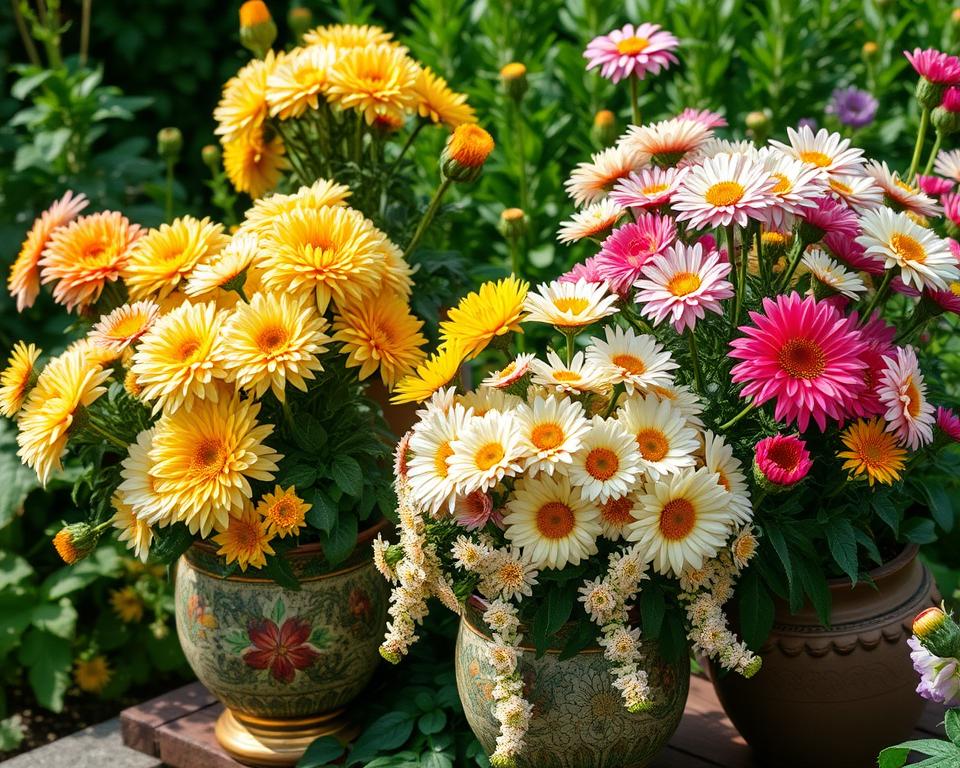
To extend the flowering display, consider including a mix of early, mid-season, and late-flowering chrysanthemum varieties in your garden. This will ensure a vibrant display of flowers over several months.
Growing Chrysanthemums in Pots
To cultivate chrysanthemums in containers, you need to understand their specific needs. Growing chrysanthemums in pots requires careful consideration of the container, soil, and positioning to ensure optimal flowering and plant health.
Choosing the Right Containers
Selecting the appropriate pot is crucial for the health of your chrysanthemums. Choose a pot that is at least 30cm deep to provide enough room for root growth. Ensure the pot has good drainage holes to prevent waterlogged soil.
Soil Requirements for Potted Chrysanthemums
Chrysanthemums prefer well-draining soil that is rich in organic matter. Use a high-quality potting compost that retains moisture but also drains excess water. Avoid using garden soil from your garden as it can compact and prevent proper drainage.
Positioning Your Potted Chrysanthemums
Positioning your potted chrysanthemums correctly is crucial for optimal flowering. Choose a location that receives at least 5-6 hours of direct sunlight daily. Be mindful of the sun’s changing position throughout the seasons and protect your plants from strong winds.
- Choose a spot that receives sufficient sunlight.
- Protect your chrysanthemums from strong winds by positioning them against a wall or fence.
- Consider the eventual height and spread of your chrysanthemum varieties when positioning pots.
Planting Chrysanthemums in the Garden
To ensure your chrysanthemums thrive, it’s essential to understand the best practices for planting them in your garden. This involves selecting the ideal location and timing the planting correctly to give your plants the best start.
Ideal Garden Locations
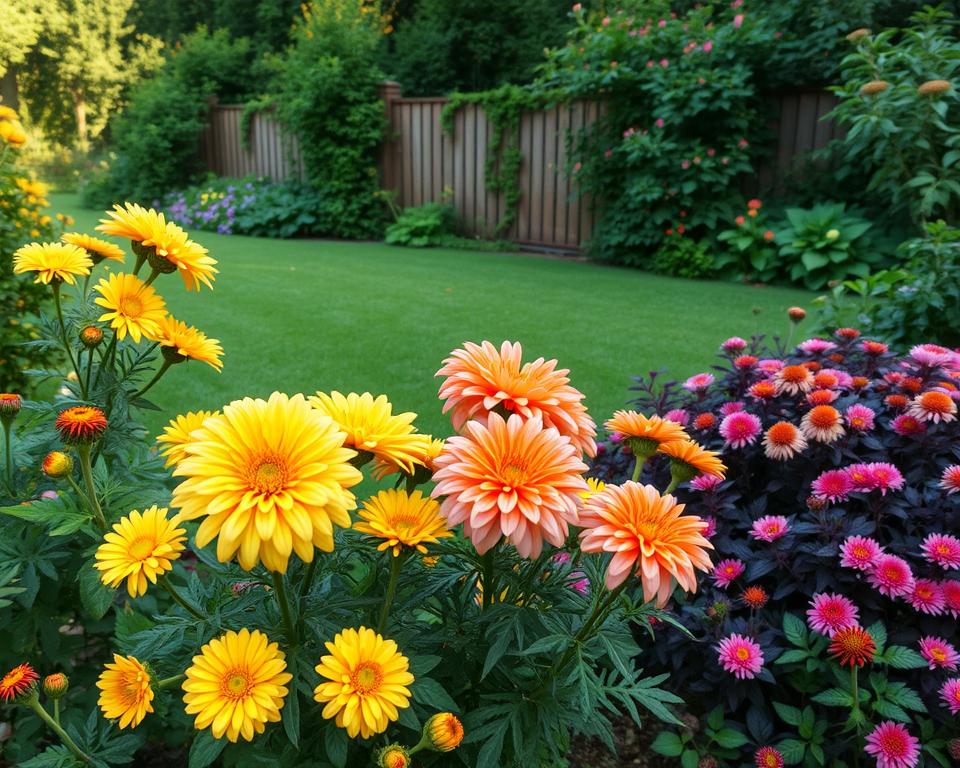
When choosing a location for your chrysanthemums, consider a spot that receives ample sunlight and has well-draining soil. Chrysanthemums generally prefer a sunny position, which encourages healthy growth and flowering. Ensure the area is not prone to waterlogging, as this can lead to root rot.
When to Plant Outdoors
The optimal time to plant chrysanthemums outdoors is in spring after the risk of frost has passed, typically from mid-May onwards in most parts of the UK. You can also plant established young plants in early to mid-summer. For instant impact, mature plants in flower can be purchased in late summer and early autumn, but ideally not later than mid-September.
| Planting Time | Benefits |
|---|---|
| Spring (after frost) | Allows plants to establish a strong root system before flowering. |
| Early to mid-Summer | Established young plants can be planted directly into borders or pots. |
| Late Summer/Early Autumn | Mature plants in flower can be purchased for instant impact. |
Chrysanthemums in Pots & the Garden – Care & Pruning
To keep your chrysanthemums thriving, whether in pots or in the garden, it’s essential to understand their care and pruning needs. Proper care ensures these beautiful flowers bloom abundantly and remain healthy throughout the seasons.
Watering Requirements
Chrysanthemums need consistent moisture, especially when they’re producing buds and flowers. Ensure the soil is moist but not waterlogged, as this can lead to root rot. Regular watering is crucial, but make sure not to overwater.
Feeding and Fertilising
Feeding your chrysanthemum with a balanced fertilizer during the growing season promotes healthy growth and abundant flowers. You can also use a high-potassium fertilizer to enhance flowering.
Pruning and Pinching Techniques
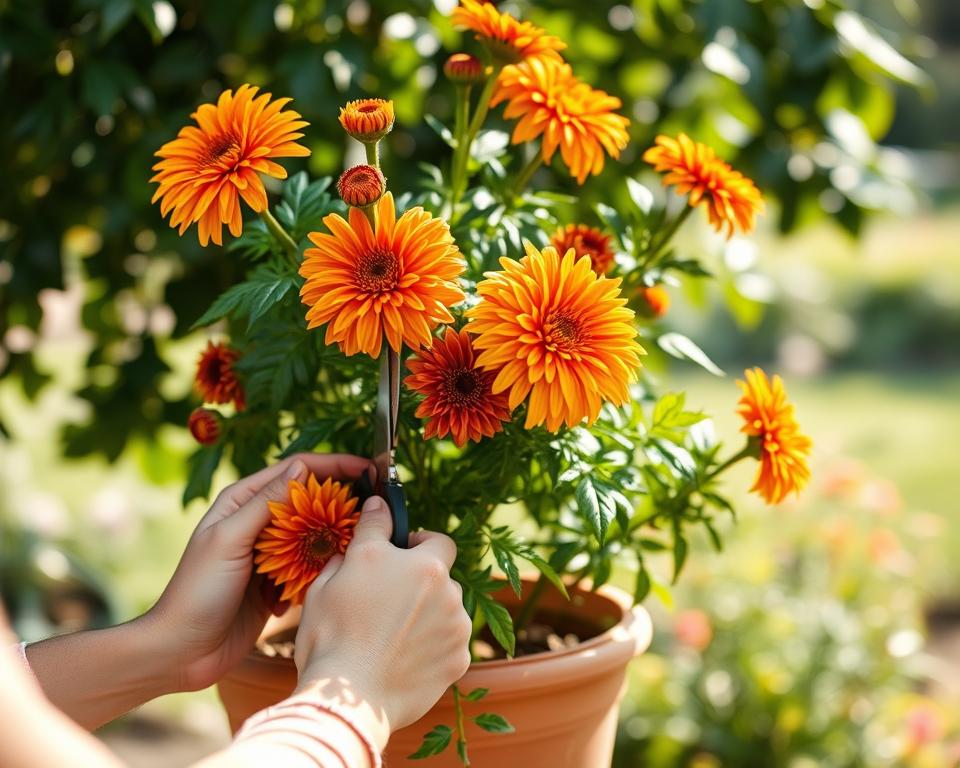
Pruning and pinching are vital for developing bushy plants with many stems and flowers. Pinch out the growing tips of young plants once they reach about 20cm in height. This encourages the plant to produce multiple side shoots, creating a fuller appearance. For taller varieties, staking is recommended to prevent damage to their sometimes brittle stems. After flowering, cut back the stems to about 20cm from the base to prepare for winter.
Managing Pests and Diseases
To keep your chrysanthemums thriving, it’s essential to understand the common pests and diseases that can affect them. Effective management involves a combination of good garden hygiene, appropriate care practices, and knowing how to identify potential issues early.
Common Chrysanthemum Pests
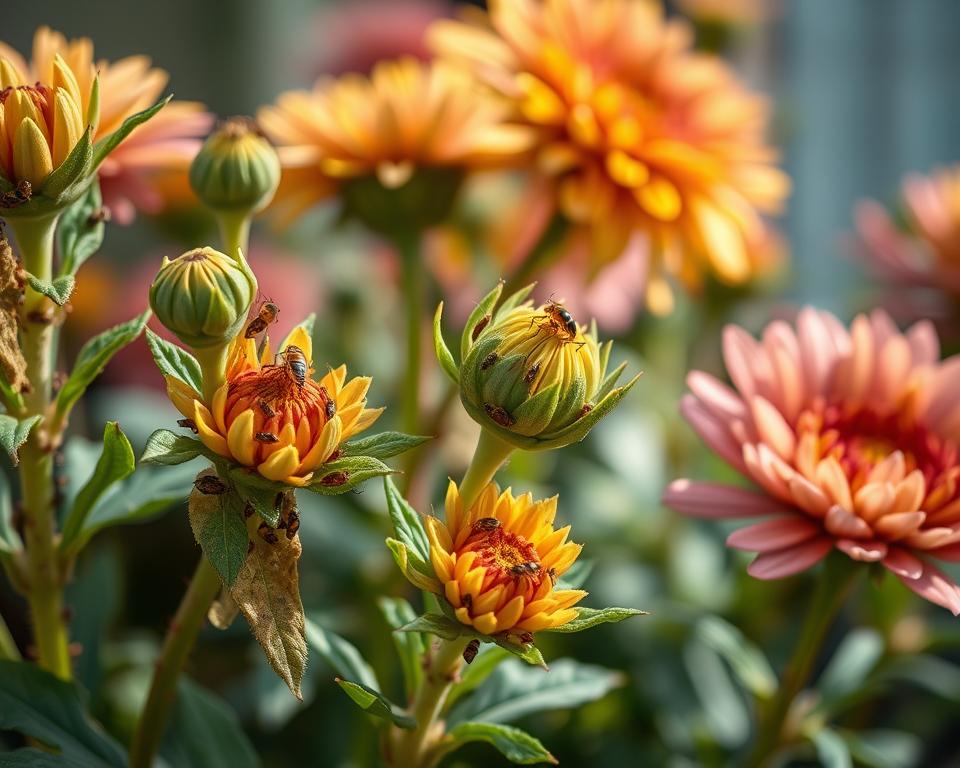
Chrysanthemums can be affected by various pests, including aphids, whiteflies, and spider mites. Regular inspection of your plants is crucial to catch any infestations early. Using insecticidal soap or neem oil can help control these pests. Ensuring good air circulation around your chrysanthemums can also help prevent pest issues.
Diseases That Affect Chrysanthemums
Disease is a significant threat to chrysanthemum health, with fungal infections being particularly problematic. Issues like powdery mildew, leaf spot, and rust can cause significant damage to leaves and overall plant health. Practicing good garden hygiene, avoiding overhead watering, and ensuring good ventilation are key steps in preventing these diseases. Removing and destroying affected leaves can also help control the spread of disease.
13 Hardy Chrysanthemum Varieties to Grow
If you’re seeking to incorporate hardy chrysanthemums into your garden, you’ll find a wide selection of varieties, each boasting its own distinct characteristics and flowering times. These plants are perfect for adding colour and vibrancy to your garden, especially during the later months of the year.
Early Flowering Varieties
Early flowering hardy chrysanthemums start blooming in late summer. ‘Emperor of China’ is a heritage variety with elegant incurved pink flowers that begin opening in early September and continue well into November in mild years. This variety is a true showstopper, providing a beautiful display of colour when many other plants have finished flowering.
Mid-Season Varieties
Mid-season varieties offer a continuation of the floral display. While specific examples are not provided, these chrysanthemums typically flower from September to October, bridging the gap between early and late flowering varieties.
Late Flowering Varieties
Late-flowering chrysanthemum varieties, such as ‘Mei-Kyo Bronze’ and ‘Anastasia Pink’, typically bloom from October through November and sometimes into December. ‘Mei-Kyo Bronze’ features complex bronze pompom flowers, while ‘Anastasia Pink’ produces unusual pale pink flowers. Both are excellent choices for adding late-season colour to your garden.
Conclusion
The versatility of chrysanthemums makes them an ideal choice for gardeners looking to add some autumnal colour. By selecting a mix of early, mid-season, and late-flowering varieties, you can enjoy chrysanthemum blooms from late summer to the first hard frosts. With proper care, including watering, feeding, and pinching, your chrysanthemums will return year after year. Many heritage varieties are still available today, offering proven garden performance. By following this guide, you can create a stunning autumn display in your garden.
FAQ
How often should I water my potted chrysanthemum?
You should water your potted chrysanthemum when the top layer of soil feels dry to the touch, usually every 2-3 days during summer and less frequently during autumn and winter.
What type of fertiliser is best for chrysanthemums?
A balanced, water-soluble fertiliser is ideal for chrysanthemums. You can also use a compost-based fertiliser to promote healthy growth.
How do I protect my chrysanthemums from frost?
To protect your chrysanthemums from frost, you can bring potted plants under cover or mulch around the base of garden plants to insulate the roots.
What are some common pests that affect chrysanthemums?
Some common pests that affect chrysanthemums include aphids, whiteflies, and spider mites. Regularly inspect your plants and treat any infestations promptly.
How do I prune my chrysanthemum to encourage new growth?
To prune your chrysanthemum, cut back the stems after flowering, and pinch out the tips of new growth to encourage bushy development.
Can I grow chrysanthemums in a shaded spot?
While chrysanthemums can tolerate some shade, they generally require a sunny spot to produce plenty of flowers. Choose a variety that is tolerant of shade if you can’t provide full sun.