
Creative Corner Shed Ideas for Small Gardens

Many homeowners with limited outdoor areas face a common challenge. They wish to maximise their garden’s potential without it feeling cramped. An innovative solution lies in utilising often-neglected spaces. Specifically, the corners of a plot can offer surprising opportunities.
These corner areas are frequently overlooked, yet they represent valuable real estate. With the right approach, they can be transformed into something highly functional. A well-planned corner garden building serves multiple purposes. It can provide essential storage, create a quiet relaxation spot, or even become a compact home office.
The popularity of these specialised structures is growing across the UK. They present a smart answer to the spatial constraints of modern properties. This article acts as a comprehensive guide for those considering this enhancement. It explores various design concepts, construction features, and practical applications.
Readers will learn how to assess their specific garden layout effectively. The guide will also help in selecting appropriate models and understanding construction quality. The ultimate goal is to empower homeowners to make informed decisions. This ensures they unlock the full potential of their outdoor living area.
Inhaltsverzeichnis
Key Takeaways
- Corner sheds are a smart solution for maximising limited garden space.
- These structures turn underutilised areas into functional and appealing spots.
- They are growing in popularity among UK homeowners with compact gardens.
- This guide covers design concepts, construction quality, and practical uses.
- It will help you assess your garden layout and choose the right model.
- Learn how to use a corner garden building for storage or as a workspace.
Benefits of Using Corner Sheds in Compact Gardens
The challenge of maximising utility in confined outdoor environments requires innovative approaches to spatial planning. Corner sheds present an intelligent solution that transforms underutilised areas into valuable assets.
https://www.youtube.com/watch?v=BLk_CAMmQPc
Optimised Use of Limited Space
These specialised structures fit perfectly into garden corners that might otherwise remain empty. They make excellent use of available space without interfering with central lawn areas.
The angled configuration of corner sheds requires significantly less floor area than traditional rectangular models. Despite their compact footprint, they offer generous storage capacity for tools and equipment.
This approach is particularly beneficial for irregularly shaped plots. Standard shed placement can disrupt garden flow, but corner designs integrate seamlessly.
Enhanced Aesthetic Appeal
Beyond practical benefits, these garden buildings contribute significantly to visual appeal. Their unique positioning creates interesting focal points and frames garden views beautifully.
Available in various styles from rustic timber to contemporary designs with large windows, they complement diverse garden aesthetics. A well-chosen corner shed enhances the overall landscape design.
This thoughtful addition can potentially increase property value by demonstrating smart use of outdoor space. It adds functional square footage while maintaining the garden’s harmonious appearance.
Corner Shed Ideas for Small Gardens
The evolution of garden buildings has led to specialised designs that maximise every inch of available space. Manufacturers now offer creative solutions specifically tailored for corner placements.

Innovative Design Concepts
Contemporary corner structures feature pentagonal shapes with centrally positioned doors for optimal access. Asymmetric window arrangements maximise natural light while maintaining privacy.
Some designs incorporate side storage compartments, like the BillyOh Penton model. This allows users to segregate garden equipment from clean relaxation areas.
Modular designs offer customisation potential with additional features or extensions. The Tiger Deluxe model demonstrates how compact layouts can deliver substantial storage capacity.
Variety of Models and Options
The market presents a diverse range from budget-friendly options starting around £480 to premium models exceeding £1,600. Brands like BillyOh and Tiger Sheds cater to different requirements.
Size options span from compact 7×7 configurations to spacious 10×10 models. The latter provides room for multiple functions like combined storage and relaxation spaces.
Summerhouse variants feature abundant glazing and Georgian-style doors. These create airy interiors perfect for reading nooks or seasonal entertainment areas.
Design and Construction Features
Quality construction is fundamental to ensuring a garden structure stands the test of time and weather conditions. The materials and techniques used determine both durability and performance.
Robust Tongue and Groove Cladding
The tongue and groove system represents superior construction. This interlocking method creates tight seals between boards. It prevents moisture, draughts, and heat loss effectively.
Standard 12mm thickness for wall cladding offers excellent durability. This substantial timber resists warping and splitting over years of use. The interlocking groove design provides structural rigidity.

Premium models extend this tongue and groove construction to floors and roofs. This creates a complete, robust envelope. The system allows for natural expansion while maintaining seals.
Weather Resistance and Durability
Proper weatherproofing is crucial for any outdoor building. Heavy-duty roofing felt and quality cladding work together. They withstand UK weather patterns including heavy rain and strong winds.
Framing typically uses 28x44mm rounded corner timber. This creates a sturdy skeleton that maintains shape under load. Robust framing ensures long-term integrity.
| Feature | Standard Specification | Premium Upgrade | Benefit |
|---|---|---|---|
| Wall Cladding | 12mm tongue and groove | 12mm shiplap style | Superior weather resistance |
| Floor Construction | Standard flooring | 12mm tongue and groove | Enhanced stability |
| Roof System | Basic felt covering | 12mm tongue and groove | Better insulation |
| Timber Treatment | Standard treatment | Pressure-treated | 10-15 year guarantee |
Pressure-treated options offer exceptional protection. Factory processes force preservatives deep into wood fibres. This guards against rot, decay, and insects for 10-15 years.
Choosing the Right Corner Shed for Your Garden
Selecting the ideal corner garden building involves careful consideration of both spatial and regulatory factors. A methodical approach ensures the final choice enhances the outdoor area perfectly.
Assessing Your Garden’s Layout
Begin by accurately measuring the intended corner. Account for fence lines, boundaries, and any existing features. It is also wise to note which areas receive the best sunlight.
Consider the access route for delivery and assembly. Ensure there is enough clearance to manoeuvre panels into position. The completed structure’s door should open freely without obstruction.
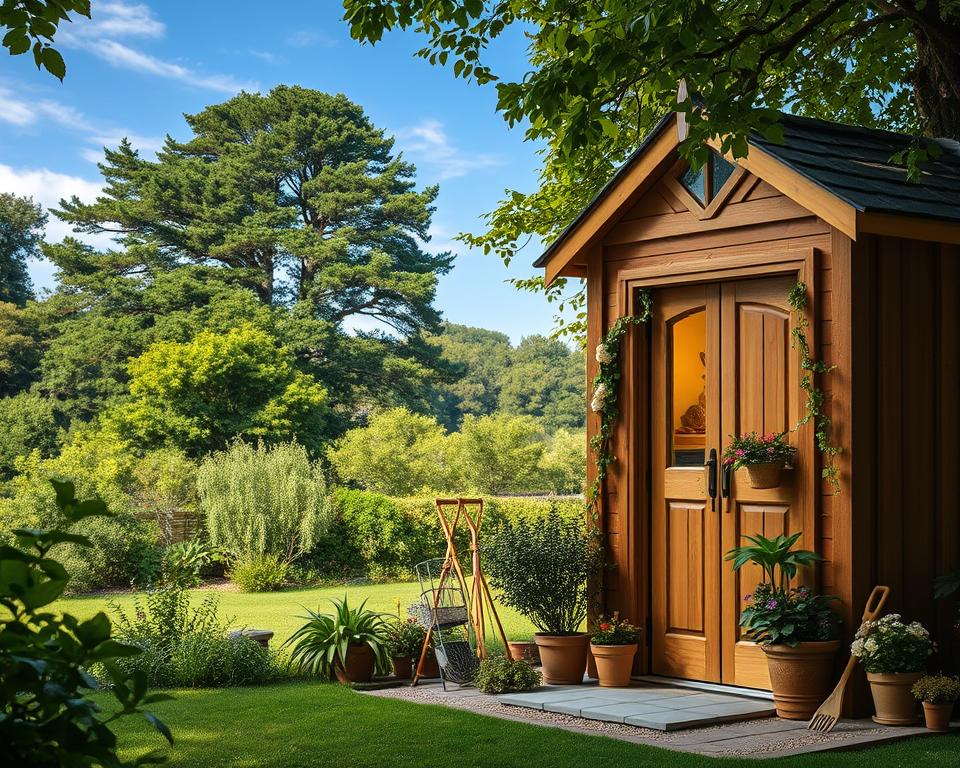
These buildings suit various plot shapes. They work well in square or rectangular spaces. They also solve challenges in L-shaped or irregular gardens.
Choosing the correct size is crucial. Compare the dimensions of popular configurations to find the best fit for your available space.
| Model Size | Ideal For | Interior Space |
|---|---|---|
| 7×7 | Very compact gardens | Focused storage |
| 8×8 | Average plots | Combined storage & workspace |
| 10×10 | Spacious corners | Multi-functional room |
Planning Permission Considerations
In the UK, most garden structures fall under ‘Permitted Development’. This means planning permission is often not required. Designs typically comply with rules on height and placement.
Permission may be needed in conservation areas, for listed buildings, or if the building exceeds certain thresholds. Positioning it forward of the main house elevation facing a highway can also require consent.
All installations require a level, stable base. Options include concrete pads, paving slabs, or timber bearers. A proper foundation guarantees the building’s integrity for many years.
Practical Uses and Versatile Designs
Modern outdoor buildings positioned in plot corners offer remarkable flexibility for various lifestyle needs. These structures transform underutilised areas into valuable assets that serve multiple functions.

Storage Solutions and Home Offices
Even compact models provide substantial storage capacity for garden tools and equipment. They keep items secure and organised away from the main home. Many homeowners use these buildings for seasonal furniture storage during winter months.
The Tiger Deluxe model exemplifies workshop applications with robust construction. Its design accommodates tool storage and workbench areas. Natural light through windows creates ideal conditions for DIY projects.
Remote work trends have increased demand for dedicated office spaces. A corner summerhouse with generous glazing provides separation from household distractions. This creates an inspiring environment for productive work.
Larger buildings like the Bengal Corner Cabin serve as multi-functional rooms. They can accommodate guest accommodation or entertainment areas. The spacious layout offers flexibility for various activities.
These versatile designs allow homeowners to maximise their outdoor space effectively. Whether for storage, home office use, or relaxation, a corner garden building provides valuable additional space.
Styling Your Shed with Complementary Furniture and Accessories
The interior design of a garden building plays a crucial role in its functionality and appeal. Thoughtful styling choices can transform even the most compact structure into a welcoming retreat.
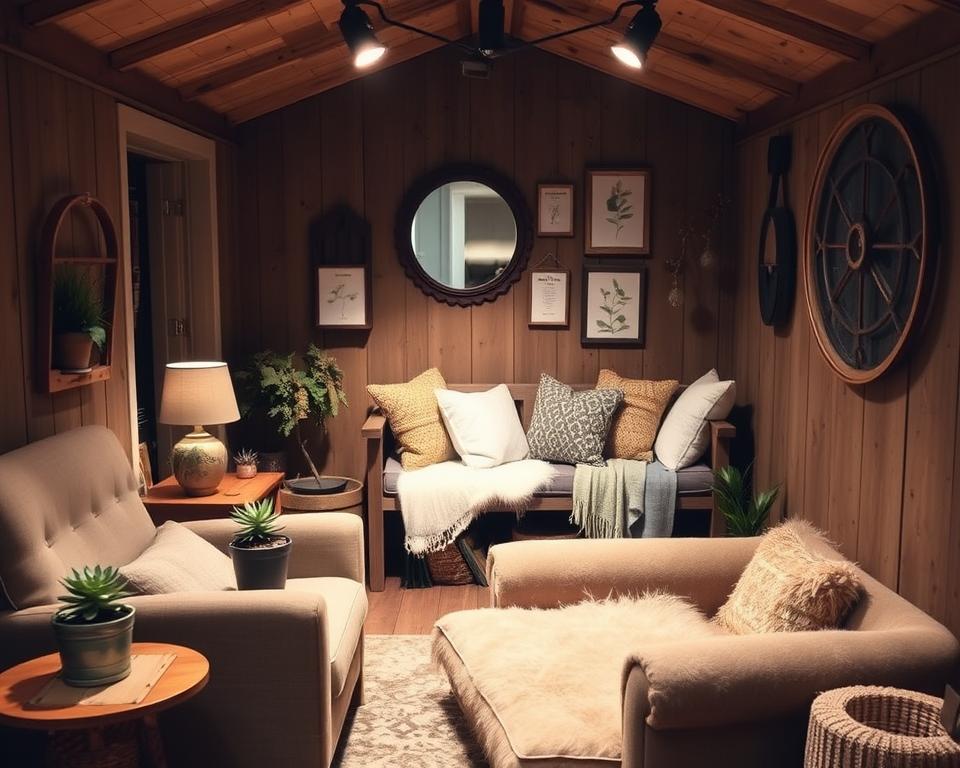
Maximising Natural Light and Interior Space
Choosing the right furniture is essential for creating flexible interior spaces. Compact, foldable pieces like deck chairs and collapsible tables maintain open floor areas. They allow the room to be reconfigured for different uses.
Corner summerhouses typically feature large windows and glazed doors. These provide plenty of natural light throughout the day. Strategic window treatments maintain privacy while maximising daylight penetration.
Vertical storage solutions make excellent use of limited floor spaces. Wall-mounted shelving and ceiling hooks keep items organised. This approach creates a tidy environment with plenty of room for movement.
Light colour schemes enhance the perception of space. Pale walls reflect natural light from the windows. This creates an airy atmosphere that feels more spacious.
Decorative touches add personal style to the interior. Hanging plants and artwork utilise vertical surfaces effectively. Mirrors can bounce light around, creating depth and brightness.
For multi-functional use, consider task-specific furniture arrangements. A reading nook requires comfortable seating and bookshelves. A workshop needs practical storage and work surfaces.
The right combination of furniture and accessories ensures the space serves its intended purpose beautifully. Careful planning creates an inviting environment that maximises every available inch.
Assembly, Delivery and Long-Term Maintenance
Successful ownership of a garden building involves understanding both the assembly process and maintenance requirements. This ensures the structure serves its purpose effectively for many years.

Easy Installation Processes
Manufacturers design these structures for straightforward DIY assembly. Comprehensive digital guides accompany each product, featuring pre-cut components and logical construction sequences.
With assistance from a friend, most buildings can be assembled within several hours. The time required depends on the building’s size and complexity.
Suppliers typically offer free delivery to mainland UK addresses. Customers should ensure clear access for delivery vehicles and manual handling of materials.
Providing a level base is the critical first step. Options include concrete slabs, paving stones, or pressure-treated timber frameworks. This preparation directly impacts the building’s structural integrity.
Regular Care Tips for Longevity
Pressure-treated models offer significant advantages with 10-15 year guarantees against rot. These buildings require minimal ongoing care beyond occasional cleaning and inspection.
For non-pressure-treated structures, annual treatment with quality wood preservatives extends their lifespan. Regular inspections help identify damage or wear early.
Seasonal maintenance tasks include clearing debris from gutters and checking roof felt condition. This systematic way of caring for your building ensures it withstands UK weather conditions effectively.
With proper care, these garden buildings can provide decades of reliable service. The right maintenance approach is the best way to protect your investment over time.
Conclusion
Making the most of available space requires thoughtful consideration of underutilised garden corners. These specialised structures offer exceptional space efficiency while transforming overlooked areas into valuable assets.
The versatility of corner garden buildings extends from basic storage to sophisticated multi-purpose spaces. They can serve as workshops, home offices, or relaxation zones without compromising the overall garden aesthetic.
Choosing quality construction with features like tongue and groove cladding ensures long-term durability. Proper planning regarding measurements, regulations, and foundation preparation is essential for successful installation.
Viewing these buildings as lifestyle investments rather than mere storage solutions reveals their true value. They expand usable living areas and support various activities from remote working to hobby pursuits.
With straightforward assembly and minimal maintenance requirements, these structures provide accessible enhancement options. Exploring the diverse range available helps homeowners maximise their outdoor potential effectively.
FAQ
What are the main advantages of a corner garden building?
Corner sheds make excellent use of awkward or underutilised spaces in a garden. Their unique shape provides ample storage or functional area without encroaching on the central lawn or patio. This design often enhances the overall aesthetic, creating a stylish focal point.
How durable are these types of garden buildings?
High-quality models feature robust tongue and groove cladding, which provides superior strength and weather resistance. This construction method ensures the building remains durable and secure for many years, effectively withstanding the British climate.
Do I need planning permission for a corner summerhouse or shed?
In most cases, you will not need planning permission if the structure meets certain criteria, such as size and placement. However, it is always advisable to check with your local planning authority, especially if you plan to use the building as a home office or if it is particularly large.
What are some popular uses for a corner shed beyond storage?
These versatile spaces are ideal for creating a tranquil home office, a hobby room, or a cosy summerhouse. With the addition of windows for natural light, they can become a comfortable retreat without taking up significant garden space.
How can I make the interior of a compact shed feel more spacious?
Choosing a design with windows and a light colour scheme can make a substantial difference. Strategic placement of furniture and utilising vertical storage options also help to maximise the available interior space and create an open, airy feel.
What is involved in the assembly of a corner garden shed?
Many manufacturers provide detailed instructions, and some offer pre-assembled sections to simplify the process. While a confident DIY enthusiast can often manage the task, some companies also provide professional installation services for a hassle-free experience.
How should I maintain my garden building to ensure its longevity?
Regular maintenance is key. This includes treating the wood with a protective preservative every one to two years, checking the roof felt for damage, and ensuring doors and windows are functioning smoothly. This proactive care will protect your investment for a long time.

