Designing a Mediterranean Garden: A Step-by-Step Guide
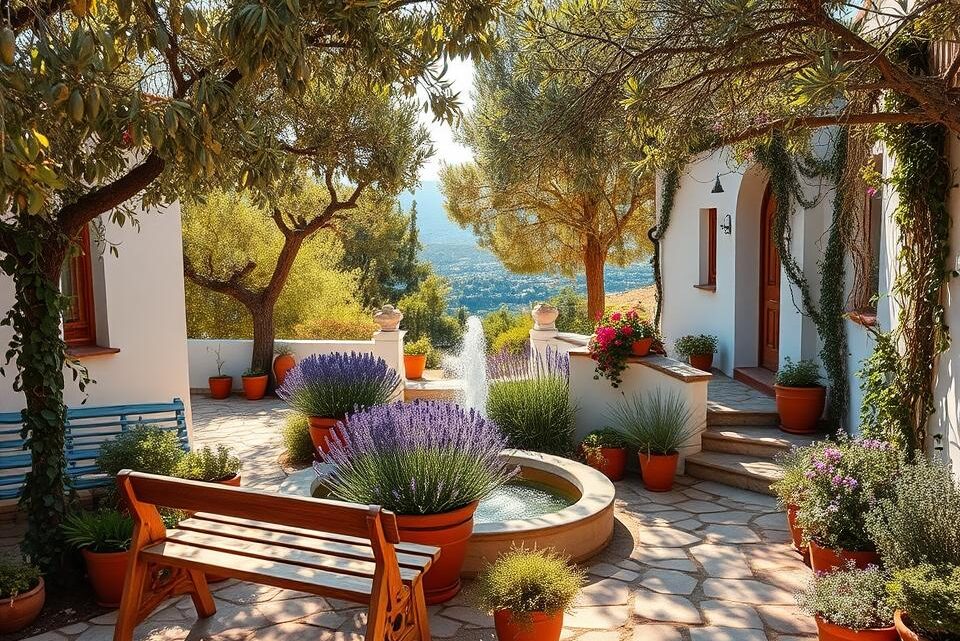
Imagine lounging by an inviting pool surrounded by brightly coloured walls and vibrant plantings, feeling like you’re on holiday all year round. A Mediterranean garden embodies this relaxed, sun-drenched atmosphere, characteristic of countries such as France, Spain, and Italy.
This comprehensive guide will walk you through creating your own Mediterranean-style garden, blending rustic elements with drought-tolerant plants to create a beautiful and practical outdoor space, even in the British climate.
We’ll explore key design principles, including the use of terracotta, gravel, and fragrant planting, to help you achieve an authentic style.
Inhaltsverzeichnis
Key Takeaways
- Create a relaxed, sun-drenched atmosphere in your outdoor space
- Blend rustic elements with drought-tolerant plants for a practical garden
- Incorporate key Mediterranean design principles, such as terracotta and gravel
- Adapt Mediterranean garden designs to different garden sizes and conditions
- Discover how to maintain your Mediterranean garden year-round
Understanding the Mediterranean Garden Style
A Mediterranean garden is designed to thrive in hot, dry climates. Characterized by its relaxed, informal style, it combines practical outdoor living spaces with drought-resistant planting and rustic hardscaping elements.
Key Characteristics of Mediterranean Gardens
Mediterranean gardens are distinguished by several key features. These include the use of gravel and paving instead of lawns, terracotta pots, water features for cooling effects, and plants with silvery or grey-green foliage adapted to hot, dry conditions.
- Informal, relaxed design that promotes outdoor living
- Drought-tolerant plants and efficient water use
- Rustic hardscaping elements, such as terracotta and stone
Why Mediterranean Gardens Work in the UK Climate
Despite the UK’s cooler, wetter climate, Mediterranean garden principles are surprisingly effective, especially as parts of Britain experience increasingly hot, dry summers due to climate change. Mediterranean plants are adaptable to UK conditions when provided with good drainage and sunny positions.
| Feature | Benefit |
|---|---|
| Drought-tolerant plants | Low maintenance and water efficiency |
| Gravel and paving | Reduced water consumption and lawn maintenance |
| Water features | Cooling effect and aesthetic appeal |
By understanding and incorporating these elements, you can create a beautiful and sustainable Mediterranean-style garden in the UK.
Planning Your Mediterranean Garden Design
A well-designed Mediterranean garden starts with understanding your space and its conditions. To create a garden that is both aesthetically pleasing and functional, you need to assess your outdoor area carefully.
Assessing Your Space and Conditions
Begin by evaluating your garden’s sun exposure, soil type, and drainage conditions. Most Mediterranean plants require at least 6-8 hours of direct sunlight daily, so identifying the sunniest areas is crucial. You should also consider the soil condition and amend it if necessary to ensure good drainage, as Mediterranean plants are adapted to well-draining soil.
- Check the sun exposure in your garden to determine the best spots for planting.
- Assess your soil type and its drainage capabilities to decide if any amendments are needed.
- Consider existing features in your garden that could be incorporated into your design.
Creating a Mediterranean Garden Plan
Once you have assessed your garden’s conditions, create a detailed plan. Divide your space into functional zones, including seating areas, dining spaces, planting beds, and pathways. Ensure the layout flows naturally and maximises both aesthetics and usability. Consider using raised beds or a rock garden if your native soil is poorly draining.
Considering Scale and Style
When selecting features for your garden design, consider the scale of your garden. For smaller spaces, vertical planting and compact water features like a wall fountain can be ideal. Larger gardens can accommodate more substantial elements such as pergolas or outdoor kitchens. Adapt the Mediterranean garden style to complement your home’s architecture, creating a cohesive design that feels authentic.

By carefully planning your garden, you can create a beautiful and functional outdoor space that captures the essence of the Mediterranean style.
Essential Elements for Designing a Mediterranean Garden
A Mediterranean garden is characterised by its use of natural materials, clever shading, and thoughtful incorporation of water features. To create such a garden, you must consider several key elements that work together to evoke the warmth and beauty of the Mediterranean region.
Shade Structures: Pergolas and Arbours
Shade is crucial in a Mediterranean garden, providing relief from the intense sun. Pergolas and arbours are traditional features that not only offer shade but also create intimate spaces for dining and relaxation. Other shade structures can include courtyards, porches, and patio umbrellas.
Water Features: Fountains and Pools
Water features are another essential element, adding a cooling effect and soothing sounds to the garden. Fountains and small pools are popular choices, creating a sense of tranquility and attracting wildlife. The reflective quality of water also enhances the visual appeal of the garden.
Outdoor Living Spaces
Outdoor living areas are central to the Mediterranean lifestyle, where outdoor entertaining is a way of life. Creating dedicated spaces with comfortable seating, dining areas, and possibly an outdoor kitchen or pizza oven, captures the essence of this lifestyle. These areas should be designed to flow naturally through the garden, maximising comfort and enhancing the sensory experience.
By incorporating these essential elements—shade structures, water features, and outdoor living spaces—you can create a Mediterranean garden that is not only beautiful but also functional and inviting. The key is to use natural materials and design elements that reflect the rustic elegance of the Mediterranean style.
Hardscaping for Mediterranean Gardens
The backbone of a Mediterranean garden lies in its hardscaping elements, which include natural materials like stone, gravel, and terracotta. These elements not only create the characteristic warm, weathered aesthetic but also serve practical purposes such as drainage and weed suppression.
Stone, Pavers and Gravel
Stone, pavers, and gravel are fundamental to Mediterranean hardscaping. Warm-toned stone is often used for walls, terraces, and paving, creating a seamless transition between the garden and the surrounding landscape. Gravel is a versatile material used for patios, pathways, and as a low-maintenance alternative to lawns. It provides excellent drainage and suppresses weeds, reducing the need for frequent watering. Additionally, mosaic patterns created with stone pebbles or cobbles add visual interest and authenticity to the garden.
- Gravel pathways and terraces serve both practical and aesthetic purposes.
- Stone features complement the natural surroundings and add to the rustic charm.
Terracotta Containers and Pots
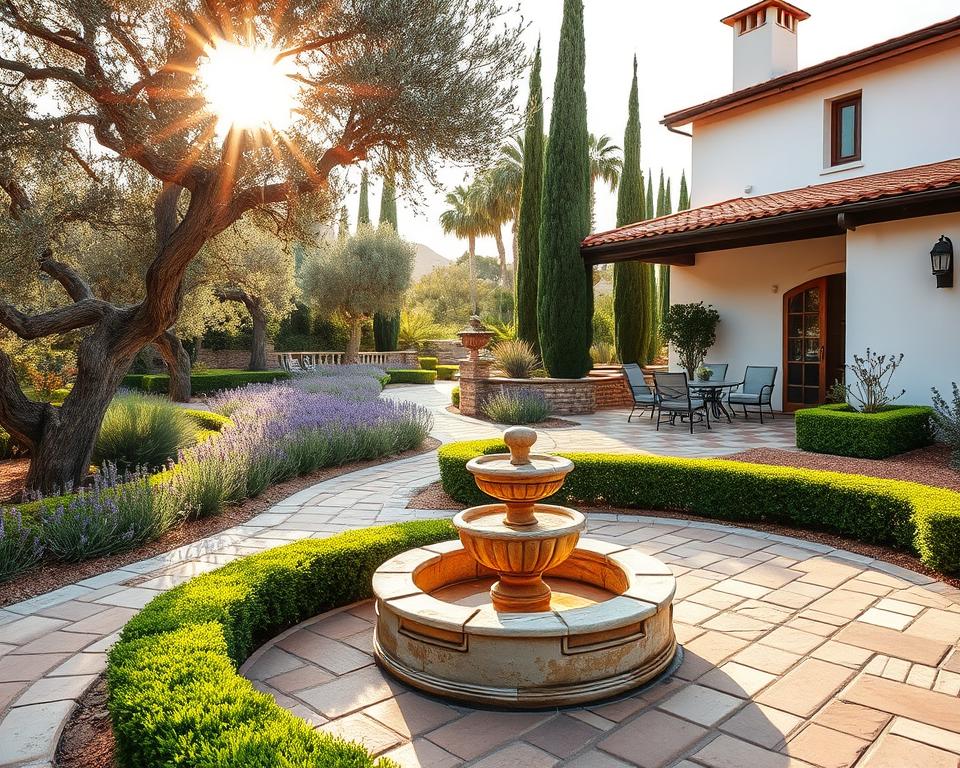
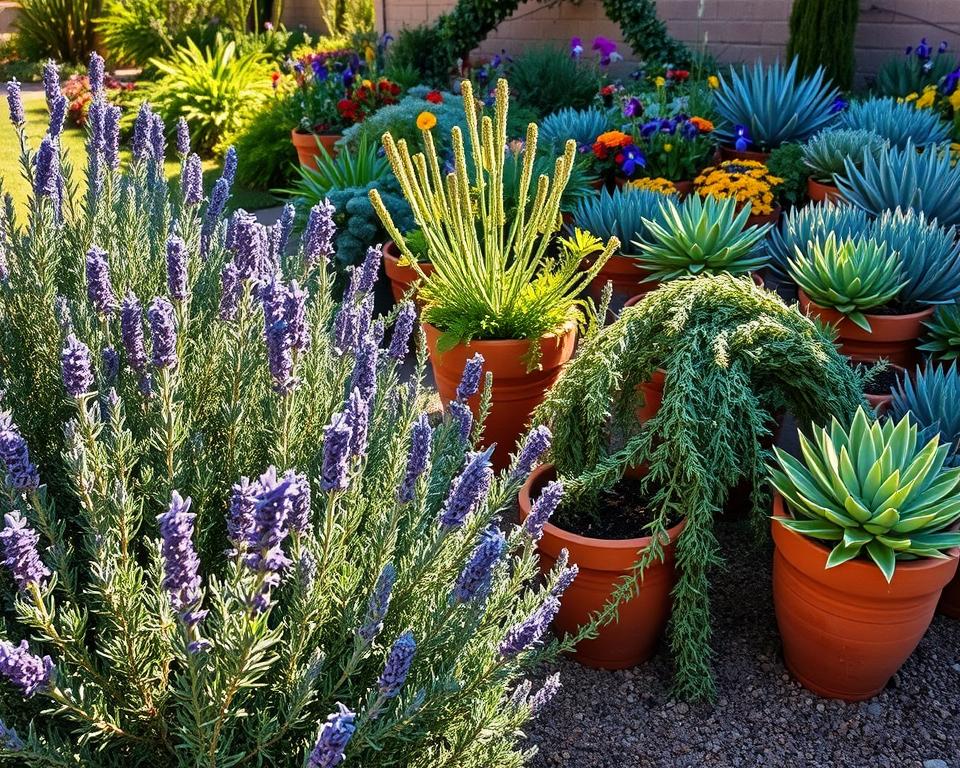
Terracotta containers and pots are classic features of Mediterranean gardens. These containers, often oversized, serve as bold focal points in the landscape. You can add a splash of colour to a patio or gravel terrace by grouping smaller ceramic or terracotta pots planted with pelargoniums and other annuals. Terracotta pots come in various sizes, making them versatile for different garden designs.
Terracotta pots are not only aesthetically pleasing but also durable, making them a practical choice for Mediterranean gardens.
Decorative Elements: Tiles and Mosaics
Decorative elements such as hand-painted tiles and mosaics add authentic Mediterranean character to your garden. Traditional designs from Spain, Italy, Greece, and Morocco often feature blue and white patterns or warm earth tones. These decorative features can be incorporated into your garden design through tabletops, wall decorations, or even pathways, enhancing the overall aesthetic and creating a cohesive look.
When selecting hardscaping materials, aim for a cohesive palette that complements your home’s architecture while creating the warm, sun-baked atmosphere characteristic of Mediterranean regions.
Choosing Mediterranean Plants
A Mediterranean garden’s beauty lies in its plants, which must be carefully selected to thrive in the local climate. The right plants will not only survive but also flourish, creating a lush and vibrant outdoor space.

Drought-Tolerant Perennials and Shrubs
Drought-tolerant perennials and shrubs are the backbone of any Mediterranean garden. These plants have adapted to survive in hot, dry conditions, requiring minimal watering and maintenance. Examples include lavender, rosemary, and santolina, which offer texture, structure, and fragrance to the garden.
Other options like ballota and phlomis add to the diversity of the garden with their silvery or grey-green foliage, reflecting sunlight and conserving water.
Mediterranean Trees and Structural Plants
Mediterranean trees and structural plants provide essential vertical elements and shade, creating the characteristic layered effect found in Mediterranean landscapes. Olive trees, Italian cypress, and bay laurel are popular choices, offering a mix of functionality and aesthetic appeal.
These trees not only add height and structure but also help to create a sense of tranquility and shade in the garden.
Fragrant Herbs and Aromatics
Fragrant herbs are a signature element of Mediterranean gardens, offering both culinary uses and sensory appeal. Thyme, oregano, sage, and lavender are popular choices, with their aromatic foliage and attractive flowers adding to the garden’s charm.
These herbs can be used in cooking and herbal remedies, while also attracting pollinators and adding fragrance to the garden.
Creating a Colour Palette
The colour palette of a Mediterranean garden is a reflection of the region’s sun-kissed terrain and sea-inspired tones. When selecting colours, it’s essential to draw inspiration from the natural landscape to create an authentic and harmonious scheme.
Traditional Mediterranean Colours
Traditional Mediterranean colours are characterized by earthy tones, sea-inspired blues, and sun-kissed yellows. Cobalt blue, terracotta, and golden yellow are vibrant focal points that stand out against a backdrop of neutral tones, such as gravel, stone, and foliage. These colours are reminiscent of the region’s picturesque villages and sun-drenched landscapes.
Complementary Plant Combinations
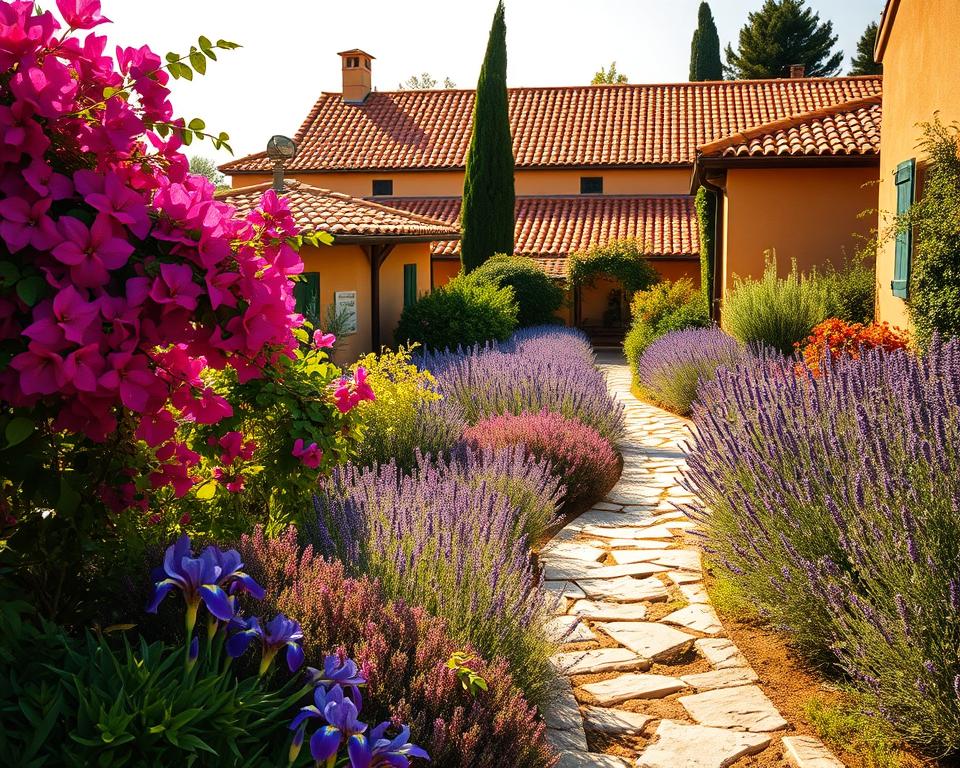
When choosing plants for your Mediterranean garden, consider combinations that create a complementary colour scheme. For example, pairing purple lavender with silver-leaved plants or contrasting bright yellow santolina against blue-flowering rosemary can add visual interest and depth to your garden. The silvery and grey-green foliage characteristic of many Mediterranean plants provides a unifying element, allowing flowering plants to shine as seasonal highlights.
By carefully selecting a colour palette and complementary plant combinations, you can create a Mediterranean garden that is both beautiful and authentic, capturing the essence of the region’s natural beauty.
Planting and Soil Preparation
Mediterranean plants thrive in well-draining soil, making soil preparation a vital step in your garden design. To create a thriving Mediterranean garden, you need to understand the soil conditions that these plants prefer.
Most Mediterranean plants prefer full sun and soil that drains well. Choosing a site that receives at least 6 to 8 hours of direct sunlight is essential. The soil should be sandy or rocky, as Mediterranean soils tend to be. Improving drainage with gravel, sand, or perlite can help prevent root rot, especially in clay or poorly draining soils.
Improving Drainage for Mediterranean Plants
Soil preparation is critical for the success of Mediterranean plants in UK gardens. Excellent drainage is the most important factor to prevent root rot during wet winter months. You can improve heavy clay soils by incorporating grit, sharp sand, and minimal organic matter to create lean, free-draining conditions.
- Consider creating raised beds or mounded planting areas if your native soil is particularly heavy or poorly draining.
- Use gravel mulch around the crown of plants to keep roots cool, suppress weeds, and retain moisture.
Planting Techniques for Drought-Tolerance
When planting, position drought-tolerant plants slightly higher than the surrounding soil level. Apply a gravel mulch around the crown to prevent crown rot and reflect heat back to the plant. Grouping plants with similar water requirements together creates efficient watering zones, placing the most drought-tolerant species in the hottest, driest areas.
By following these planting techniques and improving drainage, you can create a beautiful and sustainable Mediterranean garden that thrives in the UK climate.
Maintenance Tips for Your Mediterranean Garden
Maintaining a Mediterranean garden requires attention to specific care practices. To ensure your garden thrives, it’s essential to understand its unique needs, particularly when it comes to watering and pruning.
Watering Practices
Proper watering is crucial for the health of your Mediterranean plants. For new plants, water regularly during the first growing season until roots are established. After that, provide supplemental water sparingly during the growing season, depending on your normal rainfall. Increase watering during prolonged hot spells. Check potted plants every 1 to 2 days and water when the top 1 to 2 inches of soil is dry. Cacti, succulents, and some native plants may need little or no supplemental water.
- Water thoroughly but infrequently to encourage deep root growth.
- Allow soil to dry out between waterings, even during summer months.
- Container plants require more frequent attention, particularly during hot weather.
Pruning and Seasonal Care
Seasonal pruning is essential for maintaining the shape and health of Mediterranean plants. Prune lavender and rosemary after flowering to prevent woody growth. Shape evergreen shrubs in late spring or early autumn. Winter protection may be necessary for less hardy Mediterranean species, particularly in colder UK regions. Consider using horticultural fleece, moving containers to sheltered positions, or ensuring excellent drainage to help plants survive wet winter conditions.
| Season | Care Tips |
|---|---|
| Summer | Increase watering during hot spells, ensure good drainage. |
| Winter | Protect less hardy plants, ensure excellent drainage. |
| Spring/Autumn | Prune and shape plants, prepare for seasonal changes. |

Conclusion: Enjoying Your Mediterranean Oasis
Your Mediterranean garden will become a haven for outdoor living, rich in sensory experiences and natural beauty. As you relax in your new outdoor space, you’ll enjoy the fragrant plants and cooling shade, perfect for summer entertainment. By embracing the Mediterranean style, you’re creating a sustainable and low-maintenance garden that thrives in full sun. This garden will not only enhance your outdoor living but also provide a tranquil retreat that supports local wildlife and conserves water.
FAQ
What type of plants are best suited for a Mediterranean garden?
Drought-tolerant plants such as lavender, olive trees, and rosemary are ideal for Mediterranean gardens. These plants thrive in full sun and well-drained soil, making them perfect for the Mediterranean style.
How can I create shade in my Mediterranean garden?
You can create shade using pergolas, arbours, or trees with a broad canopy. Shade structures can be adorned with climbing plants like wisteria or grapevines to add depth and texture.
What is the best way to improve drainage in my Mediterranean garden?
To improve drainage, you can add organic matter like compost or well-rotted manure to the soil. You can also use gravel or stone to create a permeable surface, reducing waterlogging and runoff.
How often should I water my Mediterranean plants?
Mediterranean plants are adapted to dry conditions, so they require infrequent watering. Water them deeply but infrequently to encourage deep root growth, making them more drought-tolerant.
Can I use terracotta pots in my Mediterranean garden?
Yes, terracotta pots are a classic feature of Mediterranean gardens. They add a warm, earthy tone and can be used to plant a variety of Mediterranean plants, from herbs to shrubs.
How can I create a water feature in my Mediterranean garden?
You can create a water feature using a fountain, pool, or rill. The sound of running water adds a soothing ambiance, while the visual effect of water creates a sense of calm and serenity.
What are the benefits of using gravel or stone in my Mediterranean garden?
Gravel or stone can help with drainage, reduce weed growth, and add texture and visual interest to your garden. They can also be used to create a decorative groundcover or pathway.
How can I maintain my Mediterranean garden during the winter months?
To maintain your Mediterranean garden during winter, protect sensitive plants from frost, prune deciduous trees and shrubs, and keep the garden free of debris. You can also add winter-flowering plants to maintain colour and interest.