DIY Garden Playground Ideas: Tips for Your Backyard
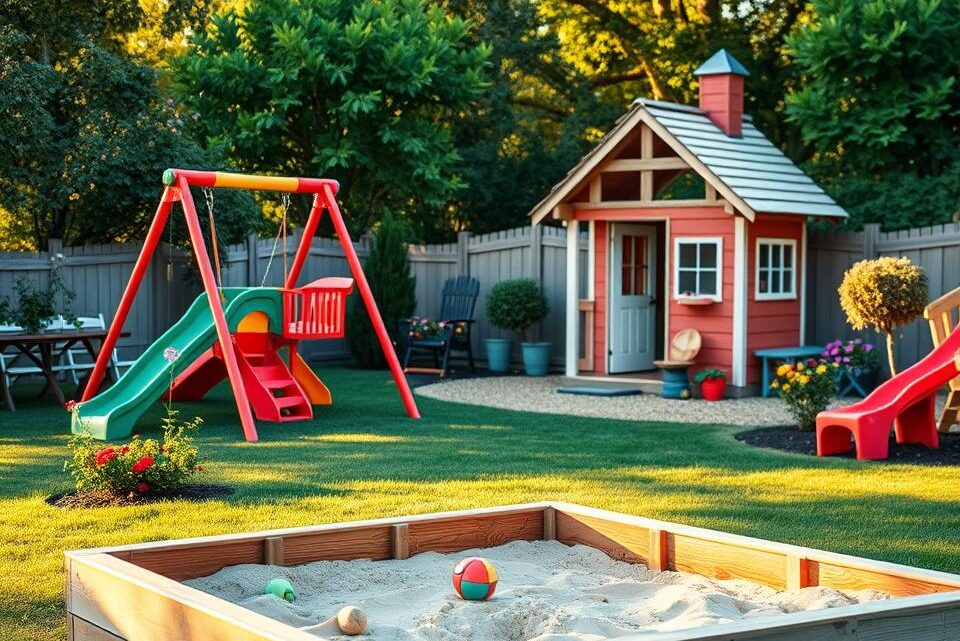
Creating a play space in your backyard can be a fantastic way to encourage outdoor play among children, promoting their overall development. In recent years, natural outdoor play spaces have gained popularity as a viable alternative to expensive plastic equipment.
By adopting a DIY approach, you can create a unique and engaging play area that caters to your children’s needs without breaking the bank. This article will guide you through the process of planning, designing, and building your own backyard playground, highlighting key elements that make a successful garden playground.
Inhaltsverzeichnis
Key Takeaways
- Creating a DIY garden playground encourages outdoor play and children’s development.
- Natural outdoor play spaces offer a cost-effective alternative to traditional playground equipment.
- A well-designed playground can be achieved on a budget with careful planning.
- Using simple, affordable materials can foster imaginative play in children.
- A backyard playground can be personalised to suit your children’s needs and preferences.
Planning Your Garden Playground
Before you start building your DIY garden playground, it’s essential to plan the space effectively. Proper planning ensures that your playground is safe, functional, and enjoyable for your children.
Assessing Your Available Space
To create an effective plan, start by assessing your backyard area. Measure the space available and consider any existing features such as trees, slopes, or garden beds. Understanding the natural elements of your space, like sun exposure and drainage, is also crucial. Creating a scaled drawing or plan of your backyard will help you visualise the playground layout and make necessary adjustments before construction begins.
Setting a Realistic Budget
Setting a budget for your DIY garden playground project is vital. Begin by prioritising the essential elements you want to include in your play area. Balance your cost considerations with the need for safety and durability. Consider sourcing materials from recycling centres or online marketplaces to save money. If your budget is limited, phase your project, starting with key features and adding more over time. Allocate your budget appropriately based on your children’s ages and interests to ensure the play area is both fun and engaging.
Creating Different Play Zones in Your Garden
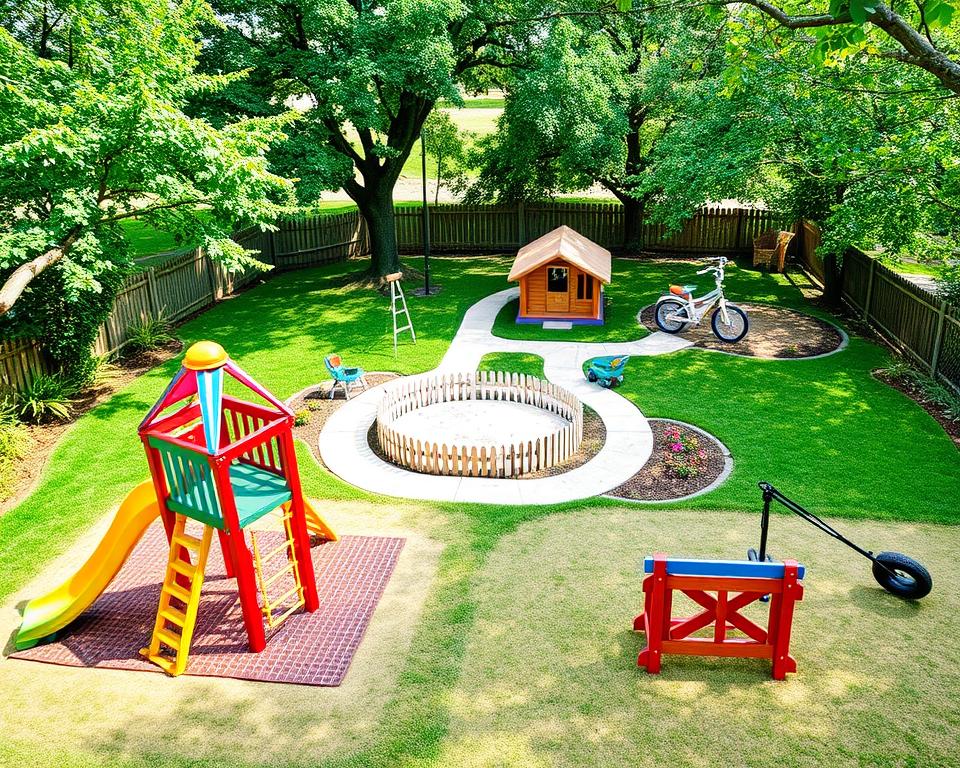
Designing a garden playground with distinct play zones can significantly enhance children’s outdoor play experience. By creating separate areas for different types of play, you can cater to the diverse needs of children and support their overall development.
Sensory and Quiet Spaces
Sensory and quiet spaces are essential for children to explore and engage with their surroundings in a calm environment. You can incorporate elements like herbs and textured plants to stimulate their senses. Adding features such as wind chimes and comfortable seating areas can further enhance these spaces, creating a peaceful retreat for children.
Active Play Areas
Active play areas are crucial for promoting physical development in children. These areas should encourage activities such as climbing, balancing, swinging, and running. By incorporating equipment like climbing frames, balance beams, and swings, you can create a dynamic play space that supports children’s physical health and coordination.
Creative and Imaginative Zones
Creative and imaginative zones are designed to foster role-play, artistic expression, and open-ended play scenarios. These areas can be equipped with materials like sand, water, and art supplies, allowing children to express their creativity freely. By providing such spaces, you can encourage children to engage in imaginative play, which is vital for their cognitive and emotional development.
By dividing your garden into different play zones, you can create a versatile play environment that supports various aspects of children’s development. Ensuring that these zones are appropriate for the ages and developmental stages of the children using them is crucial. Clearly defined spaces can lead to more engaged play and reduce conflicts between children, making your garden playground a more enjoyable and safe space for everyone.
Budget-Friendly Materials for Your DIY Playground
To make your DIY playground a reality without overspending, consider using cost-effective materials. You can create a fantastic play area by getting creative with what you already have and sourcing materials sustainably.
Natural Materials to Consider
Using natural materials like logs, stones, sand, and plants can be very cost-effective. These materials not only save you money but also blend well with the environment, creating a more natural play area. You can source these materials from tree services, landscaping companies, or even collect them from beaches or woodlands.
| Material | Source | Use |
|---|---|---|
| Logs | Tree services or woodlands | Climbing structures or seating |
| Stones | Landscaping companies or beaches | Decorative features or pathways |
| Sand | Beaches or construction sites | Soft landing surfaces or sandboxes |
Upcycled and Repurposed Items
Upcycled and repurposed items can add a unique touch to your playground while being budget-friendly. Consider using old tyres, wooden pallets, cable reels, and furniture to create play features. For instance, old tyres can be turned into swings or climbing structures, while wooden pallets can be used to build climbing walls or seating areas.
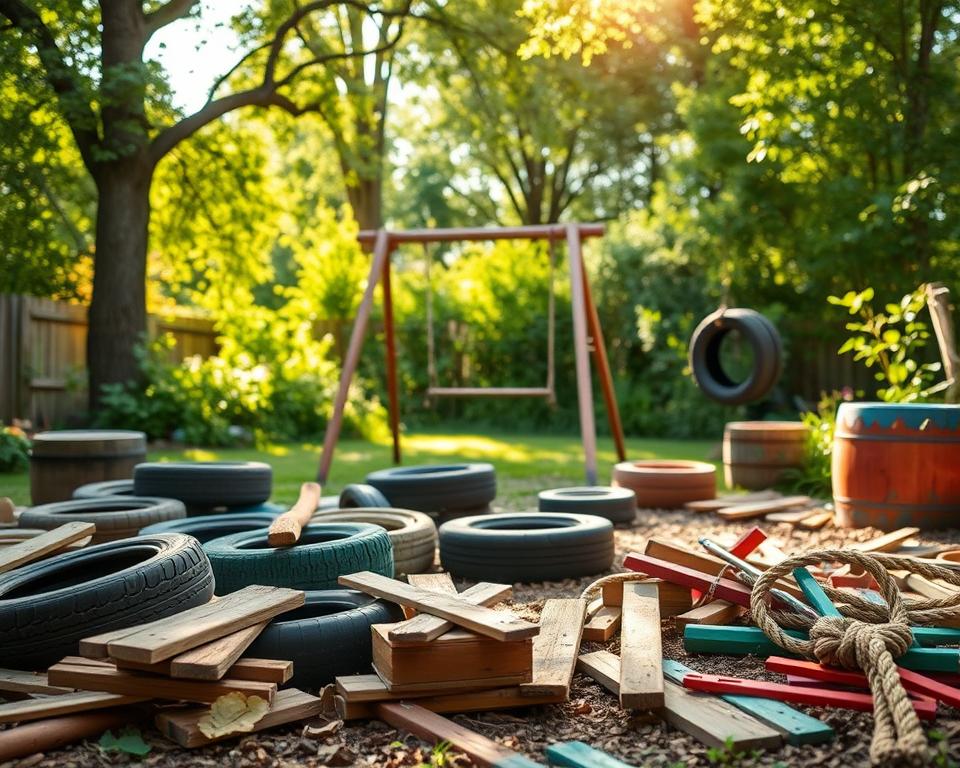
As the saying goes, “Waste is a resource that is not used properly.” Using upcycled materials not only saves money but also promotes sustainability. By choosing to repurpose items, you’re teaching children the value of creativity and environmental stewardship.
“The earth has enough for everyone’s need, but not enough for everyone’s greed.” – Mahatma Gandhi
When using any materials, ensure they are safe and durable for children’s play. Assess the condition of the materials and modify them as necessary to fit your playground design.
DIY Garden Playground Ideas: Tips for Your Backyard
With a little creativity, you can turn your garden into a fantastic playground that your kids will love. A well-designed playground can provide hours of entertainment and help develop essential physical skills in children.
Simple Climbing Structures
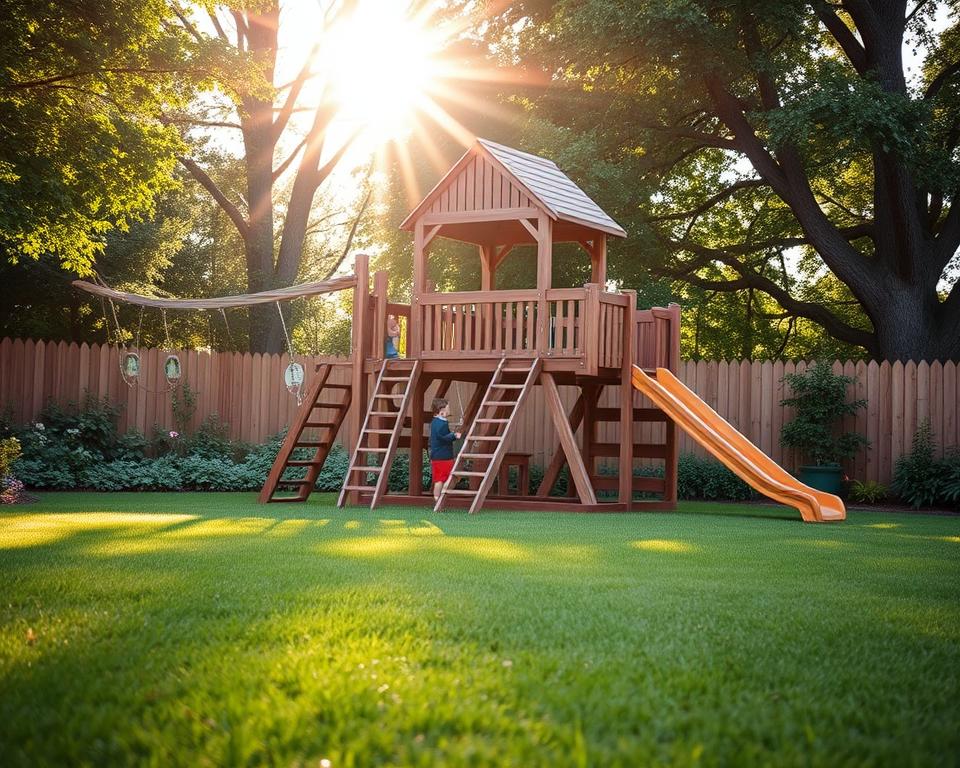
Simple climbing structures can be created using logs, wooden frames, or repurposed furniture. When building climbing equipment, it’s essential to consider the age of your children and ensure the structure is safe and stable. For younger children, a low-level climbing wall or a sturdy log can be an excellent option. For older children, you can create a more challenging climbing structure using wooden frames or ropes.
Balance Beams and Tightropes
Balance beams and tightropes are excellent for improving balance and coordination in children. You can create a balance beam using a wooden plank or a sturdy beam, securing it between two stable structures. A tightrope can be set up using a rope or a cable, anchored to two trees or sturdy posts. These features provide a fun way to challenge your children’s balance and agility.
Tyre Swings and Rope Features
Tyre swings and rope features are a great way to add movement and sensory experiences to your playground. You can create a tyre swing by hanging a tyre from a sturdy branch or a metal frame. Rope features, such as a rope ladder or a climbing rope, can be attached to a tree or a wooden structure. Ensure that all ropes and tyres are securely anchored to prevent accidents.
By incorporating these DIY garden playground ideas into your backyard, you can create a unique and engaging play area that will provide hours of fun and entertainment for your children. Remember to always consider safety and adapt the features to suit different age groups and abilities.
Building a DIY Slide and Climbing Frame
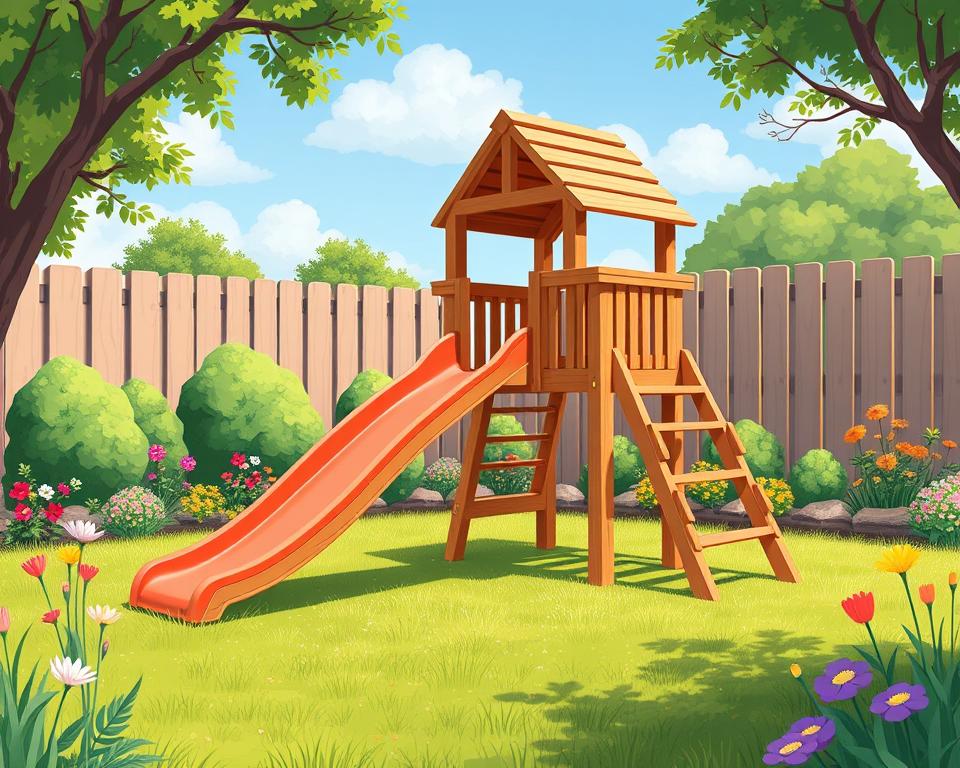
If you’re looking to add an exciting feature to your garden playground, building a DIY slide and climbing frame is an excellent choice. This project will not only provide a fun and challenging activity for your children but also enhance the overall aesthetic of your backyard.
Materials and Tools Needed
To start your project, you’ll need to gather the necessary materials and tools. The estimated cost for this project is around $336, depending on the specific materials you choose. You’ll need:
- 4 – 4x4x8 landscape timber ($32)
- 6 – 2x6x8 ($34)
- 17 – 2x4x8 ($85)
- 14 – 1x4x8 ($63)
- 3 – 2x2x8 ($10)
- 32 – 5/16″ carriage galvanized bolts ($64)
- 32 – 5/16″ galvanized nuts ($8)
- 32 – 5/16″ galvanized washers ($8)
- 8 – 4″ galvanized corner braces ($16)
- 2lb 3″ deck screws ($10)
- 1lb 1 ⅝” deck screws ($6)
- 2 ½” pocket hole screws for outdoor use
Ensure you have the necessary tools, such as a drill, saw, and wrench, to complete the project.
Step-by-Step Construction Guide
With your materials and tools ready, you can begin constructing your DIY slide and climbing frame. Start by building a sturdy base using the 4x4x8 landscape timber. Ensure the base is level and securely fastened to the ground.
Next, construct the climbing frame using the 2x4x8 and 2x6x8 lumber. Make sure to space the handholds appropriately and secure them with galvanized bolts and nuts.
Finally, attach the slide to the structure, ensuring a safe and secure angle. Use galvanized corner braces and deck screws to reinforce the attachment.
Creating Natural Sensory Play Spaces
You can easily transform your garden into a sensory haven by incorporating natural elements like sand, water, and mud. Sensory play is crucial for children’s development as it encourages exploratory play and engages their senses.

Sand and Water Play Areas
Creating sand and water play areas can be a simple and cost-effective way to enhance your garden playground. You can use reclaimed materials to create edging for your sandpit and cover it when not in use to keep it clean. For water play, consider using a storage bin or an old child’s wagon as a makeshift water table.
To make your water play area more engaging, you can add various objects like shells, stones, or even simple toys. This will encourage children to experiment and explore. Additionally, using rainwater collection systems can make your water play features more environmentally friendly.
| Material | Use | Benefits |
|---|---|---|
| Reclaimed wood | Edging for sandpit | Durable, eco-friendly |
| Storage bins | Water tables | Easy to clean, versatile |
| Rainwater collection systems | Water source | Environmentally friendly, cost-effective |
Mud Kitchens and Digging Patches
Mud kitchens are a fantastic way to encourage imaginative play and exploration. You can create a mud kitchen using old furniture, pallets, or a purpose-built frame with a reclaimed sink or container. Adding natural “ingredients” like leaves, twigs, and mud will enhance the play experience.
Digging patches allow children to explore the soil, discover bugs, and even plant their own flowers or vegetables. To contain the mess, consider edging your digging patch with reclaimed wood or stones.
By incorporating these natural sensory play spaces into your garden, you can provide your children with a unique and engaging play area that fosters creativity and exploration.
Child-Friendly Planting for Playgrounds
The right plants can transform your garden playground into a safe and engaging space for children to explore and play. When selecting plants, it’s crucial to consider both the safety and the play value they offer.
To create a child-friendly garden, you should focus on plants that are non-toxic and robust enough to withstand the rigors of play. This involves choosing plants that are suitable for your local climate and weather conditions.
Safe Plants for Children’s Areas
When it comes to selecting plants for areas where children play, safety is paramount. Opt for plants that are known to be non-toxic and avoid those with thorns or other hazardous features. Some examples of safe plants include:
- Grasses and wildflowers that are easy to maintain and provide a soft landing.
- Herbs like mint and chamomile that are not only safe but also offer sensory experiences.
- Flowering plants like sunflowers and zinnias that add color and vibrancy to the playground.
| Plant Type | Safety Features | Play Value |
|---|---|---|
| Grasses | Non-toxic, soft | Provides a natural hiding place |
| Sunflowers | No thorns, easy to grow | Creates a tall, impressive structure |
| Mint | Non-toxic, fragrant | Offers a sensory experience |
Creating Living Play Features with Plants
Plants can be used to create engaging and interactive play features in your garden playground. Ideas include willow tunnels, sunflower houses, and bean teepees. These features not only provide entertainment but also encourage imaginative play.
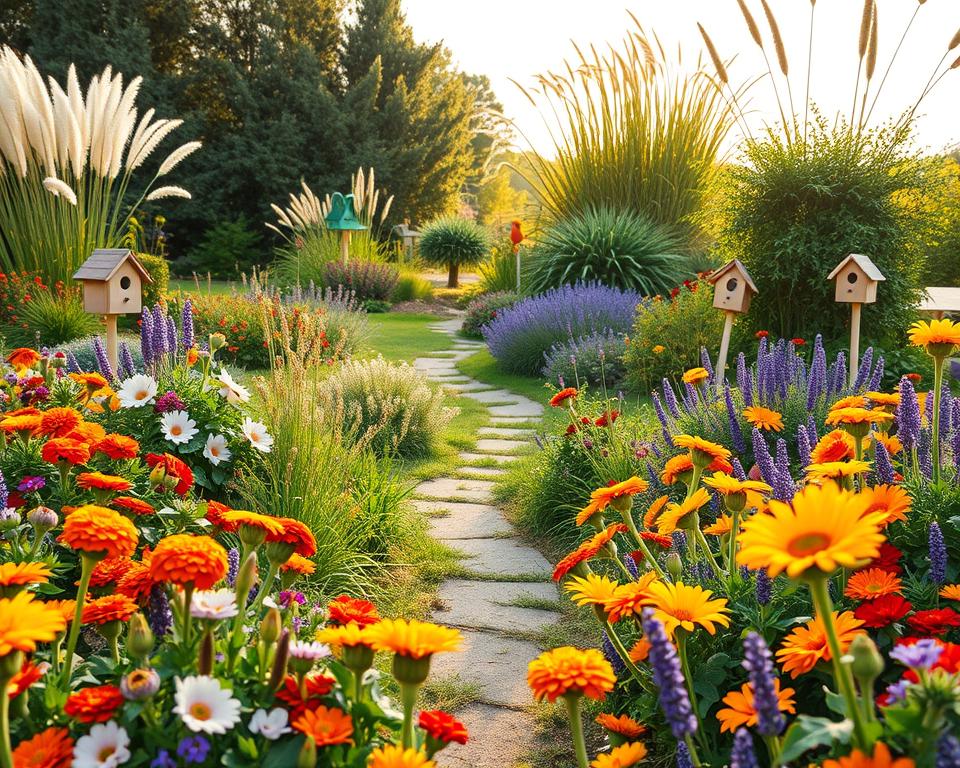
By incorporating child-friendly planting into your garden playground, you can create a space that is both fun and educational for children. Remember to involve children in the planting and maintenance process to enhance their connection with nature.
Safety Considerations for DIY Playgrounds
To build a DIY playground that is both fun and safe for your children, you need to focus on several safety aspects. Ensuring the safety of your playground is crucial for providing a secure play area for your kids.
Appropriate Materials and Construction
Selecting the right materials for your DIY playground is vital. You should make sure that all materials used are safe for outdoor use and suitable for children’s play. Consider using untreated wood or materials that are specifically designed for outdoor playgrounds. Proper construction techniques are also essential to ensure the structural integrity of the playground equipment.
When building your DIY playground, pay attention to the fastening methods and load-bearing considerations. Using the right screws, bolts, and other fasteners will help prevent accidents caused by structural failures.
| Material | Safety Features | Outdoor Durability |
|---|---|---|
| Untreated Wood | Natural, non-toxic | Moderate |
| Treated Wood | Resistant to rot and insects | High |
| Plastic | Easy to clean, durable | High |
Maintenance and Regular Safety Checks
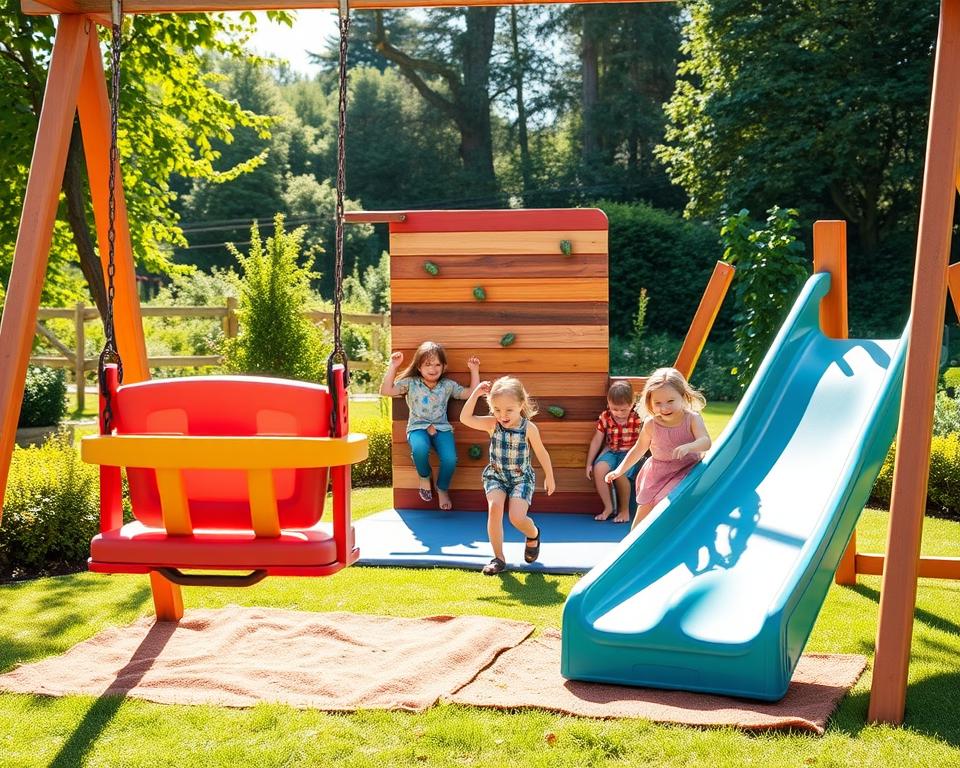
Regular maintenance is crucial to ensure the ongoing safety of your DIY playground. You should make sure to inspect the playground regularly for any signs of wear and tear, such as splinters, protruding fasteners, rot, or structural weakening. Creating a fall zone with impact-absorbing surfaces beneath climbing equipment and swings is also essential to minimize the risk of injury.
To maintain safety, involve your children in age-appropriate safety awareness without limiting their play experiences. For more complex playground structures or if you’re unsure about any safety concerns, consider seeking professional input.
Conclusion
By following the guidelines outlined in this article, you can create a unique and engaging play area that fosters your children’s imagination and development. The key points covered throughout this article have provided you with the necessary DIY garden playground ideas and tips to transform your backyard into a haven for outdoor play.
Creating natural play spaces offers numerous benefits for children’s development, encouraging imagination and a connection with nature. We encourage you to start with simple elements and gradually build your backyard playground as time and budget allow. It’s essential to balance safety considerations with opportunities for challenge and risk-taking in children’s play.
Involving children in the design and building process can create a truly engaging play area. Consider making seasonal adaptations to ensure the playground remains engaging throughout the year. We invite you to share your own DIY playground creations and ideas. A thoughtfully designed backyard playground can provide lasting memories and developmental benefits for your children.
FAQ
What is the best way to ensure my outdoor play area is safe for children?
To ensure your outdoor play area is safe, use soft landing materials like wood chips or rubber mulch under climbing structures, and make sure all equipment is securely anchored to the ground. Regularly inspect the area for hazards and perform maintenance tasks as needed.
How can I create a play space that caters to different ages and abilities?
Design a play space with different zones, such as active play areas with climbing structures and quiet spaces with sensory features. Incorporate a variety of textures, colours, and activities to engage children of different ages and abilities.
What are some budget-friendly materials I can use for my DIY playground?
Consider using natural materials like logs, stones, and sand, or upcycled items like old tyres and wooden pallets. These materials can be used to create a range of play features, from climbing structures to sensory play areas.
How can I incorporate water play into my outdoor play area?
You can create a water play area with a shallow pool or a splash pad, or incorporate water features like a mud kitchen or a rainwater harvesting system. Make sure to follow safety guidelines and regulations when installing water play features.
What types of plants are safe for children’s play areas?
Choose non-toxic plants that are resistant to damage and won’t cause allergic reactions. Consider using plants with different textures and colours to create a sensory experience. Avoid plants with thorns or sharp leaves.
How often should I inspect my DIY playground for safety hazards?
Regularly inspect your DIY playground, ideally every few months, or after extreme weather conditions. Check for damage, wear, and tear, and perform maintenance tasks as needed to ensure the play area remains safe.