DIY Log Store Ideas for Your Garden
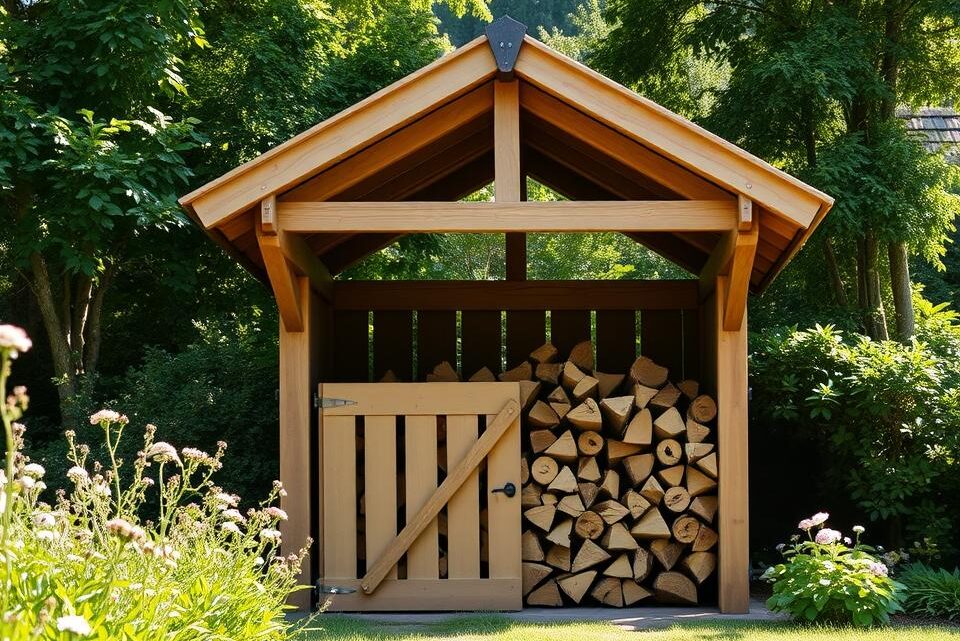
Proper timber storage is essential for homeowners with fireplaces or wood-burning stoves. Without adequate protection, quality firewood can deteriorate when exposed to rain and weather. This damages both the wood’s burning efficiency and the appearance of outdoor spaces.
A well-designed storage solution protects your timber investment while enhancing your garden’s appeal. It prevents moisture damage and unsightly clutter. Many people struggle with keeping their firewood organised and dry throughout the seasons.
Building your own storage unit offers both functional benefits and creative opportunities. This guide covers various approaches, from compact triangular designs to spacious shed combinations. Each project can be tailored to suit individual garden spaces and storage needs.
With proper guidance, constructing a practical and attractive wood storage system is an achievable goal. This comprehensive resource provides design inspiration, construction techniques, and maintenance practices. It demonstrates how a purpose-built solution can transform how you manage your firewood supply.
Inhaltsverzeichnis
Key Takeaways
- Proper wood storage prevents moisture damage and maintains fuel quality
- Well-designed storage enhances outdoor space organisation
- Custom builds can match specific garden layouts and requirements
- Various design options exist from simple racks to enclosed structures
- Construction requires basic tools and suitable materials
- Regular maintenance ensures long-term durability
- Good ventilation is crucial for drying and preserving timber
Understanding the Importance of Proper Log Storage
Effective timber preservation begins with understanding storage fundamentals. In the UK, regulations now require firewood to achieve 20% moisture content or less for burning. Freshly harvested timber typically needs about two years of seasoning before reaching optimal burn efficiency.
Preserving Log Quality and Preventing Decay
Improper storage leads to significant quality issues. When wood absorbs excess moisture, it becomes prone to decay, mould growth, and fungal infestations. These conditions render firewood practically unusable and reduce its heating capacity.
Elevating logs off the ground is crucial for preventing premature rot. Ground contact remains the primary cause of moisture absorption. Research shows that well-ventilated arrangements can accelerate drying by 30%, significantly reducing seasoning time.
Ensuring Optimal Air Circulation
Proper air circulation from all sides, including underneath, prevents moisture buildup. This promotes even drying throughout the wood pile. Dry timber burns longer, hotter, and more cleanly than damp alternatives.
It’s important to note that logs shouldn’t be stored beyond five years. Extended storage causes wood to lose heating value despite remaining dry. Following these principles ensures optimal moisture content when you store logs for future use.
DIY Log Store Ideas for Your Garden: Inspiring Designs
A well-conceived timber storage unit serves as both a practical asset and a stylish garden feature. This section explores various design ideas to suit different spaces and requirements.
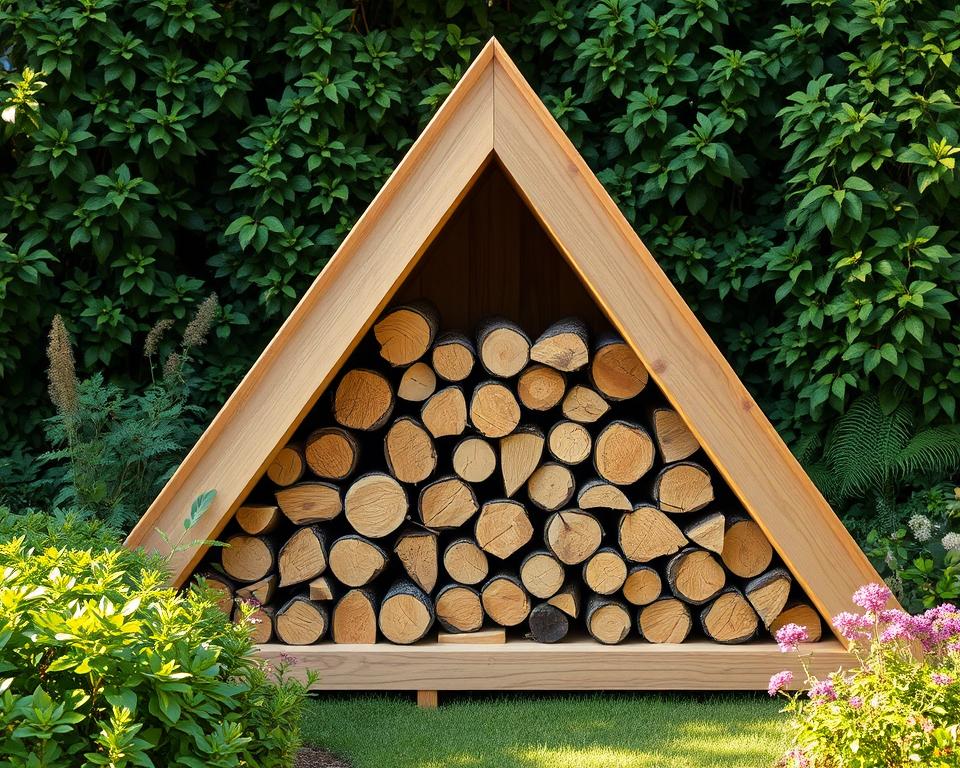
Triangular and Compact Designs
Triangular log stores offer excellent space efficiency. They fit neatly into corners, transforming awkward areas into functional storage.
These compact designs are ideal for smaller gardens. Their shape provides multi-shelf organisation and promotes superb airflow for drying timber.
“The most effective storage solutions are those that turn a problem into an opportunity, making the most of every inch.”
Shed and Storage Combos
Combination units provide a shed room alongside dedicated timber storage. This innovative approach saves space while offering secure tool storage.
The timber storage section typically features slatted walls for optimal ventilation. This design ensures wood remains dry and ready for use.
| Design Type | Best For Garden Size | Key Advantage | Ventilation Level |
|---|---|---|---|
| Triangular Store | Small to Medium | Maximises corner space | Excellent |
| Shed Combo | Medium to Large | Dual-purpose functionality | Very Good |
| Timber Log Box | Any Size | Compact and portable | Good |
Choosing the right size and style depends on individual needs and available space. Each option enhances garden organisation and timber preservation.
Essential Log Storage Principles and Best Practices
Following essential preservation techniques protects firewood quality throughout seasonal changes. These fundamental principles apply regardless of the storage method chosen.
Elevating Logs off the Ground
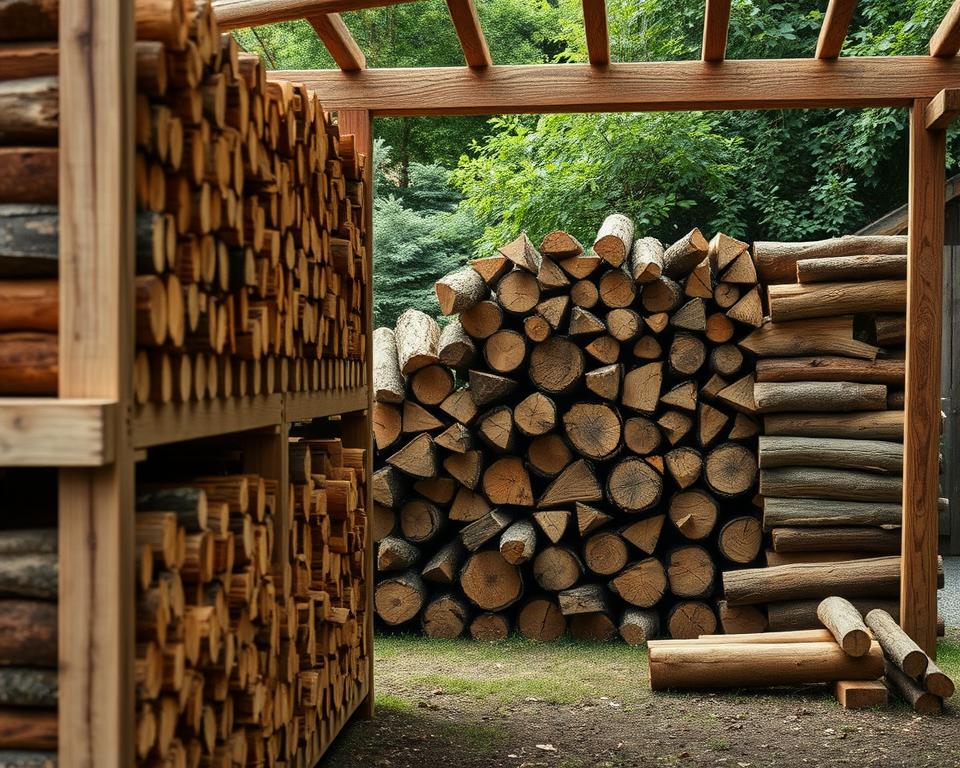
Raising timber at least 200-300mm above the surface is critical. Direct ground contact promotes moisture absorption and accelerates decay. Simple supports like concrete blocks or treated timber create this essential elevation.
This method significantly reduces the risk of insect infestations. It also prevents water pooling during wet weather. Proper elevation is the first step to keeping logs dry.
Stacking Patterns to Promote Airflow
Strategic stacking allows air to circulate freely between pieces. Alternating layers with gaps prevents moisture buildup. This approach reduces mould and fungal growth risks substantially.
Bark-upward orientation helps shed rain naturally. Uniform patterns maintain stability while maximising air exposure. Proper circulation is vital for preserving timber quality.
| Stacking Technique | Airflow Quality | Stability Level | Drying Efficiency |
|---|---|---|---|
| Alternating Layers | Excellent | High | Very Good |
| Uniform Rows | Good | Very High | Good |
| Circular Stack | Very Good | Medium | Excellent |
Selecting a well-drained location complements these stacking methods. Avoid low-lying areas where water might accumulate. These combined practices ensure timber remains in optimal condition.
Selecting the Right Materials and Tools
The success of any construction project hinges on the quality of its components. Choosing appropriate materials and tools is paramount for building a durable and functional timber storage solution.

High-quality materials ensure the structure withstands harsh British weather. They protect the valuable wood stored within.
Pressure-Treated Timber and Construction Timbers
Pressure-treated timber is essential for longevity. It resists rot and insect damage far better than untreated wood. This specific timber can last 15-20 years outdoors, compared to just 3-5 years for untreated alternatives.
Even when painting is planned, this treatment is crucial. It provides a robust foundation for the entire build.
A typical materials list includes various timber sizes for different purposes. Substantial 100x50mm foundation wood provides a stable base. Construction timber, like spruce or pine, forms the main frame.
Smaller pieces, such as 22x22mm battens, are used for attaching slatted panels. These allow for excellent ventilation.
“Investing in the right materials from the start saves considerable time and expense on future repairs.”
The roof often uses a corrugated metal sheet for weatherproofing. Foundation blocks and gravel create a stable, well-drained base.
Essential Tools and Safety Equipment
Having the correct tools makes the construction process smoother and safer. Accurate measuring tools are vital for precise cuts.
Saws are needed to cut timber to the correct lengths. Drills are used for pilot holes and driving various screws.
Safety must be a priority. When using power tools like chainsaws, appropriate protective gear is non-negotiable.
This includes helmets, cut-protection trousers, and safety boots. These items protect the builder during the project.
| Component Type | Examples | Primary Purpose | Key Consideration |
|---|---|---|---|
| Structural Timber | 100x50mm, 76x50mm | Frame and support | Pressure-treated for durability |
| Fixings | Countersunk screws | Assembly | Various sizes for different loads |
| Foundation | Concrete blocks, gravel | Stable base | Prevents ground moisture |
| Safety Gear | Helmet, boots, trousers | Personal protection | Essential for power tool use |
Investing in quality materials and tools, though initially costing around £400-450, ensures a long-lasting and effective storage solution.
Planning Your Log Store: Location and Siting Considerations
The positioning of a timber storage unit directly influences its performance and longevity. Careful site selection ensures optimal drying conditions while protecting wood from weather elements.
Choosing a South-Facing Site
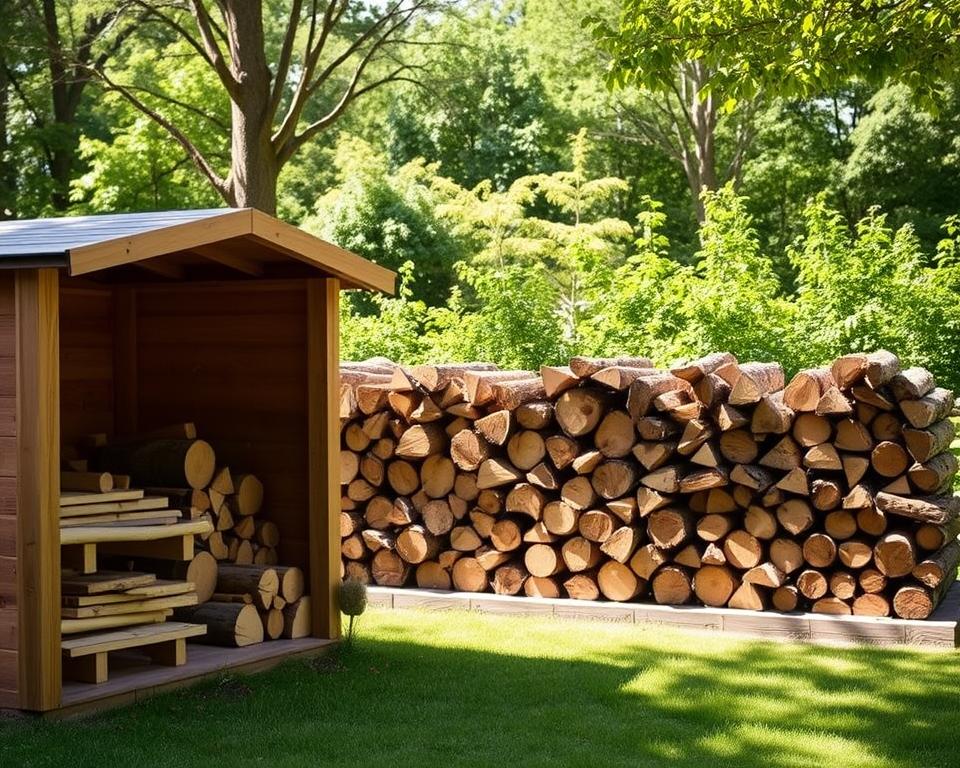
In the UK, prevailing winds typically arrive from the west. This makes a south-facing orientation ideal for open-fronted timber storage. Such positioning provides maximum protection from rain, wind, and snow.
A spot on the south side of the house receives abundant solar warmth. This natural heat actively draws moisture from stored timber. It creates the perfect environment for maintaining dry, ready-to-burn firewood.
When building against a wall or fence, maintain at least 100mm clearance. This gap ensures sufficient air circulation behind the structure. Proper ventilation prevents moisture buildup and promotes even drying.
The roof should slope forward rather than backward. This design ensures rain runs off the front, away from stored timber. Forward-sloping roofs prevent water from running down back walls.
Positioning with the open front facing east or south-east offers significant advantages. This orientation can reduce direct rain exposure by up to 70%. It also provides excellent protection from prevailing westerly winds.
Consider practical access when selecting your site. Ensure wheelbarrow or trolley access from the storage area to the house. This makes firewood transport convenient throughout the year.
Avoid low-lying areas where water might accumulate. Choose locations with natural drainage away from the structure. Proper site drainage is essential for long-term timber preservation.
Balance proximity to the home with safety considerations. The location should be conveniently accessible yet maintain appropriate distance from structures. Thoughtful placement enhances both functionality and garden aesthetics.
Step-by-Step Construction Guide for a Durable Log Store
Building a long-lasting firewood enclosure demands systematic construction from the ground up, starting with a solid base. The process ensures proper ventilation and protection from the elements.
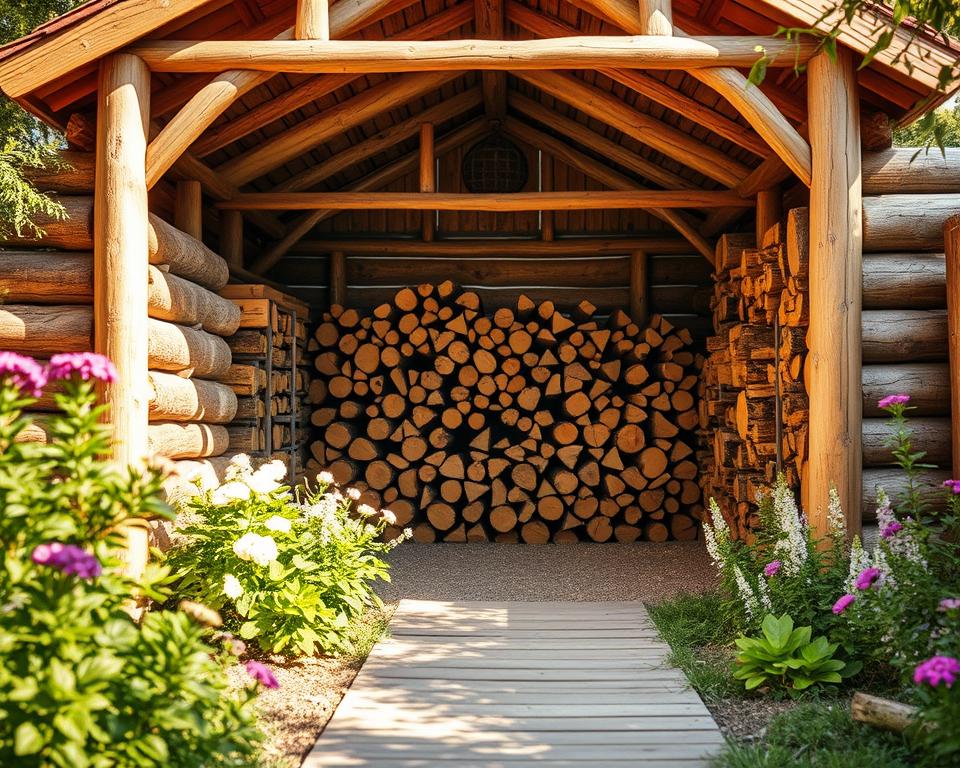
Building the Stable Base
Begin by levelling the ground and clearing all vegetation. Use stakes and string to mark the precise perimeter. Dig holes 30cm deep plus the height of decking blocks.
Compact the earth at hole bottoms before adding 20cm of gravel followed by 10cm of crushed stone chippings. Set the decking blocks so they protrude no more than 1cm from the ground.
Constructing Walls and Roof for Maximum Protection
Create the elevated base frame using three 1-metre beams cut from 50x100mm timber. Slot these into the decking block recesses. Build a rectangular floor frame using 76x50mm construction timber.
Install uprights at 1350mm for the front and 1225mm for the rear, creating the essential roof slope. Add floor planking using evenly spaced 69x22mm laths.
Construct side wall panels from the same laths attached to 22x22mm square timber frames. Build the roof frame and attach corrugated sheeting or OSB covered with roofing felt.
This comprehensive approach typically takes 1-3 days to complete, depending on experience level. The result is a professional-quality structure that properly protects stored wood.
Maximising Storage Space with Vertical and Customised Designs
Homeowners with limited outdoor areas can greatly benefit from strategic approaches to timber storage. Building upwards rather than outwards offers a smart solution.

Tall, narrow structures make excellent use of vertical space. This design philosophy allows for substantial capacity without consuming excessive ground area.
Implementing Tall, Narrow Designs
A custom-built unit measuring 2500mm wide, 1200mm deep, and 1800mm high demonstrates this principle. In a two-bay configuration, it holds over 2.2 cubic metres of firewood.
This size offers more than double the storage of typical commercial kits. The narrow profile improves vertical airflow significantly.
Warm air naturally rises through the stack, drawing moisture upwards and out. This process reduces moisture content effectively, preventing decay.
Elevating the floor 300mm off the ground is crucial. It provides optimal airflow from all directions. This height also reduces bending during log retrieval.
Customisation allows adaptation to specific spaces. Narrow side passages or unusual corner locations can be utilised efficiently.
Multi-bay designs offer practical advantages. They enable separation of wood types or seasoning stages within one structure.
Following a 2:1 length-to-depth ratio maximises storage while maintaining stability. This approach ensures firewood remains organised and accessible.
Such a log store proves that limited space need not limit capacity. With careful planning, even small gardens can accommodate substantial wood piles.
Maintaining Dry Firewood: Techniques and Safety Measures
The transition from properly seasoned timber to ready-to-burn fuel depends on vigilant moisture control practices. Consistent monitoring ensures wood reaches optimal conditions for efficient combustion.

Monitoring Moisture Content Effectively
Digital moisture gauges provide accurate readings of wood dryness. UK regulations require firewood to achieve below 20% moisture content for clean burning. Wet timber absorbs 40-50% more water during rainy periods.
This excess moisture significantly reduces heating efficiency. Damp wood produces more smoke and creosote buildup. Properly dried material burns hotter and cleaner.
Homeowners should test several pieces from different stack areas. Consistent readings below 20% indicate readiness for the stove. Hardwoods need longer seasoning but offer superior heat output.
Regular Inspections and Log Rotation
Weekly checks help identify mould, insect activity, or decay early. Loose stacking with small gaps maintains essential air circulation. This arrangement continues the seasoning process during storage.
Rotate stock systematically, using older wood first. This practice ensures a continuous supply of properly dried material. Bringing small quantities indoors before burning reduces surface moisture.
Maintain stable stacks to prevent collapse hazards. Keep appropriate distances from structures and contain sparks effectively. These safety measures protect both property and users.
Innovative Enhancements and Finishing Touches
Beyond the basic framework, several finishing touches can elevate a timber storage unit from purely functional to both durable and aesthetically pleasing. These final steps protect the investment and integrate the structure seamlessly into the garden landscape.
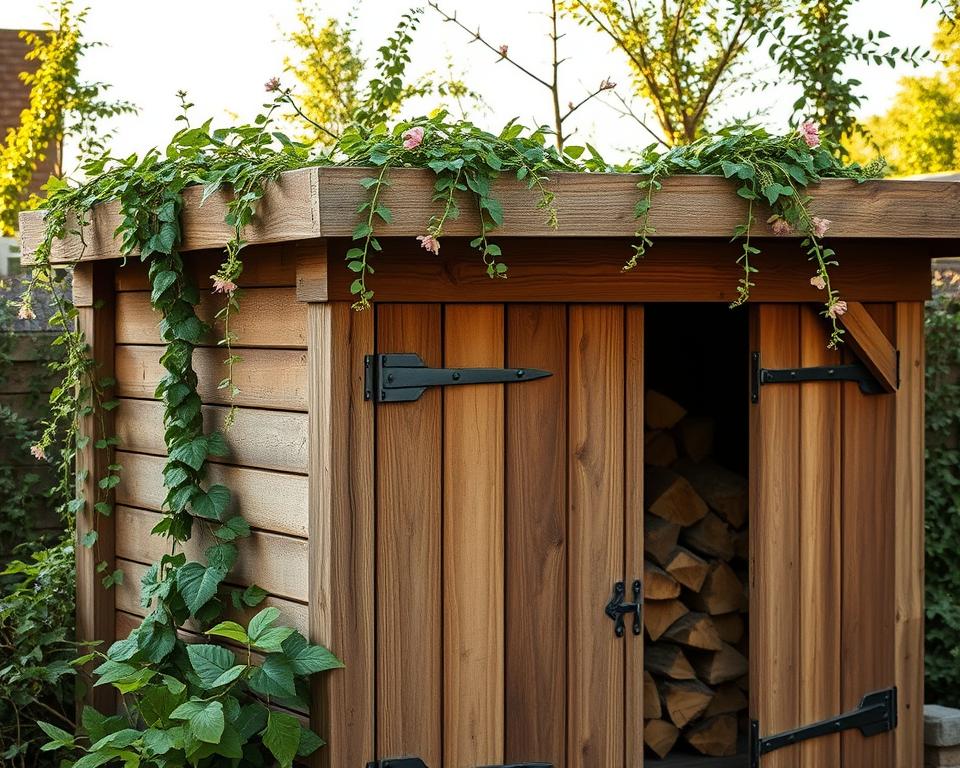
Painting and Weatherproofing
Applying a protective coat is crucial for longevity. For slatted structures, spray application offers significant advantages over traditional brushing.
It achieves 30% better coverage and dries much faster. Using a sprayable fence paint in colours like black allows for quick, even coats with minimal mess.
Dark colours help the wood structure blend into the background. Upgrading the roof protection is also wise.
Thicker roofing felt provides superior weather resistance. A front overhang of 150-200mm offers optimal rain shelter.
| Method | Coverage | Drying Time | Best For |
|---|---|---|---|
| Spray Application | Excellent | Fast | Slatted designs |
| Brush Application | Good | Slow | Solid panels |
Additional Support and Ventilation Upgrades
For those storing heavy loads, reinforcing the floor frame with extra cross-pieces adds crucial support. This prevents sagging over time.
Enhancing air circulation is another key upgrade. Adding adjustable vents or more slatted sections improves airflow without letting in rain.
If using pre-treated timber, maintenance is minimal. Seasonal tasks include brushing leaves off the roof in autumn and removing moss in spring.
Practical additions like tool hooks or a small shelf for kindling can also be incorporated. These things boost functionality significantly.
Boosting Garden Aesthetics with a Stylish Log Store
A thoughtfully designed timber storage solution can significantly enhance a garden’s visual appeal. It transforms a purely functional item into an attractive feature that complements the overall landscape.
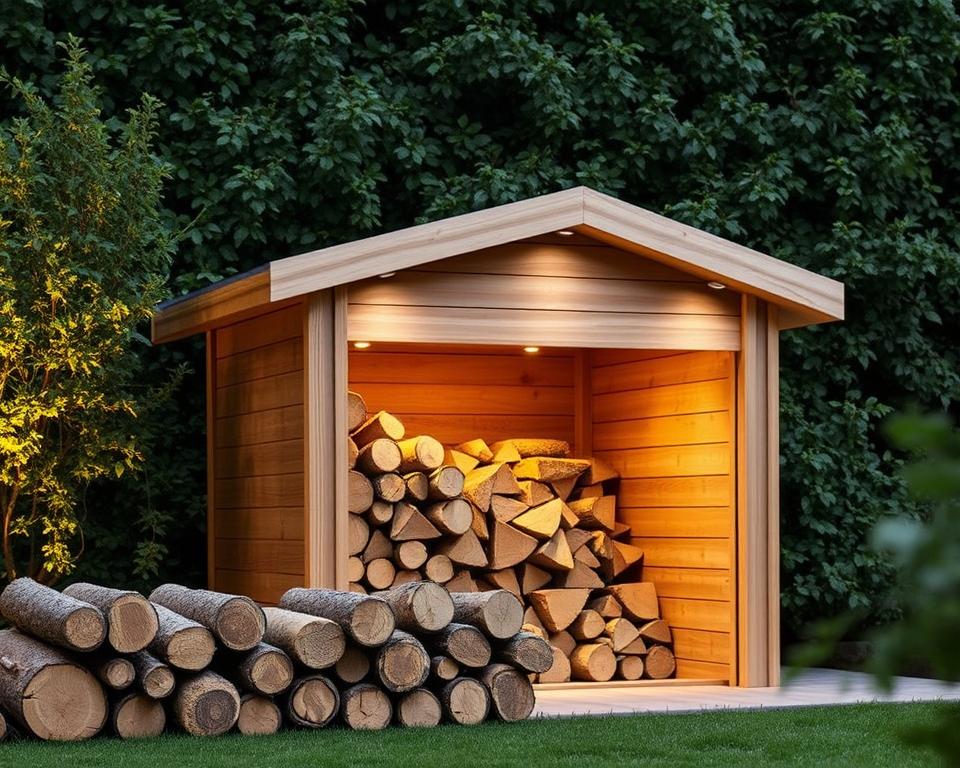
When positioned strategically, these structures create natural focal points. They draw the eye while serving their practical purpose effectively.
Complementing Garden Landscaping
Choosing materials and colours that coordinate with existing features creates harmony. A timber unit can match fencing or other wooden elements beautifully.
Geometric shapes like triangular designs offer architectural interest. They efficiently utilise corner spaces that might otherwise remain empty.
“The best garden storage doesn’t just hide things away—it becomes part of the view itself.”
These units can screen utility areas or define different garden zones. Placing them near patios keeps firewood accessible for outdoor heating.
| Garden Style | Recommended Finish | Ideal Placement | Visual Impact |
|---|---|---|---|
| Cottage Garden | Natural timber stain | Among planting beds | Rustic charm |
| Contemporary | Painted finish | Near architectural features | Clean lines |
| Traditional | Weathered treatment | Against boundary walls | Established look |
Neatly stacked wood creates appealing textures that change throughout the year. This seasonal variation adds ongoing visual interest to outdoor spaces.
Conclusion
Constructing a purpose-built shelter for firewood represents a significant step towards efficient home heating. This project combines practical benefits with the satisfaction of creating something durable. It provides a dedicated place to store firewood in optimal conditions.
The core principles remain essential. Elevation prevents ground moisture. Good ventilation ensures proper drying. A sturdy build with quality materials guarantees longevity. These ideas form the foundation of any successful log store.
A custom diy log store offers superior value over commercial options. It provides more storage capacity for a comparable investment. The wood stays dry, achieving the required moisture content for an efficient fire in your stove.
Ultimately, this way to organise logs enhances any outdoor space. It protects your fuel supply and adds an attractive feature to the garden. With careful planning, anyone can create a functional and pleasing storage solution.
FAQ
Why is it crucial to keep logs off the ground in a storage structure?
Elevating logs prevents ground moisture from seeping into the wood, which can lead to rot and make the timber unsuitable for burning. It also discourages pests and improves air circulation around the entire stack.
What is the single most important feature for a log store’s design?
Excellent air circulation is paramount. A well-ventilated structure allows moisture to escape, ensuring logs dry effectively and remain in prime condition for use in a wood-burning stove or fireplace.
Can a log store be attached to the side of a house?
While possible, caution is advised. There must be a suitable non-combustible barrier, such as a brick wall, between the stored firewood and the house. A freestanding unit placed a short distance away is often a safer and more effective option.
How can one check if firewood is ready to burn?
The most reliable method is to use a moisture meter. Well-seasoned wood typically has a moisture content below 20%. Visually, dry logs often have cracks in the grain and make a hollow sound when knocked together.
What materials are recommended for building a long-lasting log store?
Pressure-treated timber is highly recommended for its resistance to decay and insects. For the roof, durable materials like corrugated bitumen sheets or felt provide excellent protection from rain and snow.
How does the stacking method affect the drying process?
Stacking logs loosely with gaps between them, rather than tightly packing them, significantly improves airflow. This technique allows moisture to evaporate more efficiently, speeding up the drying process.
Is it necessary to paint or treat a log store?
Applying a protective stain or paint can extend the life of the timber by shielding it from the elements. It also offers an opportunity to match the store to existing garden furniture or landscaping features.
What size should a log store be?
The ideal size depends on the amount of firewood used annually. It should be large enough to hold a full season’s supply while allowing for adequate air movement. Many people find a structure that holds one to two cubic metres is sufficient.