Greenhouse Hydroponic Guide: Expert Tips and Techniques

Growing plants without soil might sound like science fiction, but it’s a practical reality with hydroponics. This method uses nutrient-rich water solutions instead of traditional soil. It offers significant advantages for modern gardeners.
When combined with a protective structure, this approach becomes even more powerful. The enclosed environment shields crops from harsh weather and pests. It also maintains ideal temperature and humidity levels for optimal growth.
This comprehensive resource introduces readers to revolutionary cultivation methods. Even those without gardening experience can successfully implement these systems. The guide covers everything from basic concepts to advanced techniques.
Readers will discover how to create an efficient, space-saving growing operation. The focus is on practical application with expert tips grounded in real-world experience. The structured learning journey covers system types, equipment selection, and ongoing maintenance.
Inhaltsverzeichnis
Key Takeaways
- Hydroponics eliminates soil by using nutrient-rich water solutions
- This method is highly efficient and saves valuable space
- Combining with a protective structure enhances plant growth conditions
- Environmental controls protect crops from weather and pests
- The system allows for year-round cultivation
- Beginners can successfully implement these techniques
- Practical guidance covers setup through maintenance
Introduction to Hydroponics in a Greenhouse
At its core, hydroponic gardening bypasses soil entirely to nourish plants more directly. This innovative approach delivers essential nutrients through water solutions straight to the root systems. The method represents a significant advancement in modern cultivation techniques.
What is Hydroponic Gardening?
Hydroponic cultivation involves suspending plant roots in oxygenated water containing dissolved nutrients. This eliminates competition from weeds and other plants for space and nourishment. Crops can focus their energy entirely on vigorous growth and development.
The efficiency advantages are substantial. Research shows this method uses 90% less water than traditional agriculture. It requires 99% less land while producing yields 20 times greater per unit area.
Five essential elements form the foundation of any successful hydroponic system. Water provides hydration and root support. Oxygen prevents root drowning while nutrients supply vital elements like nitrogen and phosphorus. Root bases offer physical support, and light enables photosynthesis.
While the concept may appear complex initially, the underlying principles are straightforward. This accessibility makes soil-free gardening suitable for beginners seeking efficient cultivation methods.
Understanding Hydroponic Systems and Setups
Various cultivation methodologies exist for delivering nutrients directly to plant roots without traditional soil. Each approach offers distinct advantages for different growing scenarios and experience levels.

Six primary categories dominate modern soil-free agriculture. These include Deep Water Culture, drip systems, Nutrient Film Technique, ebb and flow, wick systems, and aeroponics.
Nutrient Film Technique (NFT)
The Nutrient Film Technique employs a continuous flow of nutrient solution over plant roots. Plants sit in slightly angled trays, allowing water to drain back to the reservoir.
This system creates a thin film that contacts only the root tips. The concentrated nutrient delivery makes NFT highly efficient for commercial-scale operations.
Deep Water Culture (DWC)
Deep Water Culture represents the simplest entry point for beginners. Plant roots remain fully submerged in oxygenated water reservoirs at least 1.5 feet deep.
Air pumps or stones provide essential oxygenation directly to the root systems. DWC’s versatility supports heavy fruiting plants and root vegetables exceptionally well.
| System Type | Complexity Level | Best For | Key Feature |
|---|---|---|---|
| Deep Water Culture | Beginner | Heavy plants, root vegetables | Fully submerged roots |
| Nutrient Film Technique | Advanced | Commercial lettuce, herbs | Continuous thin film flow |
| Drip System | Intermediate | Various crops | Precise nutrient delivery |
| Ebb and Flow | Intermediate | Flexible applications | Flood and drain cycles |
| Wick System | Beginner | Small plants, herbs | Passive operation |
| Aeroponics | Expert | High-value crops | Mist-based nutrient delivery |
Greenhouse Hydroponic Guide: Expert Tips
New cultivators should approach their first project with methodical planning to ensure sustainable success. Professional guidance helps beginners avoid common mistakes while building confidence in their abilities.
Expert Recommendations for Beginners
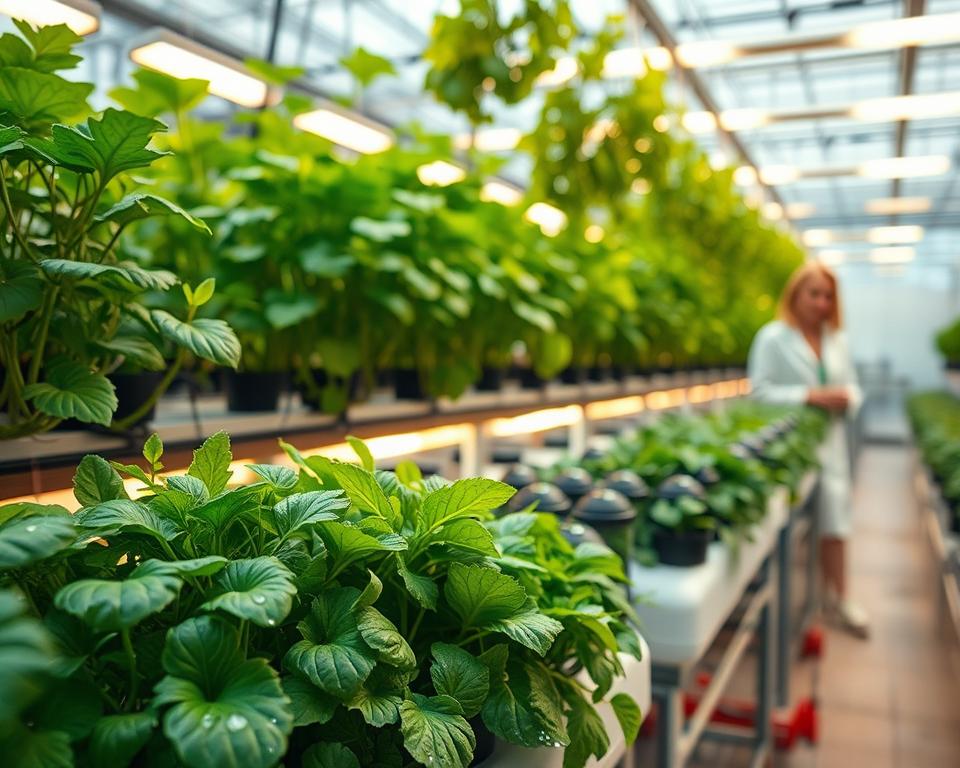
When designing an initial setup, growers must consider five critical dimensions. These include desired outcomes, target yields, available space, budget constraints, and maintenance capacity.
The choice of plants significantly influences system selection. Leafy greens like lettuce require different configurations than fruiting plants such as tomatoes. Beginners should match crop selection to their experience level.
Starting with modest systems proves more effective than ambitious over-commitment. A single tray of lettuce provides invaluable learning experiences without overwhelming newcomers. This approach allows growers to master fundamentals before expanding.
One urban farmer successfully cultivated nearly 100 heads of lettuce despite having no prior gardening experience. This demonstrates that hydroponics remains accessible even to complete novices. Proper planning and realistic expectations pave the way for successful growth.
Expert advice emphasises choosing appropriate crops for initial projects. Simpler plants like herbs and lettuce outperform demanding varieties for beginners. This strategic approach builds foundational skills while delivering satisfying results.
Selecting the Ideal Greenhouse and Equipment
The choice of protective structure and accompanying apparatus significantly influences crop outcomes. Not all enclosures suit soil-free cultivation equally. Key features demand careful consideration during selection.
Choosing the Right Structure
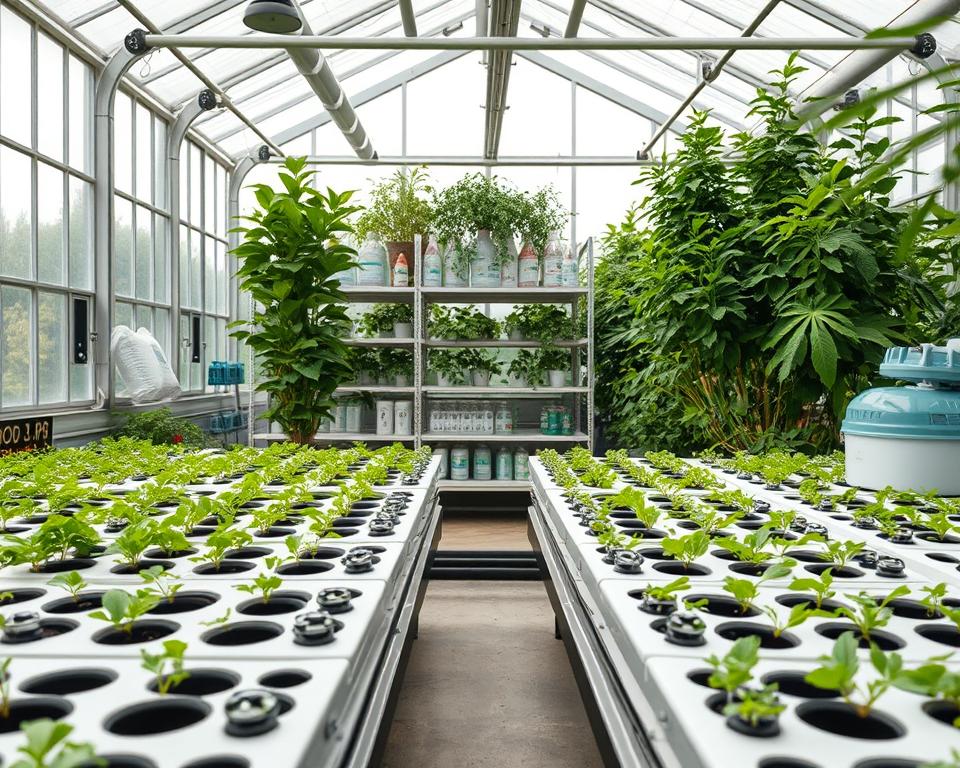
Light transmission represents a critical factor. Materials should allow ample natural illumination while filtering harmful UV radiation. Superior diffusion ensures even light distribution throughout the day.
Proper ventilation prevents mould and regulates temperature. Adjustable windows and vents maintain optimal airflow. Structural durability withstands diverse weather challenges.
Heavy-duty galvanised steel frames offer reliable strength. They support systems through seasonal changes without compromising integrity.
Essential Equipment Overview
Nutrient delivery mechanisms form the operational heart. They supply perfect nutrient balance with regular adjustments. Water reservoirs store and circulate nutrient-rich solutions.
Sizing guidelines recommend approximately one gallon per plant. Clean, contaminant-free containers prevent algae growth. Lighting solutions balance natural and artificial sources.
Energy-efficient LED grow lights supplement sunlight. Correct positioning ensures consistent photosynthetic activity. Climate control equipment manages environmental factors.
| Equipment Type | Primary Function | Key Considerations | Recommended Features |
|---|---|---|---|
| Lighting System | Photosynthetic support | Intensity, spectrum, duration | Full-spectrum LED, adjustable height |
| Climate Control | Environmental regulation | Temperature, humidity, airflow | Automated sensors, programmable settings |
| Nutrient Delivery | Plant nourishment | Concentration, frequency, pH | Precise dosing, easy monitoring |
| Water Reservoir | Solution storage | Capacity, material, cleanliness | Opaque material, easy access |
These components form an integrated system rather than isolated elements. Proper selection creates harmonious growing conditions. The right choices maximise cultivation success.
Choosing the Right Crops for Hydroponic Gardening
The success of any cultivation operation hinges on choosing suitable botanical specimens. Different vegetation types respond uniquely to nutrient-rich water environments. Growers must match their selections to both experience level and system capabilities.

Certain plants demonstrate exceptional adaptability to controlled environments. Their growth patterns and nutritional requirements align perfectly with soil-free systems. This compatibility ensures reliable results for cultivators at all skill levels.
Best Crops for Beginners
New growers achieve the greatest success with leafy greens. Lettuce varieties offer rapid growth cycles and compact space requirements. Spinach similarly thrives with minimal intervention.
Herbs represent another excellent starting point. Basil, mint, and parsley provide quick rewards. Their modest root systems adapt well to various setups.
These beginner-friendly crops share important characteristics. They feature fast growth rates and forgiving nature. Compact size allows efficient space utilisation.
For experienced growers, more demanding options become viable. Tomatoes and peppers require greater attention but offer substantial yields. Strawberries and cucumbers present rewarding challenges.
Root vegetables generally prove less suitable for initial attempts. They demand specialised monitoring and system configurations. Beginners should focus on higher-success-probability plants first.
Essential Equipment, Nutrients and Growing Mediums
Beyond the basic framework of cultivation systems lies the crucial trio of equipment, nutrients, and growing mediums. These elements work together to create optimal conditions for plant development. Quality components make the difference between mediocre and exceptional results.

Grow Lights and Climate Controllers
Full-spectrum LED grow lights provide concentrated energy perfect for plant growth. Positioning is critical—close enough for intensity but far enough to prevent burning. These lights offer superior energy efficiency and spectrum completeness.
Climate control equipment maintains ideal environmental conditions. Ventilation fans ensure proper air circulation while heaters combat cold periods. Humidifiers and dehumidifiers manage moisture levels for optimal growth.
Selecting Nutrient Solutions
Understanding and mixing nutrients is fundamental to the process. These solutions come in liquid or powder form and contain essential elements like nitrogen, phosphorus, and potassium. The NPK ratio forms the foundation of plant nutrition.
Growers should follow mixing instructions carefully and adjust concentrations based on growth stages. A well-balanced nutrient solution in water provides everything plants need for vigorous development.
Various growing medium options support roots while allowing nutrient access. Rock wool, clay pebbles, and coconut coir prevent root drowning whilst providing structural stability. The right medium bridges the gap between water-based nutrition and plant support.
Step-by-Step Hydroponic System Setup in Your Greenhouse
Implementing a soil-free cultivation arrangement requires careful preparation and systematic execution. This process ensures optimal conditions for plant development from the very beginning.

Preparing the Greenhouse
Thorough cleaning forms the essential first step. Remove all debris and sanitise surfaces with mild disinfectant to eliminate potential contaminants.
This prevents pests and diseases from affecting new crops. Proper ventilation installation follows, with fans placed to promote consistent air circulation.
Installing the System
Equipment arrangement demands strategic planning. Position the water reservoir for easy access during maintenance cycles.
Secure all connections in the nutrient delivery system. Ensure the pump operates efficiently within the planned setup.
This organised approach facilitates routine monitoring and adjustments. Growers can easily access components throughout the cultivation cycle.
System Testing and Calibration
Before introducing plants, conduct comprehensive trials. Run water through the entire system to check for leaks.
Calibrate pumps, timers, and sensors for precise operation. Start with a small-scale trial using hardy crops like leafy greens.
This validation phase confirms the setup functions correctly. It builds confidence before full implementation of the hydroponics operation.
Optimising Water and Nutrient Management
Mastering the delicate balance of water and nutrients is fundamental to a thriving soilless garden. Proper management separates productive operations from those that struggle. This involves precise mixing and smart recycling.

A key advantage of these methods is their incredible water efficiency. Traditional soil-based gardening suffers from water loss through runoff and evaporation. In a closed-loop system, water is contained and recirculated.
Plants absorb only what they need, and the controlled environment minimises evaporation. This approach can use up to 90% less water than conventional agriculture. It is a highly efficient way to cultivate plants.
Mixing Nutrient Solutions
Creating the perfect nutrient solution requires careful attention. Growers must follow mixing instructions precisely. The sequence of adding components can affect the final mixture.
It is crucial to adjust the solution for different plant growth stages. Vegetative growth requires a different nutrient balance than the fruiting phase. Regular testing with pH and EC metres ensures the solution remains optimal.
Ignoring these steps can lead to deficiencies. This compromises plant health and yield.
Efficient Water Recycling
The heart of water efficiency is the reservoir. It should hold approximately one gallon per plant. Using dark-coloured, non-toxic materials prevents algae growth.
Position the reservoir for easy cleaning and refilling. Over time, nutrient solutions degrade and need complete replacement. This prevents salt accumulation and nutrient lockout.
Monitoring helps spot issues like pH drift early. Corrective measures can then be taken before crops suffer damage.
| Aspect | Key Practice | Benefit |
|---|---|---|
| Solution Mixing | Precise measurement & staging | Prevents nutrient imbalances |
| Water Recycling | Closed-loop circulation | Uses significantly less water |
| Reservoir Management | Dark, accessible containers | Reduces algae, eases maintenance |
| Solution Monitoring | Regular pH & EC testing | Maintains optimal plant health |
Managing Climate, Light and Environmental Control
The ability to manipulate climate parameters directly impacts plant development and yield quality. Environmental management strategies create optimal conditions for consistent growth within protected cultivation systems.
Proper environmental control ensures that all factors work together harmoniously. This approach leads to healthier crops and better results.
Natural and Artificial Lighting Strategies
Effective lighting balances natural sunlight with supplemental artificial sources. Growers should maximise natural light when available. Energy-efficient LED lights provide consistent illumination during darker periods.
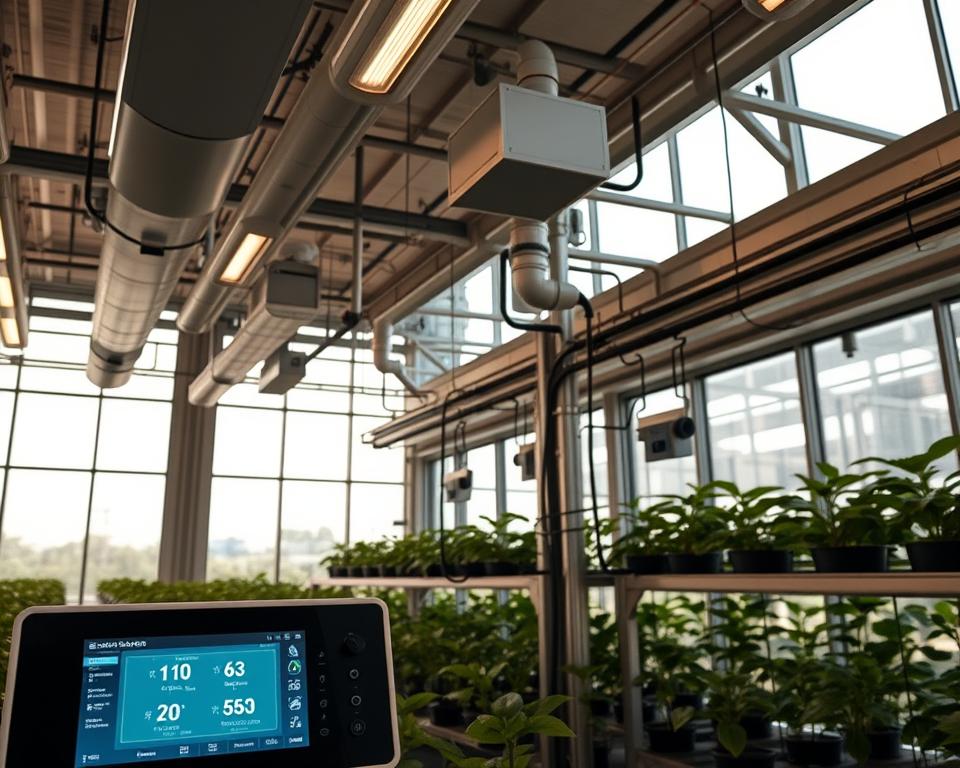
Positioning is crucial for optimal light exposure. Lights should hang at appropriate distances to prevent burning. Most plants require 12-16 hours of daily illumination.
Ventilation and Humidity Control
Proper air circulation prevents stagnant conditions that encourage disease. Ventilation systems regulate temperature and humidity levels effectively.
Adjustable windows and vents help manage environmental factors. Automated sensors maintain stability without constant manual intervention. This consistency directly influences crop quality and resistance.
| Environmental Factor | Optimal Range | Monitoring Equipment | Adjustment Methods |
|---|---|---|---|
| Light Intensity | 400-800 µmol/m²/s | PAR metre | Light height adjustment |
| Temperature | 18-26°C | Digital thermometer | Ventilation, heating |
| Humidity | 50-70% RH | Hygrometer | De/humidifiers |
| Air Circulation | 0.5-1.0 m/s | Anemometer | Fan speed control |
Routine Maintenance and Troubleshooting Challenges
A proactive maintenance schedule prevents minor issues from escalating into major problems. Consistent care ensures the system operates at peak performance, supporting healthy plants.
Growers should establish a clear routine. Weekly tasks include cleaning filters and checking for pests. Monthly procedures involve a thorough system clean and nutrient solution replacement.

Preventing Algae Growth
Controlling algae growth is crucial for system health. Algae competes with plants for nutrients and can clog the pump.
The primary defence is light exclusion. Use dark-coloured, opaque materials for the reservoir. Keeping the water container covered effectively stops algae growth.
Pest and Disease Management
Vigilance is key for pest and disease management. Sticky traps help monitor flying insects. Keeping the area clean is the best preventive measure.
At the first sign of trouble, organic solutions like neem oil are recommended. They address the issue without contaminating the system. This protects the plants and the water quality.
Regular monitoring with pH and EC metres allows growers to spot nutrient imbalances early. This proactive approach supports robust growth and helps plants grow vigorously. Addressing deficiencies quickly maintains the health of the entire hydroponics setup.
Innovative Techniques and Future Trends in Hydroponics
Forward-thinking growers are embracing cutting-edge innovations that redefine traditional farming boundaries. The field continues to evolve with remarkable speed.
Emerging Hydroponic Technologies
Aeroponics represents a significant advancement in cultivation methods. Roots remain suspended in air while receiving nutrient-rich mist. This technique enables vertical pillar designs that maximise space efficiency.
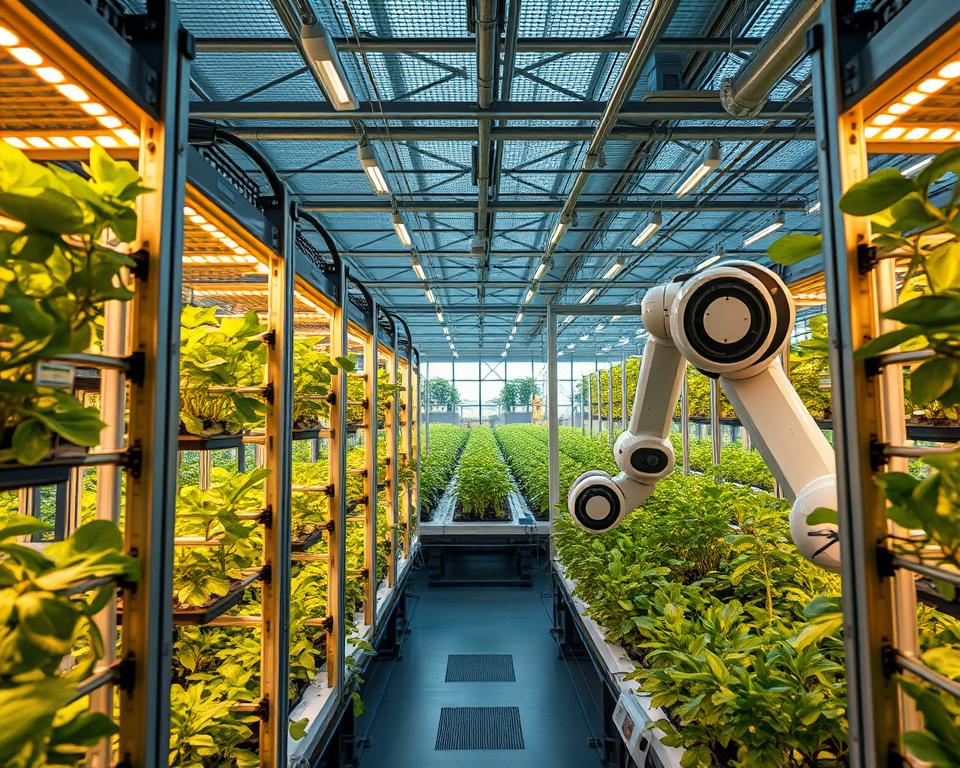
Automation is transforming how growers manage their operations. Timers and sensors streamline routine tasks. IoT integration allows remote monitoring and adjustments from anywhere.
Commercial operations increasingly adopt vertical farming approaches. Multiple growing levels stack production capacity dramatically. This addresses urban space constraints effectively.
LED lighting systems continue to improve in efficiency and spectrum control. New formulations target specific crop requirements at different growth stages. Water recycling technologies push conservation boundaries further.
| Technology | Key Benefit | Adoption Level | Space Efficiency |
|---|---|---|---|
| Aeroponic Towers | Maximum oxygen exposure | Growing | Excellent |
| IoT Monitoring | Remote control capability | Early adoption | N/A |
| Vertical Farming | High density production | Commercial scale | Outstanding |
| Advanced LEDs | Energy efficiency | Widespread | Good |
| Smart Nutrients | Crop-specific formulas | Developing | N/A |
These innovations demonstrate the dynamic nature of modern cultivation. The technology continues to advance, offering growers increasingly sophisticated tools for optimal plant development.
Resources, Tips and Additional Insights
Successful cultivation often benefits from accessing diverse learning materials beyond initial guidance. This compilation points growers toward valuable resources for ongoing development and problem-solving.
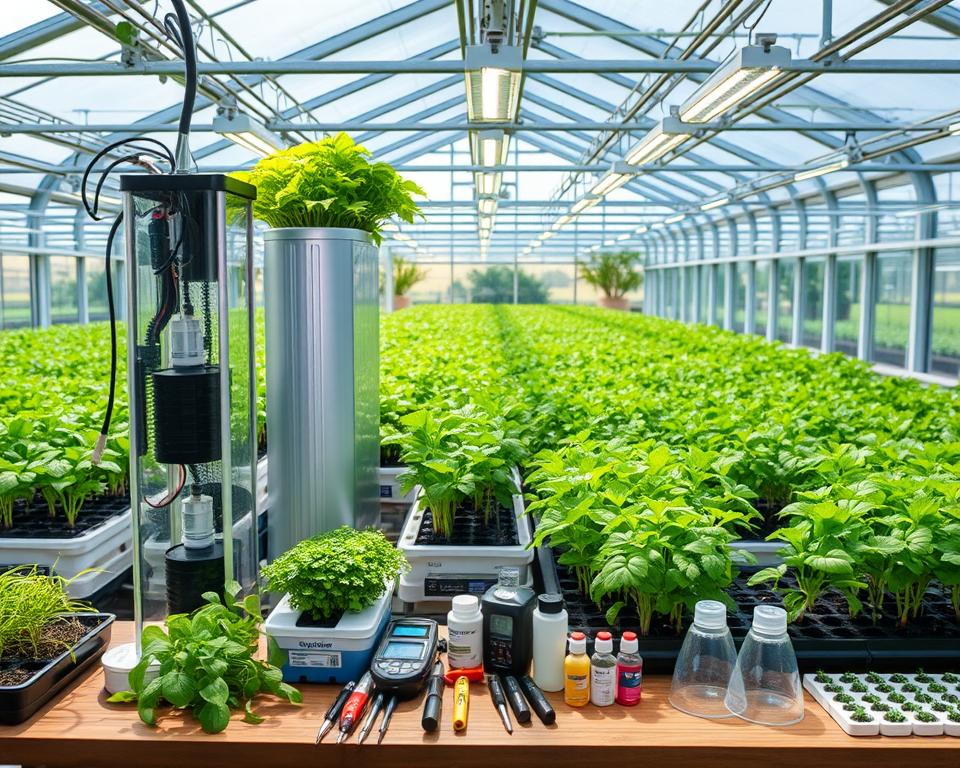
Online communities offer peer support where experienced practitioners share practical tips. Manufacturer documentation provides detailed specifications for specific equipment. These options help troubleshoot common issues in various setups.
Further Reading Suggestions
Agricultural extension services deliver research-based information, often freely available. Video platforms feature visual demonstrations of maintenance procedures. Comprehensive books offer deeper technical knowledge for serious enthusiasts.
Visiting operational facilities provides real-world context that complements theoretical learning. Many suppliers offer starter kits containing pre-selected components. This simplifies initial purchases for those beginning their garden journey.
The most effective approach involves starting with simple system configurations. Gradual expansion follows as confidence and competence grow. Hands-on experience remains irreplaceable, but these resources provide crucial support.
| Resource Type | Primary Benefit | Accessibility Level | Best For |
|---|---|---|---|
| Online Forums | Real-time peer support | High | Troubleshooting specific issues |
| Technical Documentation | Equipment-specific guidance | Medium | Optimising system performance |
| University Extension Services | Research-backed information | High | Scientific understanding |
| Video Demonstrations | Visual learning | High | Setup and maintenance procedures |
| Reference Books | Comprehensive knowledge | Medium | Deep technical understanding |
Conclusion
This approach to cultivation represents a significant step forward in efficient food production. It combines the protective benefits of a controlled environment with the precision of soil-free growing. This powerful combination allows gardeners to maximise yields while conserving vital resources.
The initial setup requires careful planning and investment. Regular monitoring is essential for success. However, the rewards are substantial for dedicated growers.
Faster harvest cycles and year-round production are achievable. This method supports more growth in less space. It also uses water with remarkable efficiency.
Success hinges on thoughtful system design and consistent maintenance. A willingness to learn from experience is crucial. This journey begins with simple setups and grows with the gardener’s confidence.
Ultimately, this method offers a sustainable solution to modern agricultural challenges. It empowers individuals to produce high-quality crops efficiently. The knowledge gained here provides a solid foundation for a thriving and productive garden.
FAQ
What is the primary advantage of using a hydroponic system?
The main advantage is efficient resource use. These systems allow plants to grow without soil, often using less water than traditional methods. They provide direct access to water nutrients, which can lead to faster growth and higher yields.
Which crops are most suitable for beginners in hydroponics?
Leafy greens like lettuce and spinach are excellent choices for novices. These plants are generally hardy, have a shorter growth cycle, and adapt well to various systems, making them ideal for initial setups.
How does the Nutrient Film Technique function?
This technique involves a thin film of nutrient solution flowing continuously over the roots of plants. The roots absorb what they need while the excess liquid returns to the reservoir, creating a highly efficient and oxygenated environment.
What is the role of a growing medium in these systems?
A growing medium provides physical support for the plant’s root system. Unlike soil, it does not supply nutrition but instead anchors the plant and helps maintain moisture and oxygen around the roots.
Why is controlling algae growth important?
Algae competes with plants for nutrients and oxygen, which can hinder plant development. Managing light exposure to the nutrient solution and maintaining a clean system are key to preventing algae issues.
Are special lights necessary for a hydroponic setup?
Yes, grow lights are often essential, especially in a greenhouse where natural light may be insufficient. They provide the specific light spectrum required for photosynthesis, ensuring healthy plant growth.
What is a common mistake to avoid when mixing a nutrient solution?
A frequent error is incorrect concentration. Over or under-dosing can stress plants. It is crucial to follow manufacturer instructions precisely and regularly check the solution’s pH and electrical conductivity levels.
Can a deep water culture system be used for larger plants?
A> While deep water culture is superb for leafy greens and herbs, larger, heavy-fruiting plants like tomatoes may require more robust support and aeration. Systems like drip irrigation or ebb and flow are often better suited for larger crops.