Discover How Tall Should a Pergola Be? Ideal Height Guide
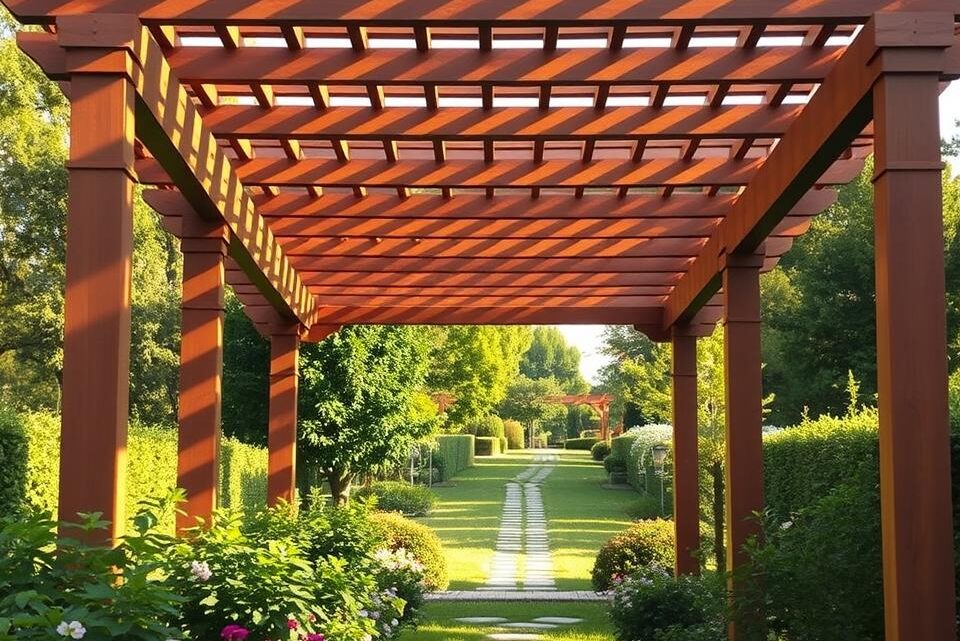
Choosing the correct height for a pergola is a crucial decision for any garden project. It directly influences the structure’s visual impact and practical use. Getting this element right ensures the pergola becomes a harmonious and valuable addition to your outdoor space.
The height of a pergola affects more than just its appearance. It determines the amount of sun protection offered and the quality of air circulation beneath the structure. Proper proportions are essential for creating a comfortable and inviting area.
This guide explores the key considerations for determining the ideal pergola height. It covers standard measurements, important regulations, and customisation options. The goal is to help you make an informed decision that balances aesthetics, function, and personal preference for your specific garden.
Inhaltsverzeichnis
Key Takeaways
- Correct pergola height is fundamental to both aesthetics and function.
- It significantly influences sun exposure and ventilation in the outdoor space.
- Proportional harmony with the garden and surrounding structures is essential.
- Planning must consider practical needs and personal design tastes.
- Adherence to local building regulations may be necessary.
- Proper height planning prevents the structure from feeling overwhelming.
- This guide provides a comprehensive overview to support your decision.
Understanding Pergolas and Their Role in Outdoor Living
A pergola fundamentally transforms a garden into a more structured and inviting environment. This garden feature consists of vertical posts that support cross beams and an open lattice roof. Its design cleverly filters sunlight, creating a pleasant, dappled shade underneath.
The primary function of a pergola is to define an outdoor living space. It provides a partial covering for walkways, seating areas, or dining spots. The structure also serves as a perfect support for climbing plants like vines and roses.
Unlike a solid-roofed gazebo, the open-top design is intentional. It allows for excellent air circulation and a unique interplay of light and shadow. This makes the space feel open yet comfortably sheltered.
Definition and Functionality
Constructed from wood, metal, or vinyl, pergolas can be freestanding or attached to a building. The choice of material affects both durability and aesthetic appeal. Each option offers distinct advantages for long-term use.
The versatility of a pergola is one of its greatest strengths. It extends the usable space of a property, creating a seamless transition between indoors and outdoors. This addition significantly enhances the overall living experience.
Design Trends in Modern Outdoor Spaces
Contemporary gardens often feature pergolas as central design elements. They act as focal points for relaxation and entertainment. Modern trends lean towards clean lines and minimalist structures.
Biophilic design, which integrates natural elements, is increasingly popular. Homeowners use pergolas to support lush greenery, blending architecture with nature. Multi-functional designs are also in vogue.
These structures may include integrated lighting, heaters, or retractable covers. This adaptability allows for year-round enjoyment of the outdoor space. The intended use directly influences the ideal proportions for the build.
| Feature | Pergola | Gazebo | Arbour |
|---|---|---|---|
| Roof Type | Open lattice | Solid roof | Often arched |
| Primary Function | Partial shade & support | Full shelter | Decorative entrance |
| Typical Size | Larger structure | Enclosed space | Smaller feature |
Factors Determining the Perfect Pergola Height
Determining appropriate measurements involves evaluating several key elements in the garden space. Multiple factors influence the final dimensions of this outdoor feature.

Space and Structural Considerations
The intended use significantly affects the required height. A compact dining area for two people may suit a 10′ x 10′ structure. Larger entertainment spaces near pools often need dimensions like 16′ x 20′.
Structural requirements also impact the overall height. Concrete footings in freeze-prone areas require additional post length. This accounts for ground stability throughout seasonal changes.
Impact of Roofline and Surrounding Architecture
The existing house architecture plays a crucial role in height decisions. The roofline should harmonise with the new structure’s proportions. Window sightlines must remain unobstructed for visual appeal.
Local regulations and neighbourhood agreements may impose restrictions. Checking with relevant authorities ensures compliance with community standards.
| Intended Use | Recommended Size | Height Considerations |
|---|---|---|
| Intimate Dining | 10′ x 10′ | Standard clearance for seating |
| Poolside Coverage | 16′ x 20′ | Higher clearance for movement |
| Entertainment Area | 20′ x 20′ | Maximum height for proportion |
Building Regulations and UK Height Guidelines
UK property owners must consider official building regulations when determining pergola dimensions. These rules ensure structures are safe and respectful of neighbours. Compliance is crucial to avoid legal issues.

Legal Height Limits for Freestanding and Attached Pergolas
Under Permitted Development Rights, most garden structures do not need planning permission if they meet specific criteria. For freestanding pergolas, the maximum height is typically 2.5 metres. This applies to structures built at ground level.
If a freestanding structure is elevated, perhaps on a deck, the limit increases to 3 metres. An attached pergola, fixed to the main property, also has a maximum height of 3 metres.
Proximity to Boundaries and Planning Permissions
The location of the structure relative to boundaries is critical. Pergolas within 2 metres of a boundary must not exceed 2.5 metres in height. This rule helps maintain light and privacy for adjacent properties.
If the structure is more than 2 metres from the boundary, the 3-metre limit applies. The roof type also influences allowances. A dual-pitched roof can reach 4 metres, while flat roofs are limited to 3 metres.
| Structure Type & Location | Maximum Height | Planning Permission |
|---|---|---|
| Freestanding (ground level) | 2.5 metres | Usually not required |
| Freestanding (elevated) / Attached | 3 metres | Usually not required |
| Within 2m of boundary | 2.5 metres | Usually not required |
Special regulations apply to listed buildings and conservation areas. For listed properties, planning permission is always mandatory. In conservation areas, size restrictions may apply. It is highly advisable to consult your local planning authority before starting any project.
How Tall Should a Pergola Be? Tips for Customised Design
Finding the right dimensions for an outdoor structure involves balancing practical needs with aesthetic harmony. This section provides specific measurements to answer the central question of ideal proportions.
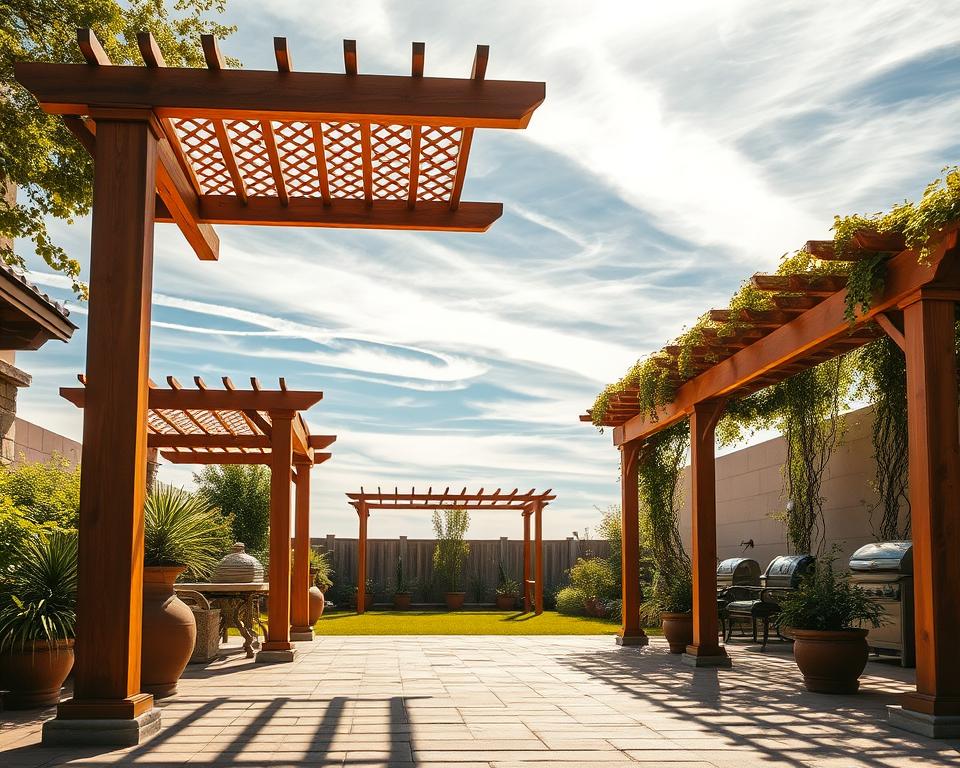
Custom Options for Tailored Outdoor Spaces
A standard pergola height typically falls between eight and twelve feet. It is crucial to remember that an eight-foot head clearance often results in a total structure height of nearly ten feet once beams and rafters are included.
Three primary categories guide most projects. An eight-foot ceiling suits small, attached structures for intimate gatherings. Ten feet is the versatile standard, accommodating accessories like fans.
For a larger pergola, a twelve-foot height ensures better proportion and scale. The absolute minimum should be seven feet for comfortable standing room.
- Too High: Reduces protection from sun and rain.
- Too Low: Compromises air ventilation and brightness.
Modern designs with integrated lighting or aluminium frames often demand higher ceilings. Companies like Azenco Outdoor offer custom solutions, such as the R-BLADE™ with adjustable louvres for perfect shade control.
Integrating Pergola Height into Your Outdoor Living Area
The successful integration of a pergola into an outdoor living space hinges on thoughtful height selection that complements the entire property. This approach ensures the structure feels like a natural part of the home, not an afterthought.
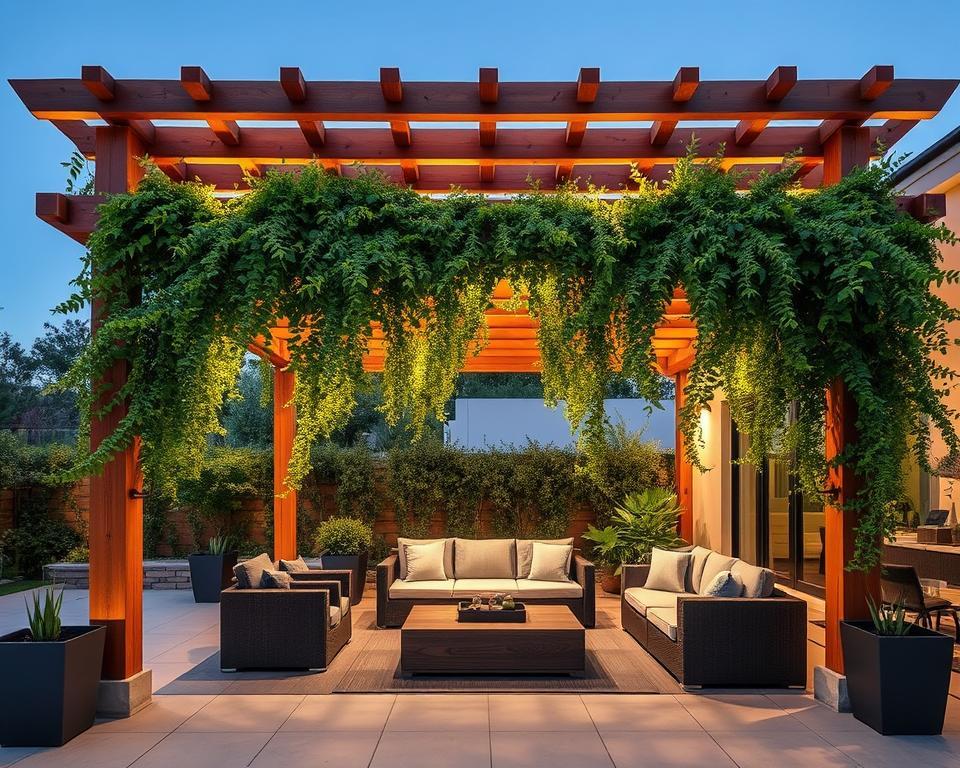
Enhancing Aesthetics and Functionality
For an attached structure, the existing roofline and window dimensions are paramount. The goal is to avoid beams obstructing views, which dictates the final size. A well-chosen height preserves the architectural character of the house.
Custom design offers the flexibility to achieve this seamless extension. It allows for adjustments that blend structural elements perfectly. This creates a cohesive and visually appealing area.
Practical Layout and Furniture Considerations
Furniture planning directly influences the minimum comfortable clearance. A standard dining table and chairs require ample headroom for standing and moving around the space. This practical need must be balanced with the desired aesthetic.
Different functions demand different proportions. An intimate dining area may suit a cosier feel, while a larger entertainment space benefits from greater airiness. The intended use of the room is a key driver.
| Outdoor Living Function | Recommended Minimum Height | Key Considerations |
|---|---|---|
| Intimate Seating/Dining Area | 2.4 metres (8 feet) | Cosy atmosphere, standard furniture clearance |
| General Entertainment Space | 3 metres (10 feet) | Accommodates fans, lights, and free movement |
| Grand-Scale Pergola with Climbers | 3.6 metres (12 feet) | Better proportion for large space, room for plants |
Ultimately, the ideal height harmonises aesthetics with the function of your living space. It creates a comfortable, inviting, and beautifully integrated outdoor living space.
Expert Advice and Practical Considerations
Executing a successful garden structure project requires careful planning and professional input. Seeking expert advice early on can make a significant difference to the final outcome.
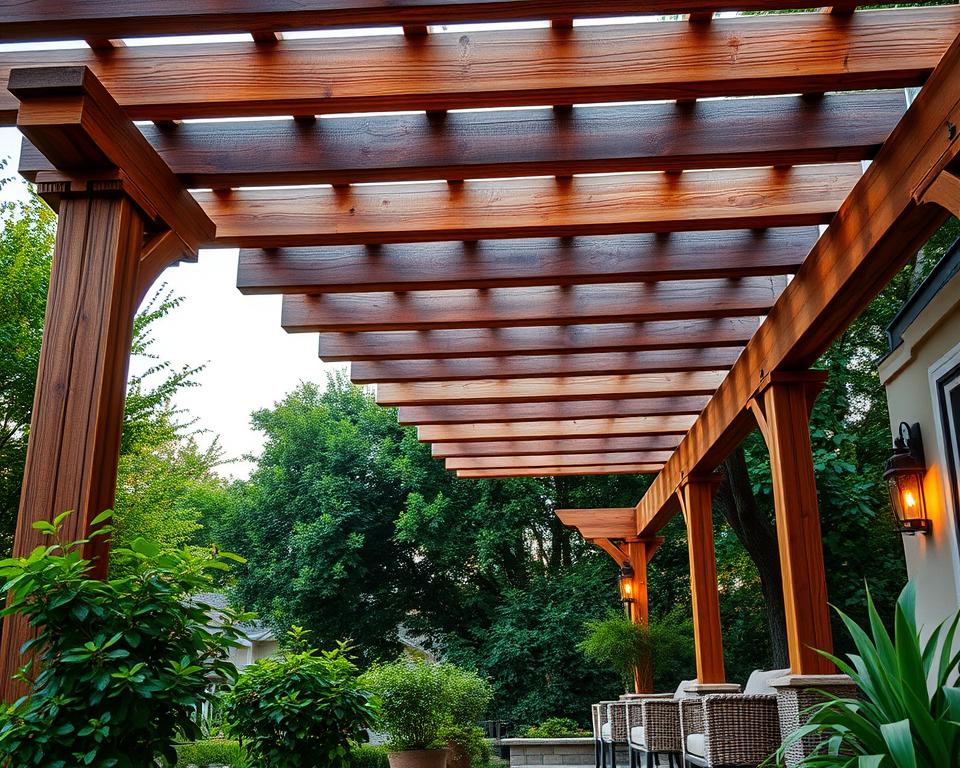
Partnering with an experienced contractor is the best way to ensure a perfect result. Their experience in local installations guarantees the structure meets specific site requirements and regulations. This professional insight is invaluable for navigating complex decisions.
Consulting with Experienced Contractors
Before starting any work, it is wise to check with the local homeowner association. This association often has specific rules about design, height, and aesthetics. Understanding these guidelines from the outset prevents costly changes later.
A knowledgeable professional helps select the right roof type and materials. They consider factors like integrating climbing plants and long-term maintenance. This guidance is crucial for creating a durable and beautiful living space.
Material Choices and Weather-Resistant Features
Choosing robust materials is fundamental to a long-lasting build. Treated wood, metal, or vinyl are excellent choices built to withstand the elements. These materials form the foundation of a weather-resistant structure.
Applying protective finishes and using weather-resistant fasteners further enhances durability. For added protection, consider a retractable canopy or side curtains. These features shield the area from rain and intense sun.
Innovative designs can even support solar panels, merging shade with renewable energy. With the right planning, a simple framework can be converted into an enclosed outdoor room. This versatility makes it a superb addition to any garden.
Conclusion
Achieving the perfect pergola proportions transforms ordinary gardens into extraordinary living spaces. The careful consideration of height ensures these structures become valuable extensions of the home.
Successful planning balances standard measurements with local regulations and architectural harmony. Each property presents unique opportunities for customised design. This approach creates a cohesive outdoor space that feels intentionally integrated.
With proper planning, pergolas become more than mere garden features. They create inviting areas for relaxation and entertainment. The right structure enhances the entire outdoor living experience, making the investment truly worthwhile.
FAQ
What is the standard height for a pergola?
The standard height for a freestanding pergola typically ranges from 2.4 metres to 3 metres. This measurement provides sufficient headroom for comfortable movement and allows for adequate air circulation.
How does the height of an attached pergola differ?
An attached pergola must align with the existing roofline of the property. Its height is often determined by the eaves of the house, ensuring a seamless and structurally sound connection.
Are there legal restrictions on pergola height in the UK?
Yes, there are regulations. Structures, including pergolas, may require planning permission if they exceed certain heights, particularly when situated near boundaries. It is essential to consult local authority guidelines.
What factors influence the ideal pergola height?
Key factors include the intended function, the size of the garden, and the presence of climbing plants. The height must balance aesthetic appeal with practical usage, such as dining or entertaining.
Why is pergola height important for functionality?
Proper height ensures the structure does not feel cramped, allows for optimal sunlight control, and accommodates features like hanging lights or fans. It directly impacts the comfort and usability of the outdoor living space.
Can a pergola be too tall?
A pergola can be disproportionately tall, which may appear out of scale with the garden and offer less effective shade. The design should harmonise with the surrounding architecture and landscape.
Should I consult a professional before building?
Engaging an experienced contractor is highly advisable. They can provide expert advice on design, ensure compliance with building regulations, and help select durable materials suited to the British climate.