Creating a Shed Base on Uneven Terrain

This guide explains practical, UK-focused techniques for creating a stable shed base on sloping, rutted or irregular ground. It shows how to achieve a durable, level foundation that protects a garden building from movement, rot and water ingress.
The advice here suits garden sheds, workshops and summerhouses of typical domestic size. It covers DIY-friendly options — and when to call a professional — and notes relevant planning and building regulation considerations in the UK. Most garden sheds do not need planning permission if they meet size limits and are not a separate dwelling, but permanent bases near boundaries or raised structures may require advice from your local planning authority.
Targeted at homeowners and tradespeople across the UK, this section and the rest of the article will help you assess site conditions, choose the right shed base for uneven ground and plan safe, effective groundworks. By the end you will understand how to build a shed base on uneven ground, compare shed foundation uneven terrain options and select the best shed base UK solution for longevity and stability.
Inhaltsverzeichnis
Key Takeaways
- How to build a shed base on uneven ground: practical, stepwise approaches for domestic sites.
- Understand when to level the site, use stepped foundations or adjustable supports.
- Shed base uneven ground solutions include concrete pads, timber frames, piers and pedestals.
- Check local planning rules for permanent or elevated bases close to boundaries.
- Good drainage and correct load distribution prevent movement and timber decay.
- Know when to call a structural or groundworks professional for complex slopes.
Understanding the Challenges of Uneven Ground for Shed Bases
Installing a shed on uneven ground brings a set of practical challenges that affect performance and longevity. Small tilts in the base can lead to warped doors, misaligned frames and poor shed stability when winds pick up. Frost heave in clay soils may lift parts of the foundation over winter, creating movement that shortens service life.
Sloping site shed issues are common where gardens fall away or have ruts from vehicles. A shed set on a slope can suffer from uneven load distribution, causing joists and floorboards to sag. Water tends to collect where the ground dips, increasing the risk of timber decay and water ingress at lower edges.
Why a level, stable base matters becomes clear once doors and windows start sticking and paint or sealants split. A true level spreads the roof and wall loads evenly, reducing point stresses that lead to fixings working loose. Good shed stability lowers maintenance needs and helps fittings last longer.
Assessing soil types and drainage characteristics is an early step that guides foundation choice. Free-draining sandy or gravel soils pose fewer problems than cohesive clay or compressible peat. Clay shrinks and swells with moisture changes, while organic layers compress and settle under load.
Practical checks include digging trial holes, observing standing water after rain and noting nearby tree roots or drains that affect the water table. Where permeability is poor, consider a soakaway or French drain to improve soil drainage shed base performance and protect the structure from prolonged wet conditions.
How to Build a Shed Base on Uneven Ground
Preparing the right base starts with careful measurement and planning. A clear survey shed site will reveal slopes, high and low points, hidden obstructions and access limitations. Use a spirit level, laser level or dumpy level with measuring tape, pegs and stringline to mark the proposed footprint and take cross-level readings at corners and midpoints.
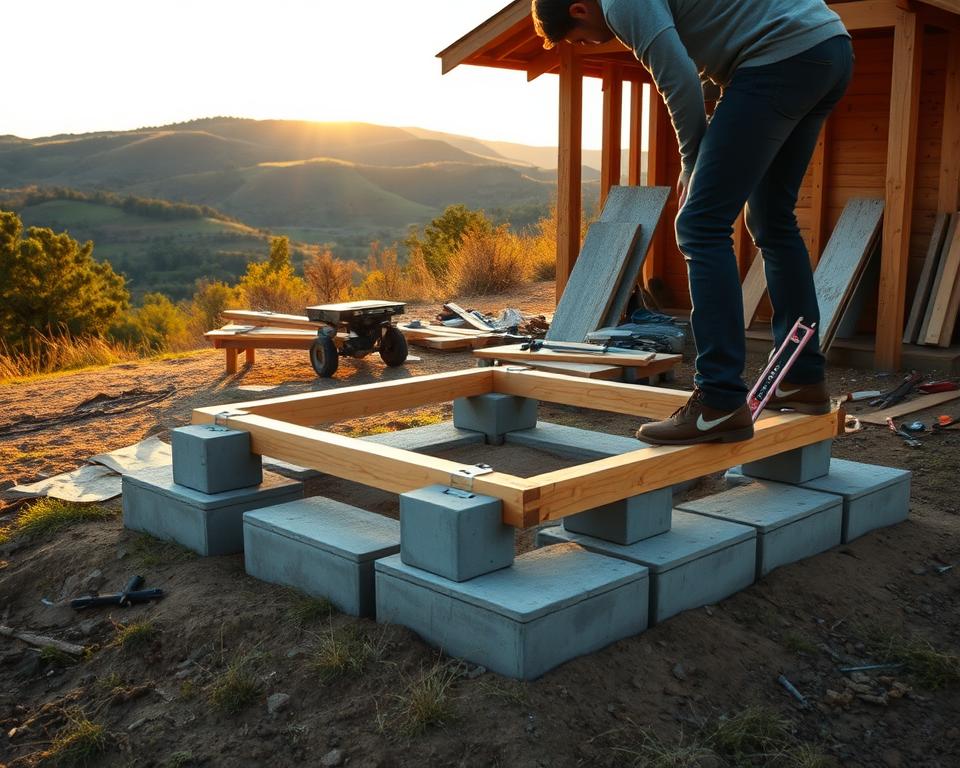
Recording the slope gradient as rise over run helps you choose the best solution. For shallow gradients, a cut-and-fill approach can create a level pad. For steeper sites a stepped shed base or terraced solution gives better long-term stability. Where minimal disturbance is required, adjustable shed supports or pedestal piers are a practical option.
Surveying and measuring the site accurately
Mark out the shed edges with pegs and a stringline. Measure diagonal distances to confirm squareness. Take level readings at each corner and the midpoint of each side. Note any tree roots, drains or buried services that will affect excavation or support placement.
Choosing an approach: level the site, step the base, or adjustable supports
Cut-and-fill is cost-effective where spoil can be used on-site. It suits gentle slopes and provides a permanent concrete or hardcore pad. A stepped shed base uses retaining elements and compacted layers to create a series of level platforms for larger drops. Adjustable shed supports mount to pads or piers and allow fine levelling with minimal groundworks, making them ideal for steep or sensitive sites.
Compare trade-offs before committing. Cut-and-fill may need waste removal and will alter drainage. A stepped solution needs more materials and skilled retaining work. Adjustable supports can raise the structure clear of damp ground and simplify future removal.
Practical step-by-step method for a compact, level base
1. Clear vegetation and topsoil inside the footprint. Remove roots and organic matter.
2. Peg out and set levels using a laser or spirit level. Decide on finished height and formation depth.
3. Excavate to formation level or mark pier positions for adjustable supports. Lay a geotextile membrane to suppress weeds and stop fines mixing with the sub-base.
4. Spread Type 1 hardcore or crushed stone to the required depth, commonly 75–150 mm depending on shed size and load. Compact in layers with a plate compactor, checking levels as you go.
5. Add a layer of sharp sand or a cement screed where a smooth finish or concrete pads are needed. For piers, cast pads to the correct depth and allow standard curing times; light-use concrete can be walkable after 24–48 hours, full strength takes longer.
6. Install sleepers, a timber frame or mounting plates on adjustable feet or pedestals. Use a spirit or laser level to make continuous checks and adjust supports until the platform is flat and square.
7. Backfill and compact around edges to lock the base in place. Leave concrete pads to cure fully before fixing the shed down or loading the area heavily.
Following these steps gives a durable result whether you choose to level the ground, build a stepped shed base or rely on adjustable shed supports. Accurate surveying and regular level checks cut rework and keep the installation efficient and secure.
Types of Shed Bases Suitable for Uneven Terrain
The right foundation keeps a garden building level, dry and long-lasting. Choice depends on slope, soil, budget and how permanent the shed will be. Below are common options with practical notes to help you decide.
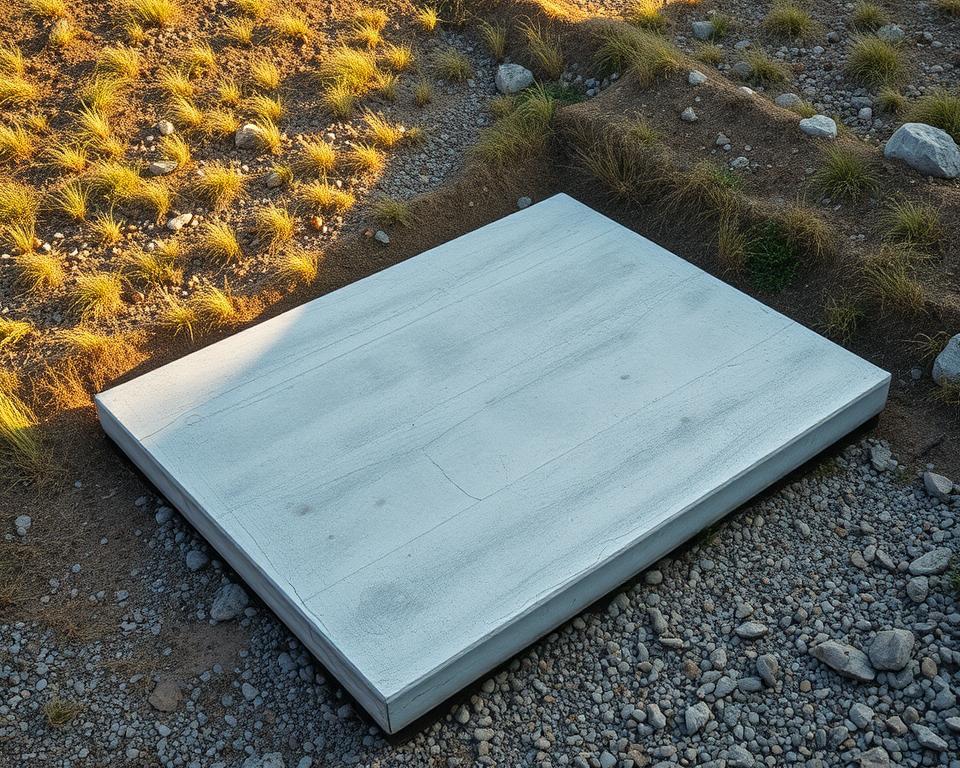
Concrete pad bases: pros, cons and suitability
A concrete pad offers very stable support and low maintenance for heavier or permanent structures. It works well where you can perform cut-and-fill or cast multiple stepped pads.
Drawbacks include labour-intensive preparation, the need for formwork and reliable drainage, and higher cost on steeper slopes. For many sites, a concrete shed base uneven ground is best where the terrain is near level or can be made so.
Timber frame bases: flexibility and levelling options
Timber frame bases install quickly and sit lightly on the ground. They cope with minor unevenness when used with packers or adjustable feet. Repair or replacement is simpler than with rigid concrete.
Use pressure-treated CLS or tanalised timber and include a damp-proof barrier. Poor drainage raises the risk of rot, so a timber frame shed base suits small to medium sheds and sites where minimal groundworks are preferred.
Concrete pier and beam systems for sloped sites
Pier and beam systems use concrete piers or pre-cast blocks at load points with beams spanning between them. This arrangement creates a raised floor and improves airflow under the shed, keeping timber dry.
They are excellent on sloping or unstable ground. Accurate setting of pier heights is essential. In cold areas, piers need secure footings below frost level to avoid movement in winter. A pier and beam shed foundation is a good choice when a raised deck is needed.
Adjustable metal or plastic pedestal systems
Adjustable pedestals include galvanised screw jacks and polymer heads that fine-tune height without heavy earthworks. They install rapidly and allow precise levelling for decking-style bases.
These systems require a compacted sub-base or small concrete pads beneath them. Check manufacturer load limits and follow guidance for spacing. An adjustable pedestal shed base works well where exact levelling matters and disruption must be minimised.
Tools, Materials and Safety Considerations
Preparing a shed base on uneven ground starts with the right kit and sensible safety habits. Select reliable equipment and fit-for-purpose materials to keep work efficient. Maintain good shed base safety while you dig, level and compact.

Essential tools make the job faster and produce a neater finish. For excavation and levelling, use a shovel, spade and mattock for loosening soil and a wheelbarrow to shift spoil. A vibrating plate compactor or hand tamper compacts hardcore and sub-base. Use a spirit level or laser level with a stringline and pegs to check falls and alignment. Measure accurately with a tape measure. Cut timber with a circular saw and fix with a power drill. For concrete work, keep bolsters and brick trowels handy. An angle grinder helps when trimming metal pedestals. For larger digs, consider hiring a mini-digger to reduce time and effort.
Choose materials that suit the ground and load. A sub-base of hardcore or Type 1 aggregate gives stable support. Use sharp sand or grit as a bedding layer where needed. For pads and piers, ready-mix or site-mixed concrete with a typical domestic strength of 20–25 N/mm² is appropriate. For timber frames, select tanalised CLS or treated sleepers and joists. Minimum bearer thickness of 18–22 mm works for small timber bases. Space joists at 400–600 mm depending on loading and floorboard type. Add damp-proof membrane or heavy-duty polythene and geotextile to control moisture. Use galvanised fixings, joist hangers and metal base plates for corrosion resistance.
Observe simple rules to protect people and the site. PPE excavation shed requirements include safety boots with steel toes, gloves, eye protection and ear defenders for noisy power tools. Wear dust masks when cutting timber or mixing cement. Follow manual handling guidance for heavy items such as sleepers and concrete blocks; lift in teams and use lifting aids where possible. Be aware of ground hazards before digging. Check for underground services via local utility enquiries and report finds promptly. Watch for unstable trenches and edge collapse. Treat cement with care to avoid alkaline burns and operate powered compactors according to the manufacturer’s instructions.
Simple checklists reduce risk and waste. Inspect tools before use, mark out the footprint clearly, and stage materials so they stay dry and protected. Keep a first-aid kit nearby and an emergency plan for unexpected hazards. These steps preserve health, speed work and improve long-term performance of the base.
Preparing the Site: Excavation, Drainage and Groundworks
Begin with a clear plan for site preparation shed base work. Mark the shed footprint with pegs and stringlines. Set a datum and use a line level or a laser to fix the finished height. Remove turf, shrubs and roots within the footprint and keep a small clearance around the perimeter for maintenance and ventilation.
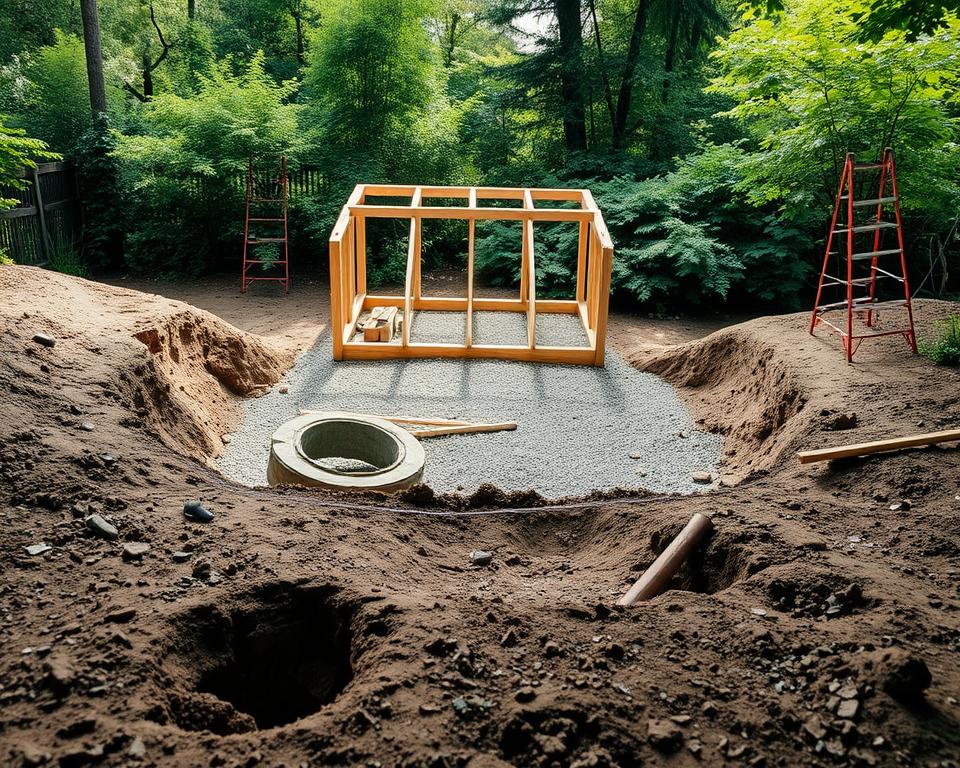
For gentle slopes, cut into the high side and use that spoil to fill the low side. When excavating sloped site areas that are steeper, form terraces with retaining timber, treated sleepers or blockwork. Build each step on a compacted sub-base so the foundation has adequate bearing.
Do not over-excavate into soft organic layers. Remove peat or soft topsoil and replace with compacted aggregate or structural fill. Place geotextile under hardcore to stop mixing with subsoil and to give long-term stability for the base.
Good shed drainage solutions start with falls away from the building. Grade the finished surface to channel surface water to a soakaway or existing drain. Where water collects, consider French drains, linear channels or a small soakaway sized to local soil infiltration rates.
Install a perimeter drain behind any retaining walls to relieve ground water pressure. For timber floors, protect joists with treated timber and a ventilation gap under the floor. Fit breathable membranes where condensation or splashback is a risk to prevent decay.
Compact all sub-base layers in 75–150mm lifts until you reach the designed level. Check levels regularly with a straightedge and spirit level. For uneven ground, use adjustable supports or pack and shim timber bearers to fine-tune the final height without disturbing the compacted sub-base.
Use the following checklist to track critical tasks and materials on site.
| Task | Key Action | Recommended Material |
|---|---|---|
| Marking out | Pegs, stringlines, datum and level set-up | Wooden pegs, nylon string, line level or laser |
| Vegetation clearance | Remove turf, roots and shrubs within footprint | Spade, mattock, waste skip |
| Excavation | Cut into high ground or form terraces on steep slopes | Excavator or hand tools; retaining sleepers or blockwork |
| Sub-base preparation | Replace soft layers, lay geotextile, compact in lifts | Crushed aggregate, geotextile, plate compactor |
| Drainage | Provide falls, French drains or soakaways to prevent pooling | Perforated pipe, grit, soakaway crate or linear channel |
| Perimeter protection | Drain behind retaining walls; ventilate timber floor | Drainpipe, gravel, treated timber, breathable membrane |
| Final levelling | Fine adjust supports, check level and compact | Packers, adjustable pedestals, spirit level |
Levelling Techniques and Foundations for Stability
Creating a stable base on uneven ground calls for careful planning and the right techniques. Small changes in height can lead to long-term movement. Use proven methods to keep the shed secure and functional.
Use retaining structures to form level platforms where cut-and-fill is impractical. A retaining wall shed approach can use timber sleepers or concrete blocks to hold back higher ground. Include drainage such as perforated pipe or weep holes behind the wall to reduce water pressure and prolong life.
Terracing steeper slopes into multiple flat stages lowers excavation volumes and creates convenient working levels. Stepped foundations for each terrace help spread loads and make access easier for maintenance.
Shimming and adjustable supports allow precise levelling without wholesale rebuilding. Galvanised packers, stainless steel shims and adjustable screw jacks tune heights beneath bearers and joists. Plastic pedestal heads work well with composite decking or concrete pads.
When using timber bearers, place packers at ends and at mid-span supports to reduce sag. Corrosion-resistant fixings and treated timber at contact points limit moisture transfer and prolong service life.
Correctly placed piers, pads or concrete beams ensure loads sit over competent ground. Position supports beneath corners, door openings and mid-span joists. Where soil bearing capacity is low, use larger pads or reinforced beams to prevent localised crushing.
For timber frames, fit joist hangers and spreader plates to distribute weight across multiple bearers. A compacted hardcore sub-base beneath pads gives uniform support and helps prevent settlement.
| Technique | Best for | Key materials | Primary benefit |
|---|---|---|---|
| Small retaining wall | Short slopes, raised borders | Timber sleepers, concrete blocks, drainage pipe | Creates a level platform and reduces excavation |
| Terraced steps | Steep ground across longer runs | Concrete steps, sleeper walls, compacted hardcore | Breaks slope into manageable stages and improves access |
| Adjustable supports | Minor height differences, precision levelling | Screw jacks, plastic pedestals, stainless shims | Quick fine-tuning and future adjustability |
| Concrete pads and piers | Uneven or poor-bearing soil | Reinforced concrete, larger pads, compacted sub-base | Spreads load to prevent localised failure |
| Timber bearer with packers | Standard garden sheds on irregular ground | Treated timber, galvanised packers, joist hangers | Cost-effective, simple levelling and load distribution |
Regular checks after installation catch movement early. Monitor piles and pads for signs of tilt or sinking. Early intervention helps prevent settlement shed foundation issues and extends the lifespan of the structure.
Installation Walkthrough: Building the Base and Erecting the Shed
Start with a clear plan that sets out levels, access and fixation points. This walkthrough shows how to build shed base step-by-step and includes practical checks to keep the work tidy and safe. Work in short stages to maintain control on uneven sites.
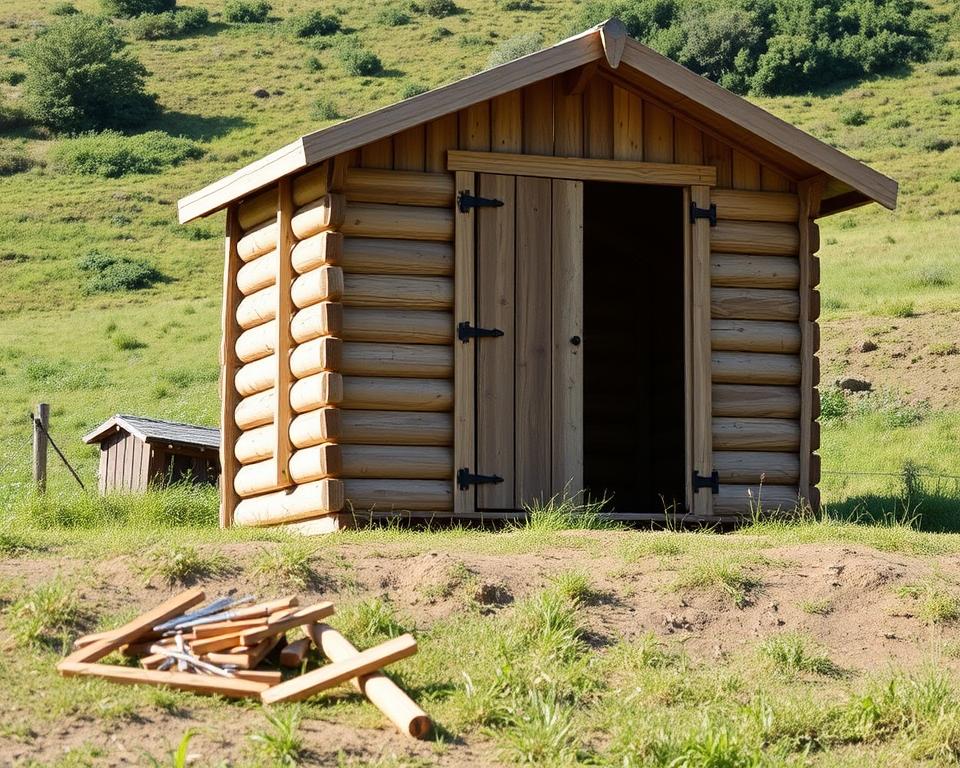
Laying sub-base materials and compacting correctly
Spread Type 1 or similar compact hardcore in 50–75 mm lifts and compact each layer with a vibrating plate until firm. Aim for the falls and levels you marked during the survey before adding any bedding layer.
Finish with a light blinding of sharp sand or fine aggregate to bed paving slabs or timber sleepers. A compact hardcore shed base reduces future settlement and helps control drainage beneath the structure.
Constructing the chosen foundation type with quality control tips
For a concrete pad, erect shuttering, place reinforcement where needed and pour to the required level. Trowel to a neat finish and allow appropriate curing time. Ensure pads sit on compacted blinding.
Piers require accurate setting on compacted bases so they reach competent subsoil. Use pre-cast blocks or cast in-situ concrete and check beam levels as you go. For timber frames, use preservative-treated bearers and adjustable feet. Square the joists and check levels frequently.
Fixing the shed to the base and checking alignment
Anchor to concrete with galvanised baseplates, chemical anchors or coach bolts following manufacturer guidance. Timber bases take bracket fixings and galvanised straps for durable connections.
Square the frame using diagonal measurements and verify alignment with a spirit level. Check doors and windows operate freely and leave a ventilation gap around the perimeter to prevent trapped moisture. When you fix shed to base correctly, the structure will stay secure and serviceable for years.
Maintenance Tips and Troubleshooting for Uneven Sites
Regular care keeps a shed standing straight and dry on tricky ground. Check the base and fittings once a year and after any heavy storms. Early attention to small faults saves money and stops minor issues becoming major repairs.
Regular inspections and signs of movement or rot
Walk around the shed and look for gaps at corners, doors that stick, and visible cracks in concrete. Tap timber close to the ground with a screwdriver to find soft spots. Check floor joists for sagging and watch for fungal growth or insect activity where timber meets soil.
Keep a simple log of measurements and photos so you can detect shed movement over time. A spirit level across thresholds and a straightedge on floorboards help pick up small shifts early.
Addressing minor settlement or drainage issues
For slight settlement, re-shim bearers or add packers beneath joists to restore level quickly. Lift and re-compact hardcore under a local low spot if the sub-base has settled. Use a hand tamper or a plate compactor for this work.
Improve surface drainage by regrading soil to direct water away from the base. Install simple channels or a French drain where pooling persists. Extending guttering and downpipes away from the foundation reduces persistent moisture that accelerates rot.
Upgrading the base if ground conditions change
If tree roots, rising water tables or peat compression undermine the original foundation, consider a more robust solution. Pier-and-beam systems and concrete piles transfer loads below unstable layers and limit future movement.
Consult a structural engineer for larger sheds or where repeated movement occurs. Retrofitting ventilation, damp-proof membranes and using treated timber will extend service life after you upgrade shed foundation.
| Issue | Quick fix | When to upgrade |
|---|---|---|
| Minor tilt or gaps | Re-shim bearers; add packers under joists | If shifting recurs despite repairs |
| Local sub-base settlement | Lift boards; re-compact hardcore | When settlement affects large areas or returns after compaction |
| Persistent surface water | Regrade soil; extend downpipes | When pooling continues or causes rot |
| Rot at timber contact points | Replace affected timbers; add ventilation | When structural members are weakened |
| Ongoing ground movement | Monitor and document movement; consult a pro | Consider pier-and-beam or piles to upgrade shed foundation |
Conclusion
Deciding how to build a shed base on uneven ground summary comes down to matching the foundation to the site and the shed’s use. Timber frame bases are often the simplest for small garden buildings, concrete pads give permanence for heavy or long-term installations, concrete piers or beam systems suit pronounced slopes, and adjustable pedestals allow fine levelling where precision matters. Choose a solution that balances cost, durability and ease of future maintenance.
Careful planning and site assessment are the most important steps in shed base best practice UK. Accurate surveying, correct sub‑base preparation and effective drainage will prevent many later problems such as settlement or water ingress. Take time to test soil firmness, mark levels and allow for surface run‑off before laying materials or pouring concrete.
For next steps, prepare a clear materials list, follow manufacturer guidance for any proprietary pedestal or base system, and check for local requirements around digging and utilities before you start. Consider hiring a structural or groundworks professional for complex slopes or poor soils. Always use appropriate PPE and safe methods when lifting, excavating or mixing concrete to reduce risk on site.
FAQ
What is the purpose of this guide on creating a shed base on uneven terrain?
This guide teaches practical, UK-focused techniques for creating a stable, level shed base on sloping, rutted or irregular ground. It explains how to assess site conditions, choose an appropriate base type (concrete pad, timber frame, pier-and-beam, or adjustable pedestals), carry out groundwork and secure the shed so it resists movement, rot and water ingress.
For what kinds of buildings and users is this guidance suitable?
The methods suit garden sheds, workshops and summerhouses of typical domestic size. The content is aimed at homeowners and tradespeople in the UK, offering DIY-friendly options plus clear indicators of when to call a professional—especially for complex slopes, poor soils or larger, heavier structures.
Do I need planning permission or building regulations approval for a new shed base?
Most domestic garden sheds under specified size limits do not need planning permission, and work on simple bases rarely triggers building control. However, permanent raised bases close to boundaries, elevated structures, or anything that resembles a separate dwelling may require advice from your local planning authority or building control. Check with your council before starting work.
What common problems arise when a shed is built on uneven ground?
Sheds on uneven ground can tilt, develop warped doors, suffer water ingress and uneven load distribution that leads to joist or floor failure. Timber contact with persistent moisture speeds rot. In clay soils, frost heave can lift parts of a base in winter, causing movement and cracking.
Why is a level, stable base so important for shed longevity?
A level base aligns walls so doors and windows operate correctly, distributes roof and wind loads evenly and reduces stress on fixings. Good stability minimises maintenance, prevents premature timber decay and helps paint and sealants perform as intended.
How do I assess soil type and drainage on my site?
Identify soil as free-draining sand/gravel, loam, cohesive clay or peat. Observe how quickly water drains after rain and look for standing water. Test permeability, note nearby drains and tree roots, and consider the local water table. Poor drainage may require a soakaway or French drain to protect the base.
What tools do I need to survey and measure an uneven site accurately?
Essential tools include a spirit level or laser level, measuring tape, pegs and stringline, and a dumpy level if available. Record cross-level measurements at corners and midpoints, note the slope gradient (rise over run) and mark any obstructions or high/low points.
What are the main approaches to dealing with sloping or rutted ground?
Three main strategies are: cut-and-fill to create a level pad (suitable for gentle slopes), stepped bases or terracing using retaining elements for significant slopes, and adjustable supports or pedestals to create a level platform without extensive earthworks—useful on steep or sensitive ground. Each has trade-offs in cost, permanence and environmental impact.
What is a practical step-by-step method for a compact, level base?
Clear vegetation and mark out the footprint, set datum and levels, dig to formation level or mark pier positions, lay geotextile, spread and compact Type 1 hardcore in layers (typically 75–150 mm overall), bed sharp sand or screed if needed, cast concrete pads or install timber sleepers on adjustable feet, and check levels continuously. Allow concrete to cure to the recommended time before loading.
When should I choose a concrete pad base?
Choose a concrete pad for heavy or permanent structures where you want low maintenance and strong bearing. Pads are very stable but labour-intensive and more costly, and they can be difficult to install on steep slopes unless stepped pads are used.
What are the advantages of a timber frame base on uneven ground?
Timber frames install quickly, are lighter on the ground and forgiving of minor unevenness when used with packers or adjustable feet. They are ideal for small to medium sheds and for minimal ground disturbance. Use pressure-treated (tanalised) CLS and ensure ventilation and damp-proofing to reduce rot risk.
How do concrete pier-and-beam systems work for sloped sites?
Concrete piers or precast blocks are placed at load-bearing points, with timber or steel beams spanning between them to form a raised deck. This suits sloped or unstable ground by keeping the shed above the surface and allowing airflow beneath timber to stay dry. Accurate pier heights and competent subsoil beneath piers are important.
Are adjustable metal or plastic pedestal systems a good option?
Adjustable pedestals—galvanised screw jacks or polymer heads—offer rapid installation and fine levelling without major earthworks. They are corrosion-resistant and suitable for decking-style bases, but must be used within manufacturer load limits and typically require a compacted sub-base or concrete bearing pads beneath.
Which materials are recommended for sub-base and foundations?
Use Type 1 or crushed stone for the sub-base, geotextile beneath to avoid mixing with soil, sharp sand or fine aggregate for bedding, and ready-mix concrete (20–25 N/mm²) for pads or piers. For timber bases use tanalised CLS, treated sleepers and galvanised fixings. Choose joist sizes and spacings appropriate to the load and floor finish.
What PPE and safety precautions should I observe?
Wear safety boots, gloves, eye protection, ear defenders for powered tools and dust masks when mixing cement or cutting. Follow manual-handling guidance for heavy items and use lifting aids. Check for underground services before digging (contact local utilities or use available UK services), beware unstable trenches and take care mixing concrete to avoid chemical burns.
How should I prepare drainage to prevent water pooling under the shed?
Create falls away from the shed, install French drains or linear channels where surface water collects, and use soakaways if needed. Lay geotextile beneath hardcore and provide perimeter drainage behind any retaining elements. Ensure ventilation under timber floors and route guttering and downpipes well away from the base.
What levelling techniques help achieve a stable foundation?
Use retaining walls, stepped foundations or terracing for larger slopes. For fine levelling employ shims, stainless-steel shims, galvanised packers, screw jacks or plastic pedestal heads. Position piers or pads under load-bearing points and use bearer plates or joist hangers to spread loads evenly.
How do I fix a shed to the base and check alignment?
Anchor to concrete pads with galvanised baseplates, chemical anchors or coach bolts, and use bracket fixings and straps for timber bases. Square the frame using diagonal measurements and check levels with a spirit or laser level. Ensure doors open freely and leave ventilation gaps around the perimeter.
What maintenance should I carry out on a base installed on uneven ground?
Inspect annually for movement: gaps at corners, sticking doors, cracks in concrete or sagging floors. Check timber for rot and insect damage. For minor settlement, re-shim bearers or add packers and re-compact localized sub-base. Improve surface water flow if pooling appears.
When should I upgrade the base because ground conditions have changed?
Upgrade if you observe recurring settlement, significant tree-root encroachment, peat compression or a rising water table. Options include replacing a simple base with pier-and-beam, adding deeper concrete footings or consulting a structural engineer for pile or reinforced solutions.
When is it advisable to hire a professional rather than DIY?
Hire a professional if the slope is steep, soils are poor (peat, soft clays), drainage issues are complex, underground services are near the footprint or the shed is large and heavy. Engage an engineer for significant ground movement or where building-control approval is likely required.