
How to Build a Wooden Gazebo?

A well-constructed wooden gazebo offers a beautiful and functional addition to any garden. It creates a dedicated space for relaxation and entertainment, enhancing the overall appeal of an outdoor area.
This comprehensive guide provides a step-by-step approach to the entire construction process. It covers everything from initial planning and site preparation to the final finishing touches.
Careful consideration of the location, materials, and structural integrity is essential for a successful outcome. The project is achievable for DIY enthusiasts with varying levels of experience when following clear instructions.
Inhaltsverzeichnis
Key Takeaways
- A wooden gazebo significantly enhances a garden’s aesthetic and functional value.
- Thorough planning and site selection are crucial first steps in the process.
- Choosing the right materials ensures the structure’s durability and longevity.
- The construction is broken down into manageable stages for clarity.
- Attention to structural details guarantees a safe and stable final result.
- Proper finishing touches protect the wood and improve the gazebo’s appearance.
Introduction to Wooden Gazebos
The timeless appeal of a wooden gazebo lies in its ability to create sheltered spaces that harmonise with natural surroundings. These elegant structures transform gardens into functional outdoor living areas perfect for relaxation and social gatherings.
Overview and Benefits of a Wooden Gazebo
A well-designed wooden gazebo offers more than just shelter from the elements. It creates a defined outdoor room that increases property value while providing protection from sun and light rain.
Natural wood construction blends beautifully with garden landscapes. The material’s warmth and character complement planting schemes and other outdoor features seamlessly.
The Appeal of DIY Outdoor Structures
Many homeowners find satisfaction in constructing their own garden gazebo. DIY projects allow complete control over design specifications and dimensions.
Building a personalised structure develops valuable carpentry skills. The process delivers the satisfaction of creating a lasting feature that family and friends will enjoy for years.
Customisation options range from size and shape to roofing style and decorative elements. This ensures the finished gazebo perfectly suits the available space and intended purpose.
| Feature | Wooden Gazebo | Metal Structure | Prefabricated Unit |
|---|---|---|---|
| Aesthetic Appeal | Natural warmth | Modern appearance | Standardised look |
| Customisation | High flexibility | Limited options | Minimal changes |
| Durability | Long-lasting with maintenance | Weather-resistant | Varies by quality |
| Cost Effectiveness | DIY savings possible | Higher material cost | Installation included |
The DIY approach offers significant cost savings compared to purchasing pre-fabricated units. It also provides an engaging outdoor project during pleasant weather conditions.
Planning Your Wooden Gazebo Project
The initial planning stage represents the most critical phase in creating a durable and aesthetically pleasing outdoor structure. Comprehensive preparation prevents costly mistakes and ensures the construction process proceeds smoothly from start to finish.
Site Selection and Ground Preparation
Choosing the right location requires careful consideration of several factors. The selected site should offer level ground with proper drainage and protection from prevailing winds.
Sunlight exposure throughout the day influences the structure’s comfort and usability. Accessibility from the main house and pleasant garden views enhance the overall experience.

Ground preparation begins with clearing vegetation and examining the area for underground utilities. A stable base is created by laying gravel and tamping it firmly to prevent future settling.
Obtaining Permissions and Precise Measurements
Local authorities often require planning permission for larger structures or those in conservation areas. Checking regulations early avoids potential legal complications during or after construction.
Accurate measurements ensure the foundation remains perfectly square and level. Using string lines and stakes, builders mark the exact dimensions before any excavation begins.
| Planning Aspect | Key Considerations | Common Challenges | Recommended Solutions |
|---|---|---|---|
| Site Selection | Drainage, sunlight, accessibility | Uneven ground, tree roots | Gravel base, professional assessment |
| Size Determination | Intended use, available space | Overestimating capacity | Careful measurement, mock layout |
| Design Choices | Roof style, railings, aesthetics | Style conflicts with garden | Material samples, visual mockups |
| Permission Requirements | Local regulations, boundaries | Delayed approvals | Early application, professional advice |
Finalising the design includes selecting roof styles and decorative elements that complement the garden’s character. This careful planning establishes a solid foundation for successful construction.
How to Build a Wooden Gazebo? Essential Steps
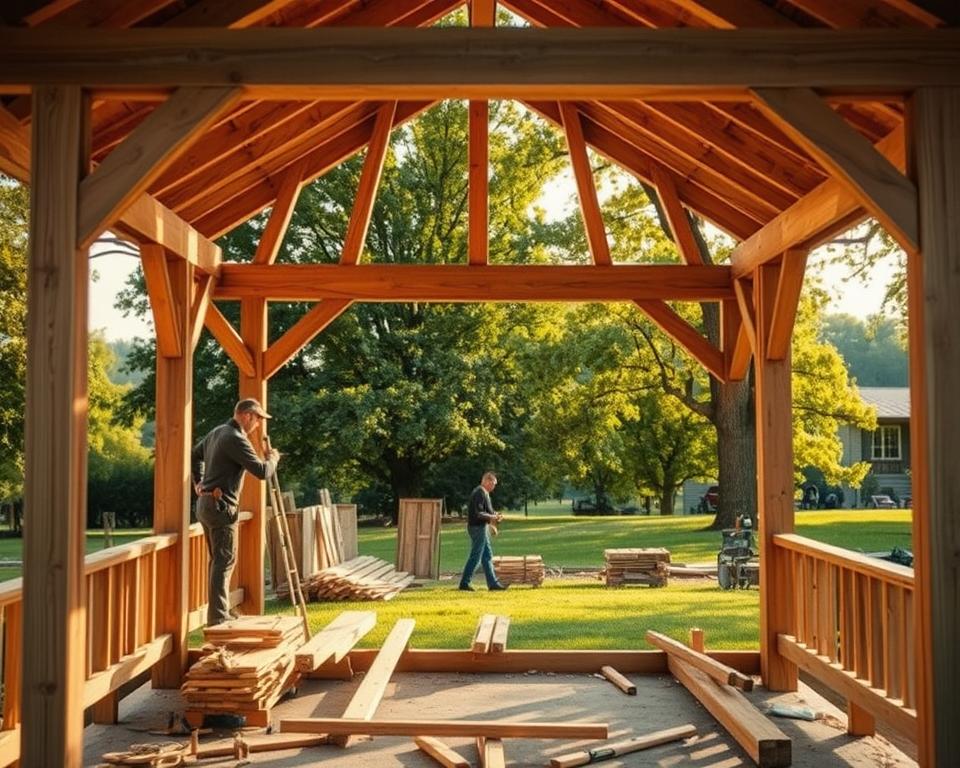
Careful sequencing of construction activities forms the backbone of successful garden structure assembly. Each phase must be completed methodically before moving to the next. This ensures the final result meets both aesthetic and safety standards.
Understanding the Construction Process
The construction process follows a logical sequence where each step builds upon the previous one. This systematic approach guarantees a structurally sound outdoor shelter. Proper planning at this stage prevents costly errors later.
Foundation work begins with setting posts securely into the ground. These must be perfectly level and precisely positioned. They support the entire weight of the structure and resist lateral forces.
Base and floor construction creates the platform for the shelter. This involves installing joists, bearers, and decking materials. The result is a stable, level surface for the main structure.
Frame construction represents the critical phase where posts connect with beams. Bracing elements create the skeleton that defines the shape. This framework provides essential support for the roof system.
Building the roof requires careful attention to angles and measurements. Proper joinery techniques ensure water sheds effectively. This component significantly influences the overall aesthetic appearance.
Adding walls, railings, or lattice panels transforms the basic framework. These elements provide privacy and wind protection. They also offer opportunities for decorative expression.
The final steps involve sanding, painting, and personalising the space. Adding lighting, seating, or plantings completes the transformation. These touches create an inviting outdoor living area.
Preparing the Foundation and Floor Construction
The structural integrity of any outdoor shelter begins with a properly prepared foundation. This critical stage determines the longevity and stability of the entire structure.
Builders must first mark the perimeter using string lines and stakes. They ensure perfect squareness by measuring diagonals before excavating holes for posts.

Choosing Between Concrete, Deck, or Gravel Bases
Several foundation options exist for garden structures. Each offers distinct advantages depending on the project requirements and ground conditions.
Concrete foundations provide maximum stability and longevity. This method involves digging holes 600-900mm deep and pouring concrete around braced posts.
Deck-style foundations create an elevated platform with excellent drainage. They require concrete footings to support beams and joists at regular intervals.
Gravel bases offer a cost-effective solution for smaller structures. This approach involves excavating to 150mm depth and filling with compacted gravel.
Floor construction follows foundation completion. Installers place pressure-treated timber joists at 400-600mm centres to create support for decking materials.
Proper levelling proves essential throughout this process. Any errors in the base become magnified during subsequent construction phases.
Decking boards require 3-5mm gaps for drainage and expansion. Use corrosion-resistant screws to secure each board to the supporting beams.
Constructing the Frame and Posts
Proper post installation and beam assembly are fundamental to structural integrity. This phase transforms the foundation into a sturdy framework.
Securing Posts with Accurate Leveling
Construction begins with selecting pressure-treated timber posts, typically 100mm x 100mm or 100mm x 150mm. These posts should account for both above-ground height and below-ground depth.
After marking an 8×8 foot square, dig holes using a post hole digger. Add 100-150mm of gravel for drainage before positioning each post. Use temporary diagonal bracing to hold them in place.
Check level repeatedly with a spirit level on all sides. Quick-setting concrete provides a practical solution, filling about two-thirds of each hole. Ensure all posts stand straight at equal height.
Assembling Beams and Joists for Structural Support
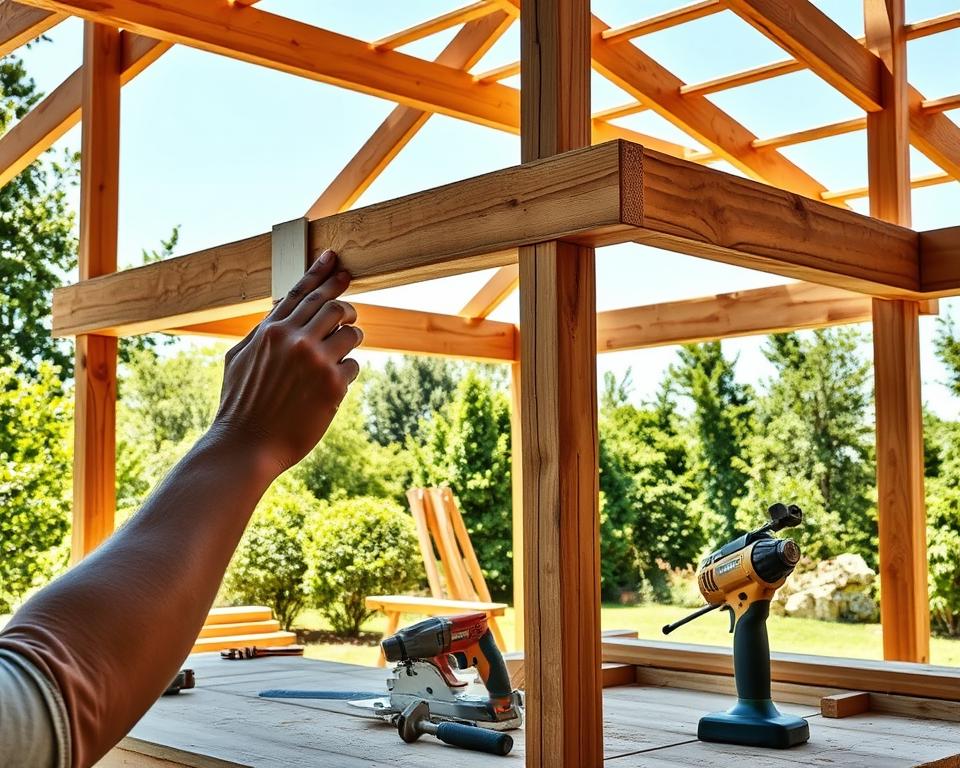
The frame assembly connects posts with horizontal beams. Use 4×4 inch timber for bracing, placing two pieces on each of three sides.
Secure these beams with large coach bolts, pre-drilling holes to prevent splitting. This task requires at least two people—one holding the beam while another attaches the bolts.
For the upper frame, create half-lap splice joints on the beams. These interlocking joints increase strength while creating a flush surface. Secure them with adhesive and additional bolts.
Throughout assembly, keep checking diagonal measurements making sure the structure remains square. Tighten all connections securely for maximum stability.
Installing the Roof and Roofing Techniques
The roof installation marks a significant milestone in the construction process. This stage transforms the open framework into a sheltered space, defining the structure’s final character and ensuring protection from the elements.

Selecting Between Gable and Hip Roof Designs
Choosing the right roof design is a crucial decision. The gable roof, with its classic triangular shape, offers excellent water runoff and a traditional feel. Conversely, the hip roof slopes on all four sides, providing superior stability in windy conditions and a more contemporary look.
Construction begins with precise cuts. Four shorter beams require a 45-degree angle cut on one end. These are bolted to the ends of a longer central beam, forming two triangles. This assembly is then lifted and secured to the top of the corner posts.
Rafters are cut to specific angles, including a birdsmouth notch for a secure fit. They are spaced evenly and fastened with galvanised screws or nails to ensure the roof structure is robust.
| Roofing Component | Material | Key Function | Installation Tip |
|---|---|---|---|
| Sheathing | OSB or Plywood | Creates a solid base | Stagger joints for strength |
| Underlayment | Felt or Membrane | Primary weather barrier | Overlap courses by 100mm |
| Drip Edge | Aluminium | Directs water away | Install before shingles |
| Final Covering | Shingles or Tiles | Weatherproof finish | Start from bottom edge |
Once the frame is secured, OSB sheathing is applied. Roofing underlayment is then nailed down, starting from the eaves. Finally, shingles are installed in overlapping courses to create a durable, weatherproof roof for the gazebo.
Adding Walls, Railings, and Windows
The addition of walls and railings significantly enhances both the comfort and safety of a garden structure. These elements provide protection from weather while creating defined boundaries for the space.

Constructing solid walls begins with precise measurement between posts. Builders typically cut panels slightly undersize to accommodate timber movement. They secure these panels using corrosion-resistant screws for superior holding power.
Incorporating Privacy and Safety Features
Window installation introduces light and ventilation while maintaining shelter. Salvaged vintage windows add character, though new units offer better weatherproofing. Creating a secondary frame using 25mm x 100mm boards ensures proper support.
For railings, posts attach to corners and between sections. The height should meet building regulations—typically 900mm minimum. Balusters require spacing no more than 100mm apart for safety.
| Feature Type | Primary Function | Material Options | Installation Priority |
|---|---|---|---|
| Solid Walls | Weather protection | Tongue-and-groove | High stability required |
| Partial Walls | Space definition | Exterior plywood | Moderate complexity |
| Lattice Panels | Filtered privacy | Wood patterns | Easy attachment |
| Safety Railings | Fall prevention | Pressure-treated timber | Regulation compliance |
Lattice panels offer an attractive compromise between openness and privacy. They allow air circulation while screening the interior. Brackets installed on the sides facilitate easy attachment with screws.
Enhancing with Finishing Touches and Decorative Features
The final phase of the project transforms the structure from a basic build into a personalised outdoor retreat. These finishing touches elevate both its appearance and functionality.

Sanding, Painting and Personalisation Ideas
A thorough sanding is the first step towards a flawless finish. Using progressively finer grits of sandpaper smooths rough surfaces and removes splinters. This preparation is crucial for the even application of protective coatings.
Applying a high-quality exterior paint or stain offers vital protection for the wood. It also allows for personalisation. As one garden designer notes,
The right colour can harmonise a structure with its natural surroundings or make it a striking feature.
Built-in benches maximise the use of space. They are constructed from the same timber and secured with sturdy brackets and screws. Once assembled, they are removed for final sanding before being fixed permanently in place.
A central table with a pedestal base avoids clutter. After sanding, multiple coats of polyurethane provide a durable surface. These elements create a comfortable place for gatherings.
Decorative elements add the final layer of charm. Hanging baskets, string lights, and climbing plants bring life and warmth to the gazebo. These features ensure the finished gazebo is a true extension of the home.
| Finishing Task | Primary Benefit | Key Consideration |
|---|---|---|
| Sanding | Smooth surface | Use grits 80 to 180 |
| Painting/Staining | Weather protection | Exterior-grade products |
| Bench Installation | Integrated seating | Secure with brackets |
| Decorative Lighting | Evening ambience | Weatherproof fixtures |
Tools, Materials and Safety Precautions
Successful construction relies on proper preparation with the right equipment and safety awareness. Having quality tools and materials ensures the project progresses smoothly.
Essential Tools and Quality Materials
The right tools make the work more efficient. Essential items include measuring tapes for accurate measurements, saws for cutting timber, and drills for driving screws and bolts.

Quality materials determine the structure’s longevity. Pressure-treated wood offers excellent protection against rot. Corrosion-resistant fasteners prevent rust from compromising the build.
Observing Safety Measures During Construction
Safety is paramount throughout the project. Wear protective equipment like gloves and safety glasses. Make sure all tools are in good working condition before starting.
Allow sufficient time for each construction phase. Rushing can lead to mistakes. A DIY approach requires careful planning and attention to detail at every stage.
Conclusion
The completion of this outdoor project marks the beginning of countless peaceful moments in a custom-built sanctuary. This structure becomes a cherished place within the garden, offering year-round enjoyment for relaxation and entertainment.
Successful diy construction demonstrates that with careful planning, any homeowner can achieve professional results. The step-by-step approach breaks down what might seem overwhelming into manageable tasks.
Regular maintenance ensures the gazebo remains an attractive feature for years. Make sure to conduct annual inspections and periodic refinishing to protect the wood.
These beautiful gazebos transform ordinary spaces into inviting outdoor rooms. They represent a valuable investment that enhances both property value and quality of time spent outdoors.
FAQ
What is the best wood for a gazebo?
Pressure-treated timber is a popular choice for its durability and resistance to rot. Cedar and redwood are also excellent options due to their natural resistance to decay, though they are often more expensive.
Do I need planning permission to build a gazebo?
In many cases, a gazebo falls under ‘permitted development’, but regulations vary. It is essential to consult your local authority, especially if the structure is large, near a boundary, or in a conservation area.
How do I ensure the gazebo posts are level?
Use a spirit level to check each post in both directions. For greater accuracy, a laser level can project a level line around all posts, ensuring they are perfectly aligned at the desired height.
Can a gazebo be built on a concrete base?
Absolutely. A concrete slab provides a very stable and permanent foundation. The wooden structure can be anchored to the concrete using appropriate post anchors or bolts to prevent moisture wicking up from the ground.
What roofing materials are suitable for a wooden gazebo?
Common choices include bituminous shingles for a traditional look, cedar shakes for a natural appearance, or even metal roofing for longevity. The choice often depends on the desired aesthetic and budget.
How can I protect the gazebo from weather damage?
Applying a high-quality exterior wood stain or sealant is crucial. This protective coating shields the timber from UV rays and moisture, significantly extending the lifespan of the gazebo.
What safety equipment is needed during construction?
Essential safety gear includes safety glasses, sturdy work gloves, and ear protection when using power tools. When working at height during roof construction, a secure scaffolding or platform is vital.

