How to Install Electricity in the Garden Shed Guide
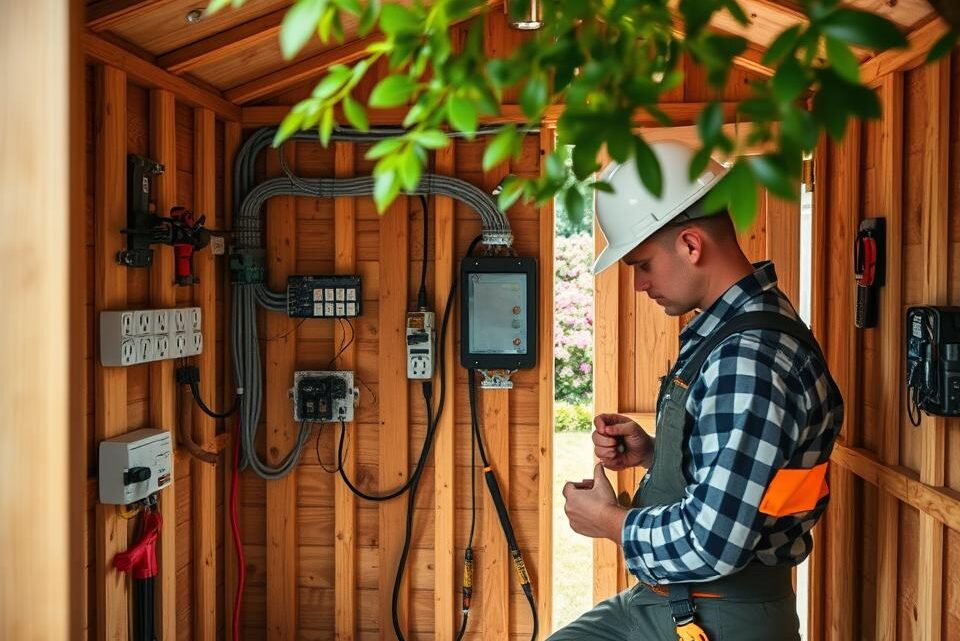
Transforming your garden shed into a functional workspace requires careful planning for garden shed electrical installation. Outdoor electrics UK regulations demand precise knowledge and strategic implementation to create a safe, powered environment for your outdoor building.
Whether you want to power workshop tools, install lighting, or create a comfortable hobby room, understanding electrical requirements is crucial. Proper outdoor electrics UK standards ensure your garden shed becomes a practical extension of your home workspace.
This comprehensive guide will walk you through every aspect of garden shed electrical installation, from initial planning to final certification. You’ll discover essential steps, safety protocols, and professional insights to successfully electrify your garden shed.
Inhaltsverzeichnis
Key Takeaways
- Understand UK electrical regulations for shed installations
- Learn essential safety protocols for outdoor electrics
- Identify when professional electrician support is necessary
- Explore cost-effective electrical installation strategies
- Ensure compliance with building standards
Understanding Electrical Requirements for Your Garden Shed
Planning the electrical system for your garden shed requires careful consideration of your power requirements and electrical load calculation. Every shed has unique needs, depending on its intended purpose and the equipment you plan to use.
Before diving into electrical installation, you’ll need to thoroughly assess your shed’s power needs. This involves creating a comprehensive inventory of all electrical devices and tools you expect to use.
Assessing Your Power Requirements
Your shed power requirements will vary based on its primary function. Consider these potential uses:
- Workshop with power tools
- Home office with computer equipment
- Hobby space for crafts or art
- Storage area with lighting and dehumidification
Calculating Electrical Load
Electrical load calculation is crucial for designing a safe and efficient electrical system. Start by listing all electrical devices and their wattage:
- Check individual appliance labels for power consumption
- Calculate total wattage
- Convert watts to amps
- Consider diversity factors (not all devices run simultaneously)
Understanding your shed’s electrical load helps prevent overloading circuits and ensures you install the right electrical capacity for your needs.
Essential Tools and Materials for Shed Electrification
Preparing for your garden shed electrical installation requires careful selection of electrical tools and materials. Getting the right equipment ensures a safe and professional setup that meets UK electrical standards.
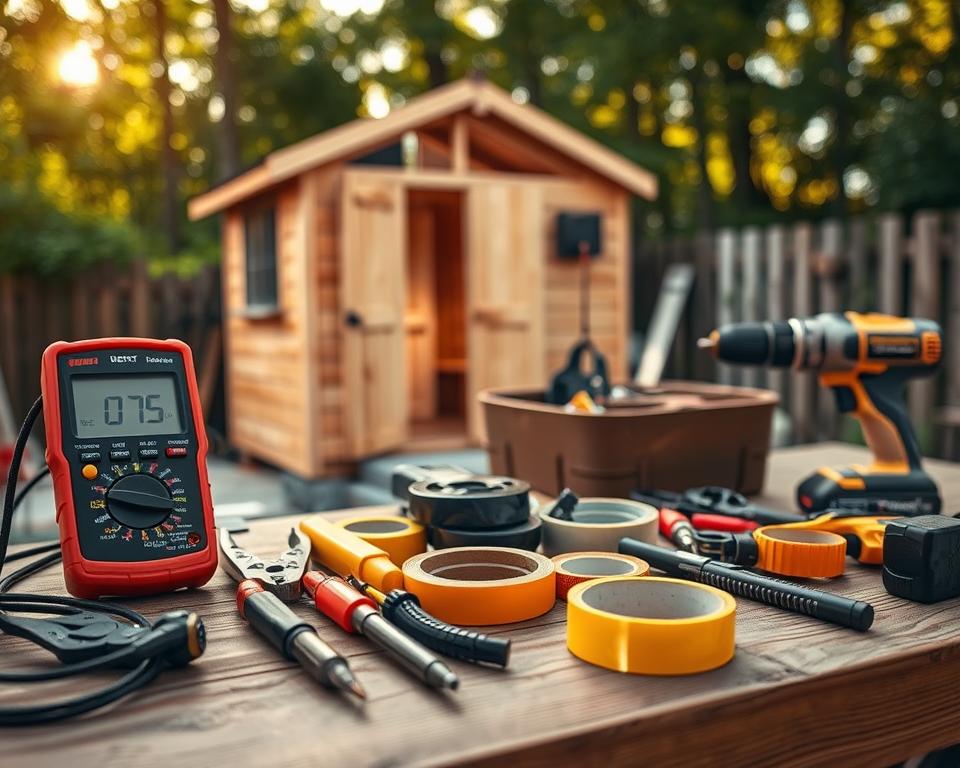
Your electrical toolkit should include several key items to complete the project effectively:
- Cable strippers
- Voltage tester
- Multimeter
- Spirit level
- Drill with masonry and wood bits
- Crimping tools
When selecting materials, armoured cable for shed installations is crucial. Steel Wire Armoured (SWA) cable provides superior protection against environmental challenges.
| Material | Purpose | Recommended Specification |
|---|---|---|
| SWA Cable | Main Power Transmission | 2.5mm² to 10mm² |
| Consumer Unit | Power Distribution | 2-4 Way with RCD Protection |
| IP-Rated Sockets | External Electrical Connections | IP66 Weatherproof Rating |
Remember to invest in quality electrical tools and materials that comply with British Standards. Proper equipment guarantees long-term safety and reliability for your garden shed electrical system.
Complying with UK Building Regulations and Safety Standards
Navigating the electrical regulations for your garden shed can seem daunting, but understanding Part P compliance and shed wiring regulations UK is crucial for ensuring safety and legal conformity. Electrical installations require careful planning and adherence to specific building standards.
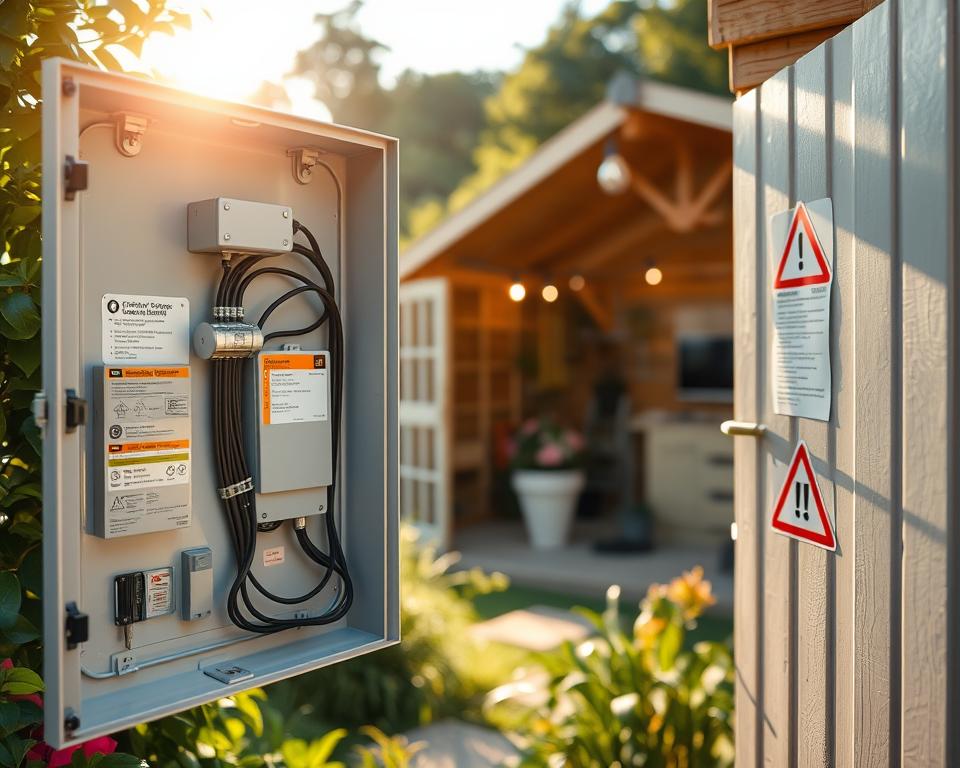
The UK has strict guidelines governing electrical work in residential and outbuilding spaces. These regulations aim to protect homeowners from potential electrical hazards and ensure professional-standard installations.
Part P Building Regulations Explained
Part P of the Building Regulations specifically addresses electrical safety in domestic settings. Key aspects include:
- Ensuring all electrical work meets BS 7671 wiring standards
- Requiring competent professionals for complex electrical installations
- Mandating safety checks and certification for electrical work
Shed wiring regulations UK demand that electrical installations be carried out with precision and care. This means any electrical work must either be completed by a registered electrician or formally notified to local building authorities.
When to Notify Your Local Authority
You’ll need to notify your local authority building control in several scenarios:
- Installing a new electrical circuit to your garden shed
- Adding multiple socket outlets
- Implementing permanent electrical connections
Failing to comply with Part P compliance can result in significant challenges, including potential insurance complications and safety risks. Always prioritise professional guidance and proper certification for your garden shed electrical project.
Planning Your Electrical Circuit Layout
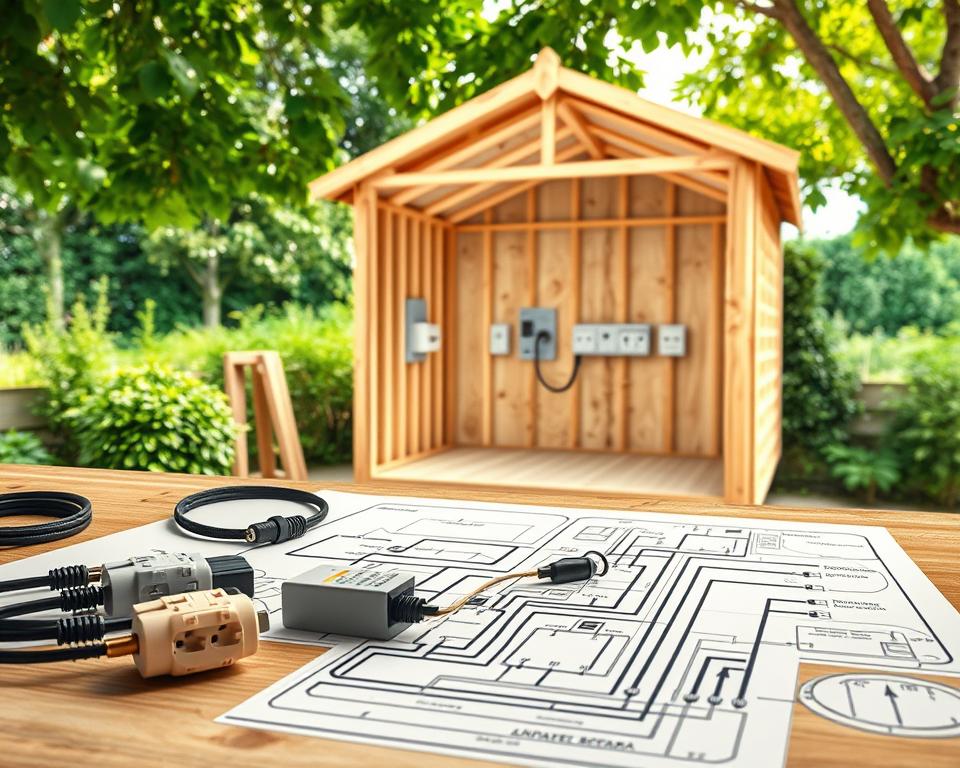
Designing an effective shed electrical circuit design requires careful planning and strategic thinking. Your garden shed power supply must be both functional and safe, considering the specific needs of your workspace.
When mapping out your electrical circuit layout, start by assessing your power requirements. Consider the following key elements:
- Total number of electrical devices you’ll use
- Maximum power consumption of each device
- Specific work areas within the shed
- Future potential expansion of electrical needs
Socket placement is crucial for an efficient shed electrical circuit design. Recommended guidelines suggest positioning sockets:
- Between 450mm and 1200mm above floor level
- Near workbenches and primary activity zones
- Evenly distributed to prevent cable stretching
- With sufficient spacing to accommodate multiple plugs
“A well-planned garden shed power supply transforms your workspace from basic to brilliant.” – Electrical Safety Experts UK
Your circuit design should prioritise safety by incorporating separate lighting and power circuits. This approach ensures that if a socket circuit trips, your lighting remains operational, which is particularly valuable in workshop environments.
Consider using either radial or ring circuits depending on your power demands. Radial circuits work best for smaller sheds, while ring circuits provide greater flexibility for high-power requirements.
Remember to include RCD (Residual Current Device) protection, which is mandatory for outdoor electrical installations and provides critical protection against electric shock.
How to Install Electricity in the Garden Shed
Installing electrical systems in your garden shed requires careful planning and precise execution. This guide will walk you through the essential steps of shed consumer unit installation and ensuring proper RCD protection for your shed.
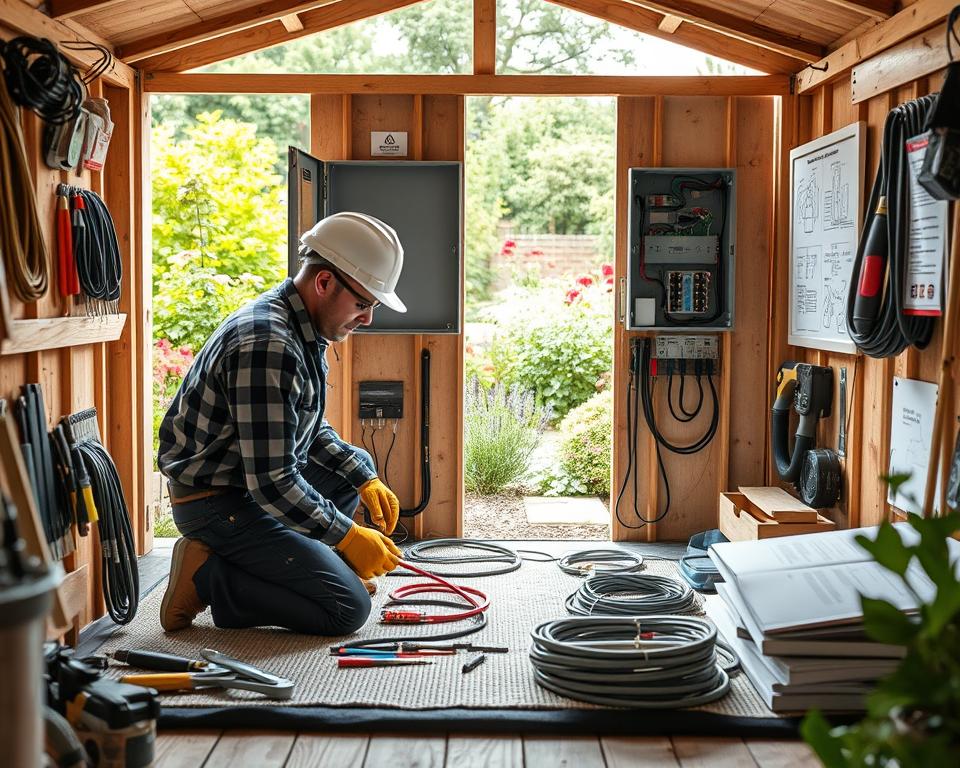
Before beginning any electrical work, safety must be your top priority. Professional expertise is strongly recommended for complex installations to prevent potential hazards.
Running Cable from Your Main Consumer Unit
Connecting your shed’s electrical circuit involves several critical steps:
- Isolate the main power supply completely
- Select an appropriate circuit breaker (16A or 32A)
- Plan the cable route carefully
- Ensure proper cable support and protection
Installing the Shed Consumer Unit
Proper placement of your shed consumer unit is crucial for safety and accessibility:
- Mount the unit securely at 1.4-1.8 metres height
- Position away from potential water sources
- Terminate incoming SWA cable using appropriate glands
- Connect earth connections
RCD protection shed installations are mandatory to prevent electrical accidents in outdoor environments.
Fitting Sockets and Light Fixtures
When installing electrical accessories in your shed, consider these key points:
| Accessory | Considerations |
|---|---|
| Sockets | Use weatherproof designs, ensure proper earthing |
| Light Fixtures | Select IP-rated for damp environments |
| Mounting | Adapt to specific shed construction type |
Always test each electrical connection thoroughly before completing your shed consumer unit installation.
Underground Cable Installation Methods
Planning underground cable installation for your garden shed requires careful consideration and precise execution. SWA cable installation demands attention to detail and adherence to UK electrical safety standards.

When preparing for underground cable installation, you’ll need to follow specific guidelines to ensure safety and compliance:
- Select appropriate SWA (Steel Wire Armoured) cable rated for underground use
- Determine precise cable route avoiding existing underground services
- Excavate a trench meeting regulatory depth requirements
- Prepare a smooth foundation for cable laying
“Proper underground cable installation protects your electrical infrastructure from environmental damage and potential hazards.” – UK Electrical Safety Standards
The recommended burial depth for underground cables varies depending on location:
- Standard garden areas: 600mm minimum depth
- Areas with potential vehicle traffic: 750mm minimum depth
- Use protective sand bedding around cable
- Install warning tape approximately 150mm above cable
Your underground cable installation should include careful backfilling, ensuring no sharp stones could damage the cable. Weatherproof cable entry points at both the house and shed are crucial for maintaining electrical system integrity.
Professional installation or consultation with a qualified electrician is recommended to guarantee your underground cable installation meets all UK electrical regulations and safety standards.
Testing and Certifying Your Electrical Installation
Completing your electrical testing shed project requires rigorous safety checks and professional certification. The final stages of your garden shed electrical installation are crucial for ensuring compliance and protecting your investment.
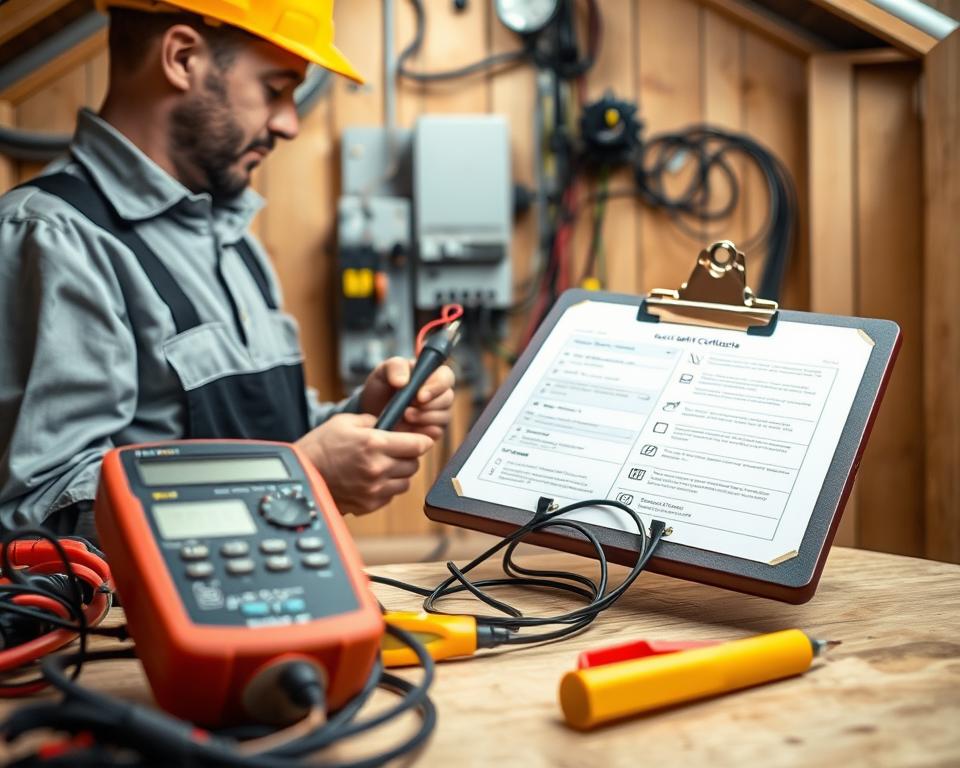
Your electrical installation demands meticulous verification through comprehensive safety tests. Professional electricians will conduct several critical examinations to guarantee the electrical system’s integrity.
Conducting Safety Tests
Safety testing involves multiple precise assessments of your electrical installation:
- Continuity testing of protective conductors
- Insulation resistance measurement
- Polarity verification
- Residual Current Device (RCD) functionality check
These tests require specialised equipment and expert interpretation. A qualified electrician ensures your electrical testing shed meets all necessary safety standards.
Obtaining an Electrical Safety Certificate
Securing an electrical safety certificate is a legal requirement for new circuit installations. This document provides crucial evidence of professional installation and compliance with BS 7671 wiring regulations.
| Certificate Components | Purpose |
|---|---|
| Installation Details | Comprehensive system documentation |
| Test Results | Verification of electrical safety |
| Regulatory Compliance | Proof of meeting national standards |
Your electrical safety certificate serves multiple purposes, including property insurance, potential property sales, and demonstrating adherence to Building Regulations.
Pro tip: Always retain your electrical installation certificate as a critical legal document for future reference.
Maintaining Your Garden Shed Electrical System
Proper outdoor electrics maintenance is crucial for keeping your garden shed’s electrical system safe and functional. Regular electrical safety checks can prevent potential hazards and extend the life of your installation.

Your garden shed’s electrical system requires careful attention due to unique environmental challenges. Exposure to moisture, temperature changes, and potential pest activity makes routine inspections essential.
Essential Maintenance Checklist
- Conduct monthly visual inspections of cables, sockets, and light fittings
- Check for signs of damage such as:
- Cracks in electrical components
- Discolouration of sockets
- Evidence of water ingress
- Test RCD protection monthly using the device’s test button
- Verify drainage around the shed to prevent water accumulation
Seasonal maintenance plays a critical role in outdoor electrics maintenance. Ensure proper ventilation to prevent condensation and protect electrical equipment from environmental threats.
Warning Signs Requiring Professional Attention
| Warning Sign | Potential Issue |
|---|---|
| Flickering lights | Potential circuit problems |
| Warm sockets or switches | Electrical load or connection issues |
| Burning smells | Immediate electrical hazard |
| Frequently tripping circuits | Overload or short circuit |
Professional electrical safety checks are recommended every 5-10 years for garden shed installations. These comprehensive assessments ensure your electrical system remains compliant and safe.
Protect your electrical system by avoiding socket overloads, using appropriate outdoor-rated extension leads, and maintaining proper environmental conditions. Proactive maintenance is always more cost-effective than reactive repairs.
Conclusion
Electrifying your garden shed represents a significant upgrade to your outdoor space. Professional electrician shed services can transform a simple wooden structure into a functional workspace or leisure area. Understanding the complexities of garden shed electrification ensures you approach the project with confidence and safety in mind.
Your electrical installation requires careful planning and respect for technical regulations. While some DIY enthusiasts might feel capable of managing parts of the project, critical stages such as consumer unit connections and final certification demand professional expertise. A registered electrician will guarantee your installation meets stringent UK safety standards and provides long-term reliability.
Investing in quality electrical infrastructure enhances your garden shed’s functionality and potential property value. By prioritising proper load calculations, using appropriate materials, and adhering to Part P Building Regulations, you create a safe and versatile space. Remember that professional guidance during garden shed electrification can prevent costly mistakes and ensure a robust, compliant electrical system.
Ultimately, your successful shed electrification project combines technical knowledge, careful planning, and professional support. Whether you’re creating a workshop, office, or relaxation area, a well-executed electrical installation will serve your needs efficiently and safely for years to come.
FAQ
Do I need a qualified electrician to install electricity in my garden shed?
For most electrical installations, you will need a qualified electrician, particularly for complex work such as connecting to the main consumer unit and providing final certification. Whilst some basic tasks can be undertaken by competent DIY enthusiasts, Part P Building Regulations require that notifiable electrical work must be completed or certified by a registered professional.
What cable type is recommended for underground shed electrical installations?
Steel Wire Armoured (SWA) cable is the preferred option for underground garden shed electrical installations. It provides robust protection against physical damage, moisture, and rodents, and is specifically designed to withstand outdoor environmental conditions.
How deep should I bury my underground electrical cable?
According to UK regulations, underground cables should be buried at a minimum depth of 600mm in areas without vehicle traffic and 750mm where vehicles might pass over the cable route. Always include warning tape approximately 150mm above the cable for future protection.
What electrical safety tests are required for a garden shed installation?
Essential safety tests include continuity testing, insulation resistance testing, polarity testing, and RCD testing. These comprehensive checks verify the electrical installation’s safety and compliance with BS 7671 wiring regulations.
How often should I maintain my garden shed electrical system?
Perform monthly visual inspections checking for cable damage, test RCD protection monthly, and arrange professional periodic inspection every 5-10 years. Regular maintenance helps prevent potential electrical hazards and ensures ongoing system safety.
What electrical load capacity do I need for my garden shed?
Your electrical load capacity depends on your specific requirements. Calculate the total wattage of all devices and tools you plan to use, considering both current and potential future needs. Typical shed installations range from simple lighting circuits to multi-circuit systems supporting power tools and electronic equipment.
Do I need planning permission for installing electricity in my garden shed?
While full planning permission is usually unnecessary, you must comply with Part P Building Regulations. This means notifiable electrical work must be certified by a registered electrician or approved through your local authority’s Building Control department.
What type of consumer unit should I use for my garden shed?
Choose a small 2-4 way consumer unit with RCD protection, specifically designed for outdoor or outbuilding installations. Ensure it provides adequate circuit protection and is mounted securely in a weatherproof location within the shed.
What IP rating should electrical accessories have in a garden shed?
Select IP65 rated or higher electrical accessories for garden shed installations. These ratings ensure protection against water jets and dust, making them suitable for potentially damp and exposed outdoor environments.
Can I install the electrical system myself?
While some basic tasks can be DIY, most electrical work requires professional expertise. Connecting to the main consumer unit, underground cable installation, and final certification must be completed by a qualified electrician to ensure safety and regulatory compliance.