How to Insulate a Garden Shed

Many homeowners are discovering the potential of their outdoor structures. A simple storage unit can become a versatile, year-round space. With the right approach, it transforms into a comfortable home office, a productive workshop, or a private gym.
This comprehensive guide details the process of adding thermal protection to a wooden structure. Proper insulation ensures the space remains usable in both summer’s heat and winter’s chill. It also protects valuable items stored inside from damp and temperature fluctuations.
The project is achievable for most DIY enthusiasts, offering significant benefits. It enhances comfort, improves energy efficiency, and increases the structure’s longevity. The guide covers everything from initial assessment to material choices and installation techniques.
Readers will find expert advice suitable for various skill levels and budgets. Solutions range from cost-effective options to premium materials. The focus is specifically on wooden sheds, the most common type found in British gardens.
Inhaltsverzeichnis
Key Takeaways
- Proper insulation converts a basic storage unit into a comfortable, multi-purpose room.
- A well-insulated structure offers protection for contents and improves energy efficiency.
- The project is a feasible DIY undertaking for homeowners with different experience levels.
- The guide provides a complete overview, from planning and material selection to installation.
- Various budget-friendly and high-performance insulation materials are available.
- The advice is tailored specifically for insulating wooden garden sheds.
Understanding the Importance of Shed Insulation
Effective insulation serves a dual purpose: enhancing occupant comfort while safeguarding the structure itself. It is an essential upgrade, not just an optional extra, for anyone wanting to use their garden building throughout the seasons.
Benefits for Indoor Comfort and Energy Savings
A primary advantage is temperature regulation. In the winter, insulation acts as a thermal barrier, trapping heat inside and significantly reducing heat loss. This creates a cosy environment for a home office or workshop.
During the summer, the same principle works in reverse. The material helps keep the interior cool by blocking external warmth. This consistent temperature makes the space far more comfortable for extended periods.
This thermal efficiency leads to direct energy savings. If the shed has electrical heating or cooling, less energy is required to maintain a pleasant temperature. This results in lower running costs and reduced energy waste.
Preventing Damp, Moisture, and Condensation
Moisture control is equally critical. Condensation forms when warm, humid air meets a cold surface, like an uninsulated wall or window. This dampness can lead to mould, rot, and structural damage over time.
Proper insulation raises the temperature of interior surfaces, preventing this dangerous temperature differential. When combined with adequate ventilation, it stops moisture-laden air from settling.
This protection is vital for anything stored within the shed, from power tools and electronics to furniture. It keeps these items safe from the damaging effects of damp and extreme humidity.
Assessing Your Garden Shed and Identifying Insulation Needs
A thorough assessment is the crucial first step before any materials are purchased. This evaluation ensures the structure is sound and ready for the upgrade. Skipping this phase can lead to wasted effort and poor results.
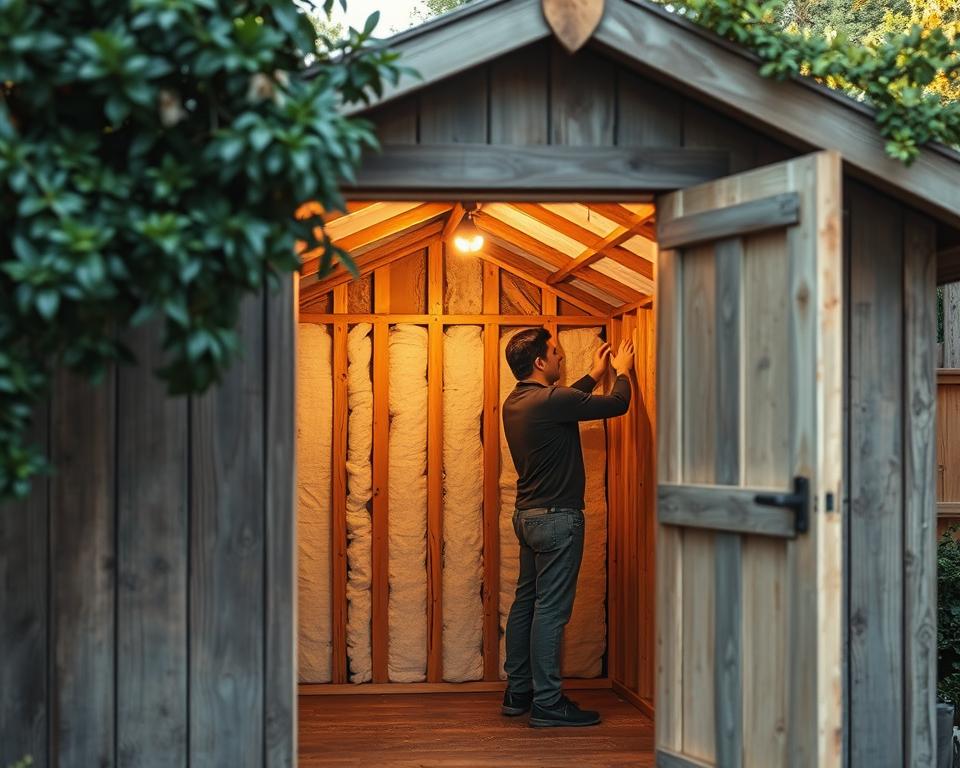
Proper preparation prevents future problems and maximises the effectiveness of the insulation.
Evaluating Structural Integrity and Gaps
Begin with the timber frame. It must be robust enough to support the extra weight of insulation materials. Sheds with thicker frames are typically more suitable.
Next, inspect the walls, roof, and floor for any gaps. A detailed visual check during daylight helps spot light penetration. Pay close attention to joints, corners, and overlapping sections.
Even tiny gaps can undermine the entire project. They allow heat to escape and cold air inside, reducing energy efficiency. Any discovered openings should be sealed with a quality, moisture-resistant sealant.
Reviewing Windows, Doors and Leaks
Windows and doors are common weak points. Check for cracked panes, damaged seals, and frames that have warped over time. A misaligned door creates drafts that will negate the benefits of insulation.
Inspect the roof and floor carefully for signs of water ingress. Look at the corners and where materials overlap, especially after rainfall. Persistent leaks often indicate a shed that has seen better days.
If the structure has multiple leaks or significant rot, replacement is often more economical than repair. Investing in a new, sturdy shed provides a solid foundation for long-term comfort.
Selecting the Right Insulation Materials for Your Shed
The selection of thermal protection materials depends heavily on the intended use of the outdoor structure. Different materials offer varying levels of performance, cost, and installation complexity.
Comparing Bubble Wrap, PIR Boards, and Fibreglass
Bubble wrap represents the most budget-friendly choice. Its air-filled pockets create basic thermal barriers. Foil-backed versions provide better performance.
PIR boards like Celotex offer superior thermal efficiency. These rigid insulation boards feature closed-cell foam construction. They come in thicknesses from 50mm to 150mm.
Fibreglass roll is easy to install and won’t shrink over time. However, it loses effectiveness when wet and requires careful handling.

Eco-Friendly and Natural Insulation Options
For environmentally conscious homeowners, natural options provide excellent alternatives. Wool insulation offers good thermal performance and moisture-wicking properties.
Rockwool provides superior soundproofing for garden offices. Wood fibre boards and batts are sustainable choices that can be cut to size.
These natural materials support environmental goals while delivering reliable thermal protection.
The right choice balances budget, performance needs, and environmental considerations. Each material serves different requirements effectively.
How to Insulate a Garden Shed
Meticulous planning forms the foundation of any effective shed upgrade. Homeowners should develop a realistic scope before purchasing materials. This approach prevents wasted effort and ensures optimal results.
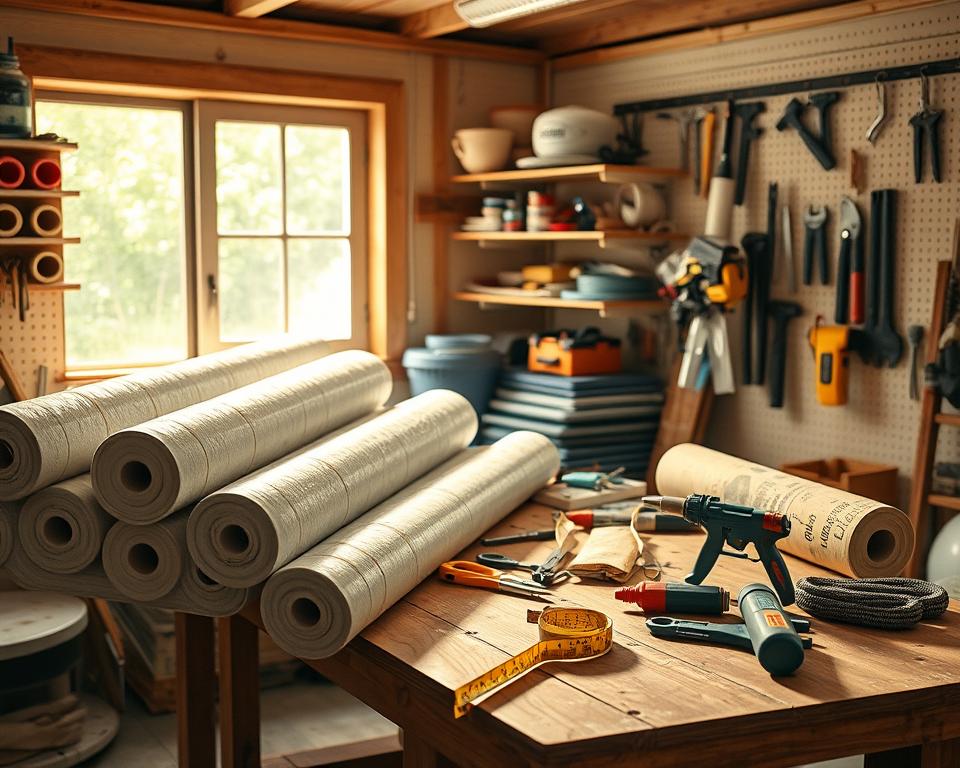
Accurate measurement of the entire space is crucial. Calculate the surface area of walls, roof, and floor. The size of the structure directly impacts material quantities and costs.
A larger building like a 20×20 log cabin demands more insulation than a compact tool shed. Starting with a well-built structure reduces requirements. Log cabins with thick walls offer natural thermal benefits.
Budget considerations allow for scaling to different financial situations. Projects range from minimal-cost solutions to premium installations. Investing in quality materials for critical areas provides the best balance.
Realistic time investment is essential for lasting performance. Rushed work often leads to poor results. Homeowners should make sure they have all necessary tools before starting.
Developing a Realistic Project Scope
Prioritise efforts based on heat loss patterns. Roofs and floors typically account for the most significant energy transfer. Addressing these areas first maximises the effectiveness of your insulation.
Calculate material quantities precisely to avoid waste. Measure each wall panel and roof section individually. This careful approach ensures sufficient coverage while controlling costs for the garden building.
The current condition of the shed influences the project scope. Structures with roofing felt or shingles may require less work. Proper assessment at this stage prevents unexpected issues during installation.
DIY Tips and Cost-Effective Insulation Options
Budget-conscious homeowners can achieve significant thermal improvements without major expenditure. Creative approaches using repurposed materials offer practical solutions for enhancing comfort.
These diy methods reduce project costs while delivering measurable benefits. They transform basic storage spaces into more usable environments throughout the year.

Repurposing Materials like Carpets and Old Blankets
Old blankets or rugs make excellent floor insulation. Thicker textiles provide better thermal barriers when laid in overlapping patterns.
This approach adds a cosy touch while limiting heat loss. Ensure arrangements are neat to avoid tripping hazards in workspace sheds.
Carpet off-cuts offer superior performance due to their thickness and padding. They prevent heat loss through floors while providing soundproofing benefits.
Adding underlay beneath carpet creates an extra air-trapping layer. This significantly enhances thermal resistance for winter comfort.
Affordable Structural Solutions
Pallet wood cladding acts as an additional barrier against draughts. It traps air between the cladding and outer wall, reducing heat transfer.
Always use heat-treated (HT stamped) pallets for safety. Attach boards horizontally or vertically, leaving a small gap behind for moisture control.
This method works best when combined with other insulation materials. Bubble wrap or polystyrene sheets complement the cladding effectively.
| Material | Best Use | Cost Level | Installation Ease |
|---|---|---|---|
| Repurposed blankets | Floor insulation | Very low | Very easy |
| Carpet with underlay | Floor coverage | Low | Moderate |
| Pallet wood cladding | Wall barrier | Low | Intermediate |
| Polystyrene boards | Walls/floor/ceiling | Medium | Easy |
Polystyrene or PIR boards represent mid-range options with better performance. Their dense closed-cell structure effectively traps heat within the shed.
Polystyrene is cheaper and simple to cut for various surfaces. PIR provides superior insulation with its foil-backed design.
Homeowners can mix these budget-friendly materials with conventional options. This approach achieves optimal results within financial constraints.
Installation Methods for Walls, Roof, and Floor
Proper installation methods ensure the insulation performs as intended throughout seasonal changes. Following systematic steps guarantees optimal thermal performance for the entire structure.
Step-by-Step Guide for Proper Installation
For an unlaid shed floor, place wooden blocks under each joist cavity. Measure and cut PIR boards to fit snugly between the joists.
Ensure materials lay flush with the top of the joists before installing the final flooring. This under-floor approach prevents significant heat loss.
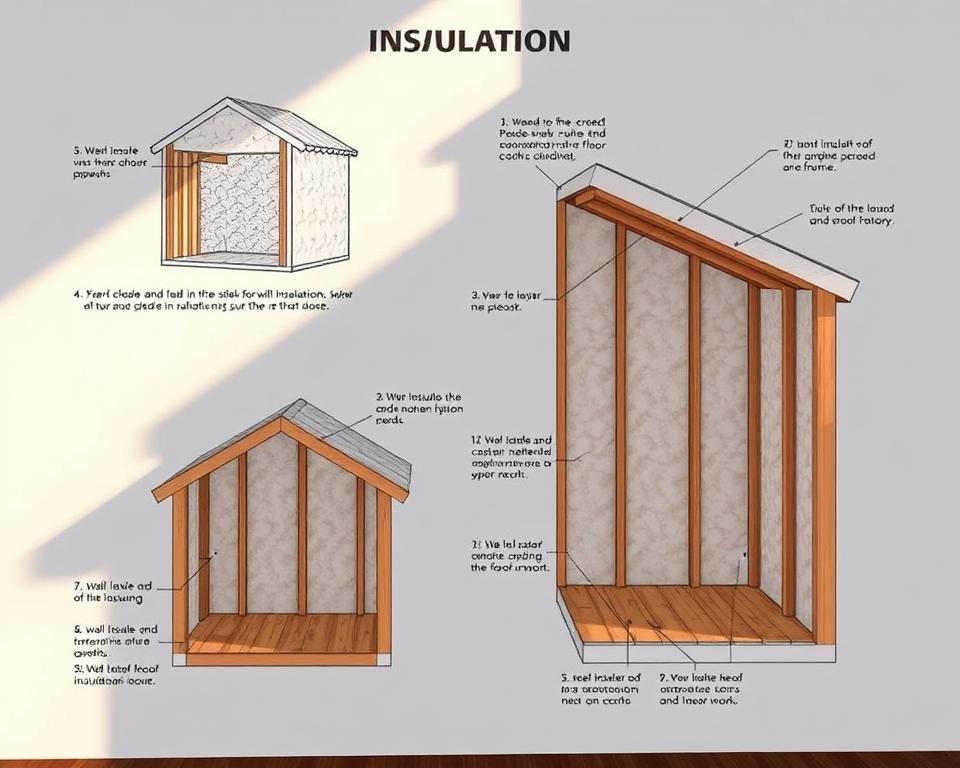
When working with existing floors, create a false floor using a breathable membrane. Cover this with thin plywood, sealing any gaps with appropriate sealant.
For walls and roof, measure panels carefully before cutting materials to size. Install a breather membrane first for proper ventilation.
Maintain an air gap of approximately 20mm between foil-backed materials and the wall surface. This prevents moisture accumulation.
Essential Tools and Best Practices
Essential equipment includes a tape measure, heavy-duty scissors, and a staple gun. A saw is necessary for cutting boards to the correct dimensions.
Work methodically from one section to another, double-checking measurements before cutting. Consistent air gaps and proper sealing are crucial for long-term performance.
Patience during installation prevents gaps and material compression. This approach ensures the insulation delivers maximum thermal benefits.
Enhancing Long-Term Energy Efficiency and Comfort
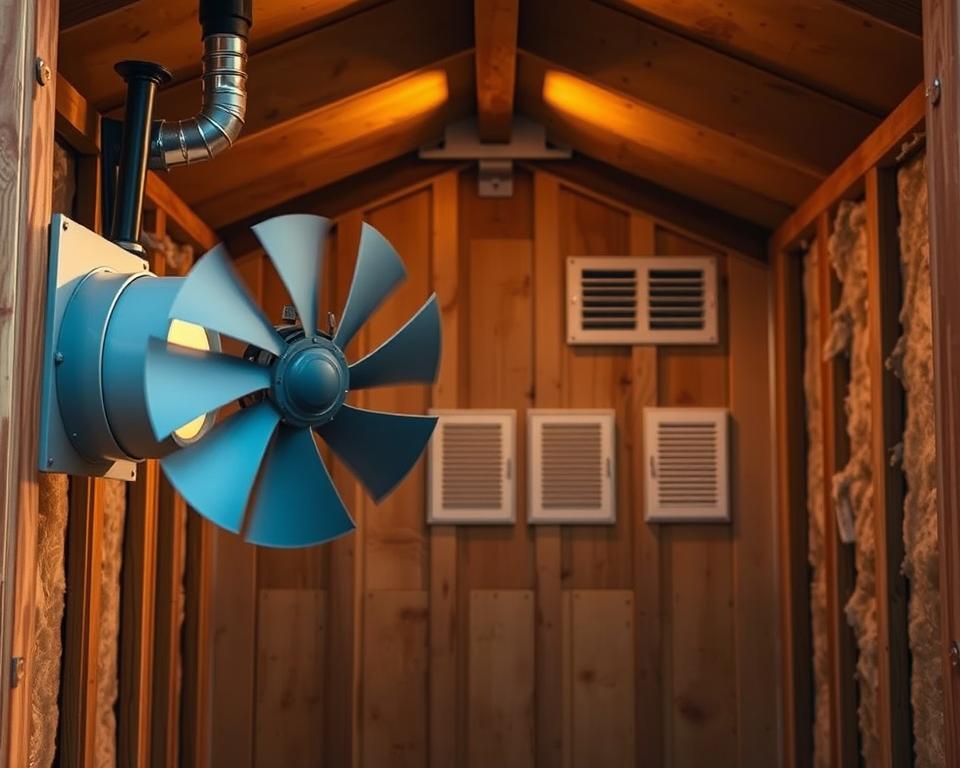
The synergy between insulation and ventilation is crucial for preserving structural integrity over time. Proper airflow management prevents moisture accumulation while maintaining thermal performance.
Improving Ventilation and Moisture Control
Adequate ventilation is essential for any enclosed space. It prevents condensation that can damage both the structure and insulation materials. Passive systems like vents or louvres provide continuous airflow.
Installing a breather membrane between walls and insulation creates an effective barrier. This membrane allows vapour to escape while blocking external moisture. It’s particularly important for occupied spaces like home offices.
Thermal mass materials help stabilise indoor temperatures. Concrete floors or brick elements absorb heat during the day and release it gradually at night. This reduces temperature fluctuations.
| Ventilation Method | Best Application | Effectiveness | Installation Complexity |
|---|---|---|---|
| Roof Vents | All shed types | High | Moderate |
| Wall Louvres | High-moisture areas | Medium | Easy |
| Breather Membrane | Walls and roof | Very High | Intermediate |
| Foundation Vents | Ground-level spaces | Medium | Difficult |
Regular maintenance inspections identify early signs of heat loss or moisture damage. Check for compressed insulation or gaps around windows and doors. Address issues promptly to maintain efficiency.
Upgrading to energy-efficient windows with double glazing significantly reduces heat transfer. Properly sealed doors and additional window coverings provide extra insulation during colder months.
These strategies ensure the environment remains comfortable throughout the seasons. They protect your investment and extend the lifespan of the structure.
Conclusion
Ultimately, the effort invested in insulating a garden shed pays dividends through enhanced usability and energy efficiency. This guide has outlined a clear path to creating a comfortable space, usable in both heat of summer and the chill of winter.
Homeowners have a wealth of materials and options at their disposal. From simple diy solutions to advanced installations, the project is accessible. The key lies in careful preparation and attention to detail, such as controlling moisture.
A well-insulated structure protects its contents and becomes a valuable extension of the home. It provides a comfortable environment for work, hobbies, or secure storage. This upgrade significantly increases the utility and value of any garden building.
FAQ
Why is it important to insulate a garden shed?
Insulating a garden shed protects its contents from extreme temperatures and moisture. It prevents heat loss in winter and keeps the interior cooler in summer. Proper insulation also combats damp and condensation, preserving the shed’s structure.
What should be checked before starting the insulation process?
Before insulating, one must assess the shed’s structural integrity. Look for gaps, leaks around windows and doors, and signs of existing moisture. Ensuring a solid, dry foundation is crucial for effective insulation.
What are the best materials for shed insulation?
Popular choices include rigid PIR boards for high thermal performance and ease of installation. Fibreglass wool is cost-effective, while bubble wrap offers a basic thermal layer. Eco-friendly options like sheep’s wool are also excellent.
Can you insulate a shed on a budget?
Absolutely. Repurposing materials like old carpets or blankets can provide basic insulation. Sealing gaps with inexpensive draft excluders and using reflective foil are other cost-effective methods to improve thermal efficiency.
What is the correct way to install insulation in a shed?
Start by fixing a vapour control membrane to manage moisture. Then, cut insulation boards to size and fit them snugly between wall studs, roof joists, and floor joists. Always maintain an air gap and seal edges with appropriate tape.
How can you prevent moisture buildup in an insulated shed?
Proper ventilation is key. Install vents to allow air circulation and use a breathable membrane behind the insulation. This setup helps moisture escape, protecting against damp and ensuring a healthy environment.