How to Keep your Garden Shed Cool in the Summer: Top Tips
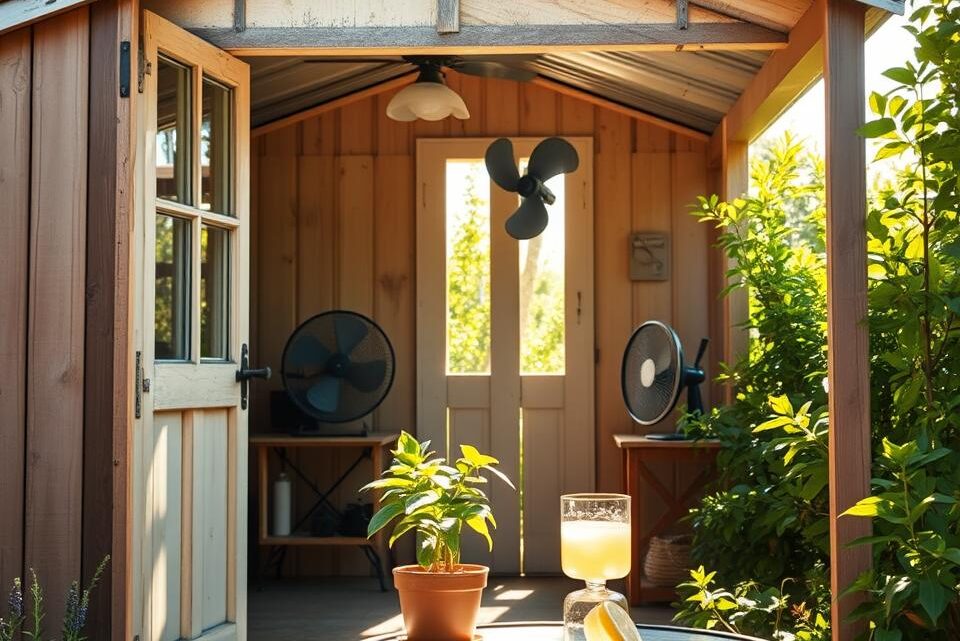
Many garden sheds become unbearably hot during the warmer months. This transformation from a useful space to a sweltering hotbox is a common experience for owners. The temperature inside can soar, making it difficult to spend time on hobbies or storage organisation.
Internal temperatures can exceed those outside by up to 10°C. This intense heat presents significant challenges. Prolonged exposure is not just uncomfortable but can be unsafe, as the body struggles to regulate its internal temperature. High humidity further complicates natural cooling through sweat.
Stored items are also at risk. Sensitive equipment, from power tools to electronics, can suffer damage or burnout in these conditions. Even a smartphone might display overheating warnings. Protecting this valuable space requires effective strategies.
This guide explores practical ways to manage heat. It offers a comprehensive range of solutions suitable for different budgets and shed types. From simple ventilation tweaks to more involved insulation projects, there are numerous approaches to achieve a cooler environment.
Proactive temperature management ensures the shed remains a functional and safe space throughout the year. The following sections will detail these methods, providing authoritative advice tailored to typical UK garden sheds.
Inhaltsverzeichnis
Key Takeaways
- Garden sheds can become excessively hot, with internal temperatures significantly higher than outdoors.
- Prolonged exposure to high temperatures poses health and safety risks.
- Stored items, including tools and electronics, are vulnerable to heat damage.
- Multiple strategies exist to reduce heat, from ventilation to insulation.
- Effective cooling maintains the shed’s usability and protects its contents.
- Solutions are available for various budgets and shed constructions.
Understanding the Heat Challenge in Garden Sheds
Understanding the physics behind shed overheating reveals why simple solutions often fall short. Solar radiation affects different building materials in distinct ways. Outdoor structures are particularly vulnerable to heat accumulation.
Common Causes of Overheating
Prolonged direct sunlight exposure is a primary factor. Many garden buildings receive intense solar radiation for hours. The highest internal temperature typically occurs around 4:00 PM.
Inadequate ventilation systems trap heated air inside. Without proper airflow, warmth has nowhere to escape. This creates an increasingly uncomfortable environment as the day progresses.
Construction materials play a crucial role. Darker colours absorb more solar energy than lighter shades. Poor insulation fails to regulate internal conditions effectively.
The Impact of Materials and Location
Metal structures conduct heat rapidly, becoming extremely hot to touch. Wood offers better natural insulation but can still overheat. Plastic sheds have varying thermal performance depending on composition.
Positioning significantly influences temperature. Structures in direct sunlight without natural shade are most vulnerable. Those near trees or buildings experience cooler conditions.
The combination of material choice and placement determines overall heat management. Understanding these factors helps in developing effective cooling strategies.
How to Keep your Garden Shed Cool in the Summer
Several practical approaches exist for regulating heat in external storage structures. These methods range from immediate adjustments to long-term investments. Each offers distinct benefits for temperature management.

Cooling techniques fall into four main categories. Passive solutions work without energy input, like strategic ventilation. Active systems include mechanical devices such as fans. Structural modifications involve physical changes to the building itself. Behavioural adjustments are simple changes in usage patterns.
Combining multiple approaches often yields the best results. For example, pairing shade creation with improved airflow can significantly reduce internal temperatures. This layered strategy provides more consistent cooling than any single method.
The cost spectrum varies widely. Free options include repositioning items for better air circulation. Moderate investments might involve insulation upgrades. Higher-cost solutions include specialised cooling equipment.
Every situation requires individual assessment. Consider the structure’s size, materials, and primary use. Budget and long-term goals also influence the ideal approach. The following sections explore these options in detail.
Optimising Insulation and Ventilation
Insulation serves as a critical defence against excessive heat accumulation. When combined with proper ventilation, it creates an effective system for temperature regulation. This approach benefits any building throughout the year.

Effective Insulation Techniques
Applying insulation to walls, roof, and floor creates a thermal barrier. This barrier slows heat transfer into the space. It maintains more comfortable conditions during warm weather.
Different materials offer various benefits. Rigid foam boards provide excellent coverage. Reflective foil products like Superfoil work well for specific applications. Proper installation ensures maximum efficiency.
Quality insulation delivers long-term advantages. It reduces electricity consumption for any cooling systems used. The investment protects stored items from temperature extremes.
Enhancing Natural Airflow
Ventilation works with insulation for optimal results. It allows hot air to escape while drawing in cooler air. This process regulates internal climate effectively.
Strategic vent placement creates cross-ventilation. Position openings on opposite walls for best airflow. Roof vents allow rising warm air to exit naturally.
Simple practices enhance ventilation significantly. Opening doors early in the morning captures cooler air. This approach takes advantage of natural breezes before heat builds up.
Implementing Double Glazed Windows for Effective Cooling
Upgrading to double glazed windows represents a sophisticated structural modification for superior temperature management. This approach directly tackles one of the primary sources of heat gain.

How Double Glazing Reduces Heat Transfer
Double glazed units feature two panes of glass separated by a sealed air or gas gap. This cavity acts as a powerful thermal barrier, significantly slowing heat transfer from outside.
The performance difference is substantial. Compared to a single pane, double glazing can reduce heat gain by up to 55%. This directly results in a lower internal temperature on sunny days.
Single-pane glass has a pronounced greenhouse effect. It allows solar radiation to enter easily but traps the resulting heat inside the structure. The additional layer in double glazing interrupts this process effectively.
The benefits extend beyond cooling. These windows also provide enhanced security, notable noise reduction, and improved energy efficiency throughout the year. This makes the building more comfortable and secure.
| Feature | Single Pane Window | Double Glazed Window |
|---|---|---|
| Heat Transfer Reduction | Base Level | Up to 55% Improvement |
| Noise Insulation | Minimal | Significant |
| Security Level | Standard | Enhanced |
| Impact on Internal Temperature | High (Greenhouse Effect) | Stabilised |
Quality is paramount. Products like toughened 3mm glass, often standard in brands like Tiger Sheds, offer superior heat and shock resistance. This increases the durability of the entire building.
Professional installation is critical for performance. Expert joiners ensure frames are fitted perfectly and edges are sealed thoroughly. This prevents drafts and moisture ingress, guaranteeing the windows work as intended.
Utilising Air Conditioning and Fans
For those seeking maximum climate control, mechanical cooling systems offer unparalleled performance. These solutions become particularly valuable when the structure serves as a workspace or frequent retreat.
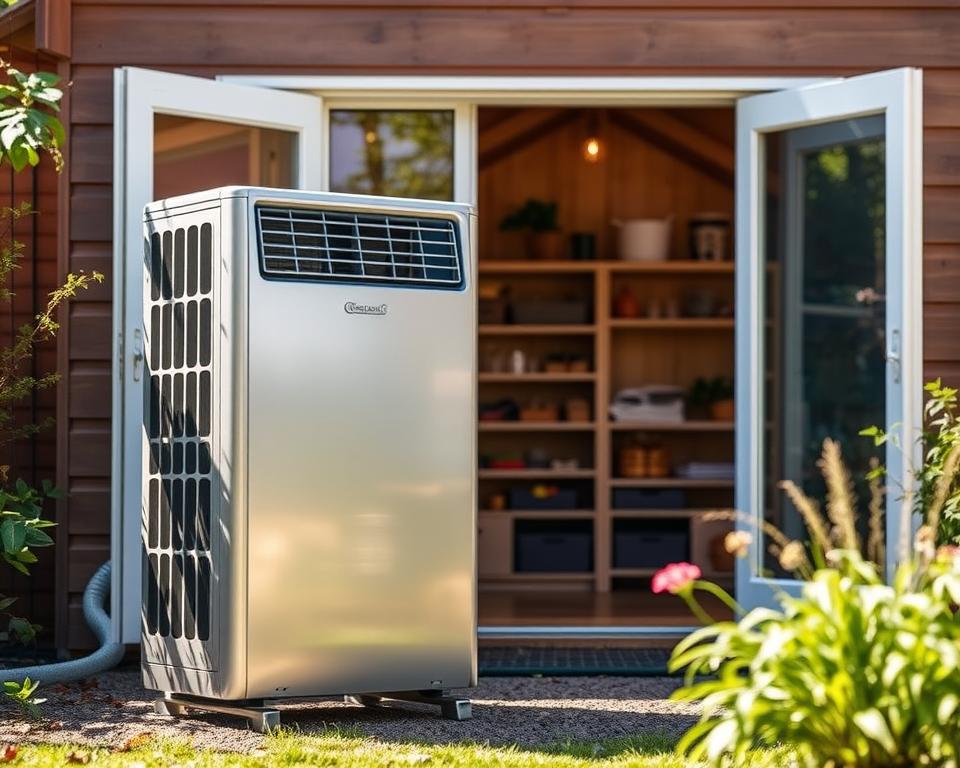
Mechanical options range from full air conditioning units to simpler fan systems. The choice depends on usage patterns, budget considerations, and existing infrastructure.
Choosing the Right Air Conditioning Unit
Selecting an appropriate air conditioning unit requires careful consideration of several factors. Sizing should match the building’s volume for optimal efficiency.
Energy efficiency ratings help minimise electricity consumption during operation. Portable units offer flexibility, while split systems provide quieter performance.
Modern air conditioning options include valuable features like app-based remote control. This allows pre-cooling the space before arrival. Some units even offer dual heating and cooling functionality.
Portable Fan Options for Improved Airflow
Fans present a more affordable cooling alternative to full air conditioning systems. They create airflow that provides perceived cooling through evaporation.
Various fan types suit different applications. Desk fans work well for personal spaces, while pedestal models offer adjustable height. Tower fans provide space-saving vertical designs.
Strategic placement maximises fan effectiveness. Position units near openings to draw cooler external air inside. This approach works best when combined with proper ventilation pathways.
Electrical requirements vary between systems. Extension cables can power devices from main buildings. Solar-powered options may suit structures without existing electricity supplies.
Applying Reflective Paint and Premium Roof Felt>
Modifying external finishes represents a straightforward method for reducing internal temperatures. This approach tackles heat at its source before it penetrates the structure.
Benefits of Using Reflective Paint
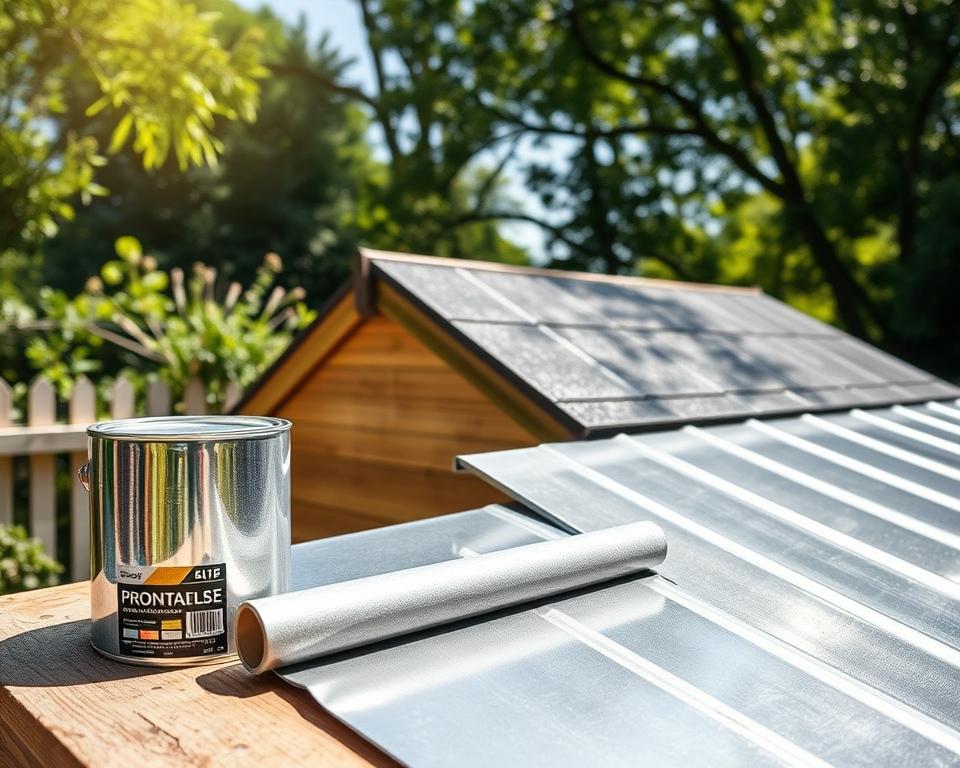
Light-coloured or specially formulated reflective paints make a significant difference in thermal performance. They work by deflecting sunlight rather than absorbing its energy. This reduces the amount of heat transferred through walls.
Choosing colours like white, cream, or pale grey can lower surface temperatures by 10-15 degrees. This protection extends the lifespan of the building by reducing UV damage. It is a cost-effective way to maintain comfort throughout the year.
Upgrading Your Roof with Quality Felt
The roof receives the most intense exposure to the sun. Premium mineral felt products provide superior heat resistance compared to basic materials. They enhance both thermal performance and waterproofing.
High-quality roof felt, like TigerFelt, offers lasting protection for any garden shed. This upgrade ensures the space remains functional during hot weather. Proper installation is key to maximising these benefits.
Adding More Windows for Natural Ventilation
Strategic window placement transforms a simple shed into a naturally ventilated retreat. This structural improvement delivers multiple benefits beyond temperature control.

Enhanced airflow and increased natural lighting work together to create a more comfortable space. The approach reduces electricity usage while improving aesthetic appeal.
Optimal Window Placement Strategies
Effective cross-ventilation requires at least two opening windows positioned strategically. Placing them on opposite walls creates natural air circulation pathways.
Cool external air enters through one opening while hot internal air exits through another. This process is driven by temperature differentials and natural convection currents.
Window height plays a crucial role in ventilation effectiveness. Lower openings allow cool air intake, while higher windows facilitate hot air escape. Roof windows take advantage of warm air’s natural tendency to rise.
Windows serve a dual purpose as both cooling assets and potential heat sources. During peak sunlight hours, covering them prevents solar heat gain while maintaining ventilation benefits.
| Covering Type | Installation Difficulty | Effectiveness | Cost Level |
|---|---|---|---|
| Fabric Curtains | Easy | Moderate | Low |
| Reflective Foil | Moderate | High | Low |
| Purpose-made Blinds | Moderate | High | Medium |
| Exterior Awnings | Professional | Excellent | High |
Permanent shading solutions like exterior awnings provide continuous protection. They allow windows to remain open for airflow while blocking direct sunlight.
Retrofitting additional windows requires careful consideration of structural integrity. Professional installation ensures weatherproofing remains intact after modifications.
Maximising Shade with External Structures
Creating shade through natural or constructed means addresses heat at its source. This approach prevents solar radiation from reaching the building before temperatures rise.
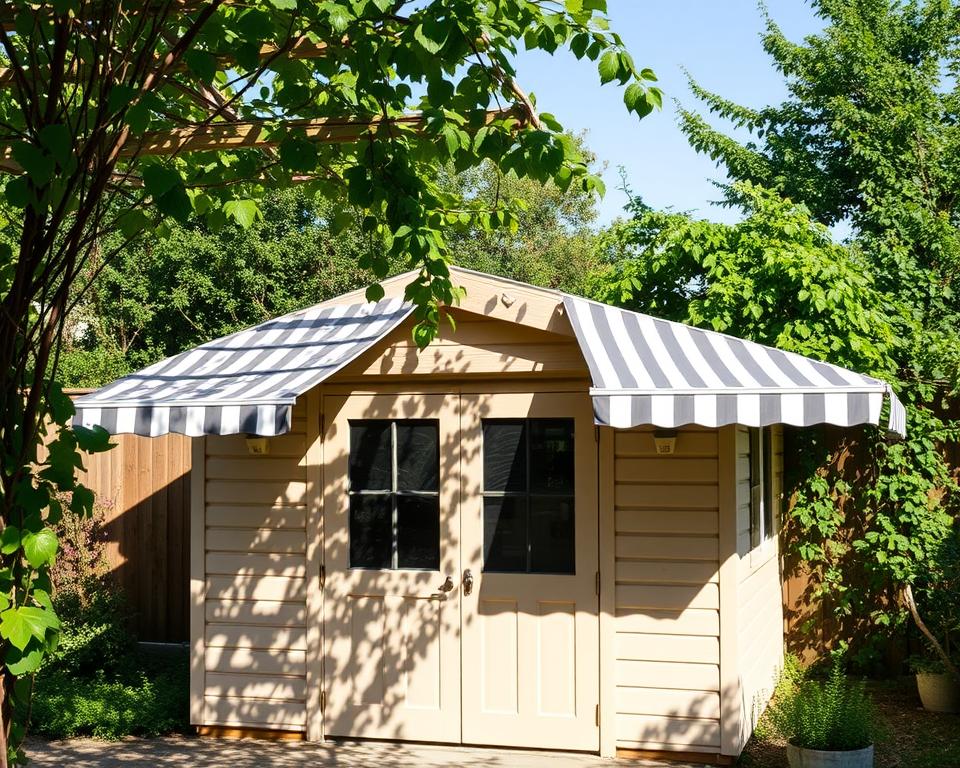
Strategic placement offers the simplest solution. Positioning a structure near mature trees or buildings provides natural cover throughout the day. This reduces direct sun exposure significantly.
Strategic Shed Placement and Natural Cover
Tree canopies create excellent shade and cooler microclimates through transpiration. However, placement beneath trees requires consideration of maintenance issues.
Falling leaves, bird droppings, and tree sap may affect the building’s exterior. There is also potential risk from falling branches during storms.
For smaller sheds, relocation to shadier positions might be practical. When planning new installations, observe shadow patterns across different times.
Using Pergolas, Trellises and Awnings
Where natural options are limited, constructed shade solutions provide excellent alternatives. Pergolas and trellises can be built over or adjacent to the space.
Enhancing these structures with climbing plants creates living shade with multiple benefits. Foliage layers provide additional insulation and evaporative cooling.
Suitable climbing plants for UK climates include:
- Wisteria
- Climbing roses
- Clematis
- Jasmine
These plants offer progressive shade development as they mature. They also improve the garden’s aesthetic appeal while serving a practical purpose.
Balance shade maximisation with maintaining adequate natural light inside. Ensure proper rain drainage and preserve access to doors and windows.
Simple Hacks for Temporary Cooling
For immediate relief during unexpected hot spells, simple temporary cooling techniques can be highly effective. These approaches offer quick solutions when permanent infrastructure is not yet available.
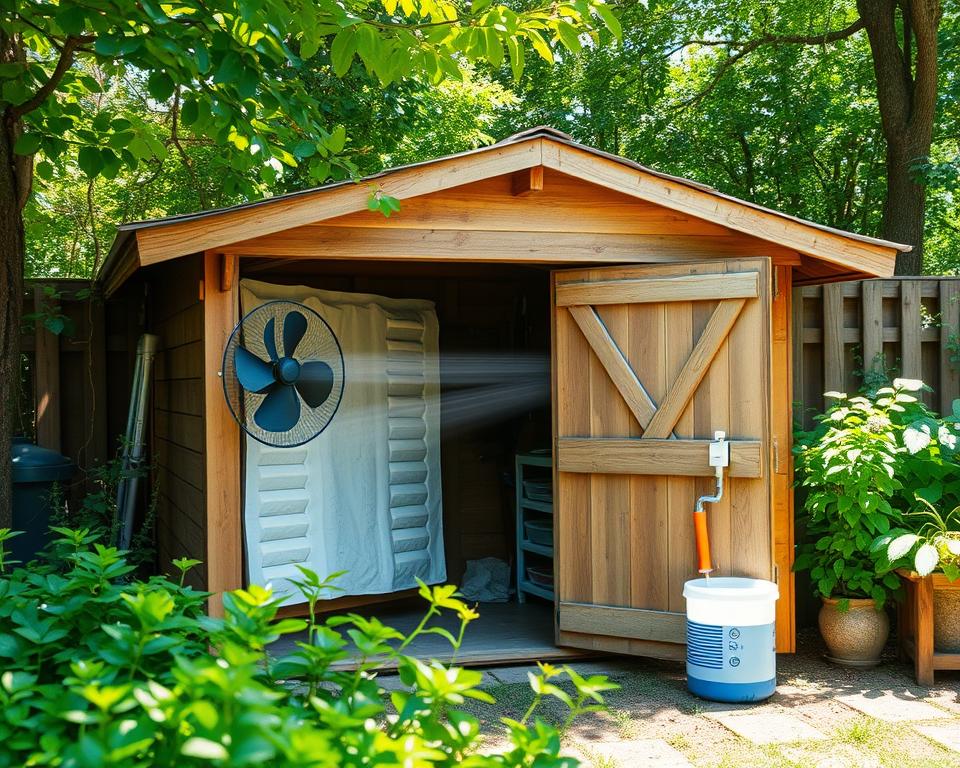
Hosing Down the Shed
Spraying the exterior with water provides rapid temperature reduction. The evaporative process absorbs heat as moisture transitions from liquid to vapour. This method can lower surface temperature by several degrees.
Apply water during early morning or evening hours for best results. Always ensure doors and windows remain closed to prevent interior damage. Wooden structures require particular care to avoid moisture-related issues.
During hosepipe bans, consider using recycled greywater if permitted. This approach works well as an occasional solution rather than daily routine.
Employing Dehumidifiers on Humid Days
Dehumidifiers address the muggy conditions common during UK warm spells. They remove excess moisture from the air, making the environment feel more comfortable. Lower humidity allows natural perspiration to evaporate more effectively.
These devices protect stored items from moisture damage and prevent rust formation. Regular emptying of water collection tanks is essential for continuous operation.
Consider the shed’s volume when selecting appropriate dehumidifier size. Both refrigerant and desiccant models offer viable options for different needs.
Exploring Material Choices and Structural Options
Different building materials exhibit distinct thermal properties that directly impact heat management capabilities. The selection process requires careful consideration of long-term performance.

Construction choices fundamentally determine how structures respond to warm weather. Material composition influences both initial heat absorption and retention patterns.
Metal vs Wooden Sheds: Managing Heat
Metal structures present significant thermal challenges. As efficient conductors, they rapidly absorb solar radiation and transfer warmth internally. External surfaces can become uncomfortably hot during summer days.
Modern plastic constructions using HDPE offer improved durability. However, they provide minimal natural insulation without additional measures. Supplementary cooling strategies become essential.
Wooden structures demonstrate superior temperature regulation. The natural cellular composition acts as an inherent insulator. This characteristic helps maintain more stable internal conditions.
Performance differences between materials are substantial. Under identical conditions, wooden options typically remain several degrees cooler than metal alternatives. This advantage stems from wood’s insulating properties.
Existing structures benefit from material-specific approaches. Metal sheds require aggressive shading solutions. Wooden buildings can leverage their natural advantages with complementary ventilation.
Conclusion
A multi-faceted approach to shed climate control ensures year-round usability and protection. The significant temperature differentials—sometimes exceeding outdoor readings by 10°C—make proactive measures essential for both comfort and equipment safety.
The comprehensive strategies presented offer adaptable solutions across various budgets. From simple ventilation adjustments to structural upgrades like insulation and double glazing, each method contributes to a cooler environment. Many improvements provide benefits throughout all seasons.
Even basic measures can substantially enhance comfort levels. Assessing individual circumstances helps prioritise the most effective options. Staggered implementation allows for gradual improvements as resources permit.
These approaches transform outdoor buildings into comfortable, functional spaces. They protect valuable contents while extending the structure’s lifespan. With thoughtful planning, any shed can become a pleasant retreat regardless of external conditions.
FAQ
What is the simplest way to reduce heat in a garden shed?
Enhancing ventilation is often the most straightforward method. Installing additional vents or ensuring existing windows can be opened allows hot air to escape, promoting natural airflow and reducing the internal temperature significantly.
Can the choice of shed material affect its internal temperature?
Absolutely. Materials like metal can absorb and retain a great deal of heat, whereas wood offers better natural insulation. Selecting the right building materials from the start is a crucial factor in managing the shed’s climate throughout the year.
How does insulation help keep a shed cool in summer?
Insulation works by creating a barrier that slows the transfer of heat. Properly insulated walls and roof prevent external warmth from penetrating the interior, helping to maintain a cooler and more stable environment even during the hottest days.
Are there any quick, temporary solutions for cooling a shed?
Yes, several temporary measures can provide relief. Hosing down the shed’s exterior on a hot day cools the surface through evaporation. Similarly, using a portable fan or a dehumidifier can improve comfort levels for short periods.
What role do windows play in shed cooling?
Windows are vital for both ventilation and light control. Double glazed units are particularly effective as they reduce heat transfer. Strategically placed windows can create cross-ventilation, allowing cool air to enter and hot air to exit the space.
Is it worth installing air conditioning in a garden shed?
For sheds used as workshops, offices, or studios, installing a small air conditioning unit can be a worthwhile investment. It provides precise temperature control, ensuring the space remains comfortable and usable regardless of the weather outside.
How can reflective paint help?
Reflective paint, often light-coloured or specially formulated, helps by reflecting sunlight away from the shed’s exterior. This reduces the amount of heat absorbed by the structure, thereby lowering the internal temperature.