How To Light Your Shed: Natural vs Artificial Lighting Solutions
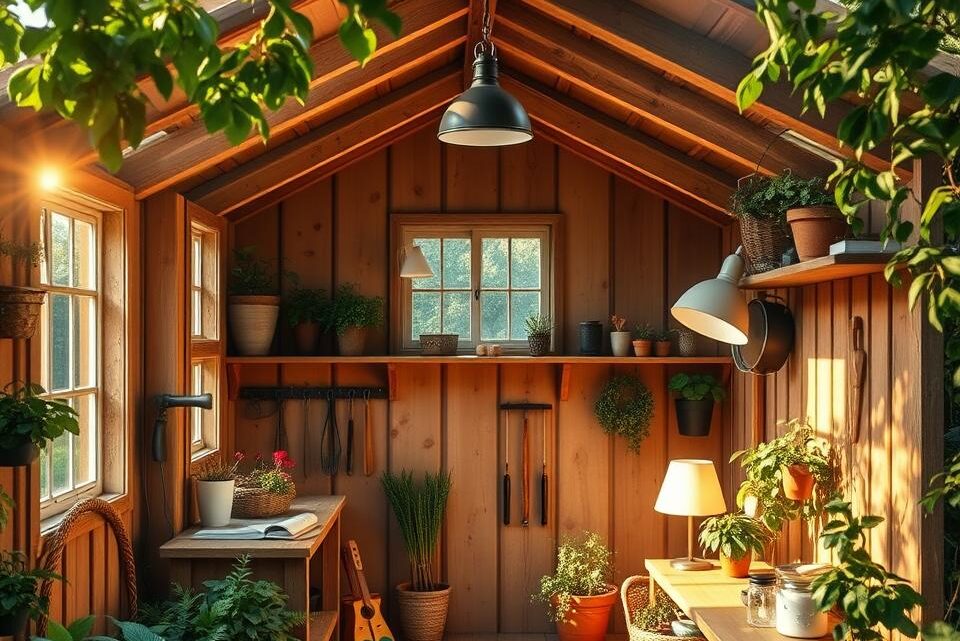
A garden shed is often more than just a storage space. It can become a workshop, a home office, or a creative retreat. The right illumination is the key to unlocking this potential.
Many people overlook the importance of good lighting in their sheds. This can turn a useful space into a dark and unwelcoming room. The choice of illumination affects mood, safety, and productivity.
There are two main categories to consider. The first harnesses the power of the sun, bringing natural light inside. The second relies on electrical or battery-powered lights for consistent brightness.
Making an informed decision transforms a basic structure into a versatile extension of the home. This guide explores the various options available.
Inhaltsverzeichnis
Key Takeaways
- Proper illumination is crucial for making a shed a functional and pleasant space.
- The choice of lighting directly impacts safety, productivity, and overall mood.
- There are two primary categories: natural light and artificial light.
- Many shed owners underestimate the importance of planning their lighting.
- Effective lighting makes a shed suitable for various uses beyond simple storage.
- Considerations include cost, installation complexity, and the intended use of the space.
Understanding the Importance of Shed Lighting
The quality of lighting determines whether a shed remains merely a storage unit or becomes a productive workspace. Many people overlook this critical aspect, but proper illumination makes all the difference in functionality and comfort.
Enhancing Safety and Functionality
Good lighting prevents accidents from tripping over objects or mishandling tools. It also improves security by deterring potential intruders, especially when combined with motion-activated systems.
Proper illumination helps keep storage areas organised. Finding items becomes quicker and easier with adequate brightness. This saves time and reduces frustration when searching for specific tools or supplies.
| Shed Purpose | Lighting Requirement | Key Benefits | Recommended Approach |
|---|---|---|---|
| Basic Storage | General ambient light | Easy item location | Single overhead fixture |
| Workshop | Bright task lighting | Precision work capability | Multiple focused lights |
| Home Office | Balanced, glare-free light | Reduced eye strain | Combined natural/artificial |
| Creative Studio | Adjustable colour temperature | Enhanced creativity | Flexible lighting system |
Creating a Versatile Workspace
Different activities demand specific lighting solutions. A potting shed requires bright light for detailed plant work, while a home office needs comfortable illumination for extended computer use.
Thoughtful lighting design transforms underutilised spaces into valuable extensions of the home. Family members are more likely to spend time in a well-lit, inviting area. This maximizes the shed’s potential beyond basic storage.
Quality illumination reduces eye strain and prevents fatigue. It enables comfortable work for longer periods, whether pursuing hobbies or professional tasks. The right approach makes the space truly versatile.
Exploring Natural Lighting Solutions for Sheds
The initial design phase presents the best opportunity to integrate features that capture free, natural illumination. These options eliminate electricity costs and create a pleasant, airy atmosphere.
Strategic placement is crucial for maximising the benefits of this approach.
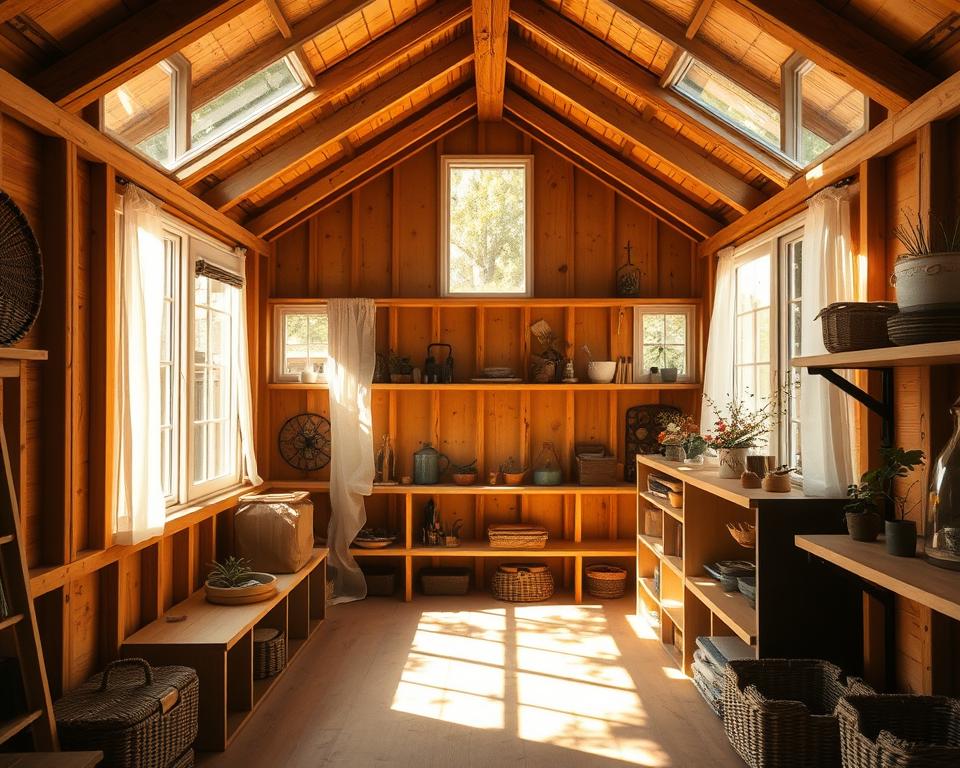
Maximising Sunlight with Windows and Skylights
Installing windows is the most common method for introducing natural light. They provide ventilation alongside illumination. Homeowners can choose between single or double-paned glass, with costs ranging from £300 to £1,000 per installation.
For overhead lighting, skylights are a premium choice. They flood the interior with sunlight throughout the day. Manual or automatic versions are available, with installation priced between £1,000 and £1,700.
Innovative Options: Cupolas and Sun Tubes
Solar tubes, or sun tunnels, offer a cost-effective alternative. These polished metal tubes channel light from the roof for around £750. They are less complex to install than traditional skylights.
Cupolas are dome-like structures on the roof that allow light to enter from all sides. Dormers are more substantial projects that add space and light. They represent a significant investment, costing from £2,500 to £20,000.
| Solution | Approximate Cost | Key Benefit |
|---|---|---|
| Single-Pane Window | £300 – £500 | Basic light and ventilation |
| Double-Pane Window | £500 – £1,000 | Improved insulation and light |
| Solar Tube | ~£750 | Affordable overhead light |
| Skylight | £1,000 – £1,700 | Maximum daylight exposure |
Effective design must account for the shed’s orientation and potential obstructions. This ensures consistent illumination despite changing weather and seasons.
How To Light Your Shed: Natural vs Artificial Lighting Solutions
The selection of illumination methods shapes the functionality of an outdoor building space. Each approach offers distinct advantages and limitations that owners should carefully consider.
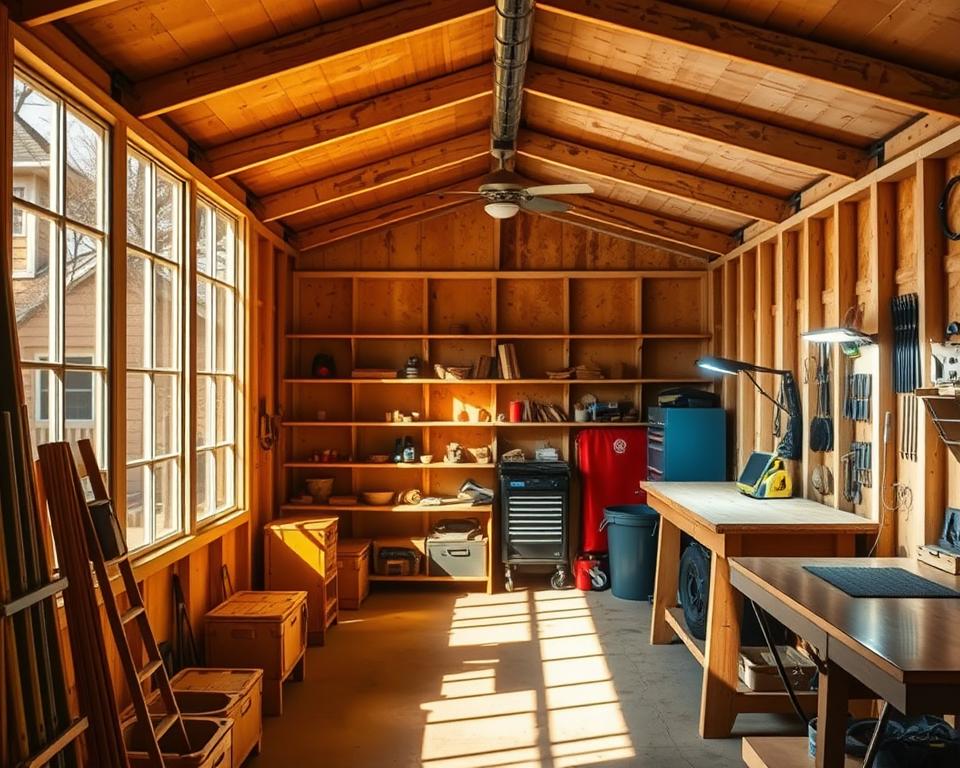
Sunlight provides a cost-free solution that enhances mood and wellbeing. It creates an inviting atmosphere while being environmentally sustainable. However, this method depends entirely on weather conditions and time of day.
Electrical systems deliver consistent brightness regardless of external factors. They enable productive use during evening hours or gloomy weather. The initial setup requires investment and ongoing energy consumption.
| Feature | Daylight | Electrical |
|---|---|---|
| Cost | Free | Ongoing |
| Availability | Weather-dependent | On-demand |
| Environmental Impact | Low | Higher |
| Consistency | Variable | Reliable |
Many successful installations combine both approaches effectively. As one designer notes, “The most functional spaces leverage sunlight when available while maintaining electrical backup.”
A balanced approach maximises benefits while minimising limitations of either system.
Consider primary usage times and local climate when planning. The ideal combination varies based on individual requirements and budget constraints.
Optimising Artificial Lighting Options
When selecting electrical illumination for an outbuilding, modern technology offers superior choices over traditional options. Homeowners can choose from several types of fixtures that provide reliable brightness regardless of weather conditions.
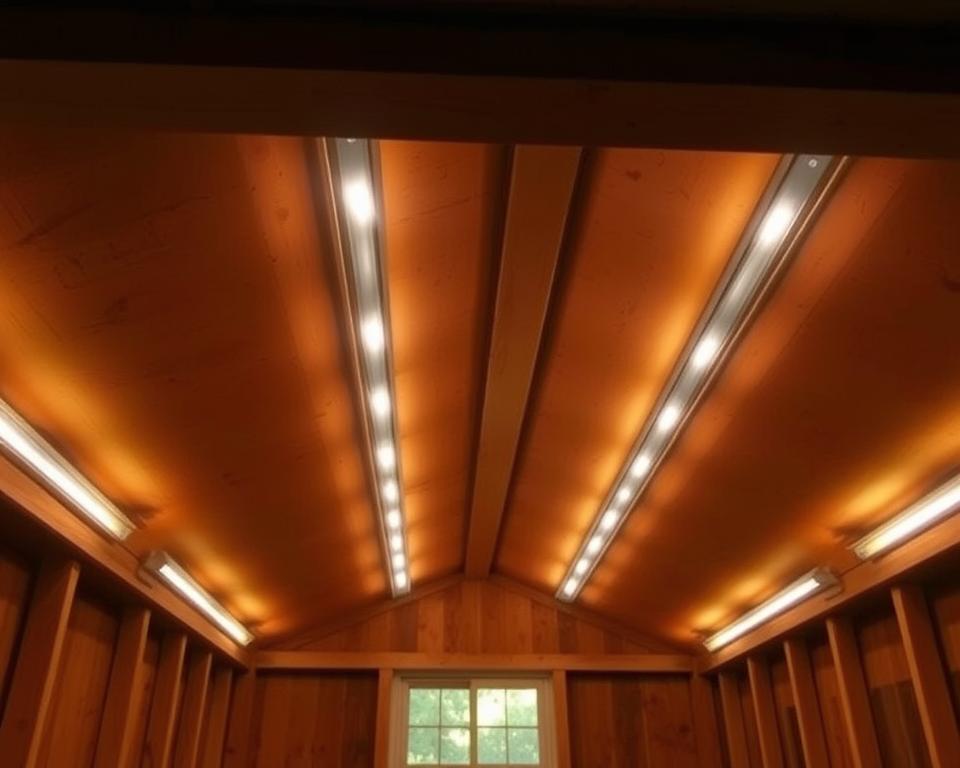
LED Lights, Incandescent Bulbs and Energy Efficiency
LED lights represent the most efficient solution available today. These fixtures use 75% less energy than incandescent alternatives while lasting up to 40,000 hours. They provide broad, even illumination perfect for ceiling installations.
LED batten lights come in 4ft and 5ft options with IP65 weatherproof ratings. This makes them ideal for garden buildings exposed to moisture. Their adjustable colour temperatures suit different activities from woodworking to office work.
Incandescent bulbs remain common due to low initial cost. However, they generate only 5-20 lumens per watt and have short lifespans. The higher electricity consumption often offsets any upfront savings.
Fluorescent lighting offers a middle ground with 10,000-15,000 hour lifespans. These fixtures also use 75% less energy than traditional bulbs. Some users report flickering issues and mercury content concerns.
Task and Accent Lighting for Detailed Work
Task lighting becomes crucial for workshops and hobby spaces. Under-cabinet LED tubes provide excellent illumination for workbenches. Adjustable clamp-on fixtures offer flexible positioning for detailed projects.
Accent lighting enhances aesthetics while providing functional benefits. Wall sconces create inviting atmospheres in entertainment spaces. Colourful LED strips work well in playhouses or creative areas.
A layered approach combines different lighting types effectively. Ambient ceiling lights provide general illumination throughout the space. Task and accent fixtures then address specific needs in work zones.
Integrating Smart and Motion-Activated Lighting Systems
Advanced technology brings a new level of convenience and control to garden buildings. Smart systems and motion sensors automate illumination, making spaces more responsive and efficient.
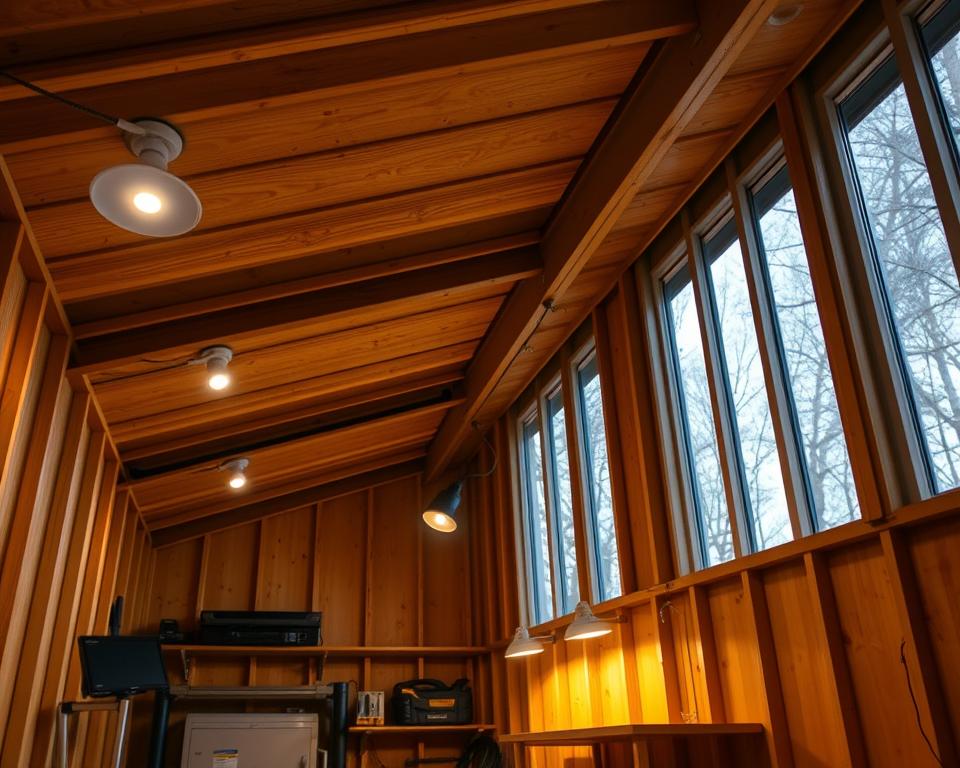
These modern fixtures can be managed remotely via smartphone apps or voice commands. This allows for the creation of custom scenes tailored to different activities. A bright setting for a workshop can switch to a softer ambience for relaxation with a simple command.
Benefits of Automation in Shed Lighting
Automation saves time and energy. Scheduling features ensure lights turn on or off automatically, which is ideal for security. It creates the appearance of occupancy when the shed is unused.
Motion-activated lighting provides immediate illumination upon entry. This is incredibly convenient when your hands are full. It also enhances safety by deterring unwanted activity around the building.
Integrating these systems creates sophisticated scenarios. For example, lights can activate upon door opening and adjust brightness based on the time of day. This intelligent way of managing power reduces waste.
While the initial investment is higher, the long-term benefits in convenience, security, and energy savings are substantial. It is a smart power upgrade for any frequently used outdoor space.
Avoiding Common Shed Lighting Mistakes
Strategic placement of light sources is crucial for creating functional and comfortable garden buildings. Many people make simple errors that reduce the effectiveness of their illumination systems.
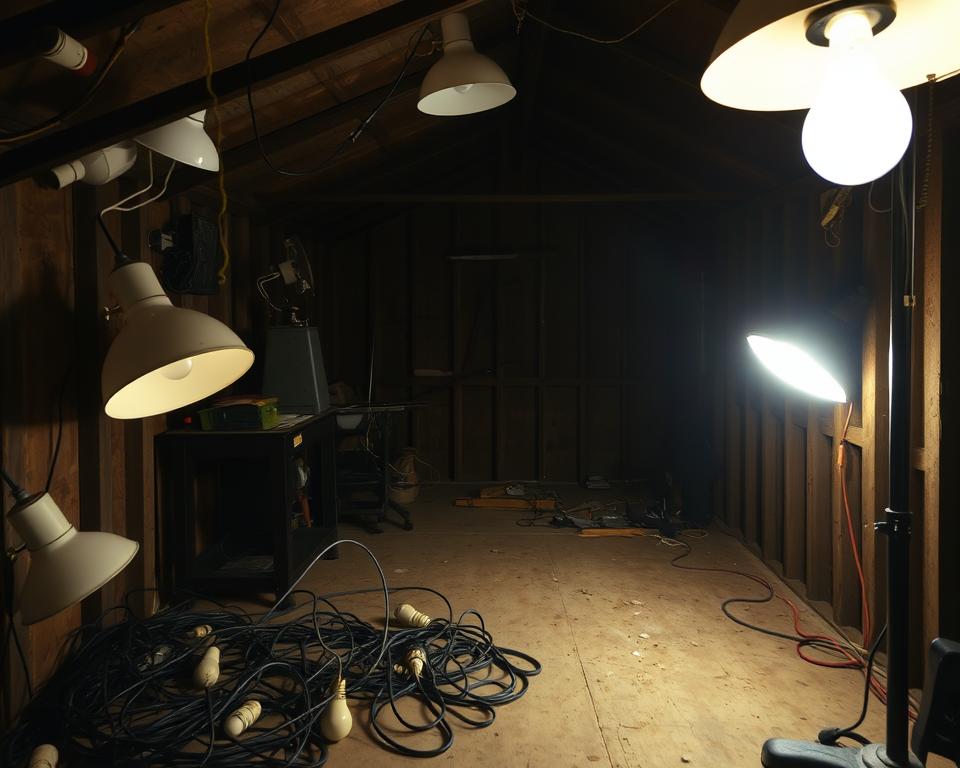
One frequent error involves inadequate planning. This leads to poorly positioned fixtures that create dark corners and harsh shadows. The space becomes difficult to use effectively.
Improper Light Placement and Overreliance on Single Sources
Relying on a single overhead fixture causes uneven illumination. Shadowed areas appear around the perimeter. Work surfaces and storage locations receive insufficient brightness.
Ignoring natural illumination opportunities is another common oversight. Over-dependence on artificial systems increases electricity costs unnecessarily. Strategic window or skylight placement provides free daytime lighting.
Improper fixture placement causes glare and unwanted shadows. This affects visibility for detailed tasks. Positioning switches far from entry points creates frustration.
| Common Mistake | Impact | Solution |
|---|---|---|
| Single light source | Uneven illumination | Multiple fixture types |
| Poor switch placement | Inconvenient access | Near entry points |
| Wattage-based selection | Inadequate brightness | Lumens-based choice |
| Ignoring energy efficiency | High electricity bills | LED technology |
Selecting bulbs based on wattage rather than lumens leads to under-lit spaces. Modern LED technology produces high brightness with low energy consumption. This consideration prevents future electricity waste.
Effective planning combines natural and artificial sources. Layered approaches with multiple fixture types address different area needs. Task lighting positioned directly above work surfaces eliminates shadows.
Creative Shed Lighting Ideas for Enhanced Functionality
Transforming a garden building into a cherished retreat involves imaginative illumination strategies. Moving beyond basic fixtures opens up a world of possibilities for both utility and atmosphere.
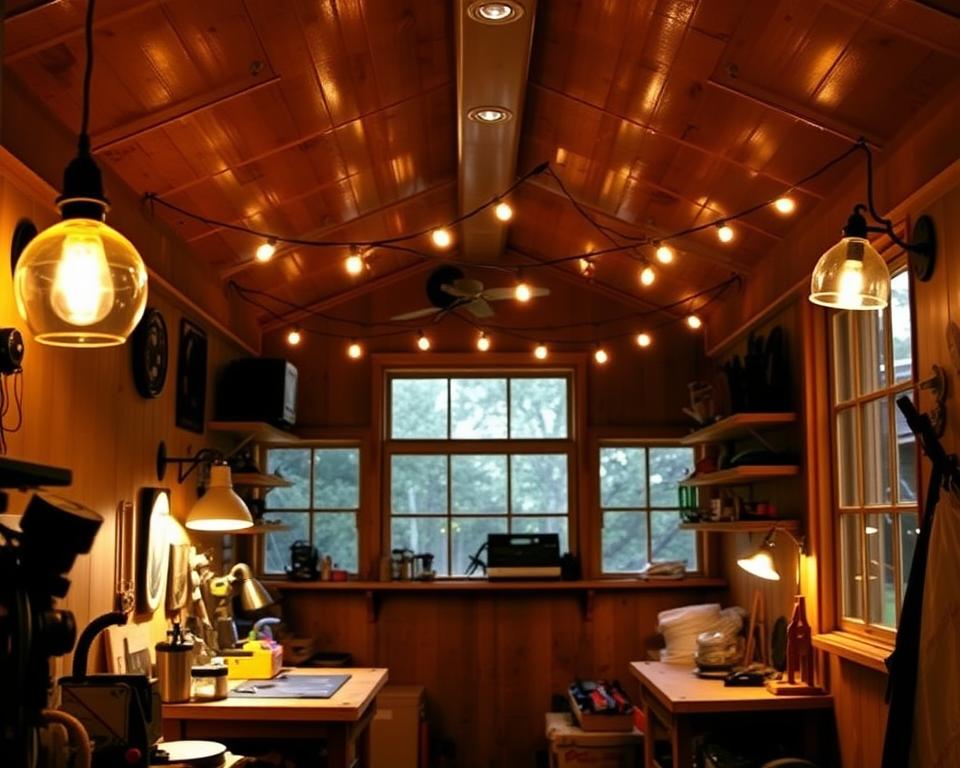
Decorative options like LED string lights offer a versatile and energy-efficient solution. They cast a soft glow and are available in various colours, allowing for a fully customised ambience. This makes them perfect for creating anything from a cosy reading nook to a vibrant entertainment area.
Design Considerations and Aesthetic Appeal
For an upscale appearance, LED chandeliers introduce unexpected elegance. They are ideal for she-sheds or garden bars, combining aesthetic appeal with long-lasting performance. The right fixture complements the interior design while providing ample brightness.
Task-specific lighting ideas are crucial. An adjustable desk lamp is perfect for a shed used as a home office, reducing eye strain. For workshops, under-cabinet puck lights illuminate tool storage, while colourful LED strips add fun to a playhouse.
A simple yet effective design tip is to paint the interior white or a light colour. This dramatically improves light reflection, making the entire space feel brighter without adding extra bulbs.
Budget and Cost Efficiency Factors
Budget-friendly lighting ideas abound. Battery-powered lamps require no electrical installation, offering great flexibility. Solar-powered options eliminate ongoing electricity costs, saving money over time.
When considering costs, look beyond the initial purchase price. Factor in energy consumption and maintenance. LED technology, though sometimes pricier upfront, often proves more economical due to its low energy use and long lifespan.
Layering different types of lights—ambient, task, and accent—creates a highly functional space. This approach allows for tailored brightness in different zones, ensuring the shed meets all its intended purposes beautifully.
Balancing Daylight and Artificial Light in Today’s Sheds
Successful illumination strategies must account for the constant fluctuations in natural light availability across seasons. The most functional garden buildings seamlessly integrate both sources to maintain consistent usability regardless of external conditions.

Seasonal and Daily Considerations
Summer’s extended daylight hours significantly reduce dependence on electrical systems. During winter months, however, shorter days and lower sun angles often necessitate artificial illumination even during daytime. This seasonal variation directly impacts energy consumption patterns.
Daily transitions require thoughtful planning. Maximising free sunlight during morning and afternoon hours reduces electricity usage. As daylight fades, supplemental artificial sources should provide gradual brightness increases to avoid eye strain.
Geographical factors play a crucial role in this balance. Shed orientation relative to the sun’s path determines sunlight exposure throughout the day. Nearby obstructions like trees or buildings can cast shadows that limit natural illumination.
Research indicates that time spent in natural light positively affects mood and circadian rhythms. Designing spaces that maximise daylight exposure during working hours supports wellbeing while reducing energy costs.
Automated systems with photosensors offer practical solutions. These devices dim or switch off artificial fixtures when sufficient daylight is available. They gradually increase brightness as natural light diminishes, creating seamless transitions.
The most effective approach views natural and artificial sources as complementary rather than competing alternatives. This perspective creates adaptable systems that respond intelligently to changing conditions throughout the year.
Conclusion
Effective illumination transforms any garden building from a simple storage area into a truly versatile space. The layered lighting approach proves most effective, combining ambient ceiling fixtures with focused task lighting and accent features. This method ensures every corner receives appropriate brightness while offering flexibility for different activities.
Quality lighting extends beyond simple visibility to enhance safety, productivity, and comfort. Modern LED technology provides excellent energy efficiency compared to traditional incandescent bulbs. The initial investment in proper fixtures pays dividends through reduced electricity costs and improved functionality.
Whether creating a workshop, home office, or creative studio, thoughtful planning ensures the space meets its full potential. The right combination of lighting options creates an inviting atmosphere that encourages regular use. With careful consideration of specific needs, any shed owner can achieve professional results that transform their outdoor building.
FAQ
What are the main benefits of good shed lighting?
Effective lighting significantly improves safety by illuminating potential hazards and tools. It also transforms the space into a versatile area for various tasks, from intricate DIY projects to general storage organisation.
Can I install lighting in a shed without a power supply?
A>Yes, solar-powered lights are an excellent option for sheds without an existing electricity supply. These systems use a solar panel to charge during the day, providing illumination after dark without increasing energy bills.
Why are LED lights often recommended for shed illumination?
LED lights are highly recommended due to their superior energy efficiency and long lifespan. They consume less power than traditional incandescent bulbs and produce minimal heat, making them a safer and more cost-effective choice for long hours of use.
How can I reduce shadows when working on detailed projects?
To minimise shadows, incorporate task lighting. This involves using directed light sources, such as strip lights or an adjustable lamp, positioned to shine directly onto the work area. This provides clear, focused illumination for precise tasks.
Are motion-activated lights a practical choice for a storage shed?
Absolutely. Motion-activated lighting offers great convenience and energy savings. The lights only turn on when movement is detected, which is ideal for quickly finding items without fumbling for a switch in the dark.
What is a common mistake to avoid when planning shed lighting?
A frequent error is relying on a single, central light source. This often creates harsh shadows. A better approach is to use a combination of general ceiling lights and specific task lighting to evenly illuminate the entire space.
How can I incorporate natural light into my shed’s design?
Adding windows, skylights, or sun tubes are fantastic ways to bring natural light into a shed. This not only reduces the need for artificial lights during daylight hours but also creates a more pleasant and airy environment.
What should I consider for lighting a shed used for multiple purposes?
For a multi-functional shed, a layered lighting design is key. Combine general ambient lighting with brighter task lights for workbenches and accent lighting for display areas. This allows you to adapt the brightness and mood for different activities.