How to Put Up a Metal Gazebo: Easy Installation Tips
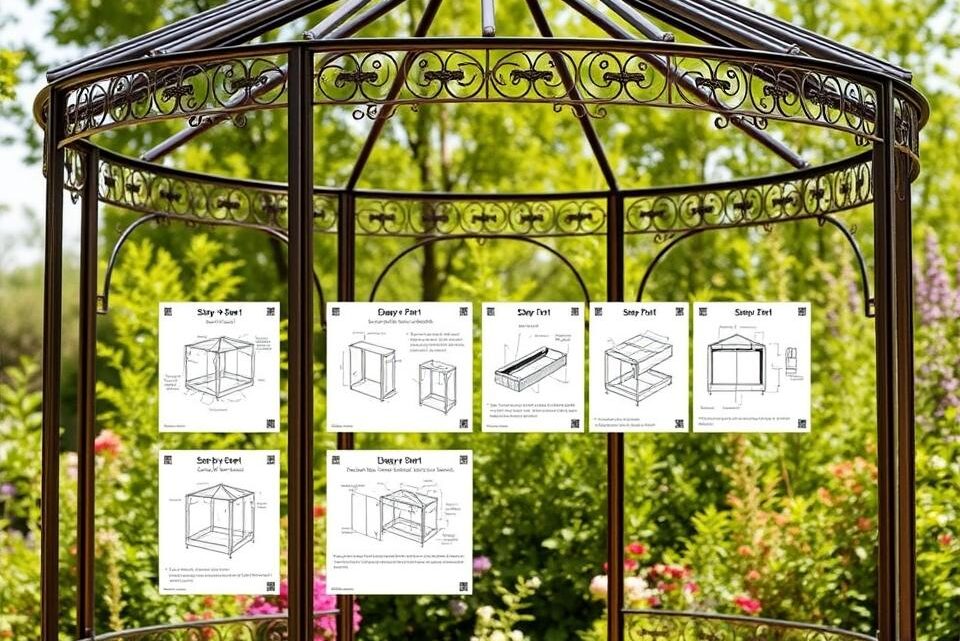
A metal gazebo installation can completely transform a garden into a beautiful and functional outdoor space. This structure offers a dedicated area for entertaining guests, enjoying family meals, or simply relaxing in the shade.
Unlike temporary pop-up shelters, a metal-framed gazebo is designed for long-term use and durability. Its robust construction, often featuring aluminium or steel, provides excellent resistance to the typical British weather. This makes it a sound investment for any homeowner.
This guide is designed to walk you through the entire installation process. Proper assembly is crucial for ensuring the safety, stability, and longevity of your new garden feature. A well-executed setup guarantees you get the most from your investment for years to come.
Even those with limited DIY experience will find the process manageable. The instructions break down the task into clear, logical stages. From initial site preparation to the final adjustments, every step is covered to ensure a successful outcome.
Inhaltsverzeichnis
Key Takeaways
- Installing a metal gazebo significantly enhances the usability of your garden.
- These structures are a durable, long-term upgrade from temporary shelters.
- Correct assembly is essential for safety, stability, and product longevity.
- This guide provides a comprehensive, step-by-step approach suitable for all skill levels.
- Careful preparation and following each stage carefully leads to the best results.
Introduction
A well-placed garden structure offers more than just aesthetic appeal, providing functional benefits throughout the seasons. This addition creates valuable outdoor space that extends living areas.
Transforming Your Outdoor Space
Adding a gazebo fundamentally changes how homeowners use their garden area. It becomes a versatile entertainment venue and sheltered dining space.
The structure serves multiple purposes beyond basic shelter. It can host gatherings or provide a quiet relaxation zone.
The Benefits of a Properly Installed Gazebo
Correct installation is crucial for any garden gazebo. A well-erected metal framework ensures stability and longevity.
Proper setup prevents potential issues like wind damage. It also protects against premature wear and material deterioration.
| Benefit | Proper Installation | Improper Installation |
|---|---|---|
| Structural Stability | Excellent resistance to weather | Risk of collapse |
| Lifespan | Long-term durability | Premature deterioration |
| Safety | Secure and stable | Potential hazards |
These benefits highlight why professional installation matters for metal garden features. The right approach ensures years of enjoyment.
Preparing for Your Metal Gazebo Installation
The initial planning phase determines the long-term performance and safety of your outdoor structure. Proper groundwork prevents common assembly errors and ensures years of trouble-free enjoyment.
Gathering Materials and Tools
Before starting, assemble all necessary items from the gazebo kit. This includes frame components, roof panels, bolts, and fasteners. Always check that all parts are present according to the manufacturer’s instructions.
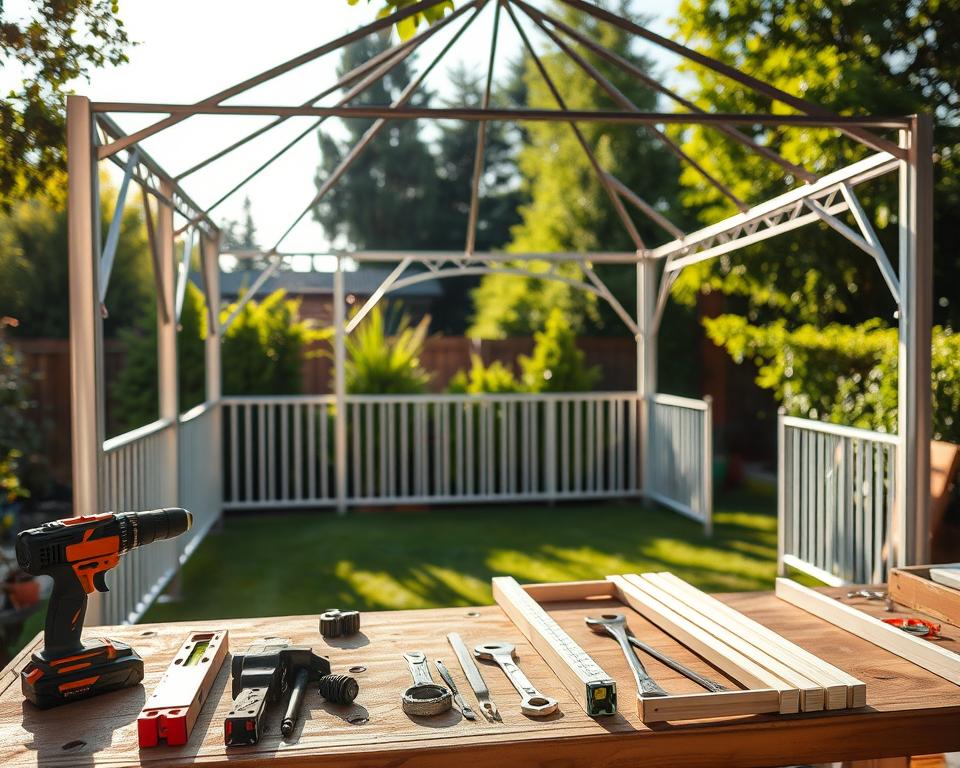
Essential tools include a level for alignment, tape measure for spacing, and a drill with appropriate bits. A hammer or rubber mallet helps drive ground anchors securely. Having everything organised streamlines the entire process.
Choosing the Right Location
Selecting the optimal spot in your garden requires careful consideration. Level ground is essential for structural stability. Uneven surfaces complicate assembly and affect long-term durability.
Consider sun exposure patterns throughout the day for comfort. Assess wind patterns to identify sheltered areas. Maintain safe distances from trees, fences, and overhead hazards.
| Location Factor | Ideal Conditions | Potential Issues |
|---|---|---|
| Ground Surface | Level and firm | Uneven or soft terrain |
| Sun Exposure | Balanced shade/sun | Constant direct sunlight |
| Wind Protection | Sheltered position | Wind corridors |
| Accessibility | Easy house access | Remote or obstructed |
Check local regulations regarding permanent structures. Some areas require planning permission for larger installations. Proper placement ensures both compliance and optimal enjoyment.
How to Put Up a Metal Gazebo
The physical construction phase is where careful preparation pays off, transforming a collection of parts into a sturdy garden feature. This stage involves a logical sequence of steps for the frame and roof assembly.
Assembling the Frame and Roof
Begin by systematically laying out all frame components, roof panels, bolts, and the canopy. Following the manufacturer’s guide is essential for this assembly process.
Construct the upper frame first. Connect crossbars and roof supports using the provided bolts. This creates the pitched roof structure. It is often easier to drape the canopy fabric over the frame before it is fully upright.
Attaching the vertical legs is a critical step. Having two people work together is highly recommended for safety and efficiency. One person can stabilise the frame while the other secures the leg connections.
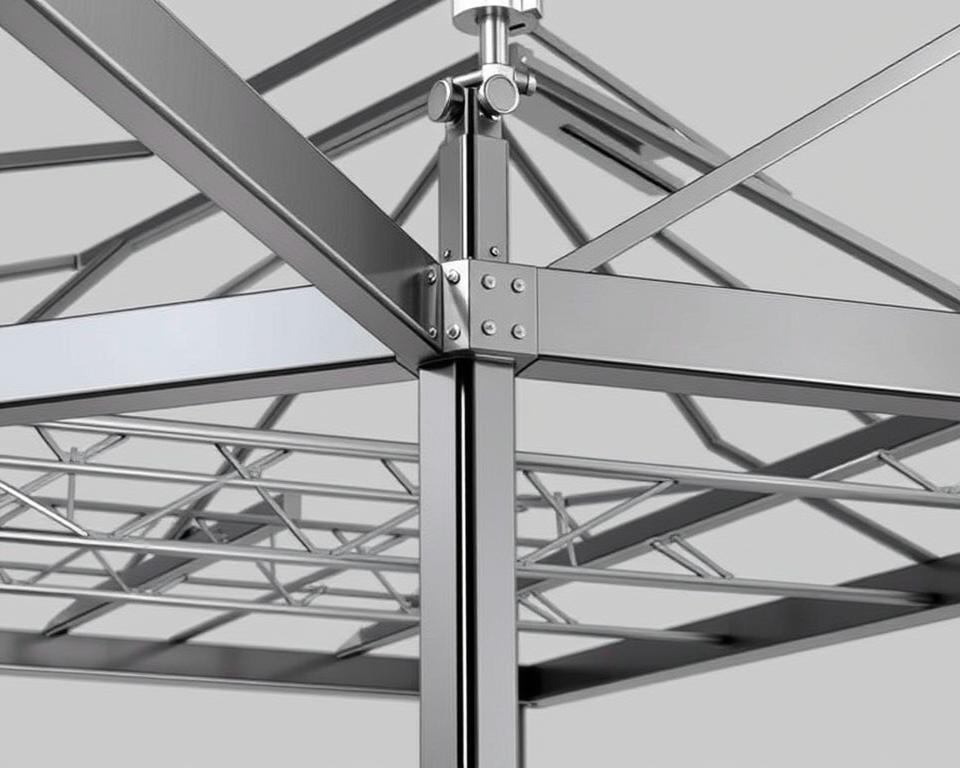
Using a level throughout this process ensures the structure remains straight. This prevents stress and guarantees a proper fit for all panels.
Securing and Anchoring the Structure
Once the frame is upright, securing it to the ground is paramount for stability. The correct anchoring method depends on the surface.
| Ground Type | Recommended Anchor | Key Consideration |
|---|---|---|
| Lawn/Soil | Spiral Ground Anchors | Hammer deeply for maximum hold. |
| Patio/Concrete | Expansion Bolts | Requires a drill and correct fittings. |
| Temporary Setup | Dedicated Weight Bags | Ideal for surfaces that cannot be pierced. |
Hammer anchors into the ground at the designated spots on the leg bases. Ensure they are driven in fully before tightening the attachment points.
Finalising the Assembly Process
The final step involves a thorough inspection. Double-check that all bolts are tight and the structure is level from every angle.
Verify that the legs are vertical and do not splay outwards. Confirm the roof panels are aligned correctly for water drainage. A meticulous final check confirms the structural integrity and safety of the entire installation.
Essential Safety and Maintenance Tips for Your Gazebo
A comprehensive maintenance schedule combined with safety awareness protects your investment from weather damage. These practices ensure your outdoor feature remains secure and functional throughout the seasons.
Implementing Safety Precautions
Proper protective equipment is essential during assembly. Wear gloves to prevent cuts from sharp metal edges. Safety glasses protect eyes from flying debris.
Handle tools carefully, using them only for their intended purposes. Avoid damaged equipment that could slip or break. Be mindful of pinch points where metal parts connect during assembly.
Watch for overhead obstacles when lifting roof panels. Maintain safe distances from power lines and tree branches. Keep children and pets away from the work area to prevent accidents.
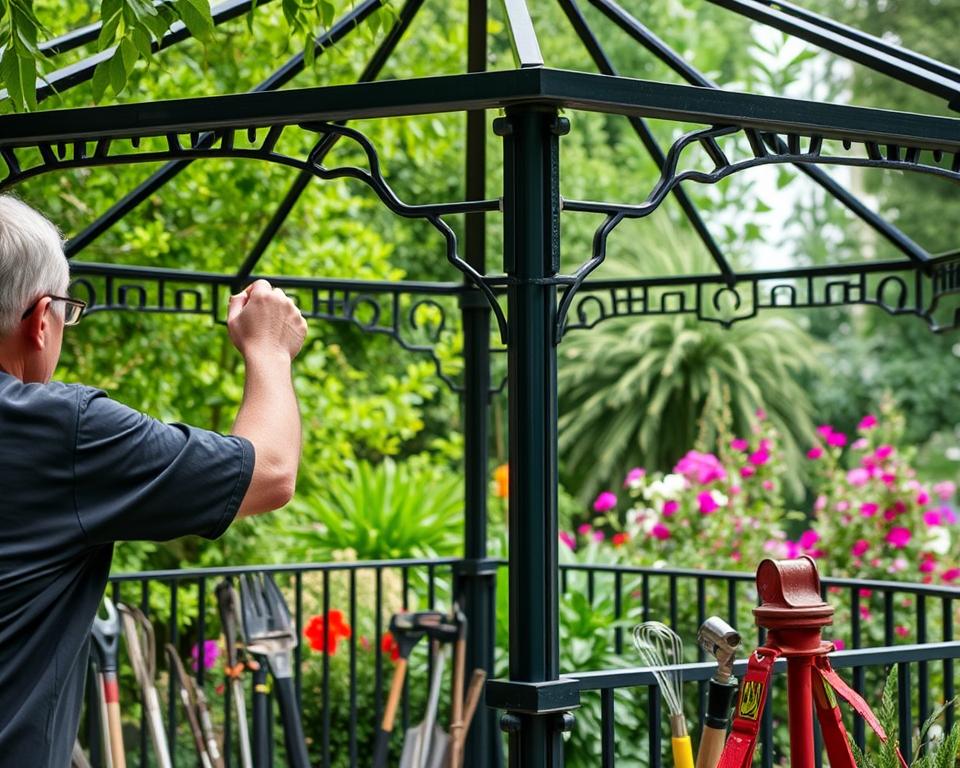
Secure anchor straps to the metal frame, not the canopy fabric. This prevents material tearing in strong winds. Always ensure the structure is placed on level ground for stability.
Regular Maintenance and Inspection Guidelines
Clean your gazebo regularly using mild soap and water. This removes accumulated dirt and debris that can degrade materials over time. Thorough drying prevents mould and mildew growth.
Inspect all components before and after each use. Look for fabric tears, rust spots, and loose bolts. Seasonal checks help identify wear indicators early.
| Maintenance Task | Frequency | Key Actions |
|---|---|---|
| Cleaning | Monthly/Seasonal | Mild soap, thorough drying |
| Structural Inspection | Before each use | Check bolts, frame, anchors |
| Canopy Care | As needed | Remove debris, check tears |
| Storage Preparation | End of season | Dry completely, use weatherproof bags |
Store components securely when not in use. Weatherproof bags or containers protect against moisture and pest damage. Proper storage extends the lifespan of these temporary structures.
Expert Installation Tips and Time-Saving Advice
Mastering the final stages of gazebo assembly requires attention to expert techniques that streamline the process. Following professional recommendations ensures a secure and efficient setup for your outdoor structure.
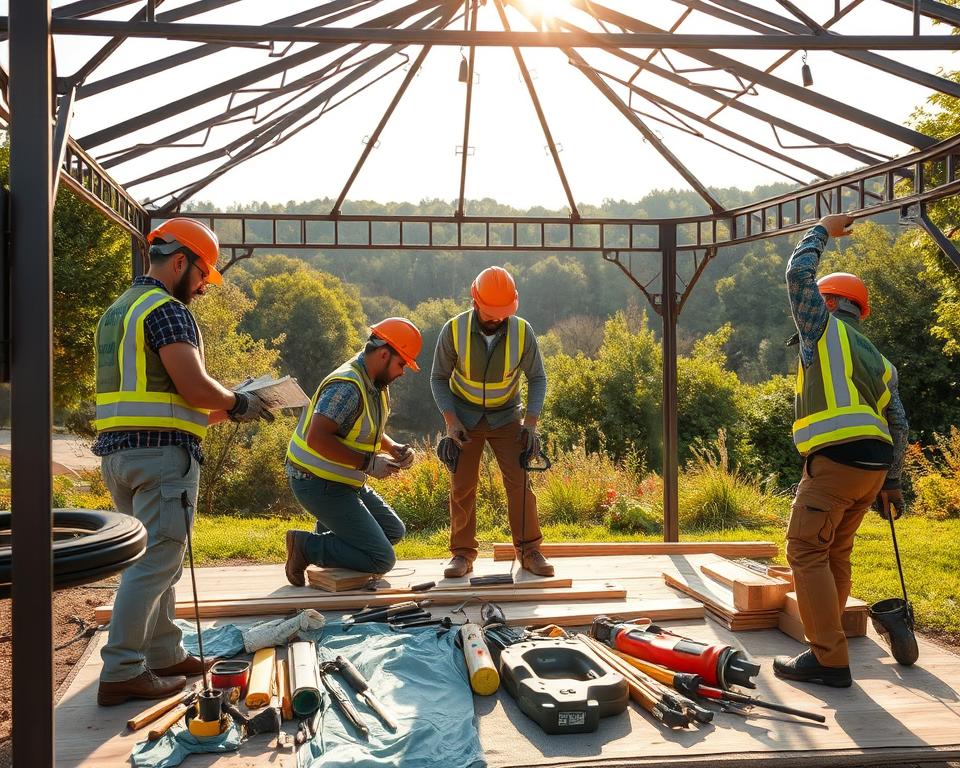
Working as a Team for Efficient Setup
Successful installation fundamentally depends on teamwork. Having at least two people available makes the entire process smoother and safer.
For larger models measuring 4×4 metres or more, four individuals are recommended. This allows for proper stabilisation of frame components during assembly.
Effective role division saves considerable time. One person can hold the roof sections steady while another attaches the panels. Meanwhile, additional helpers can prepare the next assembly step.
- Pre-sort all kit components before beginning
- Keep tools within easy reach to maintain workflow
- Read instructions completely before starting
- Begin assembly in the final location to avoid moving the heavy structure
Avoiding Common Installation Pitfalls
Many installation issues arise from simple oversights. Checking ground levelness before starting prevents unstable structures that require complete repositioning.
Bolts present another common challenge. Over-tightening can strip threads or crack metal components. Under-tightening leaves connections dangerously loose.
Canopy attachment requires particular care. Forcing fabric over frames or attaching it at the wrong stage can tear material. This affects both appearance and water drainage.
Always extend all legs to identical heights. This ensures the roof sits level and weight distributes evenly across the frame. Proper leg adjustment is crucial for structural integrity.
Conclusion
The effort invested in proper assembly yields lasting dividends in outdoor living quality. This comprehensive guide has outlined the essential step-by-step process for creating a durable garden feature.
Following thorough preparation and systematic assembly ensures excellent stability and longevity. Even those with limited DIY experience can achieve professional results by working methodically.
Choosing appropriate accessories like leg weights for concrete surfaces completes the setup for optimal performance. These additions enhance the structure’s resilience in various weather conditions.
The completed gazebo becomes a valuable garden area for relaxation and entertainment. It provides a defined space that enhances outdoor living throughout the seasons.
Proper installation transforms these structures into permanent assets. Homeowners can enjoy their investment for years with minimal maintenance requirements.
FAQ
What tools are typically needed to assemble a metal gazebo?
Most metal gazebo kits require basic tools for assembly. These often include a hammer, adjustable spanner, screwdrivers, and a spirit level. Some models might need a power drill for anchoring the structure securely. Always check the manufacturer’s instructions for a complete list.
How many people are recommended for the assembly process?
It is strongly advised to have at least two people working together. This makes handling the frame panels and roof sections much safer and more efficient. A solo installation increases the risk of damage to the gazebo or personal injury.
Can a metal gazebo be placed directly onto a lawn?
A> While possible, placing a gazebo directly onto grass is not ideal. The ground may be uneven, leading to instability. For better stability, it is best to position the gazebo on a solid, level surface such as a patio or concrete base.
Why is anchoring a metal gazebo so important?
Anchoring is crucial for safety and stability. Proper anchors prevent the gazebo from lifting in strong winds or shifting from its position. Neglecting this step can result in serious damage to the structure and surrounding property.
How often should a metal gazebo be inspected?
Regular inspections are key to longevity. A thorough check should be performed at least once per season and after any severe weather events. Look for loose bolts, signs of rust, and any damage to the frame or canopy.
Are metal gazebos difficult to maintain?
Metal gazebos are generally low-maintenance structures. Routine care involves wiping down the frame to remove dirt and debris, and cleaning the canopy according to the manufacturer’s guidelines. This helps prevent corrosion and keeps the gazebo looking its best.
What should be done if parts are missing from the kit?
If any parts are missing or damaged upon unpacking, do not proceed with assembly. Immediately contact the retailer or manufacturer’s customer service with the kit’s model number and a list of the missing components to request replacements.