Detailed Instructions on How to Move a Wooden Gazebo
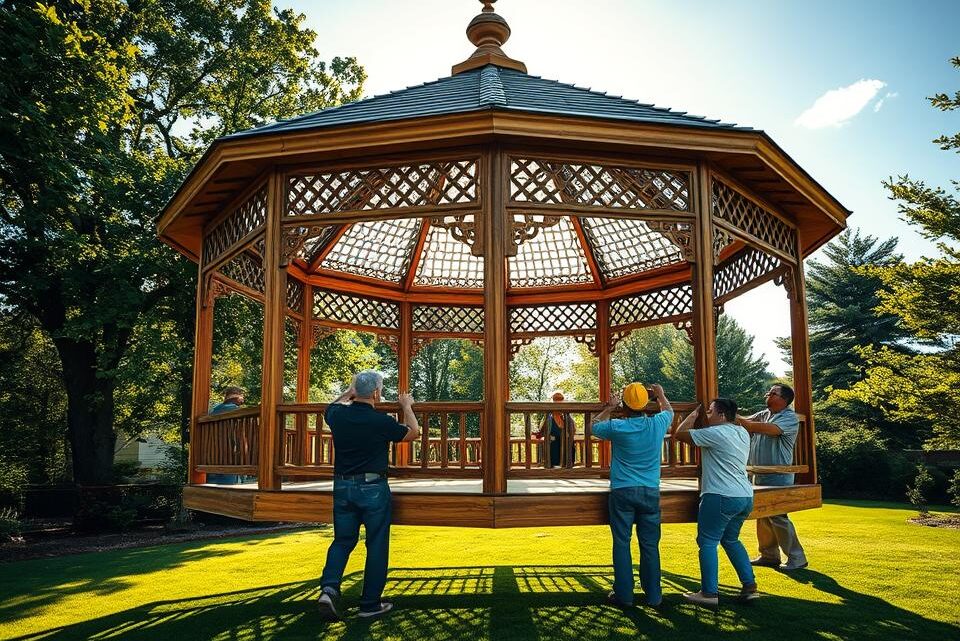
Relocating a garden gazebo presents unique challenges that require careful planning and execution. These structures can weigh up to 1,000 pounds, depending on their size, construction, and materials. With proper assessment and systematic steps, the process can be completed successfully without damage.
This comprehensive guide covers every aspect of the relocation process from initial evaluation to final installation. It addresses the specific considerations for wooden gazebos, which demand particular handling techniques due to their material properties and structural characteristics.
Readers will discover how to determine if their gazebo can be moved safely. The article outlines the necessary tools and equipment required for the task. It also provides a phase-by-phase approach to ensure safe and efficient execution.
The guide emphasises the importance of thorough planning, safety measures, and attention to detail throughout the entire process. Whether undertaking a DIY project or hiring professionals, this resource offers the expert knowledge needed for informed decisions. The content is tailored specifically for UK gardens, including relevant regulations and local considerations.
Inhaltsverzeichnis
Key Takeaways
- Proper planning is essential for a successful gazebo relocation project
- Wooden structures require specific handling techniques due to their material properties
- Safety precautions must be prioritised throughout the entire process
- The right tools and equipment are crucial for efficient moving
- UK-specific regulations and planning requirements should be considered
- Professional assessment helps determine if relocation is feasible
- Systematic execution ensures the structure arrives intact at its new location
Understanding the Feasibility of Moving Your Gazebo
A thorough feasibility assessment is the first step in any gazebo relocation project. This evaluation determines whether the structure can be moved safely and what resources will be required.
Examining the Design and Structural Complexity
The design of a gazebo fundamentally determines its movability. Portable gazebos with modular construction are ideal candidates for relocation. They feature lightweight frames that disassemble and reassemble easily.
Fixed or permanent gazebos present greater challenges. Complex architectural features and ornate woodwork require careful handling. Simple four-post designs with straightforward roof structures are far more manageable than those with intricate joinery.
Evaluating Materials and Foundation Type
Construction materials significantly impact the moving process. Solid hardwoods like oak are substantially heavier than softwoods like pine. The weight affects the equipment and manpower needed.
Foundation type represents a critical factor in determining feasibility. Gazebos anchored to concrete footings present significant challenges. Those on wooden decking or with ground stakes can be relocated more readily.
Assessing the overall condition is vital. Existing structural weaknesses may worsen during relocation. In some cases, replacement might be more practical than moving an aged structure.
Instructions on How to Move a Wooden Gazebo
Achieving a smooth transition for your outdoor shelter involves following a logical progression. This systematic approach ensures the structure remains intact throughout the entire process.

The relocation can be broken down into five distinct phases. These include preparation, systematic disassembly, secure transportation, careful reassembly, and final securing.
Key Steps to a Successful Move
Understanding the complete sequence before beginning prevents costly mistakes. Each phase builds upon the previous one, making proper order essential.
For moving a structure intact, specific techniques prove effective. Renting a hydraulic jack lifts the centre of the base evenly. Sliding 4×6 boards underneath provides support.
Drilling holes through these boards allows for steel piping insertion. A logging chain attached to a vehicle facilitates controlled movement. Placing round fence posts underneath creates a rolling mechanism.
The approach varies based on structure size and complexity. Smaller gazebos may move intact, while larger ones require partial or complete disassembly. Balancing efficiency with safety remains paramount throughout the process.
These guidelines serve both DIY enthusiasts and those hiring professionals. They provide a clear roadmap for successful gazebo relocation to any new location.
Preparing the Gazebo for Disassembly
The preparatory phase sets the foundation for a smooth disassembly process and protects the gazebo’s integrity. This critical stage ensures that all components remain organised and undamaged throughout the relocation.
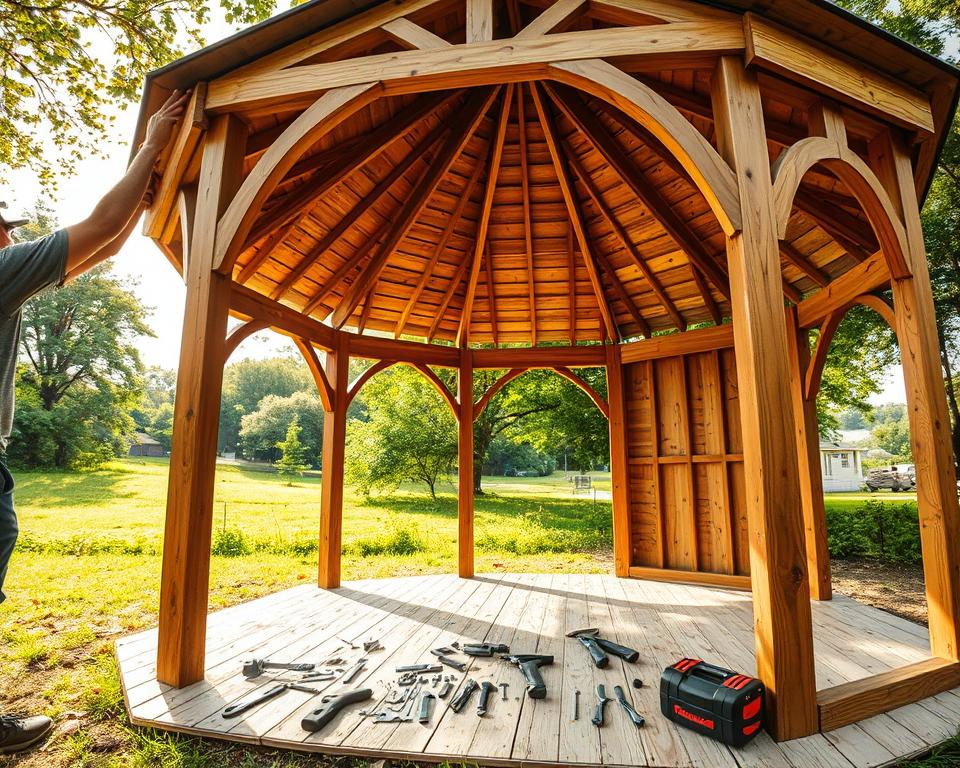
Clearing Decorations and Interior Accessories
Begin by completely emptying the interior of the structure. Remove all decorations, furniture, and accessories to prevent damage during the moving process. This includes lighting fixtures, hanging plants, and any decorative elements.
Proper storage of these items in a safe space is essential. This preparatory work creates a clear workspace for the subsequent dismantling operations. It also helps prevent any obstructions when accessing structural elements.
Documenting Measurements and Layout
Comprehensive documentation provides an invaluable reference for reassembly. Take detailed photographs from multiple angles, capturing the original configuration and connection points.
Record precise measurements of all dimensions, including height, width, and post spacing. Note the orientation of entry points and roof slopes. This documentation helps identify any discrepancies during reassembly.
Secure loose components with ropes and tarps for protection. A clean, organised workspace adjacent to the gazebo facilitates efficient disassembly. This phase also offers an opportunity to inspect for existing structural issues.
Safe Disassembly Techniques and Best Practices
Systematic dismantling forms the cornerstone of successful gazebo preservation and reassembly. This phase demands careful execution to protect the structure’s integrity.
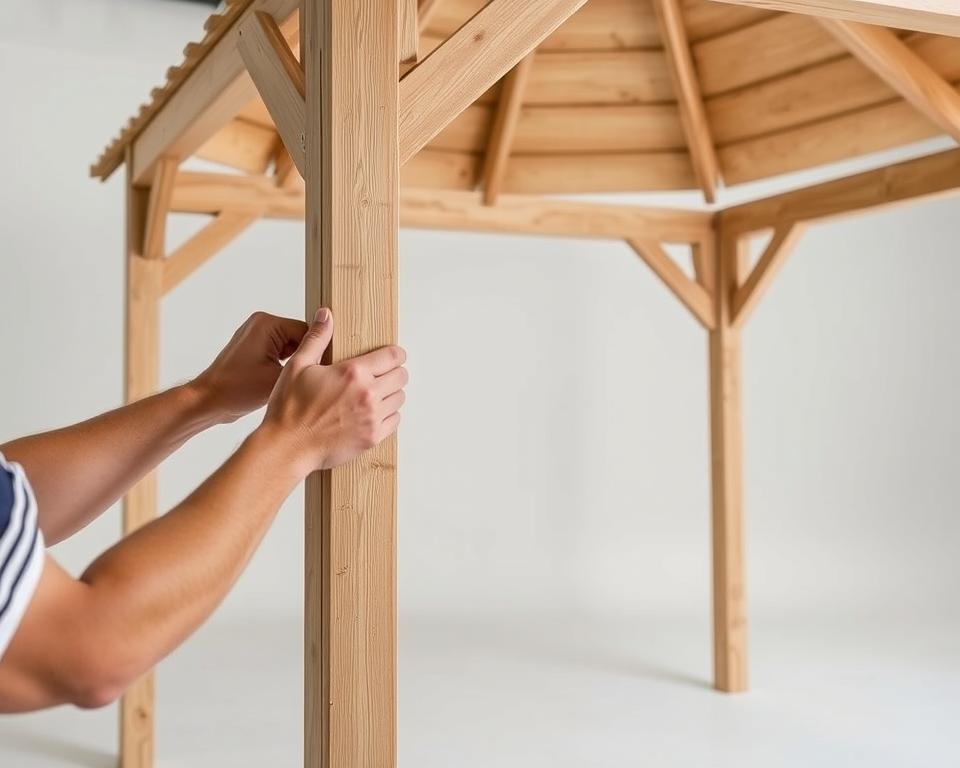
The process begins with roof removal. This component is often most vulnerable to damage. Its extraction reduces wind resistance and overall weight.
Labelling and Organising Parts
Clear labelling prevents confusion during reassembly. Use coloured tape or numbered tags for identification. Create a master diagram showing each component’s position.
Hardware organisation is equally important. Place screws, bolts and brackets in labelled bags. Associate them with their corresponding parts.
Support beams and wall panels need careful handling. Wooden components can splinter if dropped. Adequate assistance may be required for larger sections.
Safety equipment is essential throughout this process. Use ladders, scaffolding and protective gear. Working methodically reduces risks.
Protective materials like bubble wrap shield delicate surfaces. Wrap components immediately after removal. This approach prevents damage during handling.
Following a logical sequence ensures efficiency. Work from the top downward through walls and posts. Proper organisation simplifies the entire moving process.
Transporting the Gazebo Securely to a New Location
The transportation phase is a critical juncture in the gazebo relocation process. Careful execution here ensures all components arrive at the new site ready for reassembly.
Proper packing is the first line of defence. Each piece should be individually wrapped to prevent damage.

- Bubble wrap shields delicate trim and decorative elements.
- Moving blankets protect large panels from scratches and impacts.
- Cardboard sheets are ideal for flat surfaces like floorboards.
Securing Components on the Moving Truck
Strategic loading maintains stability during transit. Heavier base components and posts form the foundation of the load.
Lighter wall panels and roof materials are placed on top. All items must be secured firmly using ratchet straps or ropes.
This prevents shifting that could cause damage. For added protection against rain and dust, cover the entire load with a heavy-duty tarp.
Choosing Appropriate Equipment for Heavy Loads
The choice of vehicle depends on the distance and gazebo size. A flatbed trailer offers easy access for local moves.
An enclosed truck provides superior protection for long-distance relocation. Professional movers with relevant experience are advisable for complex projects.
They possess the specialised equipment and insurance to handle the task safely. For heavy components, hydraulic jacks and boards facilitate safe lifting.
Rolling techniques using fence posts can minimise effort for short ground moves on level terrain.
Reassembling and Anchoring the Gazebo
With all components safely transported, the focus shifts to accurate reconstruction and permanent anchoring. This critical phase determines the final stability and appearance of the structure in its new location.
Proper preparation of the site is essential before beginning work. The foundation must be level and appropriate for the specific type of gazebo being installed.
Following the Original Blueprint for Reassembly
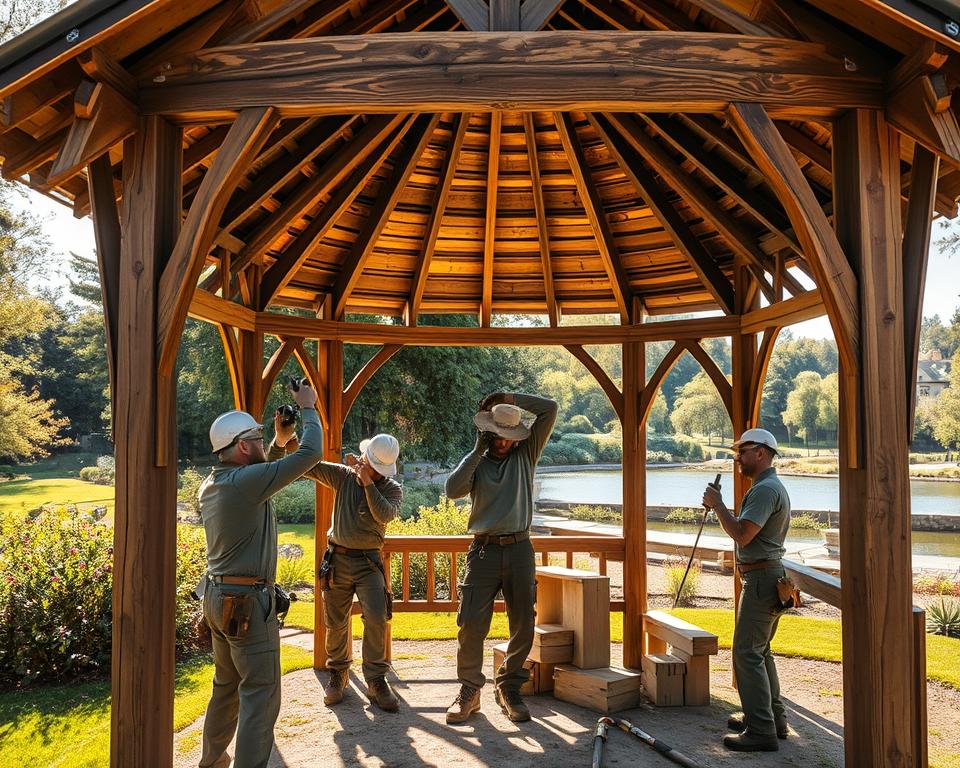
The disassembly reassembly process follows a reverse sequence, guided by photographs and labels created during dismantling. Starting with corner posts and the base frame ensures proper alignment from the beginning.
Using the labelling system saves significant time and prevents errors. Each component finds its correct position quickly. Regular checks confirm alignment and squareness as work progresses toward the roof.
Ensuring Level and Secure Placement
A quality spirit level guarantees posts remain vertical and beams stay horizontal. Even minor deviations can compromise these structures. This careful approach helps ensure gazebo stability for years to come.
Final anchoring methods vary between portable and permanent gazebos. Temporary gazebos may use ground stakes, while permanent installations often require a concrete foundation. The final step involves tightening all fasteners to secure loose components.
Expert Advice on Choosing Professional Movers Versus DIY
A pivotal decision in any gazebo relocation project is whether to undertake the task personally or engage specialist assistance. This choice hinges on several critical factors.
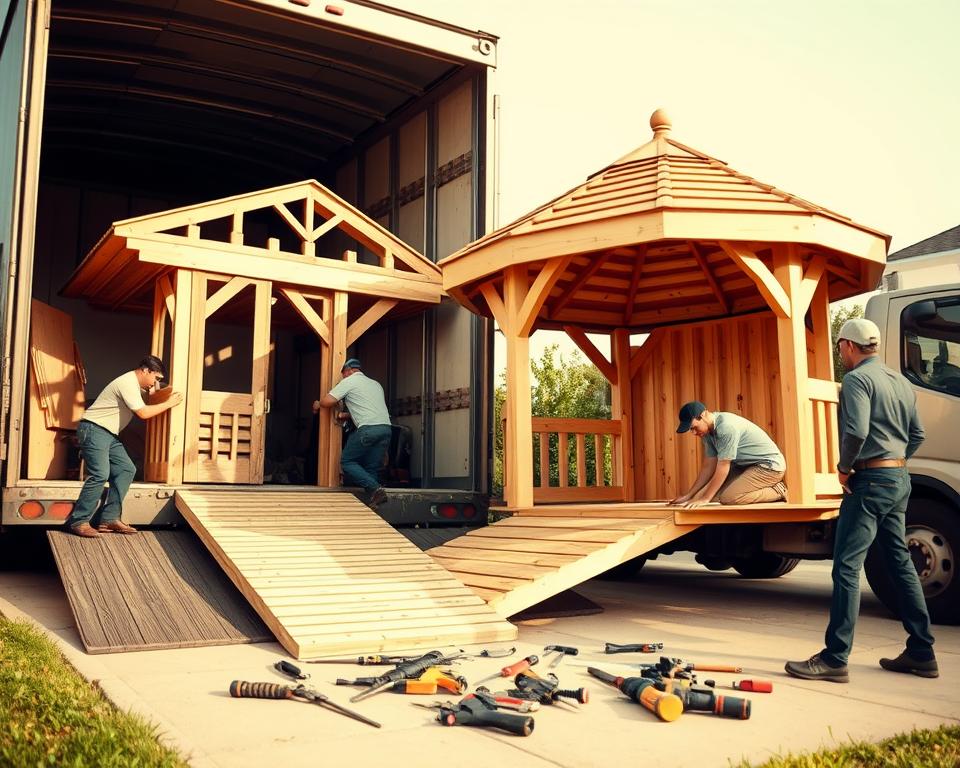
Homeowners must weigh the structure’s size and weight against their own skills, available help, and budget. Complex designs often may require an expert touch for safe handling.
Assessing the Need for Special Equipment
The necessity for specialised gear is a major consideration. Heavy components demand equipment like hydraulic jacks or flatbed trailers.
Hiring such equipment adds expense to a DIY project. Professional movers already possess these tools, which can justify their service cost for larger gazebos.
Cost Considerations and Local Recommendations
For a standard gazebo under 11 feet, professional movers might charge £300-£400. Prices rise with complexity and distance.
DIY saves money but carries risks. It is crucial to check local reviews when selecting a moving company. Verify their insurance and experience with outdoor structures.
| Factor | DIY Approach | Professional Movers |
|---|---|---|
| Cost | Lower upfront cost (tool hire only) | Higher fee, includes labour and equipment |
| Time & Efficiency | Time-consuming, depends on your availability | Typically much faster completion |
| Risk & Insurance | You bear full responsibility for damage or injury | Company carries liability and workers’ compensation insurance |
| Expertise | Relies on your skill and research | Bring proven experience and techniques |
Considerations for UK Local Regulations and Permits
Compliance with local planning requirements forms an integral part of structural repositioning. Before initiating any project, property owners must understand the regulatory framework governing outdoor installations.

Understanding Permitted Development Rules
In England, most garden gazebos benefit from permitted development rights. This means planning permission is not typically required if specific criteria are met.
Height restrictions are a key consideration. Structures must not exceed 3 metres in eaves height when within 2 metres of a boundary. The maximum overall height is 4 metres for dual-pitched roof gazebos.
Size limitations also apply to these garden features. The total area covered by all outbuildings cannot exceed 50% of the land around the original house. This calculation excludes the dwelling’s footprint.
Location presents another important factor. Gazebos cannot be placed forward of the principal elevation without permission. Side placements facing highways also require approval.
Property owners should always check local authority requirements. Special considerations apply to listed buildings and conservation areas. In these cases, special permits may be necessary.
It is wise to check local planning departments for specific guidance. Non-compliance with local regulations can result in enforcement action. This might include removal orders or retrospective applications.
When repositioning a garden feature, verify that the new location meets all criteria. A compliant structure in one position might need special permits elsewhere. Understanding these local regulations prevents complications.
Professional service providers can assist with compliance matters. Proper storage of documentation helps during inspections. The relocation process should account for all regulatory factors.
Conclusion
Successfully repositioning a garden structure requires methodical execution of each phase in the relocation journey. The project’s outcome depends on careful assessment of the gazebo’s design, materials, and foundation type before commencing work.
Meticulous planning establishes the groundwork for a smooth relocation process. This includes proper site preparation, tool acquisition, and team coordination. Following systematic procedures for disassembly, transport, and reassembly protects the gazebo throughout the move.
Homeowners must weigh the choice between DIY efforts and hiring professional movers. Factors like structure size, complexity, and distance influence this decision. Understanding local regulations ensures compliance with planning requirements.
With careful attention to each step, the gazebo relocation achieves a secure, stable installation in its new location. The structure becomes ready to provide years of enjoyment in the revitalised outdoor space.
FAQ
Can any wooden gazebo be moved?
Not all structures are suitable for relocation. The feasibility depends on the gazebo design, its age, and the foundation type. A simple, modular design on a gravel or plastic base is easier to move than a large, complex structure set in concrete, which may require professional movers.
What is the first step in planning a gazebo move?
The initial step involves careful planning. Create a detailed timeline and checklist. This process includes mapping out the new location, checking local regulations for any special permits, and assessing whether you need a moving service for long-distance transport.
How should I prepare the gazebo for disassembly?
Begin by clearing all decorations and interior accessories. It is crucial to document the structure’s measurements and layout with photographs. Secure loose parts and use bubble wrap to protect delicate components and prevent damage during the relocation process.
What are the best practices for disassembling a gazebo?
Use safe disassembly techniques, working methodically to avoid strain or injury. Labelling and organising every part, including roof sections and posts, is essential for a smooth reassembly. Keep all hardware, like screws and bolts, in clearly marked bags.
How do I transport the gazebo components safely?
Transporting the gazebo securely requires appropriate equipment. Use a suitable truck with enough space. Secure all components properly to prevent shifting. For heavy loads or complex structures, consider hiring a professional moving company with experience in handling such items.
What should I consider when reassembling the gazebo?
When reassembling, always follow the original blueprint or your documentation. The most critical factor is ensuring the gazebo is level and has a secure placement on its new foundation. This step guarantees the structure’s stability and longevity in its new location.
When should I hire professional movers instead of doing it myself?
Consider professional movers if the structure is large, heavy, or complex. Assess the need for special equipment, like cranes, and weigh the cost considerations against the risks of a DIY approach. For valuable or antique gazebos, expert help is often recommended.
Are there specific UK regulations for moving a gazebo?
Yes, you must check local regulations. Understanding Permitted Development rules is vital. Even if the gazebo itself doesn’t require planning permission, its relocation might, especially if it changes the property’s footprint or is moved to a conservation area.