is it cheaper to build your own gazebo or buy one?
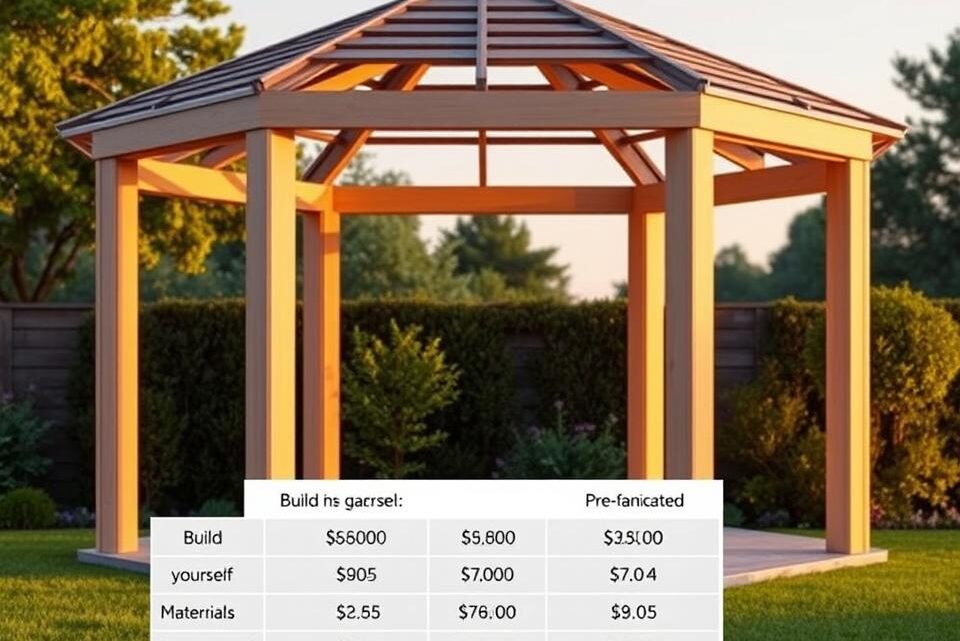
Deciding between a DIY gazebo and a pre-made gazebo can be a challenging choice for UK homeowners looking to enhance their outdoor spaces. The gazebo cost comparison involves multiple factors that go beyond simple price tags. Homeowners must weigh the benefits of a custom DIY gazebo against the convenience of a pre-made structure.
Building your own gazebo offers potential cost savings and the satisfaction of a personalised project. Alternatively, pre-made gazebos provide quick installation and professional design. Your specific requirements, budget, and skill level will ultimately determine the most suitable option for your garden.
This guide will explore the intricate details of gazebo construction, breaking down costs, time investments, and practical considerations to help you make an informed decision about your outdoor living space.
Inhaltsverzeichnis
Key Takeaways
- DIY gazebo projects can offer significant cost savings
- Pre-made gazebos provide convenience and professional finish
- Material selection dramatically impacts overall project expenses
- Skill level plays a crucial role in successful DIY gazebo construction
- Long-term maintenance costs differ between custom and pre-made options
Understanding Gazebo Types and Their Price Ranges
Exploring UK gazebo styles reveals a diverse landscape of outdoor structures that cater to various aesthetic preferences and functional needs. Homeowners and garden enthusiasts have multiple options when selecting the perfect gazebo for their outdoor spaces.
The UK market offers an impressive range of gazebo designs that blend functionality with visual appeal. Understanding the different styles helps potential buyers make informed decisions about their outdoor investments.
Popular Gazebo Styles in the UK Market
- Traditional Wooden Gazebos: Classic designs featuring intricate woodwork and timeless elegance
- Modern Metal Structures: Sleek, minimalist gazebos with contemporary lines
- Rustic Countryside Styles: Natural materials that complement rural garden landscapes
- Pavilion-style Gazebos: Larger structures suitable for commercial and residential settings
Average Cost Ranges for Pre-made Gazebos
Gazebo prices in the UK vary widely depending on size, materials, and complexity of design. Typical price ranges include:
- Budget models: £300 – £1,000
- Mid-range options: £1,000 – £3,000
- Premium designs: £3,000 – £10,000
Materials Used in Commercial Gazebos
Commercial gazebo materials play a crucial role in durability and aesthetic appeal. The most common materials include:
- Pressure-treated timber
- Aluminium
- Powder-coated steel
- Synthetic composites
Each material offers unique benefits in terms of weather resistance, maintenance requirements, and overall longevity. Selecting the right commercial gazebo material depends on specific environmental conditions and intended use.
Materials Cost Breakdown for DIY Gazebo Construction
Building a gazebo requires careful planning and understanding of DIY gazebo materials and their associated costs. The total expense varies depending on the size, design, and quality of materials selected.
Lumber represents the primary investment for gazebo construction costs. Pressure-treated pine remains the most affordable option, typically ranging from £10 to £25 per square metre. Cedar offers superior durability but increases expenses to £30-£50 per square metre.
- Pressure-treated pine: Economical choice
- Cedar: Higher durability, increased cost
- Hardwoods: Premium option with significant expense
Roofing materials significantly impact overall gazebo construction costs. Asphalt shingles provide a budget-friendly solution at approximately £15-£25 per square metre. Metal roofing offers longer-lasting protection but increases expenses to £40-£60 per square metre.
| Material | Cost per m² | Durability |
|---|---|---|
| Pressure-treated pine | £10-£25 | Good |
| Cedar | £30-£50 | Excellent |
| Metal roofing | £40-£60 | Superior |
Additional hardware like screws, brackets, and fasteners typically add £50-£100 to DIY gazebo materials expenses. Decorative elements and finishing touches can further increase costs by £100-£200, depending on design complexity.
Pro tip: Always budget an extra 10-15% for unexpected expenses when calculating gazebo construction costs.
Time and Labour Considerations for Building vs Buying
Deciding between a DIY gazebo project and professional gazebo installation requires careful evaluation of time, skills, and resources. Homeowners must weigh the potential challenges of self-assembly against the convenience of professional gazebo assembly.
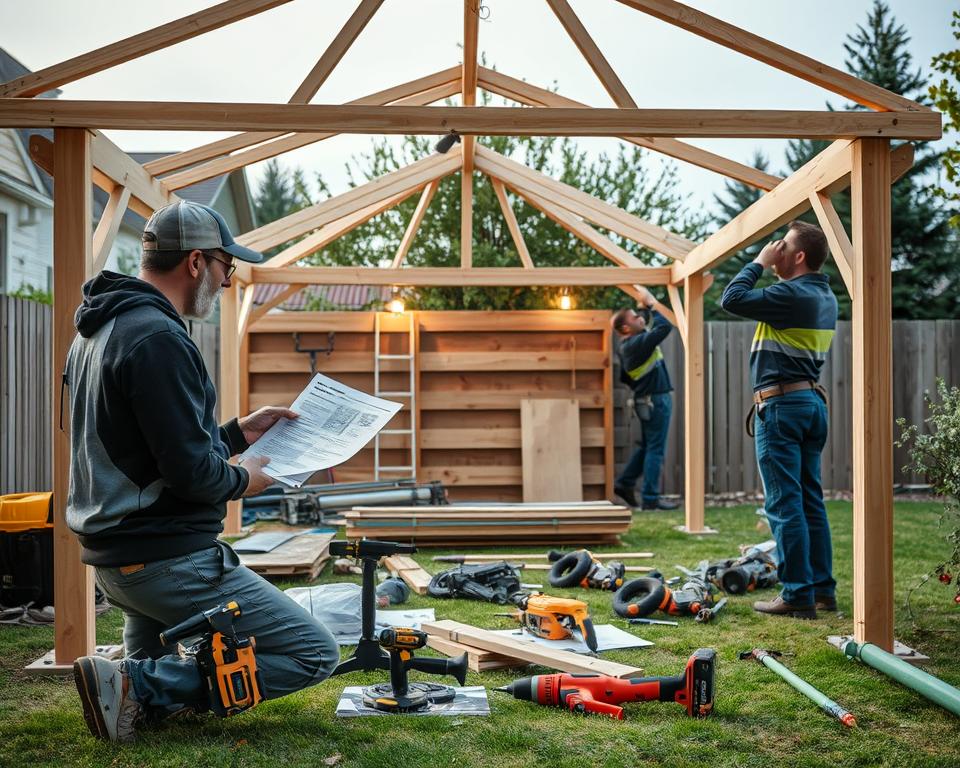
Required Skills and Tools for DIY Gazebo Construction
Successful gazebo installation demands specific technical abilities and equipment. Aspiring DIY enthusiasts should assess their current skill set against project requirements.
- Basic carpentry skills
- Understanding of structural measurements
- Proficiency with power tools
- Spatial planning capabilities
Essential Tools for DIY Gazebo Projects
| Tool Category | Specific Tools | Estimated Cost |
|---|---|---|
| Measuring Tools | Tape measure, level, square | £50-£100 |
| Cutting Tools | Circular saw, handsaw | £100-£250 |
| Fastening Tools | Drill, screwdriver set, hammer | £80-£200 |
Professional Installation Costs
Professional gazebo assembly typically ranges from £500 to £2,000, depending on complexity and size. Factors influencing cost include:
- Gazebo dimensions
- Material selection
- Site preparation requirements
- Labour rates in your region
DIY Time Investment Analysis
A typical DIY gazebo project can consume 20-40 hours of personal time. Inexperienced builders might require longer, potentially stretching the project across multiple weekends. Skilled DIY enthusiasts with prior construction experience could complete the project more efficiently.
Carefully evaluate your DIY gazebo skills against the potential time commitment and complexity of the project before deciding between self-construction and professional installation.
Is It Cheaper to Build Your Own Gazebo or Buy One?

When navigating the gazebo cost comparison, homeowners face a critical decision: build vs buy gazebo. The financial implications are not always straightforward and depend on multiple factors.
Let’s break down the key considerations in your gazebo investment strategy:
- Pre-made gazebos typically range from £500 to £5,000
- DIY gazebo materials can cost between £300 and £2,500
- Labour costs for professional installation can add £500-£1,500
The build vs buy gazebo decision hinges on several crucial elements:
- Skill level: DIY requires carpentry expertise
- Time availability: Building takes significant personal time
- Budget flexibility: Professional options offer quicker solutions
Precise gazebo cost comparison reveals that smaller, simpler designs often favour DIY approaches. Larger, more complex structures frequently become more cost-effective when purchased pre-made.
Your specific circumstances will ultimately determine the most economical choice.
For UK homeowners, considering local weather conditions and material durability is essential in making a financially sound decision.
Hidden Costs in DIY Gazebo Construction
Building a gazebo might seem like a straightforward DIY project, but numerous hidden expenses can quickly inflate your budget. Understanding these potential DIY gazebo hidden costs is crucial for homeowners planning to create their own outdoor sanctuary.
Unexpected Tool Expenses
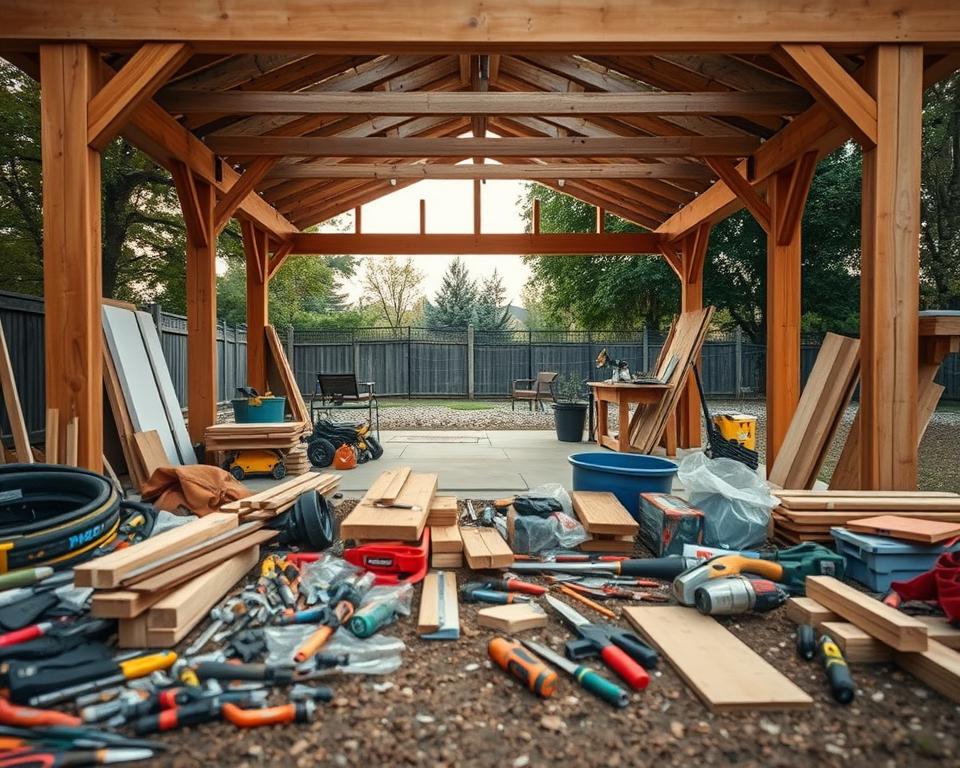
Gazebo construction requires specialised tools that can significantly increase your project’s overall cost. Many DIY enthusiasts underestimate the expenses associated with tool purchases or rentals.
- Professional-grade circular saw: £100-£250
- Power drill set: £80-£150
- Level and measuring tools: £50-£100
- Scaffolding or ladder rental: £50-£150 per week
Potential Construction Mistakes
Gazebo construction mistakes can be costly and time-consuming. Inexperienced builders might encounter challenges that require expensive corrections or complete rebuilds.
- Incorrect foundation preparation
- Misaligned structural elements
- Poor wood treatment
- Inadequate weatherproofing
Planning Permission Considerations
Navigating gazebo planning permission in the UK involves specific regulations that can incur additional expenses. Local council fees and potential design modifications might impact your budget.
- Planning application fees: £200-£500
- Potential architectural drawings: £300-£800
- Compliance adjustments: Variable costs
Careful planning and thorough research can help mitigate these hidden costs and ensure a successful DIY gazebo construction project.
Long-term Durability and Maintenance Comparison
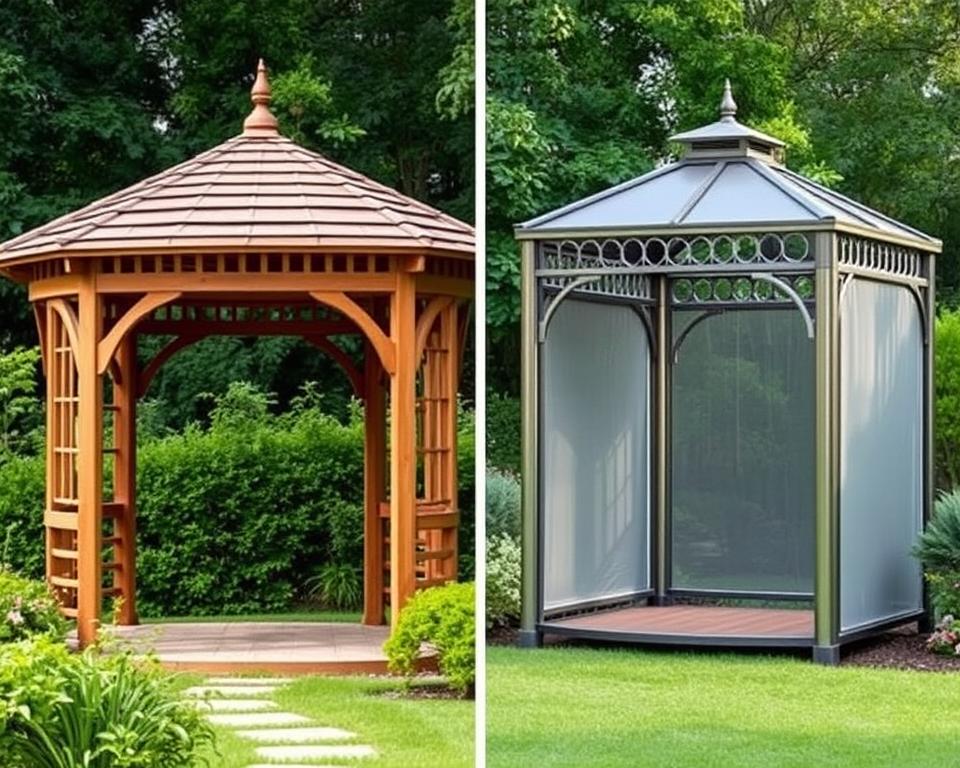
When considering gazebo maintenance, homeowners must carefully evaluate the long-term durability of DIY versus pre-made structures. Different construction methods dramatically impact the overall lifespan and upkeep requirements of outdoor gazebos.
DIY vs pre-made gazebo durability depends on several critical factors:
- Material quality
- Construction precision
- Weather exposure
- Regular maintenance practices
Professional pre-made gazebos typically offer superior durability due to standardised manufacturing processes. Manufacturers use high-grade materials and rigorous quality control measures that individual DIY builders might struggle to replicate.
| Durability Factor | DIY Gazebo | Pre-made Gazebo |
|---|---|---|
| Structural Integrity | Variable | Consistent |
| Material Resistance | Dependent on Selection | Professionally Tested |
| Estimated Lifespan | 5-10 Years | 10-15 Years |
Regular gazebo maintenance is crucial for extending the structure’s lifespan. Protective treatments, annual inspections, and timely repairs can significantly enhance durability regardless of construction method.
Homeowners should prioritise quality materials, precise construction techniques, and consistent maintenance to maximise their gazebo’s longevity and performance.
Pre-made Gazebo Benefits and Drawbacks
Selecting the right gazebo involves carefully weighing multiple factors. Homeowners seeking outdoor structures must consider the intricate balance between convenience and customisation when exploring pre-made gazebo options.

Purchasing a pre-made gazebo presents unique advantages and potential limitations for UK garden enthusiasts. Understanding these nuances helps make an informed decision about commercial gazebo quality and design flexibility.
Warranty Coverage Insights
Pre-made gazebo warranty offers critical protection for your investment. Manufacturers typically provide coverage that safeguards against:
- Structural defects
- Material deterioration
- Manufacturing inconsistencies
Design Option Considerations
Gazebo design options vary significantly between manufacturers. While pre-made structures offer convenience, they might restrict creative expression.
| Design Aspect | Pre-made Gazebo Characteristics |
|---|---|
| Size Flexibility | Limited standard dimensions |
| Aesthetic Variety | Predetermined style ranges |
| Customisation Potential | Minimal personalisation |
Quality Standards Assessment
Commercial gazebo quality depends on manufacturer reputation and material selection. Professional-grade structures typically demonstrate:
- Robust construction techniques
- Weather-resistant materials
- Precision engineering
While pre-made gazebos offer standardised solutions, they may not perfectly match individual aesthetic preferences or specific garden requirements.
Custom Design Options and Flexibility in DIY Projects
Creating a custom gazebo offers homeowners unprecedented design flexibility that pre-made options simply cannot match. DIY gazebo flexibility allows you to transform your garden into a truly personalised outdoor space that reflects your unique style and functional requirements.
When embarking on a custom gazebo design, you gain several significant advantages:
- Complete control over dimensions and shape
- Choice of materials tailored to your aesthetic preferences
- Integration with existing landscape features
- Precise sizing to fit specific garden spaces
The key to successful custom gazebo design lies in meticulous planning and creative vision. Homeowners can experiment with various architectural styles, from traditional wooden structures to contemporary metal frameworks.
| Design Aspect | DIY Flexibility | Pre-made Limitations |
|---|---|---|
| Size | Fully Customisable | Standard Dimensions |
| Material | Multiple Options | Limited Selection |
| Style | Unlimited Creativity | Predetermined Designs |
By choosing a DIY approach, you’re not just building a structure—you’re crafting a personalised outdoor sanctuary that perfectly complements your garden’s unique character.
Environmental Impact and Sustainability Factors
Creating an eco-friendly gazebo requires careful consideration of environmental impacts. Sustainable gazebo materials play a crucial role in reducing carbon footprint and minimising ecological damage.
Homeowners interested in environmentally responsible outdoor structures can explore several sustainable options:
- Reclaimed timber from local sources
- Bamboo – a rapidly renewable material
- Recycled composite materials
- FSC-certified wood products
The choice between a DIY or pre-made eco-friendly gazebo depends on several key environmental factors. Sustainable gazebo materials significantly impact the overall carbon footprint of your project.
When selecting materials, consider these critical sustainability metrics:
- Local sourcing to reduce transportation emissions
- Durability and potential for future recycling
- Minimal chemical treatment requirements
- Energy consumption during production
Eco-conscious consumers can minimise environmental impact by prioritising locally sourced, renewable materials and selecting designs that maximise material efficiency.
Sustainability isn’t just about material selection – it’s about making informed choices that protect our environment for future generations.
Weather Resistance and UK Climate Considerations
Creating a weather-resistant gazebo in the United Kingdom requires careful planning and material selection. The British climate presents unique challenges, with frequent rainfall, occasional strong winds, and rapid temperature changes that can impact outdoor structures.
Selecting appropriate UK-friendly gazebo materials is crucial for ensuring longevity and performance. Different materials offer varying levels of protection against the unpredictable British weather.
Essential Material Considerations for British Weather
- Aluminium frames: Rust-resistant and lightweight
- Powder-coated steel: Offers enhanced durability
- Treated hardwoods: Natural resistance to moisture
- Waterproof polyester canopies: Repel rain effectively
Seasonal Maintenance Strategies
Maintaining a weather-resistant gazebo in the UK requires proactive care throughout the year. Different seasons demand specific maintenance approaches to protect your outdoor structure.
- Autumn: Clear fallen leaves and check waterproofing
- Winter: Remove snow buildup and protect from frost
- Spring: Inspect for winter damage and reapply protective coatings
- Summer: Clean and check structural integrity
By choosing the right materials and implementing regular maintenance, you can create a durable, weather-resistant gazebo that withstands the challenging UK climate.
Conclusion
Deciding between a DIY or pre-made gazebo involves carefully weighing multiple factors. Gazebo cost-effectiveness isn’t just about initial expenses but encompasses time, skills, and long-term value. Your garden’s unique characteristics and personal capabilities will ultimately guide this decision.
The DIY vs pre-made gazebo decision requires thoughtful consideration of your budget, technical skills, and available time. Some homeowners might find building their own structure more satisfying and potentially cheaper, while others will appreciate the convenience of a professionally manufactured option. Each approach offers distinct advantages depending on individual circumstances.
Evaluate your garden space, personal woodworking experience, and financial resources before making a final choice. Whether you select a ready-made gazebo from a reputable manufacturer or embark on a custom construction project, ensure the outcome matches your aesthetic preferences and functional requirements. The perfect gazebo should enhance your outdoor living space while providing an enjoyable and practical addition to your garden.
Remember that investing time in research and planning will help you make an informed decision that brings both practical utility and aesthetic pleasure to your outdoor environment. Your ideal gazebo solution awaits – choose wisely!
FAQ
How much does it typically cost to build a gazebo compared to buying one?
The cost can vary significantly. A DIY gazebo might range from £500 to £3,000, depending on materials and complexity, while pre-made gazebos typically cost between £1,000 and £5,000. Your total expense will depend on size, materials, and design complexity.
Do I need special planning permission to build a gazebo in my garden?
In the UK, most gazebos fall under permitted development rights, but there are important considerations. You’ll need to ensure the structure is under 2.5 metres in height, doesn’t cover more than 50% of your garden area, and isn’t located at the front of your property. Always check with your local planning authority for specific regulations.
What are the most cost-effective materials for a DIY gazebo?
Pressure-treated pine is typically the most budget-friendly option, costing around £10-£20 per square metre. Other affordable materials include treated timber and lightweight metal frames. Softwood is generally cheaper than hardwood, but may require more maintenance over time.
How long does it take to build a gazebo myself?
For an experienced DIY enthusiast, a gazebo can take approximately 3-7 days to complete. Beginners might need up to two weeks, depending on the complexity of the design and available time for working on the project. Factors like skill level, design complexity, and available tools will impact the construction time.
What tools will I need for a DIY gazebo project?
Essential tools include a circular saw, drill, level, measuring tape, hammer, post hole digger, and safety equipment. You might also need specialised tools like a mitre saw for precise cuts. Budget around £200-£500 if you need to purchase most tools, or consider hiring or borrowing to reduce costs.
How do British weather conditions affect gazebo construction?
UK weather demands weather-resistant materials and robust construction. Pressure-treated timber or powder-coated metal are excellent choices for withstanding frequent rain and occasional harsh conditions. Ensure proper waterproofing and regular maintenance to protect your gazebo from moisture and potential weather damage.
Can I customise a pre-made gazebo?
Yes, most pre-made gazebos offer some customisation options. You can typically add features like lighting, curtains, or additional decorative elements. However, structural modifications are limited compared to a completely custom-built design. Always check with the manufacturer about potential customisation possibilities.
What are the ongoing maintenance costs for a gazebo?
Annual maintenance typically costs between £50-£200, depending on materials and condition. Wooden gazebos require more upkeep, including annual staining or sealing, while metal structures might only need occasional cleaning and rust prevention. Budget for protective treatments, replacement parts, and potential repairs.
Is a DIY gazebo suitable for someone with limited carpentry skills?
For beginners, a simple gazebo kit or modular design might be more appropriate. Consider taking a woodworking workshop or seeking guidance from experienced DIY enthusiasts. Alternatively, partial DIY approaches like assembling a pre-cut kit can be more manageable for those with limited carpentry experience.
How can I ensure my gazebo is environmentally friendly?
Choose sustainably sourced timber, use recycled materials where possible, and opt for low-impact finishes. Consider locally sourced materials to reduce transportation emissions. Look for FSC-certified wood and water-based, low-VOC treatments to minimise environmental impact during construction and maintenance.