
Make Your Own Garden Sundial
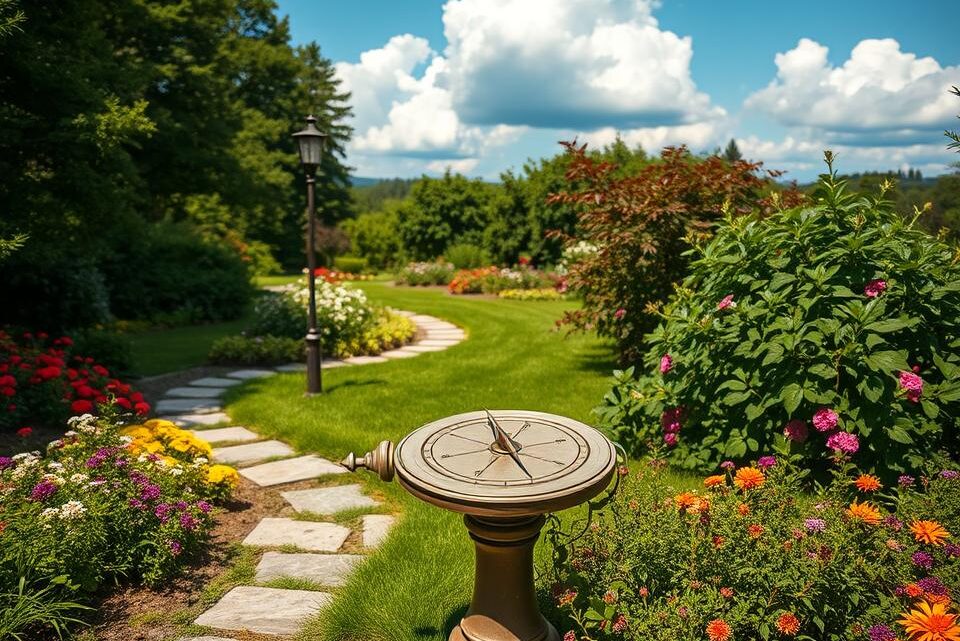
Adding a sundial to your outdoor space is a rewarding project that combines science, art, and practicality. For thousands of years, sundials have been used to tell time by tracking the shadow cast by the sun.
You can create a sundial in various ways, from a simple stick version to a more elaborate wooden design. Understanding how sundials work and the materials needed will help you add both function and character to your garden.
Inhaltsverzeichnis
Key Takeaways
- Learn the science behind sundials and how they tell time.
- Discover various methods to create a sundial, from simple to complex designs.
- Understand the role of the gnomon in a sundial.
- Find out how to add a sundial to your outdoor space.
- Explore the materials needed for different sundial types.
Understanding Sundials and How They Work
To create an accurate sundial, it’s essential to understand the fundamental principles behind its operation. A sundial tells time based on the shadow cast by its gnomon as the sun moves across the sky.
The Science Behind Sundials
Sundials operate on the principle that the sun appears to move across the sky at a constant rate, casting shadows that change position throughout the day. The gnomon, or shadow stick, is set parallel to the Earth’s axis, ensuring that the Sun’s movement is at right angles to it. This alignment allows for a scale to be marked with equal hour lines, although most garden sundials have scales at different angles, resulting in unequal hour lines.
Important Terminology: Gnomon, Hour Lines, and True North
Understanding key terms is crucial for creating an accurate sundial. The gnomon casts a shadow onto the dial face, and its positioning parallel to the Earth’s axis is vital for accurate timekeeping. Hour lines are the markings on the sundial that indicate time as the gnomon’s shadow moves across them. It’s also important to align your sundial with True North, rather than magnetic north, to ensure accurate readings.
- The angle between hour lines varies, with the widest angles at sunrise and sunset and the narrowest around noon.
- Understanding the Earth’s rotation around the sun and the resulting shadow movement is essential for creating an accurate sundial.
Essential Considerations Before You Begin
The success of your sundial project depends on several important considerations before you begin. To create a sundial that accurately tells time, you must consider your geographical location and how it affects the sundial’s configuration.
Finding Your Latitude
Before creating your sundial, you must determine your precise latitude, as this dictates the angle at which you’ll position the gnomon. You can use online resources or GPS devices to determine your exact latitude. For instance, if you live at 40° north latitude, your gnomon should be set at a 40° angle to ensure accurate time readings.
| Latitude | Gnomon Angle |
|---|---|
| 0° (Equator) | 0° |
| 30° North | 30° |
| 40° North | 40° |
| 90° North (North Pole) | 90° |
Understanding Magnetic Declination
Magnetic declination is the difference between True North and Magnetic North for your location. Understanding this is crucial because magnetic north (where a compass points) differs from true north (the North Pole), and this variation affects your sundial’s accuracy. You can use a compass to determine True North, but you will need to know your magnetic declination.
Choosing the Perfect Location in Your Garden
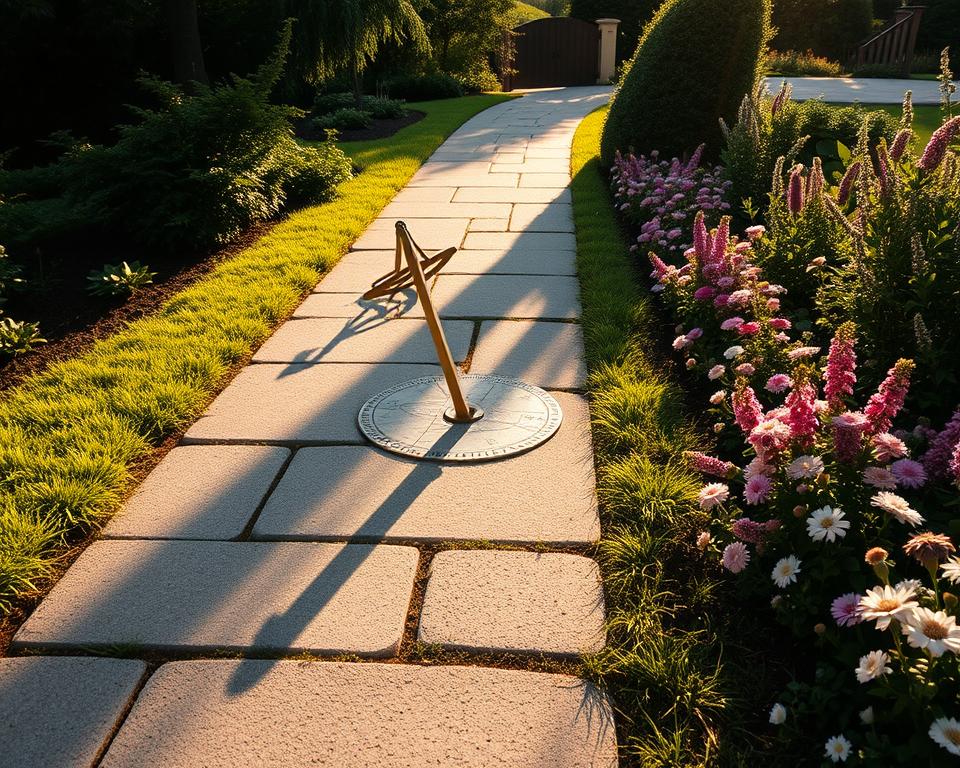
Selecting the ideal location for your sundial requires finding a spot that receives unobstructed sunlight throughout the day. Consider permanent installation factors such as visibility from your favourite garden spots and protection from strong winds. In the northern hemisphere, your gnomon should point toward the North Pole, while in the southern hemisphere, it should point toward the South Pole.
Materials and Tools You’ll Need
Making a sundial requires some simple supplies that you might already have at home. To make a sundial, you’ll need to gather a few basic tools and materials.
Basic Supplies for All Sundial Types
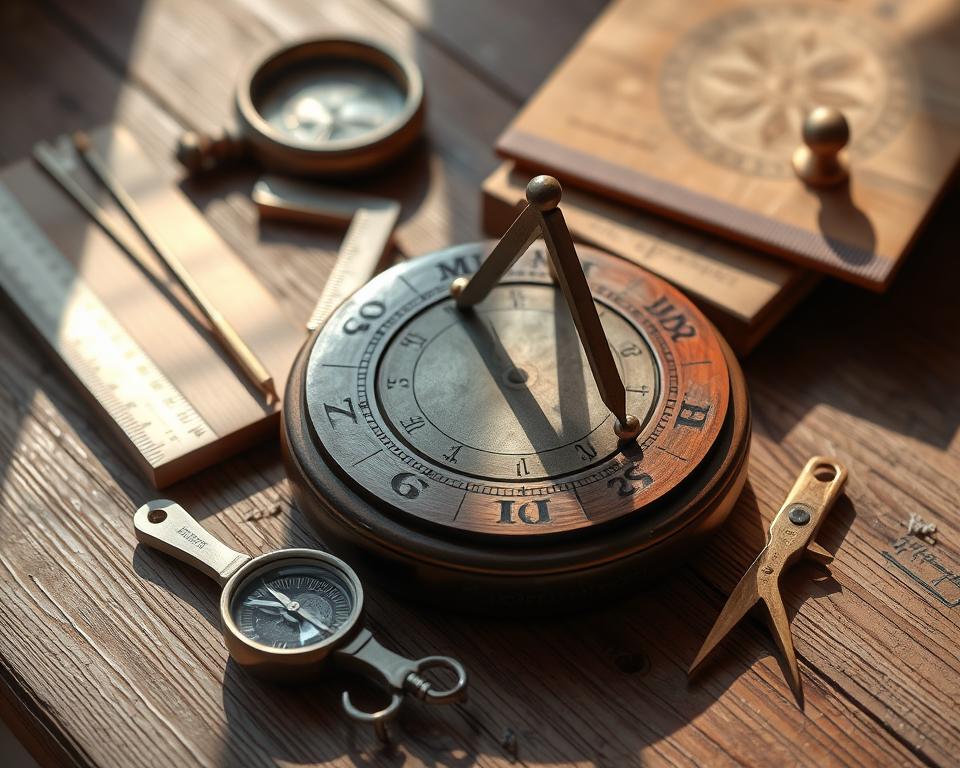
To start, you’ll need a compass to determine the direction, a ruler or measuring tape for precise measurements, and a protractor to set the correct angles. For simple sundial designs, you can use materials like sticks, pebbles, paper plates, or cardboard that can be easily manipulated and marked. Marking implements such as pencils, permanent markers, or paint will be necessary for creating the hour scale on your sundial.
Additional Materials for Advanced Designs
For more advanced sundial projects, consider using durable materials like wood, metal, concrete, or stone that can withstand outdoor conditions. You may also need tools like drills, saws, and sandpaper if you’re planning to create a permanent sundial. Weather-resistant finishes such as outdoor paint, varnish, or sealant will help protect your sundial from the elements and extend its lifespan.
By gathering these materials, you’ll be well-prepared to make a sundial that suits your needs and preferences.
Method 1: Create a Simple Stick Sundial
A simple stick sundial is an excellent introduction to understanding how sundials work. This method requires minimal materials and is a great way to demonstrate the basic principles of solar timekeeping.
Gathering Your Materials
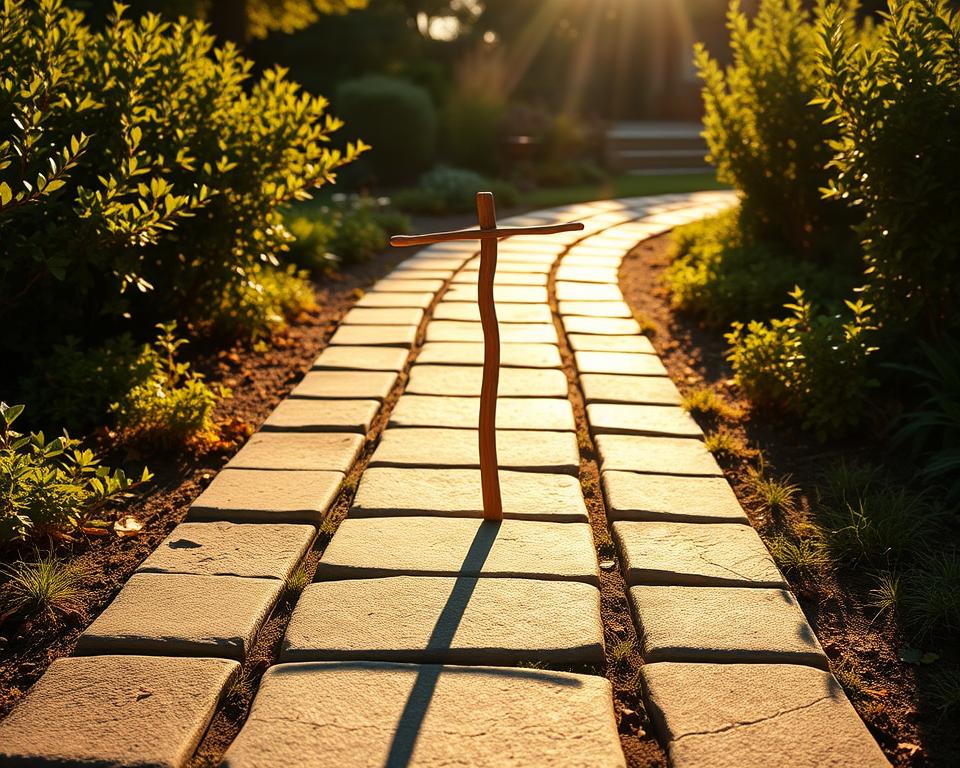
To create your stick sundial, you’ll need a few simple items: a straight stick about two feet long, a handful of pebbles, and a wristwatch or cell phone to tell the time. Make sure you have these items ready before you begin.
Setting Up Your Stick Sundial
Find a spot in your garden that receives full sun exposure throughout the day. Push one end of the stick into the ground, slanting it slightly towards the north if you’re in the Northern Hemisphere, or towards the south if you’re in the Southern Hemisphere. As the sun shines down, the stick will cast a shadow.
Marking the Hours
Starting in the morning, use a pebble to mark where the shadow falls on the ground at 7:00 a.m. Return every hour to mark the new position of the shadow with another pebble. Continue this process throughout the day, marking the hour each time.
| Time | Shadow Position |
|---|---|
| 7:00 a.m. | First pebble mark |
| 8:00 a.m. | Second pebble mark |
| 9:00 a.m. | Third pebble mark |
By following these steps, you can create a functional sundial that demonstrates how the sun’s position changes throughout the day, helping you tell the time based on the shadow cast by the stick.
Method 2: Paper Plate Sundial for Beginners
You can make a simple sundial at home using just a paper plate and a few other household items. This project is ideal for kids on a summer day, teaching them about the basics of solar timekeeping in a fun and interactive way.
Preparing Your Paper Plate
To start, gather the necessary materials: a paper plate, crayons or markers, a sharpened pencil, pushpins, a ruler, and a straight plastic straw. Write the number 12 on the edge of the plate using a crayon or marker. Then, take the sharpened pencil and push it through the centre of the plate, creating a hole. Remove the pencil, leaving the hole. Use a ruler to draw a straight line from the 12 to the centre hole, representing 12 o’clock noon.
Positioning the Gnomon
Next, insert the plastic straw through the centre hole, making sure it slants towards the north celestial pole (in the northern hemisphere) at an angle equal to your latitude. This straw acts as the gnomon, casting a shadow that will indicate the time. Make sure the straw is securely positioned to get accurate readings.
Marking and Testing Your Sundial
Bring the plate outside shortly before noon and place it on the ground in a sunny spot. At exactly noon, rotate the plate so that the straw’s shadow aligns with the line you drew. Secure the plate to the ground using pushpins. Return every hour to mark where the shadow falls, labelling each position with the corresponding hour number. As you mark the shadow’s position, you’ll create a functional sundial that demonstrates how the sun’s position changes throughout the day.
Here’s a simple table to track your sundial’s progress:
| Time | Shadow Position | Hour Label |
|---|---|---|
| 12:00 | Aligned with noon line | 12 |
| 1:00 | Mark the shadow | 1 |
| 2:00 | Mark the shadow | 2 |
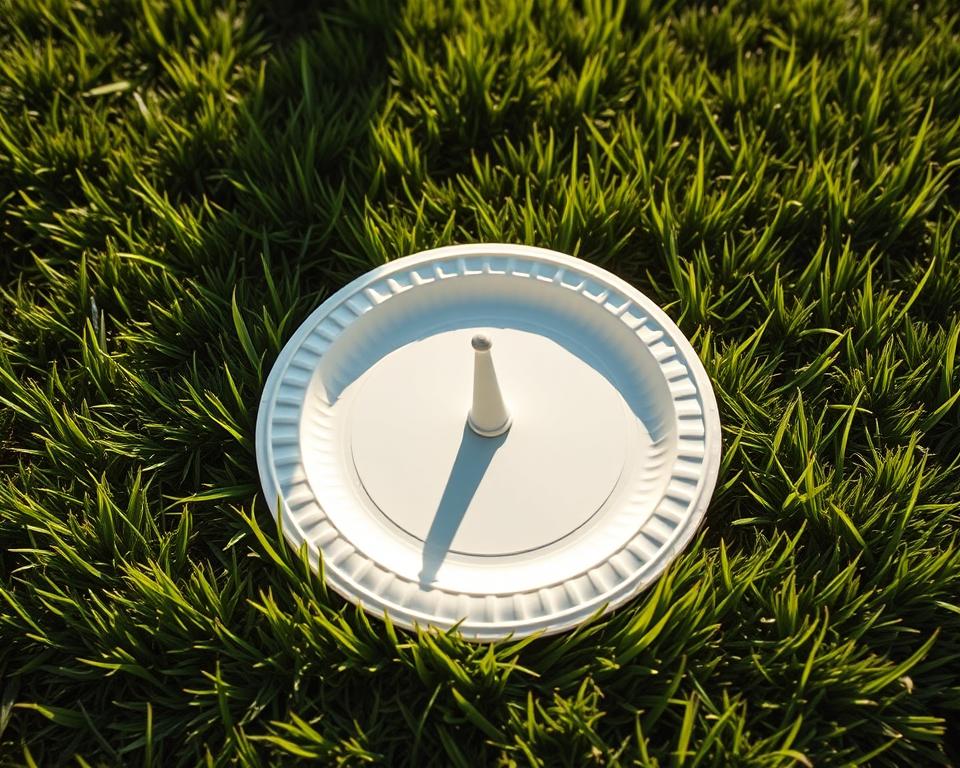
By following these steps, you’ll have a functional gnomon-based sundial that not only tells time but also serves as an educational tool. Observe how the shadow moves across the plate, illustrating the sun’s path across the sky.
Method 3: CD Case Sundial
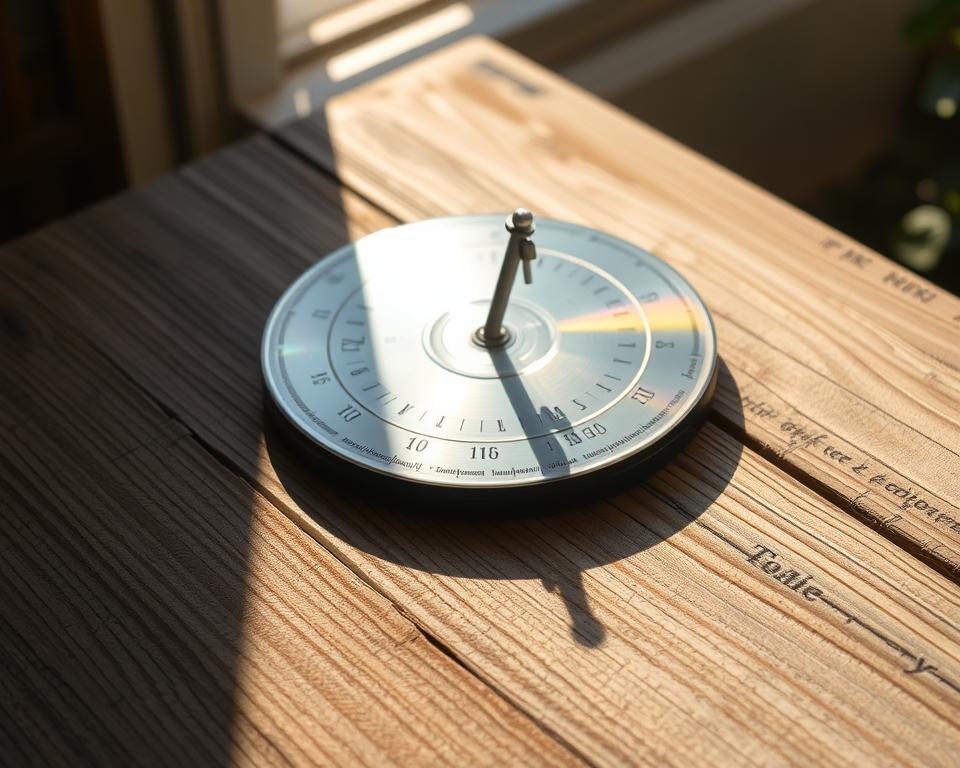
You can make a precise and portable sundial using a CD case and a few simple materials. This project not only recycles old materials but also provides a unique educational experience.
Printing and Preparing the Hour Scale
To begin, you will need to download and print a specially designed hour scale that fits around the circumference of a standard CD. Apply sticky tape to the back of the scale, ensuring it overlaps the bottom edge by about 3 mm. Carefully attach the scale to the edge of the CD with the markings facing inward.
Assembling the CD and Gnomon
Reinforce the central hole of the CD by attaching two small circular pieces of cardboard to both sides. This provides stability for your gnomon. Create your gnomon using a cocktail stick or a straightened paper clip, ensuring it passes through the exact centre of the CD at a right angle to the disc surface.
Use a protractor to set the gnomon at an angle equal to your latitude, which is crucial for accurate timekeeping in your specific location. For the UK, this angle is typically between 50º and 59º.
Setting Up Your CD Sundial
Assemble the sundial by securing the CD at an angle within an empty CD case using adhesive tack. Position it so the gnomon points toward the celestial pole. Place your completed CD sundial in a sunny location with the gnomon pointing north (in the northern hemisphere), and it will provide accurate solar time readings.
This design is particularly clever as the transparent CD allows the sundial to function year-round, even during winter months when the sun is lower in the sky.
Method 4: Wooden Garden Sundial
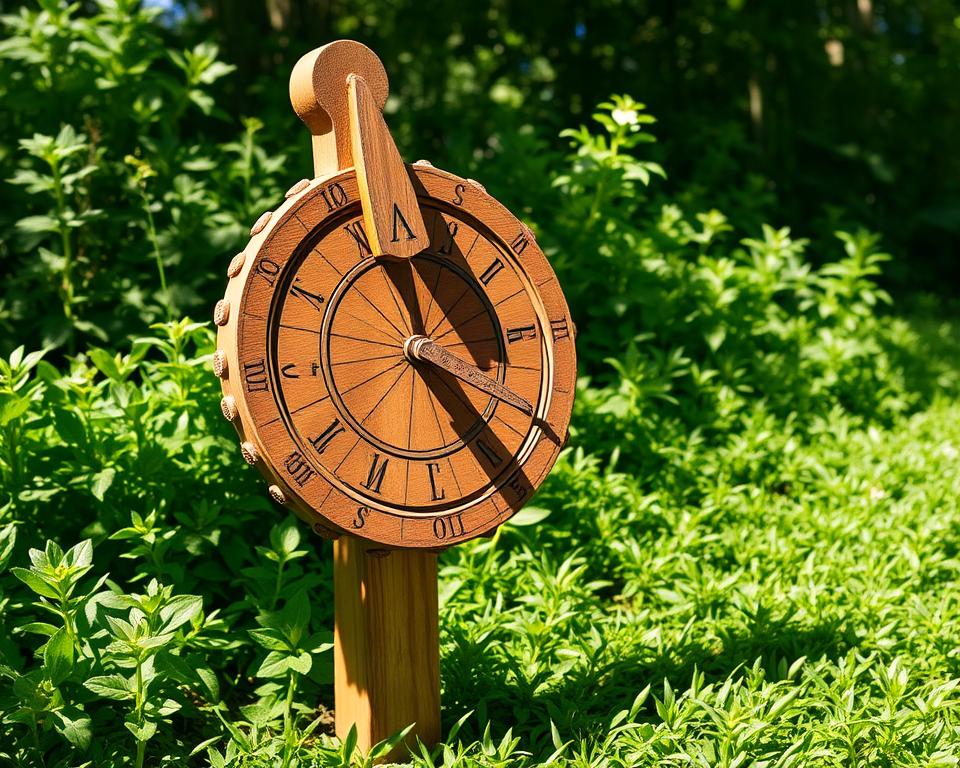
To make a wooden garden sundial, you’ll need a few basic materials and some patience. This project results in a durable, permanent timepiece that serves as both a functional instrument and an attractive garden feature.
Preparing the Wooden Base
Begin by cutting a circular wooden base from weather-resistant wood such as cedar or pressure-treated plywood, approximately 20 inches in diameter and ¾-inch thick. Make sure the wood is smooth and free of splinters. Coat both sides of the wooden circle with primer and plan your design, including the style of numbers you’ll use.
Creating and Positioning the Gnomon
For the gnomon, select a durable material like a metal rod or wooden dowel that will withstand outdoor conditions, ideally with a conical tip to create a precise shadow. The critical step is positioning the gnomon at exactly the right angle—equal to your latitude—which determines the accuracy of your sundial’s timekeeping. Use a protractor to measure and mark the correct angle, then drill a hole through the wooden base to accommodate the gnomon.
Installing Your Sundial in the Garden
For permanent installation, mount your sundial on a sturdy post that has been treated for outdoor use, ensuring it’s perfectly level and oriented correctly to true north. The mounting angle of the sundial face is equally important—the face should be perpendicular to the gnomon. Test the assembly before final installation to ensure all components fit together properly and the sundial reads the correct time on a sunny day.
By following these steps, you can create a beautiful and functional wooden garden sundial that will provide years of enjoyment and a connection to the natural world.
Make Your Own Garden Sundial with Decorative Elements
You can transform your sundial into a beautiful garden feature by incorporating decorative elements. This not only enhances the aesthetic appeal of your sundial but also makes it a unique part of your garden’s landscape.
Adding Roman Numerals and Designs
Roman numerals are a traditional choice for sundial hour markers, offering both historical authenticity and practical advantages. For instance, Roman numerals have no unattached ‘floating’ parts, unlike some Arabic numerals, making them ideal for stenciling. You can use a Cricut cutting machine to cut out Roman numerals on self-adhesive vinyl, creating durable stencils. Consider adding decorative motifs around the outer circle of your sundial, such as celestial symbols or botanical designs, to reflect your garden’s theme.
- Incorporate personalised engravings or motifs that complement your garden’s aesthetic.
- For wooden sundials, consider using pyrography (wood burning) to create permanent, beautiful markings.
- Stone or concrete sundials can be enhanced with embedded materials like coloured glass or mosaic tiles.
Weatherproofing Your Sundial
Weatherproofing is essential to preserve your sundial’s appearance and functionality. Apply multiple coats of weather-resistant sealant appropriate for your sundial’s material. For metal components like the gnomon, use rust-resistant materials or apply rust-inhibiting treatments to prevent deterioration. Ensure your sundial is positioned to receive adequate sunlight and is visually prominent as a garden focal point.
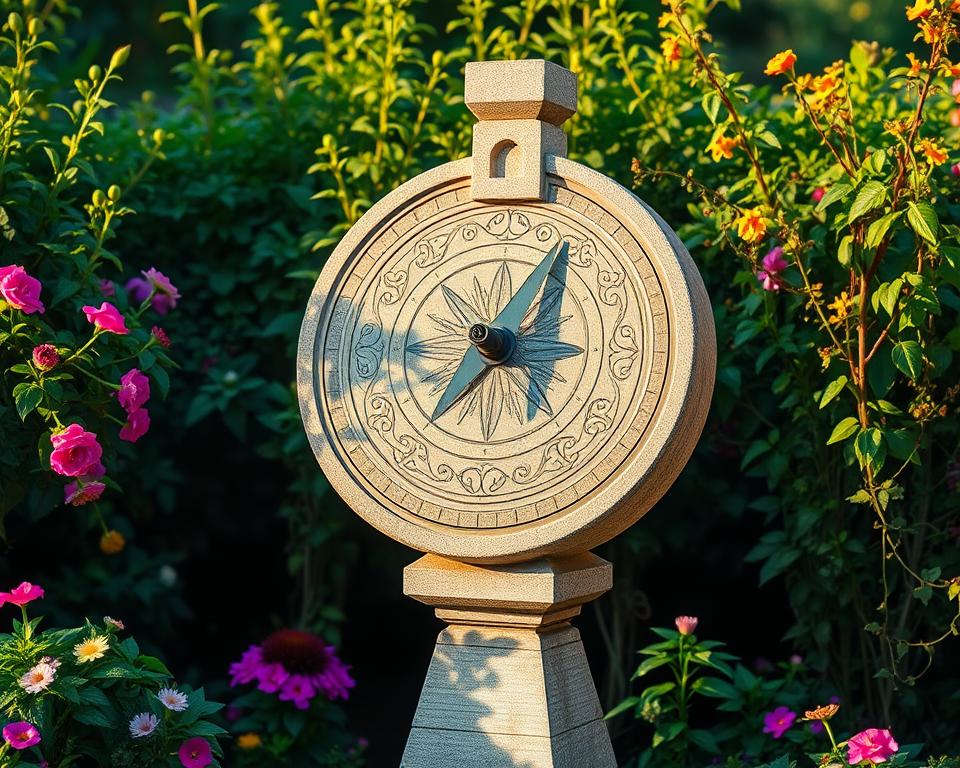
By balancing decorative elements with functional requirements, you can create a sundial that is both beautiful and accurate. Make sure to position your decorative sundial in a spot where it will be both functional and visually appealing.
Troubleshooting and Adjustments
To get the most out of your sundial, understanding how to troubleshoot common issues is essential. Even a perfectly constructed sundial will require adjustments to align with modern timekeeping conventions, as sundials naturally display solar time rather than standardised clock time.
Correcting for Daylight Saving Time
When creating your sundial, you need to decide whether you want it to display standard time or daylight saving time. For standard time in the northern hemisphere, the 12 o’clock mark should align with the north axis, while for daylight saving time, it should be positioned one hour earlier.
Accounting for the Equation of Time
The Equation of Time accounts for the variation between solar time and mean time, which can differ by up to 16 minutes throughout the year due to the Earth’s elliptical orbit and axial tilt. Referencing an Equation of Time chart will help you make precise adjustments to your sundial readings throughout the year.
| Date | Equation of Time (minutes) |
|---|---|
| Early November | +16 |
| Mid-February | -14 |
| Late June | -2 |
Your location within a time zone also affects accuracy; for every degree of longitude you are east or west of your time zone’s central meridian, add or subtract four minutes respectively. If your sundial consistently shows incorrect time, check that the gnomon is properly aligned with true north and set at the correct angle for your latitude.
Conclusion
Creating a sundial for your garden not only adds a unique feature but also connects you with a timeless method of timekeeping.
Whether you’ve made a simple stick sundial or a more complex wooden design, your sundial serves as both a functional clock and a conversation starter.
As you observe the shadow cast by your gnomon, you’ll develop an appreciation for the ancient art of tracking time and the hours of the day.
Your sundial will continue to mark time silently, requiring minimal maintenance, and stand as a testament to the enduring principles of sundial design.
FAQ
What is the purpose of the gnomon in a sundial?
The gnomon is a vertical stick or object that casts a shadow, indicating the time of day as the sun moves across the sky. Its angle is crucial in determining the accuracy of the sundial.
How do I determine the correct angle for my sundial’s gnomon?
The angle of the gnomon should be equal to your latitude. You can use a protractor to measure and set the correct angle, ensuring that it is parallel to the Earth’s axis.
What is the significance of true north in sundial construction?
True north is essential in sundial construction as it ensures that the sundial is aligned correctly with the Earth’s rotation. You can use a compass to determine the direction of true north, taking into account magnetic declination.
How often should I check and adjust my sundial?
You should check your sundial periodically to ensure it remains accurate. Adjustments may be necessary due to daylight saving time or the equation of time.
Can I use a sundial in the southern hemisphere?
Yes, you can use a sundial in the southern hemisphere, but you will need to adjust the design and orientation accordingly. The gnomon should point towards the south pole, and the hour lines will be reversed.
What materials are suitable for building a sundial?
You can use various materials, such as wood, metal, or stone, to build a sundial. The choice of material will depend on your design preferences and the desired level of durability.
How do I mark the hour lines on my sundial?
You can mark the hour lines by observing the shadow of the gnomon at different times of the day. Alternatively, you can use calculations based on your latitude and the sundial’s design to determine the correct hour lines.

