Moisture Barrier for the Floor of a Wooden Garden Shed: Tips

Your garden shed serves as valuable extra space. It protects tools, equipment, and cherished belongings. However, its wooden structure faces a constant threat from below.
Dampness rising from the ground can cause serious harm. Without proper protection, this leads to rot, mould, and weakening of the timber. This damage compromises your storage environment and shortens the shed’s life.
This guide explains how a floor moisture barrier provides essential defence. We focus on practical steps for assessment, installation, and long-term care. UK weather, with its frequent rain, makes this protection vital.
Following this advice helps prevent costly repairs. It ensures your garden shed remains dry, secure, and functional for years. Let’s begin securing your investment.
Inhaltsverzeichnis
Key Takeaways
- Ground dampness is a primary cause of timber damage in garden structures.
- Installing a protective membrane significantly extends your shed’s lifespan.
- Proper installation prevents rot, mould, and structural weakness over time.
- Regular maintenance checks are crucial for ongoing protection against moisture.
- This guide provides a clear, step-by-step approach to safeguarding your investment.
Why a Moisture Barrier is Essential for Your Wooden Shed
Your outdoor storage space faces constant challenges from Britain’s damp climate. Understanding these threats helps you appreciate the need for proper protection.
The Damaging Effects of Moisture on Wooden Structures
Water infiltration causes serious problems for timber buildings. It leads to decay and warping over time.
This compromises the entire framework’s strength. Your shed becomes less stable and secure.
UK weather brings frequent rain and humidity. These conditions accelerate damage to exposed wood.
How Moisture Leads to Rot, Mould, and Structural Weakness
Dampness creates ideal conditions for fungal growth. Rot weakens timber from within.
Mould spreads across surfaces and poses health risks. It affects air quality inside your storage area.
Structural integrity suffers as materials degrade. This requires costly repairs if left unchecked.
Protecting Your Stored Items from Moisture Damage
Your belongings need dry conditions for preservation. Tools develop rust in damp environments.
Furniture and personal items suffer from stains and odours. Electrical equipment becomes unsafe when wet.
Pests seek out moist areas for shelter. Rodents and insects cause additional harm to contents and structure.
Proper protection offers multiple benefits:
- Prevents deterioration of both building and contents
- Reduces maintenance requirements over time
- Improves thermal efficiency for year-round comfort
- Maintains property value and functionality
Experts at Atlas Sheds emphasise this protection isn’t optional. It’s fundamental for long-term performance in our climate.
Understanding these risks prepares you for the installation process. Your investment deserves this crucial defence.
Preparing Your Shed for Moisture Barrier Installation
The success of any protective installation begins with a comprehensive assessment of existing conditions. Proper groundwork ensures your investment receives optimal defence against environmental challenges.
This preparation phase addresses specific issues unique to your outdoor storage space. It creates a solid foundation for effective barrier implementation.
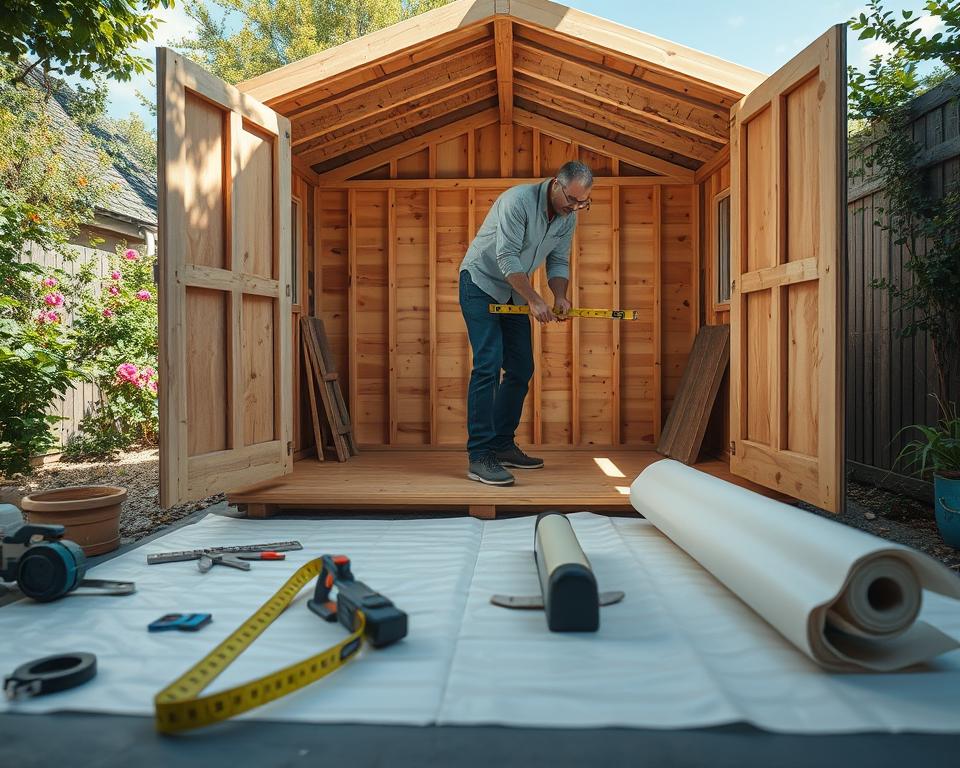
Assessing Your Current Shed Foundation and Condition
Begin with a thorough inspection of your structure’s base. Look for cracks, uneven settling, or signs of deterioration.
Check the perimeter for gaps where water might penetrate. Pay attention to areas showing discolouration or softness in the timber.
Examine the interior floorboards for warping or staining. These indicators often reveal underlying issues requiring attention before installation.
Identifying Different Types of Damp
Understanding damp varieties helps tailor your approach. Each type demands specific treatment methods.
Rising damp originates from the ground beneath. It typically shows as tide marks on lower walls and base areas.
Penetrating damp enters through leaks in roofs, windows, or doors. Look for localised wet patches following rain events.
Condensation damp forms from internal moisture accumulation. Water droplets on surfaces indicate poor air circulation issues.
Essential Tools and Materials You’ll Need
Gather appropriate equipment based on your assessment findings. Quality materials ensure long-lasting results.
Essential items include a damp-proof membrane, silicone sealant, and pressure-treated timber. Gravel provides excellent drainage enhancement.
Consider these additional supplies for comprehensive preparation:
- Spirit level for checking foundation evenness
- Moisture meter for accurate damp detection
- Protective gloves and safety glasses
- Quality brush for cleaning surfaces
Creating Proper Drainage Around Your Shed
Effective water management prevents accumulation around your structure’s base. Proper grading directs moisture away from vulnerable areas.
Slope the ground away from your building’s perimeter. A minimum gradient of 1:50 ensures efficient water runoff.
Gravel borders offer excellent drainage solutions. They help prevent water pooling while allowing natural evaporation.
| Drainage Feature | Purpose | Recommended Specification |
|---|---|---|
| Ground Slope | Water diversion | Minimum 2cm drop per metre |
| Gravel Border | Surface drainage | 30cm width, 5cm depth |
| Channel Drains | Heavy rain management | Positioned at low points |
| French Drains | Subsurface water control | Perforated pipe in gravel trench |
Clearing vegetation around your structure improves air circulation. It reduces humidity levels and minimises moisture retention.
Regular maintenance of drainage systems ensures ongoing protection. Simple seasonal checks prevent major issues developing over time.
Professional surveys recommend combining multiple drainage methods. This layered approach provides comprehensive defence against various water sources.
How to Install a Moisture Barrier for the Floor of a Wooden Garden Shed
Implementing proper defence measures transforms your outdoor storage solution. This practical guide walks you through four key installation techniques. Each method contributes to comprehensive protection against environmental threats.
Following these steps creates a dry, secure environment for your belongings. Proper implementation extends your structure‘s lifespan significantly.

Installing a Damp Proof Membrane Beneath Your Shed
Begin with a robust plastic sheet beneath the frame. This membrane acts as your first defence line against rising damp.
Secure the edges with quality adhesive tape. This prevents shifting during assembly and use.
Add a soil layer atop the sheet for enhanced protection. This simple step provides extra security against ground moisture.
Using Pressure-Treated Timber for Enhanced Moisture Resistance
Select treated timber for floors and roofing components. This material offers inherent resistance to fungi and insects.
Secure boards with appropriate fasteners to avoid metal erosion. Galvanised nails or stainless steel bolts work best.
This approach significantly reduces future maintenance requirements. Your investment remains sound for years.
Applying Silicone-Based Sealant to Gaps and Joints
Identify potential entry points around doors and windows. These areas often permit water intrusion during heavy rain.
Use a caulking gun for precise sealant application. Silicone-based products offer flexibility and durability.
Proper sealing helps prevent penetrating damp issues. It maintains interior dryness throughout seasonal changes.
Fitting Metal or Plastic Bases for Superior Protection
Consider elevated support systems for ultimate defence. Galvanised steel or HDPE bases provide excellent solutions.
These materials don’t absorb water like traditional options. They create a stable foundation resistant to decay.
Installation is straightforward with basic tools. You’ll achieve professional results with minimal effort.
| Method | Primary Benefit | Key Consideration |
|---|---|---|
| Damp Proof Membrane | Blocks rising damp | Ensure complete ground coverage |
| Treated Timber | Enhances material longevity | Use corrosion-resistant fasteners |
| Silicone Sealant | Seals penetration points | Apply in dry conditions only |
| Elevated Bases | Provides physical separation | Check level installation carefully |
Each technique addresses specific vulnerability points. Combined, they create a robust defence system for your storage space.
Industry experts confirm these methods’ effectiveness in British weather conditions. Proper implementation reduces rot and mould risks substantially.
Your efforts now pay dividends through extended service life. You’ll enjoy peace of mind knowing your possessions remain protected.
Additional Protection Measures for Comprehensive Moisture Defence
Beyond the essential moisture barrier installation, supplementary protective strategies significantly enhance your shed’s defence system. These methods address both external environmental factors and internal climate control needs.
Implementing these additional measures creates a holistic approach to moisture management. They work alongside your primary barrier to provide complete protection.
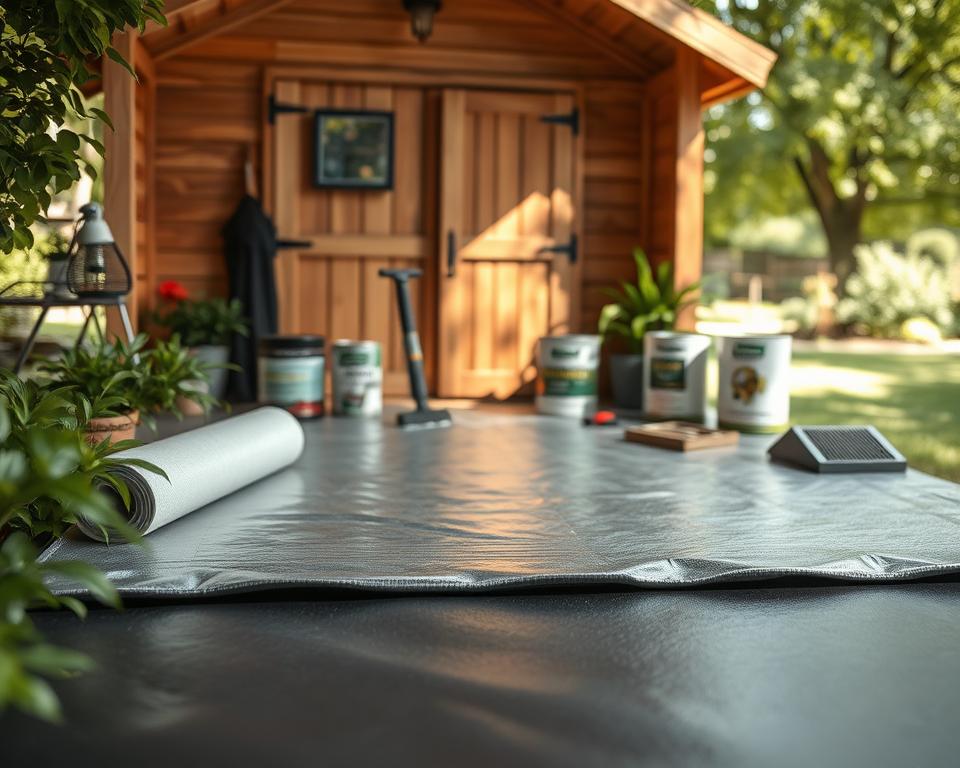
Utilising Gravel Borders for Improved Drainage
Gravel borders offer excellent perimeter protection for your outdoor structure. They create an effective drainage system around the base.
Install a 5-8cm depth of gravel over weed barrier fabric. This combination enhances water runoff while suppressing unwanted plant growth.
The gravel layer also deters pests from digging near your storage area. It provides a clean, functional border that complements your garden aesthetic.
Incorporating Skirting Boards to Seal Ground Gaps
Skirting boards provide crucial sealing between your shed’s base and the ground. They close gaps that might allow water or pests to enter.
These boards improve the structure’s stability and visual appeal. Choose treated timber or composite materials for best results.
Proper installation ensures complete coverage around the perimeter. This simple addition offers significant protective benefits.
Installing Proper Ventilation Systems
Effective ventilation prevents condensation damp inside your storage space. It promotes air circulation throughout the interior environment.
Consider static vents for basic airflow management. Solar-powered options provide active ventilation without electrical connections.
Position vents strategically to create cross-ventilation patterns. This approach maintains fresh air movement in all weather conditions.
Considering Insulation Options for Temperature Control
Insulation helps maintain stable temperatures within your shed. It reduces condensation by minimising temperature fluctuations.
Silver-backed bubble wrap offers lightweight insulation solution. Rigid foam boards provide more substantial thermal protection.
Proper insulation protects stored items from extreme temperature changes. It creates a more consistent environment for your belongings.
| Protection Method | Primary Function | Installation Complexity | Long-term Benefits |
|---|---|---|---|
| Gravel Borders | Surface water management | Low | Improved drainage and pest control |
| Skirting Boards | Gap sealing and stability | Medium | Enhanced protection and appearance |
| Ventilation Systems | Air circulation control | Medium-High | Condensation prevention |
| Insulation Materials | Temperature regulation | Medium | Climate stability and energy efficiency |
These additional measures work together to create comprehensive moisture defence. They address different aspects of protection for complete coverage.
Gravel and skirting boards handle external water management. Ventilation and insulation control internal climate conditions.
Industry experts recommend combining these methods for best results. This layered approach ensures maximum protection against various moisture sources.
Your investment deserves this comprehensive defence strategy. These measures provide peace of mind through all seasons.
Maintaining Your Moisture Barrier and Shed Protection
Ongoing maintenance routines form the backbone of long-term shed preservation. Your protective measures require regular attention to remain fully effective against environmental challenges.
This consistent care ensures your storage space maintains optimal conditions. It prevents minor issues from developing into significant problems.
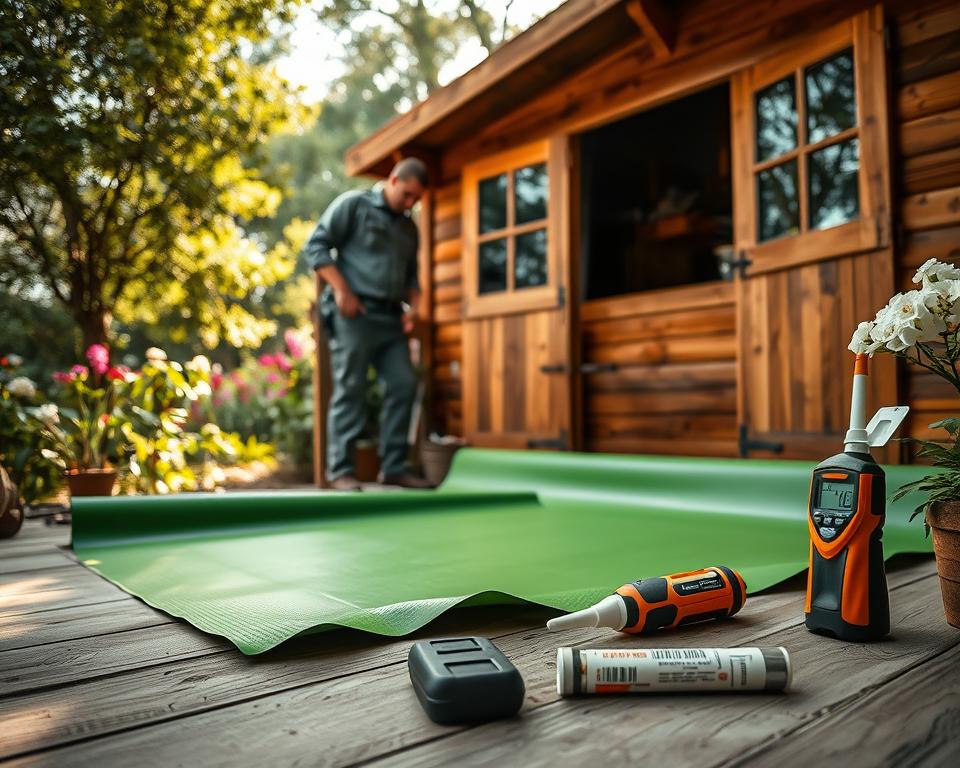
Regular Inspection Routines for Early Problem Detection
Establish monthly visual checks of your structure’s key areas. Look for cracks, discolouration, or warping in timber components.
Pay special attention to corners and joints where issues often begin. Early detection allows prompt intervention before damage spreads.
Document your findings to track changes over time. This record helps identify patterns and prioritise repairs.
Seasonal Maintenance Checklist for UK Weather Conditions
Britain’s variable climate demands seasonal attention to different aspects. Each period presents unique maintenance requirements.
Spring focuses on assessing winter damage and reapplying protective treatments. Summer is ideal for inspecting the roof and sealing any gaps.
Autumn requires clearing gutters and removing debris around the base. Winter involves monitoring for leaks and preventing snow buildup.
Reapplying Treatments and Addressing Wear and Tear
Annual reapplication of wood preservative maintains material resistance. This protects against rot and extends your structure’s lifespan.
Check silicone sealant around windows and doors for deterioration. Replace any compromised sections to maintain a proper seal.
Inspect the damp-proof membrane for signs of wear or damage. Address any issues promptly to ensure continuous protection.
Monitoring Humidity Levels With Hygrometers
Hygrometers provide accurate humidity readings inside your storage area. Place them in central locations away from direct sunlight.
Ideal levels should remain between 45-55% relative humidity. Higher readings indicate potential moisture problems requiring attention.
Consider using dehumidifiers during damp periods. They help control excess moisture and prevent condensation issues.
This proactive approach to maintenance delivers significant benefits. It extends your investment’s lifespan while preventing costly repairs.
Regular maintenance isn’t an optional extra—it’s essential preservation. Consistent care ensures your protective measures perform as intended through all seasons.
Industry experts emphasise the importance of these practices in our climate. They recommend combining visual inspections with instrument monitoring for best results.
Your dedication to regular upkeep ensures lasting protection. It maintains optimal conditions for both your structure and stored items.
Conclusion: Securing Your Shed’s Longevity
Protecting your outdoor storage space requires thoughtful planning and consistent care. This comprehensive guide has shown you effective strategies to combat environmental challenges.
Implementing proper protection measures prevents costly damage over time. Your investment remains secure against rot and mould issues.
Regular maintenance ensures lasting benefits for your garden structure. Follow these practical steps to maintain optimal conditions.
Your efforts now guarantee years of reliable service. Enjoy peace of mind knowing your belongings stay dry and protected.
FAQ
Why is a moisture barrier necessary for my wooden garden shed?
A moisture barrier is essential because it protects your shed’s structure from damp, which can cause rot, mould, and weaken the timber. It also safeguards your stored possessions from water damage, ensuring they remain in good condition over time.
What type of damp proof membrane (DPM) should I use under my shed?
You should use a robust, high-quality plastic or polythene DPM, ideally at least 1200 gauge. This material acts as a reliable shield against ground moisture, preventing it from seeping up into your shed’s floorboards and framework.
How do I check my shed for existing damp issues before installation?
Inspect the interior and exterior for signs like dark stains, soft or crumbling wood, or a musty smell. Pay close attention to corners, joints, and areas near the ground. Identifying these early helps you address problems before fitting your new barrier.
Can I install a moisture barrier myself, or do I need a professional?
Many homeowners can undertake this project themselves with basic DIY skills. You’ll need tools like a utility knife, tape measure, and sealant gun. However, if your shed’s base is uneven or significantly damaged, consulting a professional might be advisable.
What additional steps can I take to improve moisture protection?
Alongside a DPM, consider adding gravel around the base for better drainage, fitting skirting to seal gaps, and ensuring good air circulation with vents. These measures work together to keep the internal environment dry and stable.
How often should I maintain or inspect my shed’s moisture barrier?
Carry out a visual check at least twice a year, ideally in spring and autumn. Look for tears in the membrane, worn sealant, or new gaps. Prompt repairs help maintain continuous protection against water ingress.
Will a moisture barrier also help with insulation and temperature control?
While a DPM primarily blocks damp, it can complement insulation efforts by keeping the floor dry. For better temperature regulation, you might add foam boards or other insulating materials above the barrier.