Natural Stone Wall Ideas for Your UK Garden
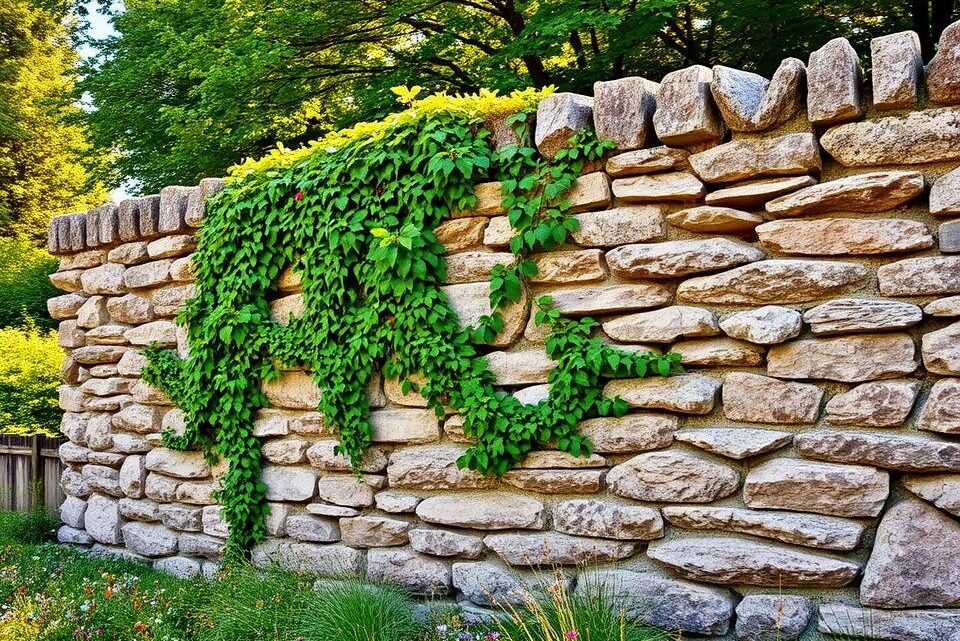
A natural stone wall for the garden is a timeless way to add structure, character and value to outdoor spaces across the United Kingdom. From Cotswold cottages to terrace gardens in Manchester and coastal plots in Cornwall, a well-chosen UK garden stone wall can define beds, create terraces and shelter tender plants from wind and frost.
This article sets out practical natural stone garden wall ideas for homeowners, garden designers and small contractors. You will find guidance on benefits such as durability in British climates, low maintenance and environmental credentials, plus advice on stone types, design styles and construction methods tailored to the UK.
Inhaltsverzeichnis
Key Takeaways
- Natural stone garden walls blend tradition and modern design to suit varied UK settings.
- They offer durability and low maintenance suited to British weather.
- Choosing the right stone influences colour, texture and plant compatibility.
- Planning, sourcing local stone and understanding regulations help control costs.
- Subsequent sections cover styles, construction options and long-term care.
Benefits of Using Natural Stone in UK Garden Walls
Natural stone has long been the material of choice for durable landscaping across Britain. Its reputation rests on proven performance, aesthetic appeal and a low environmental footprint when chosen with care. The points below explain why homeowners and landscapers favour stone for garden walls.
Durability and weather resistance in British climates
Granite, sandstone, limestone and slate have stood up to UK rain, wind and frost for centuries. Properly built walls that use breathable mortars and good capping reduce water ingress and resist freeze–thaw damage. Granite offers exceptional compressive strength and copes well with coastal salt spray.
Good drainage and correct pointing are vital to long life. Dry-stone field walls that dot the countryside show how well stone performs when assembled with craft and care. Choosing the right stone for local exposure ensures weather resistant garden walls that keep structure and appearance.
Low maintenance and long-term cost-effectiveness
Compared with timber or soft concrete blocks, stone needs less frequent replacement. Typical upkeep is periodic repointing, gentle cleaning and removing invasive plants. Avoiding aggressive cleaning methods preserves mortar and surface finish.
Over a property’s life cycle, a low maintenance garden wall can reduce repair bills and retain curb appeal. Well-built stone walls often enhance property value, making the initial outlay a sensible long-term investment.
Environmental credentials and sustainability
Sourcing local materials such as Cornish granite, Scottish sandstone or York stone cuts transport emissions and supports regional quarries. Natural stone has minimal chemical processing and is readily recyclable at the end of a project.
Choosing reclaimed stone or certified suppliers strengthens the case for sustainable garden materials. An eco-friendly stone wall lowers material turnover and brings character through weathered patina while reducing embodied carbon.
| Benefit | What to expect | Practical tip |
|---|---|---|
| Longevity | Decades of service with minimal structural decay | Use quality capping and breathable mortar to prevent water damage |
| Weather resistance | Resists rain, wind and frost when built correctly | Provide good drainage and consider granite for coastal sites |
| Low maintenance | Periodic repointing and cleaning only | Avoid high-pressure washing; inspect joints annually |
| Environmental impact | Low processing, recyclable and long-lived | Source local or reclaimed stone to reduce embodied carbon |
| Value retention | Enhances curb appeal and resale prospects | Choose styles and stone that suit the local vernacular |
Natural stone wall for the garden
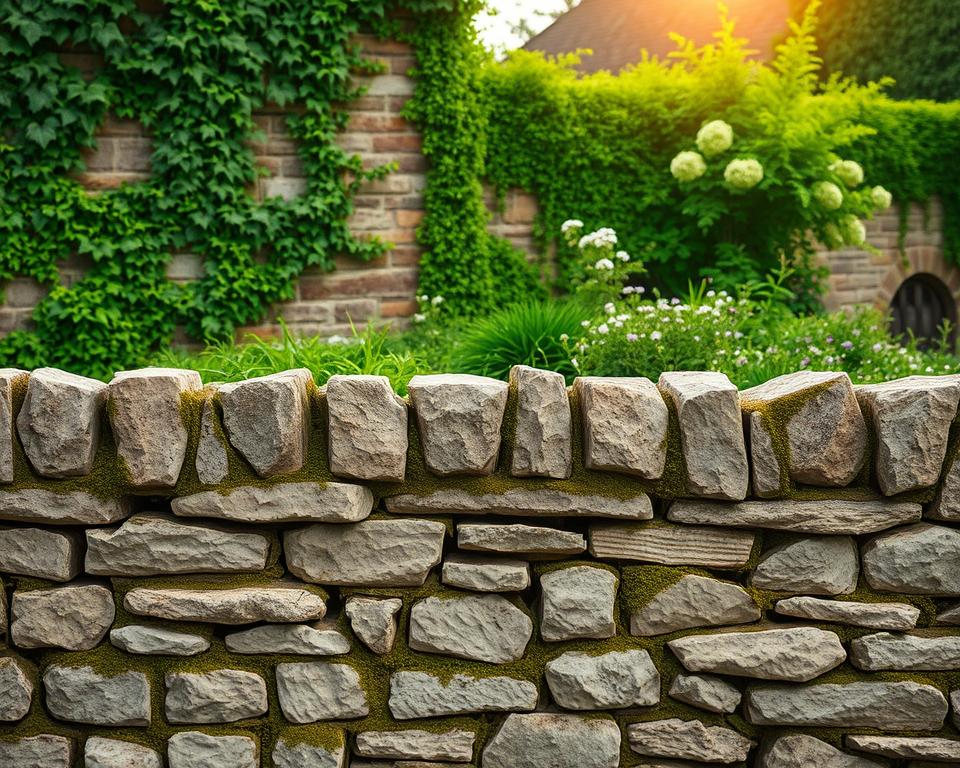
Natural stone gives gardens a clear sense of place. A garden character stone wall can act as a room divider, a terrace edge or a dramatic boundary. Colour, texture and height change how a space feels and how plants grow within it.
How a natural stone wall transforms garden character
A low retaining wall creates cosy seating pockets and warmer microclimates for tender plants. Taller boundary walls give privacy and weight to a plot, reinforcing period styles or new contemporary lines.
Warm honey sandstone softens a border and lends a Mediterranean mood. Grey granite or slate adds a modern, minimal edge that suits clean planting shapes.
Choosing stone types that complement plantings and structures
Consider stone choice for planting so materials and foliage sit well together. Mellow sandstones pair with herbaceous, cottage-style borders. Dark slate or granite provides contrast for bold, architectural plants such as Phormium or Agapanthus.
Scale matters. Small, irregular stones suit informal gardens. Large ashlar blocks work best with formal terraces and paved courtyards. Match grain and finish to existing paving, steps and timber pergolas for cohesive materiality.
Integrating stone walls with existing garden features
Plan transitions where walls meet patios, steps and raised beds to ensure level changes and continuous drainage. Use coping stones on wall tops that line walkways and seating areas.
Introduce niches, planting pockets and recessed lighting to integrate irrigation, seating and access. Thoughtful details help integrate stone wall garden features into everyday use.
Dry-stone crevices and gaps support wildlife. Small holes shelter insects, frogs and small mammals, which boosts biodiversity while keeping a handcrafted look.
Popular stone types for UK garden walls
A choice of natural stone defines the look, performance and maintenance of garden walls. Below are three commonly used materials, explained with practical notes on appearance, durability and typical uses in British gardens.
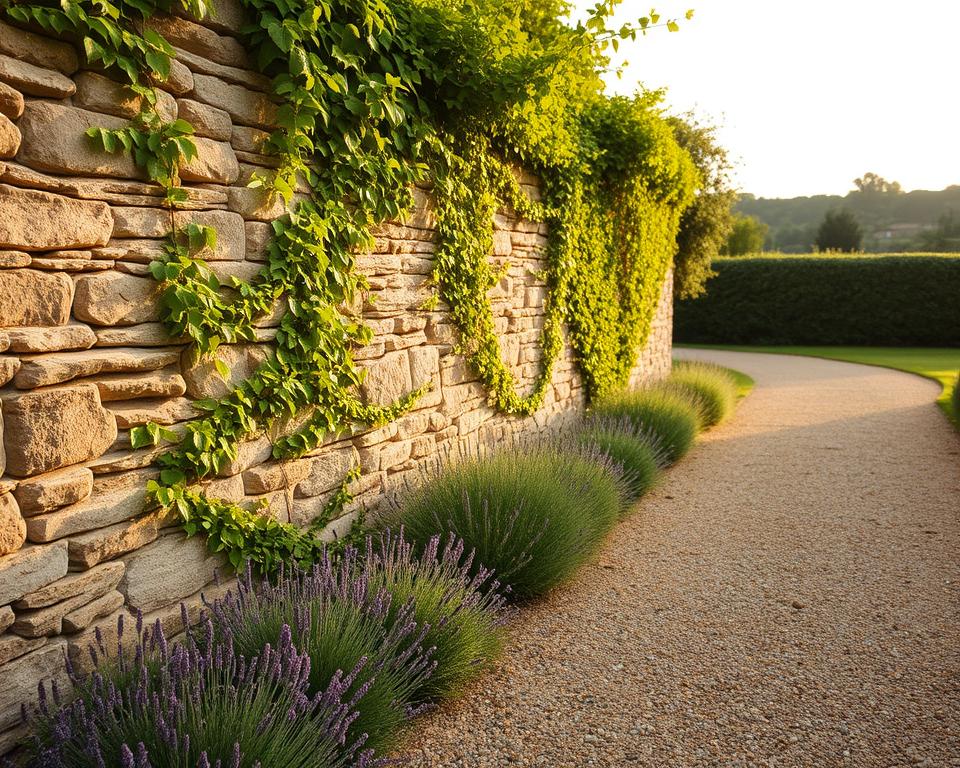
Sandstone: colour variations and texture
Sandstone offers a wide palette, from warm buff and pink tones to deep reds and greys, depending on the quarry. Varieties such as York stone and Pennine sandstones show this range.
Textures vary from sawn and dressed ashlar to riven faces. Riven surfaces give a naturalistic character that weathers well and helps climbing plants to root. Choose dense, low-porosity sandstone for wetter exposures to avoid water damage.
Use sandstone for feature walls, terraces and paving when a softer, traditional look is wanted. A well-built sandstone garden wall UK can age gracefully and suit many planting schemes.
Granite: strength and longevity
Granite is exceptionally durable with low porosity, so it resists abrasion, frost and salt spray. It is ideal for coastal sites and for heavy-duty retaining walls.
Colouration ranges from speckled greys to pinks and blacks. Finishes include polished or honed faces, yet rougher dressings are more common in gardens. Expect granite walling to be heavier and harder to shape, which raises handling costs.
A properly built granite wall UK will last for generations and suits locations where strength and load-bearing capacity are priorities.
Limestone and slate: aesthetic considerations
Limestone, such as Portland or Bath stone, shows soft, warm tones that patinate to a distinguished finish. Some limestones have higher porosity and need careful detailing in wet British climates.
Slate consists of thin, foliated sheets ideal for cladding and textured veneers. Its dark, dramatic look provides a strong contrast with green planting and works well for contemporary or formal schemes.
Many landscapers specify limestone slate garden walls where a mix of warmth and texture is required. Check local performance for freeze–thaw resistance and staining before finalising material choice.
- Practical tip: Match stone type to purpose — choose sandstone for a soft, traditional aesthetic, granite for structural strength, and limestone or slate for refined detailing.
- Material note: Consider the best stone for garden walls by weighing appearance, durability and local climate.
Design styles for stone garden walls
Choosing the right style sets the tone for a garden. Stone walls can read as rustic, formal or timeless, depending on build method, mortar choice and finish. Below are three common approaches for UK gardens, with practical notes on where each works best.
Dry-stone walling
Dry-stone walling is stacked without mortar. Craftspeople in Cumbria, Yorkshire and the Scottish Highlands keep this craft alive. The technique relies on careful selection and placement of each stone so the structure settles without catastrophic failure.
This method suits gentle slopes, field boundaries and decorative garden features where a natural look is wanted. Dry-stone work supports wildlife by offering crevices for insects and small mammals. Skilled labour is essential for a lasting finish.
Masonry with pointed finishes
Masonry stone walls use mortar and dressed or ashlar stone to deliver crisp lines and a refined appearance. These walls match formal terraces, courtyard walls and period properties where straightness and load-bearing strength are required.
Pointing styles change the visual weight of a wall. Flush, recessed and weather-struck finishes each alter the shadow lines and weatherproofing. Lime mortar often suits older or listed buildings because it breathes and sits compatibly with historic stone.
Rubble and coursed approaches
Rubble walls use irregular stones, often with mortar, to create textured, informal faces that sit well in country gardens. When stones are roughly aligned into horizontal bands the result becomes a rubble coursed wall with added visual order.
Use large, flat stones for stable courses and through-stones to tie the wall thickness together. This approach balances rustic charm with structural sense, making it a practical choice for both decorative and low retaining walls.
Decide on the style by matching purpose, site and character. A dry-stone walling UK option offers authenticity and biodiversity. Masonry stone walls give formal presence and strength. A rubble coursed wall provides a middle ground with plenty of charm among traditional garden wall styles.
Practical considerations before building
Before work begins, take time to check rules and site conditions. You should confirm UK planning permission garden wall limits with your local planning authority. Many small walls fall under permitted development, but conservation areas, listed properties and proximity to highways can change the rules. Boundary deeds and neighbour discussions reduce dispute risk. If dig works affect a shared structure, the Party Wall Act 1996 may require formal notice.
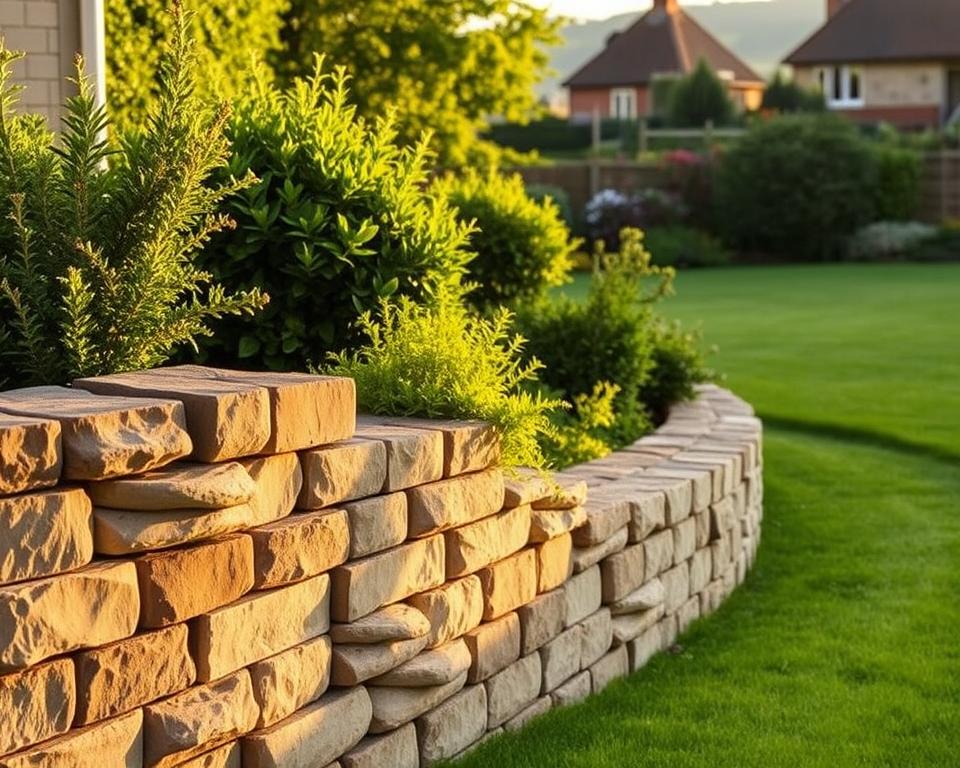
Good stone wall foundations are essential for lasting results. Excavate to firm subsoil and lay a compacted rubble or concrete strip sized for the wall height. Tall or retaining walls need deeper footings and greater reinforcement. Where ground conditions are poor, consider engineering advice to avoid movement and subsidence.
Think carefully about drainage frost wall issues when you design the backfill and capping. Use crushed stone backfill, membrane where appropriate and weep holes for retaining structures to prevent hydrostatic pressure. Breathable mortars, properly profiled capping and avoidance of water traps help reduce frost-lift in cold spells. These measures cut repair bills over the years.
Set a realistic garden wall budget before you choose materials or contractors. Costs rise with stone type, wall length and height, foundation complexity and restricted access. Labour from skilled masons will be a major line item because quality stonework is time-intensive. Obtain several quotes and compare warranties, portfolios and references.
Consider sourcing local stone UK to reduce transport costs and carbon footprint. Reclaimed yards and regional quarries supply authentic materials; look at British Limestone Company options and Marshalls alternatives for matching local character. Ask suppliers for technical data on durability and frost resistance before committing.
Use a short checklist when preparing to build: confirm planning constraints, verify property boundaries, design appropriate stone wall foundations, plan drainage frost wall details and agree a clear garden wall budget. A considered approach speeds construction and limits surprises.
Construction methods and professional vs DIY
Choosing between a professional build and a DIY approach affects cost, longevity and compliance. Small garden walls and raised beds suit confident DIYers who can use basic tools and follow good practice. Complex retaining walls, works on listed properties or projects near neighbours demand professional oversight to meet structural and legal requirements.
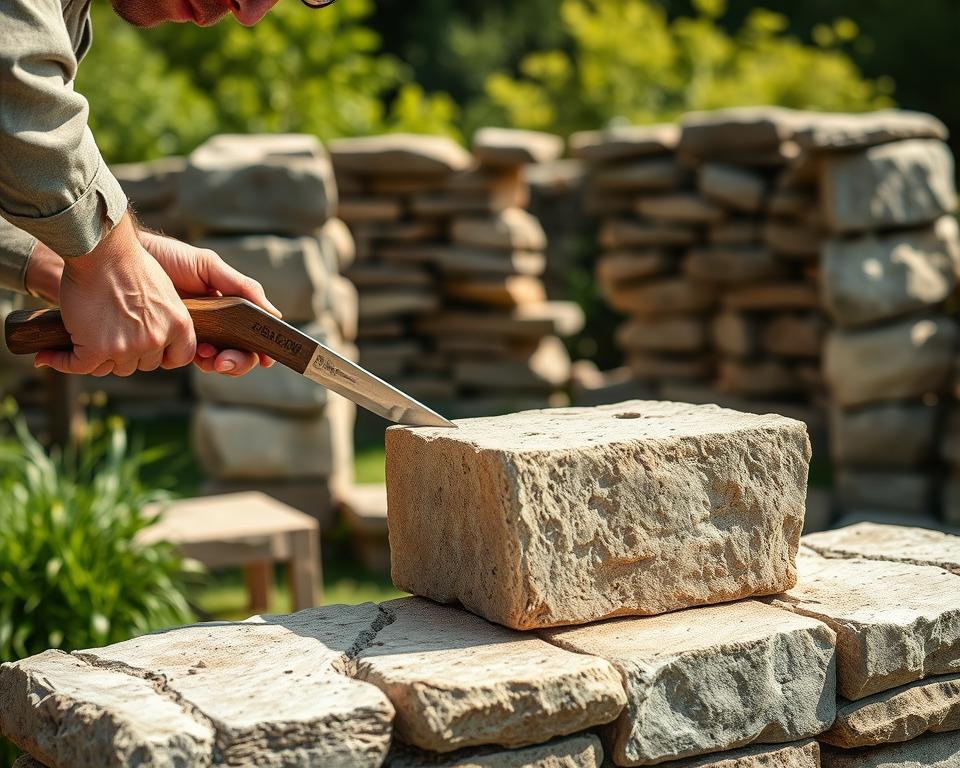
When to hire a stonemason or landscape contractor
Hire a specialist if the wall will retain soil, exceed local height limits or sit on tricky ground. A qualified stonemason or landscape contractor stone walls expert will provide structural calculations, select the correct mortar and detail coping and weep-drainage. Check trade body membership such as the Guild of Master Craftsmen or Constructionline and insist on public liability insurance.
Tools and materials for a DIY stone wall
Begin with the essentials: a spirit level, string lines, masonry hammer, bolster and chisel, trowels, wheelbarrow and compaction tools. Include safety kit such as goggles, gloves and steel-toe boots. Choose stone that suits the garden and local climate. Use crushed stone for the foundation, geotextile membrane for separation and appropriate drainage aggregates. Decide on mortar type early; lime mortar breathes and suits older stone, while cement mortar fits some modern builds.
Common pitfalls to avoid during construction
Inadequate foundations and poor drainage are frequent causes of failure. Address ground conditions and compact foundation layers properly to prevent subsidence and bulging.
Using incompatible mortars can trap moisture and cause spalling on softer stone. Match mortar type to the material and age of the wall. Pay attention to through-stones and tying methods to avoid weak faces. Avoid poorly graded stone sizes that make coursing unstable.
Neglecting legal checks creates delays and disputes. Confirm boundary lines, planning constraints and conservation area rules before work starts. When in doubt, hire a professional rather than risk stone wall construction mistakes.
Enhancements and finishing touches
Small details raise a stone wall from functional to striking. Choose capping and pointing that protect the masonry and complement the garden’s style. Think about plant pockets, lighting and a few accessories to make the wall work for both form and use.
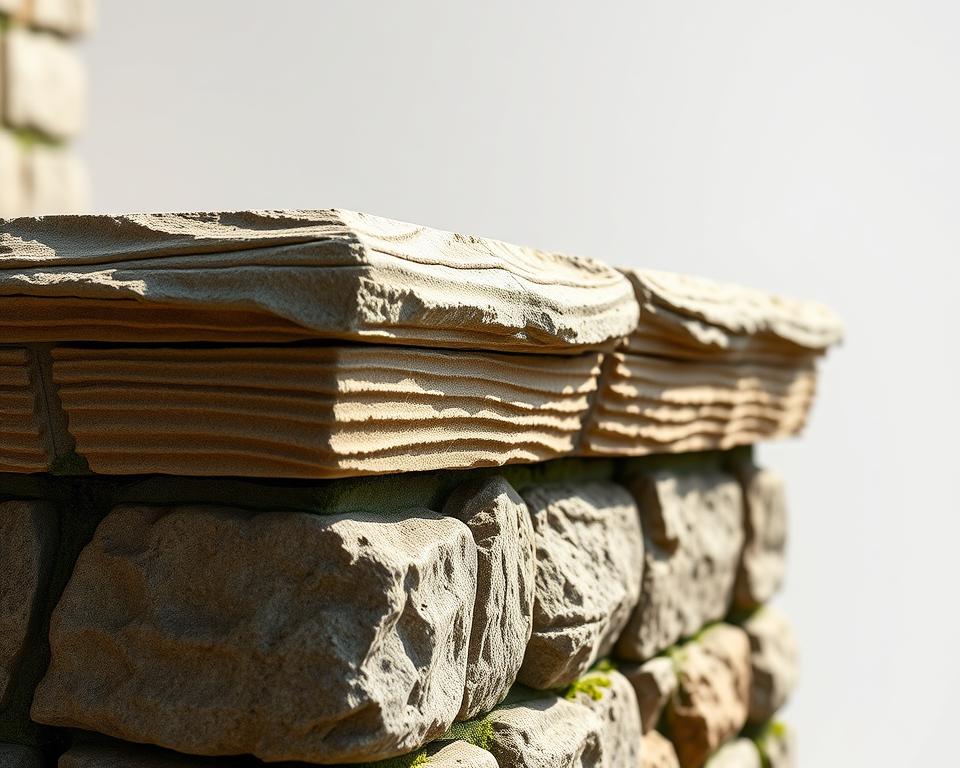
Capping, coping stones and pointing finishes
Coping stones shield the wall head from rain and give a tidy finish. Options include single stone copings, brick copings, sawn stone or sloped copings that shed water quickly.
Pointing finishes garden wall choices affect both look and durability. Flush pointing suits a neat, contemporary aesthetic. Recessed pointing lends a rustic, textured feel. Weather-struck pointing helps run off water on exposed elevations.
Use a lime-based mortar on traditional walls for breathability. For extra protection in exposed sites, discreet galvanised metal flashing can be installed without spoiling the appearance.
Incorporating planting pockets and living walls
Planting pockets stone wall designs add softness and wildlife value. In dry-stone or rubble walls, pockets sown with thyme, saxifrages or sedums create pockets of colour and habitat.
Living walls combine stone with modular planting systems or scree-style pockets to give vertical interest. Ensure substrate depth and irrigation match the plants chosen to avoid early failures.
Orient pockets to exploit the sunniest microclimates created by the wall. South-facing edges favour sun-loving species, while sheltered nooks suit wetter or shade-tolerant plants.
Lighting and accessories to highlight stonework
Lighting stone features transforms a garden after dusk. Warm LED uplights accentuate texture and create atmosphere beneath coping stones. Recessed step lights improve safety on paths beside walls.
Solar lanterns, wall-mounted fittings or concealed strip lighting in coping give a subtle effect. Plan wiring routes while building to avoid chasing into finished stonework.
Thicker walls can house integrated features. Built-in seating, niches for sculpture, mailboxes or small water features increase function without compromising aesthetics.
Maintenance and long-term care of natural stone walls
Natural stone walls bring charm to UK gardens. Regular attention keeps that charm intact. A planned approach to cleaning, minor repairs and seasonal checks prevents bigger problems.
Cleaning, re-pointing and weed control
Use mild detergent and a soft brush for surface grime. Avoid high-pressure washing that can erode mortar or stone. For moss, algae or lichen that threatens fabric, apply a specialist stone cleaner and follow the manufacturer’s guidance.
Inspect joints at least once a year. Small gaps call for repointing with a compatible mortar mix. For historic or listed walls, choose lime mortars to match original material and avoid rigid cement that traps moisture.
Remove invasive plants whose roots can shift stones. Let benign moss and lichens remain where they do no harm; they add character and support local biodiversity.
Repairing damage and addressing subsidence
Tackle minor issues promptly. Replace or re-seat displaced stones and reset loose cappings. Use matching stone for visual continuity and repoint localised areas to stop water ingress.
Bulging, leaning or widening cracks may signal foundation failure, poor drainage or tree root activity. Seek a structural or geotechnical specialist for assessment before undertaking major work.
Keep records of repair work and retain contractor guarantees for larger projects. For listed walls, follow conservation best practice and consult local conservation officers when planning repairs.
Seasonal stone wall checks and preventative care for UK weather
Carry out seasonal stone wall checks in autumn, winter, spring and summer. Before winter, clear gutters, unblock weep holes and check drainage to reduce freeze damage risk.
In spring and summer, check for regrowth of vegetation and carry out repointing during dry spells. Treat algal staining after the wet season to keep mortar sound and stone surfaces clear.
| Task | When to do it | What to look for |
|---|---|---|
| Visual inspection | Annual walk-round | Loose stones, cracks, bulges and displaced cappings |
| Cleaning | After wet season; as needed | Surface grime, algae, moss affecting mortar joints |
| Repointing stone walls | Dry months; when joints show gaps | Compatible mortar choice, small-scale works early |
| Vegetation control | Spring and autumn | Invasive roots, seedlings in joints, beneficial moss |
| Check drainage and weep holes | Autumn and after storms | Blocked channels, pooling water, signs of erosion |
| Repair subsidence stone wall | When movement, leaning or large cracks appear | Engage specialist assessment, document works and warranties |
Good stone wall maintenance UK-wise reduces long-term costs and preserves heritage. Small, regular actions extend life and avoid disruptive, costly repairs.
Conclusion
Natural stone walls bring lasting value to UK gardens by combining durability, low maintenance and sustainable credentials. Whether you choose a dry-stone boundary or a pointed ashlar feature, the right material and style create strong visual impact while standing up to British weather. These long-lasting garden walls also complement planting schemes and improve garden structure.
Practical next steps are straightforward: assess site constraints such as planning, drainage and foundations, obtain multiple quotes for stone wall installation UK from reputable stonemasons or landscape contractors, and consider locally sourced or reclaimed stone to reduce cost and carbon. Taking time to choose the correct stone type helps you choose stone wall UK options that suit soil, microclimate and the garden’s architectural character.
For complex or structural work, commission a qualified professional to ensure safety and longevity. Enhance function and appearance with coping stones, planting pockets and discreet lighting to get the most from a natural stone wall for the garden. Investigate local quarries and your planning authority early to keep the project smooth and compliant.
FAQ
What are the main benefits of a natural stone wall for the garden in the UK?
Natural stone walls offer exceptional durability in British climates, low long‑term maintenance and strong sustainability credentials. Properly built stone resists rain, wind and freeze–thaw cycles, can reduce lifecycle costs versus timber, and supports biodiversity when built as dry‑stone. Locally sourced or reclaimed stone also lowers embodied carbon and supports regional suppliers.
Which stone types work best for different UK garden styles?
Sandstone (for warm, textured tones), granite (for strength and coastal exposure) and limestone or slate (for formal elegance or dramatic dark accents) are common choices. Match colour and texture to planting and hardscaping: mellow sandstones suit cottage borders, granite suits structural retaining walls, and slate provides a contemporary contrast to green planting.
Do I need planning permission to build a garden stone wall?
Often small walls are covered by permitted development, but limits apply (for example walls under 1m by a highway or 2m elsewhere). Conservation areas, listed properties and local bylaws may impose restrictions. Always check with your local planning authority and review deeds for boundary and covenant issues; Party Wall Act 1996 may apply for shared structures.
Should I use dry‑stone or mortared masonry?
Choose dry‑stone for traditional, flexible, biodiversity‑friendly walls where a rustic aesthetic is wanted and the wall is not heavily retaining. Use mortared masonry (lime mortar preferred for historic settings) for formal terraces, load‑bearing walls or where straight, impermeable joints are required. Consider the site, function and local conservation requirements when deciding.
Can I build a stone wall myself or should I hire a professional?
Small, low decorative walls, raised beds and simple gabions are achievable for competent DIYers with the right tools and research. Hire a professional stonemason or landscape contractor for tall retaining walls, complex foundations, listed properties or works requiring structural calculations. Look for trade body membership and insurance when appointing contractors.
What foundations and drainage does a garden stone wall need?
Foundations should sit on firm subsoil; typical shallow strip footings of compacted rubble or concrete are sized to wall height and ground conditions. Retaining walls need crushed‑stone backfill, weep holes and membrane where appropriate to prevent hydrostatic pressure. Good drainage is essential to prevent frost‑lift and subsidence.
How should I choose stone suppliers in the UK?
Get multiple quotes and check physical samples. Prioritise local quarries and reputable suppliers such as regional stone yards or reclaimed stone merchants to reduce transport emissions. Verify stone properties (porosity, frost resistance), supplier provenance and ask for references and portfolios from contractors who have used the same stone.
What maintenance does a natural stone wall require?
Routine tasks include inspecting and repointing joints with compatible mortar, removing invasive vegetation, and gentle cleaning with water and soft brushes. Avoid high‑pressure washing on old mortar. Seasonal checks—clearing drains in autumn, repointing in dry months and checking for frost damage after cold spells—help detect issues early.
How can stone walls support wildlife and planting?
Dry‑stone and rubble walls create crevices used by insects, amphibians and small mammals. Incorporate planting pockets for thyme, saxifrages and sedums to add biodiversity and soften stone. Orient pockets to sunnier aspects, and design microhabitats with varied stone sizes and sheltered niches to maximise ecological value.
What are common construction pitfalls to avoid?
Avoid inadequate foundations and poor drainage, which cause bulging and subsidence. Do not use incompatible mortars (cement on soft stone can trap moisture). Ensure good grading of stone sizes, use through‑stones to tie faces, and verify legal boundaries and planning constraints before work begins.
What coping, pointing and lighting options improve longevity and appearance?
Use coping stones (single stone, sawn or sloped) to shed water and protect the wall head. Choose pointing styles—flush, recessed or weather‑struck—and lime mortar for breathability on traditional walls. Add warm LED uplights, recessed step lights or concealed strip lights in copings to highlight texture; plan wiring during construction to avoid chasing finished stonework.
Is reclaimed stone a good option for garden walls?
Reclaimed stone is an excellent low‑carbon choice that adds character and patina. It can be cost‑effective and sustainable, but verify structural soundness and matching physical properties. Reclaimed material often requires skilled craftsmanship to integrate into new works and can complement traditional or conservation projects.
How do coastal conditions affect stone selection?
Coastal exposure increases salt spray and wind loading. Granite and dense, hardened limestones perform well in seafront locations due to low porosity and resistance to salt damage. Avoid highly porous sandstones unless suitably detailed and protected with appropriate capping and drainage.
When should I consult a structural or geotechnical specialist?
Consult specialists for retaining walls above modest heights, signs of subsidence, significant ground movement, or where foundations will be near trees and complex ground conditions. A geotechnical report and structural calculations ensure safety and compliance for large or loaded walls.