Raised Garden Pond Ideas: Creating a Serene Water Feature
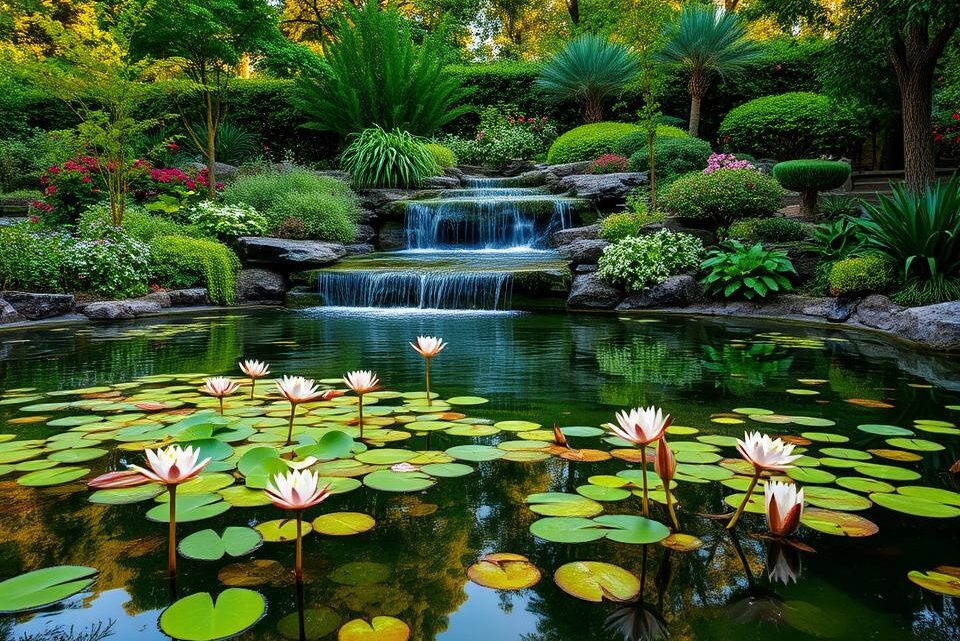
Transforming an outdoor space into a tranquil retreat is a dream for many homeowners. A thoughtfully designed water feature can achieve this, offering both visual appeal and a calming atmosphere. This guide explores innovative concepts for creating such a focal point.
Elevated designs present a distinct alternative to traditional sunken ponds. They offer significant practical benefits, including simpler installation and improved accessibility for maintenance. Their raised nature also enhances safety, making them a popular choice for households with young children.
From compact courtyards to sprawling lawns, there are design solutions to suit every space. The possibilities range from modern, geometric shapes to more naturalistic, rustic styles. Selecting the right materials and planning for the local ecosystem are crucial steps for long-term success.
This resource provides authoritative guidance, drawing on contemporary British garden trends. It covers essential considerations like material durability, installation processes, and ongoing care. The aim is to empower readers to create a beautiful and functional water feature that delivers satisfaction for years to come.
Inhaltsverzeichnis
Key Takeaways
- Elevated ponds offer easier installation and maintenance compared to in-ground versions.
- They provide enhanced safety features, ideal for gardens with children and pets.
- A wide variety of designs caters to both small and large outdoor spaces.
- Choosing durable materials is essential for the feature’s longevity.
- Proper planning supports local wildlife and creates a healthier garden ecosystem.
- Considering ongoing maintenance requirements ensures the pond remains a beautiful asset.
Introduction to Raised Garden Pond Ideas
Contemporary landscape design increasingly incorporates elevated water elements for their practical and aesthetic advantages. These features provide an accessible way to enhance outdoor spaces.
Benefits of a Raised Pond in the Garden
Elevated aquatic installations offer significant advantages for homeowners. They create an attractive focal point while supporting local ecosystems. The construction process is streamlined, requiring minimal ground disturbance.
As one landscaping expert notes,
“The accessibility of raised water features makes them ideal for urban environments where space is limited but impact is desired.”
These installations provide essential hydration sources for birds and insects. They are particularly valuable in areas where natural water sources are scarce.
| Feature | Traditional Sunken Pond | Elevated Water Feature |
|---|---|---|
| Installation Time | Multiple days | Hours to one day |
| Safety Profile | Higher risk | Enhanced safety |
| Wildlife Access | Limited | Excellent |
| Maintenance Ease | Challenging | Straightforward |
Creating a Calming Outdoor Environment
The soothing qualities of moving water contribute to peaceful garden atmospheres. Gentle sounds create therapeutic environments for relaxation and reflection.
These features transform ordinary spaces into serene retreats. The visual appeal of water adds dynamic interest throughout the year.
Urban gardens benefit particularly from these installations. They introduce natural elements into built environments, improving overall wellbeing.
Choosing the Ideal Raised Pond Design for Your Garden
The journey to creating a beautiful aquatic feature begins with understanding the fundamental choices in materials and assembly. Careful planning at this stage ensures the final result meets both aesthetic preferences and practical requirements.
Material Selection and Durability
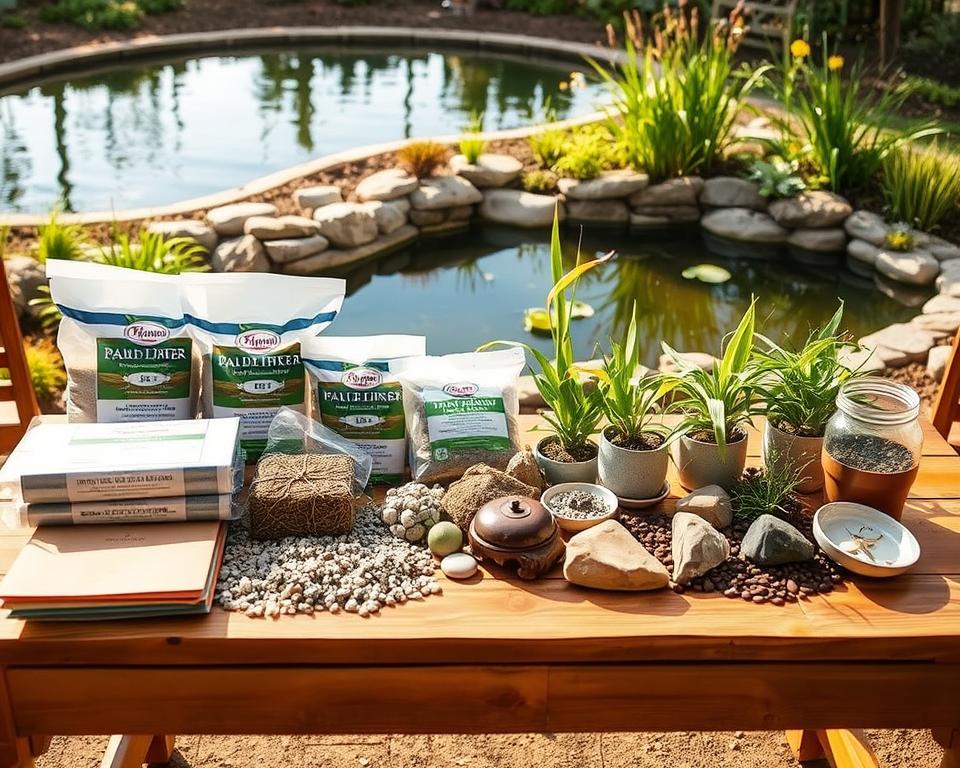
Choosing the right materials significantly impacts longevity. Timber frames offer traditional appeal but require pressure-treated wood for weather resistance. Metal options like Corten steel provide industrial aesthetics with natural rust protection.
The liner represents a critical component for water retention. High-density polyethylene (HDPE) offers excellent puncture resistance. This material choice ensures a secure environment for aquatic life.
| Material Type | Durability | Maintenance | Aesthetic Appeal |
|---|---|---|---|
| Pressure-Treated Timber | Good (with treatment) | Regular sealing | Traditional, natural |
| Corten Steel | Excellent | Minimal | Industrial, modern |
| Composite Materials | Very Good | Low | Contemporary |
| Rigid Plastic | Good | Low | Versatile |
Ease of Assembly and DIY Considerations
Assembly complexity varies across different designs. Slot-together systems appeal to beginners, requiring no specialised tools. Modular designs offer flexibility for custom shapes and sizes.
When planning the space, consider the available area and intended use. Adequate depth (minimum 46cm) supports healthy aquatic life. Pre-formed liners simplify installation but limit customisation options.
For those undertaking DIY projects, tongue-and-groove systems provide manageable assembly. These options balance structural integrity with accessibility for home builders.
Design Inspirations from British Garden Trends
Drawing inspiration from award-winning British landscapes reveals how elevated water features serve as central elements. They adapt beautifully across various scales, from compact urban courtyards to expansive country settings.
Contemporary versus Traditional Styles
Modern designs often embrace minimalist aesthetics. They feature clean geometric forms and materials like Corten steel, integrating with gravel paths and architectural planting.
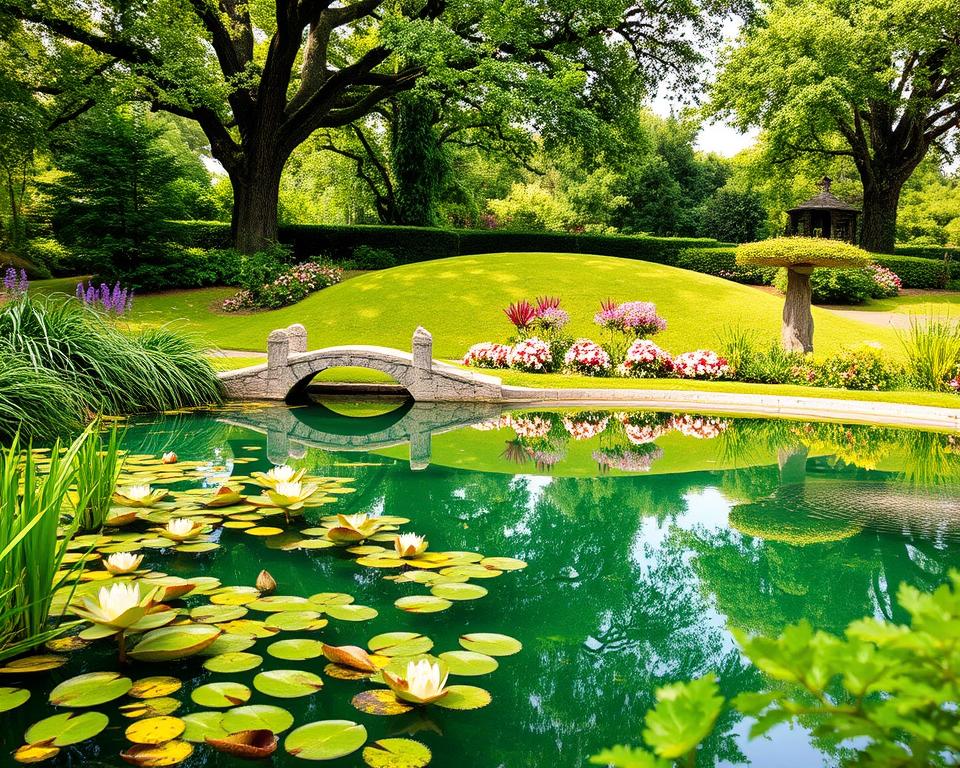
In contrast, traditional styles favour natural stone or timber constructions. These ponds exhibit classical symmetry, complementing period properties and established landscapes.
Polygonal shapes, such as hexagonal or octagonal configurations, offer a versatile middle ground. They provide interesting geometry while maintaining a formal structure.
Integrating Natural and Modular Elements
Modular systems deliver exceptional flexibility for customisable solutions. They allow adjustments to dimensions and configurations, suiting specific spatial constraints.
Natural stone features integrate seamlessly with existing materials. Sourcing stone to match house construction creates a cohesive narrative between building and landscape.
The choice between styles depends on the existing garden character and personal preference. Successful designs respect the site’s context while expressing an individual vision.
| Design Style | Primary Materials | Key Characteristics | Ideal Setting |
|---|---|---|---|
| Contemporary | Corten steel, rendered walls | Clean lines, geometric forms | Urban courtyards, modern homes |
| Traditional | Natural stone, seasoned timber | Classical symmetry, heritage elements | Period properties, walled gardens |
| Modular | Composite, rigid plastic | Customisable dimensions, flexible | Spaces with unique constraints |
Exploring Raised Garden Pond Ideas
Homeowners seeking a unique water feature will find a wealth of creative possibilities. These designs blend aesthetics with practicality, offering solutions for every space.

Hexagonal designs are a popular choice. They often incorporate built-in bench seating on three sides. This makes them ideal for compact areas, providing a place to relax while enjoying the water.
Corten steel options deliver a modern, industrial look. They are known for their durability and come with integrated overflow systems. These features make them a practical and stylish addition.
For those who enjoy observing aquatic life, garden aquariums with large viewing windows are an engaging option. They offer a clear view of fish and plants, adding interest for all ages.
Modular timber systems provide excellent versatility. They can be installed on various surfaces like patios or decking. This flexibility allows for custom configurations to suit any garden layout.
Preformed kits simplify the process considerably. They include everything needed, such as filtration pumps, for a straightforward setup. This turnkey approach is perfect for those new to water features.
Corner-specific designs are clever space-savers. They utilise often overlooked 90-degree spaces efficiently. Many include LED illumination to create a beautiful focal point, even in the evening.
| Design Type | Key Feature | Ideal For | Approx. Price Range |
|---|---|---|---|
| Hexagonal with Seating | Integrated bench seating | Small gardens, relaxation areas | £1,400 – £1,500 |
| Corten Steel | Industrial aesthetic, overflow system | Modern, contemporary spaces | Varies by size |
| Garden Aquarium | Large viewing windows | Families, wildlife observation | Around £560 |
| Modular Timber | Adjustable configuration | Versatile installation | £250 – £1,500 |
| Preformed Kit | All-inclusive package | Beginners, easy installation | Mid-range |
Practical Considerations: Size, Shape and Installation
Successful installation begins with meticulous attention to spatial requirements and structural foundations. The physical characteristics significantly influence both functionality and visual harmony within the outdoor environment.
Measuring Your Space and Determining Depth
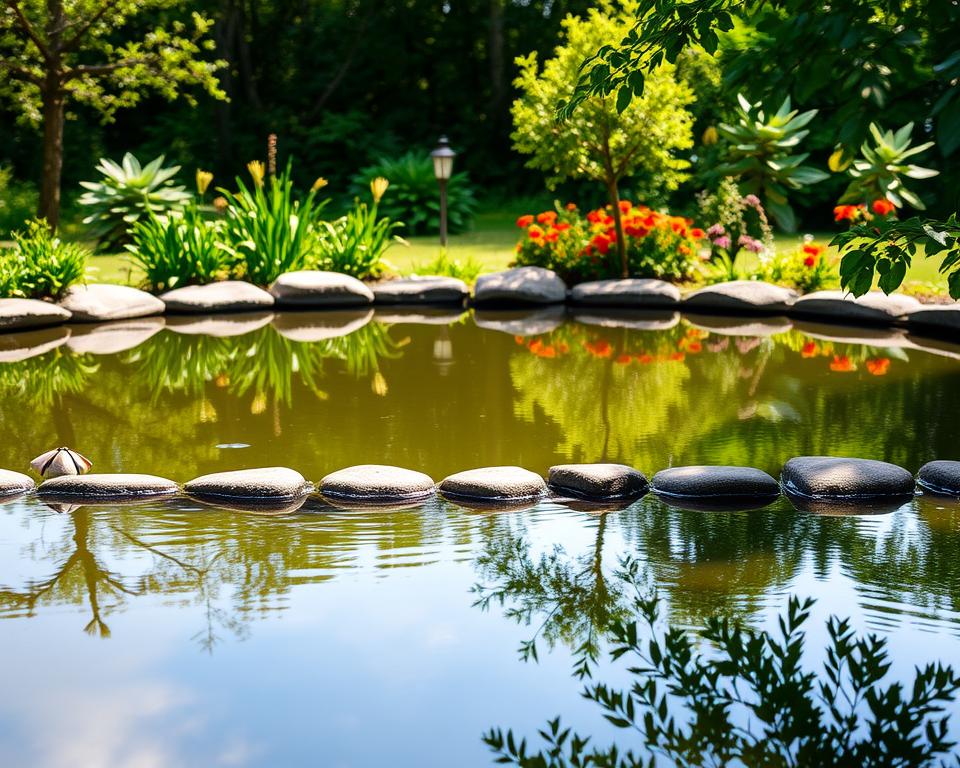
Accurate measurement of the available area represents the essential first step. Homeowners should assess dimensions while ensuring adequate clearance for maintenance access.
The recommended minimum depth for these features is 46cm. This specification prevents complete freezing in winter and excessive warming during summer months.
Formal geometric configurations suit structured garden designs. Corner-specific shapes maximise efficiency in compact spaces.
Installation Tips and Required Tools
Preparation of the ground surface varies according to installation location. Solid bases like concrete patios require minimal preparation.
Grass or soil surfaces may need levelling and compacting. This ensures structural stability for the long term.
Tool requirements typically remain modest for kit-based installations. Basic implements like spirit levels and screwdrivers often suffice.
| Installation Surface | Preparation Required | Essential Tools | Stability Rating |
|---|---|---|---|
| Concrete Patio | Minimal cleaning | Spirit level | Excellent |
| Decking | Check load capacity | Measuring tape, level | Good |
| Grass Surface | Levelling and compacting | Spade, compactor, level | Moderate |
| Soil Ground | Foundation installation | Full landscaping kit | Variable |
Enhancing Your Pond with Aquatic Plants and Wildlife
A well-balanced aquatic environment depends on thoughtful integration of flora and fauna. This creates a self-sustaining ecosystem that is both beautiful and beneficial.
Selecting Suitable Pond Plants
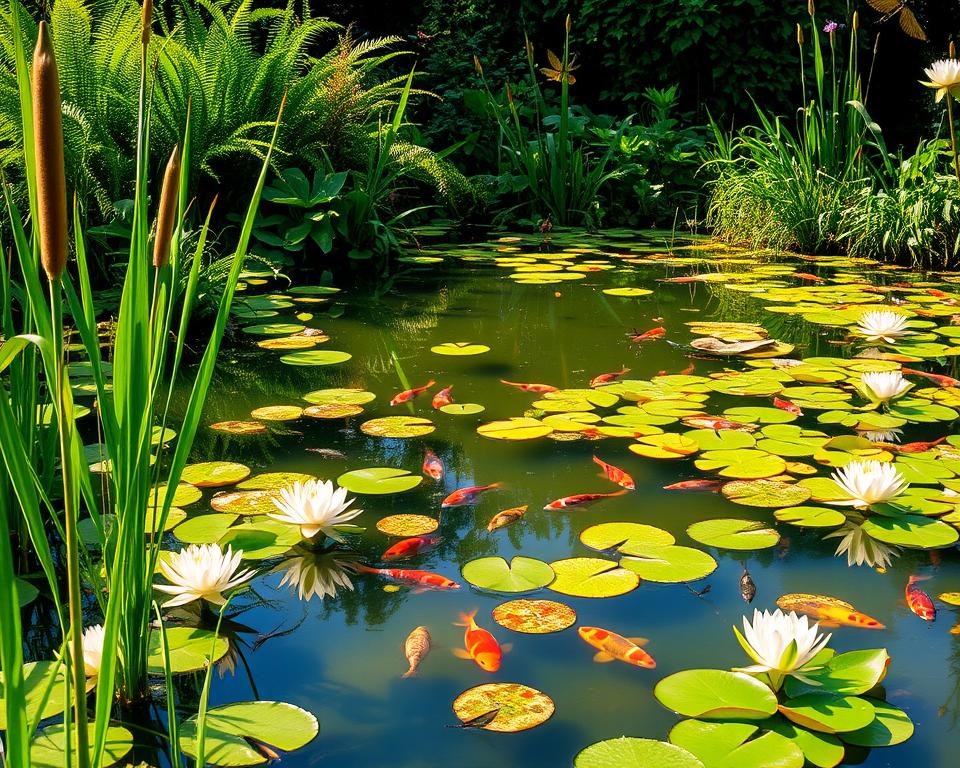
Choosing the right plants is fundamental to a healthy garden pond. They perform several vital roles, from oxygenating the water to providing shelter for creatures.
Oxygenating varieties are the foundation of a clear ecosystem. These aquatic plants absorb excess nutrients, which helps to prevent algae growth. Suppliers like Lincolnshire Pond Plants offer convenient starter packs.
It is crucial to use aquatic compost, not standard soil. This prevents the water from becoming polluted. Placing pond plants in baskets allows for easy management and movement.
Attracting Local Wildlife Safely
Wildlife will naturally discover a new water source. Creating different depth levels, including gentle beaches, ensures safe access for all creatures.
Avoid transferring frogspawn from other sources to prevent disease spread. Instead, allow local wildlife to colonise the area naturally. This patience ensures a healthier ecosystem.
For those considering fish, small species like goldfish are suitable for modest volumes. It is essential to research the mature size of all aquatic plants to prevent overcrowding.
Incorporating Integrated Features for Function and Style
A truly successful water feature seamlessly blends into the garden’s living space, offering practical benefits alongside its beauty. These integrated elements elevate the installation from a simple visual point to a functional and enjoyable part of the outdoor experience.
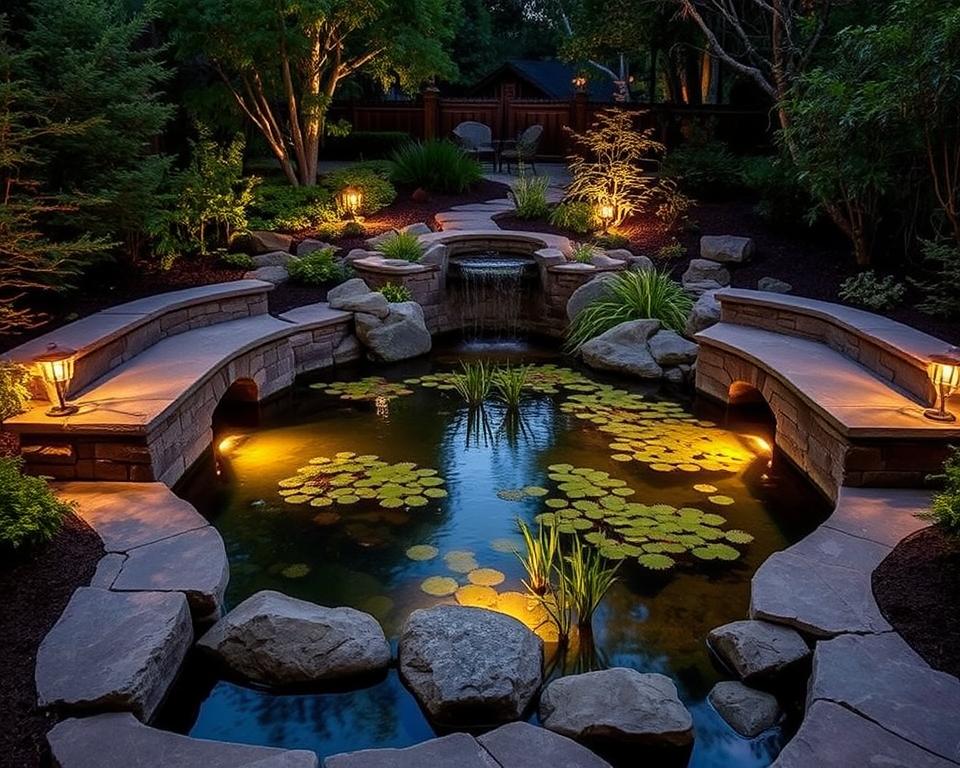
Thoughtful design choices can transform the perimeter of the feature. Built-in bench seating on multiple sides creates a dedicated area for relaxation. This approach is especially effective on a solid patio or timber decking surface.
Seating, Viewing Areas and Lighting Options
Integrated seating maximises the utility of the water feature. Hexagonal designs often include benches on three sides, effectively doubling as garden furniture. Classic Lutyens benches or built-in stones set into nearby walls provide complementary seating options.
Viewing windows offer an engaging perspective, particularly for families. They allow for observation of aquatic life and create a dramatic illuminated feature at night. Strategic planting around the edges softens the structure and integrates it with the wider garden.
The base surface is a critical consideration. Installations work well on concrete, patio slabs, or treated decking. A surround of gravel or decorative stones provides an attractive transition and aids drainage.
LED lighting extends enjoyment into the evening. It highlights water movement and creates atmospheric reflections. Container planting on the capping adds flexible, seasonal colour accents to the area.
| Integrated Feature | Primary Benefit | Ideal Setting |
|---|---|---|
| Built-in Bench Seating | Creatates a functional relaxation zone | Patio, decking, entertainment areas |
| Viewing Windows | Engaging underwater perspective | Family gardens, feature walls |
| LED Lighting | Extends usability into evening hours | All settings, especially for ambience |
| Gravel/Stone Surround | Softens edges, improves drainage | Borders, naturalistic landscapes |
Ensuring Safety and Ease of Maintenance
Maintaining the long-term appeal and safety of an aquatic installation requires careful planning from the outset. Proper protocols ensure both family security and feature longevity.
Child Safety Measures and Accessibility
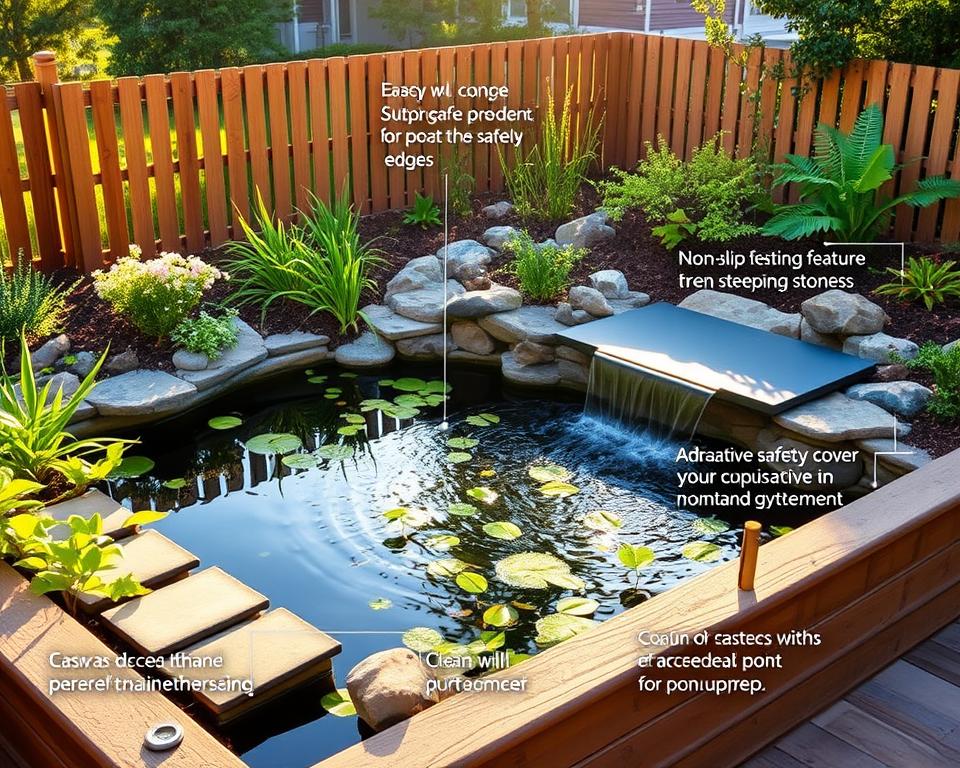
The elevated design of these features provides inherent safety benefits for households with young children. The walls create natural barriers that reduce accidental immersion risks.
Additional safety measures include protective grilles that prevent falls while allowing light penetration. These grilles protect both children and small pets from potential hazards.
Despite these advantages, vigilant supervision remains essential whenever children access areas containing water features. Safety should always be the primary consideration.
Maintenance Best Practices for Longevity
A reliable pump system circulates water effectively, helping keep it oxygenated and discouraging mosquito breeding. Regular monitoring ensures pumps function correctly.
During hot summer months, water levels require frequent checking as evaporation can stress aquatic life. The liner needs protection from punctures to prevent leakage issues.
Alternative maintenance approaches use aquatic plants and snails that help keep water clean naturally. This reduces reliance on mechanical systems.
| Maintenance Task | Frequency | Key Benefit | Equipment Needed |
|---|---|---|---|
| Water Level Check | Weekly in summer | Prevents stress on wildlife | Visual inspection |
| Pump Inspection | Monthly | Ensures proper circulation | None |
| Liner Examination | Seasonally | Prevents leaks | Visual inspection |
| Plant Maintenance | Spring and autumn | Natural filtration | Aquatic baskets |
Budgeting and Sourcing Quality Raised Pond Components
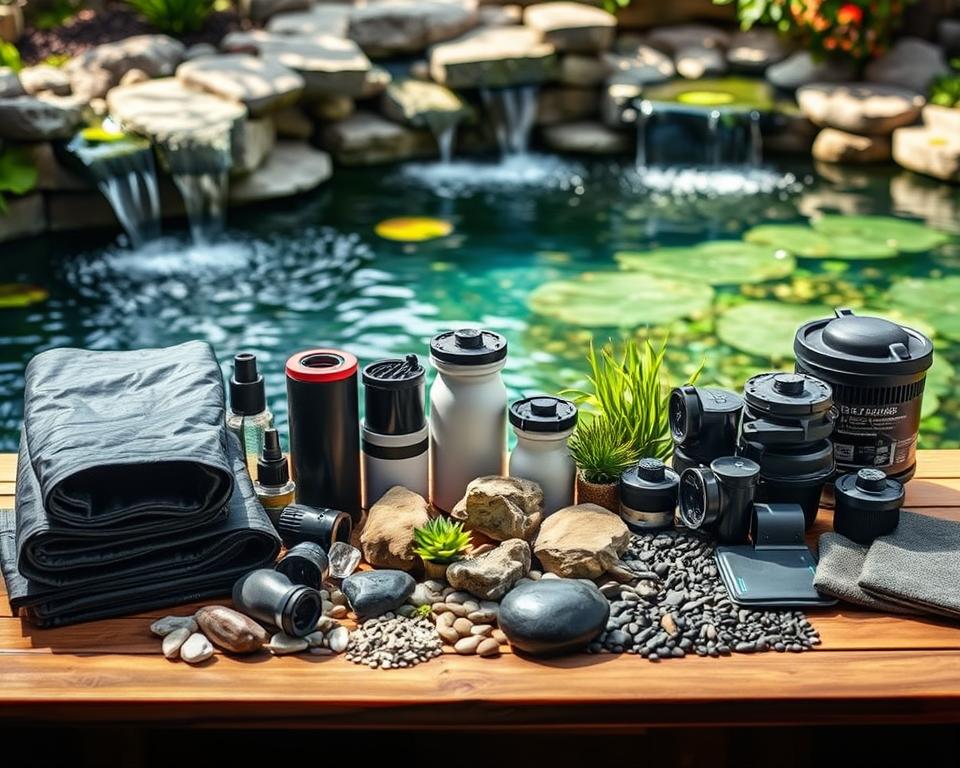
Budget considerations play a crucial role in determining the scope and quality of your aquatic installation. A well-planned budget allows for phased implementation, starting with essential components and adding features over time. This approach makes the project manageable for various financial situations.
Entry-level options begin around £250 for modular timber systems. Mid-range solutions typically cost £300-£600, while premium designs can approach £1,500. Each price point offers different benefits in terms of size, materials, and included features.
| Price Range | Example Products | Key Features | Supplier |
|---|---|---|---|
| £200-£300 | Small modular pond | Basic timber construction | Pond Keeper |
| £300-£600 | Garden aquarium | Viewing windows | Bradshaws Direct |
| £600-£1,000 | Wishing Well Pond | Decorative design | Bradshaws Direct |
| £1,000+ | Hexagonal pond | Integrated seating | Flora Select |
Component quality significantly impacts long-term value. Investing in robust liners prevents costly failures. Specialist suppliers like Flora Select and Bradshaws Direct offer products with guarantees from five to ten years.
Cost-saving opportunities exist for resourceful homeowners. Large rocks and decorative stone can be sourced through online marketplaces. This approach reduces expenses while maintaining aesthetic appeal in outdoor spaces.
The raised bed concept combines planting areas with water features. This integrated design creates cohesive landscapes while potentially reducing overall costs. It represents a versatile option for many gardens.
Conclusion
Integrating a water feature into an outdoor space offers a unique opportunity to enhance both aesthetics and biodiversity. These installations serve as versatile focal points that can transform gardens of any size or style.
The diverse design options available ensure there is a suitable solution for every context. Material selection plays a crucial role in long-term satisfaction, balancing aesthetic appeal with practical maintenance requirements.
Even compact installations provide significant benefits for local wildlife. They create habitats and water sources for various creatures. Thoughtful planning ensures these features become valuable additions to any outdoor area.
Successful projects demonstrate how water elements can elevate outdoor spaces. They combine visual appeal with ecological value, creating engaging environments for people and wildlife alike.
FAQ
What are the primary benefits of installing a raised water feature?
A raised water feature offers several advantages. It creates a distinct focal point in the garden, is often easier to install than an in-ground alternative, and provides better accessibility for maintenance and viewing. This design can also be a safer option for households with young children.
How do I choose the right size and shape for my feature?
The ideal size and shape depend on the available space and personal preference. It is crucial to measure the intended area carefully. A larger feature can support more fish and plants, while a compact design is perfect for a patio or smaller garden, offering flexibility in form from geometric to naturalistic shapes.
What materials are commonly used for construction?
Popular materials include wood, stone, brick, and pre-formed plastic or fibreglass units. Wood offers a natural look but requires treatment to withstand moisture. Stone and brick are highly durable, while pre-formed liners provide a simple, watertight solution for a straightforward installation process.
Can I build a raised feature myself?
A> Yes, many raised features are suitable for a DIY project, especially kits with pre-formed liners. Success depends on the design’s complexity, your skill level, and having the right tools. Starting with a simple, modular design is often recommended for those new to such projects.
What should I consider regarding safety?
Safety is paramount. For families, ensuring the sides are high enough to prevent accidental falls is crucial. A sturdy, secured cover or strong mesh can be used. Additionally, installing a pump with a safe, enclosed design and concealing electrical cables protects both people and wildlife.
How do I maintain the water quality?
Maintaining clear water involves several steps. A quality pump and filter system are essential for circulation. Regularly removing debris, partial water changes, and adding beneficial aquatic plants will help keep the ecosystem balanced and reduce algae growth.
What types of plants are suitable for this environment?
A> A variety of aquatic plants thrive in these settings. Marginal plants, like irises, can be placed on ledges at the edge. Oxygenators help maintain water clarity, while floating plants provide shade. It is best to choose species suited to the depth of water and light conditions.
Is it possible to keep fish in a raised structure?
Absolutely. Goldfish are a popular choice as they are hardy and adapt well. The key is to ensure the feature is deep enough to prevent freezing in winter and overheating in summer. A depth of at least 60cm is often recommended for fish health.
How can I incorporate lighting?
Lighting enhances the feature’s appeal during evening hours. Submersible LED lights can be placed within the water to highlight movement, while spotlights in the surrounding area can illuminate the structure and planting. Solar-powered options offer an energy-efficient solution.
What is the typical cost involved?
Costs can vary widely based on size, materials, and additional features like pumps and lighting. A simple, small DIY project may be relatively inexpensive, while a large, custom-built feature with complex stonework will require a more significant investment. Setting a clear budget beforehand is advisable.