Efficient Shed Heaters
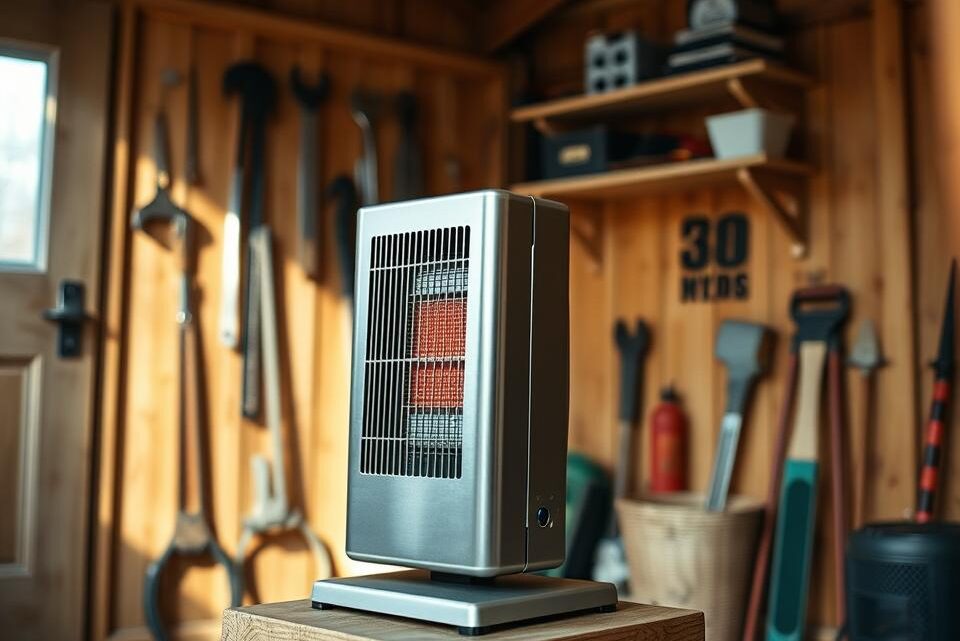
The right shed heater turns a cold, damp outbuilding into a usable workspace all year round. This guide focuses on choosing an efficient shed heater for workshops, hobby studios and storage rooms across the United Kingdom. It explains why sensible shed heating matters for comfort, tool protection and energy bills.
Efficient heating preserves tools and materials from frost and condensation, reduces mould risk and keeps a workshop or garden studio productive. Whether you need a compact workshop heater for occasional tasks, a dependable garden building heating solution for regular use, or an outdoor workspace heater for hobbies, selecting the correct system affects running costs and safety.
This article will cover heater types, key selection factors, energy-saving strategies and top-rated options for the UK climate. You will also find practical installation advice, safety and regulatory points, comparisons of upfront and running costs, smart features, maintenance tips and buying guidance to match a UK shed heater to its intended use.
Inhaltsverzeichnis
Key Takeaways
- Choose a shed heater that matches shed size and intended use to avoid wasted energy.
- Insulation and draught-proofing are as important as the heater type for lower running costs.
- Buy heaters with proven safety features and easy installation for outbuildings.
- Consider the UK climate: damp, cool winters call for moisture management as well as heat.
- Prioritise running costs and reliability—consumer research shows these drive most purchases.
- Tradespeople report improved productivity and reduced condensation when heating is well planned.
Understanding shed heater types for workshops and garden buildings
Choosing the right appliance for a workshop or garden building starts with a clear view of the main workshop heating types. Each technology has a distinct way of delivering warmth, a particular set of strengths and weaknesses, and ideal use cases. The short guide below compares common options so you can match performance to how you use the space.
Electric fan heaters: pros and cons
Electric fan heaters warm a room quickly by forcing air over a heated element. Portable models typically rate between 1 kW and 3 kW and suit short bursts of use in small workshops. Brands such as Dimplex and De’Longhi offer compact units with simple controls.
These heaters are low cost to buy and easy to move. Drawbacks include noisy operation, uneven hot spots, higher running costs for continuous use, and the potential to blow dust around work surfaces. They work best as temporary or supplemental heaters when instant heat is needed.
Infrared and radiant heaters: how they work
Infrared and radiant heaters send heat directly to objects and people rather than heating the air. This makes them effective in draughty or poorly insulated sheds where warmed air would escape. Fixed panels, such as Heatstrip or Solamagic, are common choices for workshops.
Technologies include halogen, quartz and ceramic infrared panels. Benefits are instant perceived warmth and efficient targeted heating for benches and work zones. Limitations arise from restricted coverage: correct positioning is essential and they do not replace whole-room heating where air temperature matters.
Convector and oil-filled heaters: steady warmth and efficiency
Convector heaters raise air temperature and rely on circulation to distribute heat. Oil-filled heaters heat a sealed oil reservoir, releasing steady residual warmth even after the element switches off. Models from Dimplex and DeLonghi are widely available in typical power ranges of 1.5 kW to 3 kW.
These types are quiet and energy-efficient for background heating during medium-length sessions. Oil-filled units take longer to reach temperature but give a comfortable, even heat that suits longer projects and studios where draft reduction is possible.
Gas and LPG options: portability and considerations
Gas shed heater and LPG heater options deliver high output and fast warm-up, making them popular on construction sites and for large temporary workshops. Bottled LPG catalytic and fan-assisted gas heaters give strong heat per unit fuel and are highly portable.
Practical considerations in the UK include the need for adequate ventilation, carbon monoxide risk, safe fuel storage and refuelling logistics. Familiar brands used on site follow strict manufacturer guidance. These heaters are best where ventilation rules are met and where fuel logistics are acceptable.
| Heater type | Typical kW | Strengths | Limitations | Best use |
|---|---|---|---|---|
| Electric fan heater | 1–3 kW | Rapid heat, low purchase cost, highly portable | Noisy, uneven heat, higher running cost for long use | Short bursts, small workshops, occasional use |
| Infrared / radiant heater | 0.6–3 kW (panel variants) | Direct warmth to people and work areas, good in draughts | Limited air heating, needs correct positioning | Targeted workspace heating, benches and outdoor covered areas |
| Convector heater | 1–3 kW | Quieter than fan heaters, faster than oil-filled | Less residual heat, depends on air circulation | Medium-term occupancy, quick whole-room warming |
| Oil-filled heater | 1–3 kW | Silent, steady residual heat, comfortable background warmth | Slow to heat up, heavier and less portable | Long sessions, studios and insulated sheds |
| Gas shed heater / LPG heater | 3 kW and above | High output, portable, fuel efficient for large spaces | Carbon monoxide risk, needs ventilation and safe storage | Temporary large spaces, well-ventilated workshops, construction sites |
Key factors to consider when choosing an efficient shed heater
Choosing the right heater means matching the unit to the space, use and budget. Start by checking the shed volume and your comfort needs. Consider how insulation and draught-proofing change the required heater size kW and reduce running costs. Think about heater safety features and whether a thermostat shed heater suits your routine.

Size and heating capacity (kW and room volume)
Measure your shed: length × width × height gives the volume in cubic metres. Use typical heating-load guidance to estimate needed power. For poorly insulated sheds aim for the higher end; for well-insulated spaces aim lower.
Example: a 3 m × 2 m × 2.2 m shed has a volume of 13.2 m³. Converting common area-based guidance (75–150 W/m²) to kW for small rooms, this space would usually need about 0.5–1.0 kW depending on insulation and desired temperature. UK climate and how warm you want the shed will affect the final heater size kW choice.
Insulation and draught-proofing impact
Good shed insulation lowers the heat you need. Insulate walls, roof and floor with mineral wool, PIR boards or foam boards to cut heat losses. Use breathable membranes where condensation is a concern.
Seal gaps around doors and add draught excluders at thresholds. Fit double glazing or secondary glazing to windows. These measures reduce required kW and cut running costs substantially.
Energy efficiency ratings and running costs
Estimate running costs from heater power, electricity price and hours used. For example, 1 kW running for one hour at 35p per kWh costs 35p. Electric heaters convert nearly all electricity to heat, but the perceived warmth varies by type and controls.
Look for effective controls and thermostats to avoid wasted energy. Use timers and programmable settings to limit use. Check manufacturer efficiency claims and relevant standards such as BS EN ratings where shown.
Safety features: thermostats, tilt switches and overheat protection
Prioritise heater safety features when buying. A reliable thermostat shed heater keeps temperature steady and prevents overheating. Portable units should have tip-over or tilt switches and an overheat cut-out.
Choose models with appropriate IP ratings for damp locations, cool-touch surfaces and secure grills if children are present. For fuel heaters check oxygen depletion sensors and flame-failure devices and follow guidance on safe fuel storage and ventilation.
Energy-efficient heating strategies for sheds
Keeping a shed comfortable without high bills means matching heat to use. Focus on lowering the volume that needs warming and running heaters only when required. Small changes to how you heat and seal a shed can cut consumption and improve comfort for workshops, studios and garden rooms.
Zoning and targeted heating approaches
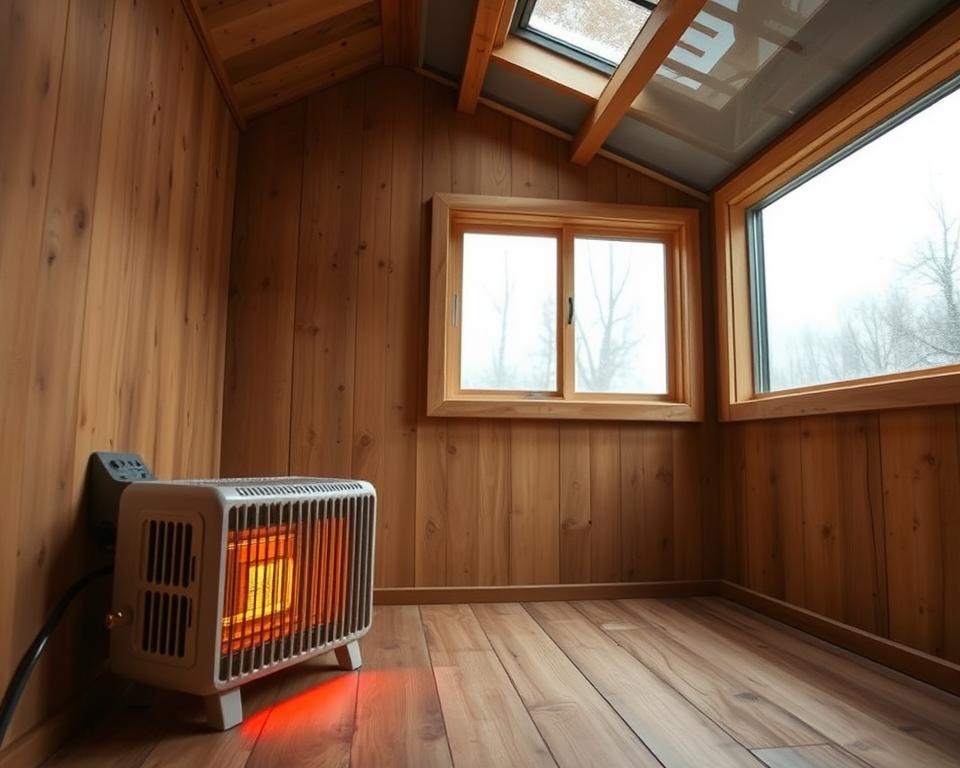
Heat the area you occupy rather than the entire room. Use partition screens or a curtain to create a warm work zone around a bench or seating area. An infrared panel placed on a wall behind the workbench gives direct warmth to a person and tools without wasting energy on the rest of the shed.
Local electric fan heaters work well for short spells of use. Place them safely so they direct heat where you need it. Zoning reduces the kW demand and shortens warm-up time. It is a practical route to energy-efficient heating in small outbuildings.
Using timers and thermostats to reduce consumption
Set heating to run only when the space is used. Simple mechanical timers and plug-in smart plugs make this straightforward for most electric heaters. A shed thermostat programmed to preheat the space 30–45 minutes before arrival saves energy while ensuring comfort on arrival.
For hobbyists who use a shed in the morning and evening, a typical schedule is 06:30–08:00 and 18:00–21:00 with a low background temperature overnight. Smart thermostats from companies such as Hive or Tado offer remote control and learning schedules for precise control.
Complementary measures: insulation, double glazing and draught excluders
Insulation for sheds makes every heater more effective. Add insulation to roof and walls, fit insulated floorboards and install thermal-lined curtains for windows. Secondary glazing or double glazing reduces heat loss through glass and cuts cold draughts.
Seal gaps at doors and vents with draught excluders and weatherstrips. These measures reduce the kW needed to reach a comfortable temperature and speed up warm-up times. Case studies from retrofit projects show significant energy savings when outbuildings are insulated and draught-proofed.
| Strategy | Practical action | Typical benefit |
|---|---|---|
| Zoning | Use screens, curtains or partitioning to heat workbench area only | Reduced heated volume; lower running hours |
| Targeted heaters | Install infrared panels or small electric fan heaters at workstation | Direct warmth; smaller kW requirement |
| Timers and controls | Fit a shed thermostat, programmable timers or smart plugs | Heating on-demand; preheat before use |
| Insulation upgrades | Insulate roof, walls and floors with appropriate materials | Lower heat loss; reduced energy consumption |
| Glazing and curtains | Install double glazing or secondary glazing; use thermal blinds | Less radiation loss; improved retention overnight |
| Draught-proofing | Fit draught excluders, seal gaps around doors and vents | Eliminates cold drafts; maintains stable temperature |
Top-rated shed heaters for the UK climate
Choosing the right heater for a British shed means matching output, safety and running cost to the building and its use. Below are well-regarded models and types that suit typical UK workshops and garden outbuildings. The focus is on proven brands and practical fit for small to medium sheds, workbenches and regular use.
Best electric heaters for small to medium sheds
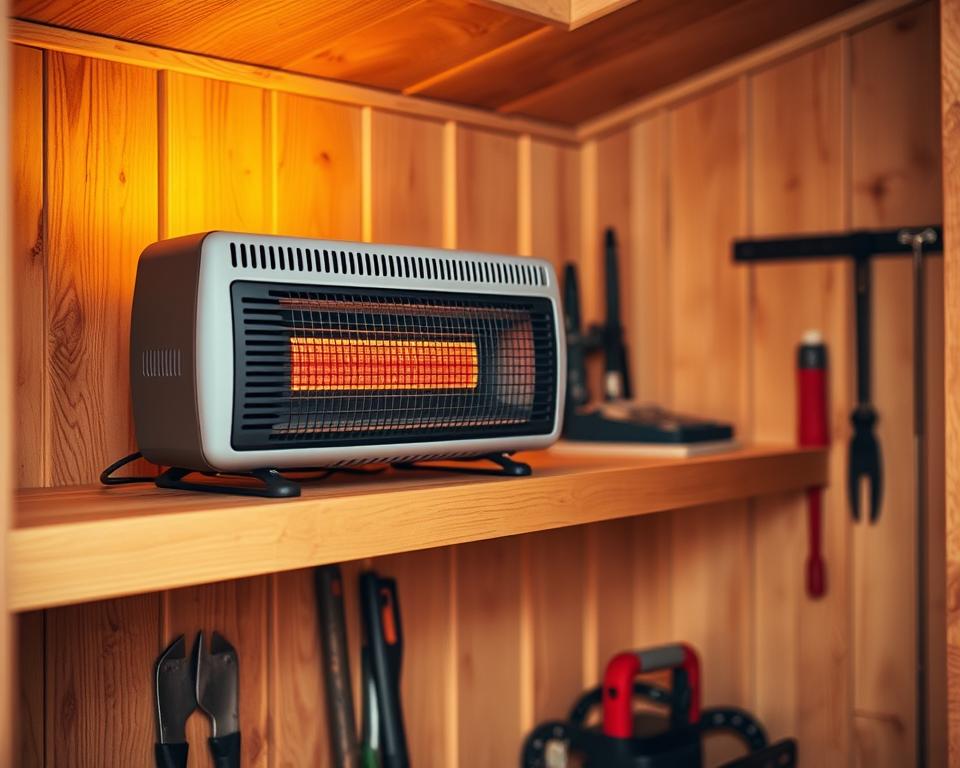
Dimplex DXE series convectors are a solid choice for a reliable electric shed heater. They offer adjustable thermostats, precise controls and good safety features for weekend workshop use. De’Longhi portable convectors perform well for general heating and are quiet with timers that cut wasteful running. Fan heaters from Honeywell suit short, intermittent bursts of heat for a busy workbench and include tip-over protection and rapid warm-up.
Rationale and fit
Target shed size: up to 8–12 m² for most models. Typical kW: 1–2.5 kW depending on insulation. Benefits: quick warm-up, simple installation, reliable thermostats. Best use: general heating, intermittent workshop tasks and small studios where an electric shed heater gives controllable heat.
Best radiant heaters for quick warmth
For instant, directional warmth, wall-mounted infrared panels and patio-style radiant units are hard to beat. Heatstrip, Solamagic and Tansun make robust panels favoured in UK installations. Mount panels 1.8–2.2 metres above the floor, angled towards the workbench, to give effective radiant coverage without glare.
Rationale and fit
Target shed size: work zones or bench areas rather than whole-room heating. Typical kW: 0.6–2 kW per panel. Benefits: immediate heat at the point of use, efficient for targeted tasks, low maintenance. Best use: focused workbench heating, temporary outdoor tasks and spot heating where a radiant heater UK delivers warmth fast.
Best low-running-cost options for frequent use
De’Longhi oil-filled radiators and Dimplex convectors with programmable thermostats are frequent choices where running cost matters. Oil-filled units run quietly and keep shedding heat after the element cycles off. Efficient convectors with good insulation and accurate thermostats cut wasted energy. For larger, well-insulated outbuildings, small air-source or hybrid options can be cost-effective, though they need more complex installation.
Rationale and fit
Target shed size: 8–20 m² for oil-filled radiators; larger for heat-pump solutions if well insulated. Typical kW: 1–3 kW for common units. Benefits: low running cost heater performance over long hours, quiet operation and low maintenance. Best use: workshops used daily, galleries and studios where steady warmth is required and users seek a low running cost heater.
Choosing for the UK climate
For damp or variable British conditions, pick units with appropriate IP ratings and reliable thermostats. User reviews from Which? and Trusted Reviews, manufacturer specifications from Dimplex, De’Longhi, Heatstrip and Tansun, and customer reports give a clear picture of durability and real-world costs. Match output to volume, prioritise safety features and favour models known as the best shed heater UK for similar applications.
Installation and placement tips for optimal performance
Correct heater installation and considered heater placement make a real difference to comfort and running costs in a shed or workshop. A few simple steps ensure even warmth, protect equipment and keep the electrics safe.

Ideal positioning for heat distribution
Place convectors and fan heaters close to the coldest wall or beneath a window to cut downdrafts and improve circulation. Point portable fan heaters toward the main workbench or activity zone for direct warmth.
Fit radiant heaters so they face the primary work area with no obstructions between the element and the user. Follow manufacturer guidance on mounting height; many radiant units work best when set 1.8–2.5 metres above floor level.
Mounting wall or ceiling units safely
Use a wall-mounted heater only on suitable substrate. Fix onto timber studs with proper coach screws or to masonry using anchors rated for the heater weight. Keep specified clearances from combustible materials as per the manual.
Consider a ceiling heater where floor space is limited and direct beam coverage is required. Make sure the ceiling structure can carry the load and allow the clearance the manufacturer requires above and below the unit.
Fixed mounting saves space and reduces tip-over risks. If unsure, appoint a qualified installer to secure a wall-mounted heater or a ceiling heater and to verify orientation and bracketry.
Electrical supply and wiring considerations in outbuildings
Outbuilding electrics must meet BS 7671. High-power heaters often need a dedicated radial circuit, the correct fuse rating and RCD protection. Overloading a domestic socket risks tripping or fire.
Shed wiring should include a suitable earth bond and, where required, a separate consumer unit or a properly installed spur from the main house circuit. Use outdoor-rated sockets and IP-rated fittings in damp areas.
Choose cable types and sizes to match the load and run lengths; an electrician can calculate volt drop and select the right cable. Regularly check for overloaded extension leads and avoid long temporary runs when a fixed supply is available.
Safety and regulatory considerations in the United Kingdom
Installing or operating a shed heater demands attention to legal rules and practical safety. Follow current UK building regulations when altering structure or fixed wiring. Know the basics of BS 7671 for safe electrical work in outbuildings and make sure appliances are used with due care.
Building regulations and electrical safety standards
BS 7671, the IET Wiring Regulations, sets out minimum requirements for electrical safety. Circuits feeding outbuildings often need RCD protection and correct earthing. If you change fixed wiring or carry out structural works such as adding insulation or new sockets, that work can trigger building regulations and may require a competent person or notification to your local authority.
Part P rules apply mostly to dwellings but can affect connected outbuildings. Use a qualified electrician or a registered competent person for installations that include new circuits, consumer units or embedded sockets to ensure compliance and reduce risk.
Carbon monoxide and ventilation guidance for fuel heaters
Any fuel-burning heater — gas, LPG, paraffin — produces combustion products that can include carbon monoxide. Never use these appliances in tightly sealed spaces without approved ventilation. Fit a certified carbon monoxide alarm in sheds where combustion heaters are used and follow HSE guidance on ventilation rates and safe fuel storage.
Ensure heater ventilation is adequate for the appliance’s rated output and check that flues, vents and airbricks remain unobstructed. If in doubt, ask a Gas Safe registered engineer or a competent technician to assess ventilation and installation.
Maintenance checks and safe operation routines
Regular checks cut accident risk and prolong appliance life. Inspect cables, plugs and flexible leads for damage before use. Clean dust from fan heaters and grills to prevent overheating. Test thermostats, timers and switches to make sure controls work correctly.
For fixed electrical installations have an annual inspection or periodic check to confirm continued electrical safety. Fuel-burning units should receive servicing by Gas Safe registered engineers for gas appliances and by competent technicians for LPG or catalytic heaters, following manufacturer service intervals and safety notices.
Observe simple routines for safe heater use: keep combustibles well clear, maintain clearances around heaters, and store fuels securely in line with HSE recommendations. These steps work with regulatory safeguards to reduce risk in workshops and garden buildings.
Comparing upfront cost versus long-term running cost
Deciding between a low-cost portable heater and a higher-spec fixed unit comes down to balancing purchase and installation outlay against ongoing running costs. Small sheds that see occasional use will favour low initial spend. Workshops used daily often justify a larger investment that reduces the lifetime cost heater figure.
Use the following worked examples to estimate heater cost per hour for common scenarios. These help compare electricity and fuel options and show how insulation investment changes the outcome.
Electricity (example rate 32p/kWh — check current tariffs)
- Formula: kW × hours × pence per kWh = pence per session.
- Example: 2 kW heater × 3 hours × 32p = 192p (or £1.92) per session.
- Heater cost per hour in this example = £1.92 ÷ 3 = £0.64 per hour.
LPG or paraffin (convert burner output to fuel use)
- Find the heater’s kW output and the fuel energy content. For LPG, 1 kg ≈ 13.6 kWh. Fuel price example: £0.80 per litre for kerosene, £0.60 per kg for LPG (check current prices).
- Example: 4 kW paraffin heater running 2 hours uses 8 kWh. If kerosene yields 10 kWh per litre and costs £0.80, the session fuel cost ≈ 0.8 litres × £0.80 = £0.64.
- That gives a heater cost per hour ≈ £0.32 in this illustration.
Compare these session costs against frequency of use to calculate annual running costs. For example, daily 3-hour use with the 2 kW electric unit above costs £1.92 × 365 ≈ £700 per year. Occasional use of 30 sessions a year costs £1.92 × 30 ≈ £58.
Calculate payback period when moving from a cheap heater to a more efficient model or when investing in insulation. Use this simple formula:
- Payback period (years) = additional upfront cost ÷ annual savings in running costs.
Worked insulation example:
- Insulation investment: £400 for walls and roof.
- Before: 2 kW heater running 4 hours daily at 32p/kWh → annual running costs ≈ 2 × 4 × 32p × 365 = £935.
- After insulation: required heat falls by 30%, so annual running costs ≈ £654. Annual savings = £281.
- Payback period = £400 ÷ £281 ≈ 1.4 years.
When a higher initial spend makes sense, consider these points:
- Frequent daily use makes lower heater cost per hour and reduced lifetime cost heater more important.
- Fixed installations from British Gas or a qualified electrician add cost but improve safety and control.
- Insulation investment reduces required kW, shortens the payback period for premium heaters, and boosts comfort.
- Quiet, low-maintenance units such as oil-filled radiators or infrared panels may cost more up front yet save money and hassle over years.
The table below summarises example comparisons for typical shed scenarios. Figures use example prices; check live tariffs and quotes for precise planning.
| Scenario | Upfront cost (£) | Usage | Estimated annual running costs (£) | Estimated payback period (years) |
|---|---|---|---|---|
| Cheap fan heater (portable) | 25 | Occasional: 30 × 3 hrs/year | 58 | N/A (low upfront) |
| 2 kW fixed electric convector + install | 350 | Daily: 3 hrs/day | 700 | Buyback via savings vs fan heater ≈ 0.5 yrs if it halves running costs |
| Infrared panel (premium) | 450 | Daily: 3 hrs/day | 560 | 1.6 (if insulation investment of £300 reduces costs by £190/yr) |
| Paraffin/LPG portable heater | 120 | Moderate: 4 hrs/day, 200 days | 320 | Short, if fuel cheaper than electricity |
Smart and auxiliary features to look for
Modern shed heating offers more than raw power. A smart heater can make a small workshop feel welcoming while cutting energy waste. Look for features that give control, convenience and clear safety guidance.
App control and programmable schedules
An app-controlled heater lets you set times and temperatures from your phone. Remote scheduling makes it easy to pre-heat a studio before a session. Integration with Google Home, Amazon Alexa or Apple HomeKit gives voice control and centralised routines.
When using smart plugs, check the power draw limits against the heater’s rating. A programmable thermostat built into the unit avoids risky plug adaptations and keeps operation simple for hobbyists.
Eco modes, adaptive thermostats and learning features
An eco mode heater reduces consumption by cycling output or holding a lower background temperature. Adaptive thermostats learn daily patterns and adjust heat only when needed.
Users report real savings when learning features cut idle running. For frequent use, an adaptive system helps maintain comfort without constant manual adjustments.
Portability, wheels and compact storage options
A portable heater with caster wheels and a sturdy handle suits makers who move between spaces. Fold-away stands and compact dimensions help store units neatly when not in use.
Keep portable units dry and clean in storage. Regular dusting and a covered shelf prolong life and keep fans, sensors and thermostats working reliably.
| Feature | Benefit | Practical tip |
|---|---|---|
| App control / app-controlled heater | Remote start, scheduling, smart-home integration | Confirm compatibility with Google Home, Alexa or HomeKit; check app reviews |
| Programmable thermostat | Consistent temperatures, lower running costs | Prefer built-in thermostats over external smart plugs for high-wattage units |
| Eco mode / eco mode heater | Reduced power usage, balanced comfort | Use eco modes overnight or for long idle periods |
| Adaptive thermostat (learning) | Automated adjustments based on occupancy patterns | Allow a two-week learning period for best results |
| Portable heater | Flexibility to heat different areas, easy storage | Choose models with wheels and secure handles for heavy units |
Practical maintenance and troubleshooting advice
Keeping a shed heater reliable starts with a clear routine and a simple checklist. Regular attention prevents breakdowns and keeps the unit safe. Below you will find compact guidance on routine care, when to call a professional, and quick fixes you can try yourself.
Routine cleaning and filter checks
Dust build-up chokes performance. For electric fan and convector models, dust grills and fan intakes weekly. Vacuum around vents and wipe external surfaces with a dry cloth. If the unit has washable filters, remove and clean them per the manufacturer’s timetable. Always unplug before you clean heater and make sure no moisture reaches electrical parts.
Service intervals and when to replace parts
Look for warning signs that you should service heater or replace heater parts. Persistent odour, unusual noise, lower heat output and frequent RCD trips are triggers. Visible damage to cables or plugs demands immediate attention. For gas or LPG units book an annual inspection with a Gas Safe engineer or a competent LPG technician. Replace worn seals, burners and any components listed in the manual.
Quick troubleshooting checklist
- Check power supply, fuses and sockets before anything else.
- Verify thermostat settings and timers; reset controls if needed.
- Reposition the heater to improve airflow and remove obstructions from grills.
- For fan heaters that do not run, inspect thermal cut-outs; repeated trips suggest professional repair.
- If a unit trips safety devices repeatedly, stop using it and seek a qualified engineer.
Practical table: simple schedule and action
| Task | Frequency | Action |
|---|---|---|
| Dust grills and fan inlets | Weekly | Vacuum and wipe; unplug unit before cleaning heater |
| Wash or replace filters | Every 1–3 months | Follow manufacturer guidance; dry fully before refitting |
| Visual cable and plug inspection | Monthly | Replace heater parts if frayed or damaged; stop using until fixed |
| Professional servicing | Annually (fuel heaters) | Gas Safe or qualified LPG technician to service heater and burners |
| Functional check | Season start and mid-season | Test thermostats, timers and safety cut-outs; note any drop in heat output |
Final troubleshooting tips
Follow the manufacturer maintenance instructions first. If basic heater troubleshooting does not solve the issue, call a qualified electrician or appliance repair service. Consumer reports note that most common faults are dust-related or simple control errors, so a clean heater and a quick check of settings often restores normal function.
shed heater: buying guide and top purchase tips
Choosing the right heater for a shed requires clear steps. Start by noting the shed size, typical use and how long it needs to be warm each day. Use reliable sources such as retailer product pages, trade supplier advice and consumer buying guides to shape your decision.
Where to buy in the UK: high-street, online and specialist suppliers
Major national DIY chains like B&Q, Wickes and Screwfix stock a wide range of electric and oil-filled heaters. Currys offers electric models and helpful product specs for home workshops. Online marketplaces such as Amazon UK and Toolstation provide fast delivery and customer reviews for confidence when you buy shed heater UK.
Specialist heating suppliers and installers give tailored advice for fixed installations. Local independent suppliers can offer hands-on help and quicker aftercare. Check stock levels, delivery options and whether the retailer or supplier offers installation services.
Warranty, returns and aftercare considerations
Always confirm the heater warranty before purchase. Typical manufacturer warranties run from 1 to 3 years. Check retailer return policies and the availability of replacement parts. Register the product with the manufacturer to activate the heater warranty and to enable faster service.
Keep receipts and any installation certificates safe. Ask whether local service centres or authorised engineers support repairs. Buying from reputable heater suppliers UK reduces the risk of long delays for spares and warranty work.
How to match heater spec to shed use (workshop, studio, storage)
Use a simple decision matrix to match the heater to the role of the shed. For busy workshops, aim for targeted radiant or high-output convector models that warm tools and people quickly. Ensure good ventilation and robust wall or ceiling mounting for safety.
For artist studios choose quiet oil-filled or convection heaters that give steady, even warmth. This prevents drafts and protects delicate finishes. For storage, a low background heat is best to avoid frost and damp; thermostatically controlled oil-filled or small convectors work well.
Consider tool sensitivity to moisture, the need for stable temperatures for paints and adhesives, and how often the space is used. Use the workshop heater buying guide approach: calculate kW needs from shed volume, add a margin for poor insulation and choose features such as timers, thermostats and safety cut-outs.
First source: check retailer product pages and warranty statements. Second source: seek trade supplier advice for specific use-cases. Third source: read consumer buying guides and comparison reviews for expectations on aftercare and performance.
Conclusion
This shed heater summary pulls together the practical points from the guide. Choose shed heater types that match your shed’s size, insulation and intended use. For workspaces, quick-response radiant or fan units suit intermittent use, while convector or oil-filled heaters work well for steady warmth in insulated sheds.
Factor running costs and safety into your decision. For the best shed heater UK options, compare energy efficiency, thermostatic control and timer features. Improve insulation and draught-proofing first to reduce power demand, and fit thermostats or programmable timers to cut energy use without losing comfort.
Ventilation and safe installation are essential, especially for gas or LPG models. Ensure fuel-burning heaters have adequate ventilation and that fixed electrical or gas work is carried out by a qualified electrician or Gas Safe registered engineer. Calculate required kW from room volume, review insulation upgrades, and prioritise reputable suppliers and clear warranties when you buy.
Use this checklist as a final action plan: assess size and use, estimate kW and running cost, upgrade insulation, select safety features and smart controls, and arrange professional installation where needed. Taking these steps will deliver more efficient shed heating and a reliable, safe solution for UK conditions.
FAQ
What is the best type of shed heater for a small workshop?
The best option depends on insulation, use pattern and budget. For short, occasional use a portable electric fan heater (1–3 kW) provides rapid warm-up. For draughty or targeted heating a wall-mounted infrared panel (e.g. Heatstrip, Solamagic) warms people and work surfaces directly. For quiet, low-running-cost background heat during frequent use, an oil-filled radiator or convector with a thermostat (De’Longhi, Dimplex) is usually preferable. Consider insulation and zoning first — better insulation often allows a smaller, cheaper heater to perform well.
How do I calculate the kW required to heat my shed?
Estimate the shed volume (length × width × height) then apply a heating load based on insulation: lightly insulated/outbuilding guidance is roughly 75–150 W/m²; convert to kW by dividing watts by 1,000. For a quick method, multiply shed floor area by the appropriate W/m². For example, a 3 m × 2 m shed with 2.2 m height (6 m² floor) would need roughly 0.45–0.9 kW depending on insulation — in practice you would choose a 1 kW–1.5 kW unit for practical operation. Adjust upward for very cold UK winters or if you need rapid warm-up.
How much will it cost to run an electric shed heater?
Running cost = heater kW × hours used × electricity price (pence per kWh). As an example, a 1 kW heater running for one hour at 35p/kWh costs 35p. A 2 kW heater for three hours at the same rate costs 2 × 3 × 35p = £2.10. Insulation, thermostatic control and using timers to preheat only when needed reduce total costs. Always check current electricity tariffs for accurate figures.
Are gas or LPG heaters safe for sheds?
Fuel-burning heaters have high heat output and portability but require careful ventilation and carbon monoxide precautions. Use only in well-ventilated spaces, fit a certified CO alarm, follow manufacturer guidance and store fuel safely. For fixed or frequent use, seek a professional assessment. Many tradespeople prefer electric or permanently vented solutions for enclosed outbuildings to avoid CO risk and meet UK safety guidance.
Which safety features should I prioritise when buying a shed heater?
Look for thermostatic control, programmable timers, overheat cut-out, tip-over/tilt switch on portable units, cool-touch surfaces and appropriate IP ratings for damp locations. For fuel heaters check oxygen depletion sensors (ODS), flame-failure devices and clear ventilation instructions. Ensure electrics serving the heater are RCD-protected and that installation complies with BS 7671 where applicable.
Will insulating my shed reduce heater size and running costs?
Yes. Insulation and draught-proofing reduce required kW and warm-up time significantly. Upgrading wall, roof and floor insulation, adding double or secondary glazing and sealing gaps around doors can lower running costs and improve comfort. In many cases the cost of insulation is recovered over a few years through reduced energy use.
What is the difference between infrared and convection heating for sheds?
Infrared (radiant) heaters warm objects and people directly, making them effective for targeted heating in draughty or poorly insulated spaces. Convector and oil-filled heaters warm the air, producing even, residual warmth suitable for maintaining background temperatures. Infrared is better for quick, localised heat; convectors/oil-filled radiators are better for quiet, sustained comfort.
Can I use a standard smart plug or thermostat with a high‑power shed heater?
Many smart plugs are rated for limited current and are unsuitable for high-wattage heaters. Check the device’s power rating and use smart thermostats or plugs specified for the heater’s load. For fixed high-power heaters, consider professional smart wiring or dedicated smart thermostats designed for heating loads to maintain safety and reliability.
How should I position a heater for best performance?
Place convectors or fan heaters near the coldest wall or under windows to reduce downdrafts; point portable fan heaters towards the work area. Mount infrared panels to face the primary workspace at the recommended height for good coverage. Always follow manufacturer clearance and mounting instructions and avoid obstructing airflow.
Do I need a new circuit or special wiring for a high-power heater in an outbuilding?
Possibly. Higher-power heaters may require a dedicated circuit, correct fuse rating and RCD protection. Outbuildings often need a bonded earth and may require a new consumer unit or spur from the main property. Consult a qualified electrician and ensure compliance with BS 7671 and local regulations before installation.
What maintenance do shed heaters need?
Routine maintenance includes dusting grills and intakes, vacuuming around vents, checking power cables and plugs for damage, and testing thermostats and safety cut-outs. For fuel-burning appliances arrange annual servicing by Gas Safe registered engineers or competent LPG technicians. Replace worn components and follow manufacturer service intervals to prolong life and maintain safety.
Which brands are reliable for UK shed heaters?
Reputable brands commonly recommended in the UK include Dimplex and De’Longhi for convectors and oil-filled units, Heatstrip and Solamagic for fixed infrared panels, and established fan-heater makers such as Honeywell. Buyers also consult reviews from Which? and Trusted Reviews to compare models for features, safety and running costs.
How can I reduce condensation and mould in a heated shed?
Maintain a low, consistent background temperature rather than rapid on/off heating, improve ventilation to remove moist air, and fit insulation and vapour-permeable membranes where needed. Use dehumidifiers for particularly damp spaces and avoid storing wet items. Proper heating combined with draught control and ventilation significantly lowers risk of condensation and mould.
Is an oil-filled radiator more economical than a fan heater?
Oil-filled radiators are generally quieter and provide steady residual heat, which makes them more economical for extended use. Fan heaters heat quickly but consume more electricity if run for long periods. Long-term costs depend on usage patterns: for frequent, long sessions choose oil-filled or thermostatically controlled convectors; for short bursts a fan heater may be appropriate.
Where is the best place to buy a shed heater in the UK?
Consider national DIY chains (B&Q, Wickes, Screwfix), electrical retailers (Currys), specialist heating suppliers, and online marketplaces (Amazon UK, Toolstation). For fixed installations or bespoke solutions local specialist suppliers and installers can offer tailored advice and fitting services. Always check warranty, return policy and availability of aftercare.