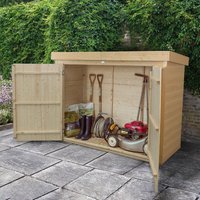
Description
Wooden garden storage special offers bring together timber sheds, compact outdoor cabinets, log stores and seat boxes for neat, weather-ready gardens; compare shapes, sizes and wood types, then choose a storage piece that fits your space and budget.
Timber with a job to do
Wooden garden storage has a certain weight to it. Not just in the material itself, but in the way it sits in a garden and settles into place. It feels less like a box and more like part of the landscape. That is one reason these wooden garden storage special offers draw so much attention: they combine plain usefulness with a look that works beside planting, paving and fences without shouting for notice.
The range usually stretches across several forms, each with its own shape and use. A tall vertical unit takes little floor space and suits narrow side returns. A low chest keeps tools or cushions close to hand and can double as extra seating. A log store has an open, aired structure for stacked timber. A cupboard-style unit gives a cleaner front and hides smaller items away. There are also bench storage designs, where the lid lifts up to reveal space inside, and boxy garden safes for items that need quick access.
Some pieces lean rustic, with visible grain and thicker boards. Others are more structured, with straight edges and a tidy panelled face. In special offers, that variety matters because it lets you match form to function rather than buying whatever happens to be reduced.
Shapes that change the way a garden works
Shape is not just about looks. It affects how the storage behaves in a real garden. A wide horizontal chest suits a patio edge or the end of a seating area. It can hold seat pads, hand tools or a cover for a barbecue without becoming too imposing. A slim upright cabinet takes advantage of unused corners and is handy where paths are tight. A shed-style unit, with a pitched roof, often gives a familiar garden silhouette and can handle taller items more easily.
There are also differences in opening style. Top-lift lids make sense for bulkier things, but side doors can be easier when you want to reach smaller items without rummaging. Double doors give a broader opening for larger tools. Slatted fronts allow a lighter visual feel and help air movement, while solid panels create a more closed, enclosed look.
Small. Clear. Neat. The shape does a lot.
Wood types and the feel of the finish
In this category, the timber itself can make a big difference. Softwood storage tends to be lighter in appearance and often appears with painted or stained finishes. It gives a straightforward garden look and can be found in many of the outdoor timber storage units placed in special offer ranges. Hardwood pieces feel denser and often carry a richer grain, which changes the whole tone of the item even before it is filled.
Some products arrive with a natural finish, showing the grain plainly. Others use colour to shift the mood: grey-washed boards for a weathered effect, dark stain for a deeper tone, or lighter shades that sit quietly near pale paving. The difference is not only visual. A painted finish can create a more uniform front, while a natural one may show knots, texture and variation in the boards.
When browsing offers, it helps to compare how the wood is presented rather than only looking at the shape. Two units of similar size can feel entirely different if one has chunky framing and the other uses slimmer slats.
Why reduced stock still earns its place
Special offers are often where practical features come into view at a lower price point. That may include a ready-built seat box, a narrow compartment for garden accessories, or a garden store with a split interior for separating tools from smaller items. The advantage is simple: you can find a structure that solves a storage problem without needing a custom build.
There is also a quiet benefit in choosing timber storage through an offer page. Because the items are grouped by current stock, you can compare different forms side by side rather than hunting across separate categories. That makes it easier to notice whether one unit has a deeper lid, a more compact footprint, or a stronger internal divider.
Some offers focus on smaller footprint designs that work well for balconies, courtyard corners or narrow terraces. Others highlight fuller storage chests for larger patios and shed-side placement. The difference in size is often the key factor, not the discount alone.
Types that keep the garden in order
Wooden garden storage comes in several useful subtypes, and each one answers a different kind of clutter:
- Garden storage boxes for cushions, toys and quick-grab items
- Wooden log stores with open sides for air flow and stacked fuel
- Outdoor cabinets for hand tools, pots and smaller gear
- Bench storage where seating and hidden space share one frame
- Tool stores with taller interiors for long-handled items
- Patio chests with broad lids and low profiles for terrace use
Each type has its own presence. A box feels casual and flexible. A cabinet feels more enclosed and structured. A log store is open by design, built to keep firewood stacked and aired. A bench storage piece carries two jobs at once, which suits smaller gardens where every centimetre earns its keep.
Small differences that matter more than they first seem
In timber storage, little details can change the whole experience. Lid depth affects how much volume is available inside. A higher base can help keep contents off the ground. Slatted walls can make a unit look lighter, while full boards create more privacy. Some designs use a flat lid; others use a pitched top that helps water run off and gives a sharper garden profile.
Access is another point worth checking. A wide-opening front is useful when you need to reach the far end of a storage chest. A top-opening lid can suit bulk storage, though it may be less handy if the unit sits close to a wall. Internal dividers can be helpful when you want to separate clean items from muddy ones, though they may reduce open space.
The smallest detail can shift the whole use of a unit. A slightly taller cabinet may hold long tools upright. A broader chest may suit folded covers better. A narrow store can fit beside a greenhouse or fence run where a larger item would block movement.
Placement that makes the offer work harder
These storage pieces are often chosen for a specific spot rather than a general need. That makes placement part of the buying decision. Beside a terrace, a low chest can sit under a window line without dominating the view. Near a shed, a vertical cabinet can collect items that would otherwise spread across the floor. By a seating area, a bench box can hold cushions and still give a place to sit.
For log storage, position matters in a different way. An open structure works best where air can pass through and where access is easy from the house or stove area. For tool storage, the unit should sit where you can open doors without stepping into planting or knocking against railings.
A good offer is not just the price. It is the fit between the structure and the space. That is where the real value sits.
What the eye sees first
Wooden storage has a visual language of its own. Straight grain, framed corners, slatted panels and visible join lines all tell a story about how the item will sit in the garden. A tall cabinet can add vertical rhythm near a fence. A low chest can calm a busy patio by giving the eye a broad, simple surface. A pitched roof store can echo the line of a garden building or shed.
Colour also changes the reading. Pale timber blends softly with gravel and lighter walls. Grey tones sit easily in modern layouts. Rich brown finishes feel warmer against planting and brick. These are not decorative extras only; they affect how much the storage stands out when it is placed in view.
That is why wooden outdoor storage boxes often feel more settled than plastic alternatives. The timber texture gives the object a presence that is closer to furniture than equipment.
Choosing by use, not by habit
It helps to sort the choice by what you will put inside. For cushions and covers, a broad chest with a lifting lid is often the shape to look at. For tools, a cabinet with a taller interior can be more useful. For firewood, an open-sided store matters more than a closed box. For mixed garden bits and pieces, a divided unit can stop smaller items from vanishing into the back.
Also consider how often the contents will be reached. Everyday items do better in a front-facing unit that opens quickly. Seasonal pieces can sit in deeper storage. If the item will live close to a path, a unit with a neat footprint and clear lid movement avoids awkward corners.
The right choice is rarely the largest one. It is the one that matches the contents and the space without forcing either of them.
Quick notes for faster browsing
- Look for footprint first, then height
- Match open-front, top-lift or double-door access to the contents
- Choose slatted sides for an airy look, solid panels for a closed finish
- Compare natural grain against painted or stained surfaces
- Check whether the unit is for cushions, tools, logs or mixed items
Short thoughts, sharp edges
Wood warms the space.
Shape changes the use.
Offers change the options.
Small gardens need smart volume.
Big gardens like tidy corners too.
When timber storage earns its spot
Used well, wooden garden storage does more than hide clutter. It sets a boundary, gathers loose pieces into one place and gives the garden a stronger sense of order. The special offers section makes that easier to reach, because it brings together different forms, finishes and sizes in one browse. You can compare a low chest against a tall cabinet, or an open log store against a more enclosed box, without losing sight of what the item is really for.
Some buyers will be drawn to the grain and finish. Others will care most about the opening style, the footprint or the shape of the roof. That is the strength of this category: it lets the practical and the visual work side by side. A storage piece can sit quietly and still do a lot.
And that is often enough. No fuss. No crowding. Just timber, shape and a clear job to do.
One more note: compare the measurements before ordering. A unit that looks compact online can still feel broad once placed against a wall, and a taller one may sit closer to a window line than expected. A little checking here saves a bigger oops later.
Browse the wooden garden storage special offers with the use in mind, and the right shape tends to show itself fairly quickly. The garden gets calmer. The bits and pieces stop wandering. The space feels less pieced together, and more like it knows what it is doing.