Tool Storage Ideas and Hacks for a Functional Space
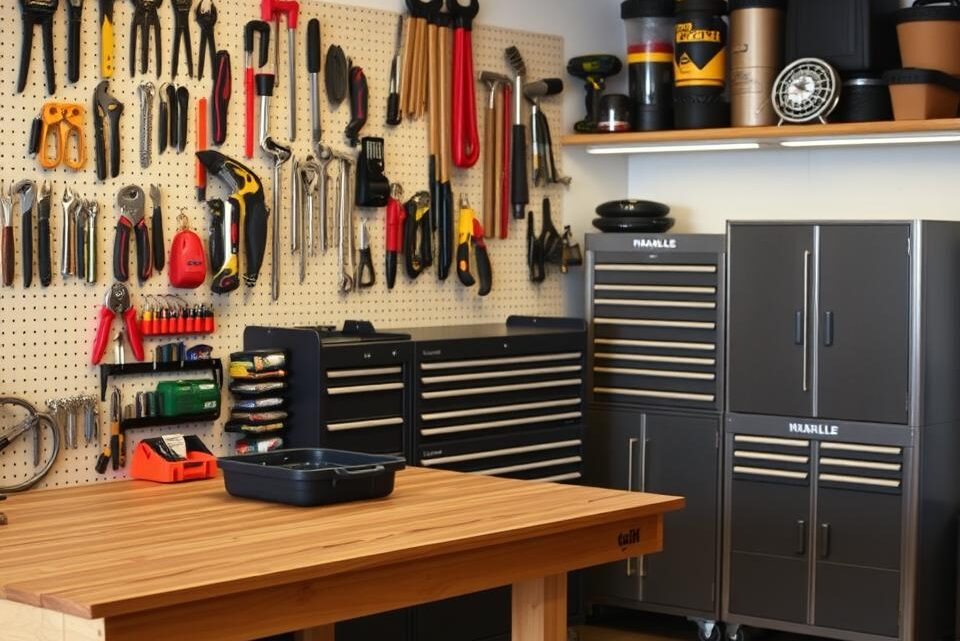
Many homeowners and DIY enthusiasts across the United Kingdom face the common challenge of scattered equipment and cluttered workspaces. This disorganisation often leads to frustration and wasted time searching for essential items.
Proper arrangement transforms chaotic garages and sheds into efficient working environments. Every item finds its designated place, creating a system that saves valuable minutes during projects.
This comprehensive guide explores various methods to maximise available room. From simple DIY approaches using household items to professional systems, readers discover solutions for different needs and budgets.
The strategies cover hand implements, power equipment, garden gear, and specialised instruments. Implementing these approaches creates safer working conditions free from tripping hazards.
Inhaltsverzeichnis
Key Takeaways
- Transforms chaotic workspaces into efficient, organised environments
- Saves time by ensuring every item has a designated location
- Offers solutions ranging from budget-friendly to premium systems
- Covers various equipment types including hand and power tools
- Creates safer working conditions by eliminating clutter
- Maximises both vertical and horizontal space utilisation
- Provides maintenance strategies for long-term organisation
Introduction to Effective Tool Storage
The struggle to maintain orderly implements affects countless British households attempting DIY projects. Disorganised equipment creates frustration and hampers productivity during home improvements.
Overview of Challenges in Tool Organisation
Equipment organisation presents unique difficulties due to varying shapes and sizes. Tiny screws and bulky power tools require different handling approaches. Many people find their implements scattered across multiple locations.
This scattered arrangement leads to wasted minutes searching for essential items. Poor organisation can damage valuable equipment through improper handling. Safety risks also increase when items create tripping hazards.
The Benefits of a Functional Space
A well-organised system transforms chaotic areas into efficient working environments. Every item finds its designated place, saving valuable time during projects. This systematic approach maximises usable room in garages and workshops.
Proper arrangement protects equipment from moisture and physical damage. This extends the lifespan of valuable implements, reducing replacement costs. An organised space encourages regular maintenance tasks and DIY projects.
The transformation creates safer, more productive zones for household work. This investment in organisation pays dividends through improved efficiency and protection of valuable items.
Understanding Your Storage Needs
Successful workshop organisation starts with evaluating both the collection and the available area. This initial assessment forms the foundation for an efficient system.
Analysing Tool Types and Usage
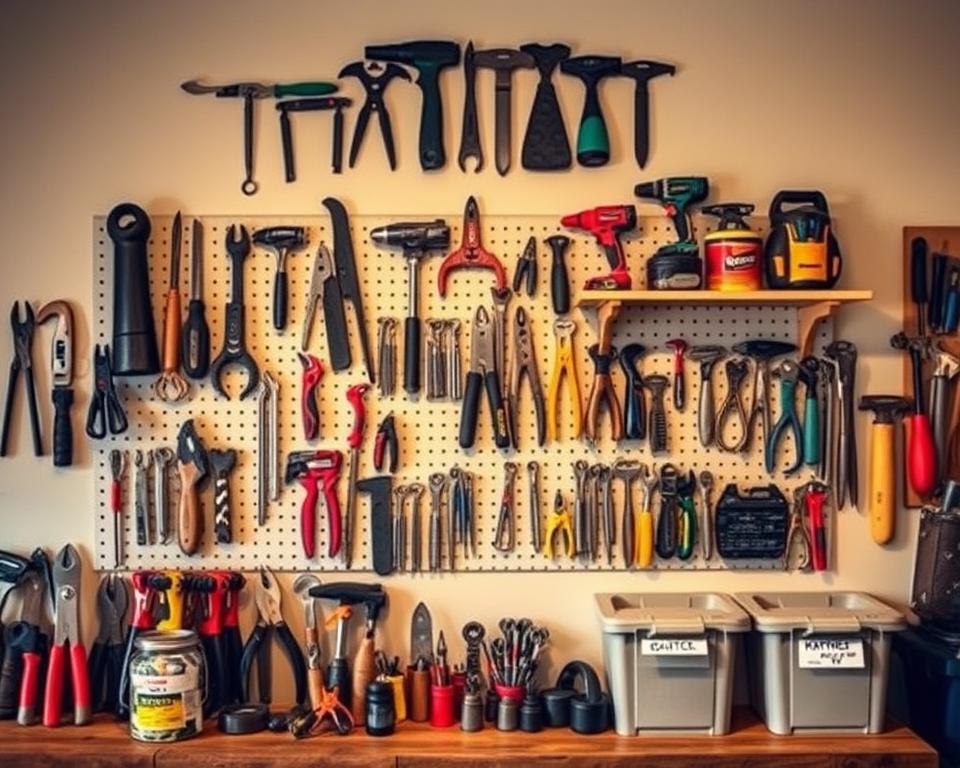
Begin by categorising implements according to function, size, and frequency of use. Hand tools like screwdrivers and wrenches benefit from grouping together.
Frequently used items deserve prime positioning at waist height. Seasonal equipment can occupy higher shelves. This approach ensures everyday implements remain easily accessible.
Delicate instruments require protected drawer storage, while robust garden tools suit open wall systems. Understanding these differences guides appropriate placement decisions.
Assessing Available Space in Garages and Workshops
Measure wall dimensions, ceiling height, and floor area carefully. Identify obstacles like doors and electrical panels that limit options.
Vertical assessment proves particularly valuable. Many garages offer substantial height for tall shelving units. This keeps floors clear for other purposes.
Consider future acquisitions when planning your system. Leave room for expansion rather than creating immediately full storage solutions.
Tool Storage Ideas and Hacks for a Functional Space
Crafting an efficient workspace begins with clever approaches to equipment arrangement. These practical concepts help transform cluttered areas into organised zones where every item has its place.
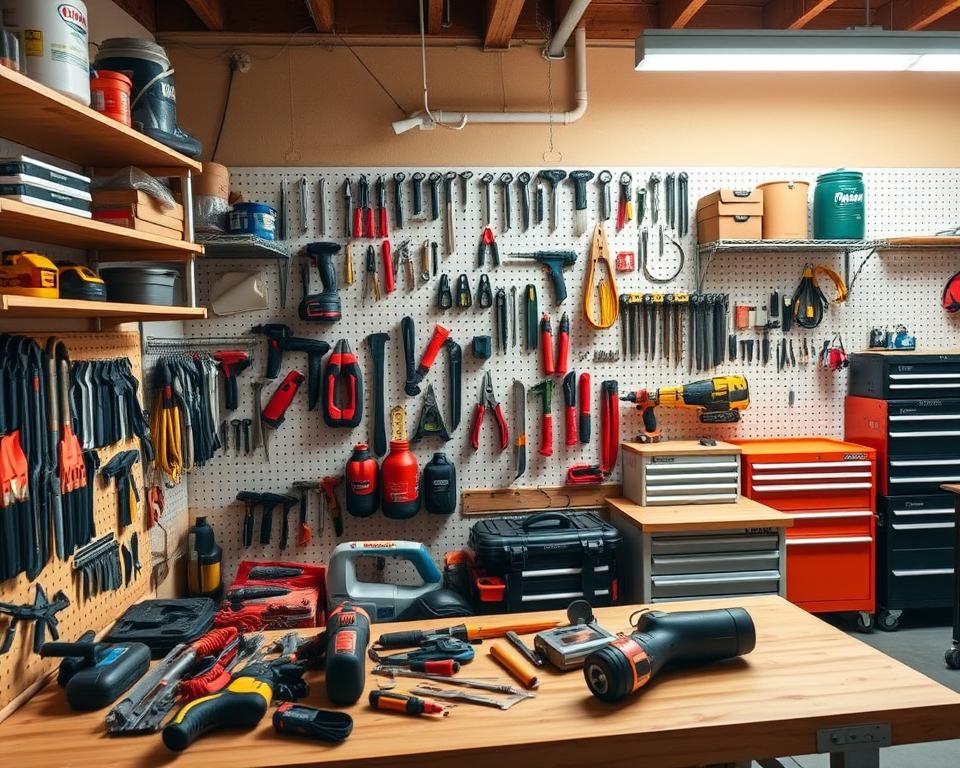
The most effective systems combine multiple methods. Wall-mounted options work alongside portable containers, while vertical solutions complement accessible surfaces. This blended approach creates comprehensive organisation.
Creative hacks demonstrate that excellent results don’t require large investments. Ordinary household items become functional organisers through simple modifications. This flexibility suits various circumstances from rental properties to permanent workshops.
The ultimate goal is establishing a system where locating any implement takes seconds. Returning items to their proper positions becomes effortless, encouraging consistent maintenance. This organised environment makes tackling projects more enjoyable and efficient.
These concepts address common frustrations like buried equipment and consumed floor space. They range from afternoon quick fixes to complete garage transformations. Each solution contributes to a safer, more productive home workshop environment.
Innovative DIY Storage Solutions
Creating a personalised system offers unmatched flexibility. Homeowners can tailor organisers to their exact requirements.

This approach often uses materials already available. It provides a cost-effective way to achieve order.
Constructing wall-mounted power tool holders
A simple holder crafted from spare wood pieces gives power tools a proper home. This creates a wall-mounted docking station.
Slots can be added for drills and impact drivers. Small shelves hold batteries and chargers. Mount it where work happens most, near a plug socket.
Repurposing everyday items for tool organisation
Old eyeglass cases protect small drill bits and delicate components. Their compact size lets them line up in drawers.
Mason jars store fasteners effectively. Retired kitchen organisers hold screwdrivers neatly. This method demonstrates creative resourcefulness.
| Solution | Materials Needed | Best For | Difficulty |
|---|---|---|---|
| Wall Holder | Spare wood, screws | Drills, drivers | Intermediate |
| Eyeglass Case Organiser | Old hard cases | Bits, batteries | Beginner |
| PVC Pipe Holders | PVC pipes, brackets | Long-handled tools | Easy |
These diy methods keep items accessible and secure. They transform cluttered areas into efficient zones.
Maximising the Use of Toolboxes and Organisers
Portable organisers form the backbone of an efficient equipment management system. They provide the flexibility to transport implements between job sites while maintaining order.
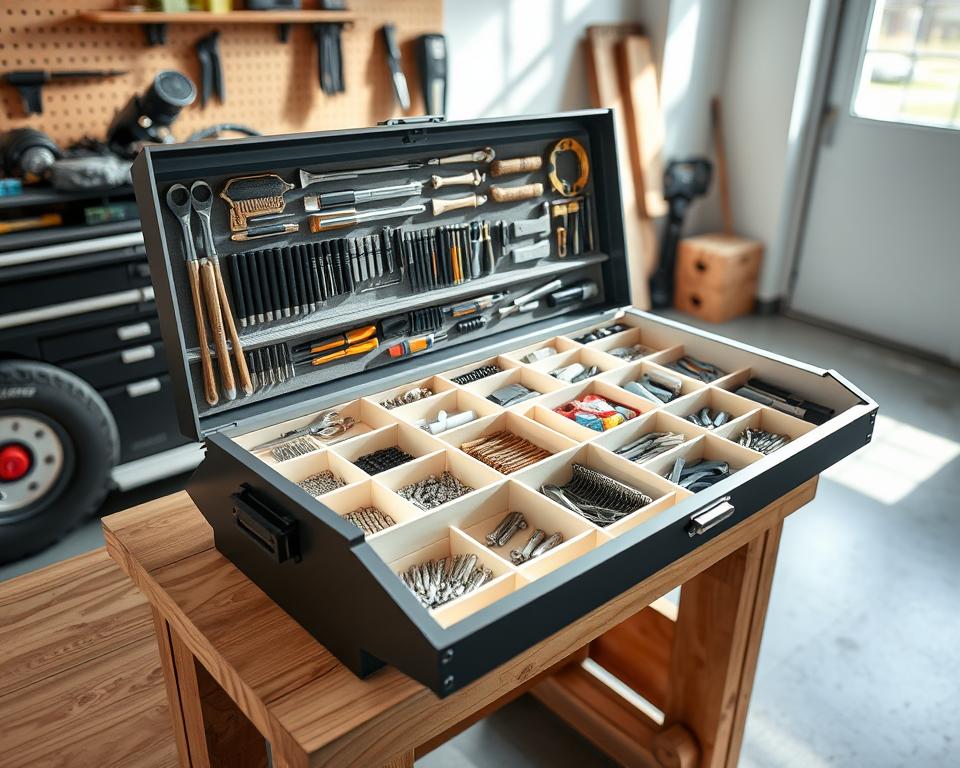
Stackable systems offer excellent space-saving benefits. Larger compartments accommodate bulky items at the base, while smaller boxes organise precision instruments above.
Customising divided containers for different tools
Adjustable dividers transform generic containers into purpose-built organisers. This approach creates perfectly sized compartments for specific collections.
Creating dedicated kits improves project efficiency significantly. A plumbing box might contain all necessary wrenches and cutters. Electrical work benefits from having testers and connectors together.
Divided sections prove invaluable for fastener storage. Separate compartments keep different screws, nails, and bolts organised. This system prevents mixing and speeds identification.
| Toolbox Type | Primary Function | Ideal Placement |
|---|---|---|
| Stackable Systems | Space-efficient vertical storage | Garage corners |
| Portable Cases | Job site transportation | Near entry points |
| Divided Containers | Small item organisation | Workbench surfaces |
Strategic placement near work areas ensures accessibility. Keeping organisers out of pathways maintains safety while encouraging consistent return after use.
Wall-Mounted Systems: Pegboards and Shelving Units
Transforming unused wall areas into functional storage zones represents a smart strategy for garage organisation. Wall-mounted solutions create efficient systems that maximise vertical space.
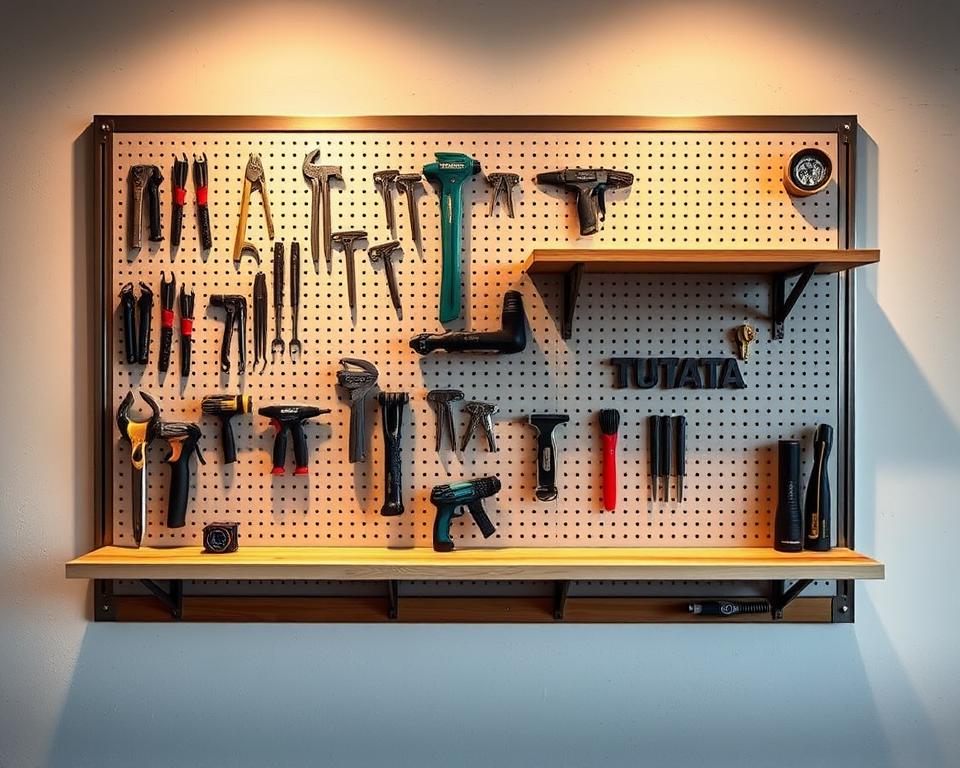
Pegboard installations offer unparalleled flexibility for organising equipment. Users can reposition hooks, brackets and shelves as their needs evolve. This adaptable wall system accommodates new acquisitions without requiring complete replacement.
Wall-mounted shelving units provide excellent vertical utilisation. They allow shelving to extend to ceiling height, unlike floor-standing alternatives. This approach is particularly valuable in garages with substantial overhead space.
Metal shelving options deliver superior durability for heavy items. They withstand garage conditions better than particleboard alternatives. The IKEA ALGOT system, now replaced by BOAXEL, demonstrates how affordable solutions can prove reliable.
Combining pegboard sections with solid shelving creates comprehensive organisation. Pegboards hold frequently used implements while shelves support larger equipment. This integrated approach keeps all items accessible and completely off the floor.
Modular wall systems enable customisation to specific requirements. Adjustable shelf heights accommodate various item dimensions. The ability to add sections as needs expand makes this a long-term solution.
Utilising PVC Pipes and Magnetic Strips
Creative thinking turns everyday items into valuable organisational assets. Simple materials like PVC pipes and magnetic strips offer ingenious solutions for workshop challenges.
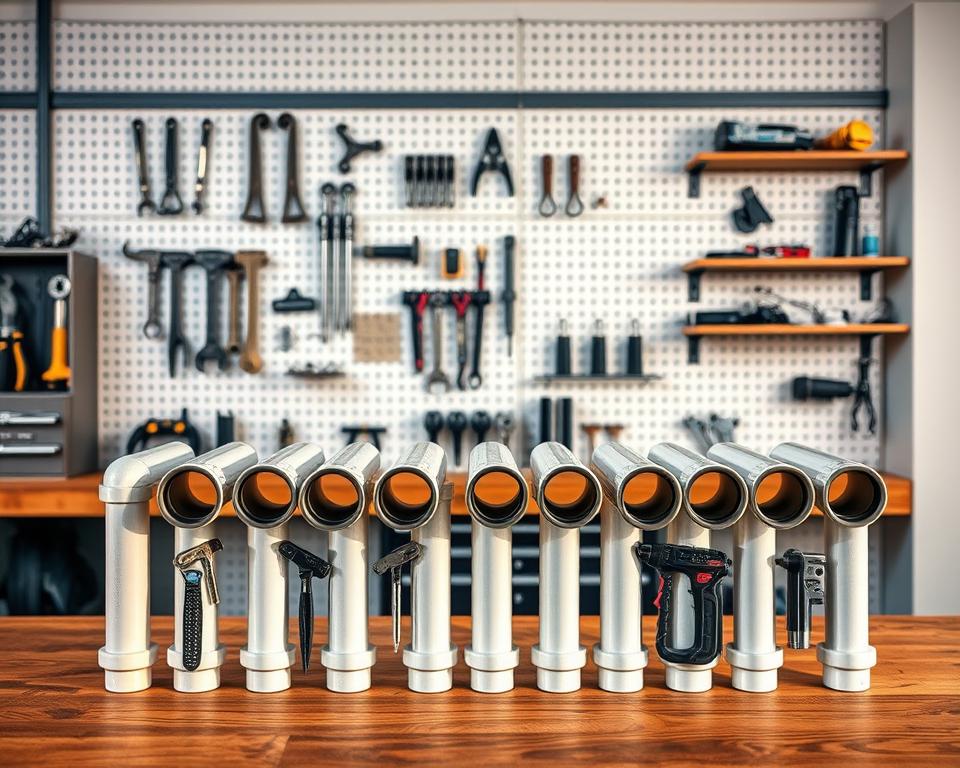
Creative methods to store long-handled tools
PVC pipes provide an excellent solution for lengthy implements. Cutting them into angled sections creates perfect cradles for rake handles and shovel shafts.
These holders prevent tools from sliding through while making retrieval effortless. They can be mounted directly to garage walls or attached to existing shelving units.
Magnetic strips offer another versatile approach. They keep metal implements suspended on walls or cabinet sides. This method eliminates drawer clutter while keeping frequently used items visible.
For non-metallic objects, small containers can be fastened beneath the strips. This creates additional holding space for pencils, brushes, and other small items.
| Solution | Best For | Installation |
|---|---|---|
| PVC Pipe Holders | Long-handled garden tools | Wall-mounted or shelf-attached |
| Magnetic Strips | Metal hand tools | Wall or cabinet side mounting |
| Combination System | Mixed tool collections | Integrated wall installation |
Both approaches demonstrate how inexpensive materials can solve common organisational challenges effectively.
Repurposing Mason Jars and Clear Containers
The visibility provided by transparent containers revolutionises how small items are stored and accessed. This approach solves the perennial problem of disorganised components that often become jumbled together.

Mason jars work excellently for keeping nails and screws separated. Their transparent nature allows immediate identification of contents without opening lids.
A clever hack involves securing jar lids to the underside of a shelf or cabinet. The jars then twist on and off these mounted lids, creating suspended storage that maximises vertical space.
Different jar sizes accommodate various quantities effectively. Small jars hold specialty items, while larger ones suit commonly used fasteners.
Clear plastic containers offer similar benefits with enhanced durability. They create organised stations where small items for specific tasks remain together.
These transparent solutions make inventory management effortless. Users can quickly identify when supplies need replenishment. The sealed nature protects contents from dust, keeping components clean and ready for immediate use.
Enhancing Storage with Metal Brackets and Hooks
Metal brackets and hooks provide robust solutions for organising heavy equipment in workshops. These fundamental hardware pieces transform vertical surfaces into functional zones capable of supporting substantial weight.
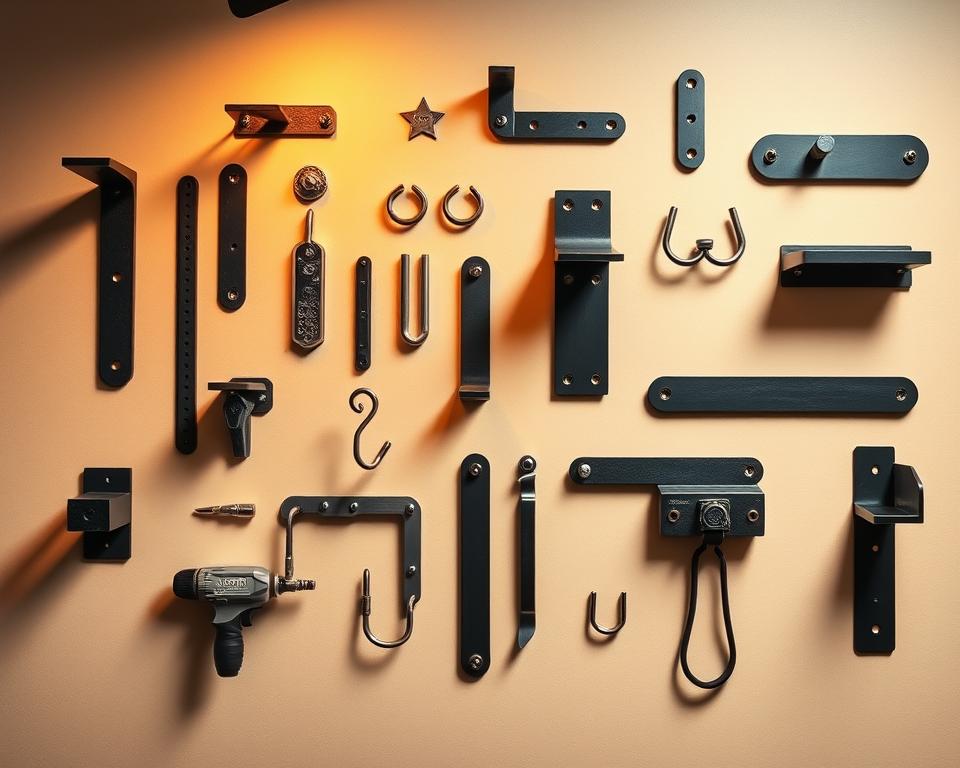
The variety of available hook styles ensures appropriate options exist for virtually any requirement. J-hooks work perfectly for items with handles, while U-hooks secure ladder rungs effectively.
Fixing hammers and other heavy tools safely
Heavy implements benefit from dedicated wall bracket systems that display them prominently. This approach prevents drawer clutter and tangling that occurs when items share confined spaces.
Installing a hammer storage bracket creates a dedicated display where each hammer hangs by its handle. A simple strip of wood or metal with evenly spaced notches keeps implements immediately visible and accessible.
Strategic placement above workbenches positions frequently used items within arm’s reach. This eliminates searching through drawers when tools are needed mid-project.
Heavy-duty hooks mounted directly into wall studs provide secure anchoring points. They support substantial items like extension ladders and wheelbarrows that would otherwise consume valuable floor space.
Elevation strategies allow items to be stored high on walls where they don’t interfere with movement. These remain accessible by stepping on stools when retrieval becomes necessary.
Optimising Garage and Garden Storage Spaces
Optimising the combined storage requirements of garages and gardens presents unique challenges that demand thoughtful solutions. These areas require protection from weather exposure while accommodating awkwardly shaped implements used outdoors.
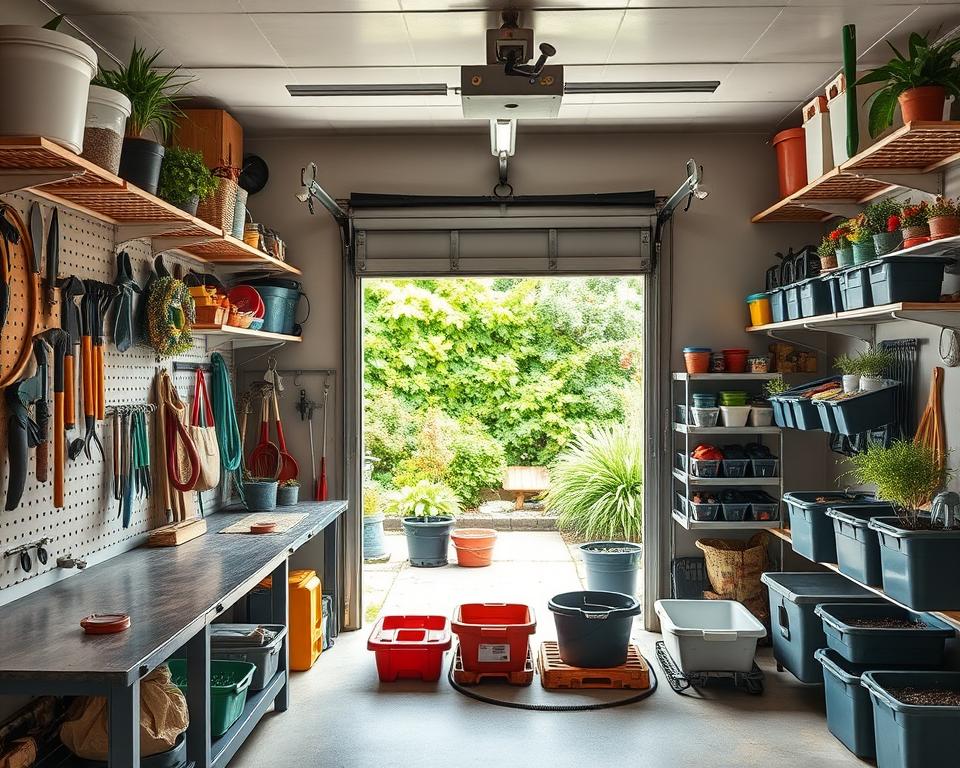
Strategic planning creates dedicated zones for different categories of outdoor supplies. One area might house lawn care equipment, while another organises garden hand tools. This logical approach makes locating and returning items intuitive.
Designing zones for outdoor supplies
Positioning garden tool storage near garage doors provides optimal placement for frequently used equipment. This minimises the distance users carry rakes, spades and hedge trimmers when moving between storage and active use areas.
Vertical solutions prove particularly valuable for long-handled garden tools. Wall-mounted racks or PVC pipe holders keep these awkward items organised and stable. They prevent tools from leaning precariously in corners where they frequently fall.
Hose management represents a common challenge in these spaces. Coiled hoses can consume substantial floor area and create tripping hazards. Wall-mounted reels or repurposed containers keep hoses neatly contained while making deployment straightforward.
Lawn mower storage deserves special consideration for maximising available room. Folding models significantly reduce space consumption, allowing vehicles to park in the garage. Traditional mowers may require dedicated floor space near doors for convenient access.
Seasonal rotation strategies further enhance space efficiency. Lawn care equipment occupies prime accessible locations during growing seasons. These items then move to higher or deeper storage when winter equipment takes priority.
Mobile Workbench and Portable Storage Options
For those requiring adaptable workshop arrangements, mobile solutions offer unparalleled flexibility. These systems transform static areas into dynamic working environments where equipment moves to the project rather than the reverse.
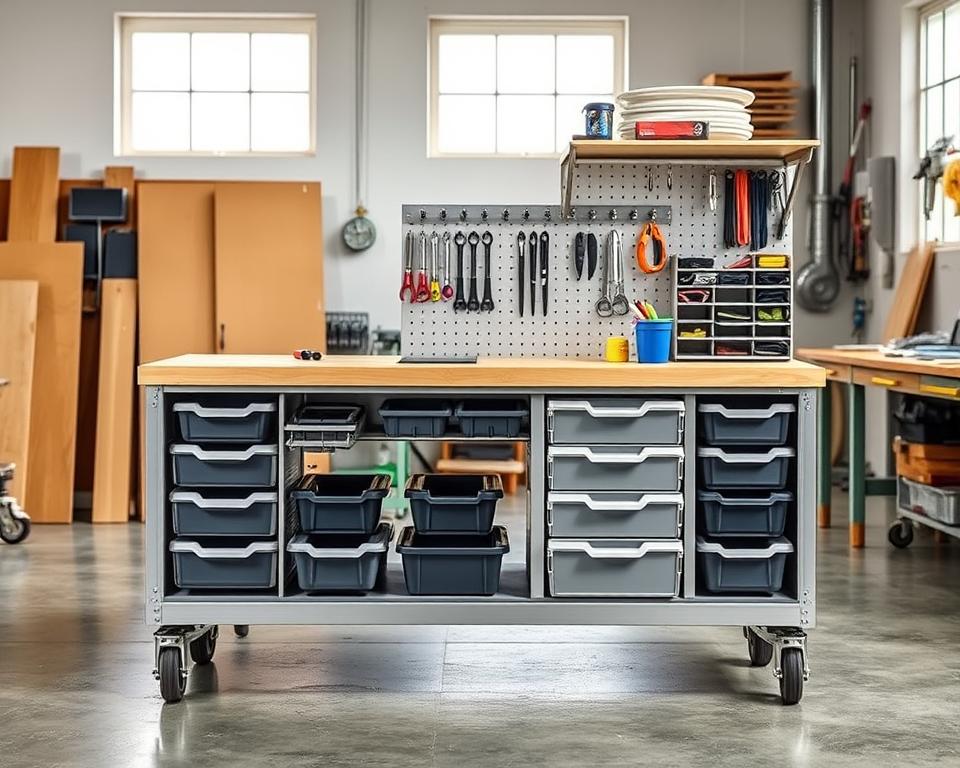
Wheeled units provide the freedom to position implements exactly where they’re needed. This approach proves invaluable for individuals working across multiple locations.
Finding flexibility with wheeled tool storage
Mobile workbenches combine sturdy surfaces with integrated organisation. They typically feature drawers for hand tools and shelves for larger equipment.
The locking mechanism on quality casters is crucial. Wheels must roll smoothly when unlocked but lock firmly during operation.
Wheeled trolleys with multiple tiers create portable stations. Removable trays allow users to carry selected items to elevated locations.
DIY construction enables customisation to specific needs. Builders can select dimensions that fit their garage space perfectly.
The portability advantage extends to cleanup and space management. Units can be rolled aside to clear floor area when not in use.
Effective Use of Labels and Clear Bins
The strategic application of labelling systems transforms chaotic garage spaces into models of efficiency. Clear containers offer immediate visibility of contents, saving valuable minutes during projects. This approach eliminates the guesswork from locating specific items.
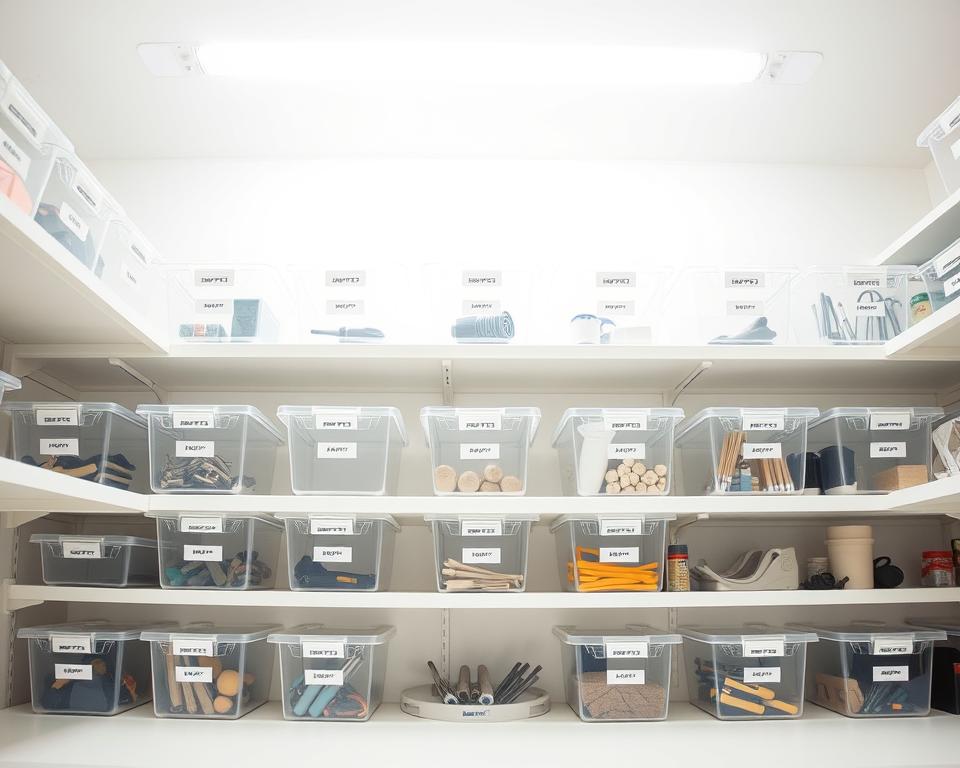
Transparent bins allow users to identify contents without opening multiple containers. However, their visibility can display cluttered appearances. Opaque alternatives provide aesthetic benefits in frequently viewed areas.
Colour-coded systems enhance organisation significantly. Blue containers might hold electrical supplies, while red ones organise plumbing components. This visual coding accelerates item location.
“A well-labelled system maintains itself, even when multiple people use it.”
Durable labels created with adhesive vinyl withstand garage conditions better than handwritten alternatives. They enable all household members to maintain the system effectively.
| Bin Type | Best Use | Visibility | Aesthetic |
|---|---|---|---|
| Clear Bins | Frequent access items | High | Functional |
| Opaque Bins | Seasonal supplies | Low | Neat |
| Colour-Coded | Categorical organisation | Medium | Systematic |
The combination of clear and opaque containers balances functionality with appearance. Consistent labelling across all bins maintains system coherence. This approach ensures every item has its designated home.
Proper identification methods serve as the cornerstone of workshop efficiency. They reduce search time and encourage consistent return of items after use.
Maximising Vertical Space in Organised Areas
Unused vertical areas in a garage present a significant opportunity for improvement. Many people focus solely on floor-level solutions, overlooking the potential above. This approach multiplies capacity without requiring more square footage.
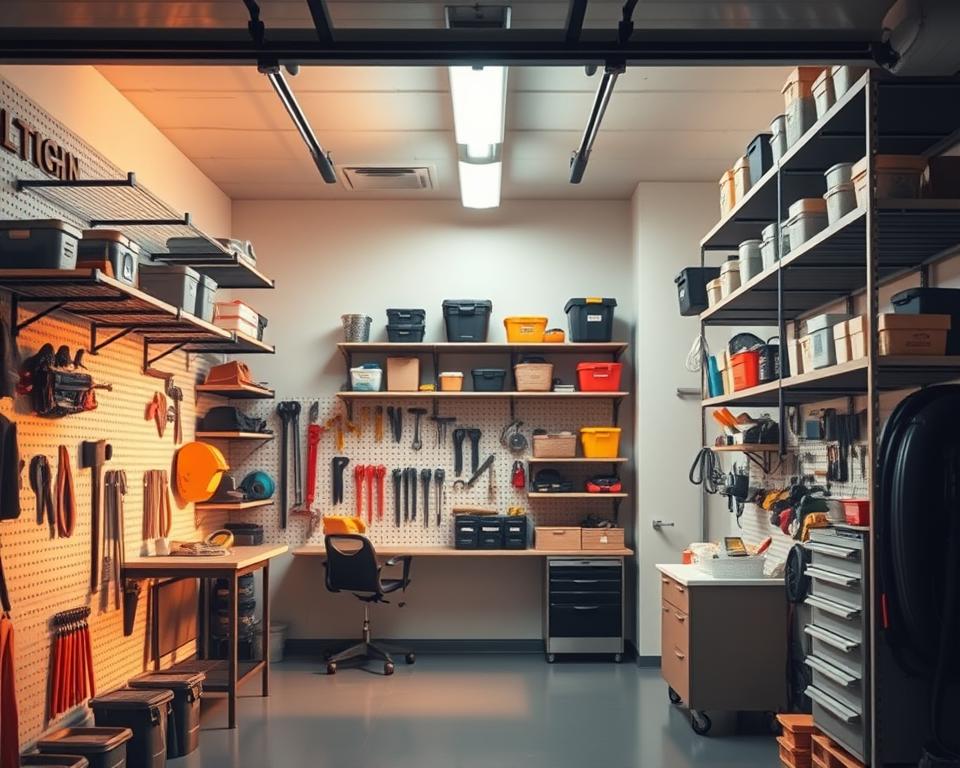
Wall-mounted shelving systems are a cornerstone of this strategy. Unlike freestanding units, they can extend from floor to ceiling. This design accommodates a far greater number of items within the same footprint.
Selecting wall-mounted shelves and overhead storage
Frequently needed supplies belong on lower shelves. This placement ensures they are easy to reach without stretching or using a step stool. It maximises convenience for everyday projects.
Seasonal gear, such as holiday decorations or camping equipment, is ideal for higher zones. These items do not require regular access. Storing them overhead keeps prime lower areas clear.
Ceiling-mounted racks capture often-wasted space. They are perfect for bulky, lightweight items like sporting goods. This method effectively clears valuable floor space.
Safety is paramount when implementing these solutions. Heavier objects must be placed on lower shelves for stability. All shelving must be securely anchored to wall studs to support the load safely.
Customising Tool Foam Organisers and Drawer Inserts
Precision-cut foam inserts transform ordinary drawers into professional-grade organisational systems. These premium solutions create custom-fitted compartments where each item occupies a precisely shaped cutout.

Two-layer foam systems with contrasting colours provide excellent visual management capabilities. When tools are removed, bright underlayers show through dark top surfaces. This creates silhouette displays that reveal missing items immediately.
Proper foam organisation begins with strategic planning rather than hasty cutting. Users should arrange tools on foam surfaces first. Experiment with layouts that group related items together.
Frequently used tools belong toward drawer fronts for easy access. Careful tracing prevents poor spacing and material waste. Test-fitting during cutting ensures accurate tool outlines.
| Cutting Technique | Best For | Difficulty Level | Tools Required |
|---|---|---|---|
| Utility Knife Cutting | Basic tool shapes | Beginner | Sharp knife, ruler |
| Hot Foam Knife | Complex outlines | Intermediate | Specialised cutter |
| Finger Hole Punching | Tool retrieval | Easy | Hole punch tool |
| Horizontal Strip Cutting | Similar tool rows | Beginner | Straight edge, knife |
Retrieval enhancements solve common problems with snug-fitting tools. Semi-circular finger holes make picking up items easier. Horizontal access strips work well for wrench collections.
This method proves particularly valuable for small tools prone to drawer clutter. Socket sets and screwdriver assortments become neatly arrayed. Customisation extends to accessories like batteries and drill bits.
Maintaining Order in a Busy Workshop Environment
The true challenge emerges in preserving order within a dynamic workshop where tools and projects constantly evolve. Initial organisation represents merely the foundation upon which ongoing maintenance builds sustainable efficiency.
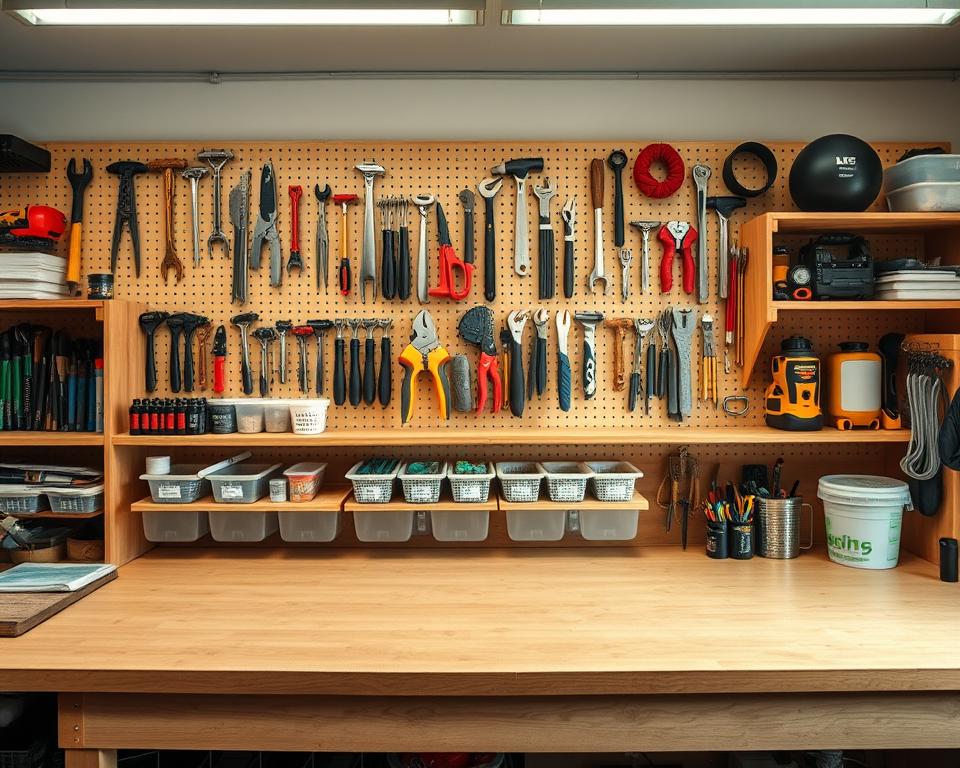
Regular reviews of the storage arrangement prove essential for long-term success. Quarterly or biannual assessments help identify emerging issues before they escalate into major problems.
Scheduling regular reviews of your storage system
These maintenance checks should evaluate whether items consistently return to their designated locations. Accumulation in temporary areas indicates inconvenient placement requiring adjustment.
Seasonal transitions offer natural opportunities for reassessment. Spring reviews ensure garden equipment accessibility, while autumn checks verify winter tool readiness.
Adjusting organisational strategies over time
Collection changes necessitate system modifications. New acquisitions require dedicated spaces, while rarely used items should vacate prime locations.
Involving all users in maintenance discussions captures diverse perspectives. Collaborative improvements increase the likelihood of consistent adherence to the organisational approach.
Strategic adjustments might include enhanced labelling or additional lighting. Mobile solutions benefit implements that frequently move between work areas.
Conclusion
The journey to an organised workspace begins with a commitment to systematic improvement. Implementing the right solution transforms any garage or shed into a productive environment. Homeowners discover that every item finds its proper place.
These approaches accommodate various budgets and skill levels. From simple DIY projects to comprehensive systems, there is a way to meet every need. The strategies ensure long-term organisation success.
Proper arrangement extends beyond mere aesthetics. It saves time by eliminating searches for misplaced supplies. Valuable equipment enjoys protection from damage, extending its lifespan.
An efficient room encourages regular maintenance and project work. Homeowners experience renewed enthusiasm for tasks they once avoided. The frustration of clutter becomes a distant memory.
Begin with small steps and experiment with different methods. The perfect organisation system evolves over time. Ultimately, a well-ordered home workshop makes every project more enjoyable and efficient.
FAQ
What is the best way to organise a garage with limited floor space?
Utilising vertical space is key. Installing wall-mounted systems like pegboards or shelving units can keep tools accessible while freeing up the floor. Overhead racks are also excellent for storing seasonal items or bulky supplies.
How can I stop small items like screws and nails from getting lost?
Clear containers, such as repurposed mason jars or divided organisers, are ideal. They allow for quick identification of contents. Adding labels to these bins further enhances organisation and saves time.
Are there any clever DIY hacks for storing long-handled garden tools?
Absolutely. A popular and effective method involves using PVC pipes. Sections of pipe can be mounted to a wall or the inside of a shed door to hold items like rakes and spades securely and upright.
What is a good storage solution for heavy power tools?
For safety and organisation, heavy power tools are best stored on sturdy shelving or within a locked cabinet. A mobile workbench with integrated storage can also provide a secure and flexible solution.
How can I make my tool storage system more adaptable as my collection grows?
Opting for modular systems is a smart approach. Systems with adjustable shelves, movable hooks, and stackable bins can be easily reconfigured. Regular reviews of the setup will help identify necessary adjustments.
What is the benefit of using magnetic strips in a workshop?
Magnetic strips offer excellent organisation for metal tools. They keep frequently used items like screwdrivers and pliers in clear view and within easy reach, which can significantly streamline a work process.
Can everyday household items be repurposed for tool organisation?
A> Yes, many common items work wonderfully. For example, an old cutlery tray is perfect for sorting small items in a drawer, and a shoe organiser hung on a door can hold a surprising number of tools and supplies.