What garden style categories exist?
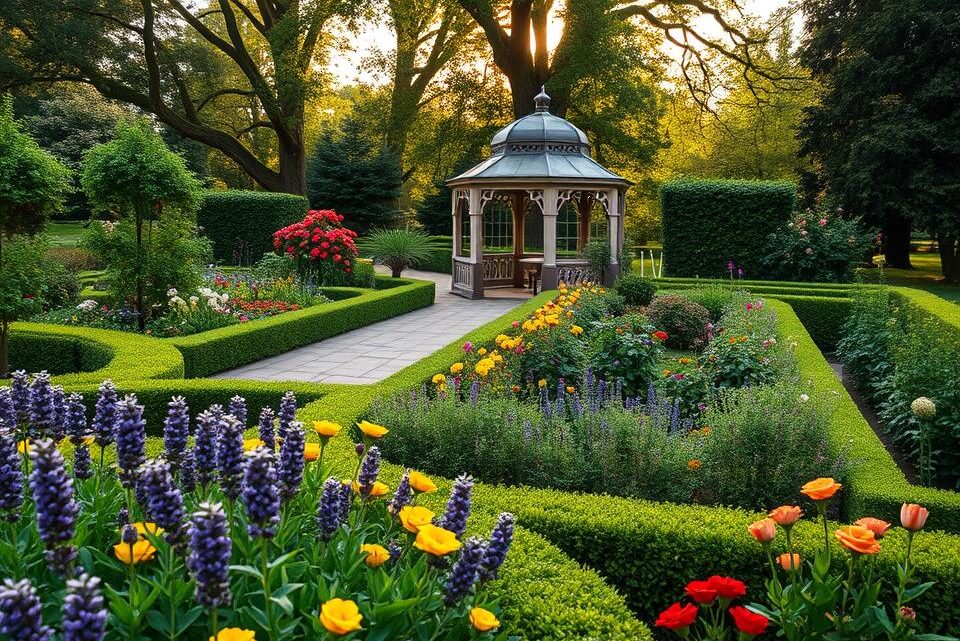
Choosing a clear garden style helps you make faster, better choices for planting, materials and furniture. A single word or a guiding phrase can simplify the whole design process and reduce overwhelm.
Begin by noting your space, aspect and microclimate. These site details steer you towards options that will thrive and look intentional rather than improvised.
You can pick classic approaches such as cottage, formal, Mediterranean or Japanese, or opt for condition-led ideas like native, woodland or edible plots. Many successful designs mix traditions, using repeated materials, colours and lines to create unity.
Plan core elements first — paths, boundaries, seating and focal points — then refine the planting to express your chosen mood. That way maintenance, resilience and enjoyment stay in balance.
Inhaltsverzeichnis
Key Takeaways
- Define a clear style to simplify plant and material decisions.
- Assess area, aspect and microclimate before choosing plants.
- Blend styles carefully, using repeated elements for cohesion.
- Prioritise paths, seating and focal points before planting.
- Match maintenance needs to the time you can commit.
How to use this ultimate guide to choose your garden style in the UK today
Pair what you love with what your site will tolerate; that balance makes good layouts last. Start by auditing your area: note sun and shade, prevailing winds, soil texture and drainage. These facts set the limits for suitable approaches in the UK climate.
Match preference to upkeep. Shortlist two or three looks that appeal, then compare them with the weekly maintenance you can commit to. A design that fits your time is more likely to thrive.
Decide core design elements early — lines (axial or curving), key materials, primary planting palette and any water features — so every choice supports one coherent language. For smaller plots, simplify geometry and cut plant numbers; repetition keeps a compact outdoor space calm.
Link house and garden by echoing materials and colours where possible; this unifies landscape and interior, especially at thresholds like kitchen doors. Plan circulation first, then place structural plants before seasonal highlights to ensure the area works year-round.
Use this guide as a practical reference. Move from overview to specific sections to translate preferences into a workable plan for your plot and local conditions.
- Audit site realities first.
- Shortlist by appeal, then test against maintenance.
- Fix lines, materials, planting and water early.
Classic garden styles: from Renaissance formality to modern movements
Classic movements offer clear templates you can adapt to your area and scale. They show how designers moved from strict axial lines and parterres to broader landscape gestures. Use their elements—terraces, ha-has, specimen shrubs—to build a coherent plan that suits your time and budget.
Renaissance: symmetry, parterres, terraces and fountains
Renaissance designs align the layout with the house, using geometric parterres, clipped hedges and topiary as strong focal structure. Straight or regularly curved stone and gravel paths frame pools, statues and formal water features. Terraces with balustrades handle slopes and create ordered sightlines.
Maintenance is intensive where clipped hedges and box were used; plan for box blight risks and consider Ilex crenata or other evergreen alternatives.
Landscape and Picturesque: rolling lawns, ha-has and borrowed views
Landscape gardens favour sweeping lawns to the house, sinuous paths, natural lakes and ha-has that keep views uninterrupted. Repton’s Picturesque adds a staged composition: a neat foreground, a pastoral middle and a rugged background with follies and dramatic routes. These approaches boost biodiversity while keeping powerful sightlines.
Gardenesque and Arts & Crafts: specimen plants, glasshouses, rooms and drifts
Gardenesque highlights exotic specimen plants, vivid carpet bedding and ornate glasshouses. Arts & Crafts counters with intimate rooms, local stone, clipped hedges and drifts of herbaceous perennials. Both give you elements — rooms, glass, strong materials — that translate well to smaller plots.

- Recognise Renaissance by axial lines, parterres and formal water features.
- Landscape uses ha-has, lawns and borrowed vistas for a natural feel.
- Arts & Crafts gives structure softened by perennial drifts and local stone.
Formal garden style: geometry, hedges, topiary and paths
A formal garden depends on clear axial lines and repeated shapes to read as a composed space. The approach descends from European exemplars such as Versailles, using clipped hedges, knot gardens and straight paths to create structure and rhythm.

Core elements: axial lines, knot gardens, stone and gravel
Start by setting a clear plan. Use gravel and stone to define parterres and paths so the geometry reads at a glance. Frame vistas with clipped hedges and punctuate them with topiary, urns or a rectilinear pond.
Maintenance, modern materials and box alternatives
Formal gardens remain high-maintenance even with mechanisation. If box is vulnerable to blight, choose resistant shrubs and structural evergreens to keep the look intact.
- Scale avenues down for a small area by using a single topiary-lined path.
- Harmonise materials across terraces and steps so house and landscaping feel joined.
- Use wildlife-friendly practices—compost mulches and reduced chemicals—without losing crisp lines.
English country garden: tradition, herbaceous borders and seasonal charm
The English country approach celebrates layered planting, generous lawns and a sequence of rooms that reveal charm at every turn.
Deep herbaceous borders combine perennials, roses and evergreen shrubs to give long seasons of colour and winter structure. Set wide paths and a simple lawn so the plants have space to breathe.

Deep borders, roses, lawns and classic focal points
Add focal elements—urns, sundials, arches and a Lutyens-style bench—to punctuate sightlines. Include herbs within borders for scent and use clipped hedges or topiary for form when flowers fade.
Design tips for smaller gardens with a country look
Limit your palette and repeat key plants to create rhythm across a compact area. Use trellis and climbers to lift planting vertically and add a small formal parterre near the house to link the informal borders to the architecture.
- Plan routine maintenance: staking, deadheading and dividing perennials.
- Weave in wildlife with nectar-rich flowers and berrying shrubs.
- Echo house materials—brick, stone and timber—for a cohesive landscape.
Cottage garden style: relaxed planting, flowers and edible accents
Embrace a relaxed, abundant approach that puts plants and scent first. A cottage look mixes bulbs, perennials, annuals and flowering shrubs to create a cosy, informal tapestry. Paths, courtyards and containers carry the planting; a large lawn is often unnecessary.
Planting palette: perennials, annuals, climbers and herbs
You will prioritise a floriferous mix of hardy perennials and cheerful annuals to keep colour through the seasons. Add climbers on arches and simple trellis to lift the composition where space is tight.
Integrate edible touches — runner beans, fruit trees and a few hardy herbs — among ornamentals so the area is both pretty and productive. Containers at thresholds extend scent and colour to seating spots.

- Use self-seeders and repeat key plants for rhythm and low-cost abundance.
- Choose shrubs for winter structure so the area still reads well outside peak flowering.
- Forego lawn if you need more planting space; gravel paths and a courtyard work well.
- Keep maintenance simple: deadhead, stake occasionally and allow a little spontaneity.
Tips — let furniture be eclectic and repurposed; the planting is the star. Curate a small palette for very compact plots to keep harmony while retaining the relaxed cottage spirit.
Contemporary and modern garden style: clean lines and controlled planting
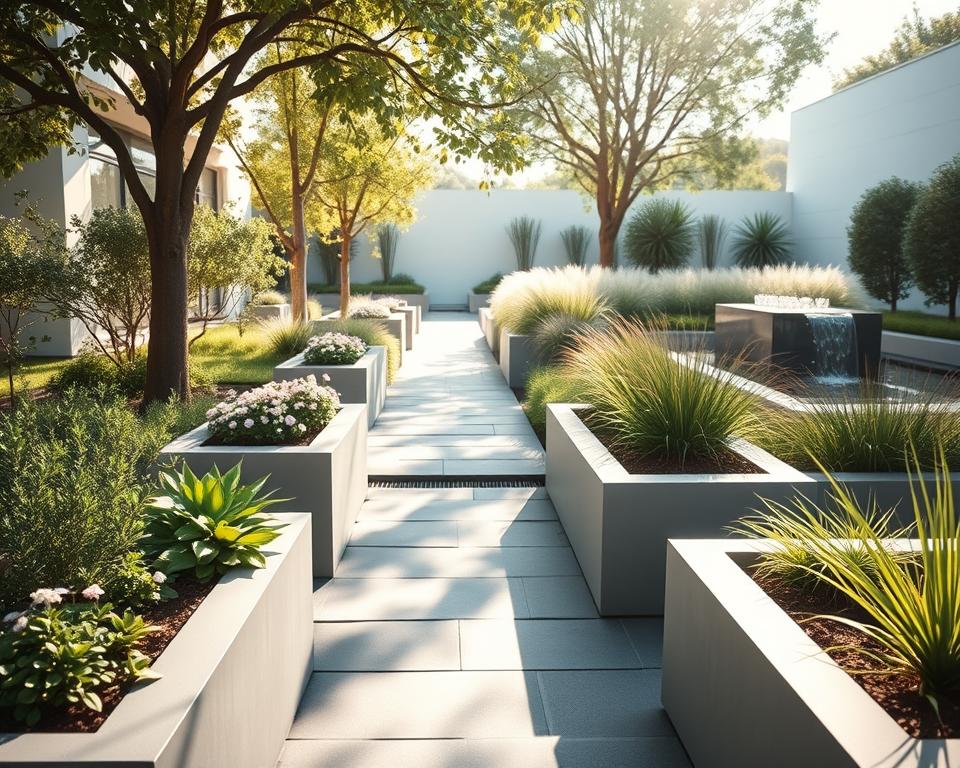
Keep the language of the layout simple. Contemporary and modern approaches rely on geometry, surface and a tightly curated plant list. This gives a calm, intentional look that suits urban plots and new builds.
Materials like corten steel, gabions and sleek stone provide crisp edges and age well. Use these for raised beds, planters, retaining walls and linear water features to hold the composition together.
Planting schemes: restrained colour and architectural foliage
Pick 12–20 plants and repeat them. Grasses, clipped evergreens and large-leaf specimens create form and texture. Keep colour tight—greens, whites and one accent—to make the shapes read clearly.
Design ideas for a modern garden in a small outdoor space
- Set out rectilinear or circular geometries to organise terraces and beds.
- Align paving grids with doors to extend interior lines into the area.
- Use built seating and storage to keep the plot uncluttered and usable.
- Include a still rill or reflecting plane for calm without fuss.
| Feature | Material | Planting approach | Benefit |
|---|---|---|---|
| Raised bed | Corten steel | Grasses + clipped box | Crisp edge, low upkeep |
| Boundary | Gabion wall | Bold foliage bands | Textural contrast, durable |
| Paving | Sleek stone | Minimal joints | Visual continuity with house |
| Water | Reflective plane | Limited planting edge | Quiet focal point, depth |
The outdoor room and urban garden: liveable spaces with style
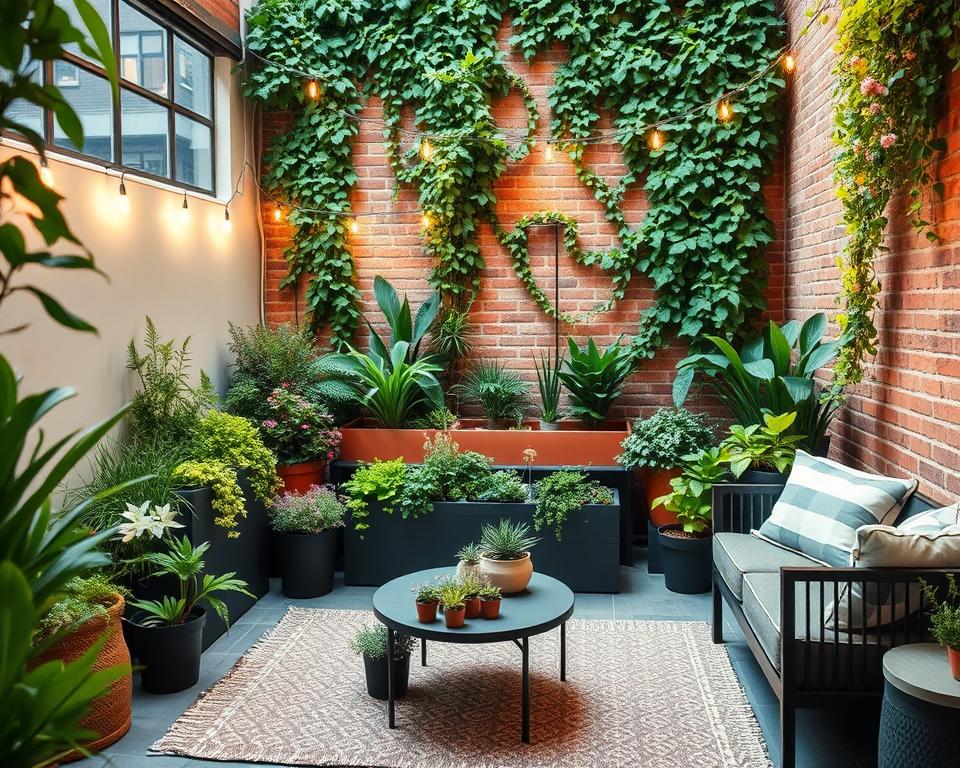
Design the exterior like an extension of your living room, using materials and lighting to blur the boundary between inside and out.
Plan zones for seating, dining, storage and heat so the area feels like a true room. In a small urban area you will double up features: raised bed seating, storage benches and built-in planters save space and tidy circulation.
Seating, storage, outdoor kitchens and lighting
Integrate an outdoor kitchen or fire feature where services allow. Position lighting for safety and atmosphere, and keep thresholds generous to avoid pinch points.
Plants with year-round structure for city microclimates
Choose structural plants and shrubs with long seasons so the garden looks composed in winter. Use containers and grouped planters to add height and soft edge without permanent works.
“Make every inch work: clever storage and durable materials extend use through the seasons.”
- Double features to save room
- Exploit urban shelter for bolder planting
- Include wildlife-friendly water and nectar plants
| Feature | Use | Materials | Benefit |
|---|---|---|---|
| Raised bed bench | Seating + planting | Corten or timber | Dual function, tidy circulation |
| Storage seat | Hidden tools | Composite timber | Clutter-free area |
| Outdoor kitchen | Cooking & dining | Stainless steel, stone | Extends usable months |
| Planter groups | Green enclosure | Frost-proof container | Height, winter structure |
Mediterranean and dry garden style: drought-tolerant planting and gravel
A dry, Mediterranean approach uses gravel, stone and drought-tolerant planting to make a resilient outdoor area that needs little extra water.
Choose plants and herbs such as lavender, rosemary, ornamental grasses and succulents to form a low-maintenance palette. These plants store moisture and cope with lean periods; they also bring scent and texture rather than bold flowers.
Replace lawn with gravel beds, pots and paving to cut demand for water. Use a deep gravel mulch to reduce evaporation and to encourage self-seeding. Expect some weeding as part of the upkeep; gravel suppresses moisture but does not stop all seedlings.

Gravel gardens, stone and water-wise tips for UK conditions
- Improve drainage where needed and group plants so they knit into drifts.
- Study UK precedents such as Beth Chatto’s Essex gravel garden for planting ideas that succeed without irrigation.
- Include a simple water-wise feature — a rain chain into a small pond or barrel — to celebrate limited water smartly.
| Element | Materials | Planting focus |
|---|---|---|
| Bed surface | Gravel mulch | Succulents, grasses |
| Containers | Terracotta, stone | Herbs, small shrubs |
| Seating | Stone pads or decomposed granite | Clear desire lines |
Adapt to your climate — in wetter areas pick drought-tolerant but moisture-tolerant plants and sharpen drainage so the scheme keeps its Mediterranean feel without failing in heavy rain.
Coastal garden style: wind-hardy plants, shingle and a seaside sense of place
A seaside plot asks for tough, drought-wise planting, simple surfaces and weathered materials that age well. Hardiness and drainage trump lush lawns in exposed spots. Use shingle, sand or gravel and timber decking to set the scene.

Plant choices for salt spray and exposure
Pick species that cope with wind, free-draining soils and, if needed, salt spray. Opt for native plants and coastal stalwarts, then add a few hardy exotics where shelter allows.
Design permeable hedging, fences with gaps and staggered planting to slow gusts. Keep paths simple and edged so loose surfaces stay stable.
“Assess salt exposure precisely — frontline plots need different plants than those a few streets back.”
- Plant into shingle or sand and mulch planting pockets to retain scarce moisture.
- Avoid high-maintenance lawns; use low mats, gravel clearings and groundcovers instead.
- Anchor the look with driftwood, patinated metals and recycled furniture for a true sense of place.
| Feature | Material | Benefit |
|---|---|---|
| Surfacing | Shingle / free-draining gravel | Quick runoff; low upkeep |
| Shelter | Permeable fencing / staggered planting | Reduces wind damage |
| Planting pockets | Mulched shingle with compost | Retains moisture, helps establishment |
| Decor | Driftwood & reclaimed metal | Authentic seaside look |
Exotic or jungle look: bold leaves, layered planting and vibrant colour
Big leaves, close planting and a hint of humidity create the lush, exotic impression many gardeners seek. Use scale and repetition to make an ordinary area feel dense and theatrical without overcomplicating maintenance.

Hardy tropical effect vs tender plants in the UK climate
Choose a largely hardy palette if you want longevity. Bananas, tree ferns and tetrapanax give drama and can survive in sheltered spots. Reserve cannas, dahlias and palms for containers or a greenhouse so you can move or protect them in winter.
- Build layers: tall focal plants, mid-level shrubs and low perennials for instant density.
- Plan microclimates—south-facing walls and enclosed courtyards extend what the climate allows.
- Use large containers for mobile tender specimens and simple water bowls to raise humidity.
- Design meandering routes and small clearings to frame seating and keep paths usable.
- Include nectar-rich plants and shelter to support local wildlife amid the lush planting.
“Head gardeners such as Philip Oostenbrink and Steven Edney show how a jungle feel works from estates to terraces.”
Japanese garden style: balance, pruning and texture
Embrace restraint and careful placement to create calm. A Japanese garden uses a few well-chosen plants and aged materials to suggest a wider landscape in miniature.
Focus on form and negative space. Place pruned pines, maples and cloud-pruned shrubs so each specimen reads as a sculptural element. Leave breathing room so moss, stone and gravel show texture and age.

Water features such as a still pond or a gentle cascade should feel proportionate. Sound and reflection are balanced with stones and shallow edges to welcome wildlife without spoiling the calm.
Use a narrow palette of materials and plants. Gravel, compact paths, lichen-streaked stone and restrained planting tones create unity. Ikebana ideas—tall, mid and groundcover—help you compose a living hierarchy that reads as heaven, humanity and earth.
- Prune mindfully; maintenance preserves the composition.
- Prefer patina over newness; avoid overt ornament.
- Align meandering paths with precise edges for quiet circulation.
| Element | Materials | Function |
|---|---|---|
| Specimen trees | Pruned pine, acer | Define lines and vertical focus |
| Surface | Gravel, moss, aged stone | Texture, low planting palette |
| Water | Still pond or small cascade | Reflection, gentle sound, wildlife edge |
“Craft, proportion and restraint create a garden that feels both intimate and worldly.”
Naturalistic, prairie and wildlife-friendly approaches
Let drifts of grasses and seedheads shape sightlines and sound as much as colour in a naturalistic layout.
Prairie planting pairs ornamental grasses with late-flowering perennials. Plant in groups so silhouettes read at a distance. Leave stems standing over winter for form and food for birds.
William Robinson’s Wild Garden idea favours self-seeding and light intervention rather than tight borders. You retain paths and views, but allow plants to settle and move over seasons.

Wildlife essentials focus on four things: food, water, shelter and healthy soil. Add a shallow pond, berrying shrubs and a log pile. Topdress with compost or well-rotted manure to boost soil life.
- Structure with grasses and late perennials for seedheads and winter interest.
- Use native plants alongside well-behaved exotics for ecological value.
- Plan seasonal mowing or strimming instead of frequent replanting.
- Weave simple mown or gravel paths for access and enjoyment.
Keep chemicals to a minimum and favour diversity; a measured palette repeated in drifts gives a coherent landscape that supports wildlife and beautiful flowers through the year.
Specialist site-led styles: woodland and bog gardens
Let site conditions guide your choices. Shade, tree roots and damp hollows point you towards woodland or bog approaches that suit the soil and light. This saves effort and invites wildlife to flourish.
Woodland borders: shade-loving plants and leaf mould
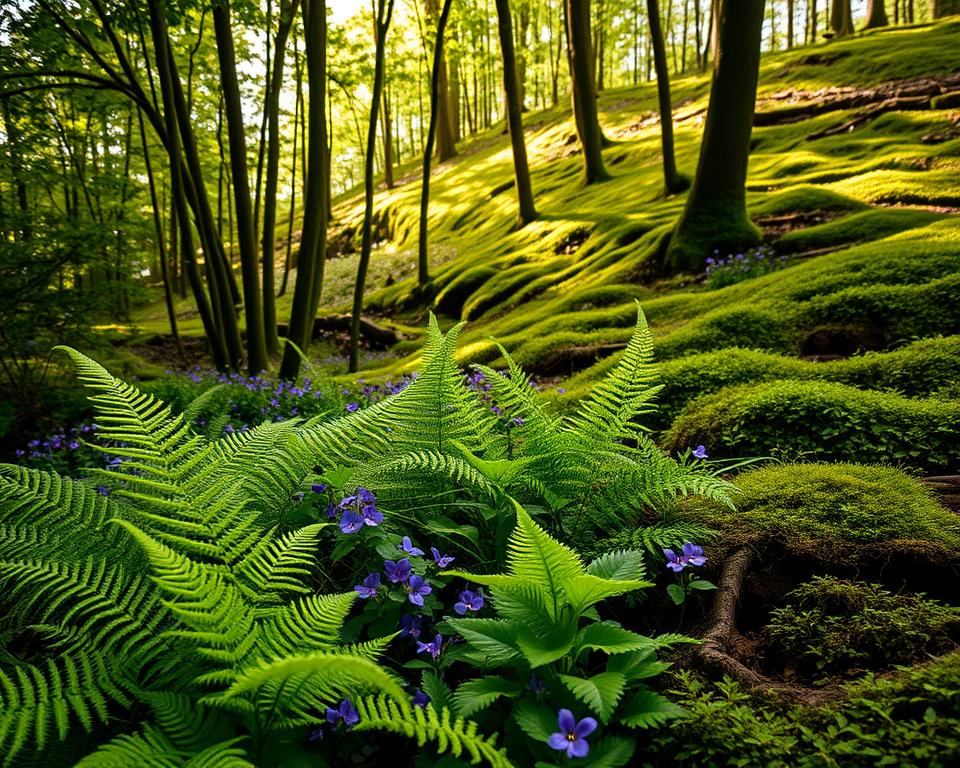
Harness the shade with ferns, spring bulbs and shade-tolerant shrubs arranged in layers from groundcover to understorey. Add well-rotted leaf mould and organic matter when planting to improve dry, root-filled soils.
Mulch each spring to retain moisture and feed soil life. Design clear, dappled openings and simple paths so the area feels inviting rather than gloomy.
Bog gardens and water features that boost biodiversity
Create a bog where water lingers or at the pond edge using moisture-loving plants that support amphibians and insects. Even a small pond with shallow shelves gives a big boost to local wildlife.
Use natural materials for edging and simple boardwalks or stepping stones to protect wet soil while opening the area to exploration. Keep maintenance light—lift and divide as needed and top up mulch annually.
| Feature | Best for | Key planting | Benefit |
|---|---|---|---|
| Leaf mould top-up | Shaded beds | Ferns, hellebores | Improves dry, compacted soil |
| Shallow pond shelf | Bog margins | Marsh marigold, iris | Habitat for amphibians |
| Boardwalk / stones | Damper area | Native plants edge | Protects soil, access for people |
What garden style categories exist? A quick-reference map of styles and when to use them
Use a simple map to match site conditions with look and planting before you start. This keeps decisions practical and reduces wasted effort.
Begin by grouping options by climate and water: dry (think mediterranean gardens), coastal or bog and pond-side. Match these to the plants that will cope with exposure and moisture.
By climate and water
Dry / Mediterranean: gravel, drought-tolerant herbs and long-lived perennials work well.
Coastal: salt-hardy shrubs and shingle or free-draining surfaces resist wear.
Bog / pond-side: moisture-loving planting and shallow shelves support wildlife and amphibians.

By structure and look
Choose a structural language that suits your house: formal geometry, contemporary grids, cottage informality or English country depth.
By planting ethos
Decide on planting direction: prairie drifts, wild self-seeders, lush exotic leaves or the restraint of a japanese garden. Each approach sets maintenance and seasonal rhythm.
- Filter choices by water and exposure first, then pick a structural look and planting ethos.
- Note paths and access early so circulation supports the chosen composition.
- Combine one option from each column to create a coherent hybrid—eg. dry + contemporary garden + prairie.
- Scale features to your area and match upkeep to your available time.
- Add simple water and habitat elements to boost wildlife in nearly every scheme.
| Group | Key elements | Best for | Benefit |
|---|---|---|---|
| Climate & water | Gravel, shingle, pond shelves | Dry, coastal, wet sites | Plants thrive where conditions suit them |
| Structure | Axial paths, grids, informal rooms | Formal, modern garden, cottage | Links house and landscape; clarifies circulation |
| Planting ethos | Drifts, self-seeders, specimen leaves | Prairie, wild, exotic, japanese | Defines maintenance and seasonal interest |
| Wildlife | Ponds, berry shrubs, log piles | All areas | Boosts biodiversity without harming design |
Quick tip: write a short brief that states your chosen climate response, structural look and planting ethos. Use it as a checklist when you select materials, paths and plants.
Design elements that cross styles: paths, materials, containers and focal points
Start by choosing a small palette of materials that link the house to the outside. Repeat these finishes across terraces, steps and paths so the whole area reads as a single, intentional place.
Stone, brick, timber and metal to echo your house and area
Choose a core material set — stone, brick, timber and a metal accent — then use those materials to tie seating, planters and edging to the architecture.
Position focal points on axes or framed views: a specimen tree, a water bowl or a sculpture. That makes each element feel deliberate rather than scattered.
Use containers where soil is limited. They add height, colour and flexibility and let you trial plants before committing to beds.
“Echoing house materials in paths and steps creates unity and helps landscaping feel like an extension of the home.”
| Element | Material | Benefit |
|---|---|---|
| Path | Natural stone | Durable, ties to house masonry |
| Raised bed / bench | Corten or timber | Dual function: seating and planting |
| Edging & fixings | Galvanised metal | Low maintenance, crisp lines |
| Lighting | Warm LED on axes | Extends use and highlights focal points |

- Scale path widths to function—access and comfort matter.
- Specify jointing and edging so materials weather well.
- Repeat rhythm and alignment to bind mixed planting into one coherent look.
Conclusion
strong, Close with a short brief that keeps choices practical. Pin down site limits, structure and a planting palette so every decision supports your chosen garden style.
You will leave with a clear shortlist of styles and simple next steps. Map repeatable elements and lines that hold the plan together through seasons and change.
Include wildlife-friendly touches—water, shelter and soil care—regardless of your selected style. Phase work by area: build structure first, add plants in waves to spread cost and learning.
Use the tips here and the quick-reference map for inspiration. Review annually, keep what works and refine planting as you gain experience; the result should feel like a natural extension of your home and area.
FAQ
Which main garden styles should I consider for a UK property?
You can choose from formal, English country, cottage, contemporary, Mediterranean, coastal, Japanese, naturalistic/prairie, exotic/jungle and specialist site-led approaches such as woodland or bog gardens. Match each option to your space, local climate, soil and how much maintenance you want to do.
How do I match a chosen approach to my space, climate and maintenance level?
Start by assessing sun, wind, soil type and drainage. For exposed coastal plots pick wind-hardy, salt-tolerant species; for dry sites favour drought-tolerant herbs, grasses and succulents. Smaller urban yards suit contemporary, courtyard or outdoor-room concepts with compact planting and hard landscaping. Also factor in weekly time available—formal and topiary-focused schemes need intensive upkeep, while prairie and wildlife-friendly designs are lower maintenance.
What are the key design elements I should plan first?
Prioritise lines and spatial layout, materials for paths and patios, planting structure and any water features. Decide on axial or curved lines, durable materials such as stone, brick or corten steel, and whether you need raised beds, containers or a pond. These choices set the look and determine plant selection and maintenance.
What defines a formal approach and what plants suit it?
Formal designs use strong geometry, axial lines, hedges, knot gardens and structured hard landscaping. Use evergreen hedging like Buxus alternatives (Ilex crenata or Lonicera nitida), clipped yew or hornbeam, and specimen shrubs that respond well to pruning. Gravel and stone paths reinforce the geometry.
How can I recreate an English country or cottage feel in a small plot?
Compress deep herbaceous borders into narrow, layered beds using perennials, roses, lavenders and climbers. Place a small lawn or gravel sitting area as a focal point and use repeat plants for cohesion. Choose smaller cultivars and container roses to save space while keeping the relaxed, seasonal character.
Which materials and planting work best for a contemporary look?
Use clean-lined materials such as sleek stone, porcelain slabs, corten steel, gabions or composite decking. Combine restrained planting: architectural foliage (e.g. Phormium, Miscanthus), a limited colour palette and structural shrubs to create calm, modern compositions suitable for urban settings.
Can Mediterranean or dry planting succeed in the UK?
Yes, with the right site and soil. Choose drought-tolerant species like lavender, rosemary, santolina, ornamental grasses and succulents. Improve drainage with free-draining soil and gravel beds, use warmed south-facing aspects, and limit high-water-demand plants to containers or sheltered microclimates.
What should I plant for a coastal or exposed garden?
Select salt-tolerant, wind-hardy species such as Armeria, Cistus, Hebe, maritime grasses and hardy lavenders. Use shingle, stone and low hedging to reduce wind erosion, and create sheltered planting pockets with rock walls or gabions where possible.
How do naturalistic and prairie schemes differ from wild gardens?
Prairie and naturalistic schemes use structured drifts of grasses and late-flowering perennials with seasonal seedheads. Wild gardens favour native mixes, informal edges and biodiversity objectives. Both support wildlife, but prairies are more curated in composition and timing, while wild gardens can be looser and more opportunistic.
What essentials support wildlife across different designs?
Provide food (flowering plants and berry shrubs), water (birdbaths, small ponds), shelter (log piles, dense evergreen hedges) and healthy soil through mulching and reduced chemical use. Even highly styled spaces can include wildlife-friendly elements without losing their character.
Are Japanese-inspired principles suitable for UK gardens?
Yes—balance, texture, careful pruning and use of stone, gravel and water translate well. Focus on restraint, seasonal interest and high-quality materials. Choose hardy plants such as Japanese maples (Acer palmatum), pruned evergreens and mosses for a contemplative mood.
What should I consider for specialist site-led projects like woodland or bog borders?
Match planting to microclimate: shade-tolerant species and leaf mould for woodland edges; moisture-loving marginal plants, sedges and bog-loving perennials for wet areas. Use native trees and shrubs to establish canopy and encourage fungi and invertebrate diversity.
How can paths, containers and focal points tie different approaches together?
Use consistent materials and a restrained palette to create coherence. Containers can introduce seasonal colour or edible plants, while strong focal points—sculpture, specimen trees or water features—anchor views and give scale. Paths guide movement and reveal successive rooms or scenes.