What Is a Modular Shed? Explained: Types and Uses

Outdoor spaces across the United Kingdom are being transformed by innovative garden structures. These flexible building solutions offer homeowners unprecedented customisation compared to traditional options.
This guide explores how these versatile structures have evolved. They now serve diverse functions beyond simple tool storage. Many function as fully equipped workshops or peaceful garden rooms.
Homeowners are increasingly choosing these sheds for their practical advantages. The flexible panel system allows for truly personalised outdoor spaces. This makes them ideal for gardens with varying layouts and spatial constraints.
This comprehensive resource will cover definitions, benefits, and installation considerations. Readers will discover practical layout planning advice for their own spaces.
Inhaltsverzeichnis
Key Takeaways
- Modular sheds offer superior customisation compared to traditional garden buildings
- These structures provide versatile solutions for storage, workshops, and leisure spaces
- The flexible panel system enables adaptation to various garden layouts and sizes
- They represent a modern approach to maximising outdoor living potential
- Proper planning ensures the structure meets specific functional requirements
- Understanding different types helps in selecting the most suitable option
What Is a Modular Shed?
The concept of interchangeable panel construction offers unprecedented flexibility for garden storage solutions. These structures utilise a system of standardised components that homeowners can arrange according to their specific needs.
Definition and Customisation
A modular garden building features walls made from evenly sized panels. This design approach allows complete control over the layout. Owners decide exactly where each component goes during assembly.
The flexibility means you can position the door on any side of the structure. Windows can be placed to maximise natural light. This customisation extends to the interior layout as well.
Interchangeable Panels Overview
Three main panel types create the complete structure. Solid wall sections provide security and storage space. Windowed panels offer light and ventilation.
The door panel includes the frame and opening mechanism. All components feature standardised dimensions for seamless integration. This interchangeable system enables countless configurations.
Manufacturers like BillyOh and Empire Sheds use this approach. Their modular shed designs allow homeowners to create truly personalised outdoor spaces. The panel-based construction makes assembly straightforward.
Advantages and Benefits of Modular Sheds
One of the most practical aspects involves the strategic placement of entry points. These garden buildings offer significant advantages through their customisable approach to design.

Flexible Door and Window Options
The flexibility to position the entrance exactly where needed represents a key advantage. Homeowners can align the door with existing garden paths for seamless access.
This eliminates the need to cross lawns or gravel areas unnecessarily. Various placement options exist, including corner positions or centred alignments.
Each configuration suits different garden layouts and user preferences.
Enhanced Natural Light and Accessibility
Strategic windows placement maximises natural illumination throughout the day. Positioning windows above workbenches or storage areas provides task lighting.
This reduces reliance on artificial lighting during daylight hours. Larger structures offer multiple windows on different sides for optimal sunlight exposure.
The benefits extend to energy efficiency and improved working conditions.
Assembly proves straightforward thanks to lightweight timber panels. These components are easy to handle and position accurately during construction.
This benefits modular approach ensures the final structure meets specific functional requirements perfectly. The benefits modular design provides make these buildings a practical choice for UK gardens.
Types of Modular Shed Designs
The versatility of these garden structures becomes clear when exploring the diverse designs available. Homeowners can select from a comprehensive range of configurations to suit their specific needs.
Apex and Pent Roof Options
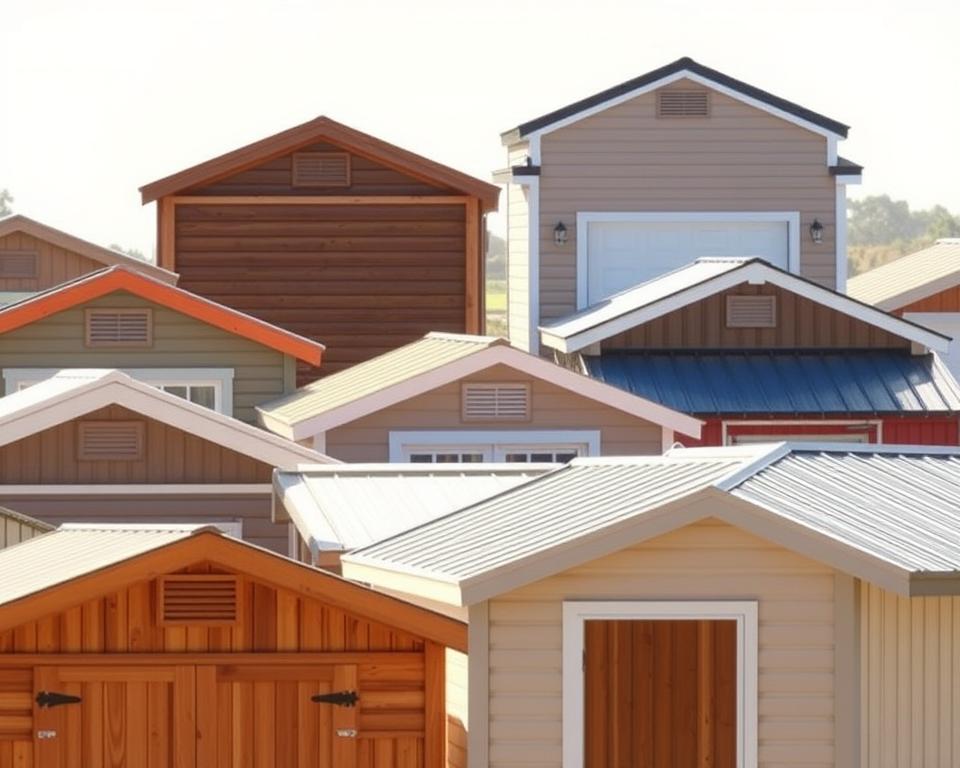
Two primary roof styles dominate the market. Apex roof designs feature a traditional peaked appearance. This type provides excellent water runoff and increased headroom.
Pent roof buildings offer a single-slope design. They are perfect for compact gardens or placement against boundaries. This space-efficient construction is ideal for tool storage.
Variety in Panel Configurations
The true flexibility lies in the panel combinations. Different arrangements create distinct sheds for various purposes. Security-focused buildings might feature windowless designs.
Workshop options often include multiple windows for natural light. Double-door models accommodate larger equipment access. The modular approach even extends to summerhouses and garden rooms.
Examples like the Redlands range illustrate this diversity. From compact 4′ x 6′ stores to spacious 6′ x 12′ structures, there’s a type for every garden.
Choosing the Right Modular Shed for Your Garden
Matching a garden structure to specific spatial requirements ensures optimal utilisation of available areas. The selection process involves careful evaluation of both the garden’s characteristics and the user’s functional needs.
Considerations for Garden Layouts
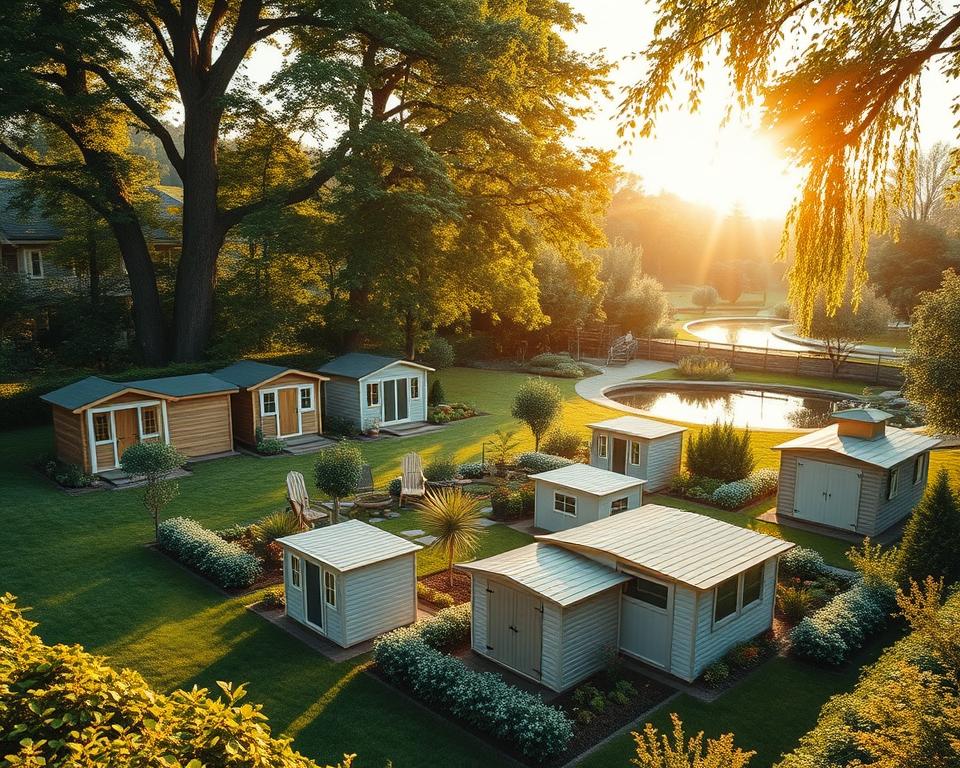
Different garden shapes demand distinct approaches to door and window placement. Narrow spaces benefit from end-positioned doors creating direct pathways. Square layouts offer flexibility for corner storage solutions.
| Garden Type | Recommended Door Position | Window Placement | Storage Optimisation |
|---|---|---|---|
| Narrow | End position | One side window | Linear organisation |
| Square | Central placement | Two side windows | Corner utilisation |
| L-shaped | Short end | Sunny side | Wrap-around panels |
L-shaped gardens require special attention to work around existing features. Strategic panel arrangement maximises both access and visual appeal.
Sizing and Space Optimisation
Selecting the appropriate size involves balancing current requirements with future possibilities. Available space should accommodate both the structure and necessary access routes.
“The right size garden building should feel spacious yet proportional to its surroundings, enhancing rather than dominating the outdoor environment.”
Internal layout planning is crucial for functional space utilisation. Consider what will be stored inside—equipment in corners may conflict with corner-positioned doors. Furniture along walls requires thoughtful door placement to avoid interruption.
Forward-thinking selection accounts for evolving needs. A slightly larger size than initially required can accommodate future uses beyond basic storage.
Installation, Construction, and Durability
The construction phase represents a crucial step in creating durable outdoor storage. Understanding the materials and methods ensures a successful build that withstands British weather conditions.
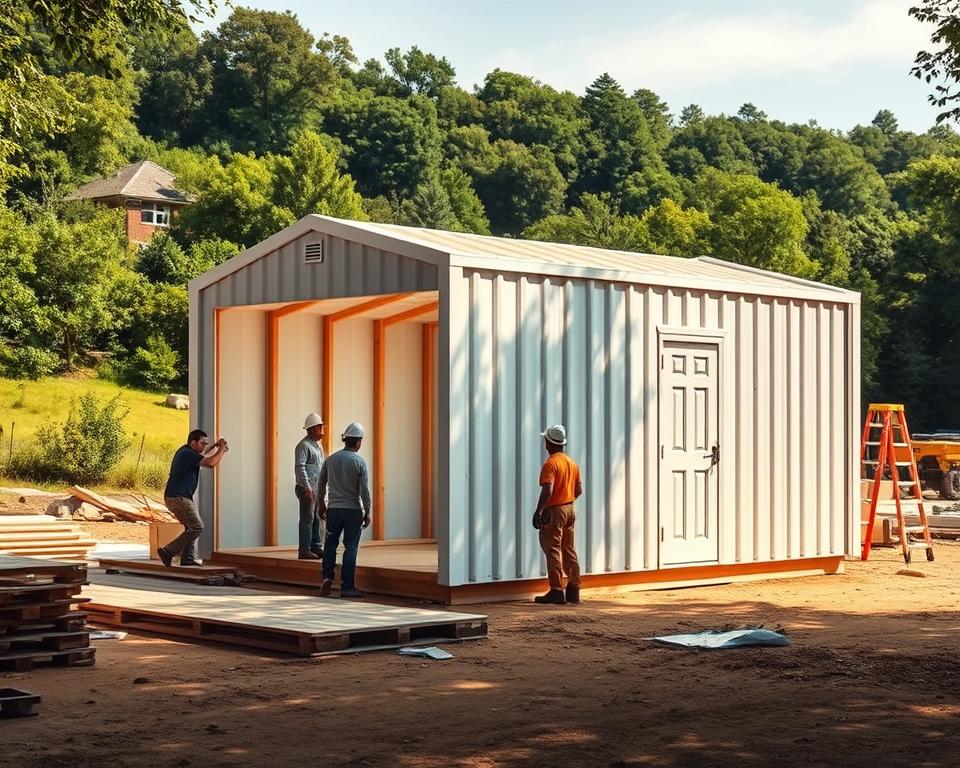
Quality garden structures use dipped-treated timber for inherent weather resistance. This treatment provides long-lasting protection with manufacturers typically offering 12-month anti-rot guarantees. The timber construction is specifically engineered for UK climate challenges.
Range of Building Materials and Methods
Tongue and groove construction forms the core of the panel joining system. This method creates secure, weathertight connections between components. The interlocking design maintains structural integrity while allowing flexible panel positioning.
Lightweight panels make the installation process manageable for most homeowners. There’s no need for specialised tools or professional building experience. The system is designed for straightforward assembly by following logical steps.
| Base Type | Preparation Time | Stability Level | Suitable For |
|---|---|---|---|
| Concrete Slab | 1-2 days | Excellent | Permanent installations |
| Paving Slabs | Half day | Good | Most garden types |
| Purpose-built System | 2-3 hours | Very Good | Quick installations |
Step-by-Step Assembly Guidance
Begin with preparing a level, stable base according to your garden’s requirements. This foundation is critical for the entire structure’s longevity and performance.
The assembly follows a logical progression from frame erection to wall panel installation. Each lightweight component slots into place using the tongue and groove system. Roof fixing completes the weatherproof enclosure.
Allocating adequate time ensures proper construction without rushing. The result is a robust building that protects contents year-round with minimal maintenance needed.
Planning and Custom Layout Ideas
Strategic planning transforms garden buildings from basic storage into personalised functional spaces. Thoughtful consideration of component placement ensures optimal utilisation of both interior and exterior areas.
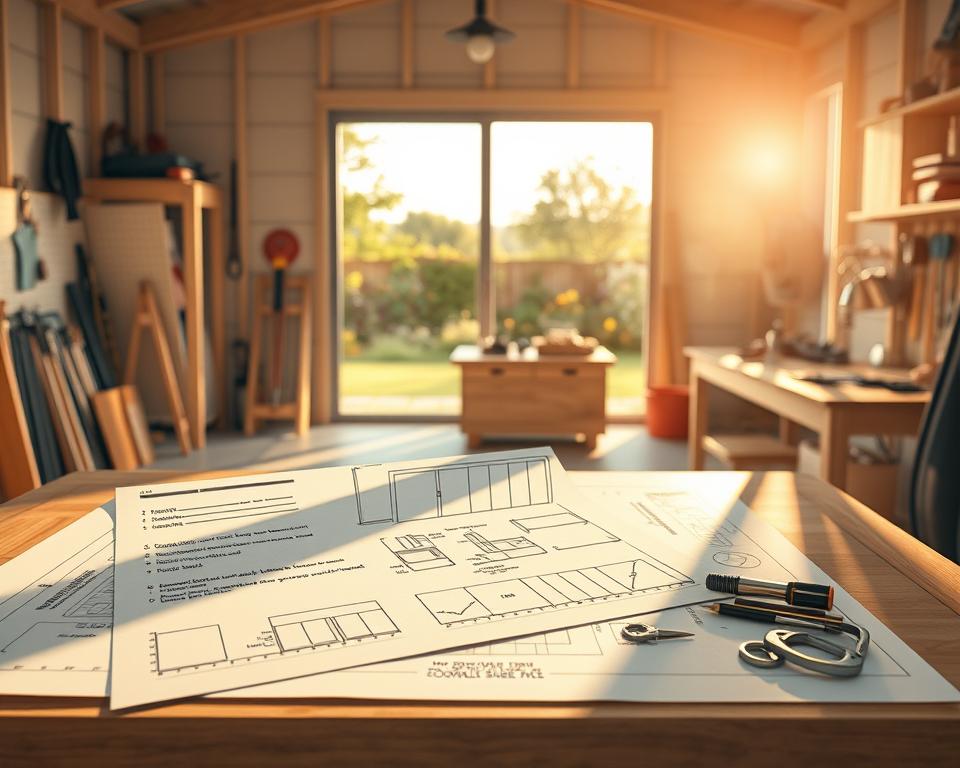
Homeowners should begin by evaluating their specific requirements before finalising the layout. This preparatory work prevents costly adjustments after construction.
Customising Doors, Windows, and Panels
Door position significantly impacts accessibility and workflow. Narrow gardens often benefit from end placement creating direct pathways. Wider structures might utilise central door positions dividing the interior into distinct zones.
Window placement requires balancing light, privacy, and security considerations. Positioning windows above potting benches provides ideal task lighting. Corner windows brighten interior spaces effectively.
Solid wall sections dominate most structures. Their arrangement affects both security and external appearance. Consider sightlines from neighbouring properties when planning window locations.
Integrating Shed Design with Garden Areas
Successful integration connects the building seamlessly with existing garden features. Pathway alignment and sightlines from the house influence component placement.
Seasonal factors deserve attention during the planning phase. Avoid window positions that create excessive summer heat. Consider capturing winter sunlight through strategic opening placement.
Checking local planning permission requirements is essential before finalising designs. Regulations vary by location regarding size, height and boundary proximity.
Conclusion
Ultimately, the true strength of these adaptable garden buildings lies in their capacity for personalisation. They provide a flexible solution that evolves alongside a homeowner’s changing needs, from simple storage to a dedicated workshop or peaceful retreat.
The variety of options available ensures a perfect fit for any space. Careful consideration of the layout, including the position of doors and windows, is key to maximising both functionality and enjoyment.
This guide has outlined the significant advantages over traditional structures. The straightforward installation and durable construction offer long-term value. Investing time in planning your ideal build pays dividends for years to come.
With the right approach, a modular shed becomes a valuable and transformative addition to any UK garden.
FAQ
How does a modular shed differ from a traditional shed?
A modular shed is constructed from pre-fabricated panels that connect together, allowing for easy assembly and future modifications. Traditional sheds are often built as one complete unit, making them more difficult to alter or expand after construction.
Can the layout of a modular shed be changed after it is built?
Yes, the design offers significant flexibility. Owners can often reposition walls, doors, and windows by rearranging the panels. This adaptability makes it simple to reconfigure the internal space as needs evolve.
What types of roofs are available for these garden buildings?
Common options include apex (gable) and pent (single-slope) roof styles. The choice affects both the building’s appearance and the amount of headroom inside, allowing for better optimisation of the available space.
Are there restrictions on where a modular shed can be placed in a garden?
Placement depends on factors like ground stability, access to sunlight, and local planning regulations. It is crucial to prepare a solid, level base and consider how the structure will integrate with existing garden areas.
How long does it typically take to construct one of these buildings?
Construction time can vary, but many modular systems are designed for rapid assembly. With a prepared base, a competent DIY enthusiast can often complete the build within a day, depending on the size and complexity.
Do you need planning permission for a modular shed?
In many cases, these structures fall under permitted development rights, meaning planning permission is not required. However, it is always advisable to check specific local regulations, especially for larger buildings or those in designated areas.
What materials are used in the construction of these sheds?
They are commonly built from durable materials such as treated wood, metal, or composite. The panels are engineered for strength and longevity, ensuring the building withstands various weather conditions.
Can additional features like windows and potting areas be included?
Absolutely. Many manufacturers offer a range of customisation options. Homeowners can select different styles of doors and windows, and even incorporate specialised internal layouts, such as dedicated potting sections.