
What Shed Size Do I Need?

Selecting the appropriate outdoor structure for garden storage represents a significant decision for homeowners. Making the right choice ensures efficient organisation and enhances the overall appearance of outdoor spaces. Many people underestimate the importance of proper planning before purchasing their garden building.
Outdoor structures typically fall into three main categories based on dimensions. Small options range from 4×4 to 8×8 feet, while medium sizes span 8×8 to 12×12 feet. Larger buildings extend beyond 12×12 feet, offering substantial capacity for various possessions.
Careful consideration of available garden area and intended usage prevents common mistakes. Assessing what belongings require protection helps determine the ideal dimensions. This comprehensive guide provides expert advice on measuring space accurately and anticipating future storage requirements.
Inhaltsverzeichnis
Key Takeaways
- Understanding the three main size categories helps narrow down options effectively
- Accurate measurement of available garden space prevents installation issues
- Considering both current and future storage needs ensures long-term satisfaction
- The right dimensions maximise storage efficiency while maintaining garden aesthetics
- Professional guidance helps navigate planning regulations and practical considerations
- Choosing slightly larger than initial requirements accommodates growing storage demands
Understanding Shed Size Categories
Categorising garden buildings by their dimensions provides a practical framework for homeowners to evaluate their options. This approach simplifies the selection process by grouping structures into manageable types.
https://www.youtube.com/watch?v=BLk_CAMmQPc
Each category serves distinct purposes and accommodates different volumes of belongings. Understanding these differences is the first step towards choosing the perfect garden building.
Small Sheds
Compact units ranging from 4×4 to 8×8 feet suit gardens with limited ground area. They offer sufficient storage for essential gardening tools, hoses, and small equipment.
Many models feature clever in-built wall shelving. This design maximises vertical space, making these small sheds remarkably efficient for their footprint.
Medium Sheds
Structures from 8×8 to 12×12 feet represent a versatile middle ground. They provide ample room for bulkier items like lawnmowers and multiple bicycles.
A key feature is often wide-opening double doors, improving access. This allows homeowners to create a small workshop area alongside their storage solutions.
Large Sheds
Buildings exceeding 12×12 feet offer substantial square footage. Their considerable sizes enable functions beyond simple storage, such as workshops or gyms.
These large sheds can comfortably accommodate numerous items, including tractors and outdoor furniture sets. They provide a flexible extra space for various hobbies and activities.
Assessing Your Garden and Storage Needs
A successful purchase hinges on two fundamental evaluations: the physical constraints of the garden and the volume of items to be housed. This careful planning prevents costly mistakes and ensures the new structure complements the outdoor living area.

Measuring Your Outdoor Space
Precise measurement of the available space is the first critical step. Homeowners should note that manufacturer quotes for dimensions can be misleading.
An 8×6 structure might refer to internal or external measurements, and may include the roof overhang. Always check the technical specifications for exact dimensions.
When positioning the building, account for the overhang to direct rainwater away from boundaries. This avoids potential issues with neighbours and protects the fence.
Determining Storage Priorities
Next, create a detailed list of all things requiring storage. Include everything from small tools to large equipment like lawnmowers.
It is wise to keep in mind future needs, especially for growing families who may acquire more items. If the shed will double as a workshop, factor in this working space from the start.
Strategic placement is also key. Choose a location with easy access for moving heavy items and consider proximity to natural light or utilities.
A good rule is for the building to occupy no more than 30% of the total garden area, preserving valuable outdoor living space.
What Shed Size Do I Need? – The Essential Buyer’s Guide
Beyond simple square footage, several critical elements dictate which garden building will best serve a homeowner’s lifestyle. This guide synthesises key considerations into a practical framework for decision-making.
Factors Influencing Shed Dimensions
A professional recommendation is to select a unit slightly larger than initial calculations suggest. If a compact model seems adequate, considering the next size up provides valuable flexibility for future needs.
The primary function is the most significant factor. Storing garden tools requires less space than creating a workshop or a multi-purpose hobby room. The types and volume of items to be housed must be carefully assessed.

Practical access is another vital consideration. Taller individuals should verify door and internal ceiling heights to ensure comfortable entry and movement. A model with just five feet of clearance may force some users to duck.
It is also wise to balance aspirational uses with reality. If the primary goal isn’t storage or workshopping, an alternative garden room might be a more suitable option than traditional sheds. Evaluating these factors helps pinpoint the optimal shed size for any specific circumstance.
UK Shed Planning Permission and Regulations
Navigating the legal requirements for garden structures prevents potential compliance issues. Understanding these rules helps homeowners make informed decisions about their outdoor building projects.
Shed Height and Ground Space Requirements
Most standard sheds avoid planning permission by staying below 2.5 metres in height. This threshold represents a key consideration for property owners.
The 50% rule mandates that properties retain at least half their original outdoor space. This prevents garden structures from overwhelming residential areas.
| Regulation | Threshold | Purpose |
|---|---|---|
| Maximum Height | 2.5 metres | Avoids planning permission requirement |
| Garden Coverage | Maximum 50% | Preserves outdoor living area |
| Boundary Distance | 2 metres | Applies to taller structures |
Usage and Boundary Considerations
Positioning near boundaries requires careful thought. Structures exceeding 2.5 metres height need planning permission if within 2 metres of a boundary.

It’s essential to keep in mind that sheds cannot serve as living accommodation. Local authorities maintain strict rules about this usage.
While regulations permit up to 50% garden coverage, best practice suggests limiting structures to approximately 30% of total outdoor area.
Homeowners should verify specific requirements with their local council. Regulations can vary across different authorities in the United Kingdom.
Key Features and Design Considerations
Attention to detail in design choices can transform a simple storage unit into a versatile garden asset. The right combination of features enhances both functionality and visual appeal.
Interior Layout and Door Options
Door selection significantly impacts accessibility. A single door suits basic storage needs perfectly. For larger items like furniture or bicycles, double doors offer superior access.
Specialty options include stable doors for ventilation and wider single doors as a compromise. Proper Z-bracing ensures door rigidity and prevents sagging over time.
Hinge positioning affects placement within the garden space. Consider surrounding structures when choosing the hinge side.

Roof and Ceiling Specifications
Roof style influences both aesthetics and functionality. An apex roof features two slopes meeting centrally, providing additional headroom.
This traditional style works well as a freestanding structure. A pent roof has a single slope, offering a modern appearance.
It suits locations against walls or fences. For roof construction, tongue and groove boarded options outperform OSB or chipboard alternatives.
They deliver superior strength and longevity. Consider how the roof style complements your garden layout and intended use.
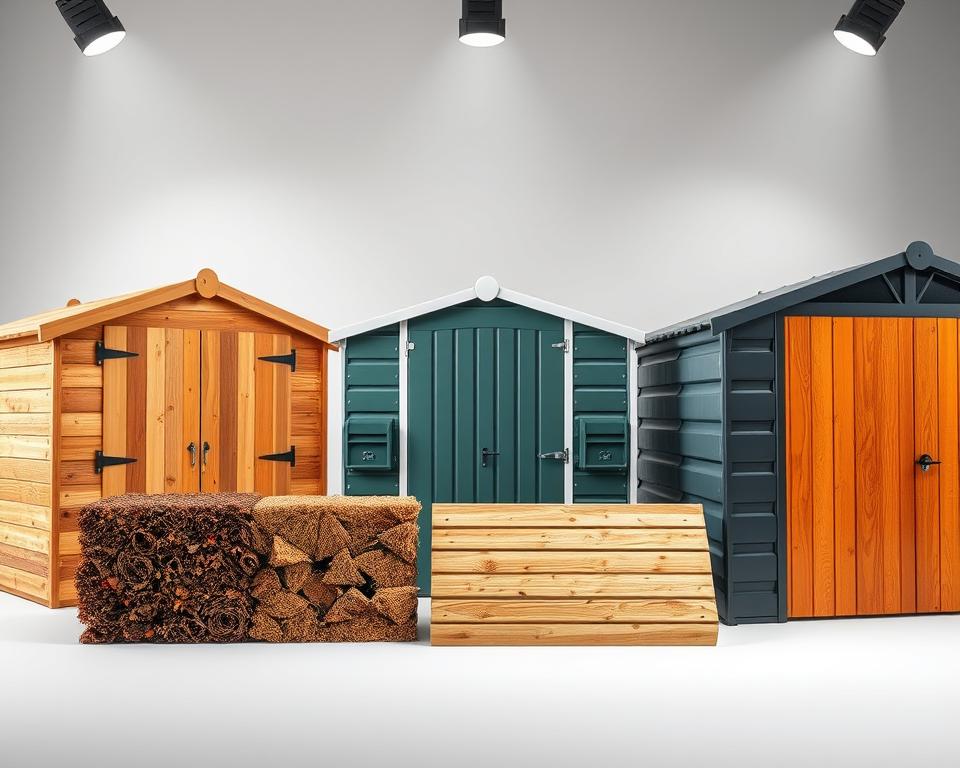
Material Options: Timber, Metal and Plastic Sheds
The choice of construction material significantly influences the appearance, durability, and maintenance needs of a garden building. Each material offers distinct characteristics that suit different priorities and garden settings.
Advantages of Quality Timber
Wood remains the classic choice for garden structures. These wooden sheds provide a natural aesthetic that blends beautifully with outdoor spaces.
High-quality timber, properly kiln-dried, resists warping and splitting. Pressure-treated options offer enhanced longevity with less maintenance.
Homeowners appreciate the versatility to paint or stain these buildings to match their garden design. This customisation makes timber a popular option.
Benefits of Metal and Plastic Alternatives
Metal sheds present a modern, low-maintenance alternative. Galvanised steel constructions resist rust and rot effectively.
This type of building offers excellent security and durability. However, thinner gauge metal may feel less substantial.
Plastic versions require minimal upkeep and assemble quickly. They suit those prioritising convenience over customisation.
Each material serves different needs, balancing cost, maintenance, and visual appeal for garden storage solutions.
Customisation, Installation and Base Requirements
The longevity and stability of outdoor structures depend heavily on correct base construction. Proper preparation ensures the building remains level and secure for years.
Every garden building requires a firm, level foundation regardless of material or dimensions. This prevents moisture issues and maintains structural integrity.
Shed Base Essentials
A quality base extends the life of any outdoor structure. Options include concrete slabs, paving stones, or timber bearers.
Modern recycled plastic grid systems offer eco-friendly alternatives. The base should slightly exceed the building’s footprint.

Account for roof overhangs when positioning the foundation. This prevents water drainage problems near boundaries.
| Base Material | Durability | Installation Complexity | Cost Range |
|---|---|---|---|
| Concrete Slabs | Excellent | High | £100-£300 |
| Timber Bearers | Good | Medium | £50-£150 |
| Plastic Grids | Very Good | Low | £80-£200 |
| Paving Stones | Excellent | Medium | £120-£350 |
Installation Tips for DIY Enthusiasts
Metal and plastic structures assemble quickly with basic tools. Wooden versions require more time and skill.
Professional installation teams are also available for complex projects. They handle larger buildings efficiently.
Choose a location with easy access for delivery and assembly. Consider future maintenance needs when positioning the structure.
Quality flooring features tongue and groove boarding. Avoid OSB or chipboard options that deteriorate over time.
Conclusion
Finalising the ideal outdoor building involves balancing practical needs with aesthetic preferences and budget constraints. Homeowners can approach their selection with confidence after thorough consideration of all factors.
Compact units suit those with limited garden space or modest storage requirements for basic tools and equipment. These smaller garden sheds provide an efficient solution without overwhelming outdoor areas.
Medium-sized models offer the perfect middle ground for storing larger items like furniture and lawnmowers. Many can incorporate a small workshop area while maintaining ample storage capacity.
Larger structures serve those with substantial demands or intentions to create dedicated spaces. They provide enough room for comfortable movement and extensive equipment.
Accurate measurement remains crucial, and selecting a unit slightly larger than minimum requirements prevents rapid outgrowth. The full range of options across materials and configurations offers versatile solutions.
Regulatory considerations, particularly UK planning requirements, ensure compliant installation. Exploring quality garden sheds from reputable suppliers guarantees a sound long-term investment.
FAQ
What are the typical dimensions for small, medium, and large garden sheds?
Small sheds generally measure up to 6×4 feet, ideal for basic tool storage. Medium options, often 8×6 or 10×8 feet, provide enough room for a lawnmower and garden furniture. Large buildings, such as 12×8 feet or bigger, function well as a workshop or for extensive storage needs.
How do I measure my garden to choose the right shed size?
It is crucial to measure the available area’s length and width, ensuring there is adequate clearance around the proposed site for installation and maintenance. One should also consider the building’s roof style, as an apex roof adds height compared to a pent design.
Do I need planning permission for a shed in the UK?
Typically, planning permission is not required if the structure meets certain criteria. This includes being single-storey, occupying less than 50% of the garden area, and having a maximum eaves height of 2.5 metres. Always check with the local authority if the building is near a boundary.
What features should I consider for the interior layout?
Consider door options; double doors facilitate access for larger items like bicycles. Interior features like windows for light, shelving for organisation, and a robust base are essential for creating a functional space for storage or as a workshop.
What are the benefits of wooden sheds compared to metal or plastic alternatives?
Wooden sheds offer a traditional aesthetic, excellent durability, and good insulation, making them a superior choice for a workshop. Metal sheds provide strong security for tools, while plastic sheds are a low-maintenance solution resistant to rot and rust.
Why is a proper base important for shed installation?
A solid, level base is fundamental for the longevity of any garden building. It prevents moisture damage, ensures structural stability, and makes the DIY installation process much simpler. Common base options include concrete slabs, paving slabs, or a dedicated plastic base.

