Garden Shed Size Without Planning Permission UK

Thinking about a new shed and want to avoid a planning application? This guide explains what size garden shed can i build without planning permission under the outbuilding rules UK. It sets out the main limits for height, footprint, and placement so you can plan with confidence.
In simple terms, permitted development sheds are allowed when they stay within set size and position rules and remain incidental to the home. We outline the typical maximum shed size without planning, where tighter limits apply near boundaries or highways, and how rules vary between England, Scotland, Wales, and Northern Ireland.
If you need extra storage or a small hobby room, this overview shows the shed size UK rules that matter most. You will learn when to ask your Local Planning Authority for advice or apply for a Lawful Development Certificate to confirm compliance with planning permission shed UK requirements.
Inhaltsverzeichnis
Key Takeaways
- Permitted development sheds are possible across the UK when size and placement limits are met.
- Typical limits cap overall height and eaves, with stricter rules within 2 metres of a boundary.
- Check the maximum shed size without planning for your roof type and garden layout.
- Outbuilding rules UK differ in England, Scotland, Wales, and Northern Ireland—verify local guidance.
- Keep the use incidental; avoid sleeping, plumbing for bathrooms, or full-time living space.
- Measure from original ground level and account for bases, decking, and raised platforms.
- If in doubt, contact your LPA or seek a Lawful Development Certificate before you build.
Understanding Permitted Development Rights for Outbuildings
Most homes benefit from permitted development rights UK that allow modest outbuildings used for garden storage, hobbies, or a home workspace. These rights apply only where the shed is incidental to the dwelling and respects size, height, and placement limits set out in GPDO outbuildings rules. Flats, maisonettes, and some converted buildings are excluded, and local conditions or Article 4 Directions can remove rights.
Before you buy or build, check planning portal guidance and your Local Planning Authority’s map layers for constraints. Where any doubt remains, a lawful development certificate offers formal proof that your proposal meets shed planning rules UK.
How permitted development applies to sheds across the UK
In general, you may erect a shed within the garden curtilage if it sits behind the principal elevation, stays within height limits, and does not dominate the plot. Use must stay incidental, so no self-contained living space. If you live on Article 2(3) land, in a conservation area, or near a highway frontage, tighter shed planning rules UK usually apply.
Rights do not override covenants or lease terms. They can also be restricted by earlier permissions. When constraints stack up, seeking a lawful development certificate gives clarity before you commit.
Key legal sources: GPDO, technical guidance, and local variations
The legal basis lies in each nation’s General Permitted Development Order. In England, Schedule 2, Part 1, Class E defines GPDO outbuildings. Wales, Scotland, and Northern Ireland have parallel orders with their own terminology and metrics. Government technical documents and planning portal guidance interpret how to measure eaves, ridge, and ground levels.
Local authorities may publish supplementary notes and apply Article 4 Directions to withdraw rights in sensitive areas. Given these local variations, confirm your address constraints and keep records, such as scaled drawings and photos of ground levels, to support any lawful development certificate application.
Differences between England, Scotland, Wales, and Northern Ireland
Under devolved planning systems, the limits vary in detail. England commonly allows higher dual-pitched roofs than flat roofs and caps eaves height, with stricter limits close to boundaries. Scotland sets different boundary distances and measurement rules. Wales follows its own GPDO and guidance, which are similar in spirit but not identical. Northern Ireland defines distinct classes and coverage thresholds for sheds and other outbuildings.
The result is the same principle across the UK—proportionate, incidental structures permitted without a full application—but the numbers and definitions differ. Always read the relevant order for your nation alongside current planning portal guidance and verify with your Local Planning Authority where necessary.
Core Size Limits for Sheds Without Planning Permission
Getting the basics right avoids delays and redesigns. The shed height limit UK interacts with roof form, boundary distance, and how you measure from the ground. Keep these principles in mind before you order materials or book delivery.
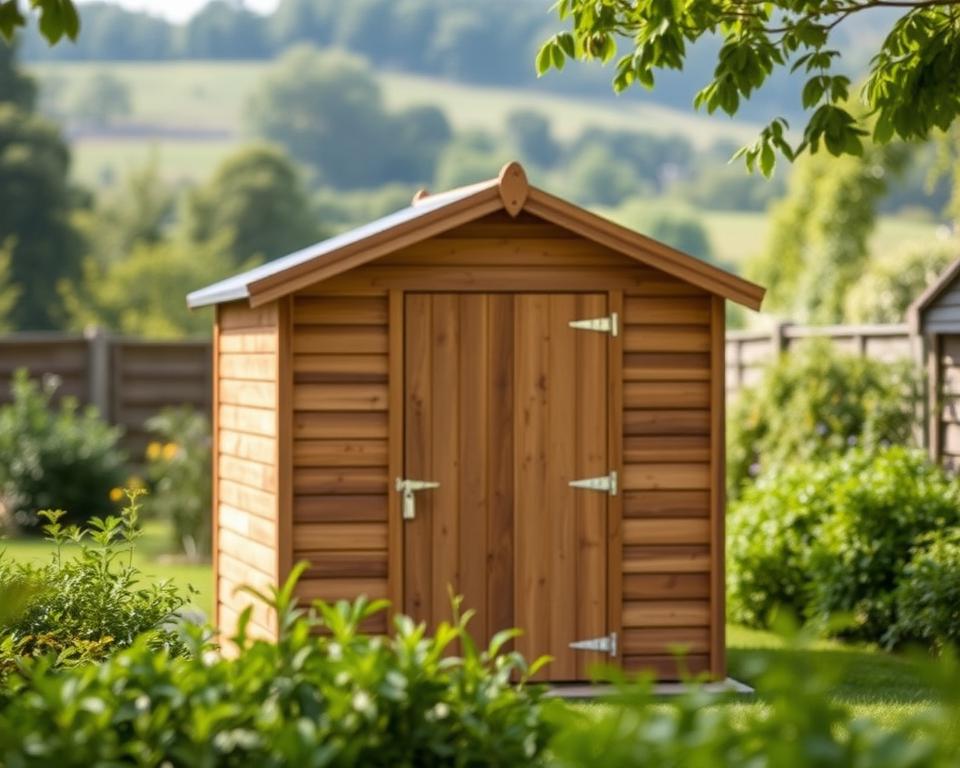
Maximum overall height with pitched and flat roofs
Where a shed sits more than 2 metres from any boundary, a dual‑pitched roof can reach up to 4.0 m overall height. Other roof types, such as mono‑pitch, hipped, or flat, have a 3.0 m cap in typical English rules. If the shed is within 2 metres of a boundary, the 2.5m boundary rule applies, so overall height must not exceed 2.5 m regardless of roof type.
These figures guide what most retailers like Wickes, B&Q, and Screwfix list as compliant options. Always cross‑check the stated peak with the shed height limit UK for your nation before purchase.
Eaves height, ridge height, and how they’re measured
The eaves height shed figure cannot exceed 2.5 m. The ridge height shed is the highest point of the roof, typically the apex on a dual‑pitch. Measurements must be taken from the highest part of the original ground level next to the structure.
Do not raise the site to gain extra headroom. Bases, plinths, or decking count where visible above ground. On sloping plots, measure from the upper side to avoid breaching the shed height limit UK inadvertently.
Floor area considerations and typical footprints
There is no single UK‑wide size cap for a shed footprint without planning, but outbuilding floor area limits work through total coverage of the garden rather than one maximum unit size. In England, no more than half of the curtilage may be covered by buildings and other additions, excluding the original house.
Popular footprints range from 3.0 m × 2.4 m (about 7.2 m²) for compact storage, up to 6.0 m × 4.0 m (about 24 m²) for workshops. Larger units can still comply if cumulative coverage stays within outbuilding floor area limits and the 2.5m boundary rule, eaves height shed, and ridge height shed criteria are all met.
what size garden shed can i build without planning permission?
The quick way to gauge size is to match your shed to the limits in the planning portal shed dimensions and keep within the shed height 2.5m rule when close to boundaries. Use this concise shed size guide to judge the maximum shed size UK rules allow on a typical dwellinghouse, while making sure the building sits behind the principal elevation.
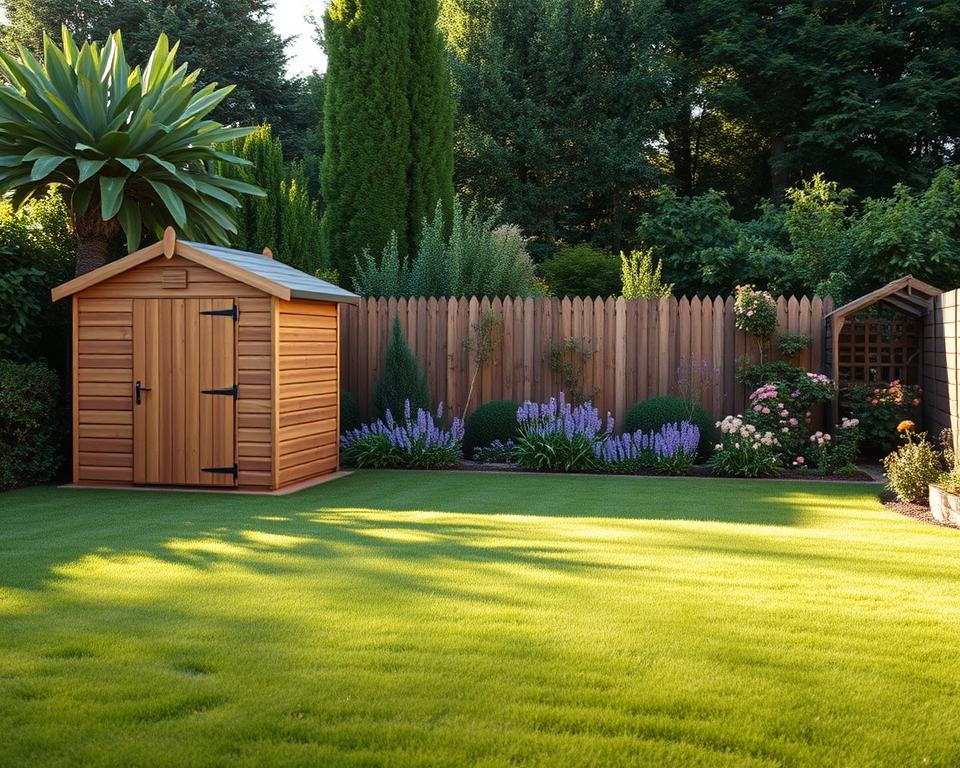
Quick reference answer with typical compliant dimensions
- Within 2 m of any boundary: overall height at or below 2.5 m, eaves at or below 2.5 m. Typical picks: 2.4 m × 1.8 m × 2.4–2.5 m high, or 3.0 m × 2.4 m × ≤2.5 m with a low mono-pitch or flat roof.
- More than 2 m from all boundaries: up to 4.0 m ridge for dual-pitched roofs, 3.0 m for other roofs; eaves up to 2.5 m. Footprint depends on available garden and the 50% curtilage cap.
- Never place it forward of the principal elevation facing a highway.
These figures reflect the core thresholds most households use when asking what size garden shed can i build without planning permission. Cross-check against the planning portal shed dimensions for your site specifics.
Scenario-based examples for small, medium, and large gardens
- Small terrace garden: Choose a low-profile unit at 2.4 m × 1.8 m with an overall height ≤2.5 m. Keep glazing away from the boundary to limit overlooking and shade.
- Medium suburban garden: A 4.0 m × 3.0 m dual-pitched shed sited >2 m from boundaries may reach 4.0 m at the ridge with eaves ≤2.5 m, provided total outbuildings cover less than half the garden.
- Large plot: A 6.0 m × 4.0 m outbuilding can comply if >2 m from boundaries, dual-pitched up to 4.0 m with eaves ≤2.5 m, and used incidentally. This aligns with the maximum shed size UK allowances for typical homes.
In each case, follow the shed height 2.5m rule when near boundaries and use a clear shed size guide so your design fits the planning portal shed dimensions in practice.
When to double-check with your Local Planning Authority
- Your home sits in a Conservation Area, National Park, Area of Outstanding Natural Beauty, the Norfolk and Suffolk Broads, or a World Heritage Site, or is affected by an Article 4 Direction.
- The property is listed, which may trigger listed building consent in addition to size compliance.
- You live in a flat or maisonette, or a converted building where permitted development rights may be removed.
- Ground levels are complex or altered, or you plan plumbing or fixed heating that could imply a change of use. Seek a Lawful Development Certificate for certainty.
Use this checklist alongside your own measurements to answer what size garden shed can i build without planning permission, ensuring your build mirrors the maximum shed size UK thresholds and the shed height 2.5m rule where relevant.
Placement Rules: Boundaries, Setbacks, and Visibility
Placing a shed is not only about size; it must also respect boundary rules shed UK guidance and sightlines from the street. Keep the outbuilding discreet, practical, and lawful by checking how it relates to the principal elevation highway and nearby plots.
Think access, light, and privacy. A smart setback shed plan avoids disputes, reduces visual impact, and preserves value.

Distance from boundaries and highway-facing positions
Under permitted development, site the shed behind the principal elevation highway frontage. Anything forward of the house line is likely to need consent, and corner plots need extra care where a side garden faces the road.
Allow enough room to walk around the structure. A modest setback shed gap helps with maintenance, reduces fire risk, and prevents accidental encroachment onto a neighbour’s land.
Impact of being within 2 metres of a boundary
If your shed is a 2m boundary shed, the maximum overall height is capped at 2.5 metres, regardless of roof type. Measure from the highest adjacent ground to stay within the rule and avoid costly alterations later.
Where fences or walls sit close, this limit often governs suburban plots. Balance headroom with compliance and consider lowering the base to respect boundary rules shed UK limits.
Garden orientation, overshadowing, and neighbour amenity
Plan to prevent neighbour amenity overshadowing. Keep taller elevations to the north where possible, so you minimise shade on gardens and living spaces. Place bulk away from windows and seating areas.
Use glazing and doors carefully to meet overlooking rules shed expectations. Face openings back to your own garden, add opaque panes where tight, and select muted materials that blend with planting for a softer edge.
Checklist cues:
- Behind the principal elevation highway line.
- Height limited to 2.5 m when within 2 metres of a boundary.
- Practical clearances for upkeep and safety.
- Layout that avoids overshadowing and reduces overlooking.
Design Factors That Affect Compliance
Good design helps a shed stay lawful and neighbour-friendly. Think about the shed roof height UK, how light enters, and how people move around it. Small choices on details and edges can decide whether it fits the rules.
Roof type, materials, and external finishes
Pick a roof form that respects the dual-pitch roof limit when clear of boundaries. A simple gable may work well where space allows, while a low profile can help near fences. Where space is tight, many owners choose a flat roof shed 2.5m to stay within height controls at the boundary.
Match tones and textures so the building sits quietly beside the house. Opt for timber from brands like Travis Perkins or engineered cladding from Marley for lasting results. Use fire‑resistant panels or fibre‑cement close to boundaries, and plan external finishes shed planning early to avoid late changes.
Windows, doors, and overlooking considerations
Place windows to face your own garden and reduce side views. Taller sill heights or obscure glass can protect privacy near fences. Rooflights from Velux or Fakro bring daylight without sightlines over a neighbour’s patio.
Choose secure doors and consider laminated glazing if tools are stored inside. Good daylight reduces the need for extra fixtures that might add bulk and affect the shed roof height UK.
Adding a veranda, balcony, or raised platform
Keep decks and steps low to the ground to remain within veranda balcony raised platform rules. Under current guidance, raised areas above 0.3 m are not permitted development with outbuildings. Keep platforms subtle and set into the site to avoid trigger thresholds.
A projecting canopy can add shelter but must not create a platform or increase mass beyond the dual-pitch roof limit or a flat roof shed 2.5m at the boundary. Plan drainage, lighting, and external finishes shed planning together so the final look stays compliant and discreet.
Usage Restrictions: Incidental Use Versus Habitable Space
Outbuildings can add real value and flexibility, but the law draws a clear line. Under garden office permitted development, an incidental use outbuilding must serve the main home and stay subordinate to it. Storage, a hobby studio, or a quiet workspace is fine; turning it into a separate place to live is not.
Keep the function supportive, not standalone. Beds, full kitchens, and long-term sleeping suggest a separate unit and can breach habitable outbuilding rules. Think carefully before fitting services that mimic a small flat.
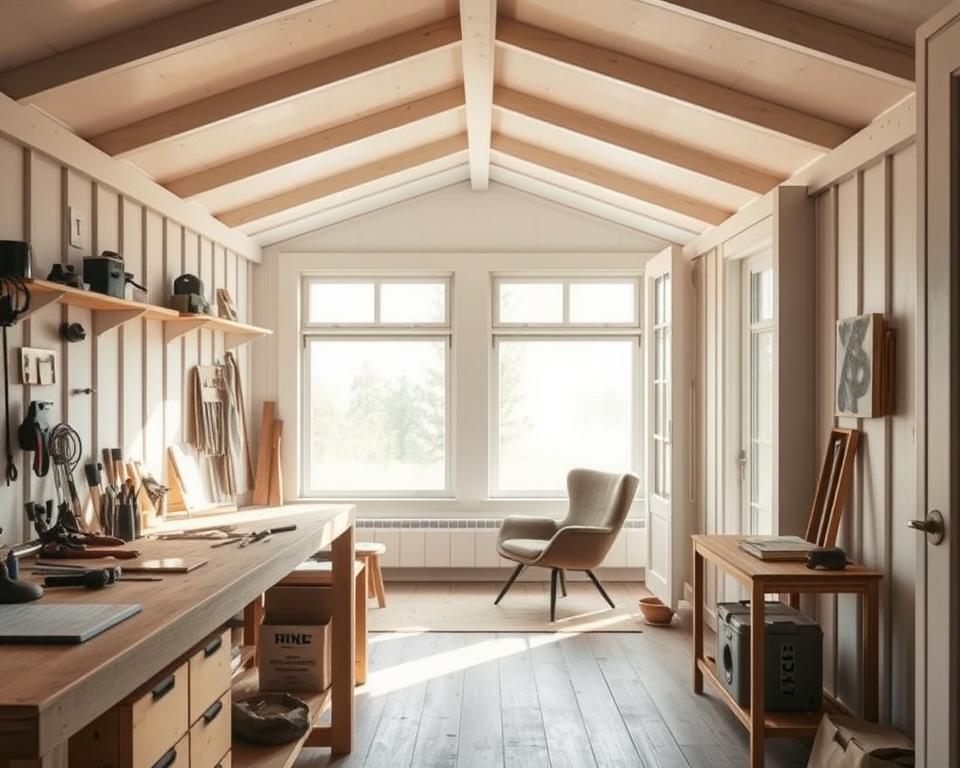
What counts as incidental to the enjoyment of the dwelling
Incidental use means the building helps day-to-day life at home. A craft room, cycle workshop, or garden office used by the household sits within garden office permitted development. A snug for films or a music room is also typical.
Sleeping facilities or cooking a daily family menu point away from incidental. If it starts to function as a separate home, it goes beyond the scope of an incidental use outbuilding.
Heating, plumbing, and the risk of changing the use class
Electric heaters and basic insulation can be acceptable, but context matters. Add a shower room and fitted kitchen and you raise shed plumbing planning concerns. Combined services, partitions, and a dwelling-style layout signal a material change.
Drain runs, hot water systems, and waste connections may also trigger Building Regulations in addition to planning. When in doubt, seek written advice before commissioning plumbers or fitters.
Home offices, gyms, and hobby rooms within the rules
A home office used by the household, with no staff and minimal visitors, remains incidental. Regular client visits, signage, or deliveries suggest a shift that may need permission beyond garden office permitted development.
Fitness spaces are common, but follow home gym shed rules: single storey, modest scale, and no raised platforms over 0.3 m. Keep wash facilities simple to avoid shed plumbing planning issues, and ensure the building stays clearly secondary to the dwelling.
| Use Type | Usually Incidental | Risk Factors | Action Point |
|---|---|---|---|
| Garden office | Yes, for household work | Staff, frequent clients, signage | Limit intensity; review garden office permitted development |
| Home gym | Yes, personal fitness | Raised platforms, loud classes, late hours | Follow home gym shed rules; manage noise |
| Hobby studio/workshop | Yes, non-commercial | Sales from site, deliveries, traffic | Keep sales online/elsewhere; maintain incidental use |
| Guest suite | Often no | Sleeping area, bathroom, kitchen | High risk under habitable outbuilding rules; seek advice |
| Utility with WC | Sometimes | Shower, full kitchen fit-out, drainage scale | Check shed plumbing planning and Building Regulations |
Special Designations: Conservation Areas, Listed Buildings, and Flats
Building near heritage assets needs extra care. Permitted development narrows where settings are sensitive, and some homes have no automatic rights at all. The points below clarify how conservation area shed rules, listed contexts, and multi-unit homes change the picture.
Extra controls in Article 2(3) land and National Parks
In England, conservation areas, the Norfolk and Suffolk Broads, Areas of Outstanding Natural Beauty, World Heritage Sites, and National Parks form Article 2(3) land Class E. Many small outbuildings remain possible, but siting is tighter. A shed beside a side elevation that faces a highway will often fall outside Class E in conservation areas.
A National Park outbuilding must sit behind the principal elevation and respect height and eaves limits. Keep bulk low and materials muted to suit local character. Early advice from your Local Planning Authority helps avoid a refusal where streetscape or setting is at risk.
Listed building consent considerations
Where a home is listed, a listed building consent shed may be needed even if the size would normally be allowed. Curtilage structures can affect the significance of the principal building, especially when placed close to it or in key views.
Discuss proposals with the council’s conservation officer and consult guidance from Historic England before ordering materials. Position, form, and finishes should preserve the building’s special interest and its setting.
Outbuildings for flats and maisonettes
Permitted development rights for outbuildings do not extend to flats maisonettes outbuildings. Any meaningful structure is likely to need full planning permission, and many schemes also trigger estate or leasehold controls.
Check your lease, secure freeholder approval, and speak with the managing agent early. Shared amenity space, access, and fire strategy can all shape whether a small store or bike shed is acceptable.
- Key checks: conservation area shed rules; Article 2(3) land Class E limits; whether a National Park outbuilding changes character; and if a listed building consent shed is required.
- Documents: title plan, photos of the setting, and scaled drawings to show height, eaves, and distance from boundaries.
Measuring Correctly: Ground Levels, Heights, and Volume
Getting the numbers right protects your project and keeps it within permitted development. When you measure shed height UK standards expect consistency, clear notes, and photos. Start by fixing the original ground level definition, then record eaves measurement and ridge height the same way each time.
On sloping plots, accuracy depends on where you stand and how you reference the ground. A sloping garden shed can still comply if you take measurements from the correct point and manage bases or platforms within the decking height 300mm rule.
Determining “original ground level” and sloping sites
The original ground level definition means the natural land before you cut, fill, or landscape. Do not bank soil or add hardcore to lift the shed. Survey the perimeter and use the highest ground level immediately next to the walls as your reference on a sloping garden shed.
Mark temporary datum points with pegs and a spirit level or laser. Take readings at each corner and mid-point. Keep a dated note so you can show how you measure shed height UK guidance if asked by the council.
How to measure eaves and ridge accurately
For eaves measurement, hold the tape from the ground reference up to the point where the wall meets the roof plane. Ignore fascias and gutters. For the ridge, measure to the very top of the roof structure.
Use a straight edge across the ridge and a plumb line for precision. Photograph each reading and annotate the images. This record supports a Lawful Development Certificate if you need formal confirmation.
Accounting for bases, decking, and raised platforms
Concrete slabs, pavers, and timber frames add to height if they sit above the original ground. Keep any platform or deck within the decking height 300mm rule to avoid breaching limits. On a slope, consider cutting into the uphill side rather than propping up the downhill side.
Install a damp-proof membrane, add drainage channels, and allow ventilation under timber bases. These steps keep the sloping garden shed dry while helping you measure shed height UK limits from the correct datum.
| What to Measure | Where to Measure From | How to Measure | Why It Matters |
|---|---|---|---|
| Original ground level | Highest adjoining ground around the shed | Set pegs; use level/laser to map natural ground | Fixes the original ground level definition and prevents over-height claims |
| Eaves height | Ground reference to roof-wall junction | Tape or laser to the bottom of the roof slope, excluding fascias | Accurate eaves measurement ensures compliance near boundaries |
| Ridge height | Ground reference to roof apex | Straight edge across ridge with plumb line to datum | Confirms overall height against permitted development limits |
| Bases and platforms | Top of base relative to original ground | Measure base thickness; add to wall/roof readings | Raised bases count towards total; affects measure shed height UK outcomes |
| Decking and steps | Deck top to original ground | Verify against the decking height 300mm rule | Keeps associated structures within permitted development |
Compliance Checklist and Common Mistakes to Avoid
Use this shed compliance checklist before you order materials or book an installer. It focuses on England, with points that also guide Scotland, Wales, and Northern Ireland.
- Eligibility: Confirm the property is a dwellinghouse with intact Permitted Development rights. Flats and maisonettes are excluded, and Article 4 Directions or planning conditions may remove rights.
- Location: Site the shed behind the principal elevation that fronts a highway. Placing it forward is a frequent entry on any PD outbuilding checklist.
- Plot coverage: Keep total outbuildings within the curtilage to 50% or less, excluding the original house. Count existing sheds and garages to avoid shed planning pitfalls UK.
- Heights: If within 2 metres of any boundary, the overall height must not exceed 2.5 metres. Elsewhere, allow up to 4.0 metres for dual‑pitched roofs or 3.0 metres for other roofs; eaves must be 2.5 metres or less.
- Form: Single storey only. No verandas or balconies. Any platform or decking should be 0.3 metres high or less.
- Use: Keep use incidental to the dwelling—storage, hobbies, a quiet home office. No self‑contained living space. Business activity should be modest, with no regular visitors or employees.
- Amenity: Choose materials that suit the house and street scene. Manage windows to avoid overlooking and minimise overshadowing. Consider fire resistance near boundaries.
- Designations: Check if you are in a conservation area, National Park, Area of Outstanding Natural Beauty, the Broads, or a World Heritage Site. Listed buildings may need consent even when PD exists.
- Measurement method: Measure from original ground level, not the top of a new base. Record spot levels on sloping sites to prevent disputes and common planning mistakes shed.
- Services: Electrical works must comply with Building Regulations Part P in England and Wales. Drainage or plumbing can trigger consent. Larger structures near boundaries may raise fire spread considerations.
Quick cross‑check for the PD outbuilding checklist:
- Behind principal elevation and not on a highway‑facing front garden.
- Under the height thresholds for its position and roof type.
- Within 50% curtilage coverage when combined with other outbuildings.
- Single storey, no veranda or balcony, decking 0.3 metres or less.
- Incidental use only, with no facilities that imply habitation.
- Special areas and any Article 4 Direction checked with the Local Planning Authority.
Avoid these shed planning pitfalls UK:
- Placing a shed forward of the principal elevation.
- Exceeding 2.5 metres overall height within 2 metres of a boundary.
- Adding a raised deck over 0.3 metres that pushes the project outside PD.
- Fitting a bathroom or kitchen that suggests a separate dwelling.
- Mismeasuring on sloping ground or from the top of a new base.
- Ignoring Article 4 Directions or restrictive estate covenants.
- Overlooking flat and maisonette exclusions.
- Forgetting cumulative coverage with existing sheds and outbuildings.
Document your measurements, roof type, materials, and service plans. A clear record supports the shed compliance checklist and helps resolve queries quickly with your Local Planning Authority.
Conclusion
This UK shed rules summary brings the key points together. In most cases you can build a shed without planning as permitted development if it is single-storey, incidental to the dwelling, and set behind the principal elevation. Keep eaves at or below 2.5 m, and mind overall height: up to 2.5 m when within 2 m of a boundary, up to 3.0 m for flat or mono-pitch roofs further away, and up to 4.0 m for dual-pitched roofs when sited beyond 2 m. Watch curtilage coverage so the outbuilding does not overwhelm the garden.
For a practical permitted development shed summary, plan dimensions that suit your plot, confirm platform or decking heights stay under 0.3 m, and position windows to avoid overlooking. Choose materials and finishes that sit well with the house, and record all measurements on a simple sketch. These steps support compliance with garden outbuilding regulations UK and help avoid costly changes later.
Rules are broadly aligned nationwide, but thresholds and terms can vary across England, Scotland, Wales, and Northern Ireland. Before you build a shed without planning, cross-check the current GPDO and national guidance for your nation. If you sit in a conservation area, near a listed building, or you are unsure, speak to your Local Planning Authority or apply for a Lawful Development Certificate for certainty.
Used well, this permitted development shed summary gives you a clear route to a compliant, useful space. Measure carefully, site it sensitively, and document the process. Done that way, your shed should serve the home without planning risk and with respect for neighbours and place.
FAQ
What is the largest garden shed I can build in the UK without planning permission?
In England, a shed can usually be up to 2.5 m high if any part is within 2 m of a boundary. If it is more than 2 m from all boundaries, the maximum overall height is 4.0 m for a dual‑pitched roof or 3.0 m for other roofs, with eaves not exceeding 2.5 m. Similar principles apply in Scotland, Wales, and Northern Ireland, but the exact thresholds differ under each nation’s GPDO. Always keep the shed behind the principal elevation fronting a highway.
Do permitted development rights for sheds apply to every home?
No. Permitted development (PD) rights generally apply to dwellinghouses, not to flats or maisonettes. Rights can also be removed by planning conditions or an Article 4 Direction. Check your Local Planning Authority (LPA) records before you start.
What are the key legal sources that govern shed sizes?
The General Permitted Development Order (GPDO) for each nation is primary. In England, see the Town and Country Planning (General Permitted Development) (England) Order 2015, Schedule 2, Part 1, Class E, plus the “Permitted development rights for householders: technical guidance” and the Planning Portal. Wales, Scotland, and Northern Ireland have their own GPDOs and guidance.
How do rules differ between England, Scotland, Wales, and Northern Ireland?
England allows up to 4.0 m for dual‑pitched roofs and 3.0 m for other roofs when more than 2 m from boundaries; 2.5 m overall if within 2 m. Scotland often limits to 3 m general height, 4 m dual‑pitched, and 2.5 m within 1 m of a boundary. Wales and Northern Ireland have similar but distinct limits and placement tests. Check your nation’s GPDO and local guidance.
How are eaves and ridge heights measured?
Measure from the original ground level next to the shed. Eaves height is to the point where the wall meets the roof plane. Ridge height is the highest point of the roof. On sloping ground, measure from the highest adjacent ground level. Bases or plinths that raise the building count towards height.
What footprint is typically acceptable under permitted development?
There is no single national maximum footprint in England under Class E. Instead, no more than 50% of the curtilage of the original house may be covered by buildings and extensions. Many compliant sheds range from 3.0 m × 2.4 m to 6.0 m × 4.0 m, provided other PD criteria are met. Other nations apply analogous coverage rules.
Can I put a shed within 2 metres of my boundary?
Yes, but the overall height must not exceed 2.5 m, regardless of roof type. This often dictates a low mono‑pitch or flat roof near fences. Always measure from the highest adjacent ground and ensure access for maintenance.
Can a shed sit forward of the house facing the highway?
No. Under PD, outbuildings must be sited behind the principal elevation that fronts a highway. Corner plots need extra care where a side garden fronts a road. If in doubt, seek advice from your LPA.
What design features could make my shed non‑compliant?
Projecting verandas, balconies, or raised platforms over 0.3 m are not permitted under Class E in England. Excessive height, eaves over 2.5 m, or siting forward of the principal elevation can also breach PD. Materials need not match the house, but choose discreet finishes and consider fire resistance near boundaries.
Are windows and doors restricted for privacy reasons?
There is no blanket ban, but you should minimise overlooking and noise. Place openings away from boundaries, consider obscure glazing, higher sills, or rooflights. Good orientation reduces impacts on neighbour amenity and improves daylight.
Can I add decking to my shed?
Decking or platforms higher than 0.3 m above ground are not PD when associated with outbuildings. Keep any platform below 0.3 m, or apply for planning permission. Remember that raised bases contribute to measured height.
What uses are allowed for a shed under Class E?
Uses must be incidental to the enjoyment of the dwellinghouse. Storage, a workshop, garden office, gym, studio, or playroom are usually acceptable. It must not provide self‑contained living accommodation or primary sleeping space.
Will heating, plumbing, or insulation make it need permission?
Not automatically. However, adding a bathroom, kitchen, or a layout that functions as a separate dwelling risks a material change of use and enforcement action. Significant business activity with client visits may also require permission. Electrical work must meet Building Regulations.
Can I use a shed as a home office or hobby room?
Yes, if it remains incidental and subordinate to the house. A typical home office with no regular client visits or employees generally stays within PD. Keep it single storey, within height limits, and below the 50% curtilage coverage.
What if my home is in a conservation area or National Park?
Extra controls apply, particularly in England’s Article 2(3) land, which includes conservation areas, National Parks, the Broads, Areas of Outstanding Natural Beauty, and World Heritage Sites. Side placements and visibility from highways are more tightly controlled. Always check with your LPA.
Do listed buildings have different rules for sheds?
Yes. Even if your shed would be PD by size, you may still need listed building consent if it affects the building or its setting. Consult your LPA’s conservation officer and review Historic England guidance before proceeding.
Do flats or maisonettes have permitted development rights for sheds?
No. Outbuilding PD rights do not apply to flats or maisonettes. You will likely need planning permission, and leasehold or freeholder consent may also be required.
How do I identify the original ground level for measurements?
Use the natural ground level before landscaping, excavation, or new bases. On a slope, measure from the highest ground next to the shed. Keep photo records and sketches, especially if you plan to apply for a Lawful Development Certificate.
Do concrete bases or timber sleepers count towards height?
Yes. Any base that raises the shed above the original ground level contributes to the measured height. Design bases to keep within height limits and ensure proper drainage and damp protection.
Should I apply for a Lawful Development Certificate (LDC)?
An LDC is optional but useful for certainty, resale, or if your site is complex, sloping, or in designated land. It confirms your shed meets PD rules at the time of issue. Your LPA processes the application.
What are common mistakes that trigger enforcement?
Placing the shed forward of the principal elevation, exceeding 2.5 m near boundaries, adding decks over 0.3 m, installing bathrooms or kitchens, mis‑measuring on sloping ground, ignoring Article 4 Directions, and overlooking the 50% curtilage coverage limit are frequent pitfalls.
What quick sizes usually comply for small, medium, and large gardens?
Small gardens: about 2.4 m × 1.8 m with overall height ≤2.5 m near boundaries. Medium gardens: around 4.0 m × 3.0 m, >2 m from boundaries, with a dual‑pitched roof up to 4.0 m and eaves ≤2.5 m. Larger plots: up to 6.0 m × 4.0 m may comply if >2 m from boundaries and within coverage limits.
When should I contact my Local Planning Authority?
If you are in a conservation area, National Park, AONB, the Broads, or World Heritage Site; live in or near a listed building; occupy a flat or maisonette; are affected by an Article 4 Direction; or have complex levels, services, or business use. Early LPA advice reduces risk and delays.